They want you to believe that Israel is isolated on the world stage. Here we list what the leaders of 75 nations around the world have said about strengthening relations with Israel since 2023. It is difficult to think of any other country as small as Israel inspiring such warm friendship and admiration from around the world. Whether you are a friend of Israel or not, you owe it to yourself to sit down, have a cup of tea and scan down our list! Northern Ireland Friends of Israel Albania Name & Title: Edi Rama, Prime Minister Date: 26 January 2026 Quote: Albania is ""a serious and reliable friend of Israel and the Israeli people across the entire political spectrum." Angola Name & Title: Leo Vinovezky (representing the newly established, active diplomatic mandate on behalf of the State) Date: November 2025 Quote:"Angola and Israel have much to do together. The future is prosperous... We are together, and this will translate into action." Argentina Name & Title: Javier Milei, President Date: 10 March 2026 Quote: "I am sincerely proud to be the most Zionist president in the world." Armenia Ministry of Foreign Affairs (MFA) of Armenia Date: 21 April 21 2026 Quote: "Armenia stands ready to expand Armenia-Israel ties and explore new opportunities for cooperation." Azerbaijan Name & Title: Jeyhun Bayramov, Foreign Minister Date: 26 January 2026 Quote: "Relations between our two states are steadily improving and are strategically significant." Bhutan Name: Prime Minister's Office (PMO) / Royal Government of Bhutan Date: September 23, 2024 Quote: "...reiterate the shared desire of the two countries to further strengthen bilateral cooperation to the benefit of both peoples." Bolivia Name & Title: Rodrigo Paz, President Date: October 2025 Quote: I wish “to lead Bolivia toward a reopening to the world and re-establishing ties with Israel.” Bulgaria Name & Title: Rosen Zhelyazkov, Prime Minister Date: 23 September 2025 Quote: "Bulgaria regards the State of Israel as a key strategic partner, and the excellent relations between the two countries will provide a strong impetus in trade, innovation, education, agriculture and tourism." Burundi Burundian Ministry of Foreign Affairs Date: 21 March 2024 Quote "Burundi and the State of Israel maintain good diplomatic relations. Israel supports Burundi in the education sectors... in the field of agriculture, in the field of defense, in the field of energy production... social entrepreneurship, community development, health, and hydrometeorology." Cambodia Name & Title: Hun Manet, Prime Minister Date: June 2026 Quote:"...reaffirmed the Royal Government's continued support for existing partnerships while encouraging greater connectivity and cooperation in emerging areas." Cameroon Name & Title: Dr Taïga, Minister acting on behalf of the Cabinet Date: 13 February 2026 Quote: "The Republic of Cameroon and the State of Israel have maintained cooperative ties since Cameroon's independence... Israel's willingness to promote economic relations between Israel and Cameroon will further take root in agriculture and livestock." Chile Name & Title: José Antonio Kast, President Date: December 15, 2025 Quote: [Agreed] "to work together to put Israel-Chile relations back on track for the good of both nations." (Following his election, Kast moved to rapidly strengthen ties, stating his intent to increase cooperation in agriculture, healthcare, AI, technology, and security). Colombia Name & Title: Abelardo de la Espriella, President Date: 14 September 2026 Quote: "I will never stop defending Israel because it is the people of God, and I will always stand with Israel." Costa Rica Name & Title: Rodrigo Chaves Robles, President Date: 11 May 2025 Quote: "Our historical alliance with Israel remains an unbreakable pillar of Costa Rican democracy and values." Cote d'Ivoire Name & Title: Tiémoko Meyliet Koné, Vice-President Date: July 2023 Quote: "The historical ties linking Côte d'Ivoire and Israel are excellent and deep, and our government is resolutely committed to bringing this strategic partnership into a dynamic new phase of modern economic and technological development." Cyprus Name & Title: Nikos Christodoulides, President Date: 10 September 2026 Quote: "I am looking forward to our discussion on how to enhance our strategic partnership at all levels. Tourism, trade, security, energy, defence." Czech Republic Name & Title: Andrej Babiš, Prime Minister Date: 14 April 2026 Quote: "Our support follows a very long tradition... it is a moral partnership that has been proven by time." Democratic Republic of the Congo Name & Title: Félix Tshisekedi, President Date: 3 September 2026 Quote: "I reaffirm [our] shared commitment to strengthening diplomatic relations between our countries and relocating our embassy to Jerusalem." Ecuador Name & Title: Daniel Noboa, President Date: 4 May 2025 Quote: the President stressed that “Israel and Ecuador have the same enemies” while pledging his country's “unwavering support and friendship.” El Salvador Name & Title: Nayib Bukele, President Date: 18 April 2025 Quote: "As a Salvadoran with Palestinian ancestry, I'm sure the best thing that could happen to the Palestinian people is for Hamas to completely disappear…" Equatorial Guinea Name & Title: Eustaquio Nseng Esono, Ambassador to Israel (representing President Teodoro Obiang Nguema Mbasogo and the state executive) Date: 13 March 2024 Quote:"We want to enhance the friendship between our countries." Estonia Name & Title: Margus Tsahkna, Foreign Minister Date: 18 March 2026 Quote: "Estonia understands the battlefield... and offers full, unequivocal support for Israel." Ethiopia Name & Title: Abiy Ahmed, Prime Minister Date: 14 November 2025 Quote: "We look forward to expanding our historic bilateral ties and technology cooperation with Israel." Fiji: Name & Title: Sitiveni Rabuka, Prime Minister Date: July 16, 2026 Quote: The opening of Fiji's new embassy in Jerusalem marks"a new chapter in our relations and reaffirms our commitment to deeper diplomatic engagement." Gabon Name & Title: Alexandre Barro Chambrier, Deputy Prime Minister Date: May 3, 2025 Quote: "Israel's relations with African countries are a strategic asset and an integral part of our effort to strengthen Israel's standing internationally." Georgia Name & Title: Irakli Kobakhidze, Prime Minister Date: August 2025 Quote: "We want to strengthen the bond between our countries and peoples." Germany Name & Title: Olaf Scholz, Chancellor Date: 12 October 2024 Quote: "...there is only one place for Germany: alongside Israel..." Ghana Name & Title: Kenneth Gilbert Adjei, Minister of Works, Housing and Water Resources (representing the Presidency and the Government of Ghana) Date: 5 May 2026 Quote:"...reiterate Ghana’s commitment to strengthening bilateral relations through sustained dialogue, meaningful partnership and a shared sense of purpose." Greece Name & Title: Kyriakos Mitsotakis, Prime Minister Date: 6 September 2026 Quote: "Greece will press ahead with its strategic defense cooperation with Israel..." Guatemala Name & Title: Bernardo Arévalo, President Date: 24 July 2026 Quote: "Today, standing on its oldest ground, we reaffirm the enduring friendship between Guatemala and Israel..." Honduras Name & Title: Xiomara Castro, President Date: 29 January 2025 Quote: "Honduras seeks to maintain respectful and progressive cooperation frameworks with Israel." Hungary Name & Title: Sándor Pintér, Acting Premier / Interior Minister Date: 12 May 2026 Quote: "Hungary remains Europe's safest partner for Israel, dedicated to deepening our strategic defence and cultural ties." India: Name & Title: Narendra Modi, Prime Minister Date: February 25, 2026 Quote: "India stands with Israel firmly, with full conviction, in this moment and beyond... Let us ensure that the friendship between India and Israel remains a source of strength in an uncertain world." Kazakhstan Name & Title: Kassym-Jomart Tokayev, President Date: 6 November 2025 Quote: "Kazakhstan's accession to the [Abraham] accords represents a new chapter... we are turning the page toward more peace, economic development, and deep cooperation in the region." Kenya Name & Title: William Ruto, President Date: 6 June 2024 Quote: "We believe in the existence of Israel as a nation and as a friend..." Kosovo Name & Title: Albin Kurti, Prime Minister Date: 18 June 2024 Quote: "Mutual visits and agreements signed in different fields and sectors between us are the result of the expansion of relations between Kosovo and Israel." Lesotho Name & Title: Mpotjoane Lejone, Minister of Foreign Affairs Date: August 2025 Quote:"...strengthen diplomatic, economic, and religious connections with Israel... driven by shared values like freedom, faith, and innovation." Liberia Name & Title: Joseph Boakai, President Date: 15 September 2025 Quote: "Liberia is certainly among the closest allies of Israel... and the sky is the limit in our cooperation in agriculture, education, defense, and strategic engagement." Malawi Name & Title: Lazarus Chakwera, President Date: 7 April 2025 Quote: "Malawi is a true friend of Israel, and our relationship is built on shared goals and values." Micronesia Name & Title: Wesley Simina, President Date: 5 March 2025 Quote: "At the bilateral level, the FSM is keen on re-engaging with Israel to explore a more progressive and productive partnership." Moldova Name & Title: Mihai Popșoi, Deputy Prime Minister & Foreign Minister Date: 28 May 2025 Quote: "The embassy opening is a clear sign that our relationship is moving in a positive direction... through thick and thin, we've supported Israel's right to defend itself..." Morocco Name & Title: Nasser Bourita, Foreign Minister in a Joint statement by Governments Date: 16 September 2026 Quote: "...establishment of full diplomatic, peaceful and friendly relations between Morocco and Israel is in the common interest of both countries and will advance the cause of peace." Nauru Name & Title: Lionel Aingimea, Foreign Minister & Vice President Date: 7 September 2026 Quote: "Our motto is 'God first,' and Israel has always held a special place in our hearts. We believe with all our hearts that supporting Israel brings us God's blessing." Nepal Name & Title: Sushila Kari, Prime Minister Date: 12 January 2026 Quote: the Prime Minister urged "continued efforts to further strengthen bilateral ties” while celebrating 65 years of Nepal–Israel relations. Nigeria Name & Title: Bola Tinubu, President Date: 22 June 2025 Quote: "Nigeria is ready to advance partnership with Israel in agricultural technology and security innovation." North Macedonia Name & Title: Timčo Mucunski, Foreign Minister Date: 25 August 2026 Quote: "Since the formation of our government, we have made the bilateral relationship with Israel one of the priorities of our foreign policy...My nation and Israel – both on the basis of political ideology, but also on the basis of our global outlook – have more things that unite them rather than divide them." Palau Name & Title: Surangel Whipps Jr., President Date: 12 September 2025 Quote: "Palau's friendship with Israel is deep-rooted, and we will continue to stand firmly by its side on the international stage." Panama Name & Title: José Raúl Mulino, President Date: 6 May 2026 Quote: "This encounter represents much more than a ceremonial act, it is the reaffirmation and renewal of a solid relationship between our two nations, built on trust, mutual respect, and cooperation..." Papua New Guinea Name & Title: James Marape, Prime Minister Date: 10 June 2026 Quote: "We will advance bilateral relations! And offer moral support to the good citizens of Israel " Paraguay Name & Title: Santiago Peña, President Date: 12 December 2024 Quote: "The present brings us together. But the future will have us more closer that we've been ever before." Peru Name & Title: Dina Boluarte, President Date: 30 August 2025 Quote: "Peru wishes to strengthen our traditional bonds of friendship and cooperative development with Israel." Romania Name & Title: Nicușor Dan, President Date: 29 June 2026 Quote: "The Romania-Israel relationship is strong... Romania and Israel have a solid collaboration in several fields - economy, security, defence industry, agriculture and information technology." Rwanda Name & Title: Olivier Nduhungirehe, Minister of Foreign Affairs and International Cooperation Date: July 6, 2026 Quote: "Rwanda and Israel share strong ties that go beyond diplomacy. What defines us is the resilience of our peoples and our determination to turn adversity into progress, to transform the tragedy of genocide into socio-economic transformation, resilience and innovation." Samoa Name & Title: Laʻaulialemalietoa Leuatea Polataivao Fosi Schmidt, Prime Minister Date: 18 September 2025 Quote: "So diplomatically, religiously, culturally, we stand with Israel... in my time as Prime Minister, I will declare this, that Samoa will not withdraw from supporting Israel as the country of God's people." Serbia Name & Title: Aleksandar Vučić, President Date: 5 June 2025 Quote: "We will always stand with Israel and the Jewish people..." Sierra Leone Name & Title:: Kenyeh Barlay, Minister of Planning and Economic Development Date: 5 June 2025 Quote:"...expressed mutual interest in deepening technical and development cooperation between their countries [specifically targeting agriculture, fisheries, and human capital development]" Slovakia Name & Title: Robert Fico, Prime Minister Date: June 26, 2025 Quote: "The bilateral relations between Slovakia and Israel are constructive, have a historical background, and there is a large Slovak diaspora living in Israel." Slovenia Name & Title: Janez Janša, Prime Minister (represented by Foreign Minister Anže Kajzer) Date: 9 September 2026 Quote: "Today sends a clear message that we seek more concrete cooperation... in new partnerships, investments, joint projects and tangible results... we want today's opening [of the new Israeli embassy] to mark the beginning of a period of greater dialogue, stronger cooperation and, above all, more tangible results for the benefit of our people." Somaliland Name & Title: Abdirahman Mohamed Abdullahi (Irro), President Date: 14 September 2026 Quote: "Somaliland chose to pursue this relationship [with Israel]... to support an organized economic, institutional and security relationship." South Sudan Name & Title: James Pitia Morgan, Minister for Foreign Affairs Date: 28 June 2026 Quote: "Israel is South Sudan’s best friend in the world.” Taiwan Name & Title: Lai Ching-te, President Date: 28 October 2025 Quote: "Israel's determination and capacity to defend its territory provides a valuable model for Taiwan..." Tajikistan Name & Title: Sirojiddin Muhriddin, Foreign Minister Date: September 2025 Quote: "tourism is a bridge between peoples" (stated during the signing of their first-ever bilateral treaty with Israel) Tanzania Name & Title: Hon. Mahmoud Thabit Kombo, Minister for Foreign Affairs Date: March 27, 2026 Quote: "Israel has been an important partner across various sectors, including agriculture, health, defense, and security, contributing to the strengthening of longstanding bilateral relations between the two countries." Togo Name & Title: Faure Gnassingbé, President Date: 4 November 2025 Quote: "Togo values its historical friendship with Israel and remains committed to strengthening our economic partnership." Tonga Name & Title: Dr. 'Aisake Eke, Prime Minister Date: 3 October 2025 Quote: "Tonga has always supported what we believe is right for us, in that regard we have always supported Israel." Trinidad and Tobago Name & Title: Kennedy Swaratsingh Minister of Planning, Economic Affairs and Development Date: 30 July 2026 Quote: "We acknowledge Israel's global leadership in innovation and sustainable development, and wish to deepen collaboration in economic diversification, food security, digital transformation, and climate resilience." Uganda Name & Title: Yoweri Museveni, President Date: 24 June 2025 Quote: "Iran and the Islamists should listen to our advice to recognise Israel..." Ukraine Name & Title: Volodymyr Zelenskyy, President Date: August 2026 Quote:"Ukraine shares deep bonds with Israel, rooted in shared security challenges and historic connections. Emphasizing those ties sends a clear message: Ukraine sees Israel as more than just another international partner." United Arab Emirates Ministry of Foreign Affairs Date: 8 September 2026 Statement:"[UAE and the Israeli government] have maintained open and direct lines of communication since the inception of our relationship more than five years ago. When necessary, all relevant intelligence has been and continues to be communicated between the relevant entities." United States Name & Title: Donald Trump, President Date: 20 January 2026 Quote: "We will continue to stand firmly with Israel and ensure its absolute security and peace." Uruguay Name & Title: Luis Lacalle Pou, President Date: 19 November 2025 Quote: "Uruguay is firmly committed to furthering our commercial and technology exchange with Israel." Uzbekistan Ministry of Investment, Industry, and Trade of Uzbekistan Date: December 30, 2025 Quote: "Following the talks, the parties confirmed their mutual interest in further strengthening practical cooperation and continuing constructive dialogue on key areas of the bilateral agenda." Venezuela Government of the Bolivarian Republic of Venezuela / Ministry of Foreign Affairs Joint Declaration (issued with Israel's Ministry of Foreign Affairs to formally resume consular ties after a 17-year break) Date: 11 August 2026 Quote: "Both governments recognize the importance of the relationship between the State of Israel and the Jewish community in Venezuela, which constitutes an important historic bridge of friendship between the two countries." Vietnam Name & Title: Bùi Thanh Sơn, Minister of Foreign Affairs Date: 2 July 2026 Quote: "Vietnam values its friendship and broad-based cooperation with Israel... call on both nations ... to scale up investment." Zambia Name & Title: Hakainde Hichilema, President Date: 13 November 2025 Quote:"To the people of Israel, I say — you are welcome in Zambia. Come discover our natural wonders and build with us a shared future."

Tech industry has, from its inception, extracted value from the place where it exists while also actively poisoning it. Today’s tech giants have contaminated and colonized Silicon Valley, organized like a series of company's feudal clusters, private cities https://t.co/1iGI0INWIW #TechIndustry #SiliconValley #EnvironmentalImpact #US

🚨 INCROYABLE ! MASTU VIENT DE RÉCOLTER 400 000 € EN SEULEMENT 10 MINUTES POUR LE VÉRITABLE SCRIPT DU FILM INCEPTION, DÉDICACÉ PAR CHRISTOPHER NOLAN 😱 C’EST L’HOMME DU ZEVENT 2026. https://t.co/UgmvPNIfVr #Inception #ChristopherNolan #Zevent2026


After “Broadway World”, Marina (1888) from the Teatro Umberto Giordano’s “GIO Festival” in Foggia now reaches the Belgian “Opera Gazet” SOURCE: https://medium.com/@ingnucllms/after-broadway-world-marina-1888-from-the-teatro-umberto-giordanos-gio-festival-in-foggia-73ba01e5f50a SOURCE: https://www.operagazet.com/marina-by-giordano-its-world-stage-premiere-in-foggia/ SOURCE: https://www.operagazet.com/marina-by-giordano-its-world-stage-premiere-in-foggia/ From the homepage of “Broadway World” to the pages of an authoritative international magazine: the world stage première of Umberto Giordano’s youthful melodrama now consecrates Foggia as the capital of a “rediscovered verismo”. There is a destiny that waits, patiently, to be fulfilled. It is the destiny of Marina, a one‑act melodrama with music by Umberto Giordano and a libretto by Enrico Golisciani, composed in 1888 for the celebrated Sonzogno competition and subsequently withdrawn by the composer himself, falling into an oblivion that lasted 138 years. That destiny was fulfilled on 5 June 2026 at the Teatro Umberto Giordano in Foggia, with the World Staging Première of the opera, the inaugural event of the first edition of the “GIO Festival” — “Giordano International Opera Festival”, the new international showcase which, from 5 to 20 June, transformed the Capitanata into a widespread stage devoted to the Maestro from Foggia. A cultural enterprise of European breadth, promoted by the Chamber of Commerce of Foggia together with the Municipality and the Province, supported by the Region of Puglia and the Fondazione Monti Uniti, and capable of restoring to history a fundamental fragment of nascent verismo. The Foggia production — directed by Giandomenico Vaccari, conducted and coordinated by Matteo Dal Maso, with sets and costumes by Alfredo Troisi, lighting by Massimo Russo, and soprano Valeria Sepe in the eponymous role — represented not a mere performance, but the scenic resurrection of an opera long believed lost. Its autograph score was rediscovered only recently at Yale University’s “Beinecke Rare Book and Manuscript Library”, within the “Frederick R. Koch” Collection, thanks to the philological work of the conductor and musicologist of Venetian and German heritage, Andreas Gies, who prepared its critical edition. After the transatlantic resonance that saw the “GIO Festival” reach the homepage of “Broadway World” thanks to the world première of Marina, complete with exclusive photographs of the historic debut, a new and prestigious international recognition now arrives. The authoritative Belgian opera magazine “Opera Gazet” dedicates an extensive musicological review to the Foggia event with the article: “ “MARINA” (by Giordano) — ITS WORLD STAGE PREMIÈRE IN FOGGIA”. An arrival far from secondary. If “Broadway World” marked the opera’s transatlantic debut, “Opera Gazet” now seals its critical consecration among the most discerning and specialised audiences: the melomaniacs, scholars, and professionals of the operatic world. From Foggia to New York, from New York to the circuit of the international opera press. The trajectory of Marina confirms what the “GIO Festival” has sought to demonstrate since its inception: Giordano’s legacy is not a local memory, but a living repertoire, capable of conversing with major stages and with the world’s most prestigious cultural outlets. The rediscovery born in Foggia is now a heritage shared by all.
Luciano Magaldi Sardella, LSE Review of Books, “A currency in crisis — the euro’s structural fragility” SOURCE: https://medium.com/@ingnucllms/luciano-magaldi-sardella-lse-review-of-books-a-currency-in-crisis-the-euros-structural-1bb7a4c8b16a Source: https://lnkd.in/dBJpcU3n With my sincerest thanks in advance to: - Ms Anna D’Alton, Managing Editor of the LSE Review of Books, London School of Economics and Political Science. - Dr John H. Cochrane, Rose Marie and Jack Anderson Senior Fellow of the Hoover Institution at Stanford University, and author of such foundational works as The Fiscal Theory of the Price Level and Asset Pricing (both Princeton University Press). - Dr Luis Garicano, Professor of Public Policy at the London School of Economics and Political Science, and former Member of the European Parliament from 2019 to 2022. - Dr Klaus Masuch, who has accompanied the euro from its very inception, having held positions of the highest responsibility at the European Central Bank for over two decades — from the stewardship of monetary policy strategy to the oversight of EU member states. This is an honour I shall not readily forget. I have had the distinct privilege of continuing my role as academic reviewer for the LSE Review of Books — one of the most authoritative scholarly publications in the world — with the volume: “Crisis Cycle: Challenges, Evolution, and Future of the Euro,” published by Princeton University Press of Princeton University, Ivy League, USA. This quite remarkable work examines the evolution of the euro from its founding idealism to its present institutionalised fragility, laying bare how the monetary union has found itself ensnared in a self-reinforcing cycle of crisis and improvisation. It is a work of rare distinction, blending scholarly rigour with the hard-won wisdom of those who have shaped European economic policy at the very highest level. I extend my most heartfelt gratitude to Professors Cochrane, Garicano and Masuch for producing a volume of such depth, lucidity and intellectual courage. To review a work of this calibre is, before all else, an uncommon privilege.
SciLight Global South Sustainable Development (GSSD) – Street Art as Participatory Infrastructure and Community Mental Health SOURCE: https://www.linkedin.com/pulse/scilight-global-south-sustainable-development-gssd-sardella-ph-d--ojtlf/ It is with considerable satisfaction that I have the honour of announcing the publication of our scholarly contribution, produced in collaboration with Professor Matteo Mantuano (Unitré, Università degli Studi di Milano), with the generous support of the Stramurales International Street Art Festival, Stornara Life APS, under the direction of Lino Lombardi, and the Banda dei Fischietti of Stornara, Puglia, Italy: "Street Art as Participatory Infrastructure and Community Mental Health: The Case of the Stramurales Festival of Stornara Life APS" Global South & Sustainable Development, 2026, 1(1), 6 🔗 https://www.sciltp.com/journals/gssd/articles/2602003135 Published by Casa Editrice SciLight, with its headquarters at Suite 4002, Level 4, 447 Collins Street, Melbourne, Victoria 3000, Australia. What Does this Research Concern itself with? The present study examines the Stramurales International Street Art Festival of Stornara (Puglia) as an innovative instrument of participatory public health intervention, analysed through the theoretical lenses of environmental psychology, resilience theory, and the emerging framework of "EnvironMental Health." Stornara constitutes a paradigmatic instance of the structural violence that afflicts rural Southern Italy: youthful emigration, infrastructural deterioration, and collective despondency together form a constellation of deeply interconnected public health crises. The Stramurales model—founded by Maestro Lino Lombardi under the auspices of the association Stornara Life APS—addresses these considerable challenges by means of three cardinal democratic mechanisms: the voluntary participation of property owners, the democratic selection of mural content through annual community assemblies, and a system of transparent governance expressly designed to forestall appropriation by local political élites. Principal Findings ISTAT data document a reduction in the annual rate of youth emigration from approximately 175 per 1,000 young adults during the period 2014–2017 to approximately 118 per 1,000 between 2018 and 2022: a diminution of some 33 per cent, notably coincident with the festival's inception. Whilst one must naturally refrain from attributing this variation causally and exclusively to the intervention in question, the quantitative evidence integrates compellingly with a rich body of qualitative testimony: participants who now describe their community no longer as "a place from which one flees", but rather as "a place actively engaged in becoming something". The psychological mechanisms thus documented — affective regulation, social cohesion, narrative reconstruction, and collective self-efficacy — are produced not by the murals as such, but by the democratic process through which they are brought into being. It is participatory governance, one must insist, that constitutes the genuine therapeutic agent. Why Does This Matter at the Global Level? Through comparative analysis with experiences drawn from the Global South—among them Casa Kolacho in Medellín, post-apartheid initiatives in South Africa, and festival projects within the Brazilian favelas—the study demonstrates the transferability of this model to contexts of structural marginalisation of markedly different character and provenance. The implications for public policy are unambiguous: democratic governance of urban space is not a procedural nicety but a fully-fledged therapeutic intervention, at once economically sustainable and eminently replicable. This work forms part of a broader research programme initiated with the publication of Street Art as Public Health Infrastructure in the Harvard Health and Human Rights Journal, and aspires to contribute, both theoretically and empirically, to the consolidation of an integrated discipline at the intersection of cultural policy, urban design, and public health. I remain profoundly grateful to all those in Stornara who possessed the singular courage to paint their own future.

The Psychologist – The British Psychological Society – When Walls Become Wellness SOURCE: https://www.linkedin.com/pulse/psychologist-british-psychological-society-when-walls-sardella-ph-d--pu8sf/ Dr Luciano Magaldi Sardella and Professor Matteo Mantuano on how ‘Stramurales Participatory Street Art’ transforms urban mental health. Link: https://www.bps.org.uk/psychologist/when-walls-become-wellness The Psychologist, The British Psychological Society by esteemed Dr. Joe Sutton, Head of Science Communication at BPS Contenuto dell’articolo On a sweltering afternoon in June 2018, we stood in the central square of Stornara, a small agricultural town in Puglia, Southern Italy, watching something extraordinary unfold. Local artist Lino Lombardi was facilitating a heated discussion among residents about which mural designs should adorn their town's crumbling walls. What struck us wasn't the art itself, but the transformation we witnessed in the eyes of people who, just months before, had described their hometown as a place to escape. These were individuals reclaiming their narrative, voting on their future, literally painting over decades of decline. We are environmental and community psychologists who have spent over a decade studying how built environments shape mental health outcomes. Dr Luciano Magaldi Sardella's research focuses on participatory arts interventions in declining rural communities, while Professor Matteo Mantuano specialises in the psychological mechanisms of community empowerment and collective agency. When we first learned about the Stramurales festival in early 2018, we recognised it as a rare opportunity to observe participatory urban art as a potential tool for addressing the mental health crisis plaguing Southern Italy's depopulating towns. Over the past seven years, we have conducted extensive fieldwork in Stornara – interviewing residents, documenting the festival's evolution, and analysing its psychological and social impacts. What we found in Stornara was something far more significant than an innovative community-led arts initiative. It was environmental psychology in action – reshaping how we understand the relationship between built environments, participatory arts, and mental health. The Crisis Hiding in Plain Sight Recent research reveals an alarming convergence of environmental and mental health crises that remains curiously underexamined in psychological discourse. Mental health research receives a mere 2.3 per cent of overall National Institute of Health funding. We cannot know how much of that concerns our environments – both natural and built – which fundamentally shape our psychological wellbeing. The newly proposed field of 'EnvironMental Health' emphasises that deteriorating built environments correlate significantly with elevated stress, social isolation, and worsening mental health outcomes. Southern Italy's rural communities embody this crisis. Between 2002 and 2017, South Italy region lost approximately two million residents to migration, predominantly young adults aged 15-34. This exodus created what Johan Galtung described as 'structural violence' – systematic arrangements preventing communities from realising their potential. The mental health toll manifests not just in individual diagnoses, but in collective despair, eroded social capital, and communities watching their futures literally emigrate. Stornara exemplified this trajectory. By 2017, this municipality of 6,000 residents faced the familiar spiral: economic contraction precipitating youth emigration, accelerating infrastructure deterioration, driving further decline. Walls crumbled. Businesses shuttered. Hope evaporated. Then something changed. The Stramurales Revolution: Democracy through Design What emerged in Stornara transcends conventional cultural tourism. The Stramurales International Street Art Festivalworks through three foundational democratic mechanisms that distinguish it from superficial beautification projects. Organised through Stornara Life APS – an open-membership association founded by Maestro Lino Lombardi – the festival prevents elite capture through voluntary property owner participation ensuring no coercion; democratic content selection through annual community voting on festival themes and mural proposals; and transparent, inclusive governance that gives all residents a voice in the festival's direction. This participatory architecture facilitates what the World Health Organization describes as 'community empowerment' – processes enabling communities to increase control over determinants affecting their health. Recent field studies in Vienna demonstrate that urban art interventions reduce stress and anxiety while improving mood states, but Stramuralesgoes further by embedding art creation within democratic decision-making structures. When residents voluntarily offer walls and vote on content, they perform acts of material and psychological investment. This restoration of collective agency – the belief that residents can shape their hometown's future rather than merely witnessing decline – directly addresses the structural violence that erodes mental health. Between 2020 and 2025, Stornara experienced a huge increase in tourism revenue despite pandemic disruption. New businesses opened. A Stornara-born emigrant who returned reluctantly in 2017 to provide parental care, now works as a tour guide and describes Stornara as 'the coolest town in Italy'. These aren't just economic indicators. They're mental health outcomes. The Science behind the Transformation Contemporary research across multiple disciplines validates what Stornara residents experience viscerally. A 2024 systematic review examining 79 peer-reviewed articles identified how arts places – from permanent museums to temporary public installations – stimulate community engagement, enhance cultural identity, and foster social cohesion. Community-driven mural projects specifically strengthen local identity and pride, creating new routines for individuals to interact and build relationships. Recent experimental research in Berlin found that sidewalk-level art exhibitions significantly altered visitors' connection to and satisfaction with their neighbourhoods, improving overall wellbeing. This aligns with emerging theories on art viewing's impact on mental health, which identifies five key mechanisms: affective processes regulating emotions and stress; cognitive processes providing sensory stimulation and learning; social processes creating shared experiences; self-transformation through reflection; and resilience building for coping with challenges. Environmental psychology research demonstrates that built environments operate as therapeutic interventions. Studies on mental health inpatient facilities reveal that design elements affecting privacy, control, daylight access, and particularly the inclusion of artwork significantly impact patient outcomes. If hospital walls matter therapeutically, how much more do the walls we encounter daily in our communities? The Stramurales model harnesses these mechanisms through the recent concept of 'visual health activism'. Several murals explicitly engage health and human rights themes: Alaniz Niz's 'Refuge for All Migrants' represents exploited African agricultural workers; Sabotaje al Montaje's 'Turning Our Backs on Migration' challenges exclusionary policies; Devil Art Design's 'African Child at Sunset' portrays migrant youth seeking dignified futures. These works address social determinants of health through human rights advocacy. Migration policies denying basic rights create health vulnerabilities – including restricted healthcare access, hazardous working conditions, and psychological trauma from discrimination. The murals perform dual public health functions, in addressing residents' mental health while advocating for populations whose health rights face systematic violation. Place Attachment and Community Resilience The relationship between environmental perception, cultural identity, and community resilience has received substantial scholarly attention in 2024-2025. Research in rural China demonstrates that environmental perception of public spaces influences community resilience through chain mediating effects of cultural identity and place attachment. When communities transform their physical environments through participatory processes, they simultaneously strengthen the psychological bonds that underpin resilience. This explains why Stramurales succeeds where traditional economic development approaches falter. The festival doesn't just create economic value – though over 150 murals by international artists now attract thousands of visitors annually. It fundamentally reshapes residents' relationship with their environment, transforming narratives of decline into evidence of vitality. Each democratically selected mural becomes what resilience researchers call an 'anchor of hope' – tangible proof contradicting despair. Contemporary resilience theory emphasises that strength resides not merely in physical infrastructure but in social cohesion. A recent analysis of resilient urban design in marginalised American neighbourhoods found that residents' message – 'We like our neighbours, we like the character of where we live' – revealed that resilience is fundamentally about people and community. Design interventions succeed when they preserve and strengthen these social bonds, rather than imposing external visions. Stramurales embodies this principle. The democratic voting mechanisms ensure art reflects genuine community values rather than artist or curator preferences. This prevents the cultural displacement often accompanying urban regeneration, where improvements benefit newcomers while alienating existing residents. By centering resident agency, Stramuralesbuilds what researchers describe as 'critical resilience' – capacity addressing underlying inequalities rather than merely adapting to them. The Participation Gap and Universal Access These findings resonate profoundly with longstanding concerns about arts accessibility. The 2015 Warwick Commission documented that the wealthiest, most educated 8 per cent of the UK population accounted for 44 per cent of live music attendance and 28 per cent of visual art visits. This participation gap particularly affects communities that would benefit most from arts engagement for health and wellbeing. But Stramurales challenges this narrative. Street art as public health infrastructure requires no admission fees, no advance booking, no cultural capital to appreciate. It exists where people live, transforming daily commutes into encounters with beauty and meaning. The democratic selection process ensures accessibility extends beyond consumption to co-creation – residents don't just view art, they determine what appears on their walls. Recent research on participatory arts and social cohesion emphasises that successful interventions share common features: delivery in local communities, non-stigmatising approaches, flexibility, promoting social engagement, involvement of exhibitions, and delivery within specific timeframes. Stramurales incorporates all these elements while adding genuine democratic governance. This matters urgently. Mental health conditions among young people globally are rising, and traditional mental health services remain chronically underfunded. If we cannot scale clinical interventions to meet demand, we must invest in preventive public health approaches targeting social determinants. From Stornara to the World: Implications for Practice The Stramurales model offers a replicable template requiring modest financial investment but substantial community participation. Essential elements include voluntary engagement, democratic decision-making, strategic social media use for marketing, and integration of local narratives with global artistic practices. Several cities have implemented variations with promising results. Research on artistic interventions in urban spaces across Europe and Asia demonstrates that participatory art projects can serve as 'social prescribing', improving psychological resilience and enhancing public engagement. Tactical urbanism approaches – small-scale, low-cost interventions improving public spaces – increasingly incorporate art as core rather than supplementary elements. The implications extend beyond individual communities. International frameworks including the International Covenant on Economic, Social and Cultural Rights enshrine rights to health and cultural participation. State obligations to conserve, develop and diffuse culture should support community-driven cultural initiatives demonstrably impacting health outcomes. As pandemic governance analyses emphasise, future health policy reforms must address not only biomedical preparedness but underlying vulnerabilities in community resilience and social cohesion. Street art operating through participatory structures directly strengthens these dimensions. What Psychologists Can Do We have roles to play at multiple levels. First, we must conduct research documenting the mental health impacts of participatory arts interventions. While promising evidence exists, methodologically rigorous studies with adequate sample sizes and long-term follow-up remain scarce. We need experimental designs, not just observational studies, examining mechanisms through which environmental transformations affect psychological outcomes. Second, we should advocate for policy recognising arts engagement as health intervention. This means supporting public health funding for community arts initiatives, particularly in economically deprived areas where traditional development approaches have failed. We should work with urban planners, architects, and artists to integrate participatory arts into neighbourhood regeneration from inception, not as afterthoughts. Third, we must ensure interventions embody genuine participation rather than tokenistic consultation. The Stramuralesmodel succeeds because residents hold real power. Without this, arts interventions risk replicating existing power structures and potentially accelerating gentrification that displaces the communities they ostensibly serve. Fourth, we should employ arts-based research methods that centre community voices. Collaborative approaches like participatory theatre, photovoice, and collaborative poetics enable communities to articulate their experiences and aspirations in ways traditional psychological assessments cannot capture. These methods acknowledge that communities possess expertise about their own needs and potential solutions. Finally, we must situate arts interventions within broader frameworks addressing social justice. Art should not function as a 'sticking plaster' masking underlying inequalities. Instead, we should harness arts' disruptive potential to promote what researchers term 'critical resilience' – capacity challenging systemic injustices rather than merely helping people adapt to them. This means addressing not just symptoms (mental distress) but causes (structural violence, economic abandonment, policy failures). Reimagining Health Infrastructure The Stramurales case compels fundamental reconsideration of what constitutes health infrastructure. We typically envision clinics, hospitals, pharmacies – biomedical institutions delivering treatments for diagnosed conditions. But what if the most effective mental health intervention for a declining community isn't a new psychiatric facility, but democratic processes enabling residents to transform their visual environment? Walls covered with democratically selected art, created through genuine community participation, demonstrably improve community mental health while operationalising cultural rights described in international law. The modest financial investment required pales beside costs of clinical services treating preventable distress. For communities experiencing decline where traditional economic development has failed, participatory street art may offer the most cost-effective, accessible, and sustainable mental health intervention available. This isn't about romanticising art or dismissing serious mental illness requiring clinical care. It's about acknowledging that population mental health requires addressing social determinants – and that participatory arts targeting built environments, social capital, and collective agency directly address these determinants. The question facing psychology isn't whether art can function as health intervention – Stramurales and growing evidence demonstrate it can. Rather, the question is whether we possess imagination to rethink health infrastructure, recognising that effective mental health promotion may require democratic decision-making and community participation as much as clinical expertise. As we watched Stornara residents voting on murals that June afternoon, we witnessed people exercising a fundamental human capacity too often denied in our field: the power to shape their own environments and, through that shaping, to heal. Perhaps that's the most vital lesson Stramurales offers psychology – that sometimes the most therapeutic intervention isn't administered by professionals, but created by communities reclaiming their agency… one democratically selected wall at a time. Dr Luciano Magaldi Sardella holds a PhD in Cognitive Leadership at Aspire Institute, Harvard Business School. Professor Matteo Mantuano is Professor of Social Sciences and Psychoeducational Health, Unitré University of Milan, Italy. Photo: 'Kid trapped in a box' mural by Leticia Mandragora References: All-Party Parliamentary Group on Arts, Health and Wellbeing (2017). Creative Health: The Arts for Health and Wellbeing (2nd ed.). Belfiore, E. & Bennett, O. (2024). The social impact of the arts: An intellectual history. London: Palgrave Macmillan. Bone, J.K., Bu, F., Fluharty, M.E., Paul, E., Sonke, J.K. & Fancourt, D. (2024). Who engages in the arts in the United States? A comparison of several types of engagement using data from The General Social Survey. PLOS ONE, 19(1), e0296743. doi:10.1371/journal.pone.0296743 Chatterjee, H.J. & Noble, G. (2024). Museums, health and well-being: A preliminary report for Phase I. UCL Museums & Public Health Research Group. Cohen, G.D., Perlstein, S., Chapline, J., Kelly, J., Firth, K.M. & Simmens, S. (2006). The impact of professionally conducted cultural programs on the physical health, mental health, and social functioning of older adults. The Gerontologist, 46(6), 726–734. Daykin, N., Mansfield, L., Meads, C., Julier, G., Tomlinson, A., Payne, A., Grigsby Duffy, L., Lane, J., D'Innocenzo, G., Burnett, A., Kay, T., Dolan, P., Testoni, S. & Victor, C. (2024). What works for wellbeing? A systematic review of wellbeing outcomes for music and singing in adults. Perspectives in Public Health, 138(1), 39–46. doi:10.1177/1757913917740391 Fancourt, D. & Finn, S. (2019). What is the evidence on the role of the arts in improving health and well-being? A scoping review. World Health Organization, Health Evidence Network Synthesis Report 67. Flores González, L.M. & Rodríguez Sánchez, I. (2024). The transformative power of art in marginalized communities: Case studies from Latin America. International Journal of Community Well-Being, 7(2), 145–167. Galtung, J. (1969). Violence, peace, and peace research. Journal of Peace Research, 6(3), 167–191. Hart, A., Gagnon, E., Eryigit-Madzwamuse, S., Cameron, J., Aranda, K., Rathbone, A. & Heaver, B. (2016). Uniting resilience research and practice with an inequalities approach. Sage Open, 6(4), 1–13. Johnson, H., Carson-Apstein, E., Banderob, S. & Macualay-Rettino, X. (2017). 'You kind of have to listen to me': Researching discrimination through poetry. Forum Qualitative Sozialforschung/Forum Qualitative Social Research, 18(2). doi:10.17169/fqs-18.3.2864 Kaplan, S. (1995). The restorative benefits of nature: Toward an integrative framework. Journal of Environmental Psychology, 15(3), 169–182. Kim, J. (2017). Effects of community-based group music therapy for children exposed to ongoing child maltreatment and poverty in South Korea: A block randomized controlled trial. Arts Psychotherapy, 54, 69–77. doi:10.1016/j.aip.2017.01.001 Li, Y., Zhang, H. & Chen, T. (2024). Environmental perception, cultural identity and community resilience: Chain mediating effects of place attachment in rural China. Journal of Rural Studies, 98, 103– 115. Marmot, M., Atkinson, T., Bell, J., Black, C., Broadfoot, P., Cumberlege, J., Diamond, I., Gilmore, I., Ham, C., Meacher, M. & Mulgan, G. (2010). Fair society, healthy lives: The Marmot Review. Strategic Review of Health Inequalities in England Post-2010. Mulligan, M., Scanlon, C. & Welch, N. (2008). Renegotiating community life: Arts, agency, inclusion and wellbeing. Gateways: International Journal of Community Research and Engagement, 1, 99–115. doi:10.5130/ijcre.v1i0.591 Neelands, J., Belfiore, E., Firth, C., Hart, N., Perrin, L., Brock, S., Holdaway, D. & Woddis, J. (2015). Enriching Britain: Culture, creativity and growth. The 2015 Report by the Warwick Commission for the Future of Cultural Value. Packer, J. & Ballantyne, R. (2024). The role of museums and art galleries in promoting wellbeing: Insights from the United Kingdom and Australia. International Journal of Heritage Studies, 30(3), 234–251. Papies, E.K., Best, M., Gelibter, E. & Stroebe, W. (2024). The role of mental simulation in desire and motivation: A systematic review. Motivation Science, 10(1), 1–18. Pykett, A.A., Osborne, T., Resch, B., Nielek, R., Krukar, J. & Malleson, N. (2024). From smart to sustainable cities: The role of environmental psychology in urban transformation. Cities, 144, 104644. Roe, J. & Aspinall, P. (2024). The restorative benefits of walking in urban and rural settings in adults with good and poor mental health. Health & Place, 71, 102654. Stuckey, H.L. & Nobel, J. (2010). The connection between art, healing, and public health: A review of current literature. American Journal of Public Health, 100(2), 254–263. Theorell, T. (2024). Psychological health effects of musical experiences: Theories, studies and reflections in music health science. Stockholm: Springer Nature. Ulrich, R.S., Simons, R.F., Losito, B.D., Fiorito, E., Miles, M.A. & Zelson, M. (1991). Stress recovery during exposure to natural and urban environments. Journal of Environmental Psychology, 11(3), 201–230. Van den Berg, A.E., Wesselius, J.E., Maas, J. & Tanja-Dijkstra, K. (2024). Green space as a buffer between stressful life events and health: A longitudinal analysis. Social Science & Medicine, 310, 115270. WHO (2019). WHO housing and health guidelines. Geneva: World Health Organization. Zarobe, L. & Bungay, H. (2024). The role of arts activities in developing resilience and mental wellbeing in children and young people: A rapid review of the literature. Perspectives in Public Health, 137(6), 337–347. doi:10.1177/1757913917712283.


🚨 MASTU DÉVOILE LA LISTE COMPLÈTE des LOTS EXCEPTIONNELS de sa TOMBOLA du ZEVENT ! 🤯🔥 ▫️ Maillot du FC Barcelone signé par Lionel Messi 🐐 ▫️ Pied du costume de Spider-Man porté par Tobey Maguire 🕷️ ▫️ Casquette de Marty McFly signée par Michael J. Fox 🧢 ▫️ Script entier d’Inception dédicacé par Christopher Nolan 📝 ▫️ Maillot de l’équipe de France dédicacé par Désiré Doué 🇫🇷 ▫️ Des plaques de certification de multiples albums et singles (dont le double platine de 1994 d’Hamza offert par Shades 😉) 👏 Au total, 39 LOTS UNIQUES à gagner en faisant simplement un DON sur son live pour participer. Les dons seront reversés aux associations partenaires du ZEvent 💚 #Tombola #ZEvent #LotsExceptionnels

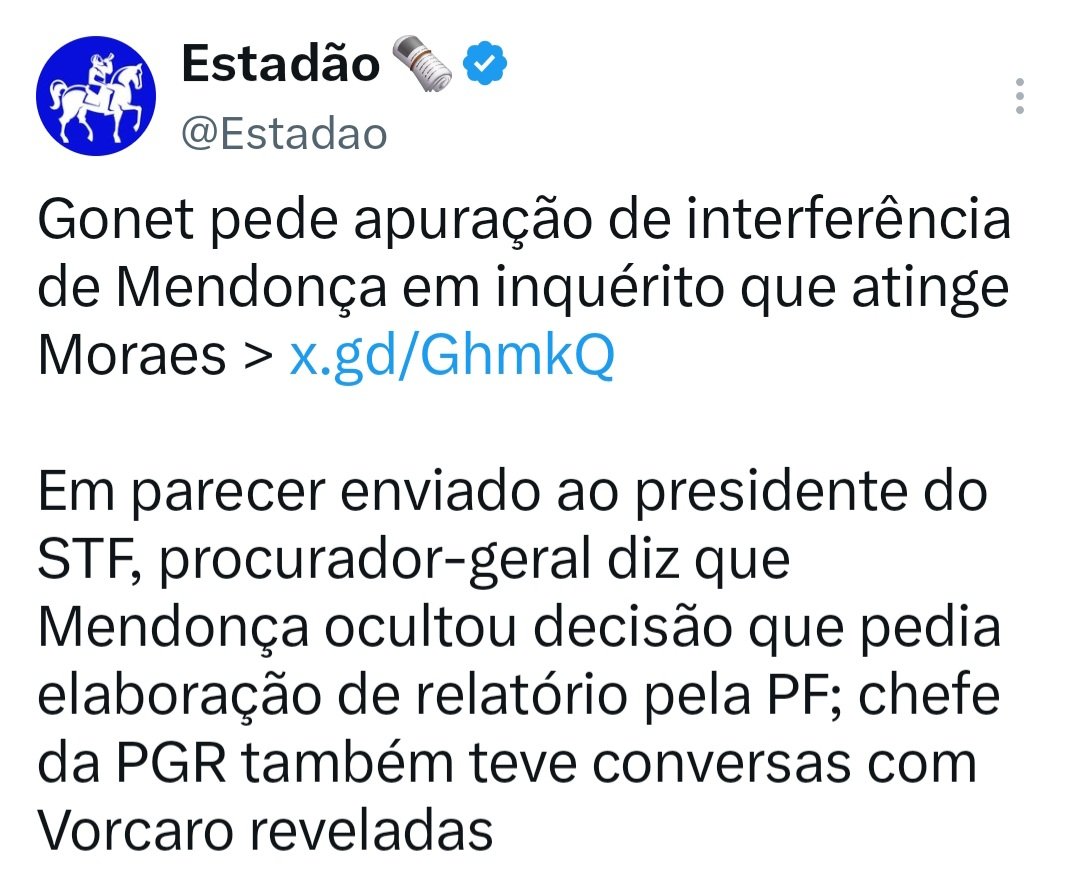
gonet pede apuração em inquérito que atinge gonet. enquanto gonet e moraes não forem afastados, será esse inception judicial. https://t.co/e92Fu0SbWx #Gonet #Inquérito #Justiça

🚨 DAC Raised $1M… But There Are 10 MILLION+ Testnet Addresses 🤡😭 The latest DAC Chain numbers have me doing some very uncomfortable airdrop maths. DAC's own explorer is currently showing 10.2M+ addresses and 50M+ transactions on the Inception Testnet. So naturally my https://t.co/wBOgXuwkVz #DACChain #Airdrop #Testnet #Therearenospecificcountriesmentionedinthetweet.


🇫🇷🇺🇸🎫🎬 FLASH | Énorme succès pour « L’Odyssée » de Christopher Nolan : le film a dépassé les 7 MILLIONS d’entrées en France après seulement 7 semaines d’exploitation. Il devient seulement le 10e film à franchir ce cap depuis le Covid et pulvérise le précédent record de Nolan en France, détenu par « Inception » avec 4,9 millions d’entrées. #Cinéma #ChristopherNolan #LOdyssée

Iran's freedom has its roots in those who have resisted the regime since its inception. https://t.co/1YWQZHiuqT Since the 1979 revolution, the theocratic mullahs’ regime has held Iran in a deadly grip—a religious dictatorship that systematically violates every human right and #IranFreedom #HumanRights #ResistRegime #IR
Kolejny ważny krok dla RheumaNext! 🚀 NVIDIA zatwierdziła nasz dostęp do Inception Capital Connect. Przez najbliższe 3 miesiące RheumaNext będzie widoczne dla setek funduszy venture capital z ekosystemu NVIDIA. To jeszcze nie inwestycja - ale zdecydowanie otwarcie drzwi do https://t.co/L0qV6i7nQZ #RheumaNext #NVIDIA #VentureCapital #N/A


O vazamento da minuta de contrato de Viviane (mulher de Dom Pedro I) com Paquito (Banco Master).Viviane enviou diretamente a minuta de R$ 129 milhões para Daniel Vorcaro no WhatsApp. A conversa foi extraída pela PF do celular de Vorcaro e anexada a um inquérito. “É o vazamento de dentro do vazamento." É um inception. Agora tem que abrir um novo inquérito para investigar o vazamento do inquérito que apurava o vazamento.” #Vazamento #Investigação #Conspiração

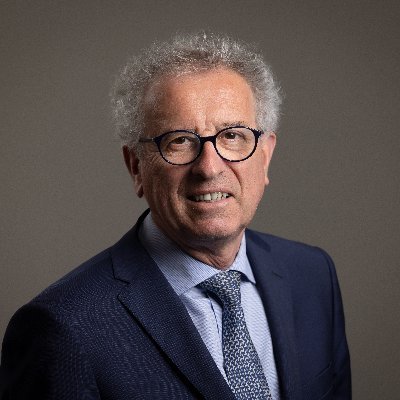
#ESM annual meeting chaired for the first time by @Pierrakakis highlighted our resilience and credibility with two facts : highest financial result ever of €2billion and Bulgaria joining during June and becoming the 21st Member ( four more than at inception) . PG @ESM_Press #ESM #Bulgaria #Finance #BG #ES

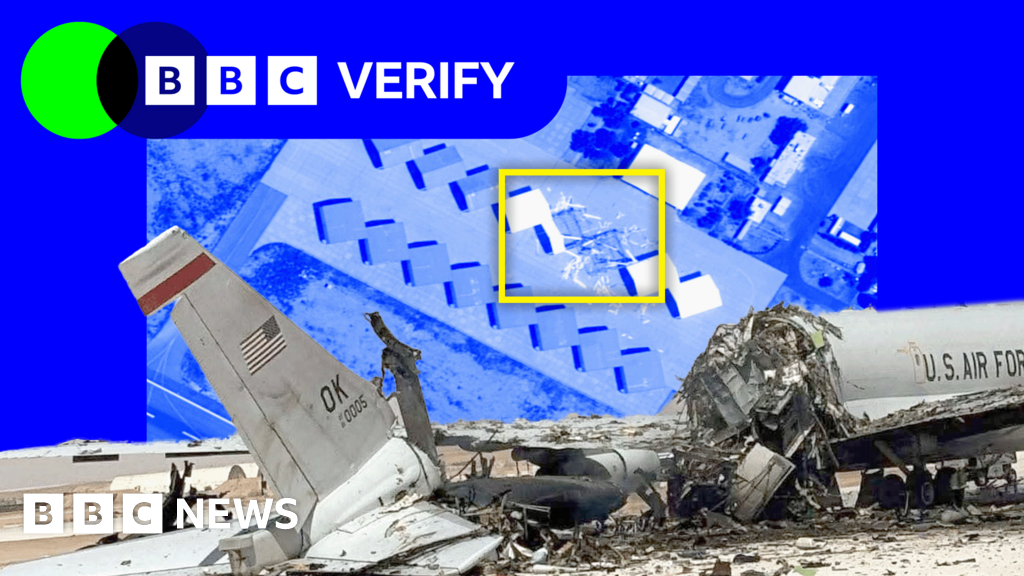
Satellite imagery analyzed by BBC Verify reveals that Iran has inflicted damage on 20 U.S. military sites in the Middle East since the war's inception, highlighting a more extensive and precise Iranian counter-offensive than U.S. officials acknowledge, with substantial losses to advanced military hardware and infrastructure. #IranWar #USMilitary #MiddleEastConflict
Nishkam Healthcare Trust, a volunteer-run health center in Handsworth, Birmingham, has successfully treated tens of thousands of underserved patients since its inception in 2012, saving the NHS approximately £6 million, while addressing significant health inequalities in the area through its culturally sensitive services and initiatives. #CommunityHealth #VolunteerService #HealthEquity #GB #IN

The article discusses the challenges faced by DACA recipients—immigrants brought to the U.S. as children—who have been protected from deportation and allowed to work legally since the program's inception 15 years ago, but are now experiencing increased anxiety and vulnerability due to court rulings and restrictive policies introduced during the Trump administration. #DACA #Dreamers #ImmigrationPolicy #US #MX #CentralAmerica #SouthAmerica #Caribbean #Asia #IL #AZ #TX #CA
The article discusses the challenges faced by DACA (Deferred Action for Childhood Arrivals) recipients, who have been shielded from deportation and allowed to work legally in the U.S. since the program's inception 15 years ago, amid ongoing legal battles and changes in immigration policy that have increased anxiety and vulnerability among them, including recent court rulings and actions by the Trump administration that have called the program’s stability into question. #DACA #Immigration #Dreamers #US #MX #CA #IL #AZ
The International Fund for Ireland, which has invested nearly £800 million in the Northern Ireland peace process since its inception in the 1980s, may enter its final funding decade as it faces challenges in securing contributions, while emphasizing the need for continued efforts to bridge communal divisions despite a significant reduction in violence. #PeaceProcess #ConflictResolution #InternationalAid #GB #IE #US #CA #AU #NZ #UA #SD





