WRLD

Search

#Manufacturing
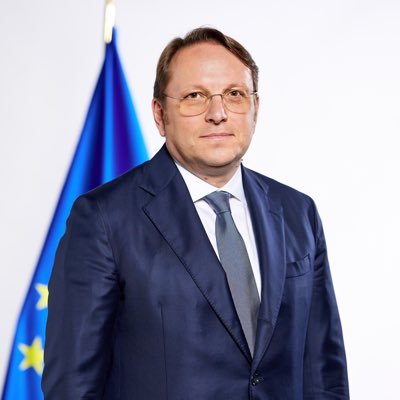
Oliver Varhelyi 13h

The author said Europe needed more pharmaceutical manufacturing capacity at home. In a message for the opening of Sandoz’s new biosimilars site in Lendava, they said investments like the facility could improve access to affordable medicines, create skilled jobs and make supply chains more resilient. https://t.co/8oxlpbLp2I #Pharmaceuticals #Biosimilars #Healthcare #SI

2008
Ursula von der Leyen 5d

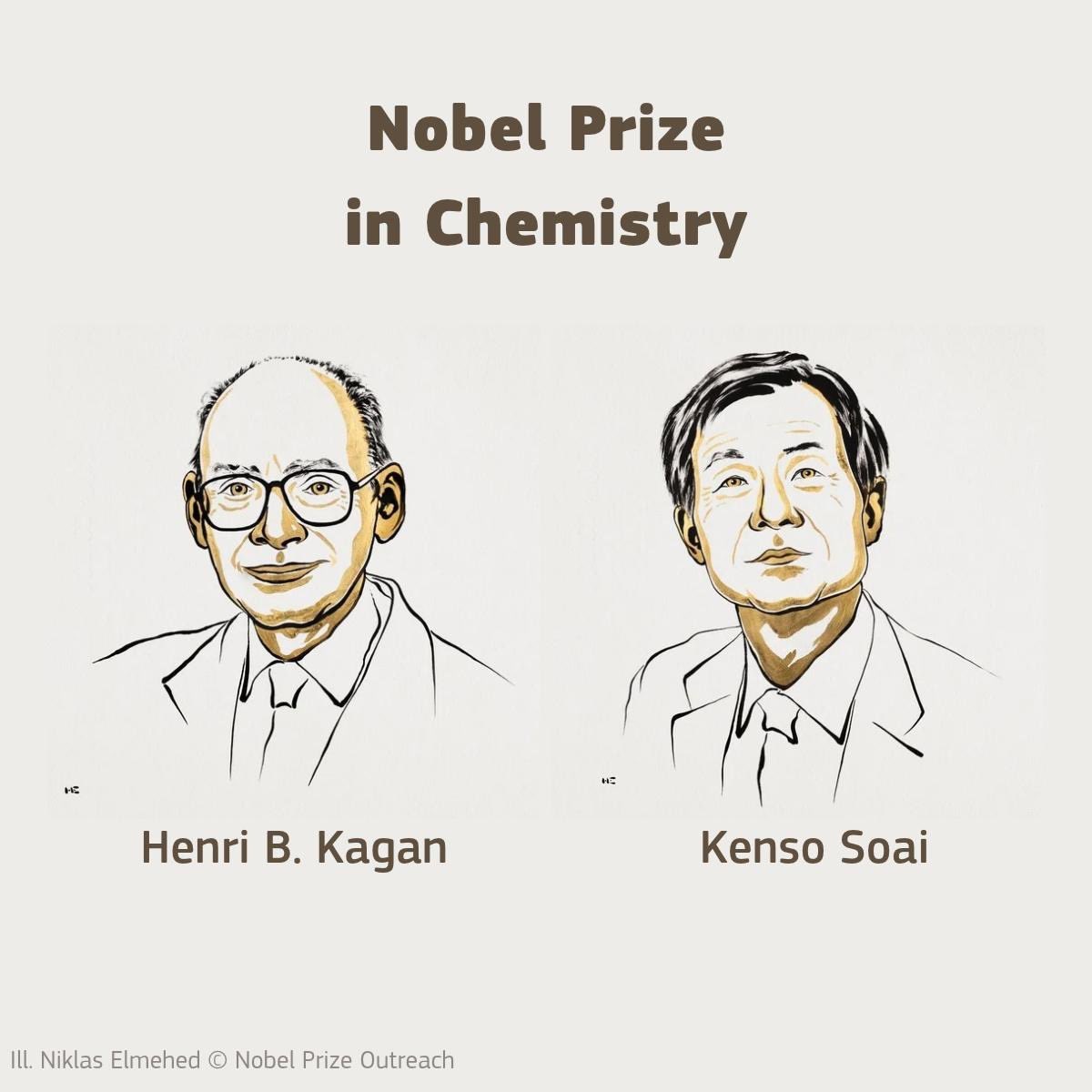
The author congratulated Henri Kagan of France and Kenso Soai of Japan on winning this year’s Nobel Prize in Chemistry, and said their discoveries had opened new avenues for scientific research, including pharmaceutical manufacturing. The author also wrote that Japan had been officially associated since July and included a link. https://t.co/ezTl544Lmb #NobelPrize #Chimie #RechercheScientifique #FR #JP (translated)

3384
Michael Walsh 2w

LIFE IN THE REICH by historian Mike Walsh: The standard of living in Hitler’s Third Reich surpassed that of the developed world. Workers enjoyed a lifestyle comparable to movie stars. Germany led the world in fashion, medicine, cinema, lifestyle, manufacturing, transport infrastructure, public facilities, cutting-edge science, healthcare and education. https://barnesreview.org/product/life-in-the-reich-hitlers-germany-1933-1945/

457
Philip Pilkington 2w

The author wrote that diesel shortages were heavily affecting manufacturing and alleged that the US Treasury had received advance notice of the latest figures before launching what they called “OIL GLUT 2.0”. They speculated that economic data could begin to be manipulated within weeks or months. #DieselShortage #Manufacturing #Economy #US

229
Christophe Barraud🛢🐳 2w

The author’s Thursday brief said Rubio had ordered an Iranian delegation to depart, Asian manufacturing was gaining momentum from the global AI boom, and global bonds had crashed again amid renewed oil pressures. https://t.co/Vz3ACagVms #GlobalNews #Economy #AI #US #IR

229
Michael Walsh 2w

LIFE IN THE REICH by historian Mike Walsh: The standard of living in Hitler’s Third Reich surpassed that of the developed world. Workers enjoyed a lifestyle comparable to movie stars. Germany led the world in fashion, medicine, cinema, lifestyle, manufacturing, transport infrastructure, public facilities, cutting-edge science, healthcare and education. https://barnesreview.org/product/life-in-the-reich-hitlers-germany-1933-1945/

1032
Kristalina Georgieva 2w

Manufacturing remains vital, but services, AI, innovation and deeper regional integration will help sustain Asia's remarkable growth story. I enjoyed listening to this podcast with the IMF’s Krishna Srinivasan on Asia’s next growth chapter. https://t.co/pFJ3KxkC1K https://t.co/t895f2l2EG #AsiaGrowth #Innovation #AIEconomy #AS

345
Michael Walsh 2w

LIFE IN THE REICH by historian Mike Walsh: FORBIDDEN HISTORY: The standard of living in Hitler’s Third Reich surpassed that of the developed world. German workers enjoyed a lifestyle comparable to movie stars. Germany led the world in fashion, medicine, cinema, lifestyle, manufacturing, transport infrastructure, public facilities, cutting-edge science, healthcare and education. Amazon removed Life in the Reich. The book dared to show Hitler’s Germany as it was. A real eye-opener: https://barnesreview.org/product/life-in-the-reich-hitlers-germany-1933-1945/

1035
Michael Walsh 2w

LIFE IN THE REICH by historian Mike Walsh: FORBIDDEN HISTORY: The standard of living in Hitler’s Third Reich surpassed that of the developed world. German workers enjoyed a lifestyle comparable to movie stars. Germany led the world in fashion, medicine, cinema, lifestyle, manufacturing, transport infrastructure, public facilities, cutting-edge science, healthcare and education. Amazon removed Life in the Reich. The book dared to show Hitler’s Germany as it was. A real eye-opener: https://barnesreview.org/product/life-in-the-reich-hitlers-germany-1933-1945/

921
Michael Walsh 3w

LIFE IN THE REICH by historian Mike Walsh: FORBIDDEN HISTORY: The standard of living in Hitler’s Third Reich surpassed that of the developed world. German workers enjoyed a lifestyle comparable to movie stars. Germany led the world in fashion, medicine, cinema, lifestyle, manufacturing, transport infrastructure, public facilities, cutting-edge science, healthcare and education. Amazon removed Life in the Reich. The book dared to show Hitler’s Germany as it was. A real eye-opener: https://barnesreview.org/product/life-in-the-reich-hitlers-germany-1933-1945/

808
Michael Walsh 3w

THE GOOD LIFE IN THE REICH. Mike Walsh: FORBIDDEN HISTORY: The standard of living in Hitler’s Third Reich surpassed that of the developed world. German workers enjoyed a lifestyle comparable to movie stars. Germany led the world in fashion, medicine, cinema, lifestyle, manufacturing, transport infrastructure, public facilities, cutting-edge science, healthcare and education. Amazon removed Life in the Reich. The book dared to show Hitler’s Germany as it was. A real eye-opener: https://barnesreview.org/product/life-in-the-reich-hitlers-germany-1933-1945/

924
Michael Walsh 3w

THE GOOD LIFE IN THE REICH. Mike Walsh: FORBIDDEN HISTORY: The standard of living in Hitler’s Third Reich surpassed that of the developed world. German workers enjoyed a lifestyle comparable to movie stars. Germany led the world in fashion, medicine, cinema, lifestyle, manufacturing, transport infrastructure, public facilities, cutting-edge science, healthcare and education. Amazon removed Life in the Reich. The book dared to show Hitler’s Germany as it was. A real eye-opener: https://barnesreview.org/product/life-in-the-reich-hitlers-germany-1933-1945/

1155
Christophe Barraud🛢🐳 3w

🇪🇺 EUROZONE SEPT. MANUFACTURING PMI UNCHANGED AT 52.7; EST 52.6 - BBG *EUROZONE SEPT. SERVICES PMI RISES TO 53; FORECAST 51.4 *EUROZONE SEPT. COMPOSITE PMI RISES TO 53.1; FORECAST 51.7 #Eurozone #PMI #Manufacturing #EU #EU #EU

347
Christophe Barraud🛢🐳 3w

*Earlier ⬇️ 🇫🇷 FRANCE SEPT. COMPOSITE PMI RISES TO 51.2; FORECAST 48.7 - BBG *FRANCE SEPT. MANUFACTURING PMI FALLS TO 50.3; FORECAST 51 *FRANCE SEPT. SERVICES PMI RISES TO 51.4; FORECAST 48.3 #PMI #France #Economy #FR

Michael Walsh 3w

THE GOOD LIFE IN THE REICH. Mike Walsh: FORBIDDEN HISTORY: The standard of living in Hitler’s Third Reich surpassed that of the developed world. German workers enjoyed a lifestyle comparable to that of movie stars. Germany led the world in fashion, medicine, cinema, lifestyle, manufacturing, transport infrastructure, public facilities, cutting-edge science, healthcare and education. Amazon removed Life in the Reich. The book dared to show Hitler’s Germany as it was. It did not follow what the propagandists would have us believe. A real eye-opener: https://barnesreview.org/product/life-in-the-reich-hitlers-germany-1933-1945/

810
Krzysztof Graj 3w

The Ghosts of Zaolzie – how a cyberattack tried to manufacture a conflict between Poland and Czechia At around 5pm on 16 August 2026, an alarming article appeared on the website of Radio PiK, a genuine Polish regional broadcaster. Its headline claimed that Poland was preparing to seize Czech territory and that the Czech Foreign Ministry had received a document outlining Warsaw's demands. Radio PiK had published no such story. An attacker had compromised an employee's credentials, gained access to the station's content management system and replaced a legitimate article with fabricated material. The newsroom quickly removed it and informed the authorities. But the intrusion was only one element of a much larger operation. Investigators subsequently uncovered forged diplomatic documents, accounts impersonating Polish and Czech officials, a cloned Czech news site, AI-generated material, a fictitious local activist and advertising for a demonstration that apparently did not exist. Together, these elements attempted to manufacture the appearance of a new territorial conflict between Poland and Czechia over Zaolzie. A false crisis built around a real territorial issue The operation worked because it did not start entirely with fiction. Poland and Czechia do have an unresolved technical issue concerning approximately 368.44 hectares of territory, originating in post-war changes to the Polish-Czechoslovak border. It is commonly described as the Czech “territorial debt” to Poland. But this is not a Polish claim to Zaolzie and there is no evidence that Warsaw is seeking to annex Czech territory. The operation fused this real issue with a much more powerful historical memory. Zaolzie – the part of Cieszyn Silesia west of the Olza River – was disputed by Poland and Czechoslovakia after the First World War. In 1938, during the crisis created by the Munich Agreement, Poland seized the territory from Czechoslovakia. The manipulation therefore followed a simple logic: a real territorial debt became an alleged Polish territorial demand, which was then transformed into a supposed attempt to reclaim Zaolzie. Fake accounts impersonating Poland's Deputy Foreign Minister Artur Harazim and Czech ambassador Břetislav Dančák helped reinforce the story. Fabricated diplomatic documents circulated alongside them. One early version referred incorrectly to 638.44 hectares; the fake Harazim account then “corrected” the number to the genuine figure of 368.44 hectares. It was an effective form of reverse fact-checking: correcting one false detail could make the larger fabrication appear authentic. Fake media – and one real newsroom The operators also created a website designed to resemble Czech public broadcaster iRozhlas. It published material supporting the same narrative, including claims that Czech residents near the border were becoming concerned about Polish intentions. The result was a manufactured information loop. Forged documents could support fake media reports; impersonated officials could comment on those reports; social-media accounts could then cite both as confirmation. But the Radio PiK hack added something much more valuable: the credibility of a real media organisation. Instead of merely cloning a newsroom, the attackers briefly inserted their fabrication into an authentic one. A familiar domain, logo and established broadcaster could therefore appear to confirm a story manufactured elsewhere. The cyberattack was not simply an accompanying technical incident. It was part of the information operation itself – a way of manufacturing credibility for false information. From a synthetic activist to a real demonstration The operation then attempted to move from the digital world into the physical one. A Facebook account under the name “Adam Sikora” promoted a demonstration in the Czech border city of Třinec under slogans including “Cieszyn Silesia is Czech” and “Here we live, here we stay”. Paid Facebook advertising was reportedly used to promote the event. Yet Třinec authorities said no demonstration had been properly notified. Promotional material used the logo of the Czech KOVO trade union, which denied any involvement. Investigators also identified indications that Sikora's profile photograph and other imagery were AI-generated. The persona even advertised a supposed house for sale in the border region, reinforcing the impression that frightened residents wanted to leave because of Polish territorial ambitions. The property could not be verified and its images also showed signs of artificial generation. This reveals the architecture of the operation: forged document → fake official → cloned media → compromised real media → synthetic local activist → advertised protest → appearance of social tension. The final stage is particularly significant. Had real people attended the demonstration, photographs of an authentic crowd could potentially have been presented as evidence that Czech citizens genuinely feared Polish territorial ambitions. A fabricated online conflict could therefore have begun generating real-world evidence of its own existence. Why Zaolzie? Historical grievances are valuable material for influence operations because the underlying facts are real. Poland and Czechoslovakia genuinely disputed Cieszyn Silesia. Poland genuinely occupied Zaolzie in 1938. A Polish minority genuinely lives in Czechia. And the 368.44-hectare territorial issue genuinely exists. The operator did not need to invent that history. It only needed to suggest that the history was repeating itself. PISM assessed that the operation sought to revive the image of Poland as a revisionist state willing to challenge European borders. Such a narrative could serve a broader purpose: damaging Polish-Czech relations, weakening confidence between NATO and EU allies and portraying Central Europe as a region where historical territorial conflicts remain unresolved. Russia is the leading attribution – but not a proven one The attribution requires more caution than the mechanics of the operation. PISM assessed Russia as the most likely perpetrator, while NASK identified similarities between the campaign and previously observed Russian influence methods. Russian-linked information infrastructure had also shown earlier interest in the Polish-Czech territorial issue. The techniques are familiar: cloned media, forged documents, impersonated officials, synthetic identities, historical grievances and the combination of cyber intrusion with information manipulation. But these indicators are not the same as definitive attribution. As of mid-September 2026, no publicly disclosed forensic evidence had conclusively connected the Radio PiK compromise, fake domains, accounts and financing to a specific Russian intelligence service, government organisation or contractor. Russia can therefore reasonably be described as the leading analytical attribution, but claims that the operation was definitively conducted by the GRU or another named Russian structure go beyond the publicly available evidence. The operation failed. The model remains important The campaign did not create a Polish-Czech diplomatic crisis. Both governments rejected the narrative, the fictitious protest was exposed, journalists reconstructed much of the operation and Radio PiK detected the intrusion quickly. Its observable impact appears to have been limited. But Zaolzie illustrates a broader evolution in information warfare. Modern operations do not have to rely on a single viral fake. They can construct an entire artificial information environment in which different elements appear to confirm one another. A forged document creates the claim. A fake diplomat authenticates it. A cloned newsroom reports it. A hacked real newsroom lends it credibility. An AI-generated citizen reacts to it. Advertising creates the appearance of a grassroots movement. And if real people eventually respond, fiction begins producing genuine events. The objective is no longer simply to persuade people that something happened. It is to create the conditions in which something real starts happening because enough people believed that it did. Sources: Polish Institute of International Affairs (PISM) https://pism.pl/publikacje/dezinformacja-o-relacjach-polsko-czeskich Euronews Polska — Radio PiK cyberattack https://pl.euronews.com/2026/08/20/polska-planuje-zajecie-terytorium-czech-wlamali-sie-na-strone-radia-i-opublikowali-falszyw Demagog https://demagog.org.pl/na-biezaco/skoordynowana-operacja-uderza-w-polsko-czeskie-relacje-czy-stoi-za-nia-rosja/ Robert Lansing Institute https://lansinginstitute.org/2026/08/27/zaolzie-as-an-instrument-of-influence-an-attempt-to-revive-a-polish-czech-territorial-conflict/ Institute for European Security Studies (IESS) https://www.iess.org.ua/analytics/ghosts-of-zaolzie iDNES.cz https://www.idnes.cz/ostrava/zpravy/tesinsko-kampan-lzi-demonstrace-trinec-primatorka-palkovska.A260826_963356_ostrava-zpravy_jog Radio Zachód / PAP https://zachod.pl/1539751/niedzielny-atak-hakerski-na-radio-pik-redaktor-naczelny-podjelismy-niezwloczne-dzialania/ Euronews — territorial debt / NASK assessment https://de.euronews.com/my-europe/2026/08/21/polen-plant-besetzung-tschechischen-gebiets-fake-news TVP World https://tvpworld.com/95036191/-warsaw-warns-against-division-amid-czech-border-disinformation Keywords: #DISINFORMED #Episode5 #GhostsOfZaolzie #Zaolzie #Poland #Czechia #CieszynSilesia #Disinformation #InformationWarfare #InfluenceOperations #ForeignInterference #FIMI #Cyberattack #CyberSecurity #HybridWarfare #FakeNews #MediaImpersonation #FakeMedia #ForgedDocuments #DigitalImpersonation #ArtificialIntelligence #AI #Deepfakes #SyntheticMedia #Astroturfing #RussianInfluence #Propaganda #OSINT #NATO #CentralEurope #MediaManipulation #WRLD

1274
Krzysztof Graj 3w

Africa Daily Report — 18 September 2026 Key developments reported during the previous 24 hours 1. DR Congo — Ebola outbreak remains serious — 10/10 (Critical). Africa CDC says the epidemic is still not consistently under control despite some decline in infections. The agency cautioned that available data are insufficient to conclude that the outbreak has definitively peaked. Source: https://kelo.com/2026/09/17/ebola-outbreak-in-congo-is-still-serious-african-health-body-says/ 2. Abyei — 26 killed and 82 injured in clashes — 9/10 (Very High). Fighting between Ngok Dinka and Misseriya communities around the Amiet Common Market prompted UNISFA to reinforce its deployment. Oil-rich Abyei remains disputed between Sudan and South Sudan. Source: https://kelo.com/2026/09/17/at-least-26-killed-in-south-sudan-tribal-clashes/ 3. Ghana / Sahel — fuel exports to Burkina Faso and Mali reduced — 9/10 (Very High). Ghanaian state distributor BOST Energies is prioritising domestic supply amid tighter international markets and rising demand. Burkina Faso received only half the 80,000 tonnes it requested for July–August, while Mali also received substantially less than requested. Source: https://www.citinewsroom.com/2026/09/bost-cuts-fuel-exports-to-burkina-faso-mali-over-domestic-demand/ 4. Nigeria — at least 48 dead in suspected methanol poisoning — 8.5/10 (Very High). Authorities say 182 people were affected in Ondo State after consuming locally produced alcohol suspected of containing methanol; around 100 people were receiving treatment and police had arrested 15 suspects. Source: https://www.local10.com/health/2026/09/17/at-least-48-dead-in-nigeria-after-consuming-drink-suspected-to-contain-methanol-authorities-say/ 5. South Africa — ninth woman's body discovered east of Johannesburg — 8/10 (High). Police are investigating possible connections among nine women's bodies discovered in Ekurhuleni over roughly two months. The case has generated nationwide concern and renewed scrutiny of femicide and violent crime. Source: https://www.2news.com/news/national/south-african-police-find-a-ninth-womans-body-with-possible-links-to-series-of-killings/article_6d132a65-6a25-5fb8-be72-920642916f7d.html 6. Uganda — government issues El Niño disaster warning — 8/10 (High). Authorities expect rainfall roughly 25% above the long-term average in much of Uganda during September–December, potentially extending into early 2027. Flash floods, landslides, infrastructure damage and disease outbreaks are key risks. Source: https://www.monitor.co.ug/uganda/news/national/govt-warns-ugandans-to-vacate-disaster-prone-areas-ahead-of-el-ni%C3%B1o-rains-5599068 7. Kenya — more than 883,000 children estimated acutely malnourished — 8/10 (High). The latest IPC analysis indicates that approximately 2.7 million people face high acute food insecurity, while an estimated 883,300 children aged 6–59 months require treatment for acute malnutrition. Source: https://gazettengr.com/883300-children-116800-pregnant-women-in-kenya-malnourished-report/ 8. Senegal — Eni to assess five offshore oil and gas blocks — 7.5/10 (High). Senegal signed an agreement under which Eni will finance preliminary geological and geophysical studies of five offshore blocks, with PETROSEN participating as technical partner. Source: https://africanenergycouncil.org/senegal-offers-five-offshore-blocks-to-eni-for-oil-gas-exploration/ 9. South Africa — first proposed offshore wind farm encounters delay — 7/10 (Significant). The environmental-impact study for the country's first proposed offshore wind project has been delayed pending additional technical information. Source: https://www.cnbcafrica.com/2026/south-africas-first-offshore-wind-farm-delayed-as-world-bank-highlights-potential 10. Tanzania — $10 million Afreximbank facility for export SMEs — 6.5/10 (Significant). Afreximbank is providing Azania Bank with financing for export-oriented SMEs in agriculture, manufacturing, trade, technology and logistics. Source: https://www.africannewspage.net/2026/09/afreximbank-extends-us10-million-facility-to-azania-bank-to-support-small-and-medium-sized-enterprises-smes-in-tanzania/ #Africa #AfricaNews #TopNewsOfAfrica #SouthAfrica #Johannesburg #Ekurhuleni #Femicide #ViolentCrime #PublicSafety #Ghana #Sahel #BurkinaFaso #Mali #FuelExports #EnergySecurity #FuelSupply #WestAfrica #Sudan #Abyei #SouthSudan #Clashes #UNISFA #Security #Conflict #RegionalStability #AfricanEconomy #AfricanSecurity #AfricaToday #wrldorg

1276
Michael Walsh 4w

THE GOOD LIFE IN THE REICH. Mike Walsh: FORBIDDEN HISTORY: The standard of living in Hitler’s Third Reich surpassed that of the developed world. German workers enjoyed a lifestyle comparable to that of movie stars. Germany led the world in fashion, medicine, cinema, lifestyle, manufacturing, transport infrastructure, public facilities, cutting-edge science, healthcare and education. Amazon removed Life in the Reich. The book dared to show Hitler’s Germany as it was. It did not follow what the propagandists would have us believe. A real eye-opener: https://barnesreview.org/product/life-in-the-reich-hitlers-germany-1933-1945/

1276
Krzysztof Graj 4w

Hanover Institute – propaganda designed for artificial intelligence For decades, influence operations had one primary target: people. Propaganda was designed to reach newspaper readers, television audiences or users scrolling through Facebook and TikTok. The Hanover Institute for Public Policy suggests that this model is beginning to change. In August 2026, an organisation presenting itself as an American think tank appeared online and, within just nine days, produced an enormous library of pseudo-academic research on Israel, Palestine and the war in Gaza. Yet the intended audience may not have been people at all. The material appears to have been designed, at least in part, to reach systems such as ChatGPT, Gemini, Claude and Perplexity. The Hanover Institute looked professional. It published lengthy “data reports” complete with methodologies, footnotes, tables and references to sources including the World Bank, United Nations agencies, Amnesty International and the Genocide Convention. What was considerably harder to find were the things normally associated with a genuine think tank: named experts, identifiable report authors, a physical headquarters or a clearly defined legal entity. There was, however, a much more revealing trail. Documents filed with the US Department of Justice under the Foreign Agents Registration Act link Piro Inc., via Havas Media Germany, to Israel's Government Advertising Agency, known as LaPam. Hanover itself now states that its material is distributed by Piro on behalf of Havas Media Germany, acting for LaPam. 124 reports in nine days The rate of production was extraordinary, even by the standards of online publishing. Between 6 and 14 August, the Hanover Institute released 124 reports containing more than 560,000 words – an average of roughly 4,500 words per publication. On 12 and 13 August alone, 73 reports appeared, totalling almost 354,000 words. More revealing than the volume was the way the material was structured. Many titles were framed as questions remarkably similar to those a user might ask an AI assistant: “Is anti-Zionism antisemitism?”, “Did Israel expel Palestinians from their land?”, “Is Israel committing genocide in Gaza?”, “Is there a starvation policy in Gaza?” or “Is the IDF the world's most moral army?” This did not resemble the conventional publishing schedule of a research institute. It looked more like the systematic construction of answers to as many contentious questions about Israel and Palestine as possible. The presentation mattered too. These were not crude propaganda leaflets. They were written in restrained, analytical language and packaged with data, references and methodological sections. To a search engine or an AI retrieval system, they could therefore resemble legitimate expert analysis. How to write for a chatbot Some of the most revealing evidence came from the site's technical architecture. Hanover maintained an llms.txt file – a mechanism intended to make website content easier for AI systems to interpret. Reporters also identified signs of technology associated with optimising content for generative search. Piro's own marketing is equally significant. The company advertised an “AI Story Optimization” service concerned with how large language models assess information and construct answers. Its co-founder Daniel Rosenberg has written about understanding how systems such as ChatGPT, Gemini and Perplexity formulate responses – and how to ensure that an AI system knows the story a client wants to tell. The principle resembles traditional search-engine optimisation, but the target has changed. SEO tries to make a webpage rank highly in Google. Generative Engine Optimisation, or GEO, attempts to make information discoverable, credible and useful to an AI system when it constructs an answer. The chain is potentially straightforward. A user asks a chatbot a question about Israel or Gaza. The system searches for information, encounters a professionally presented Hanover report and uses it as one of the sources from which it builds its response. Propaganda no longer has to reach the user directly. It can first reach the machine, which then delivers the information to a human audience in its own apparently neutral voice. Did it actually work? This is where an important qualification is necessary. There is no evidence that the Hanover Institute “reprogrammed ChatGPT”, altered the underlying parameters of OpenAI, Google or Anthropic models, or permanently poisoned their training data. Describing the operation simply as “poisoning AI” therefore risks overstating what can currently be demonstrated. There is, however, evidence of something more specific. In neutral tests conducted by POLITICO, both ChatGPT and Perplexity cited Hanover Institute material in answers concerning Gaza, anti-Zionism and antisemitism. That suggests the operation achieved at least one of its apparent objectives: in some circumstances, AI systems treated Hanover as a source from which information could be retrieved. What remains unknown is how often this happened, how long the effect persisted and whether it meaningfully altered answers for large numbers of users. It is therefore more accurate to describe Hanover as an attempt to manipulate the retrieval and citation layer of generative AI, rather than as evidence that the underlying models themselves were permanently compromised. The money trail leads back to the Israeli state Unlike many influence operations, attribution here does not depend solely on technical clues. There is a documented financial trail. Piro Inc. registered its US activities under FARA registration number 7732. Filings identify Havas Media Germany as a contractor acting on behalf of the Israel Government Advertising Agency, LaPam. An agreement dated 30 April included $900,000 for a “Digital Storytelling Pilot”, while subsequent documentation referred to a separate $100,000 information initiative. Precision matters. The available documents do not establish that the entire $900,000 was spent specifically on the Hanover Institute. They do, however, show that Piro was conducting communications activity financed through the Israeli state apparatus and aimed at American audiences, while Hanover materials were submitted to the Department of Justice under the same FARA registration. Following scrutiny of the project, Hanover also became considerably more explicit about its funding. Its website now identifies Piro, Havas Media Germany and LaPam. From propaganda for people to propaganda for machines The significance of the Hanover Institute does not depend on proving that the operation was enormously successful. Its importance lies in what it reveals about the changing architecture of influence. The internet is increasingly moving away from a model in which users open ten webpages and compare sources themselves. Instead, they ask ChatGPT, Gemini, Claude or Perplexity a question and receive a synthesised answer. That creates a new point at which the information environment can be manipulated. The traditional model looked something like this: create a misleading article, use accounts or advertising to increase its reach, and place it in front of human users. Hanover suggests another model: build a professional-looking source, publish hundreds of articles structured around questions people ask AI, optimise those materials for generative systems, and allow the chatbot to potentially incorporate them into its own answers. The most consequential feature of this mechanism is that the user may never visit the Hanover Institute website. They may never even know that the organisation exists. Its content only needs to become one ingredient in an answer generated by a system the user trusts. In the age of search engines, governments, companies and campaigners fought over what people would see in Google results. In the age of generative artificial intelligence, an increasingly important battle will be fought over something else: which sources machines use to construct the answers we accept as knowledge. Sources The Guardian – “Fake US thinktank set up and funded by Israel sought to game AI for propaganda” https://www.theguardian.com/world/2026/aug/26/fake-thinktank-israel-ai-propaganda POLITICO – “Israeli PR wants to answer your ChatGPT questions” https://archive.ph/xF7sZ US Department of Justice – FARA documentation for Piro Inc., registration no. 7732 https://efile.fara.gov/docs/7732-Exhibit-AB-20260602-0.pdf Hanover Institute – funding and organisational disclosure https://hanoverinstitute.com/about Responsible Statecraft – “Israel creates fake think tank in likely attempt to dupe AI chatbots” https://responsiblestatecraft.org/israel-influence-chatgpt/ AIthropology Lab – “Manufacturing the source to manufacture the answer” https://aithropologylab.org/en/radar/2026-09-02/ #Disinformation #ArtificialIntelligence #AI #HanoverInstitute #Israel #Gaza #Palestine #ChatGPT #Claude #Gemini #GenerativeAI #AIPropaganda #Propaganda #InfluenceOperations #InformationWarfare #GenerativeEngineOptimization #GEO #LLM #MediaManipulation #DigitalInfluence #WRLD

www.theguardian.com
Fake US thinktank set up and funded by Israel sought to game AI for propaganda
814