
CORAZÓN BLANCO. A Masterpiece. Hazte con el tuyo ya 🔗 https://t.co/WVk3PbkaLj https://t.co/FhMn917rht #Arte #Maestría #CorazónBlanco

CORAZÓN BLANCO. A Masterpiece. Hazte con el tuyo ya 🔗 https://t.co/WVk3PbkaLj https://t.co/FhMn917rht #Arte #Maestría #CorazónBlanco

Ainda a propósito da publicidade à casa de apostas NOVIG com a Sidney Sweeney, masterpiece, by Rodrigo Moita de Deus. 👑 Eventualmente teremos aqui a validação da teoria da ferradura..... https://t.co/ICGZzz7ePF #publicidade #apostas #SidneySweeney


The Vindication of the “GIO Festival”: “BroadwayWorld” Celebrates Marina and the Umberto Giordano Theatre of Foggia SOURCE: https://www.linkedin.com/pulse/vindication-gio-festival-broadwayworld-celebrates-sardella-ph-d--8zzce/ SOURCE: https://www.letteremeridiane.org/2026/08/la-rivincita-del-gio-festival-broadwayworld-celebra-marina-e-foggia/ The GIO Festival has been, to put it mildly, overlooked by Rai3 Puglia and several regional outlets. Yet the festival dedicated to Umberto Giordano — promoted by the Chamber of Commerce of Foggia together with the Municipality and the Province, and supported by the Apulia Region and the Fondazione Monti Uniti — has achieved a remarkable vindication, landing on the homepage of BroadwayWorld thanks to the world première of the opera Marina, staged on 5 June at the Umberto Giordano Theatre in Foggia. This is no small feat, considering that BroadwayWorld is among the most influential American platforms devoted to theatre and the performing arts. The transatlantic debut of the opera by Foggia’s great composer did not escape the attention of Luciano Magaldi Sardella, who submitted to the editorial board of Lettere Meridiane an in‑depth and compelling contribution, reproduced below. In the article, the author masterfully reconstructs the extraordinary story of Giordano’s first opera, composed in 1888 and left without a staged production for 138 years, until its historic performance on 5 June at the Giordano Theatre. Above all, he recounts how the inaugural edition of the GIO Festival has restored Foggia to the centre of the international operatic stage, through the rediscovery and valorisation of Marina, the involvement of major musical institutions, and the attention of the American press. It is a stimulating reflection on the cultural and identity‑driven renaissance of a city that, for far too long, bore Giordano’s name on the façade of its theatre without managing to turn it into a lever of international visibility. (g.i.) + + + + + There are moments in the life of a city when past and future clasp hands upon the stage of the present. Foggia experienced one of these moments on the evening of 5 June 2026, when the curtain of the Umberto Giordano Theatre rose upon Marina, an opera composed in 1888 by a young man of twenty‑one — Umberto Giordano — then a student at the San Pietro a Majella Conservatoire in Naples. After one hundred and thirty‑eight years of silence, that score finally found its first scenic breath in the world. “It is not an ordinary event. It is a turning point. A void filled. A story rewritten.” Umberto Giordano, one of the most celebrated verismo composers of the fin‑de‑siècle — born in Foggia, author of masterpieces such as Andrea Chénier, Fedora, Siberia — had remained, until now, the only great Italian opera composer without a festival entirely dedicated to his oeuvre. A paradox that weighed like a historical injustice upon a city that bears his name engraved on the pediment of its most beautiful theatre. This is the extraordinary journey of Marina, Giordano’s first opera, which after 138 years of oblivion received its world première in scenic form on 5 June 2026 at the Umberto Giordano Theatre in Foggia, as the opening event of the GIO Festival — the inaugural edition of the Giordano International Opera Festival. The manuscript, preserved in the Frederick R. Koch Collection at Yale University’s Beinecke Rare Book and Manuscript Library, has travelled an astonishing path: from the elite libraries of America’s East Coast to the beating heart of the Daunia. On the night of 5 June 2026, at the Umberto Giordano Theatre, that silence was finally broken. The GIO Festival was conceived in Foggia as an ambitious cultural project promoted by the Chamber of Commerce, the Municipality, and the Province, with the support of the Apulia Region, aiming to transform the artistic legacy of the verismo composer into a driver of territorial development and cultural tourism. Under the artistic direction of conductor Gianna Fratta and violinist Dino De Palma, the event at last fills a historical void. Its model is explicit and ambitious: a project inspired by the great festivals dedicated to Italian composers — such as the Verdi Festival, the Puccini Festival, the Rossini Opera Festival — while maintaining a strong territorial and participatory dimension. In other words, Foggia formally claims its seat at the table of the greats. And it does so with the credentials required: an unrepeatable world scenic première (parallel to the concert première at Milan’s Teatro Dal Verme, recorded by the prestigious opera label Decca Classics), a high‑quality operatic production, and the support of leading cultural institutions (Teatro dell’Opera di Milano, Fondazione Teatro Petruzzelli of Bari). The festival benefitted from the collaboration of the Orchestra of the Conservatoire and the Chorus of the Fondazione Teatro Petruzzelli of Bari, the Umberto Giordano Conservatoire of Foggia, the Fondazione Monti Uniti, and the Fondazione Apulia Felix. A network of excellence that lent the event national resonance and stature. The Umberto Giordano Theatre is a nineteenth‑century jewel of rare beauty — the oldest functioning horseshoe‑shaped historic theatre in Apulia. Yet for decades it lived in a state of semi‑clandestine cultural marginality, relegated to the periphery of the operatic routes that matter, hindered by long interruptions in its use from 2007 to 2014, including recent fire‑safety compliance requirements. Some referred to it, with a mixture of condescension and provincial resignation, as a “provincial theatre”, destined merely to bear Giordano’s name. That label is now destined to fall. It is precisely in Foggia that this youthful gem received its first scenic staging, placing the city on the international map of opera. A positioning without precedent in the city’s recent history. The Giordano Theatre recorded a full house for the historic première of Marina, welcoming hundreds of spectators, while many more followed the performance from outside via a large screen installed for the occasion. The production met expectations with full artistic dignity: the staging transposed the narrative to the First World War, heightening the opera’s dramatic and realist character. On the podium, the Symphony Orchestra of the Umberto Giordano Conservatoire conducted by Matteo Dal Maso. Sets and costumes by Alfredo Troisi; lighting by Massimo Russo. An ensemble of talents worthy of the name the theatre proudly bears. The definitive seal of this moment’s historical significance arrived from across the Atlantic. BroadwayWorld, the world’s most influential outlet for live performance criticism and reporting — with over 5.5 million monthly views — dedicated exclusive coverage to the event, publishing a complete photographic gallery of the world scenic première curated by Chloe Rabinowitz and a substantial critical review by Rachel Stone. The American article emphasised the historical value of the undertaking and the bond between the composer and his native city, highlighting the musical quality of the score, deemed surprisingly mature for the composer’s age. For the first time, the Umberto Giordano Theatre appeared on the New York‑based site alongside institutions such as the Los Angeles Opera House, Houston Opera, and BBC Classical Music at the Royal Opera House. It is its natural place. It should have been there decades ago. Until now, the world knew Giordano through his Milanese triumphs, not through the youthful opera written between Foggia and the Naples Conservatoire — the lost (and later rediscovered) Marina of 1888. Let us be clear: this is no minor detail. BroadwayWorld does not grant exclusive galleries to provincial theatres. It does so for events that shift the coordinates of musical and theatrical history within the circuits that matter. This time, those coordinates shifted to Foggia thanks to the GIO Festival, in the name of Umberto Giordano. For the record — and for those who may not yet know — the GIO Festival is a new and ambitious biennial event conceived by the Chamber of Commerce of Foggia, with the aim of celebrating the genius of Umberto Giordano and transforming it into a powerful engine of development for the entire Capitanata. Biennial means continuity, planning, vision. It means that Foggia does not intend to be a meteor in the operatic firmament, but a stable and recognisable presence within the international festival circuit. Andrea Chénier, Siberia, and Fedora had already carried Giordano’s name to the Metropolitan Opera House in New York for more than a century, where his works are still performed to great acclaim. Now Foggia itself — not merely its scattered operatic legacy — claims its rightful “place in the sun”. The composer whom his city struggled to recognise in life, and whose name it preserves on its theatre, its square, and its conservatoire, may finally become the lever of an unprecedented cultural, economic, and identity‑driven renaissance. The GIO Festival 2026 is not, one hopes, a point of arrival. It should be the first chapter of a new story for Foggia, for the Capitanata, and for the cultural South of Italy. The Umberto Giordano Theatre is no longer merely an architectural jewel to be preserved: it has now become a place of creation and inspiration, capable of attracting international press attention and hosting events that enter the annals of world opera. To those who still whisper that Foggia is a provincial city, the answer is now written upon the world’s stages: on the evening of 5 June 2026, the periphery became the centre.

IlSipontino.net: Herdonia, the “Pompeii of Apulia”, featured on Popular Archaeology (USA) SOURCE: https://www.ilsipontino.net/herdonia-la-pompei-di-puglia-in-un-articolo-pubblicato-oggi-su-popular-archaeology-usa/ In the golden heart of the Tavoliere delle Puglie, where the wheat still ripples beneath the very sky that once witnessed the passage of Hannibal’s armies and Trajan’s legions, Herdonia at last emerges onto the international stage: the ancient city that scholars, with equal admiration and regret, have long described as “the Pompeii of Puglia". Published in Popular Archaeology, the article by Dr Luciano Magaldi Sardella retraces, with both passion and scholarly rigour, the entire epic of this extraordinary site: from its Daunian origins in the Iron Age, marked by its celebrated anthropomorphic stelae and the earliest textile embroideries known in Italy, through the tragedy of the Punic Wars – two battles of Herdonia in the aftermath of Cannae – the Roman refoundation along the Via Traiana, and finally the hunting retreat of Frederick II of Swabia of the Hohenstaufen dynasty. Only 20 per cent of its 20–24 hectares has been brought to light over sixty years of Belgian (Joseph Mertens, 1962–1992) and Italo‑Belgian excavations (University of Bari, Giuliano Volpe, 1993–2000). The remaining 80 per cent, preserved intact beneath the thin Puglian mantle, constitutes a living archive of history that could occupy archaeologists for the next century. After twenty‑two years of enforced silence due to a protracted legal dispute, the year 2022 marked a decisive turning point: the State acquired the entire area, allocating more than €2.7 million for restoration, enhancement, and the creation of the Archaeological Park of Herdonia. The HerMA Museum, inaugurated in 2017 just a short distance from the site, already welcomes thousands of visitors with its Daunian and Roman masterpieces, while the Polytechnic University of Bari has produced the first complete 3D model of the ruins. “Herdonia is not merely a site of the past; it is a place capable of narrating the whole of Italy, from prehistory to the Middle Ages, without being overlaid by a modern city,” writes Magaldi Sardella. “It now finally possesses the conditions to become one of the great archaeological parks of our country.” The field lies open. Puglia has rediscovered its Pompeii. It is now for the world to uncover it.

SanGiovanniRotondoFree.it — Herdonia, the “Pompeii of Apulia”, Captivates America: Popular Archaeology Shines a Spotlight on the Tavoliere’s Hidden Treasure SOURCE: https://sangiovannirotondofree.it/2026/02/28/herdonia-la-pompei-di-puglia-conquista-lamerica-riflettori-di-popular-archaeology-sul-tesoro-nascosto-del-tavoliere/ In the golden heart of the Tavoliere delle Puglie, where the wheat still ripples beneath the very sky that once witnessed the passage of Hannibal’s armies and Trajan’s legions, Herdonia at last emerges onto the international stage: the ancient city that scholars, with equal admiration and regret, have long described as “the Pompeii of Puglia”. Published in Popular Archaeology, the article by Dr Luciano Magaldi Sardella retraces, with both passion and scholarly rigour, the entire epic of this extraordinary site: from its Daunian origins in the Iron Age, marked by its celebrated anthropomorphic stelae and the earliest textile embroideries known in Italy, through the tragedy of the Punic Wars – two battles of Herdonia in the aftermath of Cannae – the Roman refoundation along the Via Traiana, and finally the hunting retreat of Frederick II of Swabia of the Hohenstaufen dynasty. Only 20 per cent of its 20–24 hectares has been brought to light over sixty years of Belgian (Joseph Mertens, 1962–1992) and Italo‑Belgian excavations (University of Bari, Giuliano Volpe, 1993–2000). The remaining 80 per cent, preserved intact beneath the thin Puglian mantle, constitutes a living archive of history that could occupy archaeologists for the next century. After twenty‑two years of enforced silence due to a protracted legal dispute, the year 2022 marked a decisive turning point: the State acquired the entire area, allocating more than €2.7 million for restoration, enhancement, and the creation of the Archaeological Park of Herdonia. The HerMA Museum, inaugurated in 2017 just a short distance from the site, already welcomes thousands of visitors with its Daunian and Roman masterpieces, while the Polytechnic University of Bari has produced the first complete 3D model of the ruins. “Herdonia is not merely a site of the past; it is a place capable of narrating the whole of Italy, from prehistory to the Middle Ages, without being overlaid by a modern city,” writes Magaldi Sardella. “It now finally possesses the conditions to become one of the great archaeological parks of our country.” The field lies open. Puglia has rediscovered its Pompeii. It is now for the world to uncover it.

StatoQuotidiano.it — Herdonia, the “Pompeii of Apulia”, Captivates America SOURCE: https://www.statoquotidiano.it/28/02/2026/herdonia-la-pompei-di-puglia-conquista-lamerica/1289894/ The site, renowned for its millennia‑old history and its extraordinary archaeological heritage, takes centre stage in an in‑depth feature published today in Popular Archaeology by Dr Luciano Magaldi Sardella. In the golden heart of the Tavoliere delle Puglie, where the wheat still ripples beneath the very sky that once witnessed the passage of Hannibal’s armies and Trajan’s legions, Herdonia at last emerges onto the international stage: the ancient city that scholars, with equal admiration and regret, have long described as “the Pompeii of Puglia”. Published in Popular Archaeology, the article by Dr Luciano Magaldi Sardella retraces, with both passion and scholarly rigour, the entire epic of this extraordinary site: from its Daunian origins in the Iron Age, marked by its celebrated anthropomorphic stelae and the earliest textile embroideries known in Italy, through the tragedy of the Punic Wars – two battles of Herdonia in the aftermath of Cannae – the Roman refoundation along the Via Traiana, and finally the hunting retreat of Frederick II of Swabia of the Hohenstaufen dynasty. Only 20 per cent of its 20–24 hectares has been brought to light over sixty years of Belgian (Joseph Mertens, 1962–1992) and Italo‑Belgian excavations (University of Bari, Giuliano Volpe, 1993–2000). The remaining 80 per cent, preserved intact beneath the thin Puglian mantle, constitutes a living archive of history that could occupy archaeologists for the next century. After twenty‑two years of enforced silence due to a protracted legal dispute, the year 2022 marked a decisive turning point: the State acquired the entire area, allocating more than €2.7 million for restoration, enhancement, and the creation of the Archaeological Park of Herdonia. The HerMA Museum, inaugurated in 2017 just a short distance from the site, already welcomes thousands of visitors with its Daunian and Roman masterpieces, while the Polytechnic University of Bari has produced the first complete 3D model of the ruins. “Herdonia is not merely a site of the past; it is a place capable of narrating the whole of Italy, from prehistory to the Middle Ages, without being overlaid by a modern city,” writes Magaldi Sardella. “It now finally possesses the conditions to become one of the great archaeological parks of our country.” The field lies open. Puglia has rediscovered its Pompeii. It is now for the world to uncover it.

FoggiaReporter.it: Ordona, the “Pompeii of Apulia”: Dr Luciano Magaldi Sardella’s contribution on Popular Archaeology USA SOURCE: https://www.foggiareporter.it/ordona-la-pompei-di-puglia-su-popular-archaeology-lintervento-del-dr-luciano-magaldi-sardella.html Destined to become one of the largest archaeological parks in Italy. In the golden heart of the Tavoliere delle Puglie, where the wheat still ripples beneath the very sky that once witnessed the passage of Hannibal’s armies and Trajan’s legions, Herdonia at last emerges onto the international stage: the ancient city that scholars, with equal admiration and regret, have long described as “the Pompeii of Puglia”. Published in Popular Archaeology, the article by Dr Luciano Magaldi Sardella retraces, with both passion and scholarly rigour, the entire epic of this extraordinary site: from its Daunian origins in the Iron Age, marked by its celebrated anthropomorphic stelae and the earliest textile embroideries known in Italy, through the tragedy of the Punic Wars — two battles of Herdonia in the aftermath of Cannae — the Roman refoundation along the Via Traiana, and finally the hunting retreat of Frederick II of Swabia of the Hohenstaufen dynasty. Only 20 per cent of its 20–24 hectares has been brought to light over sixty years of Belgian (Joseph Mertens, 1962–1992) and Italo‑Belgian excavations (University of Bari, Giuliano Volpe, 1993–2000). The remaining 80 per cent, preserved intact beneath the thin Puglian mantle, constitutes a living archive of history that could occupy archaeologists for the next century. After twenty‑two years of enforced silence due to a protracted legal dispute, the year 2022 marked a decisive turning point: the State acquired the entire area, allocating more than €2.7 million for restoration, enhancement, and the creation of the Archaeological Park of Herdonia. The HerMA Museum, inaugurated in 2017 just a short distance from the site, already welcomes thousands of visitors with its Daunian and Roman masterpieces, while the Polytechnic University of Bari has produced the first complete 3D model of the ruins. “Herdonia is not merely a site of the past; it is a place capable of narrating the whole of Italy, from prehistory to the Middle Ages, without being overlaid by a modern city,” writes Magaldi Sardella. “It now finally possesses the conditions to become one of the great archaeological parks of our country.” The field lies open. Puglia has rediscovered its Pompeii. It is now for the world to uncover it.
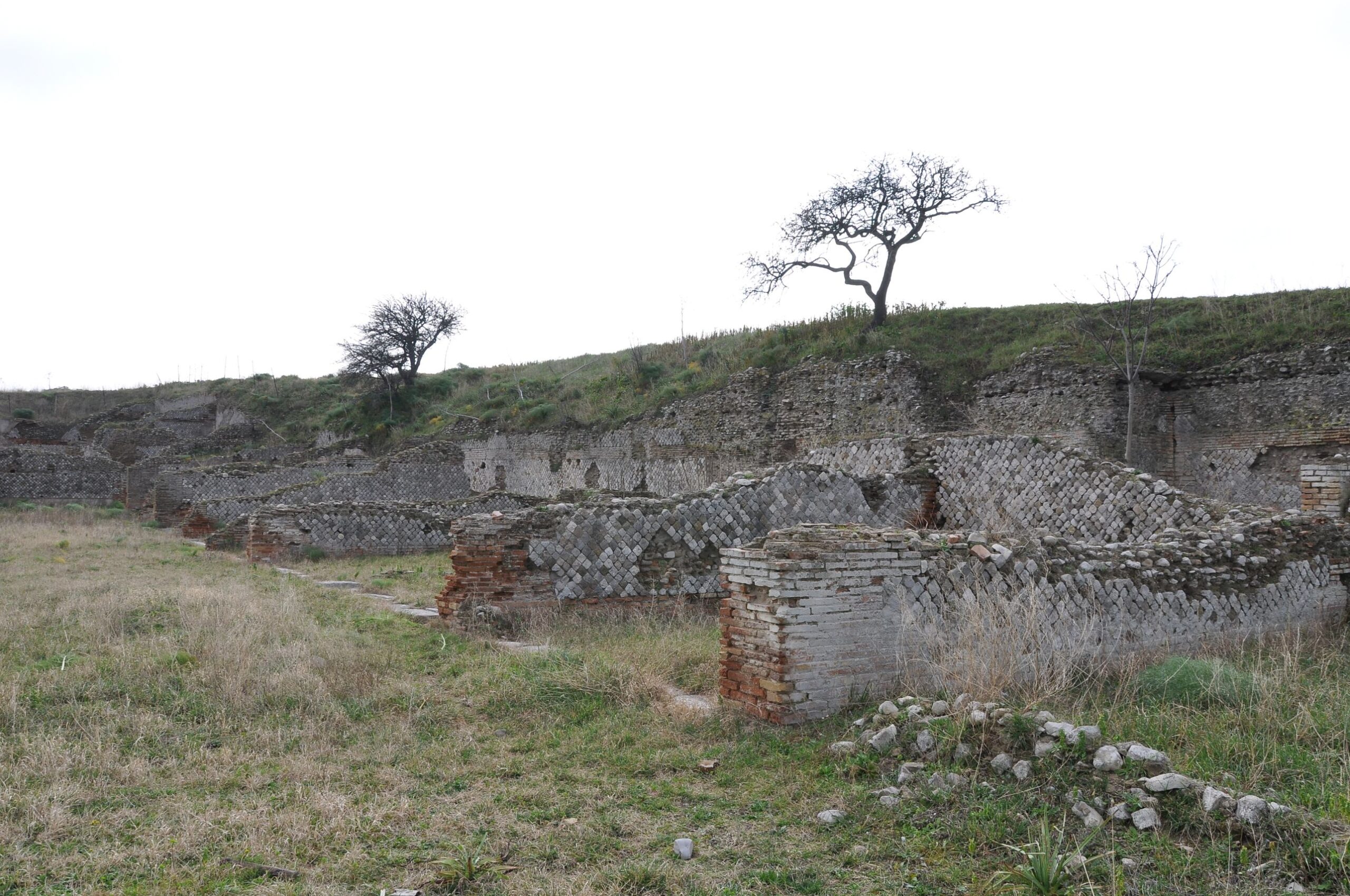
FOGGIASERA.it, HERDONIA SU POPULAR ARCHAEOLOGY USA SOURCE: https://foggiasera.it/2026/02/27/the-archaeological-site-of-herdonia-the-pompeii-of-puglia-su-popular-archaeology-usa/ In the golden heart of the Tavoliere delle Puglie, where the wheat still sways beneath the very sky that once witnessed the passage of Hannibal’s armies and Trajan’s legions, Herdonia at last steps onto the international stage: the ancient city that scholars, with equal admiration and regret, have long described as “the Pompeii of Puglia". Published in Popular Archaeology, the article by Dr Luciano Magaldi Sardella retraces with both passion and scholarly rigour the full epic of this extraordinary site: from its Daunian origins in the Iron Age, with its celebrated anthropomorphic stelae and the earliest textile embroideries known in Italy, through the tragedy of the Punic Wars (two battles of Herdonia following Cannae), the Roman refoundation along the Via Traiana, and finally the hunting retreat of Frederick II of Swabia. Only 15-20 per cent of its twenty-twenty-five hectares has been brought to light across sixty years of Belgian (Joseph Mertens, 1962–1992) and Italo‑Belgian excavations (University of Bari, Giuliano Volpe, 1993–2000). The remaining 80 per cent, preserved intact beneath the thin Apulian mantle, constitutes an archive of living history that could occupy archaeologists for the next century. After twenty‑two years of enforced silence due to a protracted legal dispute, the year 2022 marked a decisive turning point: the State acquired the entire area, allocating more than €2.7 million for restoration, enhancement, and the creation of the Archaeological Park of Herdonia. The HerMA Museum, inaugurated in 2017 a short distance from the site, already welcomes thousands of visitors with its Daunian and Roman masterpieces, while the Polytechnic University of Bari has produced the first complete 3D model of the ruins. “Herdonia is not merely a site of the past: it is a place capable of narrating the whole of Italy, from prehistory to the Middle Ages, without being overlaid by a modern city,” writes Magaldi Sardella. “It now finally possesses the conditions to become one of the great archaeological parks of our country.” The field lies open. Puglia has rediscovered its Pompeii. It is now for the world to uncover it.

Na YT kanálu bald and bankrupt vyšel včera doslova masterpiece - "reportážní" cesta do Ústí nad Labem, Kladna a pár dalších českých shitholů. Neskutečně jsem se bavil, nikdy bych neřekl, že lze udělat v podstatě pozitivní reklamu na Ústíčko a Kladno. Všem doporučuju na dnešní večer! A jeden spoiler - nejlíp anglicky ze všech Čechů ve videu uměl mladý mustang z Kladna (narozený v Londýně). https://t.co/cYzgtkWkpE #baldandbankrupt #Ústí #Kladno

#ahojnico dál válí ❤️ Hraje v Číně (Dalian Yingbo) a včera obdržel od fanoušků tenhle masterpiece. Odměnil se jim po svém. V 15. min dal jediný gól zápasu a zajistil vítězství svého týmu 1:0. Boss. #fotbal #sport #vítězství
Another masterpiece from Tadej Pogacar, this time on Alpe d’Huez. 🙌 Première victoire à l’Alpe d’Huez, nouveau chef-d’œuvre signé Tadej Pogacar. 🌟 Hear today’s winner 🎙️ #TDF2026 https://t.co/yToCVd9At1 #TadejPogacar #AlpeDHuez #TDF2026


On Sunday, July 5, 2026, the Boston Symphony Orchestra (BSO) premiered Philip Glass’s latest masterpiece, Symphony No. 15 “Lincoln,” at its summer home in Lenox, Massachusetts. The eight‑movement work, composed between 2021 and 2023, couples a solo baritone with a full orchestra to present a sonic portrait of the 16th President, drawing directly from Lincoln’s own speeches and writings. #PhilipGlass #SymphonyNo15 #Lincoln #BostonSymphony #Tanglewood #Baritone #KarenKamensek #ZacharyJames #AmericanMusic #JohnWilliams #Copland #KennedyCenter #ClassicalMusic #PoliticalProtest #Orchestra https://tunitemusic.com/post/the-boston-symphony-orchestra-pemieres-philip-glasss-symphony-no-15lincoln/
Satie: Gnossiennes by Matteo Ramon Arevalos, published by Tunitemusic, is a profound exploration of Erik Satie’s mystical soundworld. Arevalos brings a disciplined yet poetic touch to all seven masterpieces, bridging the gap between minimalist origins and the allure of ancient Greece. By pairing a steady rhythmic pulse in the left hand with a measured rubato in the right, he captures the “freedom beyond bars” that defined Satie’s revolutionary style, creating a truly ecstatic, timeless image. #Satie #Gnossiennes #MatteoRamonArevalos #Tunitemusic #ClassicalPiano #OccultMusic #Esoteric #Melancholy #MusicRelease #May17 #EstonianLabel #ItalianPianist #PianoSolo #MusicMagazine https://tunitemusic.com/releases/satie-gnossiennes-matteo-ramon-arevalos/

Absolutní masterpiece 😆😆 Poslat Pávka místo NATO do OSN což je ta naprosto zbytečná organizace ve které se vůbec nic nerozhoduje a ze která chtěla Černochová vystoupit je geniální řešení jak rudobolševikpvi zavřít hubu a poslat ho reprezentovat navenek 🤡🤡😆✌️ https://t.co/b1TEkD5hrZ #OSN #politika #Pávka

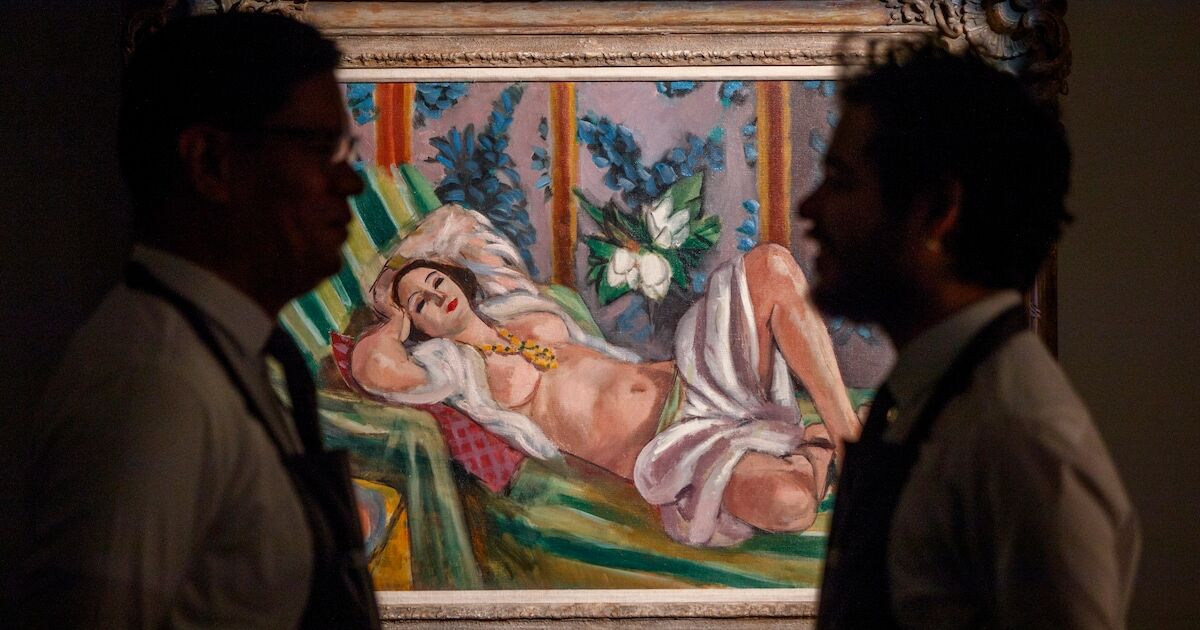
De Franse kunstenaar Henri Matisse zal met een uitzonderlijke tentoonstelling, 'Chez Matisse – Masterpieces from Centre Pompidou', van meer dan tachtig werken van 3 oktober 2026 tot 14 februari 2027 te zien zijn in het H’ART Museum in Amsterdam, wat een zeldzame kans biedt om zijn invloedrijke oeuvre in Nederland te bewonderen. #HenriMatisse #Tentoonstelling #Amsterdam

The article discusses Pablo Picasso's controversial masterpiece "Les Demoiselles d'Avignon," created in 1907, which has evoked both admiration and disdain over the decades; it explores the impact of African art on Picasso's work, the reactions it garnered upon its unveiling, and highlights contemporary artist Henry Taylor's reinterpretation of this piece showcased in a major exhibition at the Musée Picasso in Paris, emphasizing themes of representation and identity. #ArtHistory #Cubism #PabloPicasso #FR #US #CD
The article discusses Pablo Picasso's controversial masterpiece "Les Demoiselles d'Avignon," created in 1907, which has evoked both admiration and disdain over the decades; it explores the impact of African art on Picasso's work, the reactions it garnered upon its unveiling, and highlights contemporary artist Henry Taylor's reinterpretation of this piece showcased in a major exhibition at the Musée Picasso in Paris, emphasizing themes of representation and identity. #ArtHistory #Cubism #PabloPicasso #FR #US #CD


This year's international art exhibition in Venice features prominent artists like Marina Abramovic, Lorna Simpson, and Arthur Jafa, showcasing their works alongside historical masterpieces, with Abramovic making history as the first living female artist to have a solo exhibition at the Gallerie dell'Accademia. #ArtExhibition #VeniceBiennale #ContemporaryArt #IT #US #RS #GB #FR

Javier Portús Pérez describes the enduring mysteries of Diego Velázquez's iconic painting "Las Meninas," which provokes speculation about its meaning and composition even 360 years after its creation, highlighting its complex interplay between reality and fiction, the artist's presence within the scene, and the ambiguity surrounding the identities of its characters and the painting itself. #ArtMystery #Velázquez #Masterpiece

Wooyoung’s first pitch is a STRIKE! The K-pop sensation’s throw is a Masterpiece from ALL ANGLES 🤩 #ATEEZ #WOOYOUNG #에이티즈 #우영 https://t.co/DQ6VzltokK -






