WRLD

Search

#NEV
Luciano Magaldi Sardella (PhD) Just Now

LETTERE MERIDIANE — “TEATRO-EDICOLA” OF SAN SEVERO CONQUERS THE WORLD SOURCE: https://www.letteremeridiane.org/2026/10/il-teatro-edicola-di-san-severo-conquista-il-mondo/?fbclid=IwY2xjawU4oqFleHRuA2FlbQIxMQBwZG9mAXNydGMGYXBwX2lkEDIyMjAzOTE3ODgyMDA4OTIAAR5rVEwYs6UUXg7v-P0SyIQ_DRb_F6ZiY58OcseYoV4J7atcTiERnhWaqKM2pw_aem_Njle1jq1XLzHr93KLBUcVA After “Broadway World”, the “Los Angeles Journal”, “The Psychologist (British Psychological Association)” and Hollywood Beat Magazine, its “academic consecration” has now arrived courtesy of Stanford University. As I have already emphasised in my article on the revival of the GIO Festival in Foggia, celebrated by BroadwayWorld for the world stage premiere of the Giordano’s opera Marina (1888), the province of Foggia has long ceased to be peripheral. It happens when it finds an idea that shifts the coordinates: well, in San Severo, 40 kilometres from Foggia, it has happened again. Only this time an orchestra was not needed; six chairs were enough. The celebrated Teatro-Edicola of San Severo artistic director Francesco Gravino of the theatre company Foyer ’97 has been featured in the academic journal “Stanford Social Innovation Review (SSIR)” as an academic case study. The news, relayed on 19 September 2026 by ANSA Nazionale, looked like a misprint. Then it became clear that it was not. SSIR, an award-winning publication covering multisectoral solutions to global problems, included the project in its Dispatches section with the reportage “The Six-Seat Revolution”. It is the inverse trajectory to that of the GIO Festival: not a forgotten opera returning to a grand historic Italian horseshoe theatre, but an entire theatre reborn inside a disused place, forgotten by man. There are moments when past and future intertwine to create something visionary, innovative, artistically “revolutionary”: San Severo experienced one of those moments on the morning of 27 March 2026, during World Theatre Day, when the shutter of a newsstand closed for six years in Via Matteo Tondi was reopened “not to sell newspapers, but to offer stirring stories”, to quote Gravino’s motto. The idea of the visionary Francesco Gravino, artistic director, stage director and actor of the San Severo company Foyer ’97, active for at least 30 years in Capitanata, centred on the kiosk, hexagonal in metal and glass, granted free of charge by its owner Pino Frau, by now an urban relic created by the publishing crisis of the early 2000s: today in Italy active newsstands have fallen from about 35,000 in 2005 to about 20,000 in 2024, a decline of 42.8%. Gravino and eleven other actors restructured it in two weeks of work, without institutional funding, and transformed it into what is now under examination by the London commission of Guinness World Records as the “world’s smallest theatre”. The formula is deliberately austere: six spectators at a time outside, actors inside at less than a metre’s distance, 15-minute performances, continuous rotation from 11:00 to 20:45, texts ranging from Goldoni to Chekhov, from Ibsen to Dacia Maraini. On the door a QR code with an original theatrical warning: “Warning! This QR code transforms passers-by into actors. Scan only if ready.” The numbers immediately showed that it was no boutade: more than 60 people in a single afternoon, three inaugural days that sold out. But above all a positive echo that went beyond the borders of San Severo. “Broadway World” (just as in the previous case of the GIO Festival), the world’s most influential theatre criticism outlet with over 5.5 million monthly views, devoted exclusive coverage to it on 27 April 2026: “An Abandoned Italian Newsstand Just Became the World’s Smallest Theatre”. Not a mere listing, but an analysis: “There is no foyer, there is no balcony, there is no grid. There is barely a wing. What there is is something almost unrecognisable as an evening at the theatre, and for that very reason it is all the more powerful.” “Broadway World” captured Gravino’s manifesto idea: “This is a theatre of proximity. In an era of digital distance, we are putting human contact back at the centre,” framing it as “More than a clever exercise in site-specific theatre. It is a reappropriation.” All of this, in a Mezzogiorno of Italy often narrated only in terms of organised crime and marginalisation. To that seal of approval was added another, even more disorienting for a newsstand in San Severo: the “Los Angeles Journal”, one of the most influential publications on the West Coast for the performing arts. On 12 May 2026, it headlined thus: “San Severo’s Teatro-Edicola as an Innovative Model for Los Angeles Theaters?” opening as follows: “In a city in southern Italy that Hollywood has never heard of, a theatre director has just built the smallest stage in the world: six seats, fifteen minutes, zero distance. Los Angeles should pay attention.” The “Los Angeles Journal” does not indulge in folklore, but places the kiosk in Via Matteo Tondi alongside the prestigious 1,600-seat Ahmanson Theatre in Los Angeles, the Pantages of Broadway in Hollywood, the 99-seat plan of Rogue Machine, the Odyssey, the Victory Theatre and the Hollywood Fringe. It even recalls Ethan Marks’s Electrical Box Theatre, a veritable electrical box lined with red velvet in downtown Los Angeles, to argue that Gravino has taken to the extreme the question Los Angeles has been asking itself for decades: How small can a stage become before it ceases to be a stage? And it recognizes the San Severo urban model: almost zero cost, two weeks of work and six chairs, in return for immediate provincial, regional and national media coverage, recognition by the San Severo’s Municipal Administration, and a format exportable anywhere. Then, the third American piece came from “Hollywood Beat Magazine” on 20 April 2026: Six seats. Fifteen minutes. One actor. No stage. The magazine recounts the kiosk in Via Tondi left disused for almost six years, the contemporary six-seat cultural outpost, placing Francesco Gravino in a distinguished genealogy: Richard Schechner and environmental theatre, Jerzy Grotowski and poor theatre, Nicolas Bourriaud and relational aesthetics. But it closes with pragmatism: it is not a thesis, it is fixing a street corner, that is, repairing an urban street corner by asking not how large a theatre can become, but how small it must become again to recover its original power. And finally, the celebrated London-based “The Psychologist”, the journal of the “British Psychological Society (BPS)”, the oldest psychological society in the world, transformed the Teatro-Edicola into a scientific case study: on 30 July 2026 it published “The world’s smallest theatre — and Psychologists’ next act”, starting from the same detail, the morning of 27 March when the metal shutter of the hexagonal kiosk in Via Tondi reopened after six years, six people inside, an actor at less than a metre’s distance beginning Chekhov. It describes the formula: six spectators, 15 minutes, 11 actors over 10 hours, from Goldoni to Euripides, inside a kiosk where the fourth wall does not break because architecturally it never existed. But the BPS goes a step further: it cites the 2025 studies by Damien Gabriel in IBRO Neuroscience Reports, that live performance generates measurably stronger emotional and physiological activation than video, and introduces Edward Hall’s proxemics: below one metre is intimate space, reserved for doctors, close friends, lovers. In that one-square-metre space, the actor’s breath is audible, micro-expressions legible, the self-other boundary becomes permeable. The Teatro-Edicola “does not make theatre better, it makes it inevitable”. And it is here that one understands why Stanford is studying it as an academic case study in social innovation, not as a case of artistic originality. In Italy, meanwhile, the national media circuit had already picked up the phenomenon: RaiNews — TG2 Storie brought it to RaiDue at midnight on 19 April. RTL 102.5 devoted space to the format conceived by Gravino and developed by Foyer ’97 in the heart of San Severo in Via Tondi, defining it as a permanent micro-stage capable of bringing theatre into public space. ANSA.it, Gazzetta del Mezzogiorno, La Repubblica, TG2000, Radio Capital, Swiss RSI, ANSA Brazil and many others followed. And for the record: Fiorello praised it in La Pennicanza as an artistic case inspired by his Edicola Fiore, and Biagio Antonacci, on his tour in the Augustan amphitheatre of Lucera, made a “fact-finding” stop at the Teatro-Edicola singing the celebrated and nostalgic Iris in front of an audience certainly larger than the “six seats”. Francesco Gravino’s theatre company Foyer ’97 was not born yesterday: behind it lie the Teatro-Cantina of 2016, the underground theatre, and in 2011 a performance on the bell tower of a church in the centre of San Severo at 45 metres high. The Teatro-Edicola completes, in Gravino’s words, “the entire vertical extension of theatre: underground, street level, rooftop”. And it is preparing for its thirtieth anniversary in 2027 aiming to purchase the kiosk to make it permanent, exporting the “San Severo Model” to Rome, Lucca, and to the festivals of Santarcangelo and Todi. As with the GIO Festival, someone might dare to claim that it is merely a stunt, but when BroadwayWorld places you alongside the Los Angeles Opera House, the “Los Angeles Journa”l proposes you as a model for Hollywood, “Hollywood Beat Magazine” reads you through Grotowski and the “British Psychological Society” uses you to explain mirror neurones, it is no longer a stunt but an excellent artistic and academic positioning. To those who still whisper that Foggia and Capitanata are provincial, the answer is now written on two opposite and complementary fronts: on 5 June in Foggia a 138-year-old opera found the stage again at the Giordano ending up on BroadwayWorld; on 27 March in San Severo a 4-square-metre kiosk invented a stage that did not exist, ending up at Stanford, in Los Angeles, in Hollywood and in London. The periphery, when it has a precise idea, becomes the centre. Even with six chairs. Luciano Magaldi Sardella

www.letteremeridiane.org
Il teatro-edicola di San Severo conquista il mondo
Katja Kokot 32m

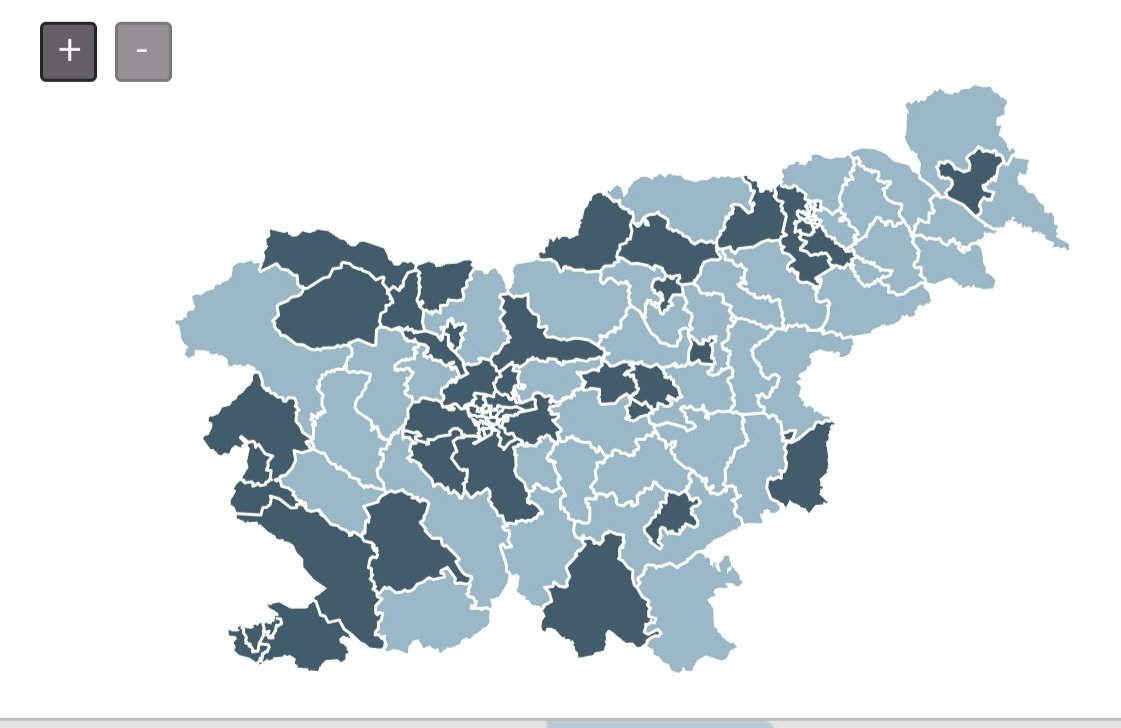
Katja Kokot wrote that the right is financing the campaign with party funds and defends its positions with party members, while the Left is said to be using not only party money but also funds from non-governmental organizations, including millions from abroad, which she referred to as "Soros money." She added that the Left is also defending its positions with the support of non-governmental activists and public RTV. She asked whether this is still democracy or a competition of capital and power against common sense. She described the map of the referendum results on the amendment to the law on parliamentary inquiry as a representation of that common sense; according to her explanation, the dark blue areas voted against, while the light blue ones voted in favor. She also mentioned that at her home polling station and the surrounding ones, about 70 percent of votes were in favor of all four questions. In this context, she wondered where Slovenia is headed and whether power would belong to foreign capital, and wrote that the nation would write its own judgment. #demokracija #Slovenija #referendum (translated)

1375
Andreas Kling 34m

The author wrote that browser content renderers could never be made completely safe from malicious takeover. They said the main architectural priority should be to sandbox them aggressively and assume they were under hostile control.

1242
Alexus Grynkewich 42m

"We are a defensive alliance, so we have no desire to escalate the situation and we do not need to do so." NATO is prepared to respond swiftly in the event of an attack on Poland or the Baltic states, but the priority of the Alliance is to deter any aggression, said General Alexus Grynkewich, the Supreme Commander of Allied Forces in Europe. #NATO #Securitate #Rusia (translated)

NATO avertizează Rusia: Un atac asupra Poloniei sau țărilor baltice ar declanșa un răspuns rapid al Alianței
www.mediafax.ro
1457
A
Andrej Babiš 1h

Even Babiš called the agreement between Trump and Putin shocking, while the Russians shot at Ukrainian civilians again, while the Ukrainians targeted one of Yandex's data centers. #szegénység #szerhasználat #mentálhigiénia (translated)

Gyilkos szerek és gyilkos szándékok
444.hu
1215
Ilie Bolojan 1h

Romania needs a functional government, and the PNL is open to contributing to its establishment. However, we will not accept to repeat political formulas that have proven not to work. The refusal to govern with the PSD does not stem from pride or political calculations, but from the lesson we learned in the last year,” Ilie Bolojan stated on Friday, October 9. #PSD #Guvern #Politică (translated)

PSD decide azi dacă votează învestirea Guvernului Luca Niculescu
adevarul.ro
1421
Seznam Zprávy 1h

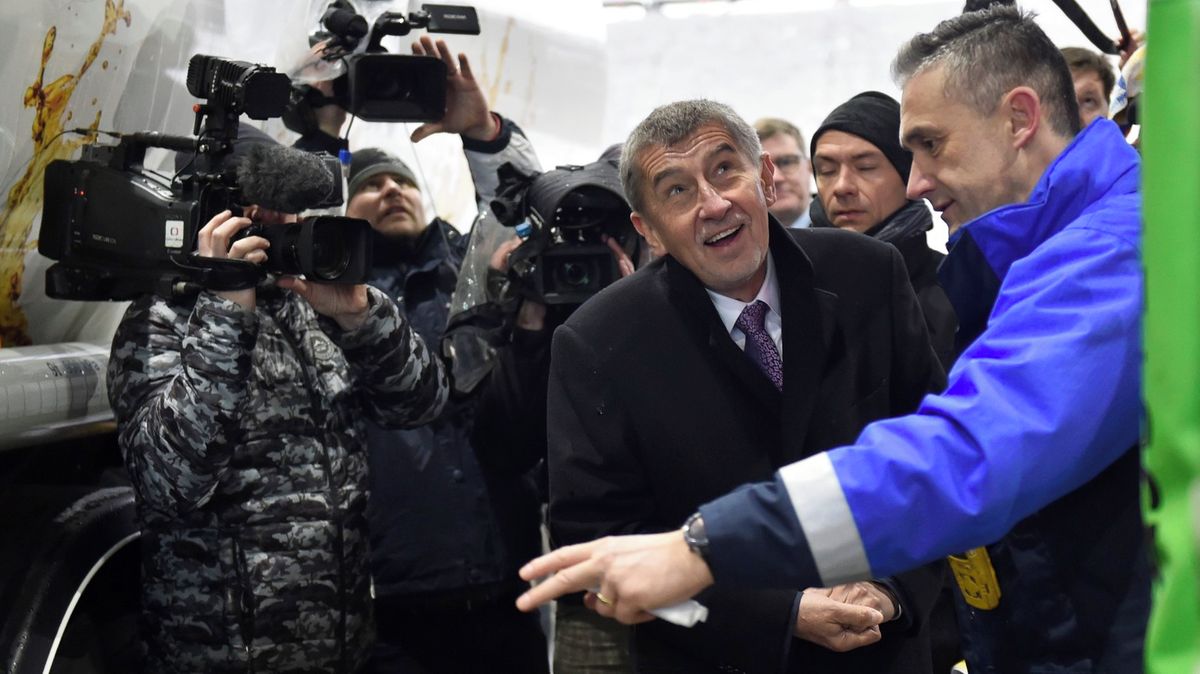
The state company Čepro purchases biofuels from the Agrofert holding without competitions and without public oversight, thereby bringing more than 19 billion crowns to the companies of this holding, while the deals are justified by the fact that the public procurement law does not apply to them. #LexBabiš #Agrofert #korupce (translated)

www.seznamzpravy.cz
19 miliard pro Agrofert bez tendrů. Zákon se na nás nevztahuje, tvrdí Čepro
1339
Digi24 2h

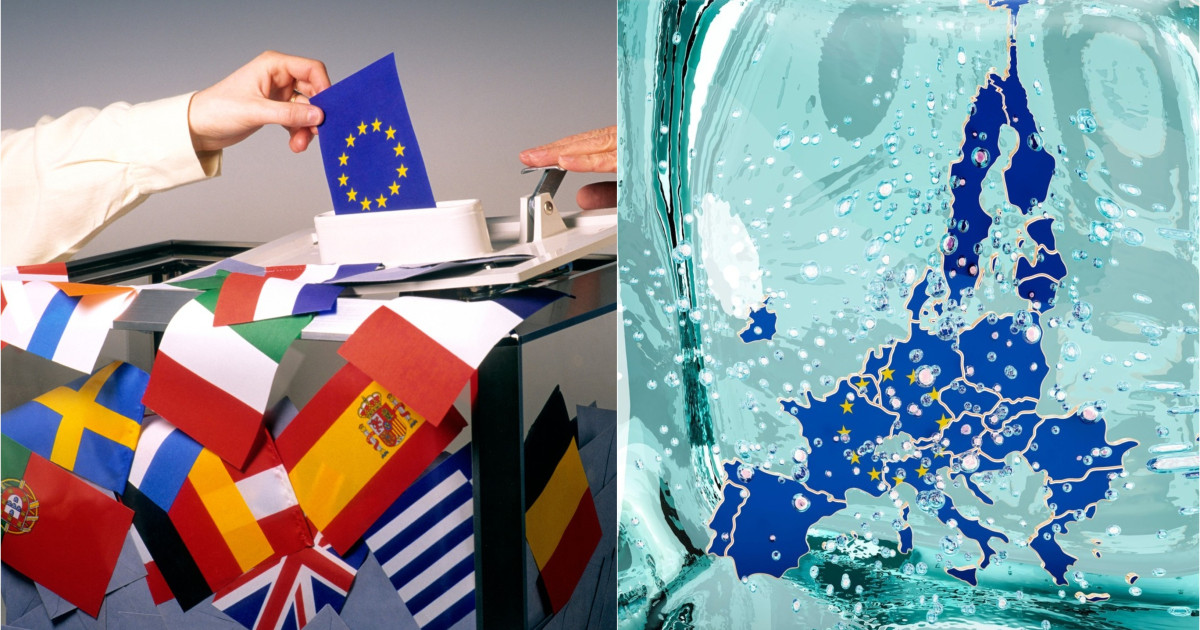
Elections in several European countries that are about to take place soon could lead to a political paralysis of the European Union, precisely at a time when it urgently needs reforms and bold decisions. #AlegeriUE #ParaliziePolitică #ReformeEuropeane (translated)

www.digi24.ro
Anul în care Europa ar putea rămâne paralizată politic: De ce următoarea perioadă lungă de alegeri este atât de riscantă pentru UE
1427
Martin Jahn 2h

For a car manufacturer like Škoda, it doesn't make a difference whether it will be 90 or 100 percent. The share of internal combustion engines is so low that it is no longer profitable to manufacture something like the Octavia when you sell 10,000 of them a year. It may be profitable for a brand that makes expensive sports cars, but not for Škoda Auto. Today, the former member of the management board of Škoda Auto, Martin Jahn, who is now the sales director of VW, commented on this clearly in a June interview for Hospodářské noviny: "For a car manufacturer like Škoda, it doesn't make a difference whether it will be 90 or 100 percent. The share of internal combustion engines is so low that it is no longer profitable to manufacture something like the Octavia when you sell 10,000 of them a year. It may be profitable for a brand that makes expensive sports cars, but not for Škoda Auto." #elektromobily #spalovacímotory #emise (translated)

Vlivní politici bijí na poplach. Naděje pro spalovací motory v Evropě opět ožívá
zpravy.aktualne.cz
1353
zdeněk šarapatka 2h

Zdeněk Šarapatka thanked his supporters and stated that their support helped him get back on his feet after the results of the Senate elections. According to him, the campaign in Prague 5 and 13 was not a fair competition about topics, but a contest over billboards. He claimed that one of the candidates was running a concurrent campaign for the Senate and the Prague City Hall, transferring funds between them, including money from a company building houses. According to Šarapatka, the state supervision office did not respond to the violations of the rules. The candidate, he claimed, received 14,606 votes out of a total of 45,782. Šarapatka also criticized the ODS, which, according to him, despite an agreement with his TOP 09, fielded its own candidate, thereby reducing the chances of defeating Václav Láska. He stated that their candidate hardly presented political positions during public appearances and instead relied on a romanticized story about the students' relationship with the school principal. He added that the students of the candidate's school, according to Šarapatka, got involved in the campaign, even though the principal was balancing on the edge of the education law. The candidate received 12,162 votes out of 45,782. As an earlier example of the split with ODS, Šarapatka mentioned its member Benda, who, according to him, appointed Matocha and Xaver Veselý to the Czech Television Council. He claimed that part of ODS contributed to his failure in the election despite the party agreements at that time. He also recalled that six years ago, at ODS's request, he supported its candidate in the second round of the Senate elections in Mělník, whom he claimed he had not seen publicly appear in the Senate since then. Šarapatka stated that he would not make the same mistake again. According to him, the result meant that there would be no amendment to the lustration law nor security clearances for government members and their deputies, and that there would be no qualified fight for a free Czech Radio and Czech Television. At the same time, he urged his supporters to keep going. #politika #volby #Senát (translated)

1585
L
Lee Jae-myung 2h

The president of North Korea, Kim Jong-un, described the test as an important step in strengthening the country's defense capabilities. #ÉszakKorea #ballisztikusrakéta #Japántenger (translated)

Észak-Korea újabb ballisztikus rakétákat lőtt ki a Japán-tenger irányába
telex.hu
1324
Katja Kokot 8h

Katja Kokot noted that the amendment to the law on parliamentary investigations was passed in June, and non-governmental organizations then collected signatures and submitted them in September. She added that there followed 30 days of campaigning, during which the Constitutional Court made a decision in September that, in her view, changed the situation. She believed that the court essentially agreed with the purpose of the law, which was intended to prevent the halting of parliamentary investigations through appeals to the Constitutional Court. #parlament #zakonodaja #UstavnoSodišče (translated)

1771
Oliver Blume 9h

"When it mattered, we found solutions together. We need this again between France and Germany," said Oliver Blume. #Volkswagen #industriaauto #China (translated)

Volkswagen cere Europei să riposteze în fața Chinei. Apel către Paris și Berlin: „Viitorul nostru nu este decis”
www.mediafax.ro
1887
Crin Antonescu 9h

We need a government. In the formation of a majority, as long as we take into account both the position of the PSD and the position of the PNL leader, Mr. Bolojan, the decisive factors remain the settlements in UDMR and in the National Liberal Party, which, as I said, is a kind of "Gordian knot" of this situation. Live on Antena 3 CNN, the former president of PNL, Crin Antonescu, stated that this is the last chance for the Romanian political scene to form a pro-Western or pro-European government. #Politic #Guvernare #România (translated)

Crin Antonescu: Ultima șansă a scenei politice de a da un guvern pro-occidental sau pro-european
www.mediafax.ro
1824
Barbora Mercury 🇨🇿✌️🇪🇺 9h

Barbora Mercury stated that according to Tsoukernik, her husband was not at the official Forbes Gala Grand Central event and did not auction any experience stay. She added that according to Tsoukernik, the amount that was supposed to go to the Jiří Menzel Foundation was likely also not agreed upon. https://t.co/KggIYZXwgM #ForbesGala #NadačníFond #JiříMenzel (translated)

1855
Acosti 9h

Acosti argued that Călin Georgescu's opponents were afraid of him because, in his opinion, they could not conceive that someone could act out of conviction and patriotism, without seeking a position or reward. He stated that Georgescu selflessly loved his country and possessed qualities such as stature, eloquence, and soul. The author accused Georgescu's critics of confusing position and wealth with value and respect, mentioning cars like the BMW X6 and Range Rover. He argued that dignity and character could not be obtained through positions, company cars, or image campaigns, and that power belonged to the Romanian people. Acosti further stated that the opponents' fear stemmed from the comparison with Georgescu, whom he described as a respected man without invoking his position. In his view, his presence made the imperfections of the critics more visible, and they were afraid of what they lacked. #România #Patriotism #Dreptate (translated)

2212
Libertarec 10h

Libertarec noted that the parliamentary investigation could ultimately fail due to an arbitrary decision allowing non-governmental organizations to bring people to polling stations after 7 PM. #Parlament #Volitve #NevladneOrganizacije (translated)

2084
Actu Foot 10h

Actu Foot reported that Gary Neville would be delighted not to have to cover Manchester City matches for the next few months, until the verdict. He also believed that it was very difficult to win at Anfield and that the team should be applauded without reservation. According to him, the situation was very bad for the Premier League and would continue for several months. #PremierLeague #Football #GaryNeville (translated)

1886
ČT24 10h

ČT24 reported that according to Ukrainian President Volodymyr Zelensky, Moscow attacked Ukrainian energy, despite U.S. President Donald Trump announcing an energy truce between Russia and Ukraine on the same day. It added that the Kremlin has not yet commented on this. #Ukrajina #Rusko #energetika (translated)

2189
Čaroděj druhé kategorie 11h

A second-category wizard published an anecdote about a shepherd in Šumava who was visited by a young man in a Tesla. Using a drone, satellite image, and analytical software, he calculated that there were exactly 482 animals in the herd, and as a reward, he took one of them away. The shepherd then labeled the young man as a member of the ruling coalition. He explained that the young man had arrived uninvited, demanded a reward for answering a question that nobody had asked him, and used expensive technology to show off his cleverness, even though he knew nothing about the shepherd's life. He added that it was not a herd of sheep, but goats, and asked the young man to return his dog. #technologie #humor #život (translated)

2196