WRLD

Search

#Neanderthal
NRC 3d

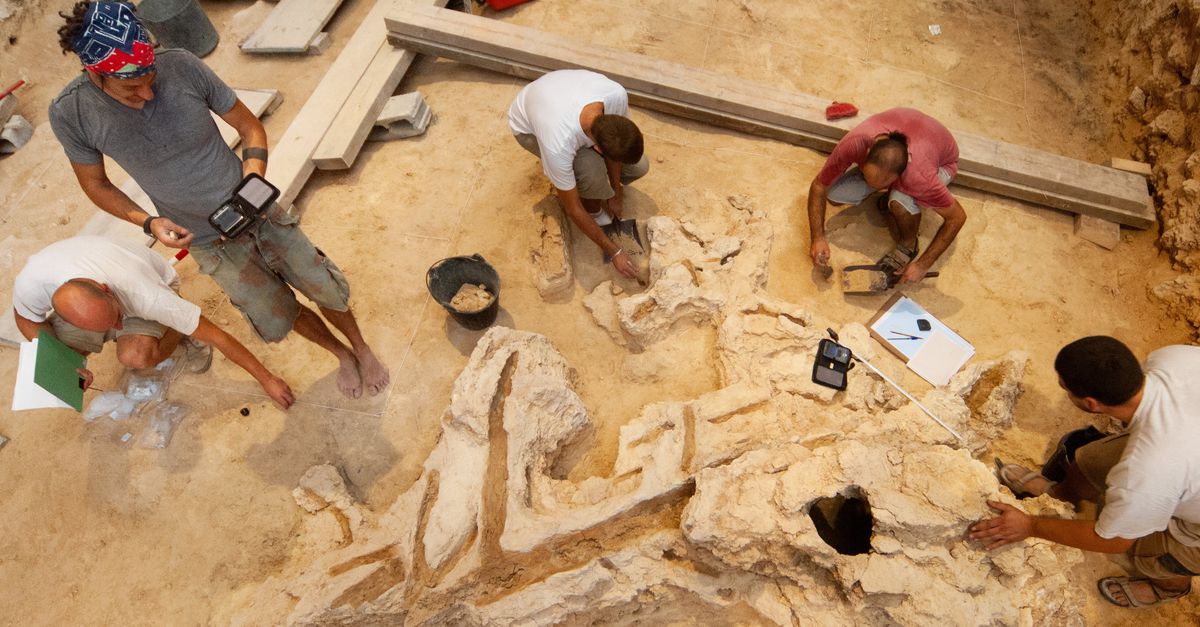
Researchers have discovered rare wooden objects from Neanderthals in the Abric Romaní near Barcelona, demonstrating that these early people also engaged in woodworking between 62,000 and 40,000 years ago. #Neanderthalers #Houtbewerking #Archeologie (translated)
www.nrc.nl
Ook neanderthalers deden aan houtbewerking. Dat blijkt uit zeldzame resten die zijn gevonden in de buurt van Barcelona
3014
Il Post 4w

Uno studio suggerisce che il sesso tra donne della nostra specie e Neanderthal potrebbe essere stato più comune rispetto a quello tra donne Neanderthal e uomini Sapiens, fornendo una spiegazione a una scoperta genetica enigmatico. #Neanderthal #Sesso #Genetica

www.ilpost.it
Domenica 13 settembre
15707
Alfons López Tena 🦇 Jun 25

New DNA study of Neanderthals bolsters suspicions of human-driven extinction — Analysis of 27 genomes reveals more diverse, better-connected populations and challenges the idea that genetic decline caused their disappearance https://t.co/2ckHBiwwev #Neanderthals #DNA #Extinction #Therearenospecificcountrycodesmentionedinthetweet.

Digi24 May 23

Un nou studiu al cercetătorilor de la Universitatea Oxford sugerează că aproximativ 90% dintre oameni sunt dreptaci datorită evoluției, începând cu strămoșii preistorici, și că această preferință ar putea fi legată de mersul biped și dezvoltarea creierului, demonstrând că nu doar Homo sapiens, ci și neanderthalienii aveau o tendință spre utilizarea mâinii drepte. #dreptaci #evoluție #cercetare

www.digi24.ro
Motivul incredibil pentru care 90% dintre oameni sunt dreptaci: cercetătorii au descoperit două indicii vechi de milioane de ani
17928
Alfons López Tena 🦇 May 19

Seasonal shellfish exploitation by Neanderthals 115,000 years ago — Los Aviones Cave (Iberian Peninsula), demonstrates that they primarily exploited intertidal mollusks during the colder months of the year, highlighting a degree of behavioral flexibility https://t.co/EqpLylAc2N #Neanderthals #Paleoanthropology #SeasonalExploitation #ES

BBC May 17

The article explores the life of Neanderthals in the Balkans, highlighting archaeological discoveries that reveal their daily activities, social structure, and adaptability, while addressing the genetic diversity and possible reasons for their extinction around 40,000 years ago, including climate change and competition with anatomically modern humans. #Neanderthals #Archaeology #HumanEvolution #RS #FR #PL #RU

www.bbc.com
Kako su neandertalci nestali sa Balkana - BBC News na srpskom
8970
Alfons López Tena 🦇 May 15

RT @alfonslopeztena: Evidence for invasive mitigation of dental caries by Neanderthals 59,000 years ago, drilling/rotating with a lithic pe… #Neanderthals #DentalCaries #AncientMedicine #Nospecificcountrycodescanbeextractedfromthegiventweet.

Alfons López Tena 🦇 May 15

Protein reveals the oldest episode of sex and procreation among human species — Chinese scientists obtain the first molecular evidence of interbreeding between our ancestor ‘Homo erectus’ and the Denisovans, relatives of the Neanderthals https://t.co/OH1jb0wp8q #Protein #Evolution #HomoErectus #CN

Il Post May 15

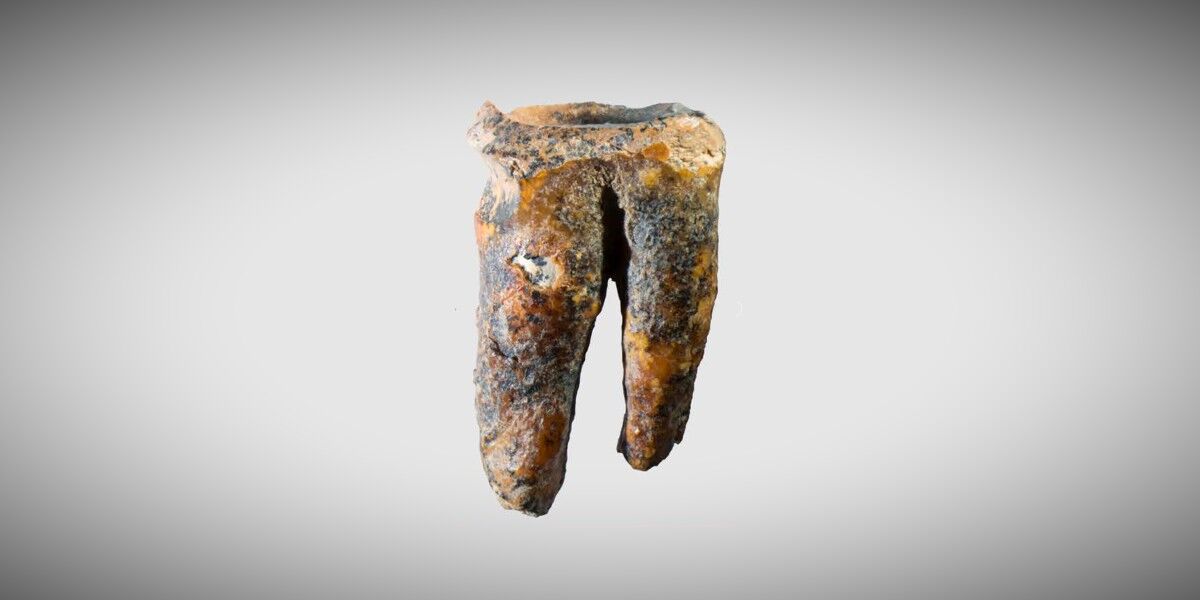
Un dente di Neanderthal datato a 59.000 anni fa, trovato nella grotta di Chagyrskaya in Siberia, presenta un foro che potrebbe essere stato causato da un primordiale intervento dentale, suggerendo la capacità dei Neanderthal di effettuare procedure mediche rudimentali, ma la comunità scientifica rimane scettica e invita a ulteriori ricerche per confermare tali conclusioni. #Neanderthal #InterventoDentale #Paleontologia

www.ilpost.it
I Neanderthal furono i primi dentisti?
16151
Alfons López Tena 🦇 May 14

Evidence for invasive mitigation of dental caries by Neanderthals 59,000 years ago, drilling/rotating with a lithic perforator — Capacity to intuit the source of pain, comprehend the feasibility of its elimination, select the most efficacious intervention https://t.co/VkKNaa6Zx2 #Neanderthals #DentalCaries #AncientMedicine #Nospecificcountrycodescanbeidentifiedinthegiventweet.

R
Reuters May 14

The discovery of a Neanderthal molar with signs of ancient dental surgery in a Siberian cave provides evidence that these early humans possessed sophisticated cognitive abilities and technical skills, performing complex procedures to relieve tooth decay over 59,000 years ago, long before similar practices were observed in modern humans. #Neanderthals #DentalSurgery #Archaeology #RU #IT

www.reuters.com
Tooth from Siberian cave reveals Neanderthal dental surgery
10170
R
Reuters May 14

A recently discovered molar in Chagyrskaya Cave, Siberia, demonstrates that Neanderthals performed complex dental surgery over 59,000 years ago, challenging the notion that such advanced cognitive and technical skills were exclusive to modern humans, as evidence shows they intentionally treated a deep cavity with stone tools to alleviate tooth pain. #Neanderthals #DentalSurgery #Archaeology #RU #IT

www.reuters.com
Tooth from Siberian cave reveals Neanderthal dental surgery
8974
R
Reuters May 14

Researchers have discovered a 59,000-year-old Neanderthal molar from Chagyrskaya Cave in Siberia that shows evidence of advanced dental surgery, challenging previous assumptions about Neanderthal cognitive abilities and demonstrating their capacity for complex medical procedures long before modern humans. #Neanderthals #DentalSurgery #Archaeology #RU #IT

www.reuters.com
Tooth from Siberian cave reveals Neanderthal dental surgery
8974
R
Reuters May 14

A 59,000-year-old Neanderthal tooth discovered in a Siberian cave shows evidence of complex dental surgery performed to alleviate a deep cavity, indicating that Neanderthals possessed advanced cognitive and technical skills long before modern humans, and challenging previous notions that such practices were exclusive to our species. #Neanderthals #DentalSurgery #Archaeology #RU #IT

www.reuters.com
Tooth from Siberian cave reveals Neanderthal dental surgery
8974
R
Reuters May 14

Researchers have discovered a Neanderthal molar from around 59,000 years ago in a Siberian cave that shows evidence of complex dental surgery, indicating that Neanderthals had sophisticated cognitive skills and techniques for medical care long before modern humans performed similar procedures. #Neanderthals #DentalSurgery #CognitiveAbilities #RU

www.reuters.com
Tooth from Siberian cave reveals Neanderthal dental surgery
10170
R
Reuters May 14

Research reveals that a Neanderthal from 59,000 years ago underwent the earliest known dental surgery for a painful cavity in a molar, demonstrating their advanced cognitive abilities and technical skills, challenging previous notions that such complex behaviors were unique to modern humans. #Neanderthals #DentalSurgery #Archaeology #RU #IT

www.reuters.com
Tooth from Siberian cave reveals Neanderthal dental surgery
8376
R
Reuters May 14

Researchers have discovered a Neanderthal molar in a Siberian cave that shows evidence of invasive dental surgery performed around 59,000 years ago, indicating that Neanderthals possessed advanced cognitive abilities and technical skills well before modern humans, as they intentionally removed decayed tissue to alleviate pain. #Neanderthals #DentalSurgery #AncientHistory #RU

www.reuters.com
Tooth from Siberian cave reveals Neanderthal dental surgery
8974
R
Reuters May 13

A recent discovery in Chagyrskaya Cave, Siberia, revealed a Neanderthal tooth dating back about 59,000 years that shows evidence of invasive dental surgery performed with stone tools, suggesting that Neanderthals possessed advanced cognitive abilities and technical skills long before modern humans. #Neanderthals #DentalSurgery #AncientHistory #RU #IT

www.reuters.com
Tooth from Siberian cave reveals Neanderthal dental surgery
8974
Dr. Petr Brož May 13

Neuvěřitelné. Nejstarší záznam o vrtání bolavých zubů je z doby před 59 tisíci lety... A nepochazí od našeho druhu, ale od naší vedlejší vývojové větve (kterou jsme později asimilovali...) - od neandrtálců! https://t.co/yU0EvB0xQ2 #DentalHistory #Neanderthals #HumanEvolution #Thetweetdoesnotmentionanyspecificcountries.Therefore #therearenocountrycodestoreturn.

Wired Apr 28

A new study published in PNAS suggests that the morphological differences between Neanderthal brains and those of modern humans are smaller than the variations observed among contemporary human populations, challenging the notion of significant cognitive inferiority in Neanderthals and indicating that their extinction may not have been due to brain structure but rather demographic or environmental factors. #Neanderthals #CognitiveScience #HumanEvolution #N/A

www.wired.it
È giunta l'ora di superare un antico pregiudizio, il nostro cervello e quello dei Neanderthal erano più simili di quanto si pensi
8989