WRLD

Search

#Observation
Dr Laetitia Muadi 15h

Dr. Laetitia Muadi called for not influencing labor inspectors in the Democratic Republic of the Congo. She introduced Finance Minister LikundeR as a loyal executor of President Félix Tshisekedi's directives. Muadi stated that no category of civil servants was currently receiving their full salary scale, specifically citing university professors, teachers, doctors, and nurses. According to her, the government was gradually adjusting salaries based on the state budget and treasury. She denied that the president ordered, during the 94th Cabinet meeting, the payment of 100% of their salary scale to labor inspectors and controllers. She indicated that presidential instructions were instead focused on accelerating the reform of the General Labor Inspection (IGT), the monthly payment of salaries, and the administrative and financial autonomy of the agency. Muadi stated that these measures had been implemented: a new IGT had been established, salaries had been integrated into the liquidation state for the fourth quarter, and operating and installation credits were included in the 2027 finance bill. She specified that inspectors and controllers were receiving 30% of their salary scale and were demanding 100%. According to her, the government had opted to increase remuneration in phases, as it had done for other categories of civil servants, depending on budgetary means. #RDC #Travail #Syndicats (translated)

2068
German Swinger 2d

German Swinger thanked Matthieu for his vigilance, believing that he had kept his reflexes from his time as a policeman. He added that his powers of observation may have attracted the attention of the DGSI at the time. #Sécurité #Vigilance #Observation (translated)
2902
Franceinfo 2d

This Saturday, during the 18th edition of the Night Day, thousands of events will be organized across France to raise awareness about light pollution and promote the protection of nocturnal biodiversity, with establishments turning off their public lighting and offering night walks and stargazing. #PollutionLuminese #Biodiversité #JourDeLaNuit (translated)

www.franceinfo.fr
Extinction des lumières, balade nocturne… Comment participer au "Jour de la nuit" ce samedi pour lutter contre la pollution lumineuse ?
2936
BeFootball 5d

BeFootball indicated, citing L'Équipe, that Zinédine Zidane intended to attend a large number of his players' matches. The media compared this approach to that of Didier Deschamps, who often entrusted this task to Guy Stéphan or Franck Raviot. It added that an organization had been set up around Zidane to monitor the targeted players, with David Bettoni, Fabien Barthez, Stéphane Plancque, and Farid Tabet tasked with increasing observations. #Zidane #Football #ÉquipeFrance (translated)

2931
Gerd Leonhard 6d

The author wrote that the observation challenged the belief that greater AI capability would resolve misalignment, arguing that past evidence and theoretical reasoning suggested it could instead intensify unwanted behaviour by making systems more effective at pursuing the wrong goals.

3398
Kultur 7d

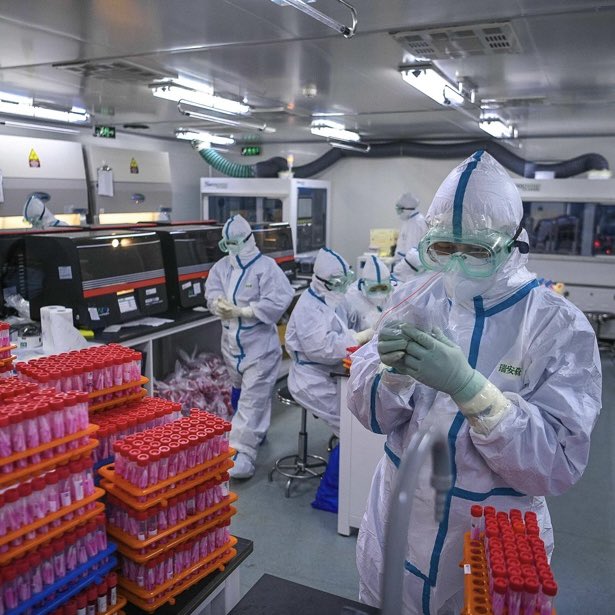
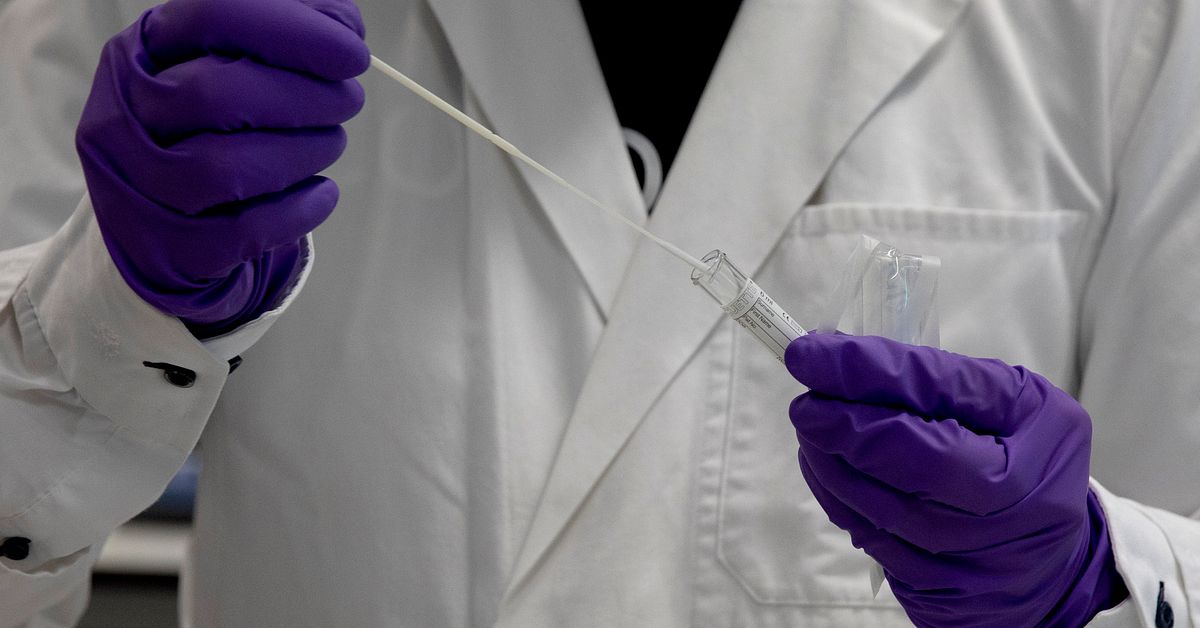
Kultur stated that a virus had escaped from a laboratory in Siberia. He wrote that 200 people were under observation after the death of a 28-year-old laboratory employee, who had allegedly been exposed to the virus, referred to as "the plague." https://t.co/0RxB9i9Xwj #Virus #Alerte #Santé (translated)

3628
SVT Nyheter 7d

A 20-year-old laboratory employee in Irkutsk is suspected to have died from the plague after accidentally breaking a test tube containing live bacteria, which has led to nearly 200 people now being placed under medical observation. #Pest #Ryssland #Sjukdomar (translated)

www.svt.se
Uppgifter: Laboratorieanställd död efter pestsmitta
1929
Mika Aaltola 7d

The author said the information was contradictory: a 28-year-old technician at an institute described as an anti-plague centre had died, 189 contacts were under observation and hospitals had been quarantined. They noted that the institute was not an anti-plague centre in the narrow sense. The official explanation was pneumonia of unknown etiology, the author wrote, arguing that this would not explain a regional quarantine.

454
Gérard Araud 7d

The author indicated that the plague bacillus was circulating among rodents in Central Asia and Siberia. He explained that Russia had established a network of laboratories and observation centers to monitor the phenomenon. #peste #SantéPublique #Russie #KZ #RU (translated)

227
Dennis Corell 2w

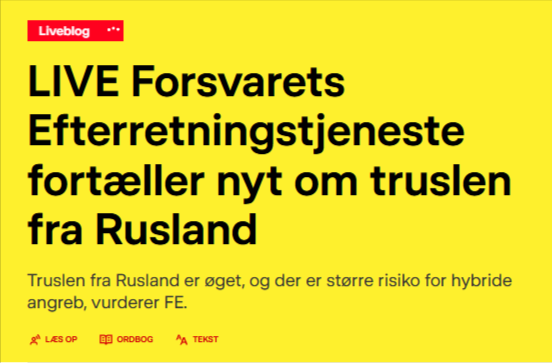
Kender I historien om Peter og russerne? Nord Stream 1 og 2 blev sprængt i luften. “Det var russerne,” sagde Peter. Senere pegede den tyske efterforskning i en helt anden retning. Der blev meldt om droner over dansk luftrum. “Det er russerne,” sagde Peter. Senere viste efterforskningen, at langt de fleste observationer slet ikke kunne bekræftes som droner. Og der blev ikke fremlagt beviser for, at Rusland stod bag. “Lad være med selv at undersøge tingene. Stol på de rigtige medier,” sagde Peter. Men efterhånden begyndte folk at stille et andet spørgsmål: Hvor mange gange kan Peter råbe “russerne”, før man begynder at kræve dokumentation, inden man tror på ham? #Rusland #Efterforskning #Misinformation

11649
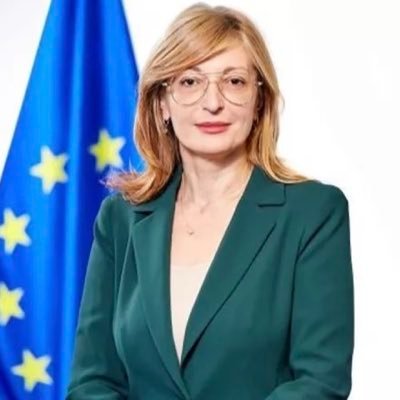
Ekaterina Zaharieva 3w

President @vonderleyen has announced an increase of almost €100 million in EU support for ocean observation. #HorizonEU is helping turn this ambition into action: backing the science we need to predict climate impacts, protect marine ecosystems and support coastal communities. https://t.co/Yol9Bw5cnZ #OceanObservation #ClimateAction #MarineEcosystems #EU

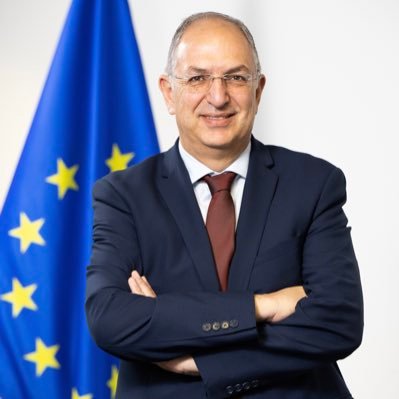
Costas Kadis 3w

At the opening of @UNESCO One Ocean exhibition at #UNGA81, our message is crystal clear: Ocean literacy, science and observation are essential to turn awareness into action. With the Global Ocean Eye Alliance launched today to support ocean observation, the 🇪🇺 is investing in https://t.co/pLeKCmEjQO #OceanLiteracy #UNGA81 #GlobalOceanEye #EU

231
Ursula von der Leyen 3w

Together we have raised €211 million for Global Ocean Observation! Thank you to all the countries that have stepped up for a better life with and on our blue planet. https://t.co/dNDbNuttpX #GlobalOcean #EnvironmentalProtection #SustainableFuture #Nospecificcountrycodesarementionedinthetweet.

1039
Costas Kadis 3w

Today, at #UNGA81 we have witnessed the international community’s dedication and commitment to global ocean observation: for healthier ecosystems, safer navigation, resilient supply chains, a stronger offshore economy and maritime security. More than 30 countries have joined the https://t.co/8wGzx7WSI2 #OceanObservation #SustainableDevelopment #MaritimeSecurity #Thetweetdoesnotmentionanyspecificcountriesbyname #sotherearenocountrycodestoreturn.

115
Ursula von der Leyen 3w

Our Ocean changes rapidly. And it impacts our planet, our economies, and our communities. Today, @MarkJCarney and I are rallying the world in support of ocean observation. Which gives us eyes and ears beneath the waves ↓ https://t.co/VV7r5MRzAj #OceanConservation #ClimateAction #Sustainability #Nospecificcountrycodescanbeidentifiedinthetweetprovided.

1963
La Libre.be 3w

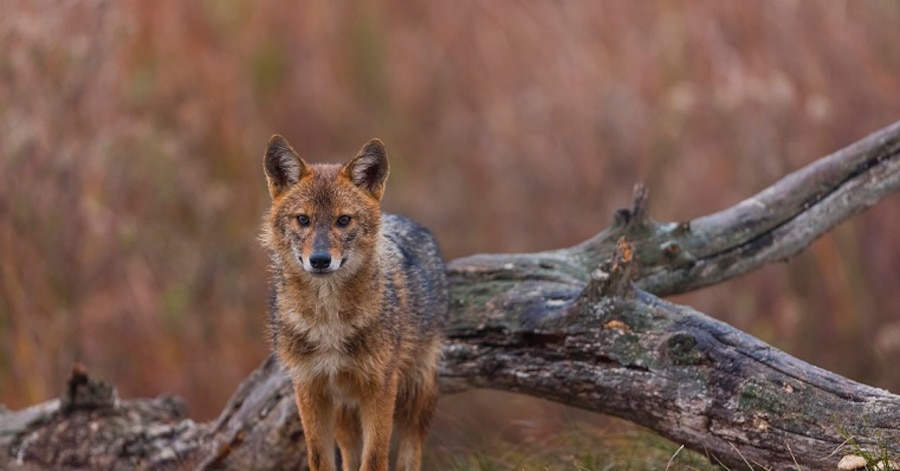
Le chacal doré, un canidé originel d'Asie, pourrait être en train de coloniser la Belgique, avec des observations non confirmées et une expansion naturelle dans plusieurs pays européens, selon une étude parue dans Nature. #ChacalDoré #Biodiversité #FauneEurope

www.lalibre.be
Le chacal doré se rapproche de la Belgique : “Il y en a peut-être déjà mais on n’a pas encore pu le confirmer”
1386
P
Patrice CUDICIO 3w

The Return to Feudalism in 21st Century Garb A simple observer's viewpoint, with no claim to hold any absolute truth. The Veneer Cracks There is something strangely archaic about the world unfolding before our eyes, despite its satellites, artificial intelligence, and promises of infinite progress. Here and there, we witness heads of state behaving like feudal lords of another age, patiently nibbling away at the neighboring territory, redrawing borders through force rather than law, as if governing a nation mattered less than expanding one's fiefdom. No names need be mentioned here: current events provide plenty of illustration, and each reader will recognize, according to their own geography and moment of reading, the faces that embody this observation. But this return to the archaic is not confined to grand geopolitical stages. It also permeates the most ordinary daily life—that of social media, where anyone can pour out venom against another without filter, without form, and often without the slightest argument. The verbal jousting of yesteryear, with its codes, its rhetoric, its tacit limits, has given way to raw invective, snap judgment, instant condemnation. We no longer debate: we execute, verbally—and sometimes it doesn't stop at words. The Vanished Inhibition What strikes one, in this dual observation—macro-political and micro-social—is the lifting of an inhibition we thought firmly anchored. Centuries of cultural construction, education, philosophy, sometimes religion, had patiently shaped mechanisms of restraint: politeness as social ritual, argumentation as a mode of resolving disagreement, respect for one's opponent as the very foundation of democratic debate. This civilizational veneer, however fragile it always was, seemed to hold. Today it is cracking, and the question—which for me remains a simple hypothesis, not a certainty—is why. A convenient explanation would blame social media: anonymity, the distance of the screen, the instantaneousness of publication would favor verbal acting-out without the usual mediation of reflection. This is probably true, but likely insufficient. For technology here is only an accelerant, an amplifier—not necessarily a root cause. A Poorly Formatted Neocortex? The more unsettling hypothesis—and I frame it explicitly as hypothesis, not scientifically established fact—is that of a failure in the formation of moral judgment and tolerance toward otherness. The human brain possesses the neural structures enabling empathy, the distancing of impulsive reaction, the acceptance of difference—but these capacities are not innate in their full exercise: they must be built, educated, cultivated, like a muscle that needs patient training from childhood onward. If this education in otherness, nuance, and tolerance of disagreement erodes—for multiple and undoubtedly complex reasons that are not mine to settle here—then older reflexes resurface: instinctive distrust of the stranger outside the clan, the law of the strongest, the logic of territorial or symbolic predation. The other ceases to be a possible interlocutor and becomes once again a potential threat, unless they belong to my tribe, my clan, my party, my digital bubble. Two Scales, One Logic What is striking, in this deliberately provocative reading, is the structural similarity between these two scales. The leader who invades a neighbor in the name of a rediscovered greatness or a reinvented historical right, and the anonymous internet user who insults a stranger in the name of an unnegotiable conviction, may obey the same underlying grammar: that of territory to defend, clan to protect, the other to subdue or exclude rather than understand. The form has changed—satellites instead of horses, tweets instead of heralds—but the substance, in this reading that remains mine alone and commits no one else, seems strangely identical to that of feudal rivalries: the absence of a recognized third party, of an accepted common rule, of a respected arbitrating authority. Everyone becomes judge and party, lord of their own digital or territorial fiefdom. A Civilization on a Knife's Edge Norbert Elias, in his Civilizing Process, showed how Western societies had historically built, with remarkable slowness, an increasing control over impulses and direct violence, in favor of more sublimated forms of social regulation. What we may be observing today—and I stress again the conditional—is a form of regression in this process, or at least a fragilization of the veneer it had patiently laid down. Should we see this as an effect of great technological accelerations, which shake up our cognitive rhythms without leaving education time to adapt? A deeper crisis of the institutions tasked with transmitting these values of tolerance—school, family, religion, the rule of law? Or simply a cyclical movement of human history, where phases of policed civilization alternate with darker backlashes? I have no certain answer, and I would be wary of anyone claiming to hold one. In Conclusion, a Shared Concern This text is only a viewpoint, necessarily partial and subjective, on a world that sometimes seems to replay ancient logics in new clothing. Perhaps I am wrong to perceive a continuity between the feudal lord and the contemporary dictator, between the anonymous online insult and the absence of education in nuance. Perhaps these phenomena are unrelated, or too complex to be thus summarized. But if this reading, even partially, hits the mark, then the question that arises is less one of technological regulation—though necessary—than the far more arduous question of how to rebuild, generation after generation, this capacity to accept the other in their difference, to debate without destroying, to coexist without necessarily dominating. This undertaking, if it exists, will not be resolved by an algorithm nor by an international treaty. It plays out, patiently, in the most elementary education—the one that teaches a child that the other is not a threat, but a possibility. Bibliography Elias, N. (1939). Über den Prozess der Zivilisation [The Civilizing Process]. Oxford: Blackwell (Eng. trans. 1978-1982). Lorenz, K. (1963). Das sogenannte Böse [On Aggression]. London: Methuen (Eng. trans. 1966). Arendt, H. (1970). On Violence. New York: Harcourt, Brace & World. Han, B.-C. (2013). Im Schwarm [In the Swarm: Digital Prospects]. Cambridge, MA: MIT Press (Eng. trans. 2017).

693
Joscha Bach 3w

Out of personal experience and observation, the largest detrimental effect on the mental health of today’s children is not social media, but school. Nothing has as big of an impact on depression, anxiety, dysphoria, suicidality, bullying etc. as a bad school vs. a good one #MentalHealth #Education #ChildWellbeing #Nospecificcountrycodescanbeidentifiedinthetweet.

347
Marko Mihkelson 🇪🇪🇺🇦🇪🇺 3w

A few observations on Russia’s election spectacle: ✅ Russia is a dictatorship. There are no free elections and no genuine domestic political process. The real opposition has been destroyed. ✅ Every party allowed into the “elections” plays a role assigned by the Kremlin. The #RussiaElections #Dictatorship #PoliticalRepression #RU

Bartosz Fiałek 3w

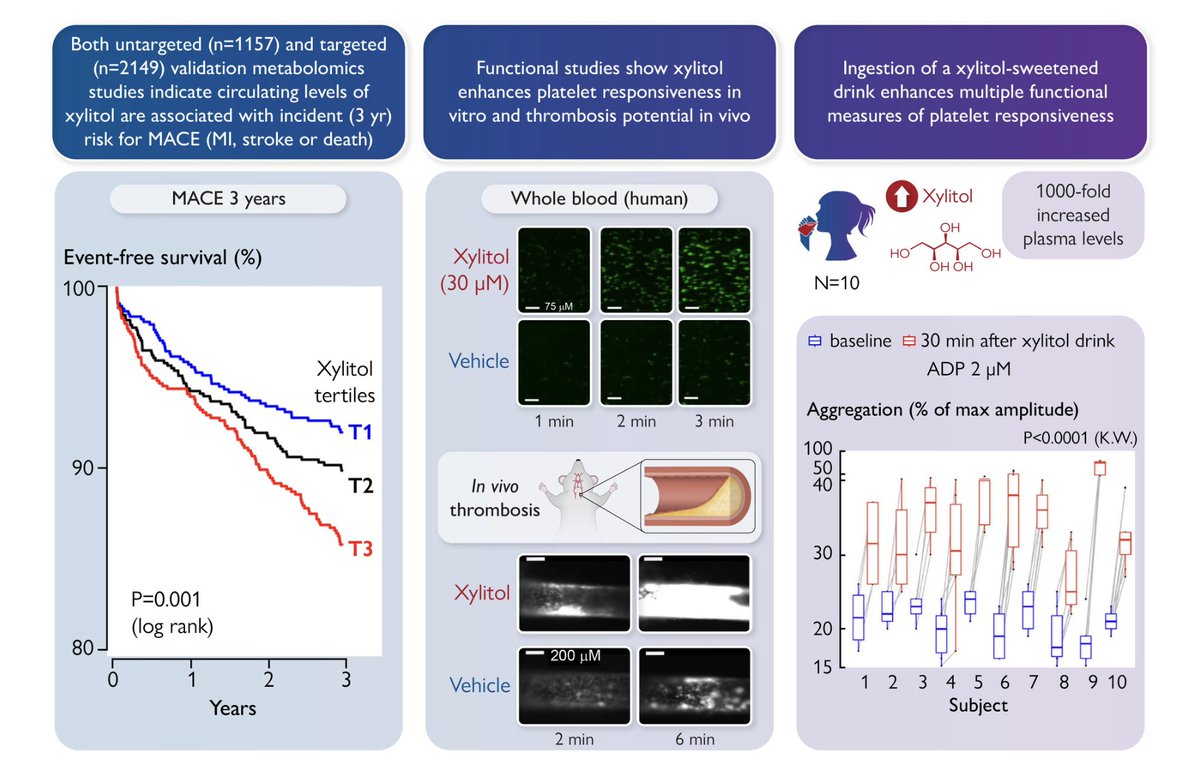
Xylitol (“birch sugar”) and cardiovascular risk. Higher blood xylitol levels were associated with a greater long-term risk of major cardiovascular events (an observational study cannot establish causality). In CLSA, over 6 years of follow-up, participants in the highest https://t.co/2Y1YiYG4Qr #Xylitol #HeartHealth #CardiovascularRisk #Thetweetdoesnotmentionanyspecificcountries.Therefore #therearenocountrycodestoreturn.