WRLD

Search

#Programming
Jürgen Schmidhuber 1w

The author wrote that I. J. Good had speculated in 1966 about an “intelligence explosion” driven by self-improving super-intelligences, but had not developed concrete RSI algorithms. By contrast, the author said their 1987 diploma thesis applied genetic programming to itself recursively.
228
Ivo Velitchkov 2w

Programming used to be like literacy. Once learned, nobody could take it away. Now the craft comes on lease, metered, and on terms that can change overnight. This essay looks at seven orders of software makers, defined by what the lease did to them. https://t.co/MYx2nZs3kj #Programming #SoftwareDevelopment #TechTrends #Nospecificcountrycodesarementionedinthetweet.

Luciano Magaldi Sardella (PhD) 2w

IL TEATRO-EDICOLA (FRANCESCO GRAVINO) SU “LA STAMPA (SPECCHIO)”, “SIX CHAIRS AT THE TEATRO-EDICOLA” by FRANCESCA TAMBURRINO SOURCE: https://www.lastampa.it/specchio/rubriche/segue-buffet/2026/09/27/news/sei_sedie_al_teatro_-_edicola-15748967/ To the delight of lovers of the genre, the news is reassuring: theatres are back in fashion. Perhaps they had never gone out of fashion but were slightly tarnished by interest in other genres considered more contemporary. Wrong, theatre after millennia withstands wear and negativity reinvigorates it. Halls thought lost are reopening and new spaces are flourishing. Because theatre can be made anywhere, in houses, in streets, on the ashes of spaces born for other purposes. For example in newsstands: in many cities these kiosks sell everything except what they were conceived for, newspapers. The ingenious wheeze is to be found in the Foggia area with the Teatro-Edicola, the smallest theatre in the world, six chairs, less than two square metres, careful programming, performances every fifteen minutes and sold-out is easily guaranteed. A happy experiment that has intrigued even the noble journal of the American Stanford University. The wheeze from San Severo in the Foggia area pleased the students of Stanford so much that they made it a case study. The result was published in the “Stanford Social Innovation Review (SSIR)” quarterly journal and award-winning website given its specific specialisation in covering multisectoral solutions to global problems, considered one of the world reference points for social innovation. The article “The Six-Seat Revolution”, that is to say the Revolution of the Six Chairs, was curated by the Foggian (Orta Nova) researcher Luciano Magaldi Sardella, supervised by editor David V. Johnson and can be retrieved in the Dispatches section of the “Stanford Social Innovation Review”. Imagine the satisfaction of the theatre company Foyer 97 which sees itself projected into global fame and planetary interest, matured into a shower of requests for duplication. After all, who does not have a disused space in a state of abandonment to be recovered worthy of rising to a cultural garrison? Meanwhile the meritorious creators of the winning idea will return to the stage in October and are already preparing the thirtieth anniversary of the company which falls next year. On those six chairs, they assure us, young and old have sat in equal albeit meagre measure. An experiment which in the universe of entertainment is followed with attention. So much so that Biagio Antonacci made a surprise stop at the Teatro-Edicola where he sang his “Iris”. Passers-by in a huddle beyond the sold-out.

www.lastampa.it
Sei sedie al Teatro - Edicola
1034
Jürgen Schmidhuber 4w

Already in 1966, I. J. Good speculated about an "intelligence explosion" through self-improving "super-intelligences" [GOOD]. But Good did not have any concrete RSI algorithms. My 1987 diploma thesis [META1], however, applied "genetic programming" (GP) to itself, to recursively #IntelligenceExplosion #GeneticProgramming #Superintelligence #Nospecificcountrycodesarementionedinthetweet.

116
notch Sep 8

Saying there's code so complex you can't understand it is like saying there's sentences so English you can't hear them. #CodeComplexity #ProgrammingHumor #TechTalk #Nospecificcountrycodescanbeidentifiedinthetweet.

2683
Luciano Magaldi Sardella (PhD) Sep 5

"RadioText-RadioSoftware (1983–1989)": The First (Forgotten) Radio Programme of Computer Science Dissemination in Italy SOURCE: https://www.linkedin.com/pulse/radiotext-radiosoftware-19831989-first-forgotten-sardella-ph-d--eqief/ Radiosoftware represents Italy's absolute pioneer in broadcasting digital literacy education over the airwaves in the Belpaese. Abstract This paper reconstructs the history of Radiosoftware, the first Italian radio programme which anticipated by over a decade the dissemination of microtelematics, computing, and digital technology, as well as modern methods of digital software distribution. Established in 1983 at Radio Popolare and subsequently developed as a national initiative on Rai Radio 3 from 1984 to 1989, Radiosoftware represents the first Italian radio programme to broadcast educational content and transmit executable software for home computers over the airwaves. Through analysis of its technical evolution, educational content, and cultural impact, this article demonstrates how the initiative constituted a significant precedent in national computer literacy, the democratisation of access to software, and the development of amateur programming communities, establishing itself as the progenitor of a media ecosystem dedicated to technological dissemination that has extended into the contemporary era. Keywords: history of Italian computing, technological dissemination, digital broadcasting, computer literacy, Radio Popolare Introduction: The Dawn of Computing Dissemination in Italy In the landscape of Italian digital media history, a fundamental chapter remains little explored in academic literature: that of computing dissemination through radio broadcasting in the 1980s. In an era characterised by the absence of network connectivity and economic and geographical barriers to accessing computer technologies, radio configured itself as a democratic instrument for the diffusion of nascent digital culture. Radiosoftware emerges in this context as an absolutely pioneering initiative in Italy, anticipating not only analogous Italian experiences but also positioning itself amongst the first European experiments in software transmission over the airwaves. Its genesis at Radio Popolare in 1983 and subsequent evolution as a national programme on Rai Radio 3 bear witness to a trajectory of technical and pedagogical innovation that merits in-depth analysis. Contenuto dell’articolo The Original Phase: Radio Popolare (1983) The birth of Radiosoftware at Radio Popolare in 1983 constitutes the foundational moment of radio-based computing dissemination in Italy. In a period when personal computers still represented niche objects, the programme set out to systematically explore programming languages, hardware architectures, and practical applications of home computing, addressing a heterogeneous audience composed of students, teachers, hobbyists, and professionals. This first incarnation established the conceptual paradigms that would characterise the entire subsequent tradition: linguistic accessibility, pedagogical vocation, attention to the social and cultural dimensions of technology, and promotion of active listener participation. Contenuto dell’articolo The National Evolution: From Radiotext to Radiosoftware (1984–1989) The experience gained at Radio Popolare found systematic development in the national initiative coordinated by Rai Radio 3. The pilot phase, denominated Radiotext, commenced on 11 May 1984 as an experimental segment within the current affairs programme Un certo discorso, presented by Pasquale Santoli. Eight 30-minute episodes, broadcast on Fridays at 16:00 with Sunday repeats, tested the technical feasibility and public interest in the transmission of executable software through audio signals. Curated by Luigi Grimaldi and Giovanni Sighele of the Lega Informatica of Florence, in collaboration with Arci Media, the pilot phase demonstrated the viability of the concept. In autumn 1984, the format consolidated with the definitive denomination Radiosoftware, expanding to one-hour episodes and maintaining its placement within Un certo discorso. Contenuto dell’articolo The third season, inaugurated on 7 February 1986, introduced a thematic structuring articulated in three distinctive segments: "Hard & soft news" (updates and reviews), "Studiare con il computer" (educational applications), and "Radio + informatica" (experimental intersections between broadcasting and computing). This phase evidenced a growing pedagogical sophistication and greater attention to formal educational applications. In late 1986, the programme acquired editorial autonomy, transforming into an independent transmission with nocturnal weekend scheduling. 1987 marked a significant technical innovation with the introduction of the 4800 bit/s hardware interface developed by the RAI Research Centre in Turin, which enabled direct connection to the RS-232 serial port, overcoming the limitations of the audio-cassette method. The concluding phase, from February to June 1989, adopted a brief daily format (10 minutes, Monday to Friday at 19:45), concentrating on MS-DOS-compatible software. Despite the announcement of a cycle for 1990, no national transmission is documented beyond June 1989. Contenuto dell’articolo The Audio-Cassette Method (1984–1987) The initial methodology replicated the cassette loading mechanisms typical of 1980s home computers. Programmes were encoded as sequences of audio impulses—electronic noises incomprehensible to the human ear—which listeners recorded onto blank audiocassettes by connecting a tape recorder to the radio's audio output. The recorded cassette was subsequently played through the computer's cassette interface, which decoded the signals, loading the software into memory. This approach, based on modulation techniques similar to frequency-shift keying (FSK), guaranteed compatibility with heterogeneous platforms such as the ZX Spectrum 48K, Commodore 64, Olivetti M10, subsequently extended to the Apple II, MSX, BBC Micro, Olivetti M24 and M28. Each episode transmitted sequentially platform-specific versions for each system. Whilst accessible and revolutionary for mass distribution in pre-Internet Italy, this method presented significant limitations: low transmission speed, susceptibility to errors induced by radio interference or ambient noise, and the necessity for precise volume and timing adjustments. Contenuto dell’articolo The RAI-Radiosoftware Hardware Interface (1987) In 1987, the RAI Research Centre in Turin developed an advanced interface documented in CCIR reports as the RAI-Radiosoftware system. The principal innovation consisted of direct transmission at 4800 bits/s utilising biphase modulation organised in packets, enabling connection to the computer's RS-232 serial port without cassette intermediation. The interface was designed for operating system independence, with management software adaptable for MS-DOS, CP/M, and potential future extensions to Macintosh. For Olivetti M24 and M28 computers, a version with an internal card was available. The Research Centre additionally developed management software, test cassettes, and manuals, considering initial commercialisation at approximately 90,000 lire. This technical evolution represented a significant advancement in terms of speed, reliability, and usability, whilst maintaining the audio-cassette method in parallel to guarantee universal access. Contenuto dell’articolo Types of Software Transmitted The catalogue of software distributed through Radiosoftware reflected a broad range of applications: practical utilities (thematic databases on fashion, music, itineraries, and personalised diets), educational tools (didactic programmes for secondary schools, upper secondary schools, and conservatoires), recreational software (games such as the Olympic pentathlon for the Commodore 64), graphic demonstrations, and creative tools (bases for musical composition and digital comics). Particularly significant was the introduction, from the third season onwards, of educational software developed in collaboration with the Ministry of Public Education, designed specifically for scholastic use across various disciplines, not limited to computing. Contenuto dell’articolo Community Participation: The ORSA Section The Osservatorio Radiofonico del Software Autoprodotto (ORSA) [Radio Observatory of Self-Produced Software], reintroduced in the third season from February 1986, constituted a space dedicated to the transmission of programmes created by listeners. This feature transformed Radiosoftware into a bidirectional platform, anticipating collaborative logics that would characterise, decades later, open-source communities and participatory digital cultures. The "listeners' post" section within "Hard & soft news" additionally facilitated continuous dialogue with the public, integrating feedback, questions, and suggestions into the programming. Questionnaires distributed at the end of cycles and surveys conducted by specialist magazines such as Sperimentare con l'elettronica e il computer provided further mechanisms for evaluation and editorial orientation. Contenuto dell’articolo Institutional Collaborations and School Experiments In 1987, Radiosoftware collaborated with the ITIS Enrico Fermi in Rome to produce a series of transmissions dedicated to the development and application of educational software in scholastic contexts. The initiative involved experimental reception centres in 60 Italian schools, where students and teachers utilised the specialised interfaces developed by the RAI Research Centre to capture and load directly the transmitted software. These experiments positioned Radiosoftware as an operational instrument of pedagogical innovation, extending its impact beyond the hobbyist user base towards formal integration within the national education system. Contenuto dell’articolo Comparison with European Experiences Although Radiosoftware represents the first Italian national initiative, it was not the first European experiment in radio transmission of software. In the Netherlands, the programme Hobbyscoop on the public broadcaster NOS began transmitting computer programmes via radio around 1979–1980, subsequently developing the Basicode standard (from 1982). This standardised format utilised a restricted subset of BASIC commands and platform-specific translation routines, guaranteeing portability across heterogeneous architectures through FSK modulation at 1200 bps. Contenuto dell’articolo In the United Kingdom, The Chip Shop on BBC Radio 4, presented by Barry Norman and launched in 1984, included a "takeaway" service that transmitted Basicode programmes during nocturnal hours on VHF. Contenuto dell’articolo Technical and Cultural Differentiation Unlike approaches based on Basicode, which privileged portability at the interpreted language level, Radiosoftware transmitted platform-specific executable files, often in machine code, encoded as audio tones analogous to cassette loading signals. This choice reflected different priorities: maximising performance and the specific capabilities of each architecture rather than guaranteeing universal compatibility through a standardised language. The subsequent introduction of the 4800 bit/s interface with RS-232 connection represented a further differentiation, bypassing cassette recording entirely. These technical specificities bear witness to an autonomous development pathway, oriented towards the characteristics of the Italian computing market and ecosystem. Contenuto dell’articolo Transition towards Telesoftware Between 1988 and 1989, Radiosoftware was progressively accompanied and superseded by telesoftware transmitted through Televideo, RAI's teletext system. Technically defined by the RAI Research Centre in collaboration with Olivetti, the system became operational in 1989 following scholastic experiments coordinated with the Ministry of Public Education and Seleco in 1988. Telesoftware represented a natural evolution that shifted distribution from radio to television, offering advantages in terms of bandwidth capacity and already widespread reception infrastructure. This transition reflected broader trends in media convergence and the evolution of digital broadcasting technologies. Contenuto dell’articolo Obsolescence and the Rise of the Internet The emergence of the Internet in the 1990s rendered obsolete both radio-based and teletext-based methods of software distribution. Bidirectional digital networks offered incomparable speed, scalability, and interactivity, radically transforming the paradigms of software access and distribution. However, the conceptual legacy of Radiosoftware persists: the idea of mass distribution of executable digital content through broadcasting channels anticipated logics that re-emerge in modern over-the-air distributions of firmware and software updates for mobile devices and IoT. Contenuto dell’articolo The Ecosystem of Italian Radio-Based Computing Dissemination COMPLETE TIMELINE From the birth of computing dissemination on radio to the contemporary digital ecosystem 🟦 1983 — THE ORIGIN Radiosoftware – Radio Popolare (1983) The first Italian programme entirely dedicated to computing, programming languages, and personal computers. The absolute progenitor of the Italian tradition of radio-based technological dissemination. 🟦 THE 1980s — THE FIRST HEIRS 1984–1989 — Bit, Byte & Musica – Radio Popolare Technology, electronics, early networks, hacker culture. Continues the pioneering spirit of Radiosoftware, exploring the countercultural and communal dimensions of nascent computing. 1987–1990 — Decoder / Cyberpunk – Radio Popolare First systematic discussions of BBS, cryptography, alternative telematics, anticipating themes that would become central in the Internet era. 🟩 THE 1990s — THE INTERNET ERA 1993 — Golem – Radio3 Critical reflection on media and digital technologies, situating technological transformation within a broader cultural and philosophical framework. 1994 — Eta Beta – Radio1 Innovation, information society, digital transformation. Technological dissemination for a general audience in the phase of initial digital literacy. 1995 — Internetworkcity – Radio Deejay Presented by Claudio Cecchetto and Marco Camisani Calzolari, represents the first pop-commercial programme dedicated to the Internet, introducing email, websites, chat, and cyber culture to the mass public with accessible language and a massified educational approach. 1996–1999 — Mediamente (radio version) – RAI Dissemination on the Internet, networks, digital culture, with particular attention to the social and cognitive implications of emerging technologies. 1997–2000 — Cybernet / Tecnologie e Libertà – Radio Sherwood Free software, digital rights, civic networks. Continuation of the critical and communal tradition inaugurated by Radio Popolare, with focus on the political and libertarian dimensions of technology. This timeline evidences how Radiosoftware does not represent an isolated phenomenon, but rather the point of origin of a continuous tradition that has traversed over four decades. From the programming languages and over-the-air software transmission of the 1980s, through explorations of BBS and alternative telematics, to mass literacy on the Internet in the 1990s and critical reflections on free software and digital rights, a connecting thread emerges that testifies to the role of radio as a privileged space for the cultural mediation of emerging technologies. Contenuto dell’articolo Contemporary Recognition and Archival Preservation In recent years, Radiosoftware has acquired renewed attention as a pioneering initiative in the history of Italian computing. In 2024, contributions by scholars such as Andrea Fortuna have described the programme as a fascinating chapter in the diffusion of personal computing in Italy, underscoring its innovative approach to the distribution of executable software in the pre-Internet era. RAI has preserved selections from the initial phase of the programme through digital platforms such as RaiPlay Sound, where a dedicated playlist in the "Via Asiago 10" series includes several pilot episodes from 1984, originally broadcast on Rai Radio 3. Preservation efforts by enthusiasts have further contributed to maintaining accessible portions of the programme's legacy, with partial audio recordings and listener interviews available on dedicated websites. Radiosoftware constitutes a significant case study from multiple disciplinary perspectives. From the standpoint of media history, it represents an innovation in the utilisation of radio broadcasting, extending its functionalities beyond the transmission of audio content towards the distribution of executable code. In computing history, it testifies to strategies of democratisation of software access in contexts characterised by scarcity of resources and infrastructure. From a pedagogical standpoint, it anticipates models of distributed and community learning that re-emerge in modern online educational platforms. The participatory dimension embodied by the ORSA section prefigures collaborative dynamics that would characterise open-source cultures. Its position as progenitor of a continuous media ecosystem dedicated to technological dissemination—from Radio Popolare through national public broadcasters to the experiences of the 1990s—underscores the role of radio broadcasting as essential cultural infrastructure in the processes of national digital literacy. In an era when over-the-air distribution of software updates has become ordinary practice for billions of connected devices, Radiosoftware emerges not as an antiquarian curiosity, but as a conceptual antecedent that illuminates often-neglected technological genealogies. Its rediscovery and archival preservation constitute essential operations for a complete understanding of the roots of Italian digital culture.

www.linkedin.com
"RadioText-RadioSoftware (1983–1989)": The First (Forgotten) Radio Programme of Computer Science Dissemination in Italy
584
ernst oberklammer Sep 5

! complete computer-checked proof of Fermat’s Last Theorem. Claude worked largely autonomously over 11 days to write the proof in the Lean programming language. * https://www.anthropic.com/research/formalizing-fermats-last-theorem * https://www.anthropic.com/research/formalizing-fermats-last-theorem

www.anthropic.com
Formalizing Fermat's Last Theorem
818
Smartino 🤔📯 Aug 27

ich hab euch ja mal erzählt, daß meine Frau Hochbegabt ist. IQ 143 Vorhin 👇 Frau: Warum brummst Du? Ich: Nichts <brumm> Sie: na sag schon Ich: <brumm> ich programmier hier grad was für die Firma und ich finde den Fehler nicht. Ich: Komm, schaus Dir mal mit an. Sie: ach nein. Ich: doch, Du hilfst mir, wenn ich es erklären kann, über das Problem reden kann. Sie: na gut. 10 Minuten später Sie: aber das hier ist doch dann nicht richtig <zeigt auf eine komplexe If-else-Verschachtelung> Ich: 🤔🧐🤔 ... 🤨 ... 🤔😮☺️👏 Sie hat einen höheren IQ als ich und das ist so toll. 😊 #Hochbegabung #Programming #IQ

22509
Baronen af Øresund Jul 22

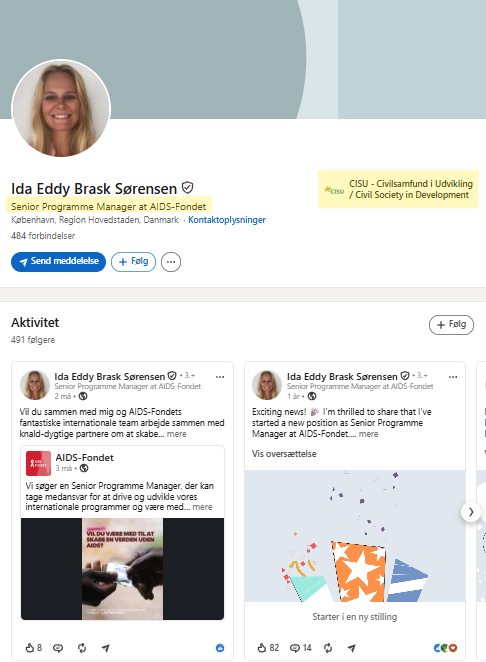
Afsløring: Medlem af Civilsamfundets bevillingsudvalg har bevilliget op mod 20 mio. kr. til en NGO hun selv er ansat i - læs mere her👇 Mød Ida Eddy Brask Sørensen. Ida er Senior Programming Manager i NGO'en Aids Fondet - en stilling hun jf. LinkedIn har haft siden august 2024. Her står hun for (i en eller grad) det overordnede ansvar for Aids Fondet projekter. Derudover har Ida siden 1. januar 2025 (også jf. LinkedIn) været en del af bevillingsudvalget i CISU's Civilsamfundspulje. Her har hun været en af de 9 medlemmer af udvalget som har ansvaret for at godkende bevillinger som en del af dansk udviklingsbistand. Og i den periode hvor Ida både har været ansat i NGO'en Aids Fondet og siddet i bevillingsudvalget for CISU's Civilsamfundspulje, har hun været med til at godkende bevillinger på op mod 20 mio. kr. til sin egen arbejdsplads hos Aids Fondet! Ida har således været med til at give bevillinger på op mod 20 mio. kr. til projekter som hun (antager jeg) qua sin stilling i Aids Fondet selv havde ansvaret for. Det kan man vist kalde lidt af en interessekonflikt. Eksempelvis er der givet en bevilling til Aids Fondet på 15 mio. kr. for perioden 1. januar 2026 - 31. december 2029. I en anden bevilling til Aids Fondet er der givet 4,2 mio. kr. for perioden 1. januar 2026 - 31. december 2027. To andre bevillinger er også givet i 2026, den ene på 44.000 kr., mens størrelsen på den sidste bevilling ikke er angivet. #Interessekonflikt #Civilsamfund #NGO

11960
Andreas Kling Jul 6

Hobby programming is in a weird place right now, as projects that used to be hella impressive can be done in a couple hours with AI. But most AI hobby projects we see are pretty low-effort and thrown together quickly. I'm pumped to find out what happens as hobby hackers start #HobbyProgramming #AIProjects #CodingLife #Nocountrycodesfoundinthetweet.

950
DataRepublican (small r) Jun 24

Every major German party has a taxpayer-funded Stiftung. CDU has Konrad Adenauer. SPD has Friedrich Ebert. The Greens have Heinrich Böll. FDP has Friedrich Naumann. But Rosa Luxemberg is unique. In reviewing the other foundations' US programming, no evidence was identified that any of the non-RSL foundations run training programs for a US political organization, maintain concurrent staff pipelines into US political organizations, or publish convention strategy for a US political organization. #Germany #PoliticalParties #TaxpayerFunding

13566
Florian Krampe Jun 6

A small hydro station in rural Nepal shifted gender norms more than a decade of donor programming had managed. Not because anyone designed it that way. #TEDx @TEDTalks #ClimateSecurity https://t.co/NHEaLtb3Iw #GenderEquality #Hydropower #SustainableDevelopment #NP

www.lavanguardia.com
El alcalde Mamdani recurre a fuertes despliegues policiales en las calles de Nueva York
Armin Ronacher ⇌ May 22

Counter point: if the models are so good at finding security issues, maybe the value of memory safe languages is diminished? #MemorySafety #Security #Programming #Nospecificcountrycodesarerelatedtotheprovidedtweet.

239
CTO Larsson May 21

The harsh truth is that AI - sleeps even less - delivers 500 lines of code in 5 min - works on first try #AI #Programming #Efficiency #Thetweetdoesnotmentionanyspecificcountries.Therearenocountrycodestoreturn.

Correio da Manha May 17

Polícia captura um croc programming de mais de três metros em uma área residencial na Carolina do Norte com a ajuda de cones de trânsito. #Crocodilo #CarolinaDoNorte #CapturaAnimal

www.cmjornal.pt
<![CDATA[ Polícia retira castor “irritado” de cruzamento com ajuda de cone de trânsito nos EUA ]]>
8372
BBC May 17

Marcus Hunter-Neill, a drag queen known as Lady Portia Di'Monte, has spoken out about the trauma he experienced after his image was erroneously linked to pedophilia allegations following a controversial children’s storytelling event, which led to protests and significant personal distress, culminating in a settlement and apology from TalkTV, while he advocates for the inclusion of diverse representations in children's programming. #DragQueen #ChildrensLiterature #PublicDebate #GB #NI #UK

www.bbc.com
Drag Queen Storytime: Abuse left drag queen fearing for his life
8970
Sam van Rooy MP May 16

RT @TheIranWatcher: 🚨 Islamic Republic state TV is now openly showing civilians how to use AK-47s through Basij-linked programming. This i… #Iran #AK47 #Basij #IR

R
Reuters May 15

Broadcasters in several countries are boycotting Saturday's Eurovision final due to Israel's participation amid ongoing conflicts in Gaza, opting instead to air alternative programming such as the sitcom "Father Ted" and various music shows, while protests and criticisms surrounding the event continue to escalate. #Eurovision #Boycott #CulturalDiversity #IE #ES #NL #SI #IS #IL #BE

www.reuters.com
It's Father Ted, Raphael or Gaza documentaries for Eurovision's boycotters
8374
The New York Times May 15

The Eurovision Song Contest will be accessible to U.S. viewers through the streaming platform Peacock and the official YouTube channel, but several countries, including Ireland, Slovenia, and Spain, are boycotting the event this year due to the participation of Israel, opting instead to air alternative programming. #Eurovision #Streaming #InternationalEvents #US #IE #SI #ES #IL #IS #NL

www.nytimes.com
How to Watch the Eurovision Song Contest Final
8374
R
Reuters May 15

Several broadcasters in Ireland, Spain, the Netherlands, Slovenia, and Iceland are boycotting the Eurovision final due to Israel's participation amid the Gaza conflict, opting instead to air alternative programming such as the sitcom "Father Ted," music shows, and documentaries, while the event continues to face backlash and protests from viewers opposed to Israel's inclusion. #Eurovision #Boycott #CulturalDiversity #IE #ES #NL #SI #IS #IL #BE #GB

www.reuters.com
It's Father Ted, Raphael or Gaza documentaries for Eurovision's boycotters
8972