WRLD

Search

#Recorder
HotNews.ro 4d

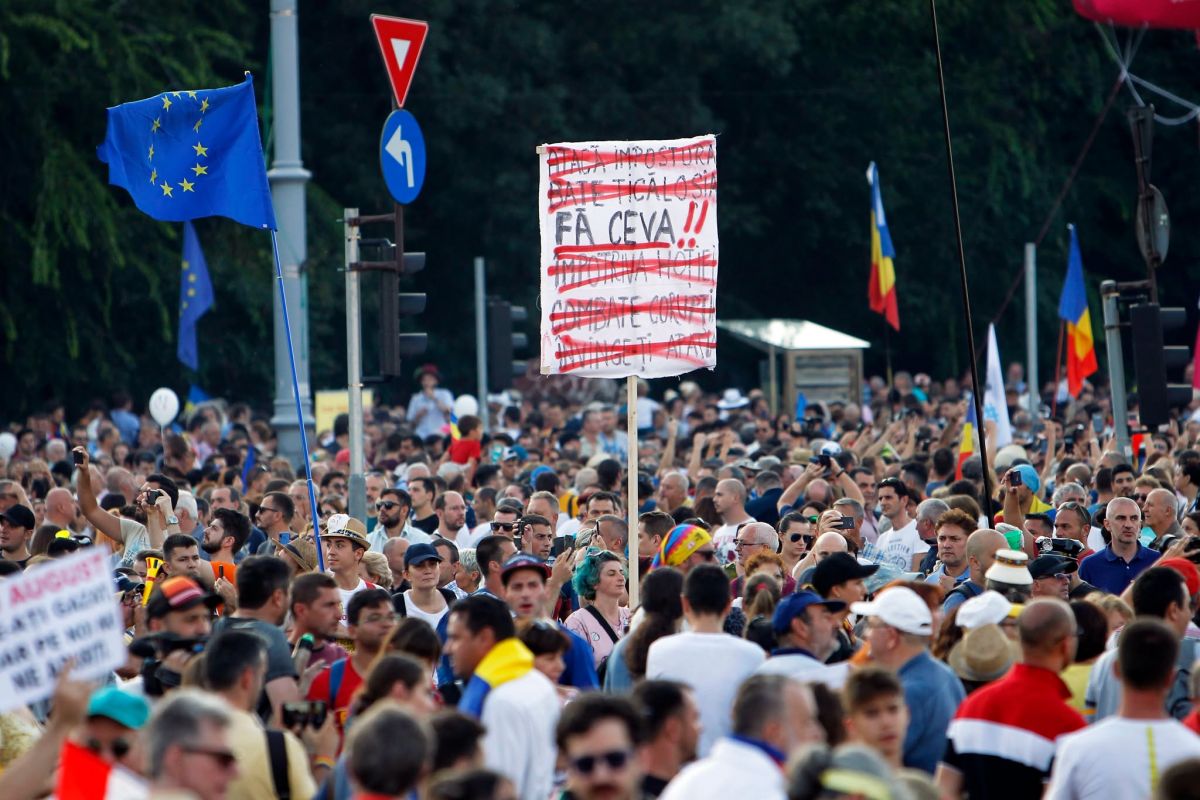
An investigation conducted by Recorder reveals that, due to the statute of limitations, no gendarme involved in the violence during the protest on August 10, 2018, in Victory Square can be held criminally accountable, which raises serious questions regarding justice and accountability in this case. #Protest10August #Justiție #PiațaVictoriei (translated)
hotnews.ro
Investigație Recorder despre „cum a fost îngropat Dosarul 10 august”, înainte de noul termen din instanță: „Niciun jandarm nu mai poate răspunde penal”
2693
aktual24.ro 2w

Premierul desemnat propune la Ministerul Justiției o judecătoare anti-Savonea. Ea a apărut în documentarul Recorder „Justiție capturată” https://t.co/8fyfutV5hW #Justiție #România #Politică

11526
Krzysztof Graj 2w

AFRICA DAILY REPORT — 25 SEPTEMBER 2026 Major developments reported during the previous 24 hours. 1. ETHIOPIA — Renewed fighting spreads across the north Federal and Tigrayan forces are again engaged in major hostilities, with fighting extending beyond Tigray. Ethiopian Airlines suspended flights to Mekelle, Axum and Shire amid the escalation and concerns over renewed conflict. Source: https://abcnews.com/International/wireStory/ethiopian-airlines-cancels-flights-tigray-amid-concerns-renewed-136676469 2. DR CONGO — Ebola outbreak continues to expand Updated European CDC data reported 7,773 confirmed cases and 3,759 deaths, with Ituri remaining the most affected province and North Kivu also recording substantial transmission. Public-health impact: Critical. Source: https://www.ecdc.europa.eu/en/ebola-outbreak-democratic-republic-congo-and-uganda 3. DR CONGO — Fatal violence during Ebola burial highlights resistance to response teams One person was killed and several wounded after security forces opened fire during unrest surrounding the burial of a suspected Ebola victim in Beni. The incident illustrates the public-trust and security challenges complicating containment efforts. Public-health/security impact: Very High. Source (Reuters report): https://www.internazionale.it/ultime-notizie-reuters/2026/09/24/one-dead-after-security-forces-open-fire-during-ebola-burial-in-congo-sources-say 4. SUDAN — RSF intensifies drone attacks in North Kordofan Reuters reported a renewed campaign of drone strikes against government-held towns in North Kordofan, including attacks affecting Um Ruwaba and El Obeid. Drones are playing an increasingly important role in Sudan's war. Humanitarian/security impact: Very High. Source (Reuters): https://www.internazionale.it/ultime-notizie-reuters/2026/09/24/sudan-s-rsf-steps-up-deadly-drone-attacks-on-frontline-cities 5. MOROCCO — PAM finishes first in parliamentary election Preliminary official results gave the Authenticity and Modernity Party (PAM) 97 of 395 seats, followed by the National Rally of Independents with 66, Istiqlal with 65 and the Justice and Development Party with 54. Source (official Moroccan government portal): https://maroc.ma/en/news/2026-legislative-elections-pam-leads-97-seats-according-preliminary-results-minister-interior 6. NIGERIA–UNITED STATES — New framework for mining investment Nigeria and the United States signed a memorandum of understanding covering geological data and exploration, mineral development and processing, infrastructure and technical capacity. Economic/strategic impact: High. Source (Channels Television): https://www.channelstv.com/2026/09/24/nigeria-us-sign-mineral-investment-pact/ 7. NIGER — Madaouela uranium agreement increases state participation Niger and Atomic Eagle finalized an agreement concerning the Madaouela uranium project, with the arrangement providing for Nigerien state participation and renewed activity at the project. Economic/strategic impact: High. Source: https://www.nigertoday.com/articles/en/niger-and-atomic-eagle-finalize-madaouela-uranium-deal-ending-dispute.html 8. SOUTH AFRICA — Financing costs constrain $98 billion energy-transition programme South Africa warned at the UN Climate Summit that high borrowing costs and shrinking international grants are limiting its clean-energy transition. A $550 million credit guarantee has been secured to attract private investment in electricity transmission. Economic/energy impact: High. Source (SABC News): https://www.sabcnews.com/sabcnews/1163387-2/ 9. GHANA — COCOBOD seeks $1.4 billion domestically to finance cocoa purchases Ghana Cocoa Board is seeking to raise 16.3 billion cedis ($1.4 billion) from domestic investors to finance cocoa purchases for the upcoming season, shifting more financing toward Ghana's domestic capital market. Economic impact: High. Source (Reuters report republished by Business Recorder): https://www.brecorder.com/news/40440904/ghanas-cocoa-regulator-pitches-usd14bn-domestic-financing-plan 10. UGANDA — Refugee programme remains heavily underfunded Uganda's response plan for more than two million refugees remains substantially underfunded, increasing pressure on food, healthcare, water, sanitation and host communities. Humanitarian impact: High. Source (Uganda Business News): https://ugbusiness.com/2026/09/politics-policy/ugandas-refugee-plan-is-a-third-funded-as-kampala-seeks-eu-help #Africa #AfricaNews #TopNewsOfAfrica #Ethiopia #Tigray #NorthernEthiopia #EthiopiaConflict #HornOfAfrica #RegionalSecurity #AfricanSecurity #Nigeria #UnitedStates #NigeriaUS #MiningInvestment #CriticalMinerals #MineralDevelopment #MiningSector #GeologicalData #StrategicMinerals #AfricanEconomy #Ghana #COCOBOD #Cocoa #CocoaIndustry #Chocolate #CocoaFinance #Agriculture #Agribusiness #DomesticMarkets #CapitalMarkets #Trade #Investment #EconomicDevelopment #Geopolitics #AfricaToday #wrldorg

abcnews.com
Ethiopian Airlines cancels flights to Tigray capital as soldiers take over airport
1268
George Buhnici 3w

Cătușele lui Călin Georgescu deasupra capului la ieșirea de la DIICOT. De atunci nu mai vedem nimic altceva. Omul ăsta e mereu ultima memă de pe net, ultima fentă de la TV. Nu cred că e o diversiune. Doar că atenția unei țări e o baterie mică si a noastră e cam uzată. Hai să o redresăm vă rog la tensiunea corectă. Uite ce contează, după mine, dincolo de meme și fente. Prima. 770 de milioane de euro. Atât am pierdut definitiv din PNRR pentru că partidele nu s-au înțeles pe legea salarizării. Adăugați 458 de milioane pierdute la cererea de plată 3. Legea trebuie adoptată oricum. Diferența e că acum o plătim noi, din buget. Ce avem de gând să cerem de la politicienii care și-au asumat eșecul? Serios? Ce primim la schimb? Vine vreunul cu cutiile de pantofi să pună diferența? Păi de ce să vină dacă noi nu cerem? A doua. Mâine e echinocțiul de toamnă. Noaptea începe să câștige. Da, sunt ăla cu panourile și bateriile, care vede în aplicație cum scade producția de la o săptămână la alta. Numai că de data asta nu e doar problema mea. Cernavodă e oprită complet din 13 august. Ambele reactoare. Aproape 20% din curentul României. Motivul oficial e Dunărea, la cel mai mic debit măsurat vreodată. Seceta o înțeleg. Lipsa unui plan B, e la ei. Suntem în alertă energetică din 1 august și acoperim golul din import. Anul viitor Unitatea 1 intră oricum în retehnologizare, deci o pierdem din nou, de data asta planificat. Iar țara e condusă de peste patru luni de un guvern interimar care nu poate da nici măcar o ordonanță de urgență. Fără glumă: se ocupă cineva de iarna asta? Ca Europa se plânge deja de gaze iar noi vom fi solidari vrem nu vrem. A treia. Raportul despre anularea alegerilor. Dacă nu mă credeți, numărați termenele: „în cel mai scurt timp”, „una-două săptămâni”, „finalul lunii ianuarie”, „două-trei luni”, „anul acesta”, „un termen rezonabil”. Ultima explicație de la Nicusor Dan: se caută varianta cea mai ușor de înțeles pentru public. Mă tem că urmează desenele animate… de mână. A patra. Generalul Pahonțu conduce SPP de peste 20 de ani. E în rezervă, cu o pensie de circa 7.000 de euro, dar tot șef. Recorder i-a documentat trecutul în trupele de Securitate la Revoluție și la Mineriadă și a arătat că o treime din teza lui de doctorat e copiată. Președintele a găsit articolul „tendențios și neserios”. Faptele din el nu le-a comentat. Presa a obosit repede pe subiect. A cincea. Reforma justiției. În decembrie ni se promitea un referendum în magistratură pentru ianuarie, iar CSM „pleca de urgență” dacă magistrații spuneau că nu servește interesul public. În aprilie, sistemul informatic era „aproape gata”. Acum e septembrie. Bonus. Horațiu Potra. Omul cu arme, grenade și seifuri sub podea, judecat pentru tentativă de lovitură de stat. Din 3 septembrie e sub control judiciar, cea mai blândă măsură preventivă. Nici măcar arest la domiciliu. Georgescu a dormit azi-noapte în arest, pentru o presupusă înșelăciune de 1,1 milioane. Potra a dormit acasă. Cătușele lui Georgescu s-au văzut perfect. Le-a ridicat singur, pentru camere. Cei 770 de milioane, reactoarele oprite și raportul care nu mai vine n-au pe nimeni care să le ridice în fața camerelor. Memoria noastră scurtă e arma pe care o folosesc împotriva noastră. #PNRR #energie #politică

12021
Hans van Dommelen 4w

Gunhild Carling (born 7 May 1975) is a Swedish jazz musician and multi-instrumentalist. She plays the trombone, trumpet and many other instruments. Carling became known for her performance at Allsång på Skansen on 20 July 2010. The same year, she became an expert commentator for Dansbandskampen at SVT. Gunhild plays trombone, bagpipes, trumpet, recorder, string instruments (such as banjo, ukulele and harp), and will often showcase all of her skills in one song, sometimes casually breaking into a tap dance or singing. https://hvdommelen.nl/jazz/Carling.html

116
Luciano Magaldi Sardella (PhD) Sep 5

"RadioText-RadioSoftware (1983–1989)": The First (Forgotten) Radio Programme of Computer Science Dissemination in Italy SOURCE: https://www.linkedin.com/pulse/radiotext-radiosoftware-19831989-first-forgotten-sardella-ph-d--eqief/ Radiosoftware represents Italy's absolute pioneer in broadcasting digital literacy education over the airwaves in the Belpaese. Abstract This paper reconstructs the history of Radiosoftware, the first Italian radio programme which anticipated by over a decade the dissemination of microtelematics, computing, and digital technology, as well as modern methods of digital software distribution. Established in 1983 at Radio Popolare and subsequently developed as a national initiative on Rai Radio 3 from 1984 to 1989, Radiosoftware represents the first Italian radio programme to broadcast educational content and transmit executable software for home computers over the airwaves. Through analysis of its technical evolution, educational content, and cultural impact, this article demonstrates how the initiative constituted a significant precedent in national computer literacy, the democratisation of access to software, and the development of amateur programming communities, establishing itself as the progenitor of a media ecosystem dedicated to technological dissemination that has extended into the contemporary era. Keywords: history of Italian computing, technological dissemination, digital broadcasting, computer literacy, Radio Popolare Introduction: The Dawn of Computing Dissemination in Italy In the landscape of Italian digital media history, a fundamental chapter remains little explored in academic literature: that of computing dissemination through radio broadcasting in the 1980s. In an era characterised by the absence of network connectivity and economic and geographical barriers to accessing computer technologies, radio configured itself as a democratic instrument for the diffusion of nascent digital culture. Radiosoftware emerges in this context as an absolutely pioneering initiative in Italy, anticipating not only analogous Italian experiences but also positioning itself amongst the first European experiments in software transmission over the airwaves. Its genesis at Radio Popolare in 1983 and subsequent evolution as a national programme on Rai Radio 3 bear witness to a trajectory of technical and pedagogical innovation that merits in-depth analysis. Contenuto dell’articolo The Original Phase: Radio Popolare (1983) The birth of Radiosoftware at Radio Popolare in 1983 constitutes the foundational moment of radio-based computing dissemination in Italy. In a period when personal computers still represented niche objects, the programme set out to systematically explore programming languages, hardware architectures, and practical applications of home computing, addressing a heterogeneous audience composed of students, teachers, hobbyists, and professionals. This first incarnation established the conceptual paradigms that would characterise the entire subsequent tradition: linguistic accessibility, pedagogical vocation, attention to the social and cultural dimensions of technology, and promotion of active listener participation. Contenuto dell’articolo The National Evolution: From Radiotext to Radiosoftware (1984–1989) The experience gained at Radio Popolare found systematic development in the national initiative coordinated by Rai Radio 3. The pilot phase, denominated Radiotext, commenced on 11 May 1984 as an experimental segment within the current affairs programme Un certo discorso, presented by Pasquale Santoli. Eight 30-minute episodes, broadcast on Fridays at 16:00 with Sunday repeats, tested the technical feasibility and public interest in the transmission of executable software through audio signals. Curated by Luigi Grimaldi and Giovanni Sighele of the Lega Informatica of Florence, in collaboration with Arci Media, the pilot phase demonstrated the viability of the concept. In autumn 1984, the format consolidated with the definitive denomination Radiosoftware, expanding to one-hour episodes and maintaining its placement within Un certo discorso. Contenuto dell’articolo The third season, inaugurated on 7 February 1986, introduced a thematic structuring articulated in three distinctive segments: "Hard & soft news" (updates and reviews), "Studiare con il computer" (educational applications), and "Radio + informatica" (experimental intersections between broadcasting and computing). This phase evidenced a growing pedagogical sophistication and greater attention to formal educational applications. In late 1986, the programme acquired editorial autonomy, transforming into an independent transmission with nocturnal weekend scheduling. 1987 marked a significant technical innovation with the introduction of the 4800 bit/s hardware interface developed by the RAI Research Centre in Turin, which enabled direct connection to the RS-232 serial port, overcoming the limitations of the audio-cassette method. The concluding phase, from February to June 1989, adopted a brief daily format (10 minutes, Monday to Friday at 19:45), concentrating on MS-DOS-compatible software. Despite the announcement of a cycle for 1990, no national transmission is documented beyond June 1989. Contenuto dell’articolo The Audio-Cassette Method (1984–1987) The initial methodology replicated the cassette loading mechanisms typical of 1980s home computers. Programmes were encoded as sequences of audio impulses—electronic noises incomprehensible to the human ear—which listeners recorded onto blank audiocassettes by connecting a tape recorder to the radio's audio output. The recorded cassette was subsequently played through the computer's cassette interface, which decoded the signals, loading the software into memory. This approach, based on modulation techniques similar to frequency-shift keying (FSK), guaranteed compatibility with heterogeneous platforms such as the ZX Spectrum 48K, Commodore 64, Olivetti M10, subsequently extended to the Apple II, MSX, BBC Micro, Olivetti M24 and M28. Each episode transmitted sequentially platform-specific versions for each system. Whilst accessible and revolutionary for mass distribution in pre-Internet Italy, this method presented significant limitations: low transmission speed, susceptibility to errors induced by radio interference or ambient noise, and the necessity for precise volume and timing adjustments. Contenuto dell’articolo The RAI-Radiosoftware Hardware Interface (1987) In 1987, the RAI Research Centre in Turin developed an advanced interface documented in CCIR reports as the RAI-Radiosoftware system. The principal innovation consisted of direct transmission at 4800 bits/s utilising biphase modulation organised in packets, enabling connection to the computer's RS-232 serial port without cassette intermediation. The interface was designed for operating system independence, with management software adaptable for MS-DOS, CP/M, and potential future extensions to Macintosh. For Olivetti M24 and M28 computers, a version with an internal card was available. The Research Centre additionally developed management software, test cassettes, and manuals, considering initial commercialisation at approximately 90,000 lire. This technical evolution represented a significant advancement in terms of speed, reliability, and usability, whilst maintaining the audio-cassette method in parallel to guarantee universal access. Contenuto dell’articolo Types of Software Transmitted The catalogue of software distributed through Radiosoftware reflected a broad range of applications: practical utilities (thematic databases on fashion, music, itineraries, and personalised diets), educational tools (didactic programmes for secondary schools, upper secondary schools, and conservatoires), recreational software (games such as the Olympic pentathlon for the Commodore 64), graphic demonstrations, and creative tools (bases for musical composition and digital comics). Particularly significant was the introduction, from the third season onwards, of educational software developed in collaboration with the Ministry of Public Education, designed specifically for scholastic use across various disciplines, not limited to computing. Contenuto dell’articolo Community Participation: The ORSA Section The Osservatorio Radiofonico del Software Autoprodotto (ORSA) [Radio Observatory of Self-Produced Software], reintroduced in the third season from February 1986, constituted a space dedicated to the transmission of programmes created by listeners. This feature transformed Radiosoftware into a bidirectional platform, anticipating collaborative logics that would characterise, decades later, open-source communities and participatory digital cultures. The "listeners' post" section within "Hard & soft news" additionally facilitated continuous dialogue with the public, integrating feedback, questions, and suggestions into the programming. Questionnaires distributed at the end of cycles and surveys conducted by specialist magazines such as Sperimentare con l'elettronica e il computer provided further mechanisms for evaluation and editorial orientation. Contenuto dell’articolo Institutional Collaborations and School Experiments In 1987, Radiosoftware collaborated with the ITIS Enrico Fermi in Rome to produce a series of transmissions dedicated to the development and application of educational software in scholastic contexts. The initiative involved experimental reception centres in 60 Italian schools, where students and teachers utilised the specialised interfaces developed by the RAI Research Centre to capture and load directly the transmitted software. These experiments positioned Radiosoftware as an operational instrument of pedagogical innovation, extending its impact beyond the hobbyist user base towards formal integration within the national education system. Contenuto dell’articolo Comparison with European Experiences Although Radiosoftware represents the first Italian national initiative, it was not the first European experiment in radio transmission of software. In the Netherlands, the programme Hobbyscoop on the public broadcaster NOS began transmitting computer programmes via radio around 1979–1980, subsequently developing the Basicode standard (from 1982). This standardised format utilised a restricted subset of BASIC commands and platform-specific translation routines, guaranteeing portability across heterogeneous architectures through FSK modulation at 1200 bps. Contenuto dell’articolo In the United Kingdom, The Chip Shop on BBC Radio 4, presented by Barry Norman and launched in 1984, included a "takeaway" service that transmitted Basicode programmes during nocturnal hours on VHF. Contenuto dell’articolo Technical and Cultural Differentiation Unlike approaches based on Basicode, which privileged portability at the interpreted language level, Radiosoftware transmitted platform-specific executable files, often in machine code, encoded as audio tones analogous to cassette loading signals. This choice reflected different priorities: maximising performance and the specific capabilities of each architecture rather than guaranteeing universal compatibility through a standardised language. The subsequent introduction of the 4800 bit/s interface with RS-232 connection represented a further differentiation, bypassing cassette recording entirely. These technical specificities bear witness to an autonomous development pathway, oriented towards the characteristics of the Italian computing market and ecosystem. Contenuto dell’articolo Transition towards Telesoftware Between 1988 and 1989, Radiosoftware was progressively accompanied and superseded by telesoftware transmitted through Televideo, RAI's teletext system. Technically defined by the RAI Research Centre in collaboration with Olivetti, the system became operational in 1989 following scholastic experiments coordinated with the Ministry of Public Education and Seleco in 1988. Telesoftware represented a natural evolution that shifted distribution from radio to television, offering advantages in terms of bandwidth capacity and already widespread reception infrastructure. This transition reflected broader trends in media convergence and the evolution of digital broadcasting technologies. Contenuto dell’articolo Obsolescence and the Rise of the Internet The emergence of the Internet in the 1990s rendered obsolete both radio-based and teletext-based methods of software distribution. Bidirectional digital networks offered incomparable speed, scalability, and interactivity, radically transforming the paradigms of software access and distribution. However, the conceptual legacy of Radiosoftware persists: the idea of mass distribution of executable digital content through broadcasting channels anticipated logics that re-emerge in modern over-the-air distributions of firmware and software updates for mobile devices and IoT. Contenuto dell’articolo The Ecosystem of Italian Radio-Based Computing Dissemination COMPLETE TIMELINE From the birth of computing dissemination on radio to the contemporary digital ecosystem 🟦 1983 — THE ORIGIN Radiosoftware – Radio Popolare (1983) The first Italian programme entirely dedicated to computing, programming languages, and personal computers. The absolute progenitor of the Italian tradition of radio-based technological dissemination. 🟦 THE 1980s — THE FIRST HEIRS 1984–1989 — Bit, Byte & Musica – Radio Popolare Technology, electronics, early networks, hacker culture. Continues the pioneering spirit of Radiosoftware, exploring the countercultural and communal dimensions of nascent computing. 1987–1990 — Decoder / Cyberpunk – Radio Popolare First systematic discussions of BBS, cryptography, alternative telematics, anticipating themes that would become central in the Internet era. 🟩 THE 1990s — THE INTERNET ERA 1993 — Golem – Radio3 Critical reflection on media and digital technologies, situating technological transformation within a broader cultural and philosophical framework. 1994 — Eta Beta – Radio1 Innovation, information society, digital transformation. Technological dissemination for a general audience in the phase of initial digital literacy. 1995 — Internetworkcity – Radio Deejay Presented by Claudio Cecchetto and Marco Camisani Calzolari, represents the first pop-commercial programme dedicated to the Internet, introducing email, websites, chat, and cyber culture to the mass public with accessible language and a massified educational approach. 1996–1999 — Mediamente (radio version) – RAI Dissemination on the Internet, networks, digital culture, with particular attention to the social and cognitive implications of emerging technologies. 1997–2000 — Cybernet / Tecnologie e Libertà – Radio Sherwood Free software, digital rights, civic networks. Continuation of the critical and communal tradition inaugurated by Radio Popolare, with focus on the political and libertarian dimensions of technology. This timeline evidences how Radiosoftware does not represent an isolated phenomenon, but rather the point of origin of a continuous tradition that has traversed over four decades. From the programming languages and over-the-air software transmission of the 1980s, through explorations of BBS and alternative telematics, to mass literacy on the Internet in the 1990s and critical reflections on free software and digital rights, a connecting thread emerges that testifies to the role of radio as a privileged space for the cultural mediation of emerging technologies. Contenuto dell’articolo Contemporary Recognition and Archival Preservation In recent years, Radiosoftware has acquired renewed attention as a pioneering initiative in the history of Italian computing. In 2024, contributions by scholars such as Andrea Fortuna have described the programme as a fascinating chapter in the diffusion of personal computing in Italy, underscoring its innovative approach to the distribution of executable software in the pre-Internet era. RAI has preserved selections from the initial phase of the programme through digital platforms such as RaiPlay Sound, where a dedicated playlist in the "Via Asiago 10" series includes several pilot episodes from 1984, originally broadcast on Rai Radio 3. Preservation efforts by enthusiasts have further contributed to maintaining accessible portions of the programme's legacy, with partial audio recordings and listener interviews available on dedicated websites. Radiosoftware constitutes a significant case study from multiple disciplinary perspectives. From the standpoint of media history, it represents an innovation in the utilisation of radio broadcasting, extending its functionalities beyond the transmission of audio content towards the distribution of executable code. In computing history, it testifies to strategies of democratisation of software access in contexts characterised by scarcity of resources and infrastructure. From a pedagogical standpoint, it anticipates models of distributed and community learning that re-emerge in modern online educational platforms. The participatory dimension embodied by the ORSA section prefigures collaborative dynamics that would characterise open-source cultures. Its position as progenitor of a continuous media ecosystem dedicated to technological dissemination—from Radio Popolare through national public broadcasters to the experiences of the 1990s—underscores the role of radio broadcasting as essential cultural infrastructure in the processes of national digital literacy. In an era when over-the-air distribution of software updates has become ordinary practice for billions of connected devices, Radiosoftware emerges not as an antiquarian curiosity, but as a conceptual antecedent that illuminates often-neglected technological genealogies. Its rediscovery and archival preservation constitute essential operations for a complete understanding of the roots of Italian digital culture.

www.linkedin.com
"RadioText-RadioSoftware (1983–1989)": The First (Forgotten) Radio Programme of Computer Science Dissemination in Italy
584
Carmen Dumitrescu Aug 29

Văd că noul trend pe net de ieri încoace e discreditarea și minimalizarea Recorder. Care nu e așa bun pe investigații și, la o adică, e doar presa de partid a USR, prin care USR își exprimă interesele. Iar acum interesul USR e să îl nenorocească pe bietul Nicușor Dan, care nu vrea să fie “omul lor” în fruntea statului, ci omul serviciilor, așa cum e și normal să fie, că toată lumea știe că președintele e al serviciilor în mod tradițional. Am încercat să rezum cât mai simplist teoriile pe care le-am citit pe net de ieri încoace. A! Și sigur că mai circulă și teoria că Pahonțu e om bun și drept, alături de teoria că și Dragnea a zis de el, dar atunci nu ne păsa de Pahonțu, așa că îl ignoram pe bietul infractor care ne atrăgea atenția. Nu am nimic de zis despre toate aceste mizerii care se spun ca să acopere spațiul cu informații contradictorii, cu gălăgie, ca să nu se mai înțeleagă om cu persoană și să nu mai aibă niciun sens adevărul. Că ăsta e jocul întotdeauna. Dar vreau să zic că mi se pare o mizerie fără seamăn să minimalizezi Recorder. Care a făcut o muncă de investigație impecabilă în toți anii de când există. Care a tradus pentru toată lumea niște fenomene de corupție pe care altfel societatea nu le-ar fi priceput niciodată. Care a spus povești care ar fi rămas nespuse, deși au rănit mulți oameni. Vă amintesc de cazul Nordis, de abuzurile din centrele de plasament sau de cele ale unor fețe bisericești împotriva unor copii, despre “vânătorul de bătrâni”, despre “eroul de la Nassyria”, despre fabricile de diplome, despre mafia gunoaielor, despre “cartelul din Carpați”. Și sunt mult mai multe, mă! Eu cred că Recorder a lansat în România presa de investigație așa cum trebuie ea făcută și mulți dintre noi, ceilalți jurnaliști care făceam investigații jurnalistice înainte de ei, ne-am lăsat inspirați de ei. Pentru că au schimbat jocul în domeniu. Și pentru că au reușit să agite un pic spiritele într-o lume în care demersul jurnalistic părea să nu mai miște pe nimeni. Să vii acum și să spui că Recorder e “presa useristă”, care dă “servite” mi se pare o lipsă totală de respect față de o muncă jurnalistică de super calitate, care s-a demonstrat de-a lungul anilor a fi corectă la milimetru. Eu știu și că oricine știe să scrie în România e considerat “userist”, dar nu înțeleg de ce vor unii să umfle USR-ul în asemenea mod nemeritat. Să știți că și oamenii apolitici sau jurnaliștii știu să scrie și ei nu au treabă cu USR-ul. Ca să fim bine înțeleși. Cât despre Pahonțu, aici lucrurile sunt clare: omul știe multe despre toți, că pe mulți i-a protejat la un moment dat. Și logic că nu se face să ataci o sursă de probleme personale. Dar… dincolo de asta… să vii și să zici că de ce a apărut acum investigația cu Pahonțu e ca și cum te-ai întreba de ce nu a publicat presa nimic despre abuzurile din centrele de minori acum treizeci de ani, când ele se întâmplă dintotdeauna? Păi jurnalistul publică atunci când are probe, când are un motiv să creadă că povestea e de interes public și când a documentat personal toate datele de care dispune. Și mai publică atunci când se simte bine psihic și se simte pregătit să se confrunte cu valurile de presiuni și de lături publice. Că poate nu știați că și jurnalistul e tot om. Sigur că Pahonțu a fost mereu parte din vechiul aparat represiv comunist. De când e el pe lume, de la Băsescu încoace, el a fost ceea ce e. Sigur că da! Dar acum, generația acestor jurnaliști tineri a găsit cu ochi proaspeți un unghi nou de interpretare a lucrurilor: totuși nu ar trebui ca oamenii vechiului sistem să se mai ducă și pe acasă? Care e problema? #Recorder #investigație #jurnalism

12304
El Lunes Jul 12

Stiți vilele alea frumi de pe malul lacului Como pe care le fotografiați ca sǎrakii? Ma rog, daca ati ajuns la Como ca eu inca nu. Well, zice Recorder ca intr-un județ din sudul României, da, sudul acela rupt în cur de saracie si fara dinti in gura, din 120 de primari, 90 au vile pe malul lacului Como si in Paris. Si apartamente in Dubai. Toti 90 sunt de la PSD. Prostilor si saracilor care sunteti voi contribuabili! (Adela Dan / FB) #LacComo #Romania #Corupție

14001
Andrei Burdusa Jun 26

O mărturie directă cu nume, loc și mecanism precis schimbă natura dezbaterii despre alegerile prezidențiale din România. Constantin Toma descrie la Recorder cum conducerea națională PSD a orchestrat transferul de voturi către candidatul extremist în primul tur. Nu mai e o ipoteză statistică. E o mărturisire. 🔗 https://aequus.news/articles/vila-lac-voturi.html

aequus.news
„Bă, trebuie să aduceți voturi
238
Andrei Burdusa Jun 25

PSD nu a greșit strategic în 2024. A aplicat un principiu. Constantin Toma confirmă la Recorder: 33 de organizații chemate la Vila Lac, cote de voturi pentru Simion, directive până în familii. Adrian Severin explicase deja logica, acum un deceniu. Dacă toți sunt corupți, nimeni nu e corupt. → aequus.news; https://www.aequus.news/articles/vila-lac

www.aequus.news
Vila Lac. Anatomia unui partid nereformabil
595
HotNews.ro May 22

Alianța „A Patra Putere” solicită demisia purtătorului de cuvânt al Poliției Române, Georgian Drăgan, după ce acesta a acuzat jurnaliștii de la Recorder de „destabilizare a instituțiilor statului” în urma publicării unui documentar despre poliție, argumentând că afirmațiile acestuia reprezintă o formă de intimidare care afectează libertatea de exprimare. #LibertateaPresei #DemisiaDrăgan #DrepturileJurnalistilor

hotnews.ro
O organizație îi cere demisia purtătorului de cuvânt al Poliției, după ce acesta a acuzat Recorder de „destabilizare a instituțiilor statului”
16137
adevarul.ro May 21

Investigația Recorder evidențiază faptul că peste 600 de funcții de conducere din Poliția Română sunt ocupate prin împuternicire, permițând un control politic extins asupra instituției, iar IGPR contestă acuzațiile, susținând că sunt bazate pe opinii fără dovezi concrete. #Poliție #Împuterniciri #Recorder

adevarul.ro
Investigația Recorder privind numirile politice din Poliție, contestată de IGPR: „Acuzații bazate pe opinii, nu pe dovezi”
10759
HotNews.ro May 21

Investigația Recorder relevă că Poliția Română este sub control politic prin sistemul „împuternicirilor”, unde peste 600 de funcții de conducere sunt ocupate fără respectarea criteriilor de competență, fiind influențate de presiuni politice care afectează eficiența instituției și contribuie la eșecurile în intervenții de urgență. #PolițieAservită #ControlPolitic #Împuterniciri

hotnews.ro
„Poliție aservită”. Investigație Recorder despre mecanismul prin care Poliția Română a ajuns să fie „sub control politic”. Un fost ministru PSD recunoaște presiunile venite de la lideri din țară
9564