WRLD

Search

#Recruitment
Krzysztof Graj 18h

Operation Dark Clark – Russia built a real organisation around a false identity Most influence operations create fake people, fake websites or fake news stories. Operation Dark Clark appears to have gone considerably further: Russian operators built what looked like a functioning research organisation in Latin America, employed real people to produce genuine research and concealed from those employees who was ultimately directing their work. OpenAI disclosed the operation on 8 October after banning a cluster of accounts originating in Russia. The actors used ChatGPT while targeting countries across Latin America, principally to damage Ukraine’s reputation, manipulate domestic political debates and manage a self-described research organisation called the Social Research Center, or SRC. OpenAI assessed Dark Clark as Category Five on the six-level Breakout Scale, the first operation it has disrupted since beginning its influence-operation reporting to reach that level. A front organisation with real employees The SRC presented itself as a research platform studying subjects including Latin America’s relationship with India and the Indian diaspora. OpenAI found more than 60 articles on its website, most of them apparently original rather than plagiarised. Internal reports produced by the Russian operators discussed hiring, dismissals, salary scales, staffing and unfinished research projects, strongly suggesting that the operators controlled the organisation rather than merely collaborating with it. At the centre of the structure was “Mia Clark”, a fictitious identity reportedly used to manage social-media activity and communicate with staff. According to OpenAI, the available evidence indicates that employees working for SRC in Latin America were probably unaware that the organisation was being directed by Russian actors. They interviewed experts, conducted research and wrote papers in what appears to have been good faith. The deception therefore existed primarily at the organisational level: much of the work was real, but the identity and strategic purpose of the institution commissioning it were not. OpenAI This is one reason Dark Clark differs from the familiar model of a troll farm. A reader encountering an SRC paper might be looking at research genuinely written by a Latin American employee based on genuine interviews. The manipulation lies further upstream, in who built the institution, selected its direction and controlled its infrastructure. From forged emails to real events The operation also appears to have attempted something more ambitious than online persuasion: inducing real people to produce events that could later be turned into propaganda. In May 2026, according to the operators’ internal reports, they created an email address impersonating Lima’s regional education authorities and instructed schools to organise activities about Ukraine for a cultural-diversity event. The instructions included references to Stepan Bandera, whose historical legacy remains particularly contentious in Poland and parts of Eastern Europe. The operators claimed that some schools complied, replied to the false address and sent photographs of the events. OpenAI could not independently verify every claim contained in the operators’ reports. It did, however, find Peruvian reporting matching the story, followed by publications in Poland and an English-language outlet in Hungary. Some coverage included comments from a Polish MEP calling for people displaying what he described as anti-Polish attitudes to be declared persona non grata. OpenAI therefore concluded that the fabricated starting point appears to have entered genuine political debate across national borders. The mechanism is unusually effective because the final photographs need not themselves be fabricated. If people can be tricked into staging a real event on the basis of a forged instruction, the operation creates authentic visual evidence of something that was artificially initiated. The same method in Ecuador and Bolivia Dark Clark’s internal reports describe similar efforts elsewhere. In Ecuador, the operators claimed they used a fake education email to encourage schools to stage ceremonies involving President Daniel Noboa and Erik Prince, the former head of Blackwater. Ecuadorian media subsequently covered a matching controversy, and the country’s education minister issued a detailed denial. Other Ecuador-focused material included fabricated audio attributed to Ukraine’s consul and a false television report alleging that Noboa’s government was recruiting Ecuadorians to fight in Ukraine. Local fact-checker Lupa found that the supposed Teleamazonas report had never been broadcast, that images had been taken from Instagram, that the audio was AI-generated and that a company named in a supposed recruitment contract did not exist in Ecuador’s corporate registry. In Bolivia, an internal report described a fake audio recording supposedly made by an employee of state water company EPSAS during anti-government protests. It claimed that water supplies to La Paz would be cut and a state of emergency declared. The allegation produced a fact-check and an official denial. OpenAI says the operators explicitly described their objective as worsening the political crisis surrounding the demonstrations. Possible links to the post-Wagner influence machine Dark Clark did not emerge in a vacuum. The operators repeatedly asked ChatGPT about Politology and La Compania, names associated in previous investigations with the Russian influence apparatus that developed from structures once connected to Yevgeny Prigozhin. Forbidden Stories and its partners obtained 1,431 pages of internal documents describing a network known as “The Company”, which they reported had grown to almost 100 operatives and was conducting influence projects across roughly 30 Global South countries. Their investigation found that the organisation moved under the supervision of Russia’s Foreign Intelligence Service, the SVR, after Prigozhin’s death. Its documented budget for ten months of activity in 2024 was approximately €7.3 million. Two older Argentina campaigns claimed in Dark Clark’s internal reports — a false story about Javier Milei buying Cartier collars for his dogs and the staging of anti-Milei graffiti — had already been independently attributed by investigative journalists to Politology/La Compania. That is significant corroboration, but it is not enough to prove that every Dark Clark activity was run by the same organisational structure. AI was the back office, not the mastermind Perhaps the most important finding concerns artificial intelligence itself. In most documented cases, the Russians were not using ChatGPT to generate the propaganda seen by the public. Their principal use was administrative: drafting reports for an unknown superior, summarising operations, translating material and recording the supposed success of campaigns. Those reports also expose a weakness in the operators’ own measurement. OpenAI found instances in which they tried to claim credit for developments they had probably not caused, suggesting that they were not only attempting to manipulate Latin American audiences but also presenting an inflated picture of their effectiveness to whoever was supervising them. Dark Clark nevertheless broke further into the real world than any influence operation OpenAI had previously disrupted. Under the Brookings framework, Category Five means that an operation has escaped its original network and been amplified by high-profile individuals such as politicians. Dark Clark crossed that threshold because fabricated narratives appear to have provoked governmental denials, mainstream reporting and political comment in several countries. Its most important innovation was therefore not a particularly convincing deepfake. It was the construction of a partly genuine institution around a concealed foreign controller. The research could be real. The employees could be real. The interviews could be real. What was false was who they were ultimately working for. Sources OpenAI — Disrupting AI-enabled “false front” operations https://openai.com/index/disrupting-ai-enabled-false-front-operations/ Forbidden Stories — Propaganda Machine: Russia’s foreign influence strategy across three continents https://forbiddenstories.org/propaganda-machine-secret-documents-reveal-russias-foreign-influence-strategy-across-three-continents/ Forbidden Stories — Ghost Journalists, Cash and Kremlin Scripts: Argentina https://forbiddenstories.org/ghost-journalists-cash-and-kremlin-scripts-how-russian-operatives-tried-to-influence-argentinian-media/ openDemocracy — Russian influence operation in Bolivia https://www.opendemocracy.net/en/russia-bolivia-south-america-putin-evo-morales-wagner-prigozhin-covert-operations-propaganda-disinformation-foreign-interference/ Lupa Media — Fake Teleamazonas report about recruiting Ecuadorians for Ukraine https://lupa.com.ec/verificaciones/noboa-mercenarios-ucrania-ecuador/ Brookings Institution — The Breakout Scale https://www.brookings.edu/articles/the-breakout-scale-measuring-the-impact-of-influence-operations/ Keywords: #DISINFORMED #Episode17 #OperationDarkClark #DarkClark #Russia #LatinAmerica #RussianInfluence #RussianDisinformation #Disinformation #InformationWarfare #InfluenceOperations #ForeignInterference #FIMI #FalseFront #FrontOrganisation #FakeInstitution #SocialResearchCenter #SRC #ArtificialIntelligence #AI #GenerativeAI #ChatGPT #OpenAI #NarrativeManipulation #SourceLaundering #InstitutionalManipulation #ForgedDocuments #FakeAudio #PoliticalInfluence #CovertInfluence #Peru #Ecuador #Bolivia #Argentina #Ukraine #Politology #LaCompania #TheCompany #SVR #WagnerLegacy #PropagandaMachine #GlobalSouth #BreakoutScale #OSINT #MediaManipulation #WRLD


83
Euronews English 2w

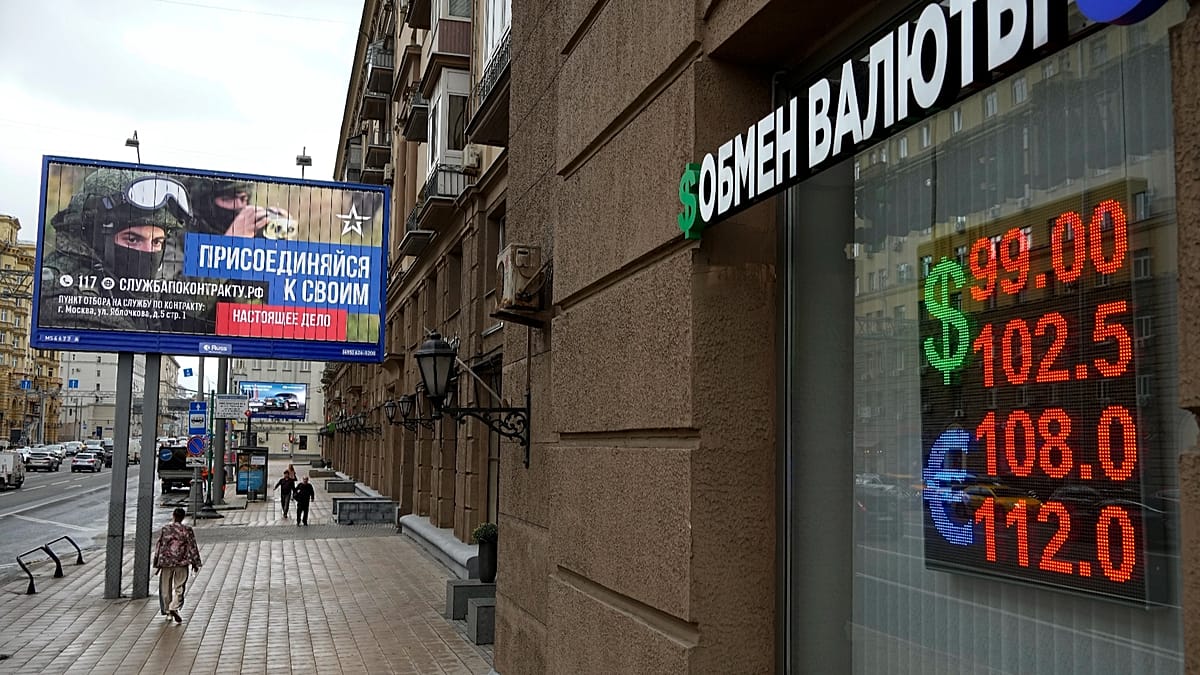
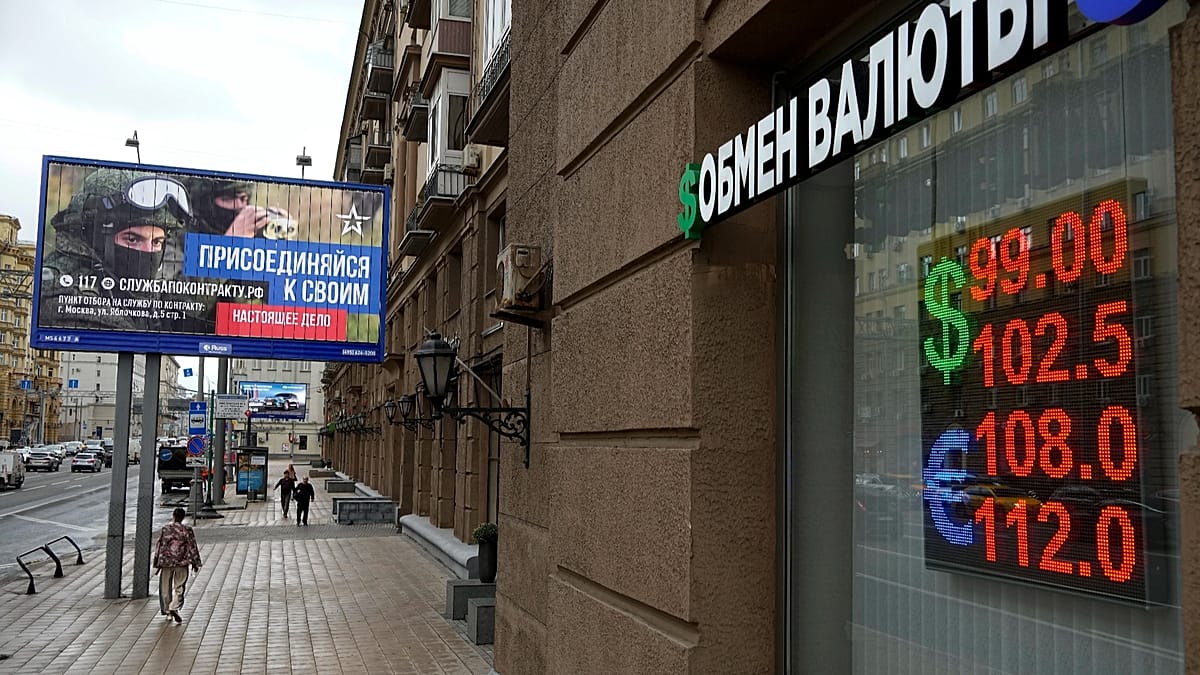
Russia's recruitment drive targeting Belarusians has become a key tool to boost manpower on the battlefield and exploits economic hardship and isolation. #Belarus #Recruitment #UkraineWar

www.euronews.com
How Russia recruits Belarusians for war in Ukraine: Methods and consequences
1954
Krzysztof Graj 2w

AFRICA DAILY REPORT — 27 SEPTEMBER 2026 Major developments reported during the previous 24 hours. 1. SOUTH AFRICA — Police investigate deadly tavern shooting Importance: 10/10 (Critical) South African police launched a manhunt after 17 people were killed at a tavern in Wedela township, southwest of Johannesburg. Police said the motive was not yet known. Source: https://www.reuters.com/world/africa/ 2. DR CONGO — Ebola reaches 63 health zones across seven provinces Importance: 10/10 (Critical) WHO reporting says the Bundibugyo Ebola outbreak has spread to Bulu in Sud Ubangi and Dungu in Haut-Uélé. As of September 23, 7,890 confirmed cases and 3,799 deaths had been reported, while conflict and displacement continue to complicate access and contact tracing. Source: https://www.channelafrica.co.za/ 3. DR CONGO — Mpox confirmed in Bunia while the Ebola response is already under pressure Importance: 9/10 (Very High) A laboratory-confirmed mpox case was identified in Bunia, raising concern about simultaneous infectious-disease pressures on surveillance, laboratories and clinical capacity. Source: https://www.businessday.co.za/ 4. SOUTH AFRICA — Tenth woman's body found in Ekurhuleni investigation Importance: 9/10 (Very High) Police discovered another woman's body east of Johannesburg, bringing the number found during the investigation to ten and intensifying concern over gender-based violence and whether some of the cases are connected. Source: https://www.africanews.com/ 5. NIGERIA–SOUTH AFRICA — Nigeria evacuates another 105 citizens Importance: 8.5/10 (Very High) Nigeria evacuated another group of nationals amid continuing anti-immigrant violence and tensions in South Africa. Nigeria's Foreign Ministry said this was the 13th consular evacuation since June 10, bringing the total evacuated to 1,821 people. Source: https://punchng.com/ 6. KENYA — Report highlights recruitment of Kenyans into Russia's military Importance: 8/10 (High) Reporting by The EastAfrican says Kenya has emerged as a leading African source country in Russian military recruitment, with recruitment practices evolving as African authorities increase scrutiny. Source: https://www.theeastafrican.co.ke/ 7. GUINEA — Former prime minister and opposition leader Sidya Touré dies in Paris Former prime minister and prominent opposition figure Sidya Touré died aged 81. He had led the Union of Republican Forces from exile in Ivory Coast; the UFR was among political parties dissolved earlier this year. Source: https://www.africanews.com/ 8. MADAGASCAR — Youth activists voice disillusionment one year after political upheaval A year after youth-led protests helped force the previous president from power, activists interviewed in Madagascar say the subsequent political transition has not delivered the changes they expected, highlighting continuing questions about governance and the country's transition. Source: https://www.africanews.com/ 9. EAST AFRICA — County levies increase costs along Kenya's regional trade corridors Importance: 7.5/10 (High) Businesses moving goods through Kenya face additional county-level charges along important transport corridors. Because Kenyan roads and the Port of Mombasa serve several landlocked East African economies, higher logistics costs can affect regional trade competitiveness and import prices. Source: https://www.theeastafrican.co.ke/ 10. AFRICA — Governments pursue new financing models for forest protection Importance: 7/10 (High) African governments are developing country-led mechanisms combining domestic expenditure with international climate finance. Kenya is highlighted for its financing approach, while Nigeria is preparing a forest-finance package for COP31. Source: https://capitalethiopia.com/ #Africa #AfricaNews #TopNewsOfAfrica #DRCongo #Bunia #Mpox #Ebola #EbolaOutbreak #PublicHealth #HealthEmergency #DiseaseSurveillance #HealthcareCapacity #OutbreakResponse #CentralAfrica #Ecology #ForestProtection #ClimateFinance #NatureFinance #Conservation #Sustainability #EnvironmentalProtection #Kenya #Russia #MilitaryRecruitment #Security #AfricanSecurity #Geopolitics #EastAfrica #RegionalSecurity #AfricaToday #wrldorg

1725
Euronews English 2w

Russia's recruitment drive targeting Belarusians has become a key tool to boost manpower on the battlefield and exploits economic hardship and isolation. #Belarus #Russia #UkraineWar

www.euronews.com
How Russia recruits Belarusians for war in Ukraine: Methods and consequences
1957
Krzysztof Graj 3w

Mali – a war where some of the people fighting do not exist In Mali's war, an apparently simple question is becoming increasingly difficult to answer: who exactly is speaking to us? A real person? A rebel organisation? A Russian influence operation? A supporter of the military junta? Or somebody who has never existed at all? In September 2026, the Dakar-based Timbuktu Institute published Des algorithmes en guerre, a report examining the use of generative artificial intelligence by actors involved in the Malian conflict. Its researchers describe the country as a potential laboratory for AI-assisted information warfare. Separatist networks are deploying synthetic fighters on TikTok. Jihadist propagandists are experimenting with AI-generated imagery. Pro-government accounts are producing large quantities of content celebrating the Malian armed forces. Russia, meanwhile, operates the most developed influence infrastructure of all: pseudo-media outlets, inauthentic accounts, AI-generated text, images and video, and systems designed to artificially amplify their visibility. Artificial intelligence did not create Mali's conflict. The war has been under way since 2012, and its participants have always fought with propaganda as well as weapons. What AI has changed is the economics of that struggle. A new “witness”, commentator, fighter, poster or video can now be produced in minutes. For audiences watching from a phone, distinguishing between genuine documentation, propaganda and material created entirely by an algorithm is becoming progressively harder. Azzghim – the fighter who cannot be killed or interrogated The most striking case documented by the Timbuktu Institute involves accounts associated with supporters of the Azawad Liberation Front, or FLA, a Tuareg separatist movement fighting the authorities in Bamako. A figure called “Azzghim” appeared on TikTok. He looks like a Tuareg fighter and regularly features in videos attacking Mali's government and Russia's Africa Corps, commenting on the conflict and promoting the cause of Azawad. There is one problem: Azzghim does not exist. Analysis of the videos identified anomalies characteristic of generative AI, including unnatural body movements, visual inconsistencies, irregular colouring and problems with audio synchronisation. According to the Timbuktu Institute, Azzghim is a synthetic character being used as the digital face of a political narrative. The propaganda advantages are considerable. An organisation no longer needs to expose a real spokesman. A synthetic personality can be designed to look exactly as its creators require, speak the appropriate language and appeal to a particular audience. Different characters could potentially be created for younger viewers, traditional communities or different ethnic and social groups. There is another advantage: a synthetic spokesman cannot be arrested, identified or interrogated. Researchers also identified accounts amplifying the material. At the time of the study, TikTok account @tawri.n.azawad had around 207,000 followers and was almost entirely devoted to publishing or repackaging content involving Azzghim. Another account, @asnan831, used a similar synthetic teenage character. An important distinction is necessary. Researchers describe these profiles as belonging to supporters or individuals associated with the FLA. The available evidence does not establish that every account is part of an operation centrally directed by the Front's leadership. The information effect, however, remains significant: a digital community can be constructed around the Azawad cause in which some of the apparent participants may not be real people at all. The jihadists are learning too The picture is different for Jama'at Nusrat al-Islam wal-Muslimin, or JNIM, the al-Qaeda-affiliated coalition that has become one of the most powerful armed groups in the Sahel. Its confirmed use of generative AI remains considerably less sophisticated. In June 2026, JNIM's Az-Zallaqa media apparatus published AI-generated posters promoting material about previous attacks. The images showed fighters in combat but contained familiar generative artefacts: buildings and vegetation merging unnaturally, blurred details and unnaturally smooth surfaces. More important than JNIM's current capabilities is what AI could add to an already sophisticated propaganda apparatus. The organisation already tailors communications to different audiences. UN reporting has documented its use of media channels for broader propaganda while other outlets increasingly distribute material in local languages, including Bambara. Generative AI could dramatically reduce the cost of this strategy, translating material into Fulfulde, Hausa, Zarma or Tamasheq, generating synthetic dubbing and producing multiple versions of the same message. The Timbuktu Institute also considers the future possibility of AI chatbots being used to personalise recruitment. That should not be presented as a capability JNIM has already demonstrated. At present, it is a risk scenario rather than a confirmed operation. Russia has the most sophisticated machine At the other end of the spectrum lies Russia's influence ecosystem. Here, AI is not an isolated experiment but another component of an infrastructure previously developed by Wagner-linked networks, Russian media operations and influence organisations operating across Africa. After Wagner's withdrawal from Mali in 2025, its military role was taken over by the Russian state-controlled Africa Corps. The information infrastructure evolved alongside it. Of particular importance is African Initiative, which presents itself as a news agency but has been identified by France's VIGINUM, the UK's Foreign, Commonwealth & Development Office and the European External Action Service as an important component of Russia's newer influence architecture in Africa. One of the most interesting elements of this ecosystem is a network researchers call AI-Freak. The operation uses generative AI to produce text, images and videos, places them on fake or apparently independent news websites and distributes them through inauthentic accounts. This is supplemented by so-called Black Hat SEO – techniques intended to artificially increase the visibility of content in search engines. Elements of this infrastructure have previously been identified by Meta and OpenAI. In 2024, OpenAI disrupted Russian accounts using ChatGPT to generate articles and comments in English, French and Russian. Some of the French-language content targeted audiences in West Africa. In a later iteration of the operation, AI models were also used to draft scripts for short videos praising the Russian Africa Corps, translate them into French and generate descriptions optimised for social media. This illustrates an important difference between the Russian approach and Azzghim. The separatist ecosystem uses AI primarily to manufacture convincing digital personalities. The Russian model increasingly resembles an industrial production line: text, image, video, pseudo-news website, distribution account, search optimisation and additional channels amplifying the narrative. The objective is not merely to convince someone of a single claim. It is to occupy as much of the information environment as possible with narratives advantageous to Moscow: Russia as an effective security partner, the West as a neo-colonial aggressor, France as a source of instability and Russian forces as defenders of African sovereignty. Yet VIGINUM also warns against equating technological sophistication with actual impact. Some Russian influence channels still attract relatively small audiences. A sophisticated operation is not automatically a successful one. The junta is building its own digital reality Mali's military authorities operate within the same contested information environment. Since breaking with France and moving closer to Moscow, Bamako has increasingly restricted independent media space while promoting a narrative built around restored sovereignty, military success and the benefits of its Russian partnership. The Timbuktu Institute highlights the TikTok account @6tm_officiel. At the time of the study, it had more than 436,000 followers and published substantial amounts of AI-generated material presenting Mali's armed forces, the FAMa, and the Africa Corps in a favourable light. One video concerning the battle for Kidal accumulated around 4.7 million views. Again, attribution requires care. Researchers describe the account as being operated by an individual based in Bamako; they do not provide evidence that it is officially managed by the Malian government. It is better understood as part of a wider pro-government information ecosystem in which the boundaries between state communications, supporters and co-ordinated propaganda can be difficult to establish. The Africa Center for Strategic Studies has previously identified the military regimes in Mali and Burkina Faso as important sources of disinformation campaigns in West Africa. Recurring narratives target France, the United Nations, ECOWAS, human-rights organisations and independent media, while presenting criticism of the authorities as part of a foreign conspiracy. Generative AI allows such narratives to be produced faster, more cheaply and in far more variations. Everyone is fighting over a different version of the same war What makes Mali particularly revealing is that multiple actors are using similar technology for very different objectives. FLA-linked networks need digital faces capable of humanising the Azawad cause and attacking Russia's presence. JNIM needs propaganda material and increasingly localised communications. The pro-government ecosystem seeks to portray Mali's armed forces as victorious and reinforce the junta's legitimacy. Russia possesses the broadest infrastructure, in which AI is merely one component of a larger system involving media outlets, websites, local partners, social-media profiles and technical amplification. The result is a war taking place simultaneously in two realities. In the first, soldiers and civilians are killed, towns change hands and the army, separatists and jihadists fight for territory. In the second, every side is trying to determine what the first reality will look like on a smartphone screen. Generative AI does not need to create a perfect deepfake to be effective. It merely needs to increase the number of competing versions of events until an ordinary viewer can no longer easily determine which one deserves to be trusted. That is why Mali matters. It is not showing us the future of information warfare. It is showing us its present. One TikTok video may feature a real soldier. Another may feature a propagandist. A third may feature a fighter who has never existed. And all three can tell completely different stories about the same war. Sources Timbuktu Institute – Des algorithmes en guerre: Comment l'IA générative rebat les cartes du conflit malien https://timbuktu-institute.org/index.php/toutes-l-actualites/item/1731-rapport-des-algorithmes-en-guerre-comment-l-ia-generative-rebat-les-cartes-du-conflit-malien AfricaNews/AFP – “Mali's information war is increasingly being shaped by AI” https://www.africanews.com/2026/09/09/malis-information-war-is-increasingly-being-shaped-by-ai/ OpenAI – research on Russia-origin influence activity and Operation Stop News https://openai.com/index/disrupting-malicious-uses-of-ai-stop-news-2024/ VIGINUM / FCDO / EEAS – technical report on African Initiative and the AI-Freak network https://www.sgdsn.gouv.fr/files/files/Publications/20250612_TLP-CLEAR_VIGINUM_FCDO_EEAS_Technical_Report_African_Initiative_EN.pdf Africa Center for Strategic Studies – Mapping a Surge of Disinformation in Africa https://africacenter.org/spotlight/mapping-a-surge-of-disinformation-in-africa/ Timbuktu Institute – analysis of AI use by JNIM https://timbuktu-institute.org/index.php/toutes-l-actualites/item/1735-artificial-intelligence-a-new-propaganda-lever-for-jnim-in-mali?print=1&tmpl=component #Disinformation #Mali #Sahel #Africa #ArtificialIntelligence #AI #GenerativeAI #AIPropaganda #InformationWarfare #InfluenceOperations #Propaganda #Deepfakes #SyntheticMedia #Azawad #FLA #JNIM #AfricaCorps #Russia #RussianInfluence #TikTok #DigitalWarfare #MediaManipulation #WRLD

timbuktu-institute.org
Rapport - DES ALGORITHMES EN GUERRE : Comment l'IA générative rebat les cartes du conflit malien
1623
Vatnik Soup Aug 29

Russia’s recruitment isn't going as planned. Independent Russian media Verstka says new soldiers are brought in from prisons or picked up off the streets. Half of them can't carry full kit, some units are at only 30–40% strength, and many desert at the first opportunity. Most #Russia #MilitaryRecruitment #Desertion #RU

937
Oliver Stuenkel 🇧🇷 Aug 25

Social media, particularly Tik Tok and Facebook, were the primary sources of recruitment of approximately 44% of children and adolescents by armed groups in Colombia https://t.co/bhzgImN2UM #SocialMedia #Colombia #ChildRecruitment #CO

117
Nikos Kotsis Aug 9

Ο Ζοφρέ Μονκαντά προχωρά τις επαφές για την απόκτηση μέσου. Ο head of recruitment του Ολυμπιακού έβαλε ξανά σε πρώτο πλάνο τον Νοά Καντιού, για τη μεσαία γραμμή. Οι λεπτομέρειες για την περίπτωση του Κρίστιαν Κάσερες. Και η αλλαγή στάσης του Γκουστάβο Πουέρτα, που άνοιξε πάλι την υπόθεση. https://t.co/if7F3KPb34 #Ολυμπιακός #μεταγραφές #ποδόσφαιρο

12028
Vatnik Soup Jul 29

Is there a reason why Meta allows Russian recruitment campaigns on their platforms? And why don't we hold them accountable to prolonging the war against Ukraine? #Meta #RussianRecruitment #UkraineWar #RU #UA

4139
Vibes Foot Jul 27

🔴 𝗟𝗜𝗩𝗘𝗥𝗣𝗢𝗢𝗟 𝗩𝗔 𝗧𝗢𝗨𝗧 𝗙𝗔𝗜𝗥𝗘 𝗣𝗢𝗨𝗥 𝗥𝗘𝗖𝗥𝗨𝗧𝗘𝗥 𝗕𝗔𝗥𝗖𝗢𝗟𝗔 🇫🇷 𝗖𝗘𝗧 𝗘́𝗧𝗘́ ! ❤️🤍 Le club envisage de soumettre une offre d’ouverture sous peu. 🗞️ @Plettigoal https://t.co/jUNCVpK5Fp #Liverpool #TransferNews #Recruitment

15143
Mary Lou McDonald Jul 16

At just 15 years of age, Cara Darmody finishes her third 50-hour protest outside Leinster House. Cara is standing up for the more than 21,000 children waiting beyond the legal deadline for an Assessment of Need, calling for the recruitment of the psychologists and therapists https://t.co/sJV3H25wvs #ChildrensRights #MentalHealth #Protest #IE

119
Euronews English Jun 18

An investigation by Ukraine's military intelligence has revealed that Russia's network of Russian Houses in at least 22 African countries serves as a recruitment tool for its war in Ukraine, enticing young Africans with promises of education and employment while simultaneously facilitating military enlistment and propaganda efforts. #RussianInfluence #RecruitmentCrisis #AfricaConflict

www.euronews.com
Moscow uses 'Russian Houses' in Africa to lure recruits into war in Ukraine, investigation shows
10125
Robert Pszczel Jun 16

The recruitment of non-Russian (but 🇷🇺 speaking) individuals residing in the EU countries for sabotage in 🇪🇺 is a growing security threat. It requires tough, coordinated responses, including heavy punishment to discourage further volunteers and action re Telegram platform.👇 #SecurityThreat #Sabotage #EUResponses #EU #RU

Sven Clement Jun 12

When new leadership positions are created or revived, transparency in recruitment and selection is essential to maintaining public trust! #SportsCommissioner #Leadership #Transparency #PublicTrust #Nospecificcountriesarementionedinthetweet #sotherearenocountrycodestoreturn.

Egidijus Navikas May 27

🇪🇺 EUDEL @ Embassy of 🇱🇹 in 🇰🇿, screened documentaries “To Die for putin” and “Mercenaries: Why Central Asians Go to War”, produced within EU-funded CARAVAN project. Documentaries address the growing issue of recruitment of Central Asian nationals into the russian armed forces https://t.co/6aaVz4sJjQ #EU #CentralAsia #Documentary #EU #LT #KZ #RU

Emmanuel Grégoire May 26

I have vowed to reform the recruitment system with €20m for training and monitoring.

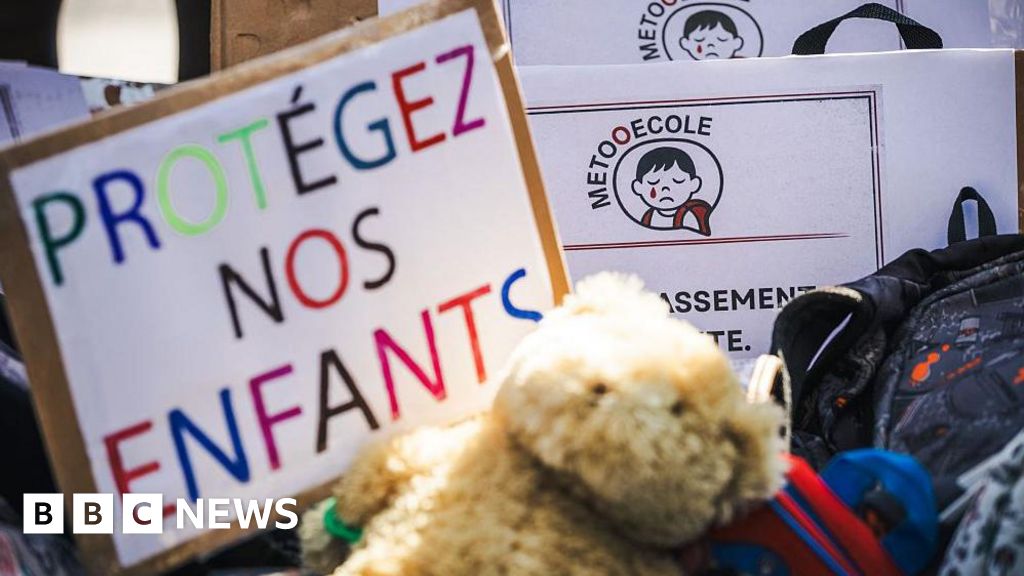
Wave of child abuse cases shakes schools in Paris
www.bbc.com
10155
BBC May 26

A wave of child abuse allegations has engulfed Paris schools, leading to protests from parents and a climate of fear, as numerous animateurs (school assistants) face accusations of inappropriate behavior, prompting calls for reform in their recruitment and oversight amidst an ongoing scandal that has seen at least 16 arrests and multiple trials. #ChildAbuse #ParisSchools #ProtectOurChildren

www.bbc.com
Wave of child abuse cases shakes schools in Paris
10155
Emmanuel Grégoire May 26

I have vowed to reform the recruitment system with €20m for training and monitoring.

Wave of child abuse cases shakes schools in Paris
www.bbc.com
10156
BBC May 26

A wave of child abuse allegations has shaken schools in Paris, leading to protests and a climate of mistrust among parents, as nearly 100 animateurs face scrutiny for inappropriate behavior, prompting calls for reforms in recruitment and monitoring practices by the city government. #ChildAbuse #ParisSchools #ProtectOurChildren

www.bbc.com
Wave of child abuse cases shakes schools in Paris
10156
Euronews English May 19

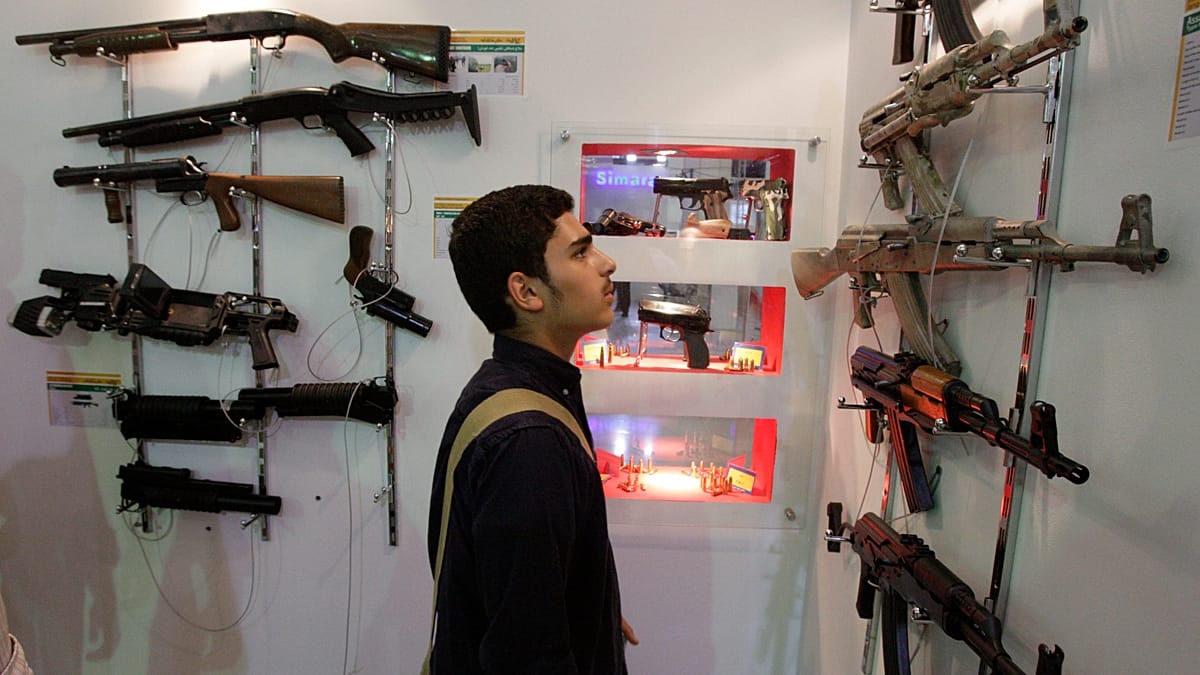
Iranian state television has aired live weapon training sessions, promoting child recruitment by the Islamic Revolutionary Guard Corps (IRGC) as young as 12, amidst ongoing conflicts and recent reports of a child being killed at an IRGC checkpoint. #ChildRecruitment #IranMilitary #HumanRightsViolation

www.euronews.com
Iranian TV teaches viewers to shoot as IRGC ramps up child recruitment
11360