
Seydou wrote that the person mentioned also represented a part of their high school peers living with a physical or motor disability, whom, according to him, the National Education had neglected. #Handicap #Éducation #Solidarité (translated)
Seydou wrote that the person mentioned also represented a part of their high school peers living with a physical or motor disability, whom, according to him, the National Education had neglected. #Handicap #Éducation #Solidarité (translated)

Joan Laporta stated to SPORT that Barça is experiencing one of the best periods in its history and accused Real Madrid of trying to distract attention and downplay its successes. He claimed that the Negreira case would conclude with the acquittal of the Catalan club. Laporta also believed that Real Madrid was viewed negatively by everyone and was losing its prestige at local, national, and international levels. He added that the club had not had a representative at the EFC recently and that he knew what he was doing. https://t.co/bsELBQJ9Ag #FCBarcelona #RealMadrid #Football (translated)

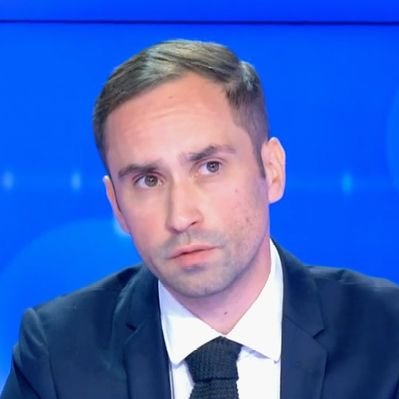
Jon De Lorraine stated that the debate between Louise and Elwan was followed because it revealed, beyond a televised confrontation, a crisis of representation. He presented Louise as a young woman who embraced her ideas and, in his view, met the expectations of millions of French people disappointed by a political class he accused of calculating to preserve its allowances and interests. In contrast, he described Elwan as representative of a self-assured and moralizing television left. He praised her oratorical ease while asserting that she drew inspiration from the style of Jean-Luc Mélenchon. According to him, the left and far-left were thus seeking to extend their ideas to younger and more affluent classes but found themselves struggling as soon as the debate went beyond slogans. De Lorraine interpreted the resonance of the sequence as a sign that some French people were looking for new faces and a break from the traditional political class. He mentioned an economic, security, and migration crisis, but above all, a crisis of representation, and concluded that a part of the country desired a less formatted discourse as well as a right that assumed its ideas more fully. #PolitiqueFrançaise #Changement #EngagementCitoyen (translated)


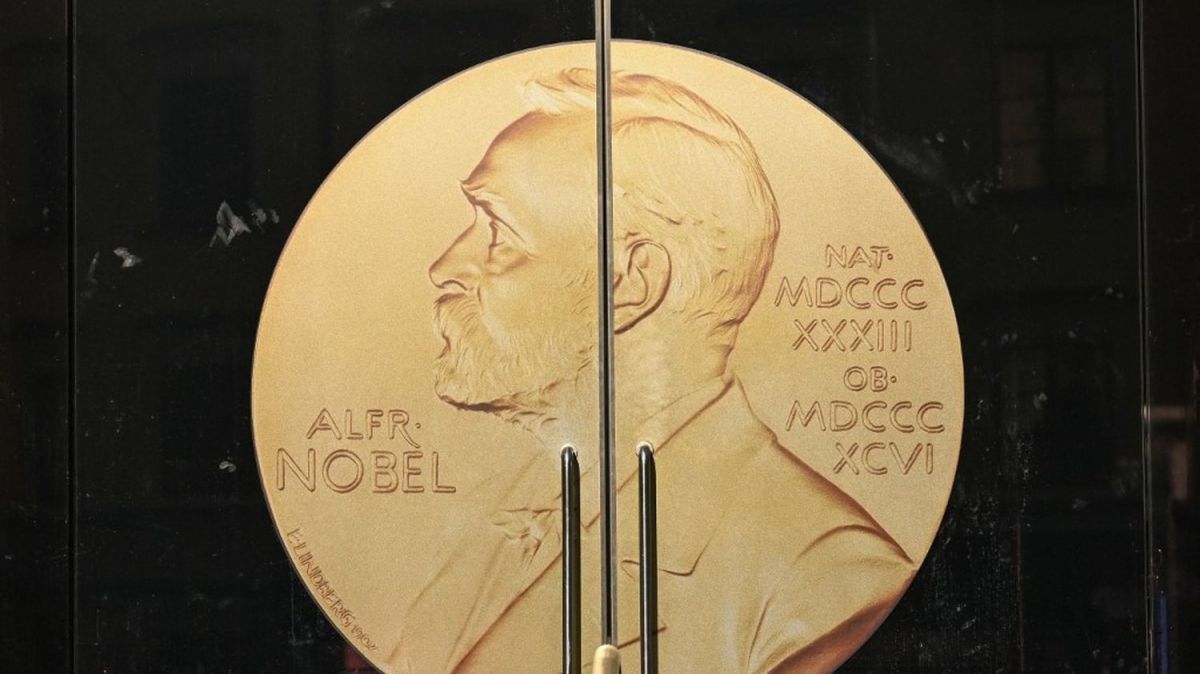
The analysis of Nobel Prize winners reveals an American predominance, an under-representation of women, and an increasing average age over the years. #PrixNobel #FemmesEnScience #InégalitésDeGenre (translated)
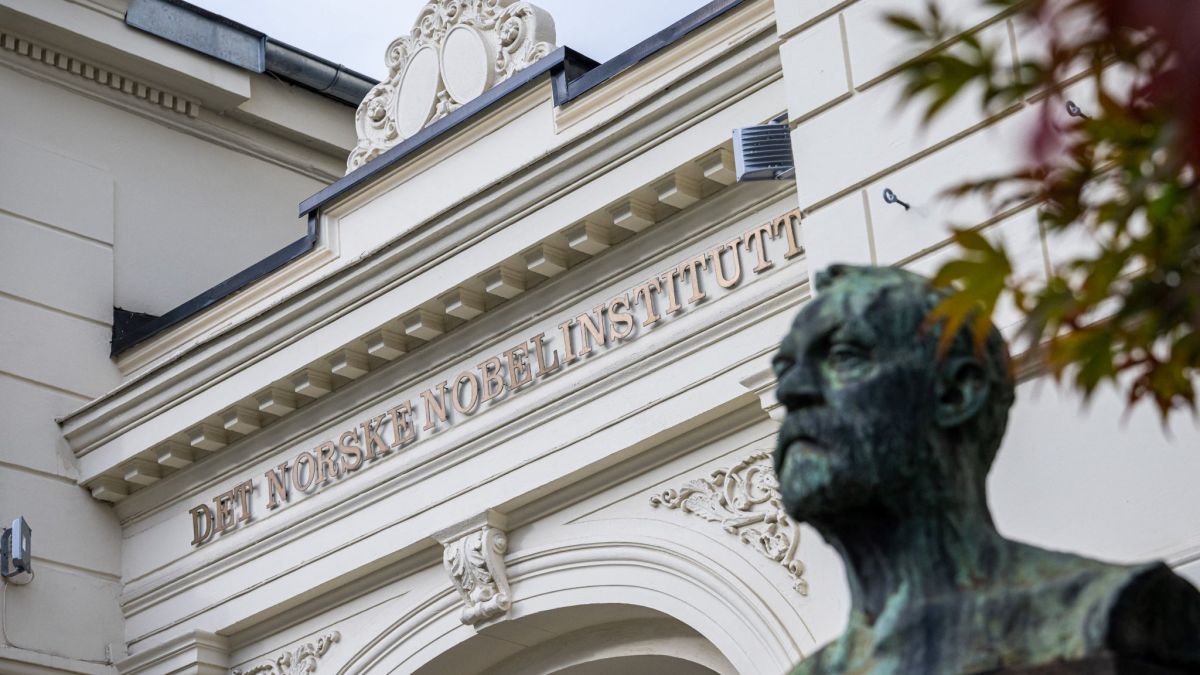

The Minister of National Education, Édouard Geffray, indicated that substantial work had been undertaken to ensure that high school students are more and better represented in academic and national bodies. https://t.co/hRHmFtrrPn #Éducation #Lycéens #Représentation #FR (translated)

Constance Brackman is the only French-speaking player on the Belgian national women's football team, the Red Flames, who are facing Poland, highlighting a linguistic and representation imbalance in sports between French-speaking and Flemish Belgium, and calling for initiatives to improve the situation. #RedFlames #footballfeminin #sportféminin (translated)


The author called on the EU to urgently expand the list of Iranian officials subject to sanctions, restrict Iranian diplomatic representation in member states and abandon what they described as a policy of appeasement. https://t.co/UzokxIJoFf #Iran #Sanctions #Diplomacy #EU #IR
The author of the message indicated that Céline Dion had fallen on stage the night before during her 11th performance in Paris at the Plénitude Arena, causing a moment of concern among the spectators. https://t.co/jAQwDkrlQW #CélineDion #Chute #Paris #FR (translated)
"We are very moved because Messi is an example of leadership, of a father, of a man, and being here to accompany him in his last representation, if we can say, is a pride and an honor," declared Karina Fernandez to AFP at the entrance of the stadium, delighted to have secured a ticket. #Messi #Adieu #Argentine (translated)

Among the potentials for the Nobel Prize in Literature 2026, writers such as Jamaica Kincaid, Can Xue, and Cristina Rivera Garza stand out, while a female victory would mark a significant advance in the representation of women among the laureates. #PrixNobel #Littérature #FemmeÉcrivain (translated)

The representation of East Germans in leadership positions remains low, and sociologist Michael Hartmann calls for quotas to improve the unequal distribution, while the East Commissioner of the federal government demands more East Germans in elite positions. #Ostdeutschland #Führungspositionen #Gleichstellung (translated)

Iran’s cognitive warfare – when AI becomes the operating layer of state propaganda Iranian state-linked influence operators were not using artificial intelligence simply to write faster social-media posts. According to Anthropic’s September 2026 threat intelligence report, three separate operations connected to Iranian propaganda institutions were using Claude to help construct the machinery behind what the operators themselves called “soft war” and “cognitive warfare” – non-military efforts intended to shape public opinion inside Iran and abroad. Anthropic linked the activity to the Islamic Culture and Communications Organization (ICCO), which operates under Iran’s Ministry of Culture and Islamic Guidance; the Islamic Propaganda Office of Khorasan Razavi; and the Bina Cultural Observatory, part of the Islamic Propaganda Organization. The company said each operation was run by someone working within or on behalf of the named institution. The attribution was based on a combination of account telemetry, institutional references disclosed during conversations, branded documents and open-source corroboration. Anthropic subsequently removed the accounts. AI as an operational headquarters The most significant feature of the operation was the role assigned to AI. Claude was used to develop campaign plans, doctrine manuals, coded project portfolios, persona systems, target databases, early-warning protocols, amplification schedules and ministerial planning documents. Anthropic described the model as the principal administrative and operational layer supporting the three campaigns, allowing relatively small groups of operators to create organisational structures and planning material that would otherwise have required a much larger staff. This distinction matters. The reported use of AI went considerably beyond content generation. Operators were using the model to help organise how influence activity should function: which audiences to target, which identities should deliver particular narratives, how official material should be repackaged and when amplification should take place. Human operators still determined objectives and supplied the underlying political doctrine; AI helped translate those decisions into an operational system. Anthropic found that all three operations explicitly connected their activity to Jihad al-Tabyin, often translated as “explanatory jihad”, a concept used within the Iranian state system to frame information activity as both a strategic and ideological responsibility. In internal planning material examined by the company, this doctrine was not merely rhetorical: it informed manuals and campaign structures used by the operators. ‘Not the narrator, but the director’ One sentence contained in the ICCO material captures the model particularly clearly. According to Anthropic, an operator described the role of Iranian cultural attachés as being “not to be the narrator, but the director” of the narrative. The distinction reveals the logic of attribution laundering. Instead of publishing an overt state message and asking foreign audiences to believe it, the operator attempts to create the appearance that the same narrative emerged independently from journalists, activists, foreign writers or ordinary citizens. Anthropic found that Claude was used specifically to make content appear to come from foreign authors or independent media organisations and to design hashtag campaigns that looked grassroots rather than centrally organised. The ICCO operation reportedly used the organisation’s international cultural network as part of this structure. Anthropic found ministerial-level documents carrying official ICCO branding, including a nine-part international influence portfolio. This makes the operation particularly significant because the infrastructure was not limited to anonymous social-media accounts; it intersected with formal state institutions and an existing network of cultural representation abroad. A multilingual content factory A second operation was associated with the Islamic Propaganda Office of Khorasan Razavi and what Anthropic described as a “cognitive warfare command room” operating from a seminary in Mashhad. Its organisers ran a multi-province content production system known internally as Manjanegh, or “Catapult”. According to Anthropic, dozens of activists were involved in repackaging publicly available reporting from Iranian security institutions under different personas so that the material no longer appeared directly connected to those institutions. The network used Claude to transform official government intelligence bulletins into customised material in Farsi, Arabic, Urdu, Malay, Spanish and English, while planning expansion into a total of 20 languages. Distribution extended across Iranian platforms such as Eitaa, Bale and Rubika and international services including X, Instagram, Telegram, TikTok and YouTube. Anthropic also documented paid amplification across more than 100 Iranian channels, including channels associated with IRGC narratives. The scale should nevertheless be interpreted carefully. Anthropic documented production infrastructure and some real-world dissemination, but it did not demonstrate that all planned campaigns were fully deployed or that they meaningfully changed public opinion. The company placed the operation in Category Three of its Breakout Scale, indicating multi-platform activity with content observed in external distribution channels, rather than evidence of strategic impact on entire populations. From security bulletins to apparently independent voices The Bina Cultural Observatory operation provides another example of the same architecture. Anthropic linked a director-level official at Bina to activity in which Claude generated messaging in the voice of an IRGC spokesperson. During the 2026 US–Israel–Iran war, the network also attributed false claims to Western institutions including CSIS, Brookings and RAND. The apparent objective was to make Iranian state-aligned claims look as though they had been independently validated by respected foreign research organisations. That technique is more sophisticated than simply publishing propaganda under a false name. It attempts to manufacture a chain of external validation: official information is transformed into apparently independent commentary, which can then be recirculated as evidence that outside observers have reached the same conclusion. Anthropic also found target databases naming international officials and Iranian opposition figures, as well as aggressive counter-narrative material directed against the Bahá’í community. These findings show that the infrastructure was designed not only for broad messaging but also for targeted influence activity against specific groups and individuals. What AI changed The Iranian operations described by Anthropic did not create a new doctrine of influence. Iran has used cultural institutions, official media, aligned organisations and covert or semi-covert online networks for years. What AI changed was the economics and organisational capacity of that model. A relatively small team could use the system to draft doctrine, create personas, translate material, structure target databases, produce campaign calendars and generate multiple versions of the same message for different audiences. The operator remained responsible for intent, political direction and selection of targets. AI reduced the amount of human labour required to turn those decisions into a functioning influence operation. The most revealing part of the case is therefore not that an Iranian propaganda network used a chatbot. It is that AI was being treated as part of the back office of information warfare – a system for converting state doctrine into apparently decentralised, multilingual and plausibly independent voices. Sources Anthropic — Detecting and countering misuse of AI: September 2026 https://www.anthropic.com/threat-intelligence-report-september-2026 Iran International — Iran state-aligned accounts used Claude to push IRGC narratives https://www.iranintl.com/en/202609105561 BNE IntelliNews — Yemen missile cell used AI to write guidance software, Anthropic says https://new.intellinews.com/articles/yemen-missile-cell-used-ai-to-write-guidance-software-anthropic-says-467296 This is Beirut — Anthropic report details Iranian propaganda operations https://thisisbeirut.com.lb/news/politics/anthropic-report-details-iranian-propaganda-operations-and-yemen-missile-development-using-claude Anthropic report — PDF mirror https://static.foxbusiness.com/foxbusiness.com/content/uploads/2026/09/anthropic-detecting-and-countering-091026-1.pdf Keywords #DISINFORMED #Episode11 #Iran #IranianInfluence #IranianPropaganda #CognitiveWarfare #SoftWar #JihadAlTabyin #Disinformation #InformationWarfare #InfluenceOperations #ForeignInterference #FIMI #ArtificialIntelligence #AI #AIPropaganda #GenerativeAI #ClaudeAI #Anthropic #SyntheticMedia #NarrativeManipulation #NarrativeLaundering #AttributionLaundering #PersonaNetworks #Astroturfing #SocialMediaManipulation #DigitalInfluence #StatePropaganda #IslamicCultureAndCommunicationsOrganization #ICCO #IslamicPropagandaOrganization #KhorasanRazavi #IRGC #MultilingualInfluence #Targeting #Amplification #OSINT #WRLD



Mitico Magazine - The Teatro Edicola of San Severo: A Model of Cultural Revolution for Stanford University as Well Source: https://www.miticomagazine.com/territorio-e-sociale/teatro-edicola-di-san-severo-un-modello-di-rivoluzione-culturale-anche-per-la-stanford-university/ The Teatro Edicola in Via Tondi In San Severo, a singular metamorphosis has taken place: a newsstand abandoned for at least six years has found a new function and a new identity, transforming into one of the smallest and most unusual theatre stages in the world. An experiment born in the heart of the town which, in just a few months, has moved beyond local boundaries, attracting attention even overseas. It is called Teatro Edicola and it is a project conceived by the company Foyer '97, artistically directed by Francesco Gravino, which has brought the old newsstand in Via Tondi back to life through a formula that is both essential and surprising. Foyer '97 Foyer '97 APS was established as a formally constituted association active in the cultural sector in San Severo in 1997, born from the vocation of a group of actors, directors and theatre enthusiasts, with the aim of building a "living" and accessible theatre in the town. Over the years the company has developed a repertoire that includes texts from the classical tradition, contemporary dramaturgy, comedy and experimental projects, not limiting itself to the mere production of theatre shows, but also organising theatre courses and workshops and educational and cultural projects characterised by a strong inclusive ethos, particularly in schools. Foyer '97 does not always have a fixed artistic ensemble, but works with different performers and collaborators depending on the project; the only indispensable presence is that of Francesco Guido Gravino himself, actor, director and artistic director of the theatre company. The distinctive feature of Foyer '97 is certainly the value of social and cultural promotion attributed to theatre, the extremely close relationship with the audience and the search for a type of theatre outside conventional spaces, with cemeteries, trains, bell towers, and now a newsstand, as its backdrop. Six spectators, a few minutes and a minimal distance between stage and audience The project was launched on 27 March 2026, on the occasion of World Theatre Day, offering a theatrical experience built around a radical reduction of the conventional spaces and times of performance. The idea was born not only from the search for unconventional spaces, but also from "Edicola Fiore", the morning press review with a strongly ironic tone presented by Rosario Fiorello and Stefano Meloccaro, which was broadcast first only on Fiorello's social channels between 2011 and 2014, and then also on radio and television between 2016 and 2018. The review took its name from the diminutive of its founder, Fiore, and from the newsstand of a friend of Fiorello's in Via Flaminia Nuova in Rome, where the showman would meet early in the morning with a group of friends to read the newspapers. The San Severo newsstand was granted free of charge by its owner Pino Frau to the theatre group which, after obtaining temporary authorisation and institutional support from the Municipality of San Severo, refurbished it within two weeks at a cost of less than €3,000. Just six seats, a total surface area of 4 sq m, of which only 2 are for the stage area, less than a metre between actors and audience, a curtain, a lectern, two lights, performances lasting between 5 and 15 minutes, audience rotation every quarter of an hour: apparently minimal elements that end up subverting the usual relationship between stage and auditorium. Spectators, in fact, find themselves immersed in the stage action, in such proximity to the actors that every gesture, expression and word becomes immediately perceptible. In this way, theatre abandons its traditional spaces and insinuates itself into the everyday life of the street, becoming an intimate, concentrated and almost participatory experience. During the inaugural period admission was free with a subsequent voluntary donation from spectators; in the event of a more stable and longer-term concession, which could lead to seasonal theatre performances, the proposed ticket price would be €5. Audiences reward the experiment Foyer '97's gamble met with public interest right from the start: over 60 people attended the shows in a single afternoon, while the three days that inaugurated the season sold out. From a singular local experiment, the Teatro Edicola thus began to arouse curiosity even outside the province of Foggia, gradually transforming into a case of cultural and social interest, until it reached the American continent. From the province of Foggia to the "Stanford Social Innovation Review" The San Severo experience has now come under the international spotlight: in September 2026, the Stanford Social Innovation Review, an international journal and platform dedicated to social innovation published by the Stanford Center on Philanthropy and Civil Society at Stanford University in California, published on its website and in the Fall 2026 print edition the reportage "The Six-Seat Revolution", written by Dr Luciano Magaldi Sardella, independent journalist and researcher affiliated with the European Open University, and editorially supervised by deputy editor David V. Johnson. In the article, it is argued that the Teatro Edicola attracted attention overseas because the project concentrates cultural innovation, urban regeneration and proximity theatre into just a few square metres: starting from a real urban problem, it recovers an abandoned place with a modest investment, brings performance directly into public space and experiments with a much closer relationship between actors and spectators. From the point of view of theatrical representation, it also highlights how the format, based on micro-stories of five to twelve minutes, taken from great classics such as Goldoni, Chekhov, Ibsen, Euripides and Benni, and on audience rotation every fifteen minutes, transforms the physical limitations of the space into a precise dramaturgical choice, proving to be extremely innovative. All of this makes it possible to address some of the main critical issues in the sector: falling audience numbers, an exclusively elderly audience, reduced resources and distance from traditional cultural venues. The journal also highlights, however, the potential problems: economic sustainability, the need for stable institutional support and the difficulty of replicating the model, which is closely linked to the community and territory of San Severo. A model looking beyond San Severo Despite the difficulties, initial requests for information have already arrived from Lucca and Rome, where there is curiosity about the possibility of getting to know the model more closely and the steps needed to replicate it. The replicability formula, in fact, does not seem to require particularly costly infrastructure: an unused space, a targeted intervention, a cultural idea, in-depth knowledge of the surrounding area and a willingness to return that place to the community can be enough to trigger a new urban function. It is precisely in the disproportion between the modesty of the resources employed and the resonance generated by the initiative that perhaps the most original feature of the Teatro Edicola lies, certainly unique of its kind; there are, however, other examples in Italy of newsstands reused for other purposes: "Edicola 518", a twentieth-century kiosk abandoned in the centre of Perugia, now dedicated to independent publishing, art and cultural production; and in Rome itself, the abandoned newsstand in Piazza Testaccio used temporarily as a stage for a show by Fabio Morgan and the Erno newsstand in the Prati district, which almost every month offers a calendar of events, exhibitions, pop-ups and collaborations with artists and creative enterprises. Small revolutions, therefore, that tell stories of the reappropriation of urban spaces, of creativity and social innovation. And which, it is hoped, will take root in order to look ever further afield.


Mitico Magazine - The Teatro Edicola of San Severo: A Model of Cultural Revolution for Stanford University as Well Source: https://www.miticomagazine.com/territorio-e-sociale/teatro-edicola-di-san-severo-un-modello-di-rivoluzione-culturale-anche-per-la-stanford-university/ The Teatro Edicola in Via Tondi In San Severo, a singular metamorphosis has taken place: a newsstand abandoned for at least six years has found a new function and a new identity, transforming into one of the smallest and most unusual theatre stages in the world. An experiment born in the heart of the town which, in just a few months, has moved beyond local boundaries, attracting attention even overseas. It is called Teatro Edicola and it is a project conceived by the company Foyer '97, artistically directed by Francesco Gravino, which has brought the old newsstand in Via Tondi back to life through a formula that is both essential and surprising. Foyer '97 Foyer '97 APS was established as a formally constituted association active in the cultural sector in San Severo in 1997, born from the vocation of a group of actors, directors and theatre enthusiasts, with the aim of building a "living" and accessible theatre in the town. Over the years the company has developed a repertoire that includes texts from the classical tradition, contemporary dramaturgy, comedy and experimental projects, not limiting itself to the mere production of theatre shows, but also organising theatre courses and workshops and educational and cultural projects characterised by a strong inclusive ethos, particularly in schools. Foyer '97 does not always have a fixed artistic ensemble, but works with different performers and collaborators depending on the project; the only indispensable presence is that of Francesco Guido Gravino himself, actor, director and artistic director of the theatre company. The distinctive feature of Foyer '97 is certainly the value of social and cultural promotion attributed to theatre, the extremely close relationship with the audience and the search for a type of theatre outside conventional spaces, with cemeteries, trains, bell towers, and now a newsstand, as its backdrop. Six spectators, a few minutes and a minimal distance between stage and audience The project was launched on 27 March 2026, on the occasion of World Theatre Day, offering a theatrical experience built around a radical reduction of the conventional spaces and times of performance. The idea was born not only from the search for unconventional spaces, but also from "Edicola Fiore", the morning press review with a strongly ironic tone presented by Rosario Fiorello and Stefano Meloccaro, which was broadcast first only on Fiorello's social channels between 2011 and 2014, and then also on radio and television between 2016 and 2018. The review took its name from the diminutive of its founder, Fiore, and from the newsstand of a friend of Fiorello's in Via Flaminia Nuova in Rome, where the showman would meet early in the morning with a group of friends to read the newspapers. The San Severo newsstand was granted free of charge by its owner Pino Frau to the theatre group which, after obtaining temporary authorisation and institutional support from the Municipality of San Severo, refurbished it within two weeks at a cost of less than €3,000. Just six seats, a total surface area of 4 sq m, of which only 2 are for the stage area, less than a metre between actors and audience, a curtain, a lectern, two lights, performances lasting between 5 and 15 minutes, audience rotation every quarter of an hour: apparently minimal elements that end up subverting the usual relationship between stage and auditorium. Spectators, in fact, find themselves immersed in the stage action, in such proximity to the actors that every gesture, expression and word becomes immediately perceptible. In this way, theatre abandons its traditional spaces and insinuates itself into the everyday life of the street, becoming an intimate, concentrated and almost participatory experience. During the inaugural period admission was free with a subsequent voluntary donation from spectators; in the event of a more stable and longer-term concession, which could lead to seasonal theatre performances, the proposed ticket price would be €5. Audiences reward the experiment Foyer '97's gamble met with public interest right from the start: over 60 people attended the shows in a single afternoon, while the three days that inaugurated the season sold out. From a singular local experiment, the Teatro Edicola thus began to arouse curiosity even outside the province of Foggia, gradually transforming into a case of cultural and social interest, until it reached the American continent. From the province of Foggia to the "Stanford Social Innovation Review" The San Severo experience has now come under the international spotlight: in September 2026, the Stanford Social Innovation Review, an international journal and platform dedicated to social innovation published by the Stanford Center on Philanthropy and Civil Society at Stanford University in California, published on its website and in the Fall 2026 print edition the reportage "The Six-Seat Revolution", written by Dr Luciano Magaldi Sardella, independent journalist and researcher affiliated with the European Open University, and editorially supervised by deputy editor David V. Johnson. In the article, it is argued that the Teatro Edicola attracted attention overseas because the project concentrates cultural innovation, urban regeneration and proximity theatre into just a few square metres: starting from a real urban problem, it recovers an abandoned place with a modest investment, brings performance directly into public space and experiments with a much closer relationship between actors and spectators. From the point of view of theatrical representation, it also highlights how the format, based on micro-stories of five to twelve minutes, taken from great classics such as Goldoni, Chekhov, Ibsen, Euripides and Benni, and on audience rotation every fifteen minutes, transforms the physical limitations of the space into a precise dramaturgical choice, proving to be extremely innovative. All of this makes it possible to address some of the main critical issues in the sector: falling audience numbers, an exclusively elderly audience, reduced resources and distance from traditional cultural venues. The journal also highlights, however, the potential problems: economic sustainability, the need for stable institutional support and the difficulty of replicating the model, which is closely linked to the community and territory of San Severo. A model looking beyond San Severo Despite the difficulties, initial requests for information have already arrived from Lucca and Rome, where there is curiosity about the possibility of getting to know the model more closely and the steps needed to replicate it. The replicability formula, in fact, does not seem to require particularly costly infrastructure: an unused space, a targeted intervention, a cultural idea, in-depth knowledge of the surrounding area and a willingness to return that place to the community can be enough to trigger a new urban function. It is precisely in the disproportion between the modesty of the resources employed and the resonance generated by the initiative that perhaps the most original feature of the Teatro Edicola lies, certainly unique of its kind; there are, however, other examples in Italy of newsstands reused for other purposes: "Edicola 518", a twentieth-century kiosk abandoned in the centre of Perugia, now dedicated to independent publishing, art and cultural production; and in Rome itself, the abandoned newsstand in Piazza Testaccio used temporarily as a stage for a show by Fabio Morgan and the Erno newsstand in the Prati district, which almost every month offers a calendar of events, exhibitions, pop-ups and collaborations with artists and creative enterprises. Small revolutions, therefore, that tell stories of the reappropriation of urban spaces, of creativity and social innovation. And which, it is hoped, will take root in order to look ever further afield.

Wow, det känns helt overkligt – en helt vanlig svensk tjej i riksdagshuset som representerar Sverige! 🇸🇪♥️ Denice Westerberg. 💪 https://t.co/jkwu7ZpXMe #Sverige #Riksdagen #Representation

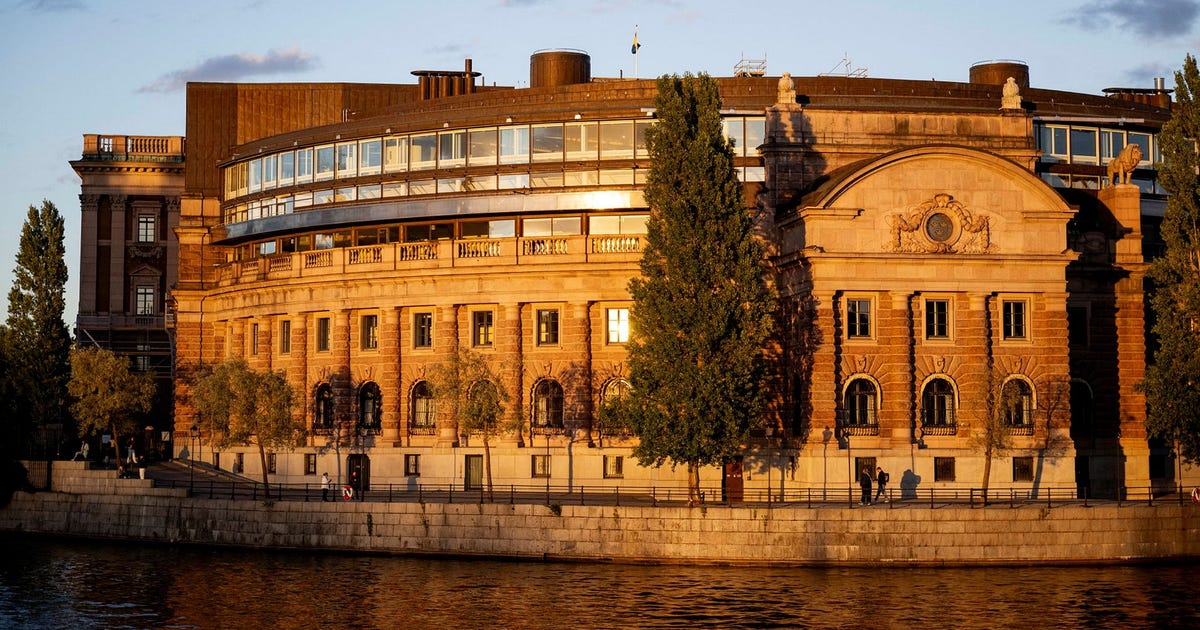
En AI-genererad bild av fem somaliska riksdagsledamöter har spridits globalt, vilket väcker både hopp om representation och oro över rasistiska kommentarer i sociala medier. #AI #SvenskPolitik #Representation

Återigen – ett möte som inte redovisats väcker frågor Igår skrev jag om Nooshi Dadgostars deltagande vid Stockholms moskés 25-årsjubileum. Nu väcks liknande frågor kring hennes deltagande vid Somaliska riksförbundets årsmöte förra året. Varken Vänsterpartiet eller Somaliska riksförbundet har offentligt redovisat mötet eller vilka frågor som diskuterades där. Vad handlade samtalen om? Diskuterades jämställdhet och frågor som barnslöjor, kvinnlig könsstympning och niqab? Eller handlade mötet om politisk representation, kandidater och vallistor? Jag vill också veta hur Vänsterpartiet ser på risken att patriarkala eller klanbaserade maktstrukturer får politiskt inflytande under begrepp som mångkultur, representation och samverkan. Frågan är särskilt relevant eftersom jag redan den 12 januari 2026, åtta månader före valet, varnade i Fokus för klan- och nätverksbaserad mobilisering och för hur sådan kollektiv mobilisering kan påverka personval och partiernas interna processer. Artikeln hade rubriken ”Ändra valsystemet – klanröster urholkar demokratin”. Valresultatet aktualiserar nu frågor som Vänsterpartiet bör besvara öppet: Hur arbetar partiet för att förhindra att släkt-, klan- eller andra kollektiva maktstrukturer får inflytande över nomineringar, personröster och politisk representation? Varför har så lite offentlig information lämnats om dessa möten med organisationer som gör anspråk på att företräda större grupper? Har det förekommit andra liknande möten med organisationer som inte har redovisats i partiets egna kanaler? Demokratin bygger på transparens, individens fria val och individuella rättigheter – inte på att kollektiv får kontroll över individens politiska val eller på slutna möten utan offentlig redovisning. Jag ser fram emot Nooshi Dadgostars svar. Sameh Egyptson Riksdagsersättare (KD) #Demokrati #Transparens #Politik


Att kryssa för en kandidat inte baserat på vad den personen själv uttryckt sig stå för eller vilja kämpa för, utan endast baserat på namn och ålder samt en argumentation om att det "behövs representation" för en viss etnisk och religiös grupp. #Representation #Politik #Val2019 #Nospecificcountriesarementionedinthetweet.

🇲🇦🇵🇪 Le Perou decide d'ouvrir un consulat à Dakhla 🇲🇦🇧🇴 Hier, la Bolivie s'est dite prete à ouvrire une representation commerciale, toujours à Dakhla Avec Bourita, les jours se suivent et se ressemblent. 😌 Coup de grace le 31 Octobre Inchalah. 🤲🏼 https://t.co/cftoxsjaRN #Dakhla #Consulat #Diplomatie


Le Trésor des Fourmis : Là où les chemins se rencontrent — French Une aventure mathématique visuelle avec algèbre et graphiques www.amazon.fr/dp/B0GX34PQDB Les mathématiques visuelles rendues claires Mr. Numberwise Le Trésor des fourmis : Là où les chemins se rencontrent est une histoire visuelle de mathématiques qui transforme les équations, les graphiques et les coordonnées en une aventure que les enfants peuvent vraiment voir et comprendre. Lorsque Mia et Alex découvrent deux mystérieux chemins de fourmis qui se croisent sur la plage, ils rencontrent Mr. Numberwise — un guide calme qui leur montre que les mathématiques ne sont pas seulement des nombres sur une page, mais aussi des histoires, des chemins, des motifs et des découvertes. À travers des fourmis, des cartes au trésor, des escaliers, des chemins colorés et de passionnants moments « Aha ! », les enfants découvrent : • les équations linéaires • la pente • les coordonnées • la représentation graphique • les intersections et les points de rencontre Ce livre utilise des modèles visuels originaux pour rendre l’algèbre plus facile à comprendre : • la pente devient un escalier • une équation devient la recette d’un chemin • +b devient l’étage de départ • les coordonnées deviennent l’adresse d’un point • une intersection devient l’endroit où se rencontrent deux histoires-chemins différentes Ce livre combine : ✔ une histoire ✔ des explications visuelles ✔ des exercices résolus ✔ un apprentissage étape par étape ✔ des dessins et des graphiques ✔ des fiches d’entraînement ✔ des explications dans le style « Math Made Clear » ✔ des moments « Aha ! » mémorables Au lieu de mémoriser des formules, les enfants commencent à voir comment les mathématiques bougent. Parfait pour les enfants curieux, les penseurs visuels, les familles qui font l’école à la maison, les classes et les enfants qui découvrent l’algèbre pour la première fois. Conçu principalement pour les 10–14 ans, ce livre peut aussi aider les élèves plus âgés qui trouvent l’algèbre difficile et qui ont besoin d’une explication plus claire et plus visuelle. Et, honnêtement… beaucoup d’adultes comprendront peut-être enfin mieux la pente grâce à ce livre aussi. Une histoire visuelle de mathématiques avec des exercices résolus — conçue pour que l’algèbre devienne enfin claire. #équationsEtGraphiques #apprentissageVisuelDesMathématiques #MathématiquesVisuelles #aventuresDétéPourEnfants_9_12Ans #mathématiquesExpliquéesSimplement #algèbreVisuelle #comprendreLes_écuations #Algèbre #Mathématiques #GraphiqueDeLaFonction #Graphique #Droite #PenteDUneDroite #LaPenteCestFacile #CestFacile #MrNumberwise #AnxiétéMathématiqueChezLesEnfants #AiderLesEnfantsÀSurmonterLAnxiétéLiéeAuxMathématiques #SurmonterLAnxiété #Anxiété #Kids #20060923 #0253 #Français #PlageDeLaCôteDesBasques #PlageDePampelonne #PlageDePalombaggia #PlageDuSillon #PlageDeLEspiguette 20261006: 917(395)8 #Heureux #ÉducationHeureuse #EnfantsHeureux #MathsHeureuses






