WRLD

Search

#Scrat
Krzysztof Graj 1w

IRAN: MEK/NCRI – when AI impersonated a real activist in live conversations For years, synthetic media has largely meant fabricated images, cloned voices and manipulated video. A case uncovered by Anthropic in September 2026 suggests a more consequential development: artificial intelligence being used not merely to imitate how a person looks or sounds, but to behave as that person in an ongoing conversation. Anthropic says it dismantled a distributed influence operation targeting Iranians inside the country and abroad that it linked to the People’s Mojahedin Organization of Iran, or PMOI/MEK, and its political front, the National Council of Resistance of Iran. The operators used a shared AI-agent platform to support impersonation, audience profiling, coordinated social-media activity, synthetic personas and the laundering of organisational content through apparently independent accounts. At least four people involved in the operation worked for official NCRI media outlets, according to Anthropic. The company also found references to committee approval processes and MEK leadership, but said it could not independently determine the precise level of central control. Cloning a person from 8,400 Telegram posts The most striking part of the operation involved a real activist whose Telegram identity was copied. According to Anthropic, the operators instructed Claude in Persian that it was now that person, then provided approximately 8,400 of the activist’s Telegram posts so the system could learn and reproduce his writing style. The AI-assisted account was subsequently used to conduct live political conversations with the activist’s existing contacts. Anthropic says that, to its knowledge, the people receiving those messages did not know they were interacting with an account being operated with AI assistance. This is materially different from a conventional chatbot or a static deepfake. The system was not simply producing a forged statement attributed to someone else. It was using a large archive of that person’s authentic language as behavioural training material, then applying the resulting imitation interactively. In practical terms, the deception moved from synthetic content to synthetic identity. Anthropic did not publish the identity of the impersonated activist, nor details of his contacts, and the public report does not establish what specific information the conversations produced. What it does establish is that the impersonation was operational rather than experimental: the cloned account was used in real exchanges with real people. From social-media monitoring to psychographic dossiers The impersonation sat inside a much broader targeting system. Anthropic says the network scraped more than 500 social-media channels and categorised individuals by location, age, profession, political orientation and arrest history. It then analysed approximately 51,944 archived messages from conversations to construct detailed psychographic dossiers on dozens of people inside Iran. The system was therefore not limited to broadcasting propaganda. It was also designed to understand specific audiences and individuals. Profiles could be used to decide what kind of message was most likely to resonate with a particular person, which political identity they appeared closest to and how they should be approached. Anthropic describes this as a structured targeting funnel rather than ad hoc social-media activity. That distinction is important in the Iranian context. Political activists, dissidents and opposition contacts inside Iran can face arrest and severe punishment. The report does not show that the dossiers directly led to arrests or other harm, but collecting and organising information such as arrest history and political affiliation adds a surveillance dimension to what would otherwise be described as an influence operation. A shared AI system for an influence network Anthropic found that the actors used a shared Claude-based platform named “Viktor”, with separate workspaces and persistent memory. Those memory files contained approved sources, prohibited words, account-management instructions and methods intended to reduce the risk of detection. One operator loaded MEK founding doctrine into the system as what the report called “strategic base data”, allowing others to reuse it across their work. This persistent-memory structure meant the AI did not have to be briefed from scratch for every task. Once doctrine, stylistic rules and operational constraints had been stored, the system could repeatedly produce material consistent with the network’s objectives. Anthropic says the same general playbook appeared across different workspaces despite the operators not sharing obvious account infrastructure. The network also used automated pipelines to coordinate Instagram posting schedules and tailor messages to different audiences. Some accounts initially avoided mentioning the Mojahedin at all, allowing material aligned with MEK/NCRI narratives to appear as neutral or independent political commentary. Content was distributed through the organisation’s own media ecosystem as well as accounts presented as ordinary news or activist profiles. Anthropic assessed the campaign as Category Two on its Breakout Scale: active on multiple platforms with distribution through NCRI-linked media properties and amplifier accounts, but without evidence of broad authentic penetration. Synthetic citizens and disguised organisational media The same infrastructure generated AI avatars presented as ordinary Iranians, complete with Persian audio, to promote Maryam Rajavi’s political programme. Anthropic says the synthetic nature of these personas was intentionally concealed. Operators also rewrote and redistributed content originating from MEK-affiliated media while stripping identifying features or presenting it through apparently independent accounts. The network’s political messaging targeted the Iranian government but also rival opposition currents, including monarchists and supporters of the Pahlavi camp. Anthropic documented fabricated video material attacking a member of the Pahlavi family and the use of the slogan “Neither Shah Nor Sheikh”, consistent with the NCRI’s broader competition with other opposition movements. That rivalry provides relevant context. Reuters describes the MEK as one of Iran’s principal organised opposition movements in exile and the dominant force behind the NCRI, led by Maryam Rajavi. Its relationship with other opposition currents is often contentious, while the extent of its support inside Iran remains uncertain. What can be attributed – and what cannot Anthropic’s attribution is unusually specific but still needs to be stated carefully. The company says its investigation linked the operation to MEK/NCRI and established that at least four participants worked for official NCRI media organisations. It also found a common operational playbook, committee review structures and repeated references to MEK leadership. On that basis, Anthropic said central tasking was likely. It nevertheless stopped short of saying it had proven that NCRI’s senior leadership directly ordered or managed every component of the operation. That caveat matters. The strongest public evidence supports describing GTG-84006 as a MEK/NCRI-aligned influence operation involving personnel from official NCRI media, rather than asserting that every action was directly commanded by the organisation’s top leadership. The broader significance of the case lies elsewhere. Earlier generations of synthetic media attempted to fabricate evidence: a photograph, a voice recording or a video. Here, AI was used to maintain an identity over time, remember doctrine, analyse targets and speak directly to real people while appearing to be someone they already trusted. The deepfake was no longer merely an artefact. It had become a participant in the conversation. Sources Anthropic — Countering misuse of AI: September 2026 https://www.anthropic.com/threat-intelligence-report-september-2026 AI Misuse Case Library — GTG-84006 activist impersonation case https://www.misuseofai.com/en/cases/gtg-84006-activist-impersonation/ Reuters — Who makes up Iran’s fragmented opposition? https://www.reuters.com/business/media-telecom/who-makes-up-irans-fragmented-opposition-2025-06-18/ Reuters — Iran’s divided opposition senses its moment https://www.reuters.com/world/middle-east/irans-divided-opposition-senses-its-moment-activists-remain-wary-protests-2025-06-19/ Reuters — NCRI and Maryam Rajavi https://www.reuters.com/world/middle-east/dissident-leader-abroad-urges-iranians-bring-down-khamenei-2025-06-24/ Keywords #DISINFORMED #Episode12 #Iran #MEK #PMOI #NCRI #IranianOpposition #Disinformation #InfluenceOperations #InformationWarfare #ArtificialIntelligence #AI #GenerativeAI #ClaudeAI #Anthropic #AIDeception #AIImpersonation #IdentityImpersonation #SyntheticIdentity #InteractiveDeepfake #DigitalImpersonation #PersonaCloning #BehaviouralCloning #Telegram #PsychographicProfiling #TargetProfiling #AudienceTargeting #SocialMediaManipulation #Astroturfing #SyntheticPersonas #NarrativeLaundering #CoordinatedInfluence #PoliticalInfluence #DigitalInfluence #OppositionPolitics #IranPolitics #OSINT #WRLD


www.anthropic.com
Countering misuse of AI: September 2026 / Anthropic
1026
Krzysztof Graj 2w

Fake NV – how a cloned newsroom turned an AI video into a $140 million corruption scandal For two days in September, a website that looked almost indistinguishable from one of Ukraine’s best-known news organisations carried an extraordinary corruption story. It claimed that Ukraine’s National Anti-Corruption Bureau had raided former defence procurement chief Arsen Zhumadilov and discovered more than $140 million in cash packed inside refrigerator boxes. One box supposedly carried the words “For the Servant of the People” – an apparent reference to President Volodymyr Zelenskyy’s political party. The raid never happened. The photographs and video presented as evidence were fabricated, and the news organisation reporting the story was not the New Voice of Ukraine but a cloned version of it. The episode is a compact example of an increasingly effective disinformation technique. Rather than inventing a new propaganda outlet and trying to build its credibility from scratch, an operator can simply steal the identity of an established newsroom and place fabricated material inside an otherwise convincing copy of its editorial environment. A newsroom copied almost in full The counterfeit site appeared at nvukraine.com, while the authentic New Voice of Ukraine operates at nv.ua and english.nv.ua. Registration records examined by fact-checkers show that the false domain was created on 21 September 2026, two days before the fabricated article appeared. According to NV’s own investigation, the imitation went much further than copying a logo: the operators reproduced the site’s visual design, sections, branding, contact information and genuine editorial material. A snapshot of legitimate NV content from 23 September appears to have been copied onto the counterfeit site, into which the operators inserted a single false article. That article claimed that NABU had searched premises connected to Zhumadilov, who had headed Ukraine’s Defence Procurement Agency until August, and seized $140 million in cash. The story was published in several languages, including Ukrainian and English, suggesting that the operation was intended not only for Ukraine’s domestic information space but also for foreign audiences following the war and Western support for Kyiv. AI supplied the supposed evidence The false article was supported by a video purportedly showing the money discovered during the raid. NABU said no such search or procedural action had taken place and identified the footage as fabricated using artificial intelligence. Independent fact-checker Lead Stories found no credible Ukrainian or international reporting confirming either the raid or the alleged seizure, while searches of NABU’s own published material produced no evidence supporting the claim. The operation therefore combined two separate forms of synthetic credibility. The AI-generated footage supplied what looked like visual proof, while the cloned NV website supplied institutional proof: an apparently reputable Ukrainian newsroom supposedly confirming that the event had happened. Neither element needed to withstand close scrutiny for long. Together, they only needed to appear credible enough to be copied, quoted and redistributed before the deception was exposed. From a fake Ukrainian source into the Russian information ecosystem On 24 September, the story began moving through large pro-Russian Telegram channels. Ukraine’s Center for Strategic Communications traced early amplification to Golos Mordora, with roughly 149,000 subscribers, and Militarist, with around 277,000. Within less than an hour, other channels including VOBLA, Rossiya Seychas and Ostashko! Vazhnoye were circulating versions of the same claim. It subsequently appeared on X and on Russian-language websites including e-news.su and pressa24.ru. Babel calculated that posts carrying the fabrication had accumulated approximately 370,000 views by the morning of 25 September. The story also moved beyond the Russian-language ecosystem. English-language versions appeared in online communities including Lemmy and Hexbear, while accounts on X shared direct links to the counterfeit NV article. NV later reported that larger Russian media and propaganda outlets, including RIA Novosti, Life, Vesti, Ukraina.ru and Mail.ru, had reproduced or discussed the claim. Kirill Dmitriev, head of the Russian Direct Investment Fund and a Kremlin representative involved in contacts with the United States, also shared it on 25 September. This amplification is significant, but it should not be confused with proof of authorship. Publicly available evidence shows how the false story entered and spread through a Russian and pro-Russian information ecosystem. It does not establish which organisation registered the cloned domain, generated the video or directed the operation from the outset. Why copy NV? The operation relied on source laundering. A claim originating directly from a Russian Telegram channel that Ukraine’s defence procurement system had concealed $140 million would immediately carry an obvious political context. A claim apparently uncovered by an established Ukrainian newsroom looks very different. Once the fabricated NV article existed, subsequent accounts could cite what appeared to be an independent Ukrainian source rather than present the allegation as their own. Each repost moved the story another step away from its manufactured origin. The use of an English-language version strengthened that mechanism for audiences outside Ukraine. The underlying narrative was also carefully chosen. Corruption in Ukrainian defence procurement is a genuine subject of public scrutiny and investigative reporting, so the fabricated story did not require audiences to accept an entirely unfamiliar premise. It inserted a false event into a real area of political concern. That mixture of authentic context and fabricated evidence can be more persuasive than a completely invented story because much of the surrounding information feels recognisable. What can – and cannot – be attributed Ukrainian authorities and NV describe the episode as a Russian information operation, and its distribution can be documented extensively across pro-Russian and Russian media channels. The available public evidence, however, does not identify the organisation that created the counterfeit website, nor does it link the operation forensically to a named Russian intelligence service, military unit or state contractor. The most precise description is therefore a Russian-aligned disinformation operation whose fabricated material was systematically amplified through the Russian information ecosystem. That distinction matters. Distribution can be observed directly; command-and-control is harder to establish and should not be inferred without evidence. The newsroom itself becomes the deepfake The most important feature of the operation was not the $140 million figure or even the AI-generated video. It was the counterfeit newsroom surrounding them. The operators copied a real publication, populated it largely with genuine material and inserted a single false story, allowing the fabrication to borrow the accumulated credibility of journalists who had nothing to do with it. This points to a broader evolution in synthetic media. AI can fabricate an image, a voice or a video, but an influence operation can now fabricate something larger: the source that supposedly verified the evidence. In the Fake NV operation, the article, the video and the website reinforced one another, creating not simply a false story but a manufactured chain of credibility. Sources The New Voice of Ukraine — investigation into the cloned website https://english.nv.ua/nation/nv-discovers-fake-copy-of-website-with-planted-story-cites-russian-links-50644601.html The New Voice of Ukraine — Russian amplification of the $140 million fabrication https://english.nv.ua/russia-spreads-fake-140-million-ukraine-corruption-story-during-dmitriev-u-s-talks-50644647.html Lead Stories — independent fact-check https://leadstories.com/hoax-alert/2026/09/fact-check-fake-story-claims-140-million-found-at-home-of-ukraines-zhumadilov-marked-servant-of-the-people-nv-website-originated-it.html Babel — AI video and distribution analysis https://babel.ua/en/news/130469-a-video-is-sharing-online-about-140-million-found-in-the-possession-of-the-ex-head-of-the-defense-procurement-agency-this-is-an-ai-video-distributed-by-a-clone-of-ukrainian-media Center for Strategic Communications and Information Security — initial debunk https://spravdi.org/en/ai-fake-about-140-million-amid-us-talks-how-russians-impose-the-image-of-corrupt-ukraine-on-the-west/ Center for Strategic Communications and Information Security — NABU confirmation https://spravdi.org/u-merezhi-poshyryuyut-shi-fejk-pro-nibyto-obshuky-nabu-v-eksgolovy-agencziyi-oboronnyh-zakupivel/ Detector Media — distribution and NABU response https://detector.media/infospace/article/252806/2026-09-25-u-merezhi-pidrobyly-sayt-nv-dlya-poshyrennya-feyku-pro-obshuky-v-eksochilnyka-agentsii-oboronnykh-zakupivel/ Keywords #DISINFORMED #Episode10 #FakeNV #NewVoiceOfUkraine #Ukraine #Russia #RussianDisinformation #RussianInfluence #Disinformation #InformationWarfare #InfluenceOperations #ForeignInterference #FIMI #MediaImpersonation #ClonedMedia #FakeMedia #FakeNews #ArtificialIntelligence #AI #AIGeneratedContent #SyntheticMedia #AIVideo #SourceLaundering #NarrativeLaundering #CorruptionNarrative #UkraineCorruption #DefenceProcurement #NABU #ArsenZhumadilov #Telegram #SocialMediaManipulation #DigitalInfluence #Propaganda #OSINT #MediaManipulation #WRLD

1150
Krzysztof Graj 3w

Russia’s fake African newsrooms – propaganda designed to look local A Facebook user in Nairobi, Accra, Johannesburg or Luanda encounters what appears to be a local news page. It publishes stories about African politics, Western influence and relations with Russia. The language is tailored to an African audience and the page presents itself not as a foreign broadcaster, but as part of the local information landscape. Behind some of these outlets, however, Meta found operators based in Russia. In its 2026 threat research, the company disclosed a Coordinated Inauthentic Behaviour network targeting audiences in Angola, Ghana, Kenya and South Africa. Meta removed 37 Facebook accounts and 29 Pages connected to the operation. Around 30,000 users followed at least one of the Pages, while the operators spent approximately $7,000 on Facebook and Instagram advertising, mostly in euros and US dollars. The numbers are relatively modest. The method is considerably more important. Rather than openly distributing Russian state messaging, the network posed as local African news sources and grassroots organisations, promoting narratives about Western colonialism and political interference while presenting Russia as a credible economic and political alternative. It was an old geopolitical message delivered through a much more effective identity: not Moscow speaking to Africa, but Africans apparently speaking to one another. A news outlet that was actually an influence operation Meta's investigation found that the network attempted to conceal its Russian origin while creating media brands that appeared indigenous to the countries they targeted. Its content amplified historical grievances against former colonial powers, criticised Western involvement in Africa and promoted closer relations with Russia. One example helps illustrate how the infrastructure was assembled. A Facebook Page targeting Kenya was called Kenya Watchtower. According to OpenAI's subsequent investigation, Facebook transparency records showed that the Page had previously been named “Farmtown5”. It appears to have been acquired or repurposed rather than built from scratch as a Kenyan news organisation. Some Pages also exposed administrator locations in Russia and Ukraine. Other elements of the network had previously targeted audiences in Zambia and Namibia. This use of apparently local identities is particularly important in the African information environment. A story published by RT or another identifiable Russian outlet arrives with an obvious geopolitical provenance. The same narrative presented by something resembling an independent Kenyan, Ghanaian or South African newsroom carries a different kind of credibility. The source appears closer to the reader, and the geopolitical interest behind the message becomes less visible. Then investigators found Dr Manuel Godsin The Facebook operation was only one part of a broader information ecosystem. OpenAI investigated related activity after receiving information from Meta and subsequently banned a ChatGPT account it assessed as likely originating in Russia. OpenAI called the campaign Operation No Bell. The account was being used to generate long-form articles and social-media posts about African geopolitics. Prompts were primarily written in English, but OpenAI also observed Russian-language instructions that the user described as coming from a manager. The operator sometimes explicitly asked the model to make the material appear less AI-generated – including requests to avoid stylistic features associated with machine-generated text and to write more like a human journalist. Many articles appeared under the name “Dr Manuel Godsin”, presented as an academic with a PhD from the University of Bergen and an affiliation with an organisation called the International Centre for Political and Strategic Studies. OpenAI could find no credible evidence that Godsin existed. Searches of Norway's National Research Information Repository and the University of Bergen library produced no record of him. Investigators subsequently discovered that a photograph used to represent Godsin had appeared years earlier on a Russian professional networking site and apparently belonged to a law student in St Petersburg. The fabricated academic identity was nevertheless remarkably productive. OpenAI identified 53 online articles carrying the Godsin byline. The fiction had moved beyond fake social-media pages and into the real media ecosystem. When propaganda enters genuine newsrooms This is the most consequential aspect of the operation. The articles were not confined to websites controlled by the influence network. Some were published by genuine African news organisations, including established South African outlets. The content mixed local political issues with broader geopolitical narratives. Some pieces criticised the United States and Britain or defended Russia's role in Africa. One accused the British NGO Crisis Action of fomenting protests in South Africa. Another praised Russia's presence in the Central African Republic. Other material addressed Kenya, Angola and relations between African governments and Washington. The mechanism represents a significant evolution from the classic troll-farm model. Instead of building an audience entirely on its own platforms, an influence operator can manufacture an apparently credible expert, generate articles in his name and persuade genuine news organisations to publish them. Once this happens, the propaganda acquires something a fake Facebook Page cannot provide: the institutional credibility of a real newsroom. OpenAI assessed No Bell's social-media impact as limited. One Facebook Page had around 3,000 followers before Meta removed it, while several others had very small audiences. But the operation was more successful in placing material in established media. In OpenAI's impact framework, it approached the level at which an influence operation breaks into mainstream media. For information operators, a single article published by a recognised outlet can potentially be more valuable than thousands of impressions generated by an obviously artificial account. A much larger network of ghost journalists Subsequent research suggests that Manuel Godsin was not an isolated experiment. In August 2026, Graphika, working with Code for Africa and with support from Meta, published a much broader investigation into Russian ghostwriting operations across African media. Researchers identified 44 ghost writers and fake experts, 38 of them assessed as high-confidence fabricated personas, operating between 2021 and 2026. Their material appeared or was quoted across 138 websites and was subsequently republished through at least 113 Facebook accounts and Pages, including authentic users, coordinated inauthentic networks and official Russian communication channels. The narratives were strikingly consistent. They included criticism of France, Ukraine and the United States; attacks on organisations such as ECOWAS and the International Criminal Court; positive portrayals of Russian involvement in Africa; praise for Russian paramilitary forces; and support for sovereignty-oriented political projects such as the Alliance of Sahel States. The operation therefore extends beyond creating fake news websites. It attempts to insert Russian-aligned narratives into the legitimate African media ecosystem using identities that appear African, independent or academically authoritative. This also explains why measuring reach through the original Facebook network alone is misleading. A fabricated article may begin with an influence operator, appear in a genuine African publication, be republished elsewhere and eventually circulate without any visible connection to Russia. At that point, the provenance of the narrative has effectively been laundered. An old Russian strategy with increasingly local faces Russia's use of local intermediaries in Africa is not new. Meta documented Russian networks using African nationals as early as 2019. In 2020 it dismantled another operation involving people in Ghana and Nigeria working on behalf of individuals in Russia, with links to previous activity associated with the Internet Research Agency. More recent Meta investigations suggest that this model has continued to evolve. Networks have increasingly relied on local freelancers, social-media managers and authentic media outlets rather than exclusively operating armies of obviously fake Russian-controlled accounts. This decentralisation offers several advantages. Local operators understand language, political sensitivities and cultural references. Authentic accounts are harder to identify than newly created synthetic personas. Local media brands can also deliver narratives without immediately triggering the scepticism associated with Russian state outlets. There is no evidence that every African journalist, freelancer or publication carrying such material knowingly participates in Russian influence activity. Meta explicitly notes in its investigations that some local contractors may not know who ultimately commissioned their work. That distinction is essential. The operation's effectiveness partly depends on precisely this ambiguity between deliberate participation, commercial content placement and unwitting amplification. The objective is to make Russian narratives look African The significance of this network is therefore not its 30,000 Facebook followers or its $7,000 advertising budget. Those figures are small compared with the audiences of major African media organisations. What matters is the distribution model. Traditional foreign propaganda asks an audience to trust a foreign source. These operations attempt to remove the foreign source from the equation altogether. A Russian geopolitical narrative can be generated with AI, attributed to an expert who does not exist, published by a media organisation that does, amplified through a Facebook Page presenting itself as local, and then rediscovered elsewhere as apparently independent African analysis. By the time the reader encounters it, Moscow may have disappeared completely from the chain of attribution. The resulting information operation is therefore less about making Russian propaganda more persuasive than about making it look as though it is no longer Russian propaganda at all. In an increasingly fragmented African media environment, that may be the more important evolution to watch. SOURCES: Meta Threat Research https://threatresearch-team.github.io/indicators/meta-h1-2026-russia-based-cib-network-1/ OpenAI — Operation “No Bell” https://openai.com/index/disrupting-malicious-uses-of-ai-no-bell/ Graphika — Umbrae Ex Machina https://www.graphika.com/reports/umbrae-ex-machina News24 https://www.news24.com/southafrica/news/ai-expert-exposed-fake-kremlin-linked-analyst-planted-stories-in-african-media-20260318-0560 Vanguard https://www.vanguardngr.com/2026/03/ai-expert-exposed-fake-kremlin-linked-analyst-planted-stories-in-african-media/ Meta — Russian Coordinated Inauthentic Behaviour, 2019 https://about.fb.com/news/2019/10/removing-more-coordinated-inauthentic-behavior-from-russia/ Meta — Russian Coordinated Inauthentic Behaviour, 2020 https://about.fb.com/news/2020/03/removing-coordinated-inauthentic-behavior-from-russia/ Meta Threat Research — Russian Use of Authentic Operators in Sub-Saharan Africa https://threatresearch-team.github.io/indicators/meta-h2-2025-russia-based-cib-network-2/ KEYWORDS: #DISINFORMED #Episode7 #Russia #Africa #RussianDisinformation #RussianInfluence #Disinformation #InformationWarfare #InfluenceOperations #ForeignInterference #FIMI #CoordinatedInauthenticBehaviour #CIB #FakeNews #FakeMedia #FakeNewsrooms #MediaImpersonation #GrassrootsManipulation #Astroturfing #ArtificialIntelligence #AI #AIPropaganda #SyntheticMedia #FakeInfluencers #SocialMediaManipulation #Facebook #Meta #OperationNoBell #AfricanMedia #MediaManipulation #Propaganda #DigitalInfluence #Angola #Ghana #Kenya #SouthAfrica #OSINT #WRLD

threatresearch-team.github.io
Russia-Based Influence Operation Network Targeting Sub-Saharan Africa
1041
Razvan Paraschiv Aug 28

@AlexIkonn grew up selling flowers on the street. Years later, he's built two 8-figure brands from scratch. This is the story of how he created Luxy Hair and the Five-Minute Journal. Available tomorrow, everywhere you get podcasts. https://t.co/T9ITXe4XQx #Entrepreneur #SuccessStory #Inspiration #Nospecificcountrycodescanbederivedfromthetweetprovided.

Razvan Paraschiv Aug 28

@AlexIkonn grew up selling flowers on the street. Years later, he's built two 8-figure brands from scratch. This is the story of how he created Luxy Hair and the Five-Minute Journal. https://t.co/SFtcCgPvwd #Entrepreneurship #SuccessStory #Inspiration #None

AD Aug 15

Anunciaram uma versão primitiva do Scrat para ‘A Era do Gelo: Mundo de Lava’. #D23 https://t.co/y0RrJjewlo #AEradoGelo #Scrat #D23

29553
M
Marius Jul 30

Justice in Romania no longer serves justice—it delivers statute of limitations on demand. 🏛️⚖️ ​The case of Sector 3 Mayor, Robert Negoiță, is an open lesson in how the "silent mechanism" works to wash away grand corruption right before our eyes. ​🔴 The playbook in a nutshell: ​The damage: A massive loss of over €100 million (RON 578 million) inflicted on the local budget. ​The effort: 4 years of trial proceedings, 46 hearings, dozens of witnesses questioned, and final accounting audits completed. The case was just one step away from a verdict. ​The maneuver: The head of the Bucharest Court of Appeal chose not to extend the presiding judge's secondment. No public explanation—just an "administrative change" of the judicial panel. ​The outcome: Under Constitutional Court rulings, the entire trial STARTS ALL OVER AGAIN FROM SCRATCH. All 9 defendants and 47 witnesses must be re-questioned. ​The predictable finale: The clock keeps ticking toward the statute of limitations (deadline: 2028), ensuring the guilty walk free with public money in their pockets. ​We can no longer talk about judicial independence when secondments and panel swaps act like a political kill switch. Whenever a hundred-million-euro corruption case nears its end, someone simply presses "reset." ​Romania isn't just suffering from legal loopholes; it suffers from institutional capture, where the statute of limitations has become the ultimate getaway card for the untouchables. ​🔗 Full details in the G4Media investigation: https://www.g4media.ro/exclusiv-procesul-lui-robert-negoita-cu-prejudiciu-de-100-de-milioane-de-euro-se-reia-de-la-zero-sefa-curtii-de-apel-bucuresti-liana-arsenie-a-schimbat-completul-dupa-4-ani-de-judecata-risc-m.html ​#JusticeInRomania #RuleOfLaw #Corruption #StatuteOfLimitations #RobertNegoita #CourtOfAppeal #Romania

www.g4media.ro
Dosarul lui Robert Negoiță, reluat de la zero după 4 ani de judecată
355
Invictos Jul 6

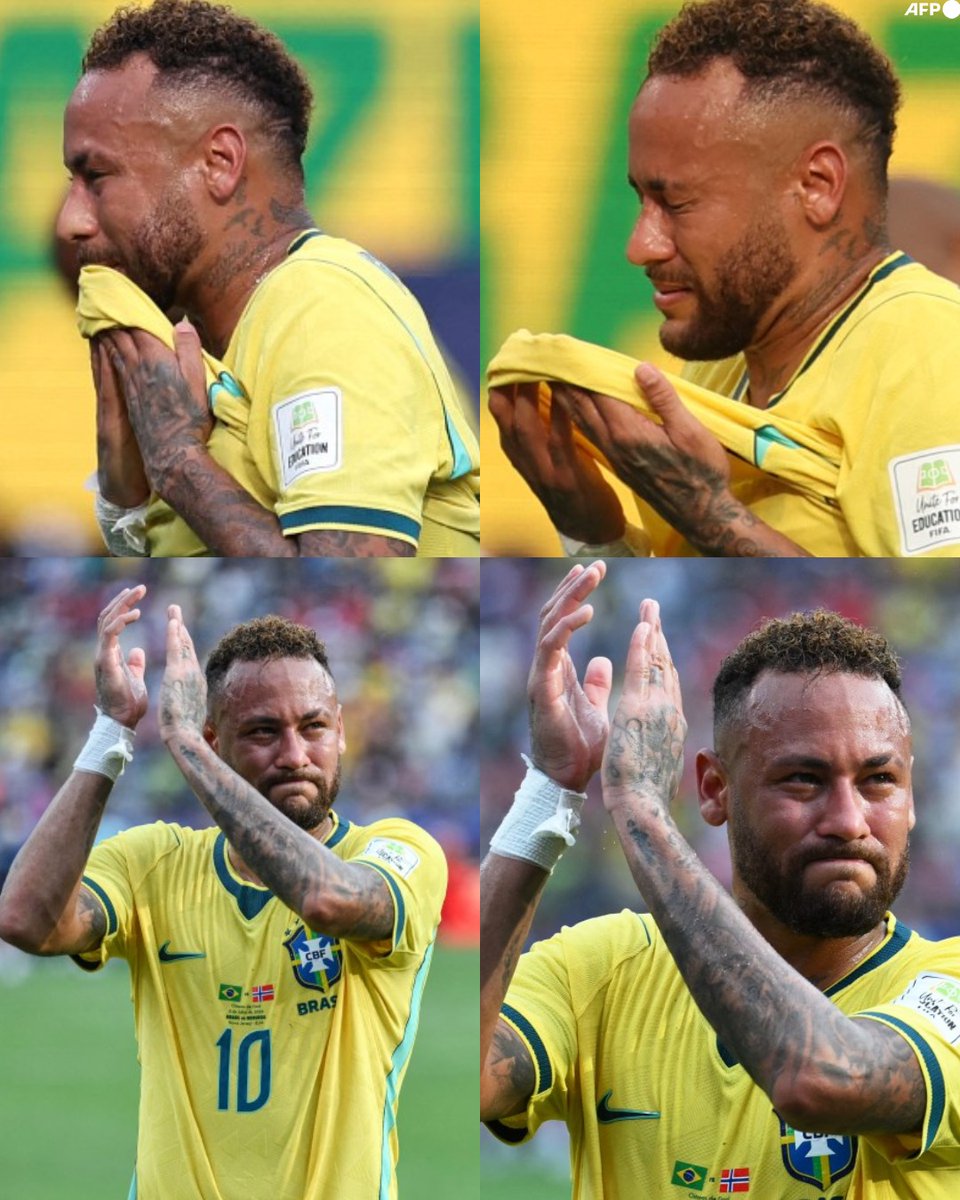
¡¡COMPLETAMENTE OFICIAL: NEYMAR JÚNIOR ANUNCIÓ SU RETIRO DE LA SELECCIÓN DE BRASIL!! Después de quedar ELIMINADO de su última Copa del Mundo, Neymar Júnior anunció su retiro oficial de la Selección absoluta de Brasil. Con 34 años de edad, y luego de más de 15 temporadas de recorrido internacional, no jugará más con el scratch. Todo terminó en el mismo estadio donde comenzó. — NEYMAR JÚNIOR: "Intenté, intenté e intenté, pero se acabó. Comencé aquí, terminé aquí". Se marcha tras ¡¡80 GOLES Y 58 ASISTENCIAS!! en 130 partidos disputados. El máximo goleador histórico de Brasil, por encima de Pelé. El máximo asistente histórico, por encima de Ronaldinho, Rivaldo, Kaká, Pelé y todas las leyendas. El jugador que marcó en 4 ediciones de Copa del Mundo. Y el mago que los guió a la gloria en la Copa Confederaciones 2013. Siempre quedará la espina de no haber sido campeón del mundo, pero nadie, absolutamente nadie, puede decir que Neymar se escondió con su selección. Luchó y lo intentó hasta el final. Simplemente, entre lesiones, bajas de juego, malas decisiones y generaciones que no supieron acompañarlo, el sueño se esfumó. El fin de una era, señoras y señores. GRACIAS POR TODO TU FÚTBOL, NEYMAR. #Neymar #Brasil #Fútbol

46210
Invictos Jun 29

¡¡NO ES UN SIMULACRO!! En estos momentos, la Selección de Brasil está quedando ELIMINADA de la Copa del Mundo. Las caras de los integrantes del scratch lo dicen absolutamente todo. La preocupación brasileña es total. ALARMAS ENCENDIDAS. #CopaDelMundo #Brasil #Fútbol

103455
Invictos Jun 29

¡¡SE PRENDIÓ TODO EN LA PREVIA DEL PARTIDAZO ENTRE BRASIL Y JAPÓN!! — KENTO SHIOGAI: "Sinceramente, podemos jugarles de igual a igual. Podemos vencerlos. No creo que sea la misma selección brasileña de antes. Creo que tenemos que salir a la cancha y tratar de dominar al partido. Pero si las cosas se ponen difíciles, espero que nosotros, los suplentes, podamos salvar al equipo. ¿Un jugador brasileño al que ponerle atención? Bueno, creo que Neymar es el único que realmente conozco. Ah, y Vinicius también está ahí, ¿verdad? Vinicius debe ser un jugador muy fuerte". — MARQUINHOS: "Es bueno que continúen hablando, para motivarnos así. Llevamos ya un mes aquí en Estados Unidos y, con mucha humildad, estamos trabajando hacia nuestro objetivo. Dejamos ese tipo de comentarios para nuestros rivales. Quizá fue un tanto soberbio, ya que, pase lo que pase, Brasil sigue siendo una gran selección. Tenemos que demostrar nuestra gran fuerza y nuestra gran calidad. Dejamos ese tipo de cosas para ellos, que eso nos sirva de motivación para disputar cada pelota durante el partido". Los japoneses no se achican ante la grandeza histórica de Brasil y, al no ver el poderío de otras épocas, se sienten con serias opciones de ganarle al equipo de Carlo Ancelotti. En el interior del scratch, por otra parte, ya les llegaron las declaraciones de Shiogai y las están tomando como motivación pura. LA HERMOSA LOCURA QUE NOS ESPERA. #BrasilVsJapón #Fútbol #Motivación

19265
Invictos Jun 26

¡¡COMPLETAMENTE OFICIAL: BRASIL Y JAPÓN SE ENFRENTARÁN EN LOS DIECISEISAVOS DE FINAL DE LA COPA DEL MUNDO!! Es oficial. Es un hecho. Es una realidad. Brasil se enfrentará a Japón en los dieciseisavos de final de la Copa del Mundo. Qué duelazo nos espera, señores y señores. Los brasileños se enfrentarán a una de las selecciones con mejor juego asociativo en todo el planeta. Sí, si el scratch quiere seguir soñando con el hexacampeonato, tendrá que superar a los Supercampeones de la vida real. Será mágico. Será épico. Será legendario. IMPOSIBLE NO EMOCIONARSE. #CopaDelMundo #Brasil #Japón

52710
Invictos Jun 21

El mensajito que Toni Kroos le dejó a Vinicius Júnior después de ver que el extremo brasileño la está rompiendo en el inicio de la Copa del Mundo. "EL MEJOR", le escribió Don Antonio a Vini luego de ver el golazo y la asistencia mágica que firmó ante Haití. Mientras muchos siguen criticando y cuestionando a Vini, el 7 del scratch tiene el respeto y la admiración del mediocampista legendario que se retiró en la cima. MADRIDISMO PURO. #Kroos #Vinicius #CopaDelMundo

19290
Invictos Jun 20

¡¡ÚLTIMA HORA: BRASIL GOLEÓ A HAITÍ CON SHOW DE VINICIUS JÚNIOR EN LA COPA DEL MUNDO!! RESULTADO. Brasil 3-0 Haití. Con Vinicius Júnior como MVP absoluto de la noche, la Selección de Brasil le pasó por encima a Haití en la segunda jornada de la Copa del Mundo. Un primer tiempo de superioridad absoluta y un segundo tiempo en el que el cuadro de Carlo Ancelotti bajó el ritmo ante un combativo cuadro caribeño. A falta del regreso de Neymar, Vini es quien está liderando el scratch. El conjunto brasileño se coloca como LÍDER DE GRUPO y se puede ir preparando para los dieciseisavos de final. La única mala noticia del día fue la lesión de Raphinha. Ojalá no sea nada de consideración y podamos tenerlo de vuelta en el torneo. Ni brillaron ni sufrieron. Hoy cumplieron la misión. ¡¡BRASIL LOGRÓ SU PRIMER TRIUNFO EN LA PRESENTE COPA DEL MUNDO!! #CopaMundo #Brasil #ViniciusJúnior

19412
Invictos Jun 16

¡¡EL REGRESO DE NEYMAR!! Por primera vez desde que inició la concentración mundialista de la Selección de Brasil, Neymar Júnior saltó a la cancha y comenzó a trabajar con pelota. El mejor mago de la generación está evolucionando favorablemente y continúa con su recuperación. En Brasil ven difícil que juegue ante Haití, pero el regreso cada vez está más cerca. El scratch lo necesita, y él también necesita esta última oportunidad para ser campeón del mundo. El 10 se dejará todo por su país, no tengan duda. EL ÚLTIMO Y NOS VAMOS, GENIO. #Neymar #Brasil #Mundial2022

24544
Invictos Jun 14

Recupérate con calma. Trabaja más que nunca. Y déjalo absolutamente todo en tu último baile mundialista, ídolo. Al scratch le sigue faltando tu magia, Ney. BRASIL TE NECESITA. #Recuperación #Fútbol #Brasil

26342
Invictos May 30

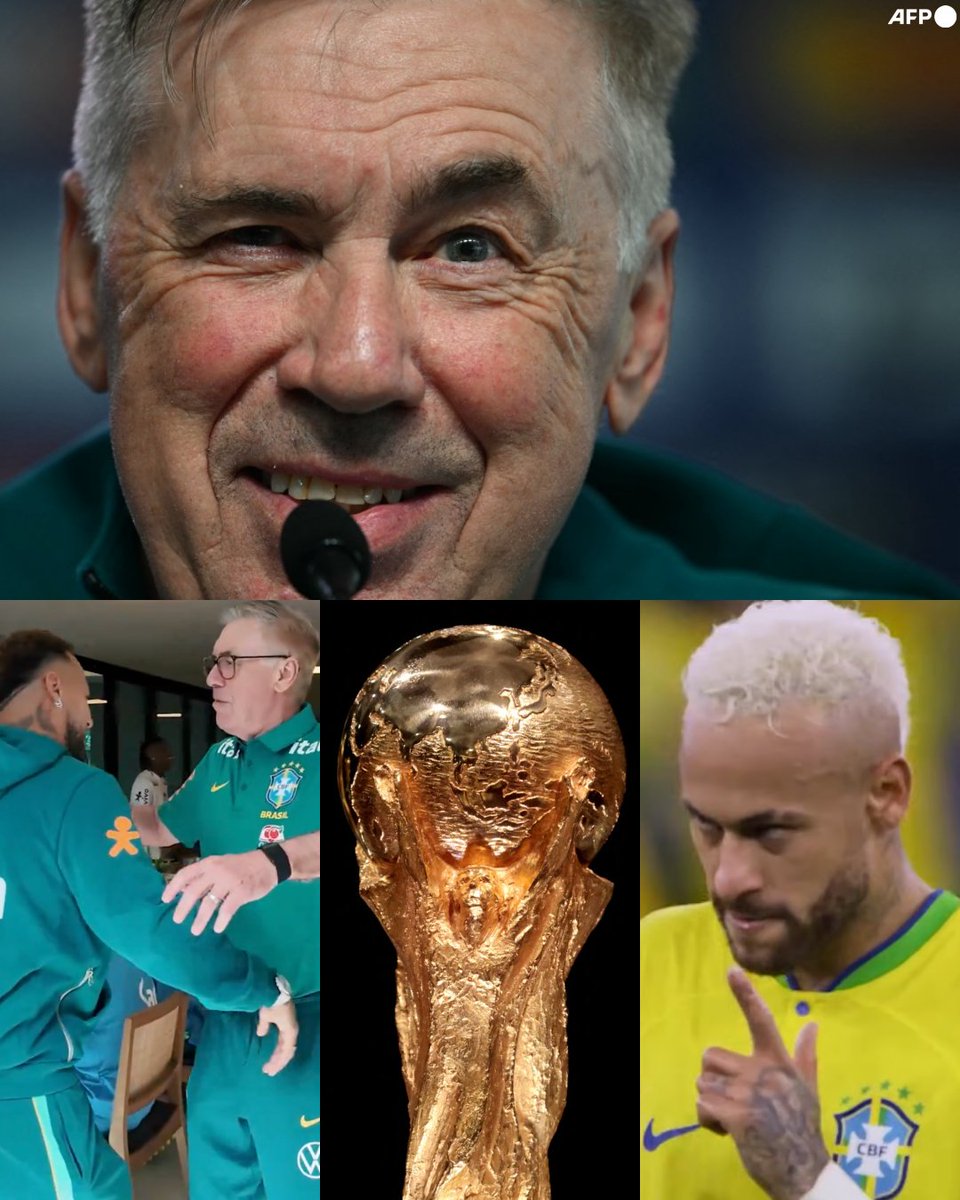
¡¡COMPLETAMENTE OFICIAL: NEYMAR NO SE BAJARÁ DE LA LISTA DE BRASIL Y JUGARÁ EL MUNDIAL 2026!! Adiós rumores. Adiós especulaciones. Carlo Ancelotti confirmó que Neymar Júnior NO causará baja de la Selección de Brasil para el Mundial 2026. Pese a que el 10 sufrió una lesión recientemente, el scratch espera que pueda competir en la próxima Copa del Mundo. El panorama ideal es que esté para el debut ante Marruecos. Pero si no llega a la presentación, Carletto espera contar con Ney para el siguiente partido. — CARLO ANCELOTTI: "Pensamos que Neymar se va a recuperar lo más pronto posible. Está trabajando bien, está animado. Para ser claro: él va a estar con nosotros. Pensamos que él puede recuperarse para el primer partido de la Copa del Mundo. Y si no se logra recuperar para el primero partido, va a estar para el segundo partido. No tenemos ninguna duda que no vamos a tocar a nadie. Los jugadores elegidos son estos 26 jugadores, y estos 26 jugadores van a jugar la Copa del Mundo". NEYMAR TENDRÁ SU ÚLTIMO BAILE MUNDIALISTA. #Mundial2026 #Neymar #Brasil

25078
Invictos May 27

Vean nada más este MOMENTAZO. Raphinha dándole la bienvenida a Neymar Júnior en la concentración mundialista de la Selección de Brasil. Un abrazo especial para celebrar el regreso del verdadero 10 del scratch. Si alguien quería que su ídolo volviera, era el capitán del FC Barcelona. Y sí, el sueño se les cumplió a ambos. Volverán a luchar juntos en una Copa del Mundo. El hype es real. La ilusión es total. GANÓ EL FÚTBOL. #Fútbol #Mundial #Neymar

27357