WRLD

Search

#Uprising
Gunther Fehlinger-Jahn 1w

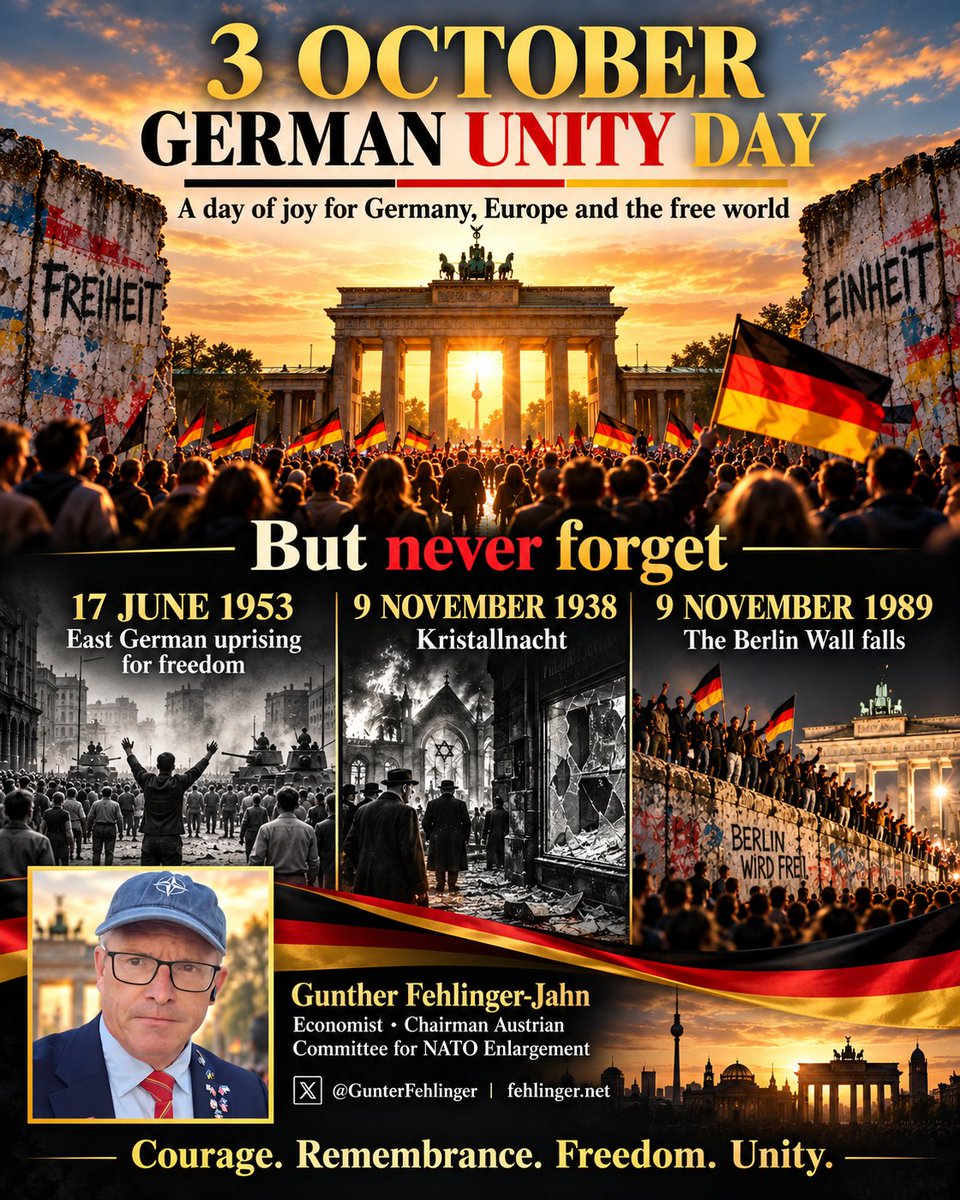
The author wrote that Germany marked Unity Day on 3 October by celebrating unity, freedom, and the peaceful overcoming of division, while also remembering its history. They said around a million people had risen against the SED dictatorship in East Germany on 17 June 1953 and that the uprising was met with violence. https://t.co/iWsYUJCaSC #TagDerDeutschenEinheit #Einheit #Geschichte #DE (translated)
S
Sandfeen 2w

For those that still don’t understand what Benghazi was all about: 🚨mSo here's the REAL story: Ambassador Stevens was sent to Benghazi to secretly retrieve US made Stinger Missiles that the State Dept had supplied to Ansar al Sharia in Libya WITHOUT Congressional oversight or permission. Sec State Hillary Clinton had brokered the Libya deal through Ambassador Stevens and a Private Arms Dealer named Marc Turi, but some of the shoulder fired Stinger Missiles ended up in Afghanistan where they were used against our own military. On July 25th, 2012, a US Chinook helicopter was downed by one of them. Not destroyed only because the idiot Taliban didn't arm the missile. The helicopter didn't explode, but it had to land and an ordnance team recovered the missile’s serial number which led back to a cache of Stinger Missiles kept in Qatar by the CIA. Obama and Hillary were in full panic mode, so Ambassador Stevens was sent to Benghazi to retrieve the rest of the Stinger Missiles. This was a "do-or-die" mission, which explains the Stand Down Orders given to multiple rescue teams during the siege of the US Embassy. It was the State Dept, NOT the CIA, that supplied the Stinger Missiles to our sworn enemies because Gen. Petraeus at CIA would not approve supplying the deadly missiles due to their potential use against commercial aircraft. So then, Obama threw Gen. Petraeus under the bus when he refused to testify in support of Obama’s phony claim of a “spontaneous uprising caused by a YouTube video that insulted Muslims.” Obama and Hillary committed TREASON! THIS is what the investigation is all about, WHY she had a Private Server, (in order to delete the digital evidence), and WHY Obama, two weeks after the attack, told the UN that the attack was the result of the YouTube video, even though everyone KNEW it was not. Furthermore, the Taliban knew that the administration had aided and abetted the enemy WITHOUT Congressional oversight or permission, so they began pressuring (blackmailing) the Obama Administration to release five Taliban generals being held at Guantanamo. Bowe Bergdahl was just a useful pawn used to cover the release of the Taliban generals. Everyone knew Bergdahl was a traitor but Obama used Bergdahl’s exchange for the five Taliban generals to cover that Obama was being coerced by the Taliban about the unauthorized Stinger Missile deal. So we have a traitor as POTUS that is not only corrupt, but compromised, as well and a Sec of State that is a serial liar, who perjured herself multiple times at the Congressional Hearings on Benghazi. Perhaps this is why no military aircraft were called upon for help in Benghazi: because the administration knew that our enemies had Stinger Missiles that, if used to down those planes, would likely be traced back to the CIA cache in Qatar and then to the State Dept’s illegitimate arms deal in Libya. Make sure everyone reads the true story of Benghazi. https://x.com/nettermike/status/2104049336263082060

x.com
Mike Netter (@nettermike) on X
1150
Gunther Fehlinger-Jahn 3w

SERBIA DECIDES — 25 OCTOBER 2026 🇷🇸🇪🇺 Twenty-six years after the 5 October 2000 uprising that ended Slobodan Milošević’s rule, Serbia is again approaching a consequential election. The early parliamentary vote is set for 25 October 2026, and the student-led movement has formally https://t.co/AQolYJ6qSM #SerbiaDecides #Elections2026 #StudentMovement #RS #EU

116
Adham Hasanin Aug 18

Rabaa: The Hour the World’s Conscience Stood Still On the anniversary of one of the largest single-day killings of protesters in modern history, one question remains unanswered: who will be held accountable? By Adham Hasanin Egyptian journalist and political writer, based in the Netherlands On 14 August, the anniversary returns of a day unlike any other in modern Egyptian history. Not simply because it was the bloodiest Egypt has known wars and massacres before and since ,but because it was the day a state chose to open fire on its own people in broad daylight, in front of the world’s cameras, and then let thirteen years pass without a single officer ever being held accountable. This article will not be a cold recitation of statistics, though the statistics exist, are documented, and are horrifying. It is an attempt to understand something deeper: how a square in the heart of Cairo, filled with tents, children, and worshippers, became the site of the largest mass killing the Arab world has witnessed in the past decade and why the echo of that day still reverberates in every Egyptian prison cell today. I. A Morning That Began Like Any Other For readers unfamiliar with the background: in July 2013, the Egyptian military, led by then-General Abdel Fattah el-Sisi, removed Mohamed Morsy Egypt’s first freely elected civilian president, a member of the Muslim Brotherhood who had taken office in 2012 following the 2011 uprising against Hosni Mubarak. In response, tens of thousands of Morsy’s supporters staged an open-ended sit-in demanding his reinstatement. By 14 August 2013, more than twenty thousand people had spent weeks camped out at two Cairo squares, Rab’a al-Adawiya and al-Nahda, in a peaceful sit-in. They were not an army, nor a uniform bloc; they were entire families men, women, and children, some affiliated with the Muslim Brotherhood, many simply ordinary citizens who saw the restoration of elected legitimacy as a cause worth the risk. There were tents for sleeping, communal kitchens feeding the demonstrators, speaking platforms, and a small field clinic that no one imagined would, within hours, become one of the most terrifying places in modern Egyptian history. In the early hours of that morning, Central Security Forces and army units, under the command of then-General Sisi, began what was officially described as a "dispersal" operation targeting both sit-ins simultaneously. It was not a dispersal in any ordinary sense of the word. According to a year-long investigation by Human Rights Watch, it was a pre-planned operation that anticipated, from the outset, thousands of deaths. II. The Numbers the Regime Refuses to Speak The Egyptian government, to this day, cites a death toll of "over 600" for that single day a figure that, even at its official lowest, is horrifying enough to warrant an independent international investigation. But the field investigation conducted by Human Rights Watch, drawing on field hospital records, survivor testimony, and analysis of video footage from dozens of angles, arrived at a far more disturbing figure: at least 817 people killed at Rab’a Square alone, with the true toll likely exceeding 1,000, plus another 87 killed at the nearby al-Nahda Square. When the deaths from the weeks surrounding 14 August are added from the dispersal of the Republican Guard sit-in on 8 July, through the Mansoura Street killings, to the dispersal of an October 6 march the combined total reaches at least 1,150 deaths in just six weeks, according to Human Rights Watch’s meticulous documentation. This figure led the organisation to use a term not deployed lightly in international law: crimes against humanity. Human Rights Watch described the Rab’a killings as "one of the world’s largest killings of demonstrators in a single day in recent history." Not in Egyptian history alone in modern history as a whole. What happened at Rab’a is cited in international reporting alongside China’s 1989 Tiananmen Square massacre. This is the true scale of what the Egyptian state has spent thirteen years trying to minimise, justify, and reduce to a mere "security incident" in a news bulletin. III. "All According to Plan" When Mass Killing Becomes Administration, Not Chaos The title Human Rights Watch chose for its detailed report on the massacre deserves lingering on: "All According to Plan." This is not an emotive headline; it is a precise legal conclusion built on field evidence. According to the investigation, what happened at Rab’a was not a dispersal operation that spiralled out of control amid chaos or panic, as the regime later tried to portray it. It was a carefully planned operation that assumed, in advance, massive casualties. Then-Interior Minister Mohamed Ibrahim admitted, in a televised interview broadcast on 31 August 2013 just weeks after the massacre that his ministry had anticipated losses of "10 percent of the people" present at the sit-in, acknowledging that the number of demonstrators exceeded twenty thousand. By simple arithmetic, this is an official admission that the state anticipated, in advance, the deaths of roughly two thousand people and proceeded with the operation regardless. This is the true horror at the heart of the Rab’a story: it was not a security operation that spun out of control, but a conscious administrative decision, made in an air-conditioned room, with advance calculations, by men who knew precisely how many human beings would die under their fire and who proceeded anyway, or perhaps because of it. According to Human Rights Watch’s analysis, the objective was to send an unambiguous message: whoever challenges the new state will pay an irreversible price. IV. Snipers, Women, and Children The Faces the Reports Do Not Tell Behind every number in the Human Rights Watch reports lies a full human story, deliberately omitted from the state’s official narrative. The investigation documented how security forces opened fire from multiple angles, and how snipers positioned themselves atop buildings surrounding the square, targeting according to survivor testimony and analysed video footage any movement in the square, regardless of whether it was an armed combatant or a nurse trying to reach a wounded person. According to documented testimony, entire families had their tents burn over their heads as fire swept through the sit-in. Doctors and paramedics were killed while trying to pull the wounded from the line of fire. Most damningly of all, the documentation shows deliberate targeting of ambulances and field medical points meaning that wounded people who survived the first bullet then faced death by bleeding out, because anyone attempting to save them was themselves a target. This detail the targeting of medics is what elevates the event from "excessive violent repression" to what human rights organisations have described as a systematic crime. When security forces target those trying to save the wounded, they are not merely dispersing a sit-in; they are preventing witnesses from surviving to tell what happened. V. Thirteen Years of Total Impunity The most painful part of the Rab’a story is not only what happened that day, but what has not happened in the years since. From 14 August 2013 to today, not a single officer, of any rank, has been held accountable for the deaths of hundreds, or thousands, of Egyptians. Quite the opposite: the state has moved to entrench impunity through the force of law itself. Egypt issued legislation granting senior military officers immunity from questioning over any violations that may have occurred following Morsy’s removal a law specifically designed to close the door on any future judicial accountability, regardless of how political circumstances might change. Even the fact-finding committee established by then-interim President Adly Mansour to investigate the June and July events concluded, in its report issued more than a year after the events, that the sit-in’s leaders bore responsibility for the deaths, on the grounds that they had allowed weapons into the square even as the same report admitted, in a glaring contradiction, that security forces had failed to target only armed individuals, meaning they had fired indiscriminately on everyone: armed and unarmed, man and woman, adult and child. This is the pattern that has repeated for over a decade: as each anniversary approaches, official statements re-narrate the events and shift blame onto the victims, while the actual perpetrators — those who planned the operation, gave the orders, and pulled the trigger — remain free. Some now occupy the highest offices of the state. VI. Why This Anniversary, Why Now? A reader might ask: why revisit this story after all these years? Has the world not moved on to newer crises? The answer lies in the very nature of impunity. When a state is never held accountable for the largest massacre of protesters in its modern history, it does not simply "forget" the crime it sets a precedent, telling every future ruler and every future security apparatus: mass killing is possible, politically profitable, and free of cost. This poisonous lesson does not remain confined within Egyptian borders; its echo reaches every Arab capital contemplating how to handle its own opposition. More dangerously, this system of impunity did not stop at Rab’a’s edges; it is the foundation on which Egypt’s entire subsequent decade of repression was built: thousands of political prisoners, grossly unfair mass trials that produced death sentences for dozens of defendants in cases linked directly to the Rab’a events themselves, laws criminalising peaceful protest, a muzzled press, and a civil society hollowed of substance. All of it traces back to the morning of 14 August 2013, when the state learned that overwhelming force succeeds, and that the world will condemn for a few days, then move on. VII. Delayed Justice Is Not Forgotten Justice Despite more than a decade of official silence and impunity, the Rab’a case remains alive in international legal memory. Human rights organisations, from Human Rights Watch to Amnesty International, continue to renew their annual calls for an independent international investigation, grounded in the legal principle that crimes against humanity are not subject to statutes of limitation: delayed justice is not forgotten justice. The victims who fell in that square were not numbers in a statistical report. They were fathers who left behind children too young, that day, to understand why their father would never return. They were mothers who, thirteen years later, are still searching for a clearly marked grave to which they can carry flowers, and young people who had decades of life ahead of them that they never got to live. Their memory does not fade with time; it grows with their children, who carry with them the same question their parents asked before they were killed: when will justice come? Conclusion: What Does This Anniversary Demand of Us? Every year, as the anniversary of 14 August returns, the same question resurfaces one the Egyptian state refuses to answer: who gave the order? Who planned the operation? Who decided that twenty thousand human beings deserved to be shot with live ammunition because they staged a peaceful sit-in? This anniversary is not a call for vengeance, nor an invocation of the past for its own sake. It is a reminder that justice, however delayed, remains a debt still owed. And that every instance of international silence over a massacre of this scale opens the door to the next one, elsewhere, under a different pretext, carrying the same lethal conviction: that the world will condemn for a week, then forget. We will not forget. And we will not stop asking the question that unsettles everyone who took part in that crime, regardless of the office they hold today: where is the accountability? Rab’a is no longer merely the name of a square in Cairo. In the conscience of everyone who believes in justice, it has become a test of the world’s conscience itself a test the world has not yet passed.

471
Adham Hasanin Aug 11

A Crown Instead of the Barracks: An Idea From Outside the Box Could Egypt’s exiled opposition use constitutional monarchy to dismantle the legitimacy of the 1952 coup? By Adham Hasanin Egyptian journalist and political writer, based in the Netherlands To understand what follows, a reader unfamiliar with Egypt needs one basic fact: since 1952, Egypt has never been governed by anyone who did not first wear a military uniform. Gamal Abdel Nasser, Anwar Sadat, Hosni Mubarak, and today Abdel Fattah el-Sisi four men, four eras, one common origin. All rose through the armed forces. All inherited a state built by a coup that year, when a group of officers calling themselves the "Free Officers" overthrew King Farouk I and, within a year, abolished the monarchy altogether and declared a republic. For seventy-three years, the underlying equation has not changed: the army rules, power passes from one officer to the next, and legitimacy is drawn from the barrel of a gun rather than the ballot box. Every conceivable form of opposition has been tried legal parties and banned ones, Islamist movements, liberal and leftist coalitions, the 2011 popular uprising, and the 2013 elections whose result was overturned by force within a year. All of them hit the same wall: a military institution that reproduces itself under different names, while the core of the system remains untouched. So what if the problem, all along, has not simply been who rules, but the constitutional framework that makes military rule possible in the first place? And what if the answer lies not in swapping one president for another, but in dismantling the underlying equation itself, through a framework Egyptian opposition movements have never seriously tried: a purely ceremonial constitutional monarchy, on the model of Belgium, the Netherlands, or Spain where the head of state becomes a symbol above the political fray, while the army is permanently expelled from politics and returned to its barracks. This is not a call to revive a particular family, nor nostalgia for a golden age that never quite existed. It is a proposal for a political and strategic tool that has not yet been used in the intellectual arsenal of Egypt’s opposition in exile a tool that deserves serious discussion, regardless of whether it is ever literally realised or simply serves to expand the boundaries of what is politically thinkable. I. Why 1952, Not 2013 or 2011, Is the Root The strategic error made by most Egyptian opposition movements from the Muslim Brotherhood to the April 6 Youth Movement to the various civil opposition parties has been treating each political crisis as an isolated case: Mubarak was corrupt and had to be toppled; Sisi staged a coup that must be condemned; the interim military council was a transitional phase to be endured. This piecemeal approach treats the symptoms while leaving the original illness untouched. That original illness is the very structure of legitimacy established by the coup of 23 July 1952. The Egyptian republican system, from Nasser to today, has never built its legitimacy on a genuine democratic social contract. Instead, it has rested on a fixed trinity: the rhetoric of "revolution against feudalism and colonialism," charismatic individual leadership, and military protection of the regime framed as the guarantor of stability. This trinity has repeated itself from Nasser to Sadat to Mubarak to Sisi, with only cosmetic variations. Each new president was never a break from the system he was its continuation. When the opposition says "let us return to the constitutional framework that preceded the coup," it is not criticising a particular policy. It is declaring that the legal foundation of everything that came after 1952 was illegitimate from the start. Here lies the rhetorical power of "returning to the pre-1952 order": it does not merely demand swapping one ruler for another. It withdraws historical legitimacy from the entire republican military system including today’s regime, which draws its own declared legitimacy from that same "1952 legacy." II. Why a "Ceremonial Crown," Not "the Return of a Ruling Family" Here is the most important distinction anyone advocating this idea seriously must grasp: the project does not rest on restoring any particular individual from the Muhammad Ali dynasty, nor on nostalgia for King Farouk or his ancestors. The real power of the idea lies in the constitutional form, not in the person who happens to sit on the throne. Three successful European democracies illustrate the model clearly. Belgium, where King Philippe is a purely constitutional symbol with no real executive power, while the state is run through an elected parliament and a complex coalition government reflecting the country’s linguistic and political diversity. The Netherlands, where King Willem-Alexander formally opens the parliamentary year and signs laws, but where actual decision-making rests with the prime minister and the elected parliament. And Spain, where the king represents symbolic continuity of the state above party politics, while the military and security services answer entirely to civilian authority a transition achieved after the death of the dictator Francisco Franco in 1975, when King Juan Carlos I voluntarily relinquished the extensive executive powers he had inherited and backed free elections, most dramatically in February 1981, when he personally ordered the armed forces to remain loyal to the constitution during an attempted military coup, causing it to collapse within hours. The common thread across these three models is not "the presence of an ancient royal family." It is the principle of separating symbol from power. The monarch in these countries does not rule; he represents. He issues no political decisions; he provides the continuity and symbolic stability that allows party political competition to revolve beneath him, without every transfer of power becoming an existential crisis of legitimacy. This is precisely what Egypt’s military republican system lacks: a neutral mechanism for guaranteeing state continuity that does not depend on the person of the ruler or his security apparatus. When Egypt’s military-republican president is absent, it is always the army that fills the vacuum, because it is the only institution built to be the "guarantor of stability." Under a ceremonial monarchical model, by contrast, it is the king not the army who represents that symbolic guarantee, genuinely opening the door to removing the military institution from the political equation altogether. III. Egypt’s Standing Under the Monarchy: An Honest Reckoning, Not Blind Nostalgia For a Western reader with little prior knowledge of Egypt’s monarchical period (1922–1952), it helps to know this: Egypt was nominally independent under its own king from 1922, but Britain retained enormous informal control over the country’s foreign policy, military bases, and the Suez Canal throughout the period a reality that shaped everything that follows. Any honest invocation of "Egypt’s standing under the monarchy" must avoid the trap of mythologised nostalgia that many advocates of this idea fall into. Egypt in that era was no lost paradise, and any honest article must say so plainly. The Egyptian pound, for instance, often invoked as a symbol of "national currency strength" in that period, was not strong because of independent Egyptian monetary policy. It was pegged to the British pound sterling as part of Egypt’s complete colonial financial dependency until 1947, with Egypt exercising no independent oversight of its own currency whatsoever. The pound’s strength, in other words, was not a sovereign Egyptian achievement it was a reflection of British imperial power ruling Egypt from behind the throne. But this does not mean Egypt lacked a genuine regional standing worth studying. Cairo, in the 1930s and 1940s, was the undisputed cultural capital of the entire Arab world: the Egyptian film industry produced more than half of all Arabic-language cinema; its theatre scene, led by figures like Youssef Wahbi and Naguib al-Rihani, and its music, with Umm Kulthum and Mohammed Abdel Wahab, set the standard across the region; Cairo University was the first modern university in the Arab world; and the Egyptian press was the reference point for Arab public opinion from the Atlantic to the Gulf. Cairo was, quite simply, to the Arab world what Paris was to Francophone Europe: an unrivalled centre of cultural and intellectual gravity. This standing was not necessarily a product of monarchy itself, so much as a product of a relative space of political and press pluralism that allowed Egyptian civil society to flourish, despite all the flaws of the political system and the interference of both palace and occupier. The lesson here is not "bring back the king and the standing will return." It is: when even a limited margin of civic freedom exists, Egypt flourishes culturally and intellectually almost by its own nature. And that margin is precisely what has been entirely absent across the past seven decades of unchallenged military rule. IV. What Reform Would Actually Require Not Repeating the Old Mistakes Any serious advocacy of this model must include, even briefly, a clear vision for avoiding the flaws of the old monarchical system itself otherwise the proposal collapses into simply replacing one form of authoritarianism with another wearing a different crown. First, the armed forces would need to be placed fully under a civilian ministry of defence, with its budget subject to transparent parliamentary oversight the exact opposite of its current status as a state-within-a-state, and equally opposed to its role under the monarchy, when it often served as an instrument of British influence. Second, a judiciary fully independent of both palace and government alike, unlike the old model, which saw direct royal interference in political life as when King Fuad I dismissed the elected government of Prime Minister Saad Zaghloul’s successor, Mustafa al-Nahhas, in 1928, in one of the clearest "constitutional coups" in modern Egyptian history. Third, a parliament that genuinely represents the people rather than landowners and the aristocracy, as was the case before 1952, when membership in the Senate was effectively conditional on the ability to pay land taxes meaning political representation was, by law, restricted to the wealthy. Fourth, genuine economic sovereignty, with a truly independent national currency rather than one pegged to a foreign power’s currency, unlike the historical dependency of the Egyptian pound on sterling. These four principles are enough to clarify that the project on offer is not a literal "return to the past," but a borrowing of the constitutional form (symbolic monarchy) combined with an explicit rejection of its old substance (colonial dependency, palace interference, parliamentary feudalism). V. The Role of Egyptian Movements in Exile: Between Goal and Instrument This raises the most practical question of all: how might Egypt’s opposition abroad actually adopt this idea, and in what capacity? The honest answer is that the power of this proposal does not necessarily lie in its literal fulfilment, but in its dual strategic function. On one hand, it can be advanced as a genuine political goal adopted by broad coalitions of Egyptian movements coalitions that might include Islamists, liberals, leftists, and traditional monarchists, united around a single shared premise: rejecting the legitimacy of the 1952 order and everything that followed from it, even if they later disagree over the precise final shape of the state. On the other hand and this matters more in practice the idea can be deployed as a rhetorical instrument of pressure to widen a Egyptian political debate currently trapped between two false choices: "continued military rule" or "no alternative, chaos awaits." When the opposition puts forward a clearly defined third model a European-style constitutional monarchy it breaks this false binary and opens new intellectual space in Egyptian public discourse, even if the project is never realised in its literal form. This kind of "leverage idea" is common in the history of political movements worldwide: it is not necessarily proposed to be fulfilled immediately in full, but to redraw the boundaries of the politically possible, and to force the existing regime to defend its legitimacy rather than simply assume it. Conclusion: An Invitation to Debate, Not a Ready-Made Prescription This article does not claim that restoring a monarchical form would magically resolve Egypt’s chronic crisis of legitimacy, nor does it ignore the immense difficulties facing any transformative project under a military institution as economically and securitywise entrenched as Egypt’s is today. But it raises a question that deserves serious debate among Egypt’s opposition in exile, rather than automatic dismissal simply for being unfamiliar: Has the Egyptian opposition exhausted every available tool for dismantling the legitimacy of 1952, or has it remained trapped in the same old binary swapping one ruler for another while the framework that makes military rule possible remains untouched? The idea is on the table now, not as a finished solution, but as an overdue invitation to think outside the box.

354
Andrzej Halicki MEP Aug 1

There is a city that stops for one minute every year. Not out of routine, but out of remembrance. On the 82nd anniversary of the Warsaw Uprising, take a moment to watch this powerful short film and remember the courage, sacrifice and resilience of those who fought for freedom. #WarsawUprising #Remembrance #Courage #PL

236
Ivo Velitchkov Aug 1

In case you missed it. 'The fear killed her': How an exam scandal in India sparked a student uprising https://t.co/O4e0uZn6j3 #StudentUprising #ExamScandal #IndiaNews #IN

Arkadiusz Mularczyk MEP Aug 1

President @RobertaMetsola, thank you for commemorating the Warsaw Uprising. It is worth recalling, however, that it was an armed uprising against the German occupation and German terror. Honouring the victims also requires acknowledging the perpetrator. Eighty-two years later, #WarsawUprising #HistoryMatters #NeverForget #PL #DE

Nightglow Klarname Jul 9

Die EU hat heute den Krieg gegen die Freiheit erklärt. Mit der Chatkontrolle wird ab sofort in allen privaten Chats, Nachrichten und Dateien herumgeschnüffelt. Kein Entrinnen. Angeblich für Kinder – in Wahrheit die größte Massenüberwachung, die Europa je gesehen hat. Unsere intimsten Gespräche gehören nicht mehr uns, sondern Brüssel und seinen Handlangern. Das ist der offene Aufbau eines totalitären Überwachungsstaates. Die schlimmsten Diktaturen der Geschichte fingen immer so an: erst „Schutz“, dann totale Kontrolle, dann Unterdrückung jeder abweichenden Meinung. Wenn Menschen aus Angst vor Fehlern oder Repressalien ihre Meinung nicht mehr äußern, ist die Meinungsfreiheit zwar formal vorhanden – aber praktisch erledigt. Genau diesen Effekt erzeugt die EU. Das Bundesverfassungsgericht hat mehrfach klargestellt, dass anlasslose Überwachung zu Abschreckungseffekten führt, die die freie demokratische Teilhabe gefährden. Genau diese Einschüchterung ist Gift für jede Demokratie. Ich persönlich trete hiermit aus der EU aus. Ich verbiete jedem Staat, jeder Behörde und jedem Konzern, meine privaten Chats, Nachrichten oder Dateien zu überwachen, zu scannen oder zu durchsuchen. Das ist mein persönlicher Widerstand gegen diesen Überwachungswahnsinn. Meine Kommunikation ist privat – und das bleibt sie. Ich lasse mich nicht von Bürokraten versklaven. Deutschland muss JETZT aus der EU austreten. Sofort. Ohne Wenn und Aber. Eine Union, die anlasslose Überwachung normalisiert, stellt sich selbst ins Abseits. Die Chatkontrolle ist kein Schutz, sondern ein Angriff auf die Freiheit — ein System, das Bürger wie Verdächtige behandelt und Grundrechte zur Verhandlungsmasse macht. Die EU ist zum Feind der Freiheit geworden – ein bürokratisches Monster, das Souveränität, Demokratie und Menschenwürde frisst. Jeder Tag in dieser Union ist ein Tag der Schande. Für mich ist klar: Eine politische Ordnung, die Überwachung institutionalisiert, verliert ihre Legitimation. Freiheit oder EU — beides zusammen geht nicht. Uprising - Muse #Freiheit #Überwachung #Meinungsfreiheit

12347
Tunite Music Jun 27

The Liszt Institute and Tallinn Hungarian Cultural Center will honour the Hungarian Uprising’s 70th anniversary with “Revolutionary Jazz – Hungary 1956” concerts in Tallinn and Tartu. #HungarianUprising #1956 #JazzRevolution #Estonia #LisztInstitute #Vanemuine #Vabamu #GuitarMadness #IstvanGyarásf #FreedomMusic #VoiceOfAmerica #QuincyJones #GerryMulligan #EstonianYouthGroup #CreativeUnit https://tunitemusic.com/post/revolutionary-jazz-70th-anniversary-concerts/

tunitemusic.com
Revolutionary Jazz: 70th Anniversary Concerts - Tunitemusic
714
Yaroslav Trofimov Jun 17

“The carrot is extremely powerful and extremely important to them if they don’t want to face another January uprising in Iran,” said @vali_nasr . “But the issue is creating trust that the carrot is actually there. The main debate in Iran is really about this, between people who #Iran #JanuaryUprising #TrustIssues #IR

477
BBC Jun 15

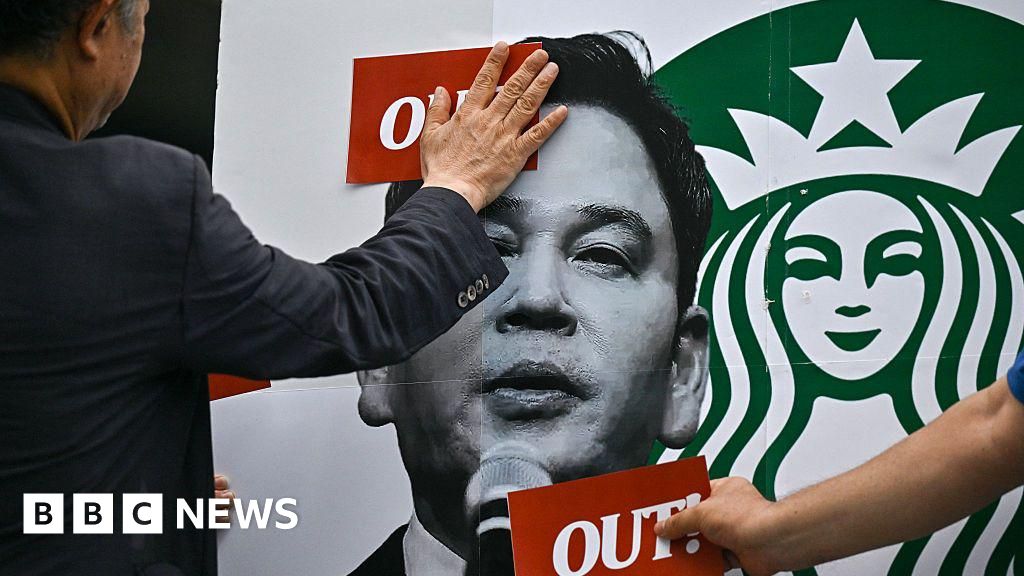
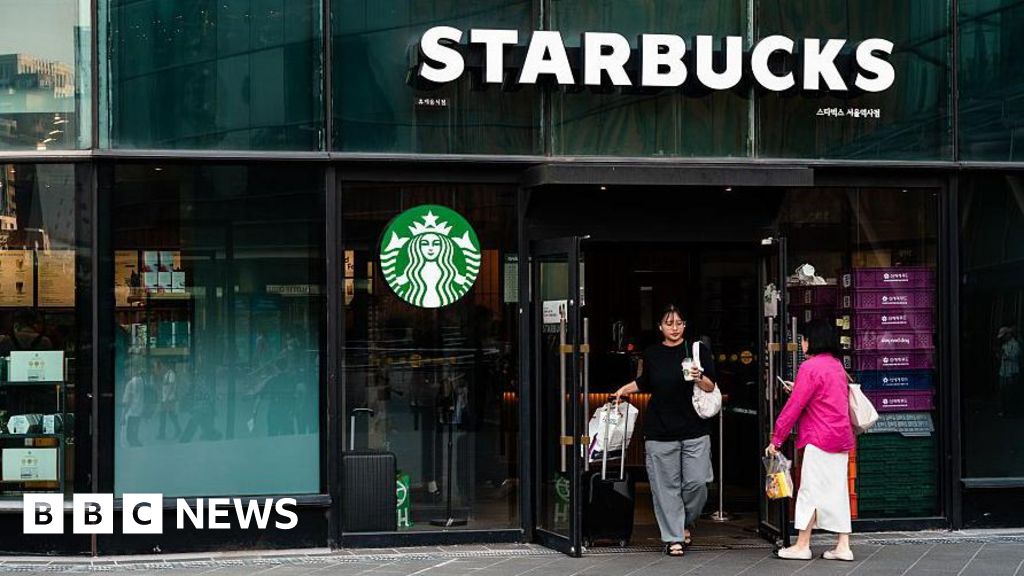
Starbucks in South Korea will temporarily close all its stores next week for a half-day to provide staff with a history lesson in response to severe backlash over a promotional campaign that coincided with the anniversary of the Gwangju Uprising, during which many civilians were killed, prompting protests and a drop in sales. #StarbucksKorea #GwangjuUprising #CorporateResponsibility

www.bbc.com
South Korea's Starbucks to shut for staff history lesson after backlash
10130
Euronews English Jun 15

Starbucks will close its stores across South Korea for half a day to provide staff with a history lesson on the Gwangju uprising, following public backlash over a Tank Day promotion that coincided with the anniversary of the event, which was marred by the deaths of civilians during a military crackdown in 1980. #SouthKorea #Starbucks #GwangjuUprising

www.euronews.com
Starbucks to close outlets across Korea for history lesson after 'Tank Day' ad fiasco
8343
Azadeh Moshiri May 25

I visited Sheikh Hasina's former residence which is now a memorial for the student protesters killed in the 2024 uprising.

BBC at the site of China's worst mining disaster in more than a decade
www.bbc.com
10158
BBC May 19

Starbucks Korea has fired CEO Sohn Jeong-hyun following backlash over a Tank Day promotion that was perceived as insensitive to the historical context of the 1980 Gwangju Uprising, which involved a military crackdown on pro-democracy activists, prompting public outrage and calls for a boycott. #StarbucksKorea #GwangjuUprising #MarketingFail

www.bbc.com
Starbucks Korea sacks CEO over controversial 'Tank Day' promotion
10165