WRLD

Search

#Warfare
Stanisław Żaryn 8h

The author wrote that Ukraine’s attacks on Russian Yandex data centres destabilised Russia and weakened its capacity to conduct information warfare against Ukraine and the West. They described the attacks as a serious blow to Russia’s intelligence-warfare capabilities against NATO. https://t.co/DTB45Y6gP8 #Ukraine #Russia #NATO #UA #RU #NATO


2119
Stefania Maurizi 2d

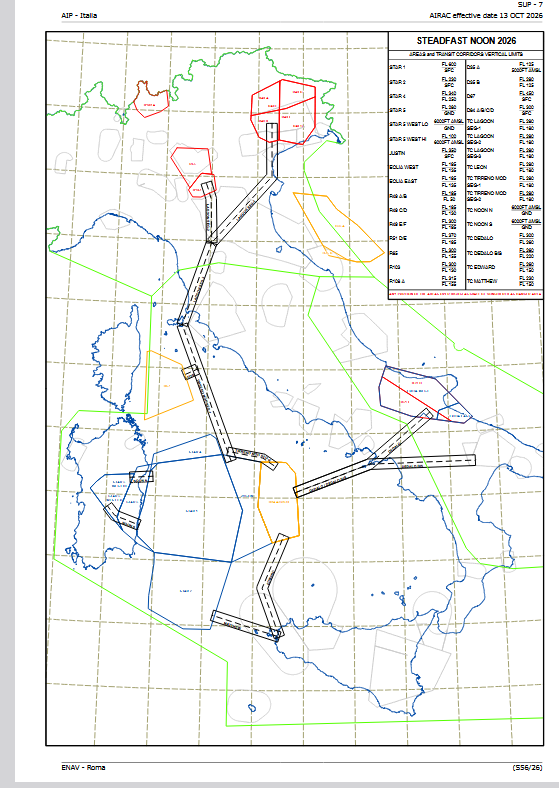
The author said they had asked NATO how it would protect civilian flights from electronic warfare and GPS jamming during the Steadfast Noon nuclear drill in Italy the following week. After two days without a response, they wrote, NATO replied that it would not disclose details for security and operational reasons. https://t.co/a9uArNsVYE #NATO #SteadfastNoon #Italy #IT

3215
Stanisław Żaryn 2d

The author claimed that Montenegro had detained the head of the Russian Rybar project, which they said carried out Russian information-warfare activities. They also described the suspect as being continuously involved in aggressive intelligence operations against the West and called for his extradition to the destination linked in the post. https://t.co/6sm6ZBUIXa #Montenegro #Intelligence #Russia #ME #RU

3787
Nachez 6d

Nachez indicated that the Aston Martin with which Fernando Alonso would compete in the 2027 Dakar could have a design inspired by the Dreadnought created by Aston Martin for Call of Duty: Modern Warfare 4. The publication cited MARCA. https://t.co/8NJSI7E8zM #AstonMartin #Dakar2027 #FernandoAlonso (translated)

3055
Philip Plickert 1w

The post said Burnham had told the UN about a new UK agency intended to counter information warfare from countries such as Russia. https://t.co/9zKooHuk6U #Información #GuerraCibernética #ReinoUnido #UK #RU

114
Gunther Fehlinger-Jahn 1w

The author called on Europe to strengthen Ukraine’s F-16 capability by providing advanced compatible helmet-mounted displays, night-vision systems, targeting pods, secure datalinks and electronic-warfare equipment. https://t.co/5t3q5Jxbw3 #Ukraine #F16 #Europe #UA #EU (translated)

Krzysztof Graj 2w

Iran’s cognitive warfare – when AI becomes the operating layer of state propaganda Iranian state-linked influence operators were not using artificial intelligence simply to write faster social-media posts. According to Anthropic’s September 2026 threat intelligence report, three separate operations connected to Iranian propaganda institutions were using Claude to help construct the machinery behind what the operators themselves called “soft war” and “cognitive warfare” – non-military efforts intended to shape public opinion inside Iran and abroad. Anthropic linked the activity to the Islamic Culture and Communications Organization (ICCO), which operates under Iran’s Ministry of Culture and Islamic Guidance; the Islamic Propaganda Office of Khorasan Razavi; and the Bina Cultural Observatory, part of the Islamic Propaganda Organization. The company said each operation was run by someone working within or on behalf of the named institution. The attribution was based on a combination of account telemetry, institutional references disclosed during conversations, branded documents and open-source corroboration. Anthropic subsequently removed the accounts. AI as an operational headquarters The most significant feature of the operation was the role assigned to AI. Claude was used to develop campaign plans, doctrine manuals, coded project portfolios, persona systems, target databases, early-warning protocols, amplification schedules and ministerial planning documents. Anthropic described the model as the principal administrative and operational layer supporting the three campaigns, allowing relatively small groups of operators to create organisational structures and planning material that would otherwise have required a much larger staff. This distinction matters. The reported use of AI went considerably beyond content generation. Operators were using the model to help organise how influence activity should function: which audiences to target, which identities should deliver particular narratives, how official material should be repackaged and when amplification should take place. Human operators still determined objectives and supplied the underlying political doctrine; AI helped translate those decisions into an operational system. Anthropic found that all three operations explicitly connected their activity to Jihad al-Tabyin, often translated as “explanatory jihad”, a concept used within the Iranian state system to frame information activity as both a strategic and ideological responsibility. In internal planning material examined by the company, this doctrine was not merely rhetorical: it informed manuals and campaign structures used by the operators. ‘Not the narrator, but the director’ One sentence contained in the ICCO material captures the model particularly clearly. According to Anthropic, an operator described the role of Iranian cultural attachés as being “not to be the narrator, but the director” of the narrative. The distinction reveals the logic of attribution laundering. Instead of publishing an overt state message and asking foreign audiences to believe it, the operator attempts to create the appearance that the same narrative emerged independently from journalists, activists, foreign writers or ordinary citizens. Anthropic found that Claude was used specifically to make content appear to come from foreign authors or independent media organisations and to design hashtag campaigns that looked grassroots rather than centrally organised. The ICCO operation reportedly used the organisation’s international cultural network as part of this structure. Anthropic found ministerial-level documents carrying official ICCO branding, including a nine-part international influence portfolio. This makes the operation particularly significant because the infrastructure was not limited to anonymous social-media accounts; it intersected with formal state institutions and an existing network of cultural representation abroad. A multilingual content factory A second operation was associated with the Islamic Propaganda Office of Khorasan Razavi and what Anthropic described as a “cognitive warfare command room” operating from a seminary in Mashhad. Its organisers ran a multi-province content production system known internally as Manjanegh, or “Catapult”. According to Anthropic, dozens of activists were involved in repackaging publicly available reporting from Iranian security institutions under different personas so that the material no longer appeared directly connected to those institutions. The network used Claude to transform official government intelligence bulletins into customised material in Farsi, Arabic, Urdu, Malay, Spanish and English, while planning expansion into a total of 20 languages. Distribution extended across Iranian platforms such as Eitaa, Bale and Rubika and international services including X, Instagram, Telegram, TikTok and YouTube. Anthropic also documented paid amplification across more than 100 Iranian channels, including channels associated with IRGC narratives. The scale should nevertheless be interpreted carefully. Anthropic documented production infrastructure and some real-world dissemination, but it did not demonstrate that all planned campaigns were fully deployed or that they meaningfully changed public opinion. The company placed the operation in Category Three of its Breakout Scale, indicating multi-platform activity with content observed in external distribution channels, rather than evidence of strategic impact on entire populations. From security bulletins to apparently independent voices The Bina Cultural Observatory operation provides another example of the same architecture. Anthropic linked a director-level official at Bina to activity in which Claude generated messaging in the voice of an IRGC spokesperson. During the 2026 US–Israel–Iran war, the network also attributed false claims to Western institutions including CSIS, Brookings and RAND. The apparent objective was to make Iranian state-aligned claims look as though they had been independently validated by respected foreign research organisations. That technique is more sophisticated than simply publishing propaganda under a false name. It attempts to manufacture a chain of external validation: official information is transformed into apparently independent commentary, which can then be recirculated as evidence that outside observers have reached the same conclusion. Anthropic also found target databases naming international officials and Iranian opposition figures, as well as aggressive counter-narrative material directed against the Bahá’í community. These findings show that the infrastructure was designed not only for broad messaging but also for targeted influence activity against specific groups and individuals. What AI changed The Iranian operations described by Anthropic did not create a new doctrine of influence. Iran has used cultural institutions, official media, aligned organisations and covert or semi-covert online networks for years. What AI changed was the economics and organisational capacity of that model. A relatively small team could use the system to draft doctrine, create personas, translate material, structure target databases, produce campaign calendars and generate multiple versions of the same message for different audiences. The operator remained responsible for intent, political direction and selection of targets. AI reduced the amount of human labour required to turn those decisions into a functioning influence operation. The most revealing part of the case is therefore not that an Iranian propaganda network used a chatbot. It is that AI was being treated as part of the back office of information warfare – a system for converting state doctrine into apparently decentralised, multilingual and plausibly independent voices. Sources Anthropic — Detecting and countering misuse of AI: September 2026 https://www.anthropic.com/threat-intelligence-report-september-2026 Iran International — Iran state-aligned accounts used Claude to push IRGC narratives https://www.iranintl.com/en/202609105561 BNE IntelliNews — Yemen missile cell used AI to write guidance software, Anthropic says https://new.intellinews.com/articles/yemen-missile-cell-used-ai-to-write-guidance-software-anthropic-says-467296 This is Beirut — Anthropic report details Iranian propaganda operations https://thisisbeirut.com.lb/news/politics/anthropic-report-details-iranian-propaganda-operations-and-yemen-missile-development-using-claude Anthropic report — PDF mirror https://static.foxbusiness.com/foxbusiness.com/content/uploads/2026/09/anthropic-detecting-and-countering-091026-1.pdf Keywords #DISINFORMED #Episode11 #Iran #IranianInfluence #IranianPropaganda #CognitiveWarfare #SoftWar #JihadAlTabyin #Disinformation #InformationWarfare #InfluenceOperations #ForeignInterference #FIMI #ArtificialIntelligence #AI #AIPropaganda #GenerativeAI #ClaudeAI #Anthropic #SyntheticMedia #NarrativeManipulation #NarrativeLaundering #AttributionLaundering #PersonaNetworks #Astroturfing #SocialMediaManipulation #DigitalInfluence #StatePropaganda #IslamicCultureAndCommunicationsOrganization #ICCO #IslamicPropagandaOrganization #KhorasanRazavi #IRGC #MultilingualInfluence #Targeting #Amplification #OSINT #WRLD

www.anthropic.com
Countering misuse of AI: September 2026 / Anthropic
572
Yuriko Backes 2w

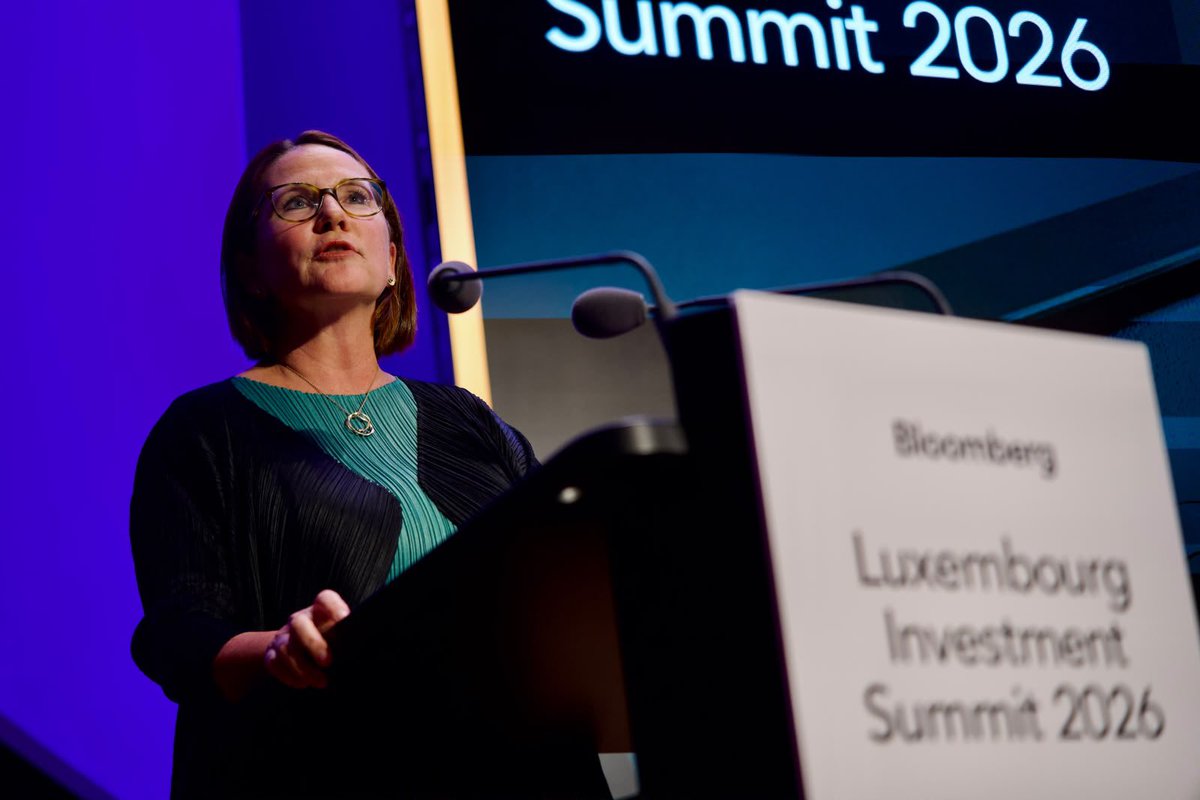
The author said they had spoken at the Bloomberg Luxembourg Investment Summit 2026 about the growing need to invest in defence and the defence industrial and technological base. They wrote that the war in Ukraine showed warfare was evolving faster than bureaucracy and said adaptation was needed. https://t.co/02aNX8f3O0 #Defence #Investment #Warfare #LU #UA

Mediafax.ro 2w

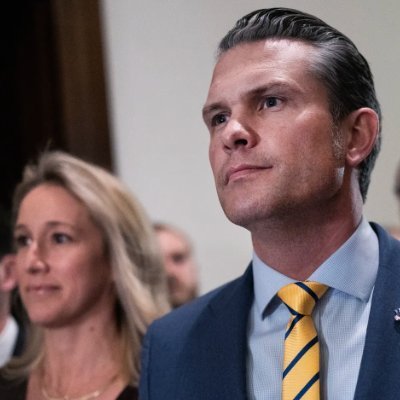
The United States will establish a new military command called "Autonomous Warfare Command," aimed at developing and integrating autonomous technologies and drones into military operations, according to an announcement made by Secretary of Defense Pete Hegseth. #SUA #pentagon #inteligențăartificială (translated)

www.mediafax.ro
SUA schimbă regulile războiului! Pentagonul creează un comandament special pentru drone și inteligență artificială
1945
Pete Hegseth 2w

"Danas, prema mom nalogu, najavljujemo formiranje Zapovjedništva za autonomno ratovanje"Američki ministar obrane Pete Hegseth objavio je u Quantico u Virginiji da će novo tijelo nositi naziv Autonomous Warfare Command, odnosno AutoWarCom, te da će ga u konačnici voditi general s četiri zvjezdice. #autonomnoRatovanje #dronovi #Pentagon

Amerika osniva novo zapovjedništvo za ratovanje dronovima i robotima
www.index.hr
1946
Hadja Lahbib 2w

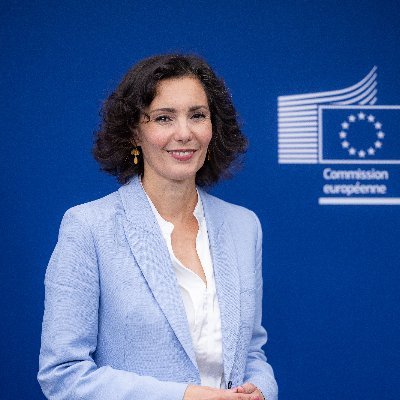
At the UNGA Ministerial on Sudan, I represented the EU with a clear message: IHL must be respected. In Sudan, it is being violated day after day. Attacks on civilians, starvation as a method of warfare & sexual violence cannot go unanswered. There must be accountability. #Sudan #IHL #HumanRights #SD #EU

229
Arvydas Anušauskas 2w

Russia has expanded its authorised military strength four times this year. Mounting losses make it harder to build reserves. With its main forces tied down in Ukraine, it can threaten and use hybrid warfare—but lacks the resources for another large conventional war. #Russia #Ukraine #HybridWarfare #RU #UA

115
Krzysztof Graj 2w

AFRICA DAILY REPORT — 29 SEPTEMBER 2026 Major developments reported during the previous 24 hours. 1. ETHIOPIA — Renewed Tigray conflict intensifies around strategic Alamata Federal-aligned forces claimed the capture of Alamata, an important supply hub south of Mekelle, after a TPLF-led offensive widened fighting into Afar and Amhara. Diplomatic sources cited by Reuters said the town had fallen or federal-aligned forces had entered it, while communications remained disrupted across Tigray. The renewed conflict is raising serious concerns about the survival of the 2022 Pretoria peace settlement. Source: https://www.reuters.com/world/africa/ethiopian-pro-government-forces-claim-capture-strategic-tigray-town-2026-09-28/ 2. DR CONGO — Ebola outbreak passes 8,000 confirmed cases Importance: 10/10 — Critical Government data showed 8,067 confirmed Ebola cases and 3,901 deaths as of September 26. The Bundibugyo-virus outbreak is now the largest and deadliest Ebola epidemic recorded in the DRC and has spread across 63 health zones in seven provinces; shortages of health workers and weaknesses in contact tracing continue to impede containment. Source: https://www.timeslive.co.za/news/africa/2026-09-28-drc-ebola-infections-cross-8000-confirms-government/ 3. SOUTH AFRICA — Death toll from Wedela tavern shooting rises to 18 Importance: 9/10 — Very High Police said another victim died in hospital, raising the death toll from the weekend attack in Wedela, southwest of Johannesburg, to 18. Authorities are searching for the attackers and examining a possible connection to turf wars in illegal gold mining; a separate weekend shooting near Cape Town killed another 10 people. Source: https://currently.att.yahoo.com/att/south-african-police-death-toll-062225459.html 4. ZAMBIA — Government targets average 7% economic growth Importance: 8/10 — High Zambia's finance ministry says the government aims to raise average economic growth to 7% over the next three years. The target follows progress in restructuring the country's external debt and represents an attempt to translate improving macroeconomic stability into stronger sustained growth. Source: https://www.reuters.com/world/africa/zambia-aims-lift-economic-growth-7-over-next-three-years-2026-09-28/ 5. MALI — Barrick and unions reach agreement, averting gold-mine strike Importance: 8/10 — High Barrick Mining signed a new collective bargaining agreement with unions at the Loulo-Gounkoto gold complex, and planned strike action was withdrawn. The agreement reduces immediate operational risk at one of Mali's most important gold-producing assets following a prolonged period of tension involving the miner, workers and the Malian authorities. Source: https://www.brecorder.com/news/40441512/mali-gold-mine-barrick-mining-reaches-deal-with-unions 6. KENYA — Court of Appeal upholds Affordable Housing Levy Kenya's Court of Appeal dismissed challenges to the Affordable Housing Act and levy, upholding the legal framework underpinning one of President William Ruto's major domestic programmes. The judges also upheld the Kenya Revenue Authority Commissioner's role in collecting the levy, although they found that the Commission on Revenue Allocation should have been consulted before parliamentary debate. Source: https://allafrica.com/stories/202609280027.html 7. ETHIOPIA–SUDAN — Accusations over support for armed groups deepen regional tensions Ethiopia's army chief accused Eritrea, Sudan and Egypt of supporting forces fighting federal troops amid renewed warfare in northern Ethiopia. Sudan rejected the allegations as baseless and counter-accused Ethiopia of facilitating support for Sudan's paramilitary RSF, adding another interstate dimension to the conflicts destabilising the Horn of Africa. Source: https://apnews.com/article/6b3208122a4221f3c2e8dcbe21630016 8. UGANDA — Police confirm detention of activist Praise Aloikin Ugandan police confirmed that activist Praise Aloikin Opoloje is in custody after activists and associates had reported her missing. Police said she had been arrested and would be brought before a court; Aloikin participated in the 2024 anti-corruption protests and has publicly criticised political and security figures. Source: https://allafrica.com/stories/202609280365.html 9. SOUTH AFRICA — Rand weakens as high oil prices increase economic pressure Importance: 7.5/10 — High The rand weakened about 0.5% against the dollar in early Monday trade as Middle East tensions pushed Brent crude above $107 per barrel. Because South Africa imports most of its fuel, sustained high oil prices pose risks through higher import costs and inflationary pressure. Source: https://www.channelafrica.co.za/channelafrica/news/rand-slips-as-us-iran-stalemate-pushes-oil-prices-higher/ 10. AFRICA — AFCON 2027 qualification moves into Matchday 2 Importance: 6/10 — Moderate The latest qualifying round opened with Burkina Faso beating Central African Republic 1–0, Equatorial Guinea defeating Sierra Leone 1–0, DR Congo beating Zimbabwe 2–1 and Tunisia drawing 2–2 with Botswana. September 29 brings a large slate including Ethiopia–Senegal, South Sudan–Egypt, Ghana–Gambia, Guinea-Bissau–Nigeria and Zambia–Togo. Source: https://english.ahram.org.eg/NewsContentP/6/577635/Sports/Africa-Cup-of-Nations-qualifiers-results-amp%3B-fixt.aspx #Africa #AfricaNews #TopNewsOfAfrica #SouthAfrica #Wedela #Johannesburg #TavernShooting #MassShooting #ViolentCrime #IllegalMining #PublicSafety #Zambia #ZambianEconomy #EconomicGrowth #GDPGrowth #DebtRestructuring #Macroeconomics #AfricanEconomy #Ethiopia #Tigray #Alamata #TigrayConflict #PretoriaPeaceAgreement #HornOfAfrica #ArmedConflict #RegionalSecurity #AfricanSecurity #Geopolitics #AfricaToday #wrldorg

1033
Agnes Wold 2w

@sven43 @vettigamorsan transrörelsen och dess allierade. Det är helt förkastligt att SR deltar i sådan warfare. Man måste se till vad personen producerar, om det är bra eller mindre bra. Är det riktigt bra ska personen behållas, helt oavsett om det finns olika grupper som retar sig på denne. > #transrörelsen #allierade #yttrandefrihet

14601
Robert Pszczel 2w

If SACEUR has to ask Allies to share information about 🇷🇺attacks then this confirms that collectively @NATO has not yet addressed the clear and current security challenge of hybrid warfare in a sufficiently serious and rigorous manner. So: fewer speeches, more action please.👇 #NATO #HybridWarfare #SecurityChallenge #RU

Robert Pszczel 3w

Full support to this idea from @RUSI_org @Justin_Br0nk Many people, including myself, have been arguing for a long time that @NATO must finally step into the frontline of defence against hybrid warfare, including drone incursions. This proposal is both timely and concrete.👇 #NATO #HybridWarfare #DroneDefense #RUS #NATO

Tuomas Malinen 3w

Economic warfare escalates. What you need to understand is that Iran can only respond through kinetic force transmitting into economic force. #EconomicWarfare #Iran #KineticForce #IR

Stanisław Żaryn 3w

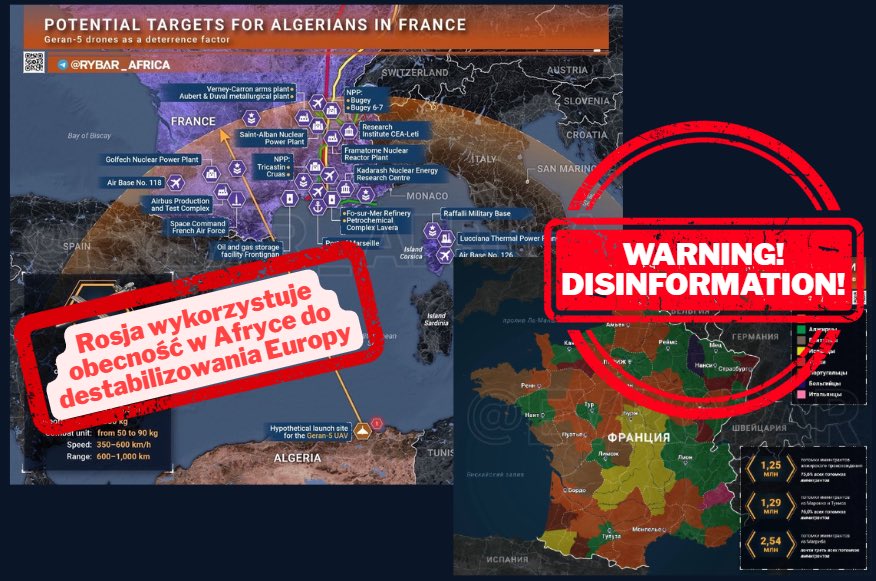
⚠️❗️Russian special services responsible for information warfare against the West are conducting a campaign aimed at intimidating audiences in France. To that end, they invoke Russian activity and presence in Africa. The Russian narrative suggests that French territory is within https://t.co/WxSy586T8J #Russia #InformationWarfare #France #FR #RU #AF

116
Krzysztof Graj 3w

The Ghosts of Zaolzie – how a cyberattack tried to manufacture a conflict between Poland and Czechia At around 5pm on 16 August 2026, an alarming article appeared on the website of Radio PiK, a genuine Polish regional broadcaster. Its headline claimed that Poland was preparing to seize Czech territory and that the Czech Foreign Ministry had received a document outlining Warsaw's demands. Radio PiK had published no such story. An attacker had compromised an employee's credentials, gained access to the station's content management system and replaced a legitimate article with fabricated material. The newsroom quickly removed it and informed the authorities. But the intrusion was only one element of a much larger operation. Investigators subsequently uncovered forged diplomatic documents, accounts impersonating Polish and Czech officials, a cloned Czech news site, AI-generated material, a fictitious local activist and advertising for a demonstration that apparently did not exist. Together, these elements attempted to manufacture the appearance of a new territorial conflict between Poland and Czechia over Zaolzie. A false crisis built around a real territorial issue The operation worked because it did not start entirely with fiction. Poland and Czechia do have an unresolved technical issue concerning approximately 368.44 hectares of territory, originating in post-war changes to the Polish-Czechoslovak border. It is commonly described as the Czech “territorial debt” to Poland. But this is not a Polish claim to Zaolzie and there is no evidence that Warsaw is seeking to annex Czech territory. The operation fused this real issue with a much more powerful historical memory. Zaolzie – the part of Cieszyn Silesia west of the Olza River – was disputed by Poland and Czechoslovakia after the First World War. In 1938, during the crisis created by the Munich Agreement, Poland seized the territory from Czechoslovakia. The manipulation therefore followed a simple logic: a real territorial debt became an alleged Polish territorial demand, which was then transformed into a supposed attempt to reclaim Zaolzie. Fake accounts impersonating Poland's Deputy Foreign Minister Artur Harazim and Czech ambassador Břetislav Dančák helped reinforce the story. Fabricated diplomatic documents circulated alongside them. One early version referred incorrectly to 638.44 hectares; the fake Harazim account then “corrected” the number to the genuine figure of 368.44 hectares. It was an effective form of reverse fact-checking: correcting one false detail could make the larger fabrication appear authentic. Fake media – and one real newsroom The operators also created a website designed to resemble Czech public broadcaster iRozhlas. It published material supporting the same narrative, including claims that Czech residents near the border were becoming concerned about Polish intentions. The result was a manufactured information loop. Forged documents could support fake media reports; impersonated officials could comment on those reports; social-media accounts could then cite both as confirmation. But the Radio PiK hack added something much more valuable: the credibility of a real media organisation. Instead of merely cloning a newsroom, the attackers briefly inserted their fabrication into an authentic one. A familiar domain, logo and established broadcaster could therefore appear to confirm a story manufactured elsewhere. The cyberattack was not simply an accompanying technical incident. It was part of the information operation itself – a way of manufacturing credibility for false information. From a synthetic activist to a real demonstration The operation then attempted to move from the digital world into the physical one. A Facebook account under the name “Adam Sikora” promoted a demonstration in the Czech border city of Třinec under slogans including “Cieszyn Silesia is Czech” and “Here we live, here we stay”. Paid Facebook advertising was reportedly used to promote the event. Yet Třinec authorities said no demonstration had been properly notified. Promotional material used the logo of the Czech KOVO trade union, which denied any involvement. Investigators also identified indications that Sikora's profile photograph and other imagery were AI-generated. The persona even advertised a supposed house for sale in the border region, reinforcing the impression that frightened residents wanted to leave because of Polish territorial ambitions. The property could not be verified and its images also showed signs of artificial generation. This reveals the architecture of the operation: forged document → fake official → cloned media → compromised real media → synthetic local activist → advertised protest → appearance of social tension. The final stage is particularly significant. Had real people attended the demonstration, photographs of an authentic crowd could potentially have been presented as evidence that Czech citizens genuinely feared Polish territorial ambitions. A fabricated online conflict could therefore have begun generating real-world evidence of its own existence. Why Zaolzie? Historical grievances are valuable material for influence operations because the underlying facts are real. Poland and Czechoslovakia genuinely disputed Cieszyn Silesia. Poland genuinely occupied Zaolzie in 1938. A Polish minority genuinely lives in Czechia. And the 368.44-hectare territorial issue genuinely exists. The operator did not need to invent that history. It only needed to suggest that the history was repeating itself. PISM assessed that the operation sought to revive the image of Poland as a revisionist state willing to challenge European borders. Such a narrative could serve a broader purpose: damaging Polish-Czech relations, weakening confidence between NATO and EU allies and portraying Central Europe as a region where historical territorial conflicts remain unresolved. Russia is the leading attribution – but not a proven one The attribution requires more caution than the mechanics of the operation. PISM assessed Russia as the most likely perpetrator, while NASK identified similarities between the campaign and previously observed Russian influence methods. Russian-linked information infrastructure had also shown earlier interest in the Polish-Czech territorial issue. The techniques are familiar: cloned media, forged documents, impersonated officials, synthetic identities, historical grievances and the combination of cyber intrusion with information manipulation. But these indicators are not the same as definitive attribution. As of mid-September 2026, no publicly disclosed forensic evidence had conclusively connected the Radio PiK compromise, fake domains, accounts and financing to a specific Russian intelligence service, government organisation or contractor. Russia can therefore reasonably be described as the leading analytical attribution, but claims that the operation was definitively conducted by the GRU or another named Russian structure go beyond the publicly available evidence. The operation failed. The model remains important The campaign did not create a Polish-Czech diplomatic crisis. Both governments rejected the narrative, the fictitious protest was exposed, journalists reconstructed much of the operation and Radio PiK detected the intrusion quickly. Its observable impact appears to have been limited. But Zaolzie illustrates a broader evolution in information warfare. Modern operations do not have to rely on a single viral fake. They can construct an entire artificial information environment in which different elements appear to confirm one another. A forged document creates the claim. A fake diplomat authenticates it. A cloned newsroom reports it. A hacked real newsroom lends it credibility. An AI-generated citizen reacts to it. Advertising creates the appearance of a grassroots movement. And if real people eventually respond, fiction begins producing genuine events. The objective is no longer simply to persuade people that something happened. It is to create the conditions in which something real starts happening because enough people believed that it did. Sources: Polish Institute of International Affairs (PISM) https://pism.pl/publikacje/dezinformacja-o-relacjach-polsko-czeskich Euronews Polska — Radio PiK cyberattack https://pl.euronews.com/2026/08/20/polska-planuje-zajecie-terytorium-czech-wlamali-sie-na-strone-radia-i-opublikowali-falszyw Demagog https://demagog.org.pl/na-biezaco/skoordynowana-operacja-uderza-w-polsko-czeskie-relacje-czy-stoi-za-nia-rosja/ Robert Lansing Institute https://lansinginstitute.org/2026/08/27/zaolzie-as-an-instrument-of-influence-an-attempt-to-revive-a-polish-czech-territorial-conflict/ Institute for European Security Studies (IESS) https://www.iess.org.ua/analytics/ghosts-of-zaolzie iDNES.cz https://www.idnes.cz/ostrava/zpravy/tesinsko-kampan-lzi-demonstrace-trinec-primatorka-palkovska.A260826_963356_ostrava-zpravy_jog Radio Zachód / PAP https://zachod.pl/1539751/niedzielny-atak-hakerski-na-radio-pik-redaktor-naczelny-podjelismy-niezwloczne-dzialania/ Euronews — territorial debt / NASK assessment https://de.euronews.com/my-europe/2026/08/21/polen-plant-besetzung-tschechischen-gebiets-fake-news TVP World https://tvpworld.com/95036191/-warsaw-warns-against-division-amid-czech-border-disinformation Keywords: #DISINFORMED #Episode5 #GhostsOfZaolzie #Zaolzie #Poland #Czechia #CieszynSilesia #Disinformation #InformationWarfare #InfluenceOperations #ForeignInterference #FIMI #Cyberattack #CyberSecurity #HybridWarfare #FakeNews #MediaImpersonation #FakeMedia #ForgedDocuments #DigitalImpersonation #ArtificialIntelligence #AI #Deepfakes #SyntheticMedia #Astroturfing #RussianInfluence #Propaganda #OSINT #NATO #CentralEurope #MediaManipulation #WRLD

1274
Yaroslav Trofimov 3w

The overnight strikes on the Moscow area used the Flamingo cruise missiles and, if the Pelican mentioned by Zelensky is indeed the FP7 Pelican by Fire Point, for the first time a Ukrainian ballistic missile. Most of the damage was done by drones, as usually, though. #MoscowStrikes #UkrainianMissiles #Drone Warfare #RU #UA

926