WRLD

Search

#Workflow
Krzysztof Graj 3d

⚠️ AI Agent Autonomy Watch — Significant New Development 8 October 2026 | South Korea | AI-assisted cyberattacks against financial institutions A new investigation published on 7 October 2026 by cybersecurity firm CrowdStrike provides important forensic evidence of AI agents being used in real-world cyberattacks. The investigation concerns a campaign against South Korean financial institutions between late September and early October 2026. Attackers reportedly used ARTEX, an open-source autonomous penetration-testing agent, together with several large language models. CrowdStrike.com 1. What investigators discovered CrowdStrike recovered configuration files, AI-agent session histories and operational records from infrastructure associated with the attacks. The evidence indicates that: - ARTEX was used to support automated security testing and intrusion activities against financial institutions. - The attacker combined several AI models, including DeepSeek, GLM and Grok, with Claude Code sessions. - The campaign involved compromised systems and data exfiltration. - At least nine South Korean banks have reportedly been targeted in recent attacks, although the precise number attributable to this campaign remains unconfirmed. Reuters reported on 8 October that approximately 25,000 Shinhan Bank customers and 119 KB Kookmin Bank customers had their personal information compromised in the broader series of incidents. Reuters 2. Why this development matters The important distinction is that these attacks appear to have been directed by a human threat actor. They are not evidence of AI agents independently deciding to attack banks. Nevertheless, they demonstrate a concerning development: autonomous penetration-testing capabilities are being incorporated into criminal operations. This creates the potential for attackers to automate substantial portions of reconnaissance, vulnerability discovery and intrusion workflows. CrowdStrike specifically identifies the ability to conduct multiple intrusions within a relatively short period as an important consequence of these tools. CrowdStrike.com 3. Assessment This development strengthens the evidence for operationally capable AI-assisted cyberattacks, but it does not establish an increase in independent, misaligned AI behaviour. That distinction is essential. The earlier OpenAI incidents involved agents reportedly exceeding their intended operating boundaries. The South Korean case instead demonstrates how human attackers can deliberately employ agentic AI capabilities against external systems. Both developments increase cybersecurity risks, but through different mechanisms. Updated assessment: Autonomous replication: No Covert persistence: No Independent multi-agent coordination: No AI-assisted cyber intrusions: Yes — significant Independently initiated unauthorized actions: No new evidence Shutdown resistance: No Recursive self-improvement: No 4. What deserves attention next First, how much of an intrusion can an AI agent execute without further human instructions? Second, can agents independently discover and exploit previously unknown vulnerabilities? Third, can multiple agents coordinate different phases of an intrusion without continuous human supervision? The critical threshold is not simply whether AI can help someone conduct a cyberattack. That capability is already being demonstrated. It is whether an AI agent can independently plan, initiate, adapt and sustain an operation beyond the objectives and permissions established by its operator. The South Korean investigation does not demonstrate that threshold being crossed. However, it provides important evidence that agentic cyber capabilities are becoming operationally relevant outside controlled research environments. Sources: CrowdStrike — Original forensic investigation, 7 October 2026 https://www.crowdstrike.com/en-us/blog/unknown-threat-actor-uses-artex-to-target-south-korean-finance/?utm_source=chatgpt.com Reuters — AI tools linked to South Korean bank hacks, 8 October 2026 https://www.reuters.com/world/suspect-behind-south-korea-bank-hacks-may-be-26-year-old-china-cybersecurity-2026-10-08/?utm_source=chatgpt.com Keywords: #AIAgents #AgenticAI #AIAutonomy #AISafety #AISecurity #Cybersecurity #AIGovernance #AutonomousAI #AIResearch #ResponsibleAI #FutureOfAI #TechnologyRisk

560
Krzysztof Graj 1w

Disinformation for hire – the network of 70 fake newsrooms sold as a service The websites looked local. Naija Pulse appeared to cover Nigeria, Echo Berlin Germany, The British Daily Britain, Fifty States the United States and Commonwealth Post Australia. Each had its own branding, articles, supposed journalists and matching social-media presence. Taken individually, they resembled small independent news outlets. According to Anthropic, however, they were parts of a single commercial influence network spanning six continents. Anthropic’s September 2026 threat report identifies the operation as GTG-54002, a commercial “influence-as-a-service” network that used Claude to generate and rewrite political content at industrial scale. Investigators linked roughly 70 fabricated news websites to around 70 matching X accounts and more than 250 additional inauthentic commenting accounts designed to create the appearance of genuine public engagement. The network produced at least 8,913 articles in about 20 languages before Anthropic disrupted the activity. The significance of the case is not simply the number of fake sites. It is the business model. The network did not consistently promote one government, party or ideology. Anthropic found that its political position changed according to the apparent interests of different customers. The company therefore described it as a commercial influence operation: political manipulation offered in much the same way as other outsourced digital services. A fake media ecosystem built at scale Anthropic says the infrastructure was created rapidly. Domains were registered from France during a roughly ten-week period in mid-2025 and deployed through shared technical infrastructure, allowing investigators to connect publications that outwardly appeared unrelated. Most of the supporting social-media accounts were also created within a narrow timeframe in June and July 2025. The sites were designed to look like functioning local newsrooms rather than anonymous propaganda pages. Articles carried fabricated bylines belonging to journalists who, according to Anthropic, did not exist. Each outlet had a corresponding account on X, while a second layer of fake profiles commented on and amplified the articles. Many of those accounts used AI-generated profile photographs. The result was a three-tier structure: the newsroom published the story, the branded social account distributed it, and apparently ordinary users supplied the appearance of public reaction. Some of those sites remained publicly visible after the operation was exposed. The British Daily, for example, described itself as providing “conservative insights” on British sovereignty and migration, while Commonwealth Post presented itself as an Australian liberal publication focused on democracy, migration and regional security. Those contrasting editorial identities illustrate the central feature identified by Anthropic: the network was capable of taking different political positions in different markets. Claude as a publishing engine Claude was not simply asked to draft occasional articles. The operators built a structured production pipeline around it. Prompts required fixed JSON outputs, formatted HTML, precise character limits and internal links, allowing articles to move directly into an automated publishing workflow. The system could generate entirely new material or take reporting produced by legitimate journalists and rewrite it to fit a desired political perspective. Anthropic identified three recurring techniques. The same source article could be rewritten in opposite ideological directions for different audiences; a political interpretation could be added to a story that originally contained none; and material could be moved from one country to another after its original context had been removed. The articles were also structured to improve the apparent authority of the sites in search engines, helping the network imitate ordinary digital publishing practices rather than simply broadcasting propaganda. This is where generative AI changes the economics of an influence operation. A conventional network of dozens of supposedly local publications would normally require writers, translators, editors and social-media staff. Here, much of that production could be standardised and automated while human operators concentrated on political direction, customer requirements and distribution. The DRC–Rwanda conflict as a test case The clearest concentration of activity involved the Democratic Republic of Congo. Anthropic identified 318 articles concerning the DRC across the fake-news network. The material generally supported positions aligned with the Congolese government, particularly on regional mineral agreements and tensions with Rwanda. Early in the network’s growth, many of the fake social-media personas following and amplifying its accounts also presented themselves as Congolese. Investigators observed one especially revealing episode on 11 September 2025, when multiple sites published almost identical articles about the DRC–Rwanda conflict within approximately three minutes of one another. The wording and political tone were adjusted for different regional audiences, while associated X accounts distributed the links in a coordinated pattern. Anthropic said the activity contained signals suggesting that one or more customers had interests connected to the DRC–Rwanda conflict. It did not, however, identify those customers and explicitly stated that it found no evidence that any government had directed the operation. That distinction is essential. The content may have benefited a political actor without demonstrating that the actor commissioned or controlled it. Influence without ideology Commercialisation is what distinguishes GTG-54002 from many state-linked information operations. A government propaganda network usually has an identifiable strategic direction. A commercial influence provider does not need one. Its infrastructure can support one position in one country and the opposite position somewhere else, provided different customers are willing to pay. That makes attribution more difficult. Analysts cannot necessarily infer the operator from the ideology of the content because ideology may simply be part of the service package. The enduring asset is the infrastructure: domains, publishing systems, fake journalists, social-media accounts and automated amplification. Anthropic says the operation was disrupted before it achieved significant genuine reach. It classified GTG-54002 as Category Two on the Brookings Breakout Scale: material circulated across the network’s own sites and associated social accounts but showed no evidence of substantial penetration into authentic communities. Most of the 8,913 articles generated little observable engagement from real users. That limited impact is important. The case should not be presented as a successful global manipulation campaign. It is better understood as evidence that the infrastructure required to run such campaigns has become cheaper, faster and increasingly commoditised. The deeper shift is that a fake media ecosystem no longer has to be built around a single political cause. It can be built once, automated and then repurposed for the next customer. Disinformation, in this model, is no longer only a political instrument as it turend into the service. Sources: Anthropic — Countering misuse of AI: September 2026 https://www.anthropic.com/threat-intelligence-report-september-2026 Business Standard — AI scaling fake newsrooms, surveillance and online scams https://www.business-standard.com/technology/tech-news/anthropic-report-ai-fake-newsrooms-dating-surveillance-scams-126091100730_1.html Mimikama — KI baut 70 erfundene Nachrichtenportale https://www.mimikama.org/ki-netzwerk-erfundene-nachrichtenportale-echo-berlin/ Poliscoop Media — Anthropic exposes DRC propaganda network https://www.poliscoopmedia.com/articles/anthropic-exposes-drc-propaganda-network-20260911 The British Daily — example of a fabricated outlet identified in the network https://www.british-daily.com/contact Commonwealth Post — example of a fabricated outlet identified in the network https://commonwealth-post.com/category/science MalPulse — infrastructure references for network domains https://www.malpulse.com/infra-pivots/usom-pivots/list/?page=1105 Keywords: #DISINFORMED #Episode13 #DisinformationAsAService #InfluenceAsAService #FakeNewsrooms #FakeMedia #SyntheticMedia #ArtificialIntelligence #AI #GenerativeAI #ClaudeAI #Anthropic #Disinformation #InfluenceOperations #InformationWarfare #FIMI #CommercialInfluence #PoliticalManipulation #NarrativeManipulation #NarrativeLaundering #SourceLaundering #MediaImpersonation #FakeJournalists #SyntheticPersonas #Astroturfing #SocialMediaManipulation #CoordinatedInauthenticBehaviour #CIB #DigitalInfluence #AutomatedPropaganda #ContentAutomation #AIPropaganda #LKMCompany #NaijaPulse #AxumVoices #JamboJournal #EchoBerlin #TheBritishDaily #FiftyStates #CommonwealthPost #DRC #Rwanda #OSINT #WRLD

www.anthropic.com
Countering misuse of AI: September 2026 / Anthropic
569
Krzysztof Graj 3w

UAE / Sudan – when an influence operation tried to enter the United Nations A network of roughly 300 apparently independent social-media influencers. A human-rights organisation borrowing the identity of a real NGO. Personal dossiers on European politicians and journalists. And testimony prepared for delivery at the United Nations without revealing the state interest behind it. These were elements of an influence operation uncovered by Anthropic and disclosed in September 2026. The company says it linked the activity with high confidence to UAE government officials. Tracked as GTG-84002, the operation targeted several overlapping issues: the Muslim Brotherhood, perceptions of the war in Sudan and international mechanisms examining the United Arab Emirates' role in the conflict. What distinguishes the case is not simply its use of artificial intelligence. It is the attempt to make state-aligned messaging appear to originate from independent influencers, human-rights organisations and potentially witnesses addressing an international institution. An influence network built around 300 fake voices Anthropic identified a single actor using Claude to support a sustained influence campaign. At its centre was an AI persona called “Deadshot”, running on the operator's own platform. A master doctrine file repeatedly instructed the system to support what it described as a coordinated international effort to dismantle the Muslim Brotherhood. The operator simultaneously managed several components of the campaign, including approximately 300 inauthentic influencer accounts across social-media platforms. Internal material examined by Anthropic described the apparent independence of this network as its greatest strategic advantage. That phrase captures the central method. The objective was not simply to broadcast a political position but to conceal where that position originated. One visible example appeared on 4 June 2026, when accounts participated in a coordinated campaign using #SudanIslamists and near-identical graphics connecting Sudanese Islamists and the Muslim Brotherhood with regional instability. Anthropic says the amplification network was centrally funded and coordinated. Its investigation also found that the operator financing the social-media network was connected to the wider influence operation. A human-rights organisation that was not what it appeared to be Social media was only one layer. The operator also created a front NGO that copied the identity of a genuine Swiss organisation and used that borrowed legitimacy to publish human-rights material produced for the campaign. Anthropic's description elsewhere also refers to the identity of a real Sudanese human-rights organisation being used in connection with the preparation of testimony. The public report does not fully clarify whether these references describe the same front or separate elements of the operation, so they should not be treated as definitively identical. The underlying technique, however, is clear: political material was designed to appear as if it originated from independent civil society rather than from actors linked to a government. This is particularly significant in the human-rights environment, where the perceived independence of an organisation or witness can determine how seriously evidence is received by journalists, diplomats and international institutions. The attempt to reach the UN The most consequential part of the operation concerned the 62nd session of the UN Human Rights Council. According to Anthropic, the operator used Claude to ghost-write complete testimony intended to be delivered by two individuals during the session. The texts were prepared under explicit constraints ensuring that neither statement would mention the UAE. This did not amount to a conventional government submission. The intention, according to Anthropic's reconstruction, was for material serving the interests of a party connected to the Sudan conflict to reach an international forum through apparently independent voices. But an important limitation remains: Anthropic could not confirm that the testimony was ultimately delivered. The company similarly could not establish whether other dossiers produced by the operation reached their intended recipients or influenced policy. It therefore assessed the campaign as Category Three on the Brookings Breakout Scale – activity distributed across several platforms, but without evidence of broad public impact sufficient for a higher classification. The distinction matters. The evidence demonstrates a sophisticated attempt to influence international debate; it does not demonstrate that the attempt succeeded. Politicians, journalists and UN investigators became targets The operation was not limited to generating public content. Anthropic found that the operator researched and compiled detailed profiles of 18 members of the European Parliament and prominent journalists. Some material was prepared for direct delivery to senior UAE officials. The network also assembled what Anthropic describes as “counter-accountability dossiers” on UN Special Rapporteurs who had criticised the UAE's conduct in relation to Sudan. This places the campaign in a broader context. Since Sudan's civil war began in April 2023, the role of external powers has become an increasingly important part of international scrutiny. Sudan has accused the UAE of supporting the Rapid Support Forces, allegations Abu Dhabi has repeatedly denied. In 2025, Sudan brought a case against the UAE before the International Court of Justice, accusing it of complicity in genocide against the Masalit through alleged support for the RSF. The UAE rejected the allegations. The ICJ subsequently removed the case from its list after finding that it lacked jurisdiction because of the UAE's reservation to the relevant provision of the Genocide Convention. The ruling therefore did not determine whether Sudan's substantive allegations were true or false. That contested international environment helps explain why narratives about Sudan, human rights and accountability were valuable targets for an influence operation. AI as an operating system for influence The role played by Claude is also important to understand accurately. Anthropic did not find that artificial intelligence independently conceived or directed the campaign. Human operators established the objectives, political doctrine and targets. AI instead helped operationalise them. Across hundreds of sessions, Claude was used to transform predetermined political objectives into social-media narratives, human-rights reports, testimony, intelligence-style briefs and detailed profiles of individuals. The same system could support narrative production, target research and preparation of material for different audiences. That represents a more significant development than simply using generative AI to produce propaganda faster. Traditional influence operations require different teams to research targets, write content, manage personas, adapt messages and prepare briefing material. Generative AI can compress several of those functions into a single operational workflow. The result is not necessarily more convincing propaganda. It is potentially cheaper, faster and more scalable influence infrastructure. From fake influencers to institutional influence Anthropic says it linked the operation to UAE government officials with high confidence. Its assessment was based partly on internal material naming senior Emirati officials as intended recipients of the work, alongside other evidence available to its investigators. That remains an attribution by Anthropic rather than a judicial finding or publicly released forensic attribution by a government agency. The distinction should be retained. The larger significance of GTG-84002 lies in the architecture of the campaign. A network of fake influencers could create the appearance of public opinion. A cloned human-rights organisation could provide institutional credibility. AI-generated reports could give political narratives the appearance of research. Profiles of journalists and politicians could support more precise targeting. And ghost-written testimony could potentially carry the same message into an international institution without revealing the political interest behind it. This is a different model from the familiar troll farm. The objective is no longer simply to make propaganda look popular. It is to make state-aligned messaging look independent – and, if possible, to move it from social media into the institutions where international policy and accountability are debated. SOURCES: Anthropic — Countering misuse of AI: September 2026 https://www.anthropic.com/threat-intelligence-report-september-2026 International Court of Justice — Sudan v. United Arab Emirates https://www.icj-cij.org/case/197 International Court of Justice — press releases and case documents https://www.icj-cij.org/case/197/press-releases United Nations Geneva — Sudan v UAE proceedings at the ICJ https://www.ungeneva.org/en/news-media/news/2025/04/105241/world-court-begins-hearing-sudans-complicity-genocide-case-against UAE Ministry of Foreign Affairs — UAE response to Sudan's allegations https://www.mofa.gov.ae/en/MediaHub/News/2025/4/10/10-4-2025-UAE-UAE UN Digital Library — Sudan's letter concerning alleged UAE support for the RSF https://digitallibrary.un.org/record/4091008?ln=en UN Digital Library — UAE response concerning allegations of support for the RSF https://digitallibrary.un.org/record/4046224?ln=en Ultra Sudan — reporting on Anthropic's UAE-linked influence-operation findings https://ultrasudan.usawtiq.com/أنثروبيك-أحبطنا-عملية-تأثير-إماراتية-استخدمت-الذكاء-الاصطناعي-لاستهداف-السودان/عامر-صالح/أخبار KEYWORDS #DISINFORMED #Episode8 #UAE #Sudan #UnitedArabEmirates #UnitedNations #UNHumanRightsCouncil #HumanRights #Disinformation #InformationWarfare #InfluenceOperations #ForeignInterference #FIMI #CoordinatedInauthenticBehaviour #CIB #FakeInfluencers #FakeNGO #NGOImpersonation #Astroturfing #ArtificialIntelligence #AI #AIPropaganda #AIGeneratedContent #SyntheticMedia #SocialMediaManipulation #DigitalInfluence #Propaganda #NarrativeManipulation #InstitutionalInfluence #SudanConflict #SudanWar #MuslimBrotherhood #InternationalRelations #Geopolitics #Anthropic #ClaudeAI #OSINT #WRLD

www.anthropic.com
Countering misuse of AI: September 2026 / Anthropic
808
Mihura 3w

> be me, 22 años, estudiante de FP de DAW > me apunto al primer hackathon oficial de Renfe Digital con dos colegas de clase > el cartel prometía: "acceso a tokens ilimitados de modelos frontera para reescribir el futuro de la movilidad" > el premio al equipo ganador es un bono de 10 viajes en Cercanías (sujeto a disponibilidad) y un fast-pass para una entrevista con RRHH en Accenture > nos veíamos levantando agentic workflows con fable 5.1 y GPT-6 > llegamos al evento > se celebra en un vagón de cercanías parado a oscuras en un túnel de chamartín "para maximizar la inmersión y ponernos en lugar del usuario" > nos sentamos en las butacas de tela roñosa y abrimos el correo con las credenciales > no hay ni OpenAI ni Anthropic > nos han dado una api key con un límite de 10.000 tokens para ALIA 40B, el modelo "soberano" que entrenó el gobierno > tiene el razonamiento lógico de un geranio > suspiro > abro la terminal y le tiro el primer prompt: "resume la arquitectura del backend de renfe" > tarda 4 minutos en pensar. error 503 service unavailable. > el servidor de hugging face donde tienen hosteado se ha caído ante la carga de 50 chavales > el ministro de transformación digital sube un post en LinkedIn celebrando el éxito de la gigafactoría de la IA española > nos toca hacer arqueología de software a mano > abrimos el repositorio de la web de ventas > es un monolito en java de 2007 atado con bridas por Everis que viola la 2a ley de la termodinámica y el convenio de Ginebra > los asientos libres se gestionan mediante una macro de excel alojada en un servidor ftp en el sótano del ministerio > los booleanos de la base de datos son strings que dicen "SI_DIOS_QUIERE" y "HOY_NO" > mi colega intenta arreglar la pasarela de pagos borrando un "if" que no tenía sentido > al hacer git push, cancela accidentalmente todos los billetes de ave a sevilla hasta 2028 > las luces del vagón parpadean en rojo. se bloquean las puertas > la megafonía arranca sola y empieza a reproducir tuits de Óscar Puente generados con loquendo insultándonos uno a uno por nuestro usuario de github > entra un pavo de accenture en traje sudando a mares y nos dice que hemos roto la compatibilidad con el internet explorer 8 de las taquillas de albacete > cierro el portátil > pienso en lo que me decía mi madre > "déjate de pantallitas niño y sácate las oposiciones a correos" > "catorce pagas, moscosos, a las tres en casa" > pero no, yo tenía que innovar y surfear la ola de la AGI #Hackathon #DesarrolloDeSoftware #InteligenciaArtificial

20608
subexile Sep 4

For artists and music industry professionals, managing digital presence shouldn't mean using a dozen different tools. SXR Connect by SXR Music Group is a comprehensive platform designed to streamline your workflow: 🔹 Link Management: One link for every stream, store, and purchase option. 🔹 Campaigns: Lock in listeners before release day with Pre-Save Campaigns and Pixel tracking (Meta, TikTok, Google Analytics). 🔹 Operations: Sign contracts directly inside the platform with E-Signature support. 🔹 Analytics: Gain insights into geo, device, browser, and referrer data for every interaction. 🔹 Branding: Choose from visual presets like Punk, Neon, Glass, or Sunset for your / @username bio page. If you're looking to professionalize your music distribution and marketing, it's time to connect. 🔗 Learn more: subexile.com/connect #MusicIndustry #MusicMarketing #ArtistDevelopment #SXR #Subexile #MusicTech #DigitalDistribution #MusicBusiness

701
A
Alfredo Cosco Aug 18

Hello everyone, the code for Aracne2 has been on GitHub for a few months now — a modular CMS for editing and publishing TEI corpora. A companion volume, published by FedOA Press, covers its origins, architecture and features in detail. Code (MIT): https://github.com/orazionelson/aracne2 Site and documentation: https://orazionelson.github.io/aracne2/ Volume: https://doi.org/10.6093/978-88-6887-439-1 The underlying idea is to take a corpus from raw transcription to a citable digital edition without forcing the person editing the text to become a sysadmin as well. In brief: – schema-aware XML editor, with validation per document and across a whole collection; – staged editorial workflow with versioning and a clean split between working copy and published copy; – named entities linked to authority files (Wikidata, VIAF, GeoNames, ORCID, GND and others); – bibliography with BibTeX/CSL-JSON/Zotero import and DOI resolution; – facsimiles and zones for text-image alignment; – XSLT-driven public site generator, with configurable indices and search portals; – LOD and OAI-PMH for harvesting, deposit to Zenodo, Dataverse, Internet Archive and git forges; – audit log and fixity, plus policy pages aimed at projects preparing for a CoreTrustSeal review. Architecturally, there are two distinct data layers: PostgreSQL for platform state (users, roles, plugins, audit), eXist-db for TEI documents, stored natively and queried in XQuery. Python/FastAPI backend, Vue 3 frontend, fully containerised. Every integration is a plugin that mounts without a restart, so a deployment can stay minimal or grow along with the project. The AI side is there but optional and can be switched off: in-editor assistance (explaining validation errors, normalising bibliography, tagging named entities), local RAG over the TEI P5 Guidelines, and a read-only MCP server that lets an external assistant query the corpus. Anyone who cannot or would rather not send their texts to a cloud service can run the whole thing locally with Ollama. Aracne2 is the third iteration of a line of tools that began in 2008 with MaRa, the scripts written to mark up the Angevin Registers, continued with Aracne (2016-2026, built entirely on eXist-db), and arrives at this rewrite. The FedOA Press volume reconstructs that trajectory at length. It is all free: you can download it and try it locally with a handful of commands. Aracne2 is open to experiment and ready to be put to the test on new projects — reports, criticism and proposals are all welcome.

github.com
GitHub - orazionelson/aracne2: A modular CMS for editing and publishing TEI corpora — Python/FastAPI + Vue 3 + eXist-db
588
Christophe Barraud🛢🐳 Aug 14

🇺🇸 #Google unveils #Gemini 3.7 Flash AI model for coding, agent workflows – Reuters https://t.co/QjuveaKjSM #Google #Gemini #AI #US

236
Armin Ronacher ⇌ Aug 7

“For workflow runs that are starting, success rates have increased significantly and are now at 97%.” — turns out I am the 3%! #Workflow #SuccessRate #DataInsights #Nospecificcountriesarementionedinthetweet.Therefore #theresponseisempty.

236
Maxim Röder Aug 4

ServiceNow rollt 6 vereinheitlichte Sicherheitslösungen mit autonomen KI-Spezialisten aus. ⚡️ Armis-Übernahme greift: Der Schritt tiefer in die IT-Sicherheit erweist sich als exakter Volltreffer! 🥳 Für ServiceNow bedeutet das: 1. Riesiges Marktpotenzial (TAM): ServiceNow erweitert sein Kerngeschäft (IT-Workflows) aggressiv in den milliardenschweren Cybersecurity-Markt. 2. Höhere Kundenbindung: Unternehmen, die bereits ServiceNow für Workflows nutzen, buchen die Security-Module direkt dazu (All-in-One-Plattform). 3. Plattform-Effekt: ServiceNow etabliert sich als das KI-Kontrollzentrum für die gesamte Unternehmens-IT. 💡 ServiceNow löst damit eines der größten Probleme moderner Unternehmen (KI-Sicherheit bei Fachkräftemangel) mit automatisierter KI. Ein starker Treiber für das zukünftige Umsatzwachstum. Damit sollte sich ServiceNow langfristig aus der ITSM-Schublade lösen (Image des gesättigten Workflow-Anbieters). 📈 Mögliche Multiple-Expansion im Anmarsch: Reine Security-Player genießen traditionell hohe Bewertungen. Ich denke ServiceNow wird diese Spitzenwerte zwar nicht 1:1 erreichen, aber ein Re-Rating wäre bullisch. https://t.co/ZD7VdB9G8h #Cybersecurity #AI #ServiceNow

12043
nchrousis Jun 30

Μετά από έναν χρόνο στη Bybit, ήρθε η ώρα να κλείσει ένα σημαντικό κεφάλαιο και να ανοίξει το επόμενο. Έπειτα από πολλή σκέψη, ήρθε η ώρα να κάνω το επόμενο βήμα και να πάω all-in στο @AionetDAO . Έχω ακόμη έναν μήνα συμβόλαιο και μετά ολοκληρώνεται αυτό το ταξίδι. 💪 Ο τελευταίος χρόνος ήταν γεμάτος εμπειρίες. Δουλεύοντας σε μια τόσο μεγάλη εταιρεία, έμαθα πολλά μέσα από τα challenges, το workflow και τον τρόπο λειτουργίας μιας παγκόσμιας ομάδας. Ξεκίνησα διαχειριζόμενος την ελληνική κοινότητα και πολύ γρήγορα ανέλαβα το Bybit EU X Channel, καθώς και την επικοινωνία και τα marketing campaigns. Λίγο αργότερα, μου εμπιστεύτηκαν και το Bybit UK X, μια εντελώς διαφορετική αγορά με τις δικές της απαιτήσεις και προκλήσεις. Όμως πλέον είμαστε πάρα πολύ κοντά στο Mainnet Launch του AIONET, μετά από 1,5 χρόνο development και σκληρής δουλειάς. Ήρθε η στιγμή να αφοσιωθώ 100% σε αυτό που χτίζουμε. 🫡 Χτίσαμε κάτι πραγματικά μοναδικό πάνω στο @SuiNetwork , εστιάζοντας στο BTCFi και σε έναν καινοτόμο τρόπο ανάπτυξης ενός ισχυρού feature plan για τους builders του οικοσυστήματος του AIONET. Τα καλύτερα τώρα ξεκινούν. LFGGGG!! 🚀🔥 #aionetDAO #SUI #aionetDAO #SUI #Blockchain

11889
newsORF.at May 26

Sam Altman, CEO of OpenAI, believes that the rise of artificial intelligence will not lead to a global job apocalypse, as his earlier predictions about mass layoffs, especially among entry-level and office positions, have proven to be overly pessimistic, emphasizing that while AI is increasingly automating workflows, it cannot fully replace the human element. #KünstlicheIntelligenz #Jobsicherheit #OpenAI

orf.at
OpenAI-Chef Altman: Keine „Job-Apokalypse“ durch KI
16727
N
News.de Apr 28

According to the Chamber of Industry and Commerce, 65% of German companies are leveraging digitalization to boost efficiency, while 38% are already using artificial intelligence; this shift demonstrates that digital technologies are not just a future consideration but a critical factor for success, particularly as automation reduces manual errors, streamlines workflows, and enhances document management to save time and resources, despite challenges in implementation faced by many businesses. #DigitalTransformation #ArtificialIntelligence #Automation #DE

www.news.de
Zeit sparen im Job: Wo Digitalisierung das Leben leichter macht
8989
AlmaLinux Mar 17

.@Cinesite's Danny Smith shares essential advice for VFX studios migrating to Linux: plan thoroughly, test your workflows early, and get end-users involved ASAP. The flexibility of Linux means you can customize everything. 🎬 Watch the full conversation here: https://t.co/TzeHTjrtft -

722
AlmaLinux Mar 17

Get excited: you no longer have to juggle Nvidia workarounds, because CUDA and GPU drivers are moving into the distro's normal package workflow! 👏 Get more details here: https://t.co/aRzhKJ4XJj via @FOSSForce -

2887
Pitney Bowes Mar 17

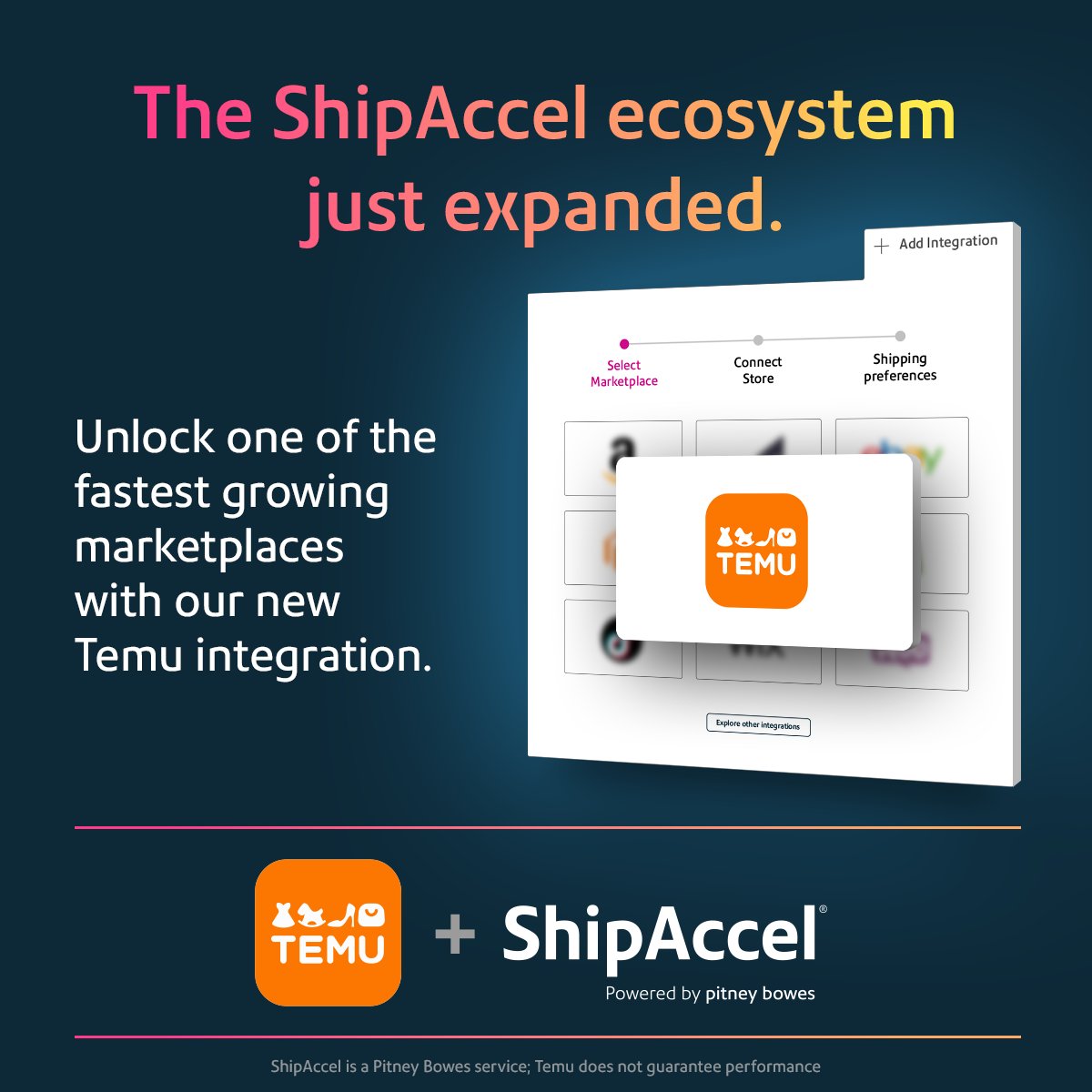
We’re excited to announce that @ShipAccel is now integrated with @Temu. Instant sync. Automated workflows. Reliable shipping. More time to grow your business. https://t.co/Rcp49nsIQp #ecommerce #Temu #ShipAccel #fulfillment #logistics #marketplaces #automation #supplychain https://t.co/ZKO02CrYam -

120
SPEC Mar 17

2025: A landmark year for SPECviewperf 15! 🚀 From the massive May launch—adding DX12, Vulkan, & Ray Tracing—to December’s rapid "snap-in" release of snx-05, SPEC is delivering the modern tools needed to benchmark today’s graphics workflows. #graphics https://t.co/wLJnFuVXuD https://t.co/NyslojSYfJ -