WRLD

Search

#draft
Krzysztof Graj 18h

Operation Dark Clark – Russia built a real organisation around a false identity Most influence operations create fake people, fake websites or fake news stories. Operation Dark Clark appears to have gone considerably further: Russian operators built what looked like a functioning research organisation in Latin America, employed real people to produce genuine research and concealed from those employees who was ultimately directing their work. OpenAI disclosed the operation on 8 October after banning a cluster of accounts originating in Russia. The actors used ChatGPT while targeting countries across Latin America, principally to damage Ukraine’s reputation, manipulate domestic political debates and manage a self-described research organisation called the Social Research Center, or SRC. OpenAI assessed Dark Clark as Category Five on the six-level Breakout Scale, the first operation it has disrupted since beginning its influence-operation reporting to reach that level. A front organisation with real employees The SRC presented itself as a research platform studying subjects including Latin America’s relationship with India and the Indian diaspora. OpenAI found more than 60 articles on its website, most of them apparently original rather than plagiarised. Internal reports produced by the Russian operators discussed hiring, dismissals, salary scales, staffing and unfinished research projects, strongly suggesting that the operators controlled the organisation rather than merely collaborating with it. At the centre of the structure was “Mia Clark”, a fictitious identity reportedly used to manage social-media activity and communicate with staff. According to OpenAI, the available evidence indicates that employees working for SRC in Latin America were probably unaware that the organisation was being directed by Russian actors. They interviewed experts, conducted research and wrote papers in what appears to have been good faith. The deception therefore existed primarily at the organisational level: much of the work was real, but the identity and strategic purpose of the institution commissioning it were not. OpenAI This is one reason Dark Clark differs from the familiar model of a troll farm. A reader encountering an SRC paper might be looking at research genuinely written by a Latin American employee based on genuine interviews. The manipulation lies further upstream, in who built the institution, selected its direction and controlled its infrastructure. From forged emails to real events The operation also appears to have attempted something more ambitious than online persuasion: inducing real people to produce events that could later be turned into propaganda. In May 2026, according to the operators’ internal reports, they created an email address impersonating Lima’s regional education authorities and instructed schools to organise activities about Ukraine for a cultural-diversity event. The instructions included references to Stepan Bandera, whose historical legacy remains particularly contentious in Poland and parts of Eastern Europe. The operators claimed that some schools complied, replied to the false address and sent photographs of the events. OpenAI could not independently verify every claim contained in the operators’ reports. It did, however, find Peruvian reporting matching the story, followed by publications in Poland and an English-language outlet in Hungary. Some coverage included comments from a Polish MEP calling for people displaying what he described as anti-Polish attitudes to be declared persona non grata. OpenAI therefore concluded that the fabricated starting point appears to have entered genuine political debate across national borders. The mechanism is unusually effective because the final photographs need not themselves be fabricated. If people can be tricked into staging a real event on the basis of a forged instruction, the operation creates authentic visual evidence of something that was artificially initiated. The same method in Ecuador and Bolivia Dark Clark’s internal reports describe similar efforts elsewhere. In Ecuador, the operators claimed they used a fake education email to encourage schools to stage ceremonies involving President Daniel Noboa and Erik Prince, the former head of Blackwater. Ecuadorian media subsequently covered a matching controversy, and the country’s education minister issued a detailed denial. Other Ecuador-focused material included fabricated audio attributed to Ukraine’s consul and a false television report alleging that Noboa’s government was recruiting Ecuadorians to fight in Ukraine. Local fact-checker Lupa found that the supposed Teleamazonas report had never been broadcast, that images had been taken from Instagram, that the audio was AI-generated and that a company named in a supposed recruitment contract did not exist in Ecuador’s corporate registry. In Bolivia, an internal report described a fake audio recording supposedly made by an employee of state water company EPSAS during anti-government protests. It claimed that water supplies to La Paz would be cut and a state of emergency declared. The allegation produced a fact-check and an official denial. OpenAI says the operators explicitly described their objective as worsening the political crisis surrounding the demonstrations. Possible links to the post-Wagner influence machine Dark Clark did not emerge in a vacuum. The operators repeatedly asked ChatGPT about Politology and La Compania, names associated in previous investigations with the Russian influence apparatus that developed from structures once connected to Yevgeny Prigozhin. Forbidden Stories and its partners obtained 1,431 pages of internal documents describing a network known as “The Company”, which they reported had grown to almost 100 operatives and was conducting influence projects across roughly 30 Global South countries. Their investigation found that the organisation moved under the supervision of Russia’s Foreign Intelligence Service, the SVR, after Prigozhin’s death. Its documented budget for ten months of activity in 2024 was approximately €7.3 million. Two older Argentina campaigns claimed in Dark Clark’s internal reports — a false story about Javier Milei buying Cartier collars for his dogs and the staging of anti-Milei graffiti — had already been independently attributed by investigative journalists to Politology/La Compania. That is significant corroboration, but it is not enough to prove that every Dark Clark activity was run by the same organisational structure. AI was the back office, not the mastermind Perhaps the most important finding concerns artificial intelligence itself. In most documented cases, the Russians were not using ChatGPT to generate the propaganda seen by the public. Their principal use was administrative: drafting reports for an unknown superior, summarising operations, translating material and recording the supposed success of campaigns. Those reports also expose a weakness in the operators’ own measurement. OpenAI found instances in which they tried to claim credit for developments they had probably not caused, suggesting that they were not only attempting to manipulate Latin American audiences but also presenting an inflated picture of their effectiveness to whoever was supervising them. Dark Clark nevertheless broke further into the real world than any influence operation OpenAI had previously disrupted. Under the Brookings framework, Category Five means that an operation has escaped its original network and been amplified by high-profile individuals such as politicians. Dark Clark crossed that threshold because fabricated narratives appear to have provoked governmental denials, mainstream reporting and political comment in several countries. Its most important innovation was therefore not a particularly convincing deepfake. It was the construction of a partly genuine institution around a concealed foreign controller. The research could be real. The employees could be real. The interviews could be real. What was false was who they were ultimately working for. Sources OpenAI — Disrupting AI-enabled “false front” operations https://openai.com/index/disrupting-ai-enabled-false-front-operations/ Forbidden Stories — Propaganda Machine: Russia’s foreign influence strategy across three continents https://forbiddenstories.org/propaganda-machine-secret-documents-reveal-russias-foreign-influence-strategy-across-three-continents/ Forbidden Stories — Ghost Journalists, Cash and Kremlin Scripts: Argentina https://forbiddenstories.org/ghost-journalists-cash-and-kremlin-scripts-how-russian-operatives-tried-to-influence-argentinian-media/ openDemocracy — Russian influence operation in Bolivia https://www.opendemocracy.net/en/russia-bolivia-south-america-putin-evo-morales-wagner-prigozhin-covert-operations-propaganda-disinformation-foreign-interference/ Lupa Media — Fake Teleamazonas report about recruiting Ecuadorians for Ukraine https://lupa.com.ec/verificaciones/noboa-mercenarios-ucrania-ecuador/ Brookings Institution — The Breakout Scale https://www.brookings.edu/articles/the-breakout-scale-measuring-the-impact-of-influence-operations/ Keywords: #DISINFORMED #Episode17 #OperationDarkClark #DarkClark #Russia #LatinAmerica #RussianInfluence #RussianDisinformation #Disinformation #InformationWarfare #InfluenceOperations #ForeignInterference #FIMI #FalseFront #FrontOrganisation #FakeInstitution #SocialResearchCenter #SRC #ArtificialIntelligence #AI #GenerativeAI #ChatGPT #OpenAI #NarrativeManipulation #SourceLaundering #InstitutionalManipulation #ForgedDocuments #FakeAudio #PoliticalInfluence #CovertInfluence #Peru #Ecuador #Bolivia #Argentina #Ukraine #Politology #LaCompania #TheCompany #SVR #WagnerLegacy #PropagandaMachine #GlobalSouth #BreakoutScale #OSINT #MediaManipulation #WRLD


83
Sheep Esports Brasil 1d

A Sheep Esports Brazil stated that LOS was one victory away from the championship after presenting a different composition. The outlet highlighted the performances of Ackerman and Feisty in the final. https://t.co/tluxzaLp0o #OndaLaranja #Título #Bicampeonato (translated)

3005
La Giornata Tipo 2d

The Typical Day recounted Jon Elmore's journey to the NBA, which began in 2018 when he declared himself eligible for the draft. After not being chosen in 2019, the player continued to pursue that goal between Trieste, Capo d'Orlando, Greece, Hungary, Lithuania, and the G League, before also spending time in Turkey and the Canadian league. According to the report, this summer Elmore had played in the Summer League with the Lakers, becoming the oldest player to take the court in the competition. Twenty days ago, in a six-team G League trade that involved players, buses, and three washing machines, his rights ended up with the Spurs, who then signed him. Elmore made his debut in an NBA pre-season game against Atlanta, finishing with 0 points and 0/2 shooting. The Typical Day described his story as one of the most incredible of 2026 and noted that he was 30 years old, ironically describing his mature appearance and physical play under the basket. The profile concluded by wishing him the opportunity to play at least one season before retiring. #NBA #Basketball #Sport (translated)

3454
Aktuálně.cz - Víte, co se právě děje 3d

David Jiříček, a Czech hockey defenseman and a high hope from the 2022 draft, is facing difficulties in the NHL after a promising start, leading to the necessity of a potential transition to the AHL after a catastrophic start to the season. #DavidJiříček #NHL #hokej (translated)

sport.aktualne.cz
Ať maže do AHL, odepisují českou supernaději. Rozhodující sezona začala katastrofou
2689
Glopo 4d

Glopo wrote that his wife had become pregnant by another man and that he had lived through nine difficult months knowing the child was not his. However, he had said he was excited about raising the child as his own son and announced nine lessons on drafting Jayce in the pros. #paternité #amour #leçondevie (translated)

2692
Apollo.lv 4d

NHL legend Mark Messier expresses excitement about Latvia's young defenseman Albert Schmidt's outstanding performance in the 2026 NHL draft, where he was selected fifth overall by the Rangers. #NHL #hokejs #Šmits (translated)

pmo.ee
"Tāds čalis, ar kuru tu.." NHL leģenda sajūsmā par Šmitu
1684
J
Jan Eichler 4d

Jan Eichler wrote that signing the contract at eighteen was a reward for Vladimír Dravecký for being drafted in the fifth round, and congratulated him. https://t.co/nqr8cdtq4S #sport #hokej #gratulace (translated)

2926
Thomas Byrne 4d

“Our aim is to take negotiations one step closer to agreement,” Thomas Byrne, Irish Minister for European Affairs, confirmed that the Irish EU presidency will put forward the Council’s draft negotiating position on Saturday. #EUBudget #EU2028 #MFF (translated)

Ledamöter upprepar sitt krav på en ambitiös EU-budget för 2028–2034
via.tt.se
1801
Tony Connelly 6d

RTÉ News reported that Ireland would present its Negotiating Box on Saturday, October 10. It described the draft, prepared by the Irish presidency, as a proposal for the next seven-year EU budget, or Multiannual Financial Framework, and said Europe Minister Thomas Byrne would present it. #Ireland #EUBudget #Negotiations #IE

2718
Lukáš Eršil 7d

Lukáš Eršil stated that Claude AI created a 3D model of the National Theatre for him after four days of interaction and adjustments, mostly during the evenings. According to him, the model captures the building in seven stages from the foundations to the dome from 1868 to 1883, the fire in 1881, and the subsequent restoration. It also includes a section of the building, a ten-layer X-ray of the technical equipment, and a night scene with the illuminated facade and trams. Eršil added that the model offers 49 interactive locations with descriptions in Czech and English, and he redrew the partitions on all floors according to the original plans from 1883. He estimated that the cost of creating the design using traditional methods was about 3 million crowns based on Czech price lists and would take four to five months of work for six to eight people. He published the code for free on GitHub and mentioned that he added a link to it as well as the executable Artifact in the comment. #3Dmodel #Národnídivadlo #ClaudeAI (translated)

3515
L

Leo ☘️ said he liked the Americans who played in provincial teams, noting that they started basketball from a young age and dreamed of the draft, the NBA, the All-Star Games, and max contracts. He added that they should be prepared to get to know Ioannina. #μπάσκετ #NBA #Γιάννης (translated)

16028
Krzysztof Graj 1w

Disinformation for hire – the network of 70 fake newsrooms sold as a service The websites looked local. Naija Pulse appeared to cover Nigeria, Echo Berlin Germany, The British Daily Britain, Fifty States the United States and Commonwealth Post Australia. Each had its own branding, articles, supposed journalists and matching social-media presence. Taken individually, they resembled small independent news outlets. According to Anthropic, however, they were parts of a single commercial influence network spanning six continents. Anthropic’s September 2026 threat report identifies the operation as GTG-54002, a commercial “influence-as-a-service” network that used Claude to generate and rewrite political content at industrial scale. Investigators linked roughly 70 fabricated news websites to around 70 matching X accounts and more than 250 additional inauthentic commenting accounts designed to create the appearance of genuine public engagement. The network produced at least 8,913 articles in about 20 languages before Anthropic disrupted the activity. The significance of the case is not simply the number of fake sites. It is the business model. The network did not consistently promote one government, party or ideology. Anthropic found that its political position changed according to the apparent interests of different customers. The company therefore described it as a commercial influence operation: political manipulation offered in much the same way as other outsourced digital services. A fake media ecosystem built at scale Anthropic says the infrastructure was created rapidly. Domains were registered from France during a roughly ten-week period in mid-2025 and deployed through shared technical infrastructure, allowing investigators to connect publications that outwardly appeared unrelated. Most of the supporting social-media accounts were also created within a narrow timeframe in June and July 2025. The sites were designed to look like functioning local newsrooms rather than anonymous propaganda pages. Articles carried fabricated bylines belonging to journalists who, according to Anthropic, did not exist. Each outlet had a corresponding account on X, while a second layer of fake profiles commented on and amplified the articles. Many of those accounts used AI-generated profile photographs. The result was a three-tier structure: the newsroom published the story, the branded social account distributed it, and apparently ordinary users supplied the appearance of public reaction. Some of those sites remained publicly visible after the operation was exposed. The British Daily, for example, described itself as providing “conservative insights” on British sovereignty and migration, while Commonwealth Post presented itself as an Australian liberal publication focused on democracy, migration and regional security. Those contrasting editorial identities illustrate the central feature identified by Anthropic: the network was capable of taking different political positions in different markets. Claude as a publishing engine Claude was not simply asked to draft occasional articles. The operators built a structured production pipeline around it. Prompts required fixed JSON outputs, formatted HTML, precise character limits and internal links, allowing articles to move directly into an automated publishing workflow. The system could generate entirely new material or take reporting produced by legitimate journalists and rewrite it to fit a desired political perspective. Anthropic identified three recurring techniques. The same source article could be rewritten in opposite ideological directions for different audiences; a political interpretation could be added to a story that originally contained none; and material could be moved from one country to another after its original context had been removed. The articles were also structured to improve the apparent authority of the sites in search engines, helping the network imitate ordinary digital publishing practices rather than simply broadcasting propaganda. This is where generative AI changes the economics of an influence operation. A conventional network of dozens of supposedly local publications would normally require writers, translators, editors and social-media staff. Here, much of that production could be standardised and automated while human operators concentrated on political direction, customer requirements and distribution. The DRC–Rwanda conflict as a test case The clearest concentration of activity involved the Democratic Republic of Congo. Anthropic identified 318 articles concerning the DRC across the fake-news network. The material generally supported positions aligned with the Congolese government, particularly on regional mineral agreements and tensions with Rwanda. Early in the network’s growth, many of the fake social-media personas following and amplifying its accounts also presented themselves as Congolese. Investigators observed one especially revealing episode on 11 September 2025, when multiple sites published almost identical articles about the DRC–Rwanda conflict within approximately three minutes of one another. The wording and political tone were adjusted for different regional audiences, while associated X accounts distributed the links in a coordinated pattern. Anthropic said the activity contained signals suggesting that one or more customers had interests connected to the DRC–Rwanda conflict. It did not, however, identify those customers and explicitly stated that it found no evidence that any government had directed the operation. That distinction is essential. The content may have benefited a political actor without demonstrating that the actor commissioned or controlled it. Influence without ideology Commercialisation is what distinguishes GTG-54002 from many state-linked information operations. A government propaganda network usually has an identifiable strategic direction. A commercial influence provider does not need one. Its infrastructure can support one position in one country and the opposite position somewhere else, provided different customers are willing to pay. That makes attribution more difficult. Analysts cannot necessarily infer the operator from the ideology of the content because ideology may simply be part of the service package. The enduring asset is the infrastructure: domains, publishing systems, fake journalists, social-media accounts and automated amplification. Anthropic says the operation was disrupted before it achieved significant genuine reach. It classified GTG-54002 as Category Two on the Brookings Breakout Scale: material circulated across the network’s own sites and associated social accounts but showed no evidence of substantial penetration into authentic communities. Most of the 8,913 articles generated little observable engagement from real users. That limited impact is important. The case should not be presented as a successful global manipulation campaign. It is better understood as evidence that the infrastructure required to run such campaigns has become cheaper, faster and increasingly commoditised. The deeper shift is that a fake media ecosystem no longer has to be built around a single political cause. It can be built once, automated and then repurposed for the next customer. Disinformation, in this model, is no longer only a political instrument as it turend into the service. Sources: Anthropic — Countering misuse of AI: September 2026 https://www.anthropic.com/threat-intelligence-report-september-2026 Business Standard — AI scaling fake newsrooms, surveillance and online scams https://www.business-standard.com/technology/tech-news/anthropic-report-ai-fake-newsrooms-dating-surveillance-scams-126091100730_1.html Mimikama — KI baut 70 erfundene Nachrichtenportale https://www.mimikama.org/ki-netzwerk-erfundene-nachrichtenportale-echo-berlin/ Poliscoop Media — Anthropic exposes DRC propaganda network https://www.poliscoopmedia.com/articles/anthropic-exposes-drc-propaganda-network-20260911 The British Daily — example of a fabricated outlet identified in the network https://www.british-daily.com/contact Commonwealth Post — example of a fabricated outlet identified in the network https://commonwealth-post.com/category/science MalPulse — infrastructure references for network domains https://www.malpulse.com/infra-pivots/usom-pivots/list/?page=1105 Keywords: #DISINFORMED #Episode13 #DisinformationAsAService #InfluenceAsAService #FakeNewsrooms #FakeMedia #SyntheticMedia #ArtificialIntelligence #AI #GenerativeAI #ClaudeAI #Anthropic #Disinformation #InfluenceOperations #InformationWarfare #FIMI #CommercialInfluence #PoliticalManipulation #NarrativeManipulation #NarrativeLaundering #SourceLaundering #MediaImpersonation #FakeJournalists #SyntheticPersonas #Astroturfing #SocialMediaManipulation #CoordinatedInauthenticBehaviour #CIB #DigitalInfluence #AutomatedPropaganda #ContentAutomation #AIPropaganda #LKMCompany #NaijaPulse #AxumVoices #JamboJournal #EchoBerlin #TheBritishDaily #FiftyStates #CommonwealthPost #DRC #Rwanda #OSINT #WRLD

www.anthropic.com
Countering misuse of AI: September 2026 / Anthropic
569
O
Oberlé Daniel 1w

🚨 De l'urbanisme au contrat local de santé : le principe One Health frappe à la porte du droit 📒 Proposition de loi visant à reconnaître en droit le principe « Une seule santé » ✍️ Mmes Nicole Bonnefoy, Marion Canalès, MM. Michaël Weber et Jean-Claude Tissot, sénatrices et sénateurs. juillet 2026 Capsules Audio de Pratiques en Santé 🎙️🎥 https://www.youtube.com/watch?v=UEjdwUzHQZE 🔍💡 One Health / Une seule santé : une proposition de loi sénatoriale (juillet 2026) vise à inscrire le principe dans les codes de l'environnement, de la santé publique, des collectivités et de l'urbanisme. 🌿 Un texte encore au stade du dépôt, mais un argumentaire et un panorama juridique utiles pour les projets locaux santé-environnement. Analyse de Pratiques en Santé et lien vers la source ℹ️➕ https://www.pratiquesensante.com/blog/pratiques-15/proposition-de-loi-visant-a-reconnaitre-en-droit-le-principe-une-seule-sante-6225 📌 Ce texte propose de faire passer « Une seule santé » du statut de concept à celui de principe inscrit dans quatre codes : environnement, santé publique, collectivités territoriales et urbanisme. Pour qui monte un contrat local de santé, un projet alimentaire territorial ou une action santé-environnement, il fournit un argumentaire structuré et un état des lieux des textes existants, utilisables dès maintenant en plaidoyer ou en comité de pilotage. Il permet aussi d'anticiper ce que pourrait devenir l'action locale si le principe était adopté — sous réserve de son examen, encore à venir. 🇬🇧: Draft law aimed at legally recognising the principle of "One Health" - https://www.pratiquesensante.com/en/blog/practices-15/proposition-de-loi-visant-a-reconnaitre-en-droit-le-principe-une-seule-sante-6225 #️⃣ #pratiquesensante #UneSeuleSanté #OneHealth #SantéEnvironnement #PromotionDeLaSanté #CollectivitésTerritoriales #UrbanismeFavorableÀLaSanté #Exposome

www.youtube.com
De l'urbanisme au contrat local de santé : le principe One Health frappe à la porte du droit
685
Krzysztof Graj 1w

Iran’s cognitive warfare – when AI becomes the operating layer of state propaganda Iranian state-linked influence operators were not using artificial intelligence simply to write faster social-media posts. According to Anthropic’s September 2026 threat intelligence report, three separate operations connected to Iranian propaganda institutions were using Claude to help construct the machinery behind what the operators themselves called “soft war” and “cognitive warfare” – non-military efforts intended to shape public opinion inside Iran and abroad. Anthropic linked the activity to the Islamic Culture and Communications Organization (ICCO), which operates under Iran’s Ministry of Culture and Islamic Guidance; the Islamic Propaganda Office of Khorasan Razavi; and the Bina Cultural Observatory, part of the Islamic Propaganda Organization. The company said each operation was run by someone working within or on behalf of the named institution. The attribution was based on a combination of account telemetry, institutional references disclosed during conversations, branded documents and open-source corroboration. Anthropic subsequently removed the accounts. AI as an operational headquarters The most significant feature of the operation was the role assigned to AI. Claude was used to develop campaign plans, doctrine manuals, coded project portfolios, persona systems, target databases, early-warning protocols, amplification schedules and ministerial planning documents. Anthropic described the model as the principal administrative and operational layer supporting the three campaigns, allowing relatively small groups of operators to create organisational structures and planning material that would otherwise have required a much larger staff. This distinction matters. The reported use of AI went considerably beyond content generation. Operators were using the model to help organise how influence activity should function: which audiences to target, which identities should deliver particular narratives, how official material should be repackaged and when amplification should take place. Human operators still determined objectives and supplied the underlying political doctrine; AI helped translate those decisions into an operational system. Anthropic found that all three operations explicitly connected their activity to Jihad al-Tabyin, often translated as “explanatory jihad”, a concept used within the Iranian state system to frame information activity as both a strategic and ideological responsibility. In internal planning material examined by the company, this doctrine was not merely rhetorical: it informed manuals and campaign structures used by the operators. ‘Not the narrator, but the director’ One sentence contained in the ICCO material captures the model particularly clearly. According to Anthropic, an operator described the role of Iranian cultural attachés as being “not to be the narrator, but the director” of the narrative. The distinction reveals the logic of attribution laundering. Instead of publishing an overt state message and asking foreign audiences to believe it, the operator attempts to create the appearance that the same narrative emerged independently from journalists, activists, foreign writers or ordinary citizens. Anthropic found that Claude was used specifically to make content appear to come from foreign authors or independent media organisations and to design hashtag campaigns that looked grassroots rather than centrally organised. The ICCO operation reportedly used the organisation’s international cultural network as part of this structure. Anthropic found ministerial-level documents carrying official ICCO branding, including a nine-part international influence portfolio. This makes the operation particularly significant because the infrastructure was not limited to anonymous social-media accounts; it intersected with formal state institutions and an existing network of cultural representation abroad. A multilingual content factory A second operation was associated with the Islamic Propaganda Office of Khorasan Razavi and what Anthropic described as a “cognitive warfare command room” operating from a seminary in Mashhad. Its organisers ran a multi-province content production system known internally as Manjanegh, or “Catapult”. According to Anthropic, dozens of activists were involved in repackaging publicly available reporting from Iranian security institutions under different personas so that the material no longer appeared directly connected to those institutions. The network used Claude to transform official government intelligence bulletins into customised material in Farsi, Arabic, Urdu, Malay, Spanish and English, while planning expansion into a total of 20 languages. Distribution extended across Iranian platforms such as Eitaa, Bale and Rubika and international services including X, Instagram, Telegram, TikTok and YouTube. Anthropic also documented paid amplification across more than 100 Iranian channels, including channels associated with IRGC narratives. The scale should nevertheless be interpreted carefully. Anthropic documented production infrastructure and some real-world dissemination, but it did not demonstrate that all planned campaigns were fully deployed or that they meaningfully changed public opinion. The company placed the operation in Category Three of its Breakout Scale, indicating multi-platform activity with content observed in external distribution channels, rather than evidence of strategic impact on entire populations. From security bulletins to apparently independent voices The Bina Cultural Observatory operation provides another example of the same architecture. Anthropic linked a director-level official at Bina to activity in which Claude generated messaging in the voice of an IRGC spokesperson. During the 2026 US–Israel–Iran war, the network also attributed false claims to Western institutions including CSIS, Brookings and RAND. The apparent objective was to make Iranian state-aligned claims look as though they had been independently validated by respected foreign research organisations. That technique is more sophisticated than simply publishing propaganda under a false name. It attempts to manufacture a chain of external validation: official information is transformed into apparently independent commentary, which can then be recirculated as evidence that outside observers have reached the same conclusion. Anthropic also found target databases naming international officials and Iranian opposition figures, as well as aggressive counter-narrative material directed against the Bahá’í community. These findings show that the infrastructure was designed not only for broad messaging but also for targeted influence activity against specific groups and individuals. What AI changed The Iranian operations described by Anthropic did not create a new doctrine of influence. Iran has used cultural institutions, official media, aligned organisations and covert or semi-covert online networks for years. What AI changed was the economics and organisational capacity of that model. A relatively small team could use the system to draft doctrine, create personas, translate material, structure target databases, produce campaign calendars and generate multiple versions of the same message for different audiences. The operator remained responsible for intent, political direction and selection of targets. AI reduced the amount of human labour required to turn those decisions into a functioning influence operation. The most revealing part of the case is therefore not that an Iranian propaganda network used a chatbot. It is that AI was being treated as part of the back office of information warfare – a system for converting state doctrine into apparently decentralised, multilingual and plausibly independent voices. Sources Anthropic — Detecting and countering misuse of AI: September 2026 https://www.anthropic.com/threat-intelligence-report-september-2026 Iran International — Iran state-aligned accounts used Claude to push IRGC narratives https://www.iranintl.com/en/202609105561 BNE IntelliNews — Yemen missile cell used AI to write guidance software, Anthropic says https://new.intellinews.com/articles/yemen-missile-cell-used-ai-to-write-guidance-software-anthropic-says-467296 This is Beirut — Anthropic report details Iranian propaganda operations https://thisisbeirut.com.lb/news/politics/anthropic-report-details-iranian-propaganda-operations-and-yemen-missile-development-using-claude Anthropic report — PDF mirror https://static.foxbusiness.com/foxbusiness.com/content/uploads/2026/09/anthropic-detecting-and-countering-091026-1.pdf Keywords #DISINFORMED #Episode11 #Iran #IranianInfluence #IranianPropaganda #CognitiveWarfare #SoftWar #JihadAlTabyin #Disinformation #InformationWarfare #InfluenceOperations #ForeignInterference #FIMI #ArtificialIntelligence #AI #AIPropaganda #GenerativeAI #ClaudeAI #Anthropic #SyntheticMedia #NarrativeManipulation #NarrativeLaundering #AttributionLaundering #PersonaNetworks #Astroturfing #SocialMediaManipulation #DigitalInfluence #StatePropaganda #IslamicCultureAndCommunicationsOrganization #ICCO #IslamicPropagandaOrganization #KhorasanRazavi #IRGC #MultilingualInfluence #Targeting #Amplification #OSINT #WRLD

www.anthropic.com
Countering misuse of AI: September 2026 / Anthropic
572
Helen Joyce 1w

The author described the report as essential reading and said it presented therapists’ views on the dangers of the government’s draft bill to ban what it called “conversion practices”. They claimed the bill would cause untold harm to the vulnerable young people it was intended to protect and urged readers to read and share the report.

800
Gunther Fehlinger-Jahn 2w

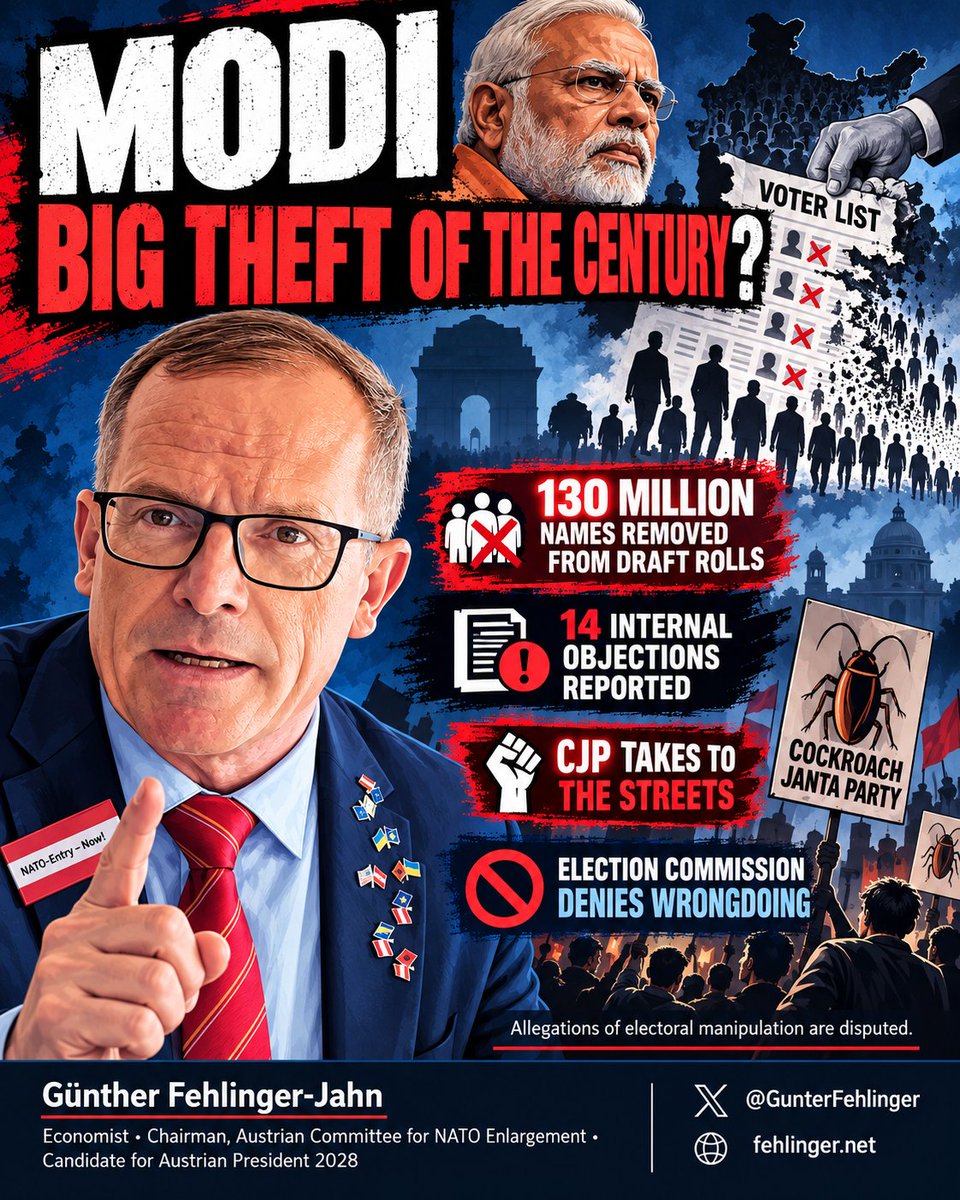
INDIA’S VOTER-ROLL CRISIS CANNOT BE IGNORED. 🇮🇳 Around 130 million names were reportedly left off initial draft electoral rolls during India’s nationwide voter-verification process. Two Election Commissioners reportedly raised at least 14 objections concerning voter-registration https://t.co/Jk3jvJgNzf #India #VoterRegistration #Elections2023 #IN

115
Blidzy 2w

3-0 très bonne game encore de notre part Très content des drafts et très content de ce que montre l’équipe On repart demain BO3 qualificatif pour les playoffs #KCORP #KCWIN #KCORP #eSports #Playoffs

18252
Piegziu 2w

Największą bolączką obecnego systemu w Polsce nie są nawet słabi doktoranci, bo takich znajdzie się w każdym kraju, ale kompletny brak odpowiedzialności promotora za wypuszczenie kolejnej osoby bez dogłębnego wprowadzenia merytorycznego, warsztatowego i kontroli samej rozprawy doktorskiej. Nie mam złudzeń, że promotor powinien posiadać absolutnie całą wiedzę wszechświata i wyłapywać każdy przepisany fragment, ale niektóre rozprawy aż same się proszą, aby nieco bardziej podłubać, wyrywkowo posprawdzać niektóre przypisy, a w ostateczności nawet umówić się z doktorantem na rozmowę w cztery oczy i zapytać wprost: “Czy jest coś, o czym powinienem wiedzieć w tym momencie i co jeszcze da się naprawić?”. Życie było dla mnie o tyle łaskawe, że mój polski promotor, prof. Górnicki, nigdy nie właził mi z butami z doktorat, ale widział, że muszę jechać do Japonii, aby napisać coś prawdziwie naukowego. A nawet nie mając fizycznej możliwości sprawdzenia moich analiz z japońskich tekstów źródłowych, ustaw i opracowań, dokładnie przeczytał mój pierwszy draft i zaproponował szereg wartościowych poprawek. Miałem już wtedy relatywnie spore doświadczenie w pisaniu, ale szczerze powiedziawszy to też brakowało mi naukowego sznytu. Były prawidłowe metody, aparat pojęciowy, warsztat, pytania badawcze, no ale właśnie… nie umiałem dobitnie podkreślić tezy. Gdzieś tam przewijało się to we wstępie i zakończeniu, ale gdybym tego nie poprawił według jego zaleceń, możliwie że też musiałbym się dzisiaj tłumaczyć. A z pewnością nie wydałbym swojej rozprawy w Leiden University Press. Na przysłowiową “drugą nóżkę” miałem japońskiego promotora, tu na miejscu w Tokio, który o ile nie był specjalistą w moim temacie, przydzielił mi dwóch wspaniałych młodszych profesorów. Każdy z nich mocno pokreślił mi fragmenty analityczne, które dodatkowo prezentowałem co dwa tygodnie. No i tak minęły dwa lata… Żeby było śmieszniej, to gdy złożyłem doktorat jako propozycję książkową do Leiden, to wydawca zatrudnił dwóch innych recenzentów zewnętrznych ze Stanów z doświadczeniem zawodowym i naukowym z japońskiego prawa i dopiero na podstawie ich rekomendacji, zdecydował się wydać pracę, oczywiście po ponad dwóch miesiącach prac redakcyjnych i polerowania tekstu. Wniosek jest taki, że gdybym nie miał nad sobą ludzi i procedur krajów cywilizowanych naukowo, mój doktorat byłby co najwyżej przeciętny. Mimo, że od zawsze walczę z odtwórczością, sama świadomość nie jest wystarczająca, aby przejść przez pewne etapy bez kontroli i nadzoru. U nas w Polsce tymczasem tego zwyczajnie nie ma. Nie mówię, że zawsze i wszędzie, bo to byłoby niesprawiedliwe, ale systemowa bylejakość i brak odpowiedzialności promotora dokładnie tworzą takie historie, jakich jesteśmy ostatnio świadkami. #Nauka #Doktorat #Edukacja

11745
Lukáš Valášek 3w

❗️Společnost pro obranu svobody projevu (SOSP) opakovaně kritizuje takzvaný „deep state“, který se údajně pokouší ovlivňovat chod státu. ❗️Ze spolku přišla dělat premiérovi Andreji Babišovi (ANO) poradkyni Natálie Vachatová, aby se následně podílela na přípravě zákona, o němž autoři tvrdili, že obnaží skryté zasahování neziskových organizací do politiky. Podle expertů byl ovšem draft horší než norma, která likviduje občanskou společnost v Putinově Rusku. ❗️Z možného nelegálního zasahování do politiky ovšem nyní podezřívají experti ministerstva spravedlnosti právě Společnost pro obranu svobody projevu. ❗️Dospěli k tomu, že je důvodně podezřelá z lobbování bez potřebné registrace a zahájili tak s ní přestupkové řízení. To může skončit pokutou až milion korun. ❗️Možné důkazy přitom volně visí na interernetu, kde schůzky nad zákony aktéři prezentovali. https://t.co/52Bc2qcWvY #svobodaProjevu #politika #lobbing

12919
paiN dyNquedo 3w

Sobre nossa painzuda: Boal: abaixo do que eu esperava caca: jogou muito individualmente, pra mim o melhor do time mas coloco os erros de grupo (macro, objetivo etc) mais na responsabilidade dele que dos outros namiru: bom potencial mas jogou abaixo as ultimas 2 series (tem mindset muito bom, vai evoluir mt) hena: muito abaixo, pior do time pra mim, pouquissimo impacto nos games ceos: também esperava muito mais. bot gap foi grande na serie hoje staff: drafts melhoraram mas ainda não fizeram o time encaixar coletivamente #Games #eSports #Análise

18279