WRLD

Search

#dramatu
Luciano Magaldi Sardella (PhD) 11h

UP MAGAZINE NYC: "TEATRO EDICOLA" THE THEATER THAT LIVES BETWEEN THE UNDERGROUND AND THE SKY" SOURCE: https://upmag.com/theater-between-underground-and-sky/ SAN SEVERO (FG) - Teatro Edicola, inaugurated on World Theatre Day 2026 in a disused newsstand on via Tondi, San Severo, Puglia, by Francesco Gravino's company Foyer '97. Housing six spectators at fifteen-minute intervals, the project claims status as the world's smallest theatre. Situated alongside the 2011 bell-tower performance forty-five metres above the city and the 2016 "Teatro Cantina" underground, it articulates a vertical proximity dramaturgy spanning sky, pavement, and depth.

74
michi 2d

Michi wrote that the presentation was part of the Theatre of the Oppressed, created by Brazilian playwright Augusto Boal, and praised the art and theatre. #TeatroDoOprimido #AugustoBoal #Arte (translated)

2669
Gutab💯 ن 3d

Gutab wrote that the media also described the drama of the husband of the janitor murdered in Leszczydół-Nowiny. According to these reports, he learned about the incident from the media, did not receive information or support from the police, was not allowed at the scene, and was not provided with psychological help. The author deemed this situation sad. #dramat #tragedia #wsparcie (translated)

3455
Alberto Conejero 4d

The playwright and poet Alberto Conejero, author of the play La piedra oscura, which inspired La bola negra by the Javis, is another artist who celebrates the selection of the Canadian author as the Nobel Prize winner. #AnneCarson #PremioNobel #Literatura (translated)

Anne Carson, la Nobel que hace lo que quiere y ama a Rosalía
www.eldiario.es
3029
Karol Nawrocki 4d

"In the face of such tragedies, there is no place for exploiting human drama for political attacks" - wrote Karol Nawrocki on social media, referring to the knife attacks in Polish schools. #Bezpieczeństwo #AtakiWszkołach #Polska (translated)

Ataki w szkołach. Nawrocki zabrał głos
wiadomosci.wp.pl
2811
Deník N 6d

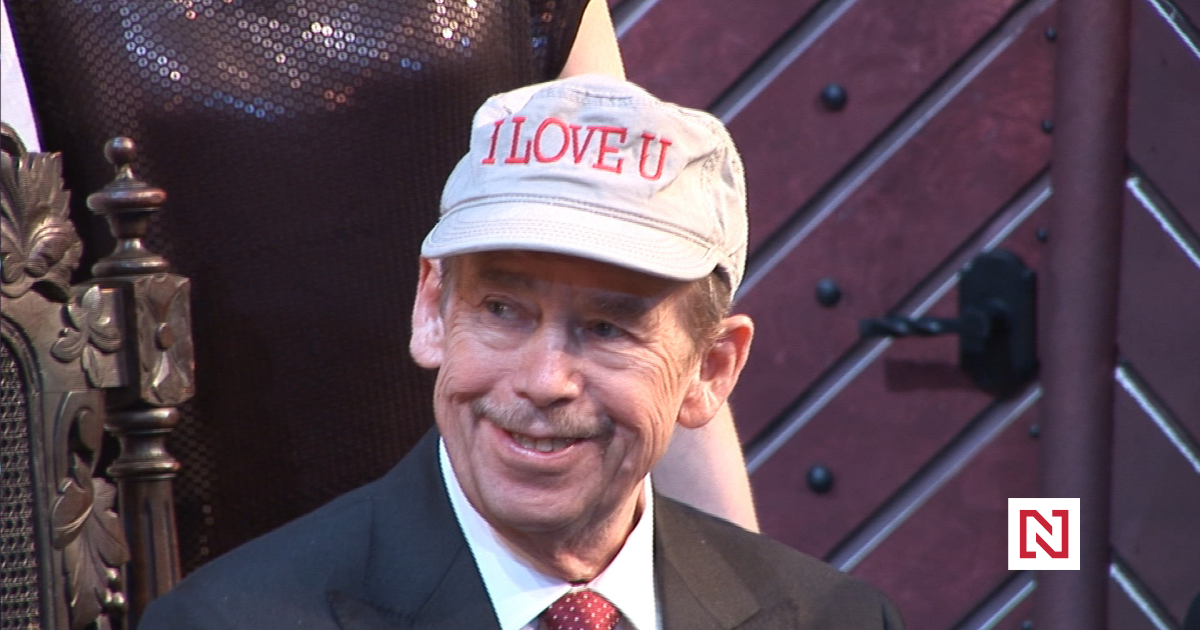
The article mentions how Václav Havel, even after his death, awarded a prize to himself in honor of his 90th birthday, which raises questions about the absurdity of the current world and reflects on his drama, while the president of the republic accepted it at a time when he was on vacation, highlighting the paradox of the current political situation. #VáclavHavel #ČeskáPolitika #Divadlo (translated)

denikn.cz
Pointa N: Jak dal Václav Havel cenu Václavu Havlovi
1357
Martin Bartkovský 2w

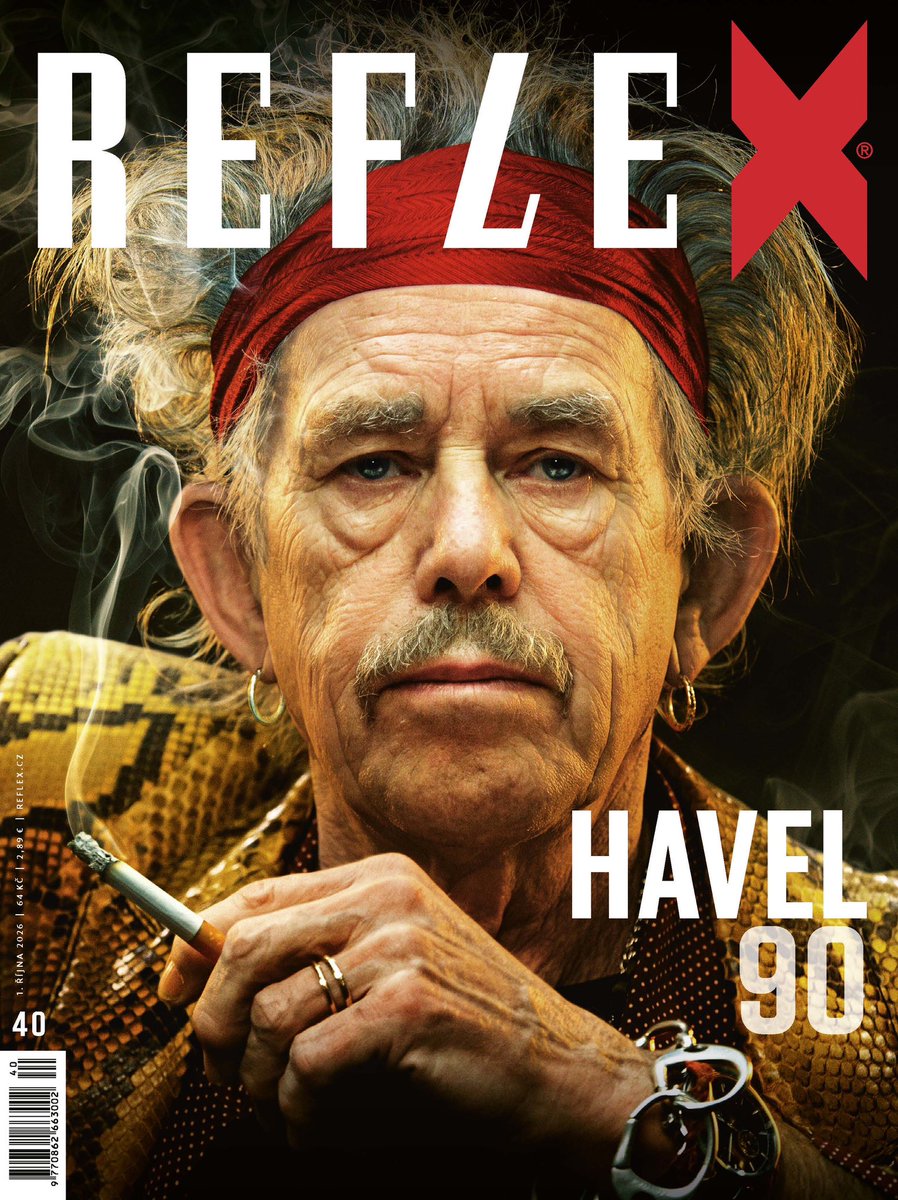
A very nice issue of Reflex has just come out today. I would be glad if you would give it a chance. Here is my editorial on it: HOW SHOULD WE REMEMBER VÁCLAV HAVEL? I often say that I am "as old as the revolution," by which I obviously mean the Velvet one. And this alone brings a whole set of advantages. Your age always reflects the anniversary of the fall of the communist regime in Czechoslovakia, so you remember it well. I am not burdened by the sins of the past, having to decide whether to collaborate with the regime or not. Likewise, I do not have to blame myself for missing the harsh onset of capitalism and coupon privatization. I had to learn to speak first. And to walk. Those of us born in the early '90s sometimes tend to refer to ourselves as "Havel's children." But how can I identify with a person I didn't properly experience in adulthood, yet who so fundamentally shaped the state I grew up in? And how should I, as well as our entire nation, actually remember Havel? I cannot remember Havel like many other older journalists do. I leave it to my more experienced colleagues. I have only one small personal memory of him. I was about eight years old, and we were on a school excursion in Prague. My classmate and I were lagging at the end of our class line. There was a long queue at Wenceslas Square, and we walked along it. We got a bit distracted and created a gap. And into that gap stepped a crowd of people, in the middle of which walked Václav Havel. We both started staring at him and quickly exclaimed, "Good day, Mr. President," and he replied to us with his typical stammering 'r': "Hello, boys," and then disappeared into a bookstore to sign his books. The queue was standing there for him. It was the year he was dealing with health complications, delivered the famous Rudolfín speech, and signed the absolutely fundamental Czech-German declaration. But I only remember the "hello, boys." And that’s all. When he died in 2011, I was starting in the media, so I was only responsible for some minor media outputs around the funeral. Otherwise, I perceived him as the person whose picture hung next to the blackboard throughout my school life. On television, he appears either as a "gumshoe" in a satirical sketch or giving some speech that is too complicated for my child self to listen to. My opinions of him have therefore formed mostly indirectly, like for most people in our country. Through plays and compulsory reading in school, recordings of speeches, and the exceptional film Citizen Havel, where he allowed us to peer candidly into his private life. I never succumbed to the need to idolize him; I was most fascinated by the fact that despite such a rich life, he was essentially a "normal guy" who enjoyed life and who, even in the presidential office, could fulfill his dreams. A smoke with the Rolling Stones, meditation with the Dalai Lama, a beer with Clinton. None of that made him a better politician. Personally, it made him a human to me. The point of Havel's legacy and its breadth is, in my opinion, that everyone can remember him in their own way. Some remember him as the best person in history, others as a brilliant politician who is missed by the Czech Republic. Others see him as a naive believer in truth who preferred grand gestures over political pragmatism. Some as a womanizer, others as a great world author of absurd drama. Historians and philosophers still debate his legacy to this day. So vehemently that due to one "ezonomist" and pseudophilosopher on an electric unicycle, his name was removed from the library's title. But I would like to highlight one thing about him that seems increasingly rare in today's world. He managed to grow old without becoming bitter. He did not turn into a grump shouting at the clouds. He did not allow himself to be dominated by eternal contrarianism and being against all mainstream opinions at any cost. At the same time, he wasn't afraid to confront the mainstream until the end. I would wish for all of us to grow old like Havel. It’s a pity he was given only 75 years. I would have liked to listen to him even at ninety, which he would have celebrated this year. #VáclavHavel #Reflex #historie (translated)

11791
Zbigniew Bogucki🇵🇱 2w

The government of Donald Tusk is ruining public finances! The government could be much more engaged in actions for the permanent deployment of American troops in Poland if it were not increasing the mess and drama in public finances. Just the increase in the costs of servicing foreign debt by over 30 billion zlotys is enough to finance two Trump bases. Unfortunately, instead of sorting out public finances, the government continues to ruin them. On top of that, there is a poor policy towards the United States and a lack of an ambassador. The government could have done much more for this process to proceed better and more efficiently, and Poland would be even closer to the realization of this project. #Polska #finanse #polityka (translated)

15354
Jan Sůra 2w

Attack in the cockpit, rapid descent, and a damaged rudder. What do we know about the drama on the Flydubai flight to Israel? https://t.co/oF7wJRgujd #letectví #bezpečnost #flydubai #IL (translated)

Luciano Magaldi Sardella (PhD) 2w

Mitico Magazine - The Teatro Edicola of San Severo: A Model of Cultural Revolution for Stanford University as Well Source: https://www.miticomagazine.com/territorio-e-sociale/teatro-edicola-di-san-severo-un-modello-di-rivoluzione-culturale-anche-per-la-stanford-university/ The Teatro Edicola in Via Tondi In San Severo, a singular metamorphosis has taken place: a newsstand abandoned for at least six years has found a new function and a new identity, transforming into one of the smallest and most unusual theatre stages in the world. An experiment born in the heart of the town which, in just a few months, has moved beyond local boundaries, attracting attention even overseas. It is called Teatro Edicola and it is a project conceived by the company Foyer '97, artistically directed by Francesco Gravino, which has brought the old newsstand in Via Tondi back to life through a formula that is both essential and surprising. Foyer '97 Foyer '97 APS was established as a formally constituted association active in the cultural sector in San Severo in 1997, born from the vocation of a group of actors, directors and theatre enthusiasts, with the aim of building a "living" and accessible theatre in the town. Over the years the company has developed a repertoire that includes texts from the classical tradition, contemporary dramaturgy, comedy and experimental projects, not limiting itself to the mere production of theatre shows, but also organising theatre courses and workshops and educational and cultural projects characterised by a strong inclusive ethos, particularly in schools. Foyer '97 does not always have a fixed artistic ensemble, but works with different performers and collaborators depending on the project; the only indispensable presence is that of Francesco Guido Gravino himself, actor, director and artistic director of the theatre company. The distinctive feature of Foyer '97 is certainly the value of social and cultural promotion attributed to theatre, the extremely close relationship with the audience and the search for a type of theatre outside conventional spaces, with cemeteries, trains, bell towers, and now a newsstand, as its backdrop. Six spectators, a few minutes and a minimal distance between stage and audience The project was launched on 27 March 2026, on the occasion of World Theatre Day, offering a theatrical experience built around a radical reduction of the conventional spaces and times of performance. The idea was born not only from the search for unconventional spaces, but also from "Edicola Fiore", the morning press review with a strongly ironic tone presented by Rosario Fiorello and Stefano Meloccaro, which was broadcast first only on Fiorello's social channels between 2011 and 2014, and then also on radio and television between 2016 and 2018. The review took its name from the diminutive of its founder, Fiore, and from the newsstand of a friend of Fiorello's in Via Flaminia Nuova in Rome, where the showman would meet early in the morning with a group of friends to read the newspapers. The San Severo newsstand was granted free of charge by its owner Pino Frau to the theatre group which, after obtaining temporary authorisation and institutional support from the Municipality of San Severo, refurbished it within two weeks at a cost of less than €3,000. Just six seats, a total surface area of 4 sq m, of which only 2 are for the stage area, less than a metre between actors and audience, a curtain, a lectern, two lights, performances lasting between 5 and 15 minutes, audience rotation every quarter of an hour: apparently minimal elements that end up subverting the usual relationship between stage and auditorium. Spectators, in fact, find themselves immersed in the stage action, in such proximity to the actors that every gesture, expression and word becomes immediately perceptible. In this way, theatre abandons its traditional spaces and insinuates itself into the everyday life of the street, becoming an intimate, concentrated and almost participatory experience. During the inaugural period admission was free with a subsequent voluntary donation from spectators; in the event of a more stable and longer-term concession, which could lead to seasonal theatre performances, the proposed ticket price would be €5. Audiences reward the experiment Foyer '97's gamble met with public interest right from the start: over 60 people attended the shows in a single afternoon, while the three days that inaugurated the season sold out. From a singular local experiment, the Teatro Edicola thus began to arouse curiosity even outside the province of Foggia, gradually transforming into a case of cultural and social interest, until it reached the American continent. From the province of Foggia to the "Stanford Social Innovation Review" The San Severo experience has now come under the international spotlight: in September 2026, the Stanford Social Innovation Review, an international journal and platform dedicated to social innovation published by the Stanford Center on Philanthropy and Civil Society at Stanford University in California, published on its website and in the Fall 2026 print edition the reportage "The Six-Seat Revolution", written by Dr Luciano Magaldi Sardella, independent journalist and researcher affiliated with the European Open University, and editorially supervised by deputy editor David V. Johnson. In the article, it is argued that the Teatro Edicola attracted attention overseas because the project concentrates cultural innovation, urban regeneration and proximity theatre into just a few square metres: starting from a real urban problem, it recovers an abandoned place with a modest investment, brings performance directly into public space and experiments with a much closer relationship between actors and spectators. From the point of view of theatrical representation, it also highlights how the format, based on micro-stories of five to twelve minutes, taken from great classics such as Goldoni, Chekhov, Ibsen, Euripides and Benni, and on audience rotation every fifteen minutes, transforms the physical limitations of the space into a precise dramaturgical choice, proving to be extremely innovative. All of this makes it possible to address some of the main critical issues in the sector: falling audience numbers, an exclusively elderly audience, reduced resources and distance from traditional cultural venues. The journal also highlights, however, the potential problems: economic sustainability, the need for stable institutional support and the difficulty of replicating the model, which is closely linked to the community and territory of San Severo. A model looking beyond San Severo Despite the difficulties, initial requests for information have already arrived from Lucca and Rome, where there is curiosity about the possibility of getting to know the model more closely and the steps needed to replicate it. The replicability formula, in fact, does not seem to require particularly costly infrastructure: an unused space, a targeted intervention, a cultural idea, in-depth knowledge of the surrounding area and a willingness to return that place to the community can be enough to trigger a new urban function. It is precisely in the disproportion between the modesty of the resources employed and the resonance generated by the initiative that perhaps the most original feature of the Teatro Edicola lies, certainly unique of its kind; there are, however, other examples in Italy of newsstands reused for other purposes: "Edicola 518", a twentieth-century kiosk abandoned in the centre of Perugia, now dedicated to independent publishing, art and cultural production; and in Rome itself, the abandoned newsstand in Piazza Testaccio used temporarily as a stage for a show by Fabio Morgan and the Erno newsstand in the Prati district, which almost every month offers a calendar of events, exhibitions, pop-ups and collaborations with artists and creative enterprises. Small revolutions, therefore, that tell stories of the reappropriation of urban spaces, of creativity and social innovation. And which, it is hoped, will take root in order to look ever further afield.

www.miticomagazine.com
Teatro Edicola di San Severo: un modello di rivoluzione culturale anche per la Stanford University
1033
Luciano Magaldi Sardella (PhD) 2w

Mitico Magazine - The Teatro Edicola of San Severo: A Model of Cultural Revolution for Stanford University as Well Source: https://www.miticomagazine.com/territorio-e-sociale/teatro-edicola-di-san-severo-un-modello-di-rivoluzione-culturale-anche-per-la-stanford-university/ The Teatro Edicola in Via Tondi In San Severo, a singular metamorphosis has taken place: a newsstand abandoned for at least six years has found a new function and a new identity, transforming into one of the smallest and most unusual theatre stages in the world. An experiment born in the heart of the town which, in just a few months, has moved beyond local boundaries, attracting attention even overseas. It is called Teatro Edicola and it is a project conceived by the company Foyer '97, artistically directed by Francesco Gravino, which has brought the old newsstand in Via Tondi back to life through a formula that is both essential and surprising. Foyer '97 Foyer '97 APS was established as a formally constituted association active in the cultural sector in San Severo in 1997, born from the vocation of a group of actors, directors and theatre enthusiasts, with the aim of building a "living" and accessible theatre in the town. Over the years the company has developed a repertoire that includes texts from the classical tradition, contemporary dramaturgy, comedy and experimental projects, not limiting itself to the mere production of theatre shows, but also organising theatre courses and workshops and educational and cultural projects characterised by a strong inclusive ethos, particularly in schools. Foyer '97 does not always have a fixed artistic ensemble, but works with different performers and collaborators depending on the project; the only indispensable presence is that of Francesco Guido Gravino himself, actor, director and artistic director of the theatre company. The distinctive feature of Foyer '97 is certainly the value of social and cultural promotion attributed to theatre, the extremely close relationship with the audience and the search for a type of theatre outside conventional spaces, with cemeteries, trains, bell towers, and now a newsstand, as its backdrop. Six spectators, a few minutes and a minimal distance between stage and audience The project was launched on 27 March 2026, on the occasion of World Theatre Day, offering a theatrical experience built around a radical reduction of the conventional spaces and times of performance. The idea was born not only from the search for unconventional spaces, but also from "Edicola Fiore", the morning press review with a strongly ironic tone presented by Rosario Fiorello and Stefano Meloccaro, which was broadcast first only on Fiorello's social channels between 2011 and 2014, and then also on radio and television between 2016 and 2018. The review took its name from the diminutive of its founder, Fiore, and from the newsstand of a friend of Fiorello's in Via Flaminia Nuova in Rome, where the showman would meet early in the morning with a group of friends to read the newspapers. The San Severo newsstand was granted free of charge by its owner Pino Frau to the theatre group which, after obtaining temporary authorisation and institutional support from the Municipality of San Severo, refurbished it within two weeks at a cost of less than €3,000. Just six seats, a total surface area of 4 sq m, of which only 2 are for the stage area, less than a metre between actors and audience, a curtain, a lectern, two lights, performances lasting between 5 and 15 minutes, audience rotation every quarter of an hour: apparently minimal elements that end up subverting the usual relationship between stage and auditorium. Spectators, in fact, find themselves immersed in the stage action, in such proximity to the actors that every gesture, expression and word becomes immediately perceptible. In this way, theatre abandons its traditional spaces and insinuates itself into the everyday life of the street, becoming an intimate, concentrated and almost participatory experience. During the inaugural period admission was free with a subsequent voluntary donation from spectators; in the event of a more stable and longer-term concession, which could lead to seasonal theatre performances, the proposed ticket price would be €5. Audiences reward the experiment Foyer '97's gamble met with public interest right from the start: over 60 people attended the shows in a single afternoon, while the three days that inaugurated the season sold out. From a singular local experiment, the Teatro Edicola thus began to arouse curiosity even outside the province of Foggia, gradually transforming into a case of cultural and social interest, until it reached the American continent. From the province of Foggia to the "Stanford Social Innovation Review" The San Severo experience has now come under the international spotlight: in September 2026, the Stanford Social Innovation Review, an international journal and platform dedicated to social innovation published by the Stanford Center on Philanthropy and Civil Society at Stanford University in California, published on its website and in the Fall 2026 print edition the reportage "The Six-Seat Revolution", written by Dr Luciano Magaldi Sardella, independent journalist and researcher affiliated with the European Open University, and editorially supervised by deputy editor David V. Johnson. In the article, it is argued that the Teatro Edicola attracted attention overseas because the project concentrates cultural innovation, urban regeneration and proximity theatre into just a few square metres: starting from a real urban problem, it recovers an abandoned place with a modest investment, brings performance directly into public space and experiments with a much closer relationship between actors and spectators. From the point of view of theatrical representation, it also highlights how the format, based on micro-stories of five to twelve minutes, taken from great classics such as Goldoni, Chekhov, Ibsen, Euripides and Benni, and on audience rotation every fifteen minutes, transforms the physical limitations of the space into a precise dramaturgical choice, proving to be extremely innovative. All of this makes it possible to address some of the main critical issues in the sector: falling audience numbers, an exclusively elderly audience, reduced resources and distance from traditional cultural venues. The journal also highlights, however, the potential problems: economic sustainability, the need for stable institutional support and the difficulty of replicating the model, which is closely linked to the community and territory of San Severo. A model looking beyond San Severo Despite the difficulties, initial requests for information have already arrived from Lucca and Rome, where there is curiosity about the possibility of getting to know the model more closely and the steps needed to replicate it. The replicability formula, in fact, does not seem to require particularly costly infrastructure: an unused space, a targeted intervention, a cultural idea, in-depth knowledge of the surrounding area and a willingness to return that place to the community can be enough to trigger a new urban function. It is precisely in the disproportion between the modesty of the resources employed and the resonance generated by the initiative that perhaps the most original feature of the Teatro Edicola lies, certainly unique of its kind; there are, however, other examples in Italy of newsstands reused for other purposes: "Edicola 518", a twentieth-century kiosk abandoned in the centre of Perugia, now dedicated to independent publishing, art and cultural production; and in Rome itself, the abandoned newsstand in Piazza Testaccio used temporarily as a stage for a show by Fabio Morgan and the Erno newsstand in the Prati district, which almost every month offers a calendar of events, exhibitions, pop-ups and collaborations with artists and creative enterprises. Small revolutions, therefore, that tell stories of the reappropriation of urban spaces, of creativity and social innovation. And which, it is hoped, will take root in order to look ever further afield.

www.miticomagazine.com
Teatro Edicola di San Severo: un modello di rivoluzione culturale anche per la Stanford University
1033
Kancelaria Prezydenta RP 2w

💬 Rządzący porwali projekt Pana Prezydenta i wyrzucili do kosza, kładąc na szali dobro i interes Polaków. To obłudne zachowanie Donalda Tuska i próba wywołania kolejnego kryzysu, by odwrócić uwagę od zapaści w służbie zdrowia, dramatu w finansach publicznych i nieudolnego rządzenia państwem. Rzecznik Prezydenta RP @LeskiewiczRafa, @PolsatNewsPL #Polska #polityka #zdrowie

12752
Marcin Najman 3w

Ale nas rozgrywają ruskie… Dramat🤦‍♂️ Czekam na ustalenie wszystkich okoliczności tego dramatu. Zero tolerancji dla bydlaków napadających na bezbronnych ludzi. #Dramat #Bezpieczeństwo #ZeroTolerancji

18582
chrzanik 3w

Niewiarygodne, Horna-Cieślak tłumaczy się w Polsacie i porównała sytuację do… małego Kamilka: - kwestionuje pani uzasadnienie sądu? - wielokrotnie jako rzeczniczka nie zgadzałam się z orzeczeniami sądów, na przykład sprawa Kamilka… - z całym szacunkiem, ale porównywanie dramatu małego Kamilka z zaobserwowaną przez panią sytuacja na ulicy… to są dwie różne kategorie Kobieto, do dymisji i znikaj z życia publicznego. #Polska #Polityka #Media

32115
Łukasz Warzecha 3w

Pisałem już o dramacie, jaki wynika z planów ogólnych dla setek tysięcy ludzi. Ale proszę zobaczyć, jakie są komentarze pod tym wpisem Wiktora: "Bardzo dobrze!", "Dość tego, żeby sobie każdy budował, gdzie chce!", "Zakazać, zabronić!". To jest DRAMAT. #dramatu #komentarze #społeczeństwo

13751
Robert Bąkiewicz 3w

O ludobójstwie Polaków można mówić za pomocą dat, liczb i nazw miejscowości. Żadna statystyka nie odda jednak strachu dziecka, rozpaczy rodziców ani dramatu człowieka, który w jednej chwili stracił całą rodzinę. Stanisław Srokowski opisuje zbrodnie OUN-UPA również poprzez #ludobójstwo #Polacy #historie #PL

ABC TU DIARIO EN ESPAÑOL 3w

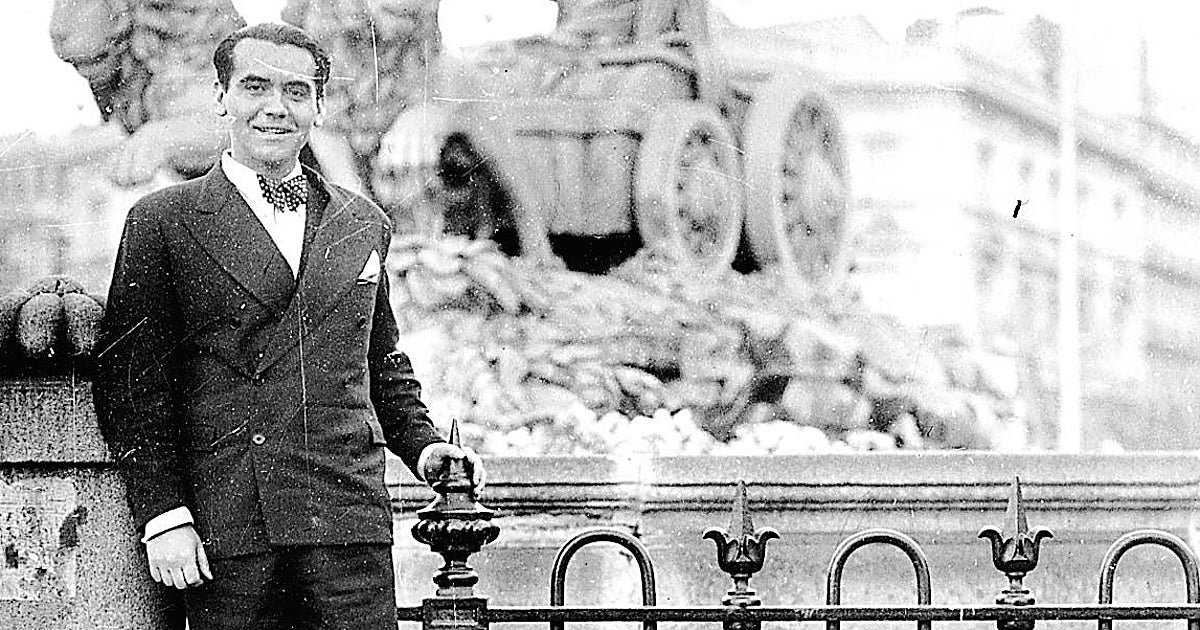
Los primeros días de Federico García Lorca en Madrid en 1919 fueron difíciles, marcados por una mezcla de entusiasmo y fracasos, mientras comenzaba a forjar su carrera como poeta y dramaturgo. #Lorca #Madrid #Poética

www.abc.es
Lorca en Madrid cuando solo era Federico
7528
Fábio Garcia 4w

Eu fico irritado quando dizem que ela é uma gringa farmando like de BR. Ela estuda nosso idioma, se apaixonou pela nossa dramaturgia e a visita no Projac parece uma criança na Disney. Por que é tão difícil acreditar que nossa arte pode encantar o mundo? https://t.co/CjWfSkPuhb #Cultura #Arte #Inclusão

15695
Dawid Żbik 4w

📈 Awans na 1. miejsce w rankingu 🏆 Zwycięstwo w US Open Jelena Rybakina klamrą domyka wielkoszlemowy sezon. Wygrała w Melbourne, wygrywa też w Nowym Jorku. Bardzo dobry poziom tego finału, duża dramaturgia, trzy sety, czego chcieć więcej? #USOpen #tenis #JelenaRybakina #USOpen

11873
Luciano Magaldi Sardella (PhD) Sep 5

“BROADWAY WORLD” OF NEW YORK WELCOMES THE TEATRO MERCADANTE OF CERIGNOLA IN THE NAME OF THE MASCAGNI FESTIVAL SOURCE: https://www.linkedin.com/pulse/broadway-world-new-york-welcomes-teatro-mercadante-sardella-ph-d--i5mbe/ by Stephi Wild, New York City. SOURCE: https://www.broadwayworld.com/italy/article/Photos-Teatro-Mercadante-and-Teatro-Goldoni-Partner-on-SOUNDTRACK-MASCAGNI-20260827 The most influential theatrical portal in the world, with at least six million global visitors per month, consecrates the cultural twinning between Cerignola and Livorno and the historical restitution of a verismo born in Puglia, southern Italy: there exists a moment when a local history ceases to be peripheral and, by the mere fact of being recounted in the right place, becomes universal history. That moment, for the Teatro Mercadante di Cerignola, has arrived. Broadway World, the bible of international theatre read daily by producers, artistic directors and critics from New York to the West End, has welcomed into its pages the cultural pact between the Mercadante and the Fondazione Teatro Goldoni of Livorno, sealed in spring 2026 by Artistic Director Savino Zaba and the Municipal Administration in the person of the Deputy Mayor and Commissioner for Culture, Maria Dibisceglia. The piece is signed by New York editor Stephi Wild, under the title: “Photos: Teatro Mercadante and Teatro Goldoni Partner on SOUNDTRACK MASCAGNI”. It is no mere detail. Broadway World does not review provincial seasons. When it does, it is signalling to the American and global theatrical system that something, down there, deserves to be seen. The heart of this recognition is Soundtrack Mascagni: the music that inspired cinema, the cinema that celebrated Mascagni, the co-production chosen as the closing event of the VII edition of the Mascagni Festival. A hybrid work, a concert-reading for narrating voice, ensemble, images and sounds, with dramaturgy and text by Vittorio Giacci, performed by the Artists of the Mascagni Academy and the Orchestra of the Teatro Goldoni di Livorno “Massimo de Bernart” conducted by Maurizio Colasanti. On stage, in the guise of an imaginary Mascagni, as narrator and guide through his own musical universe, the actor-director Maurizio Nichetti. A production, as the Italian notes record, “born from the synergy between the Teatro Mercadante di Cerignola and the Teatro Goldoni di Livorno”, which will see on stage the great actor and director Maurizio Nichetti and the Orchestra of the Goldoni, conducted by Maestro Maurizio Colasanti, with direction entrusted to Marco Voleri and Savino Zaba. What Broadway World has intercepted, moreover, is not merely a production but also a historiographical thesis that at last forces the international literature to catch up. For decades, Anglophone biographies have dismissed Pietro Mascagni’s Apulian decade as “years of poverty and obscurity”: the documentary truth, preserved in the Polo Museale of Piano San Rocco, is of a different temper entirely. In December 1886, on tour with the Maresca company, Mascagni stopped in Cerignola, where the mayor then in office, Commendatore Cannone, invited him to remain to conduct the newly founded philharmonic. The composer would stay, save for brief absences, in the house in Via Assunta until 1895, composing no fewer than five operas: Cavalleria rusticana; L’amico Fritz; I Rantzau; Guglielmo Ratcliff; Silvano. A third of his entire operatic output, written in feverish poverty, in an agricultural town of the Ofantine plain. It was there, in July 1888, that the verses of Cavalleria reached him by postcard from Livorno, sent by his poet friends Giovanni Targioni-Tozzetti and Guido Menasci. There, on 27 May 1889, he completed the autograph. The envelope, that morning, bore the postmark of Cerignola. The world premiere at the Costanzi in Rome, on 17 May 1890 before Queen Margherita, was an earthquake. As Zaba has synthesised it, in a formula destined to endure: “Livorno gave Mascagni to the world. Cerignola inspired him and kept the deepest part of his soul.” In fact, the productive parabola sanctioned by BroadwayWorld is exemplary in the way it overturns the traditional North-South axis of cultural projects. It begins on 23 August at the Mascagni Festival in Livorno with Soundtrack Mascagni. Then its debut in Cerignola, in the course of the Mercadante’s forthcoming season. Indeed, with a date already fixed: “Soundtrack Mascagni” will be presented in Cerignola on 24 October as the opening production of the 2026/2027 theatrical season of the Teatro Mercadante. An idea as simple as it is revolutionary: cinema as a lens through which to re-read Mascagni. The composer plundered by Scorsese and Coppola, cited by Visconti as a tutelary deity, already possessed in his own writing — dense, symphonic, almost edited by cuts — a cinematic vocation. Soundtrack Mascagni does not merely celebrate that filiation; it interrogates it. That BroadwayWorld should have chosen to capture precisely this — a provincial theatre that does not seek hospitality but co-produces as an equal with a historic theatre such as the Goldoni — says much about the shifting of Italy’s cultural axis. No longer a South that imports, but a South that generates archives, that preserves autographs, caricatures, unpublished letters, and restores them to the international circuit. For Cerignola, accustomed to being narrated as a land of wheat and not of music, this arrival on Broadway World is more than a press clipping. It is the certification that its Mascagni story is no longer a local footnote, but a necessary chapter in the history of verismo. And that the Mercadante, from a provincial municipal theatre, has entered in full right the ranks of those Mascagni theatres upon which the whole world now looks, and with admiration.

www.linkedin.com
“BROADWAY WORLD” OF NEW YORK WELCOMES THE TEATRO MERCADANTE OF CERIGNOLA IN THE NAME OF THE MASCAGNI FESTIVAL
584