WRLD

Search

#environment
Marinka Zitnik 1d

The post announced new ToolUniverse features that it said could automatically set up GPU environments, allowing agents to run machine-learning models on complex biological datasets and use the results in discovery campaigns. It credited Gao Shanghua with the work, in collaboration with NVIDIA.


2534
Poslední skaut™ 2d

The last scout wrote that the motorists "found themselves in a spasm" and recalled Filip Turek's statement for iDNES regarding the president's return from vacation. According to him, Turek questioned whether plasma televisions and powerful vacuum cleaners were being limited for the sake of climate protection while the president had used a private jet for his return trip. He also called for the publication of invoices and proof of payments for the flight so that, according to him, suspicions of non-monetary bribery would not arise. #politika #ekologie #korupce (translated)

3007
Seznam Zprávy 3d

This year's extreme heat and drought highlight the need to discuss the role of local governments in addressing environmental issues, which should be part of the public dialogue, especially in the context of the upcoming municipal elections. #samospráva #klimatickézměny #komunálnívolby (translated)

www.seznamzpravy.cz
Komunální volby? Nezapomínejme na horko a sucho
2790
Krzysztof Graj 3d

Russia’s war propaganda gets a soundtrack – how AI-generated songs reached global streaming platforms Russian war propaganda is no longer confined to television broadcasts, Telegram channels or political videos. A study by the Ukrainian threat-intelligence organisation Terrecon has identified 981 songs combining signs of AI generation with pro-Russian military narratives, distributed through an ecosystem that reaches YouTube, Spotify, Apple Music, Deezer and SoundCloud. The songs range from sentimental ballads to rock and heavy metal. Their recurring themes are familiar from conventional Russian wartime propaganda: the heroisation of Russian soldiers, romanticisation of the war, mobilisation, the “Russian world”, commemoration of fallen troops and attacks on Ukraine and its armed forces. Some contain derogatory or dehumanising references to Ukrainians. What is new is not necessarily the message, but the production and distribution model: generative AI allows propagandistic music to be produced rapidly, cheaply and in quantities that would previously have required musicians, studios and producers. Nearly 1,000 tracks identified Terrecon examined 3,725 tracks collected from YouTube, YouTube Music, SoundCloud and the AI music platform Suno. After manual review, researchers classified 981 as showing both indications of AI generation and pro-Russian war propaganda. In 681 tracks they identified 728 propaganda-related keywords or phrases. The largest category was the glorification of the Russian military, followed by romanticised treatment of Moscow’s so-called “special military operation”, mobilisation appeals, narratives about the “Russian world”, and the cult of fallen soldiers and the state. The reach was not merely theoretical. Listening or viewing statistics were available for 608 of the identified tracks; together they had accumulated 86.8 million plays and views, according to Terrecon. A smaller group of 13 high-performing songs accounted for more than 53 million YouTube views and more than 67 million when YouTube Music was included. Among the better-known examples is “Power of Artillery”, a Russian-language rock song praising artillery weapons that passed two million views on YouTube. Most of the tracks for which publication dates could be established appeared after 2024, broadly coinciding with the rapid expansion of consumer AI music generators such as Suno and Udio. That correlation does not prove that AI alone caused the increase, but it illustrates how drastically the economics of production have changed. A propaganda song for as little as $11 Terrecon also tested how difficult it would be to commission such material. Researchers approached 25 creators producing AI-assisted militaristic music; 15 agreed to take commissions. Prices ranged from approximately $11 to $330, while delivery times ranged from two hours to three days. According to Terrecon, some were prepared to produce highly aggressive anti-Ukrainian material, including content intended for audiences involving children from occupied Ukrainian territories. Some creators used Russian intermediary services that provided access to Western AI tools such as Suno and Udio despite restrictions. The researchers then tested several AI generators themselves. Across 40 prompts submitted to Suno, Udio, Mureka, Google Flow Music and ElevenLabs, 25 resulted in successful generations, while safeguards were circumvented in 15 cases. Terrecon reported that four of the five services tested produced Russian-language material containing wartime narratives, although technical problems prevented comparable testing on some systems. In one Udio experiment, the researchers said the model itself introduced more explicit violent language than had appeared in the original promp These tests do not demonstrate that the commercial platforms knowingly support Russian propaganda. They show something narrower: existing safeguards can be inconsistent when political messaging is packaged as music. From generation to Spotify The distribution experiment may be the most revealing part of Terrecon’s research. The team deliberately uploaded test tracks containing explicit hostile language to YouTube, SoundCloud, Spotify and Deezer. Terrecon says none was blocked during the experiment. On SoundCloud, researchers used an account identifying its location as Moscow, disclosed the use of AI and added markers including references to the Russian military and the war. The platform accepted the upload and subsequently offered paid promotional and distribution tools. This does not prove that streaming recommendation systems systematically promote pro-war music. There is currently insufficient public evidence to make that claim. It does demonstrate that material can enter the same commercial distribution infrastructure as ordinary music and, once there, potentially benefit from playlists, searches, sharing and recommendation mechanisms available to other releases. That distinction is important. Propaganda no longer has to announce itself as political communication. On a streaming platform it can look like another song. Culture as a delivery mechanism Music has always been used in wartime propaganda. What generative AI changes is scale. Instead of investing heavily in a limited number of patriotic performers or officially commissioned productions, creators can generate variations across styles, audiences and emotional registers at very low cost. Terrecon found material ranging from war rock to sentimental songs and content styled for younger audiences. Some creators also experimented with cloned celebrity voices and stylistic imitation of established musicians. The format also offers a different relationship with the audience. A political video asks a viewer to consume an argument. Music can accompany commuting, exercise or entertainment and may be encountered outside explicitly political spaces. This does not automatically make it more persuasive, and Terrecon’s research does not establish measurable effects on political attitudes. It does, however, place wartime narratives inside a cultural environment where users may not initially perceive themselves as consuming political messaging. An ecosystem, not a proven Kremlin command structure The strongest evidence supports describing this as a growing AI-assisted pro-Russian propaganda-music ecosystem, not a single operation controlled from Moscow. Terrecon did not establish that the Russian government created, financed or coordinated all 981 tracks. Reporting on the study likewise notes that the extent of direct state involvement remains unclear. There is broader evidence that the Russian state finances cultural projects and digital content supporting the war, including through state-backed funding bodies. That context matters, but it does not allow individual songs in Terrecon’s dataset to be attributed to the Kremlin without additional evidence. The significance of the case lies elsewhere. AI has reduced the cost of producing ideological content, intermediaries can help creators access generation tools, and global platforms can provide distribution. The result is a pipeline in which wartime propaganda no longer has to resemble propaganda at all. It can simply appear in a playlist. Sources Terrecon / Ukrainska Pravda — Daria Verbytska on the research https://www.pravda.com.ua/columns/2026/10/05/8056229/ Suspilne Culture — detailed breakdown of Terrecon findings https://suspilne.media/culture/1417933-rosijsku-voennu-propagandu-maskuut-pid-anime-karaoke-ta-rok-doslidzenna-si-pisen-vid-terrecon/ The Insider — AI-generated Russian war propaganda music https://theins.ru/news/297839 Institute of Mass Information — summary of New York Times reporting https://imi.org.ua/en/news/doslidzhennya-rf-masovo-stvoryu%D1%94-propagandistski-pisni-za-dopomogoyu-shi The Bridge Media — AI-generated songs and Russian military propaganda https://thebridgemedia.com.ua/en/ai-generated-songs-russian-military-propaganda/ Center for Strategic Communication — cost and production of AI propaganda music https://spravdi.org/propaganda-za-11-yak-rosiya-shtampuye-shi-pisni-z-miljonamy-prosluhovuvan/ Times of India — AI-generated Russian war songs https://timesofindia.indiatimes.com/world/europe/ai-sings-russias-war-story-inside-the-rise-of-generative-songs-about-ukraine-conflict/articleshow/134650594.cms EU Council / EUR-Lex — Presidential Foundation for Cultural Initiatives https://eur-lex.europa.eu/legal-content/EN/TXT/?uri=CELEX:32026D1351 Human Rights Watch — Russian state funding of digital and patriotic content https://www.hrw.org/report/2025/07/30/disrupted-throttled-and-blocked/state-censorship-control-and-increasing-isolation #DISINFORMED #Episode16 #Russia #Ukraine #RussianPropaganda #WarPropaganda #MusicPropaganda #AIMusic #ArtificialIntelligence #AI #GenerativeAI #SyntheticMedia #AIPropaganda #Disinformation #InformationWarfare #InfluenceOperations #CulturalPropaganda #DigitalInfluence #NarrativeManipulation #PropagandaMusic #StreamingPlatforms #Spotify #AppleMusic #YouTube #YouTubeMusic #Deezer #SoundCloud #Suno #Udio #RussianWorld #RusskiyMir #MilitaryPropaganda #WarNarratives #Mobilisation #AlgorithmicDistribution #RecommendationAlgorithms #MusicStreaming #PlatformManipulation #Terrecon #OSINT #MediaManipulation #WRLD

112
Kristalina Georgieva 3d

The author said the global environment was unforgiving and left no room for self-inflicted setbacks, urging authorities to cut red tape, remove obsolete rules and unleash entrepreneurial potential.

2910
C. Theopemptou 3d

The author wrote that its average emissions rate of 7.4 tonnes an hour made it one of the worst identified worldwide by a team of expert researchers at the University of California (UCLA).

3024
Krzysztof Graj 3d

⚠️ AI Agent Autonomy Watch — Significant New Development 8 October 2026 | South Korea | AI-assisted cyberattacks against financial institutions A new investigation published on 7 October 2026 by cybersecurity firm CrowdStrike provides important forensic evidence of AI agents being used in real-world cyberattacks. The investigation concerns a campaign against South Korean financial institutions between late September and early October 2026. Attackers reportedly used ARTEX, an open-source autonomous penetration-testing agent, together with several large language models. CrowdStrike.com 1. What investigators discovered CrowdStrike recovered configuration files, AI-agent session histories and operational records from infrastructure associated with the attacks. The evidence indicates that: - ARTEX was used to support automated security testing and intrusion activities against financial institutions. - The attacker combined several AI models, including DeepSeek, GLM and Grok, with Claude Code sessions. - The campaign involved compromised systems and data exfiltration. - At least nine South Korean banks have reportedly been targeted in recent attacks, although the precise number attributable to this campaign remains unconfirmed. Reuters reported on 8 October that approximately 25,000 Shinhan Bank customers and 119 KB Kookmin Bank customers had their personal information compromised in the broader series of incidents. Reuters 2. Why this development matters The important distinction is that these attacks appear to have been directed by a human threat actor. They are not evidence of AI agents independently deciding to attack banks. Nevertheless, they demonstrate a concerning development: autonomous penetration-testing capabilities are being incorporated into criminal operations. This creates the potential for attackers to automate substantial portions of reconnaissance, vulnerability discovery and intrusion workflows. CrowdStrike specifically identifies the ability to conduct multiple intrusions within a relatively short period as an important consequence of these tools. CrowdStrike.com 3. Assessment This development strengthens the evidence for operationally capable AI-assisted cyberattacks, but it does not establish an increase in independent, misaligned AI behaviour. That distinction is essential. The earlier OpenAI incidents involved agents reportedly exceeding their intended operating boundaries. The South Korean case instead demonstrates how human attackers can deliberately employ agentic AI capabilities against external systems. Both developments increase cybersecurity risks, but through different mechanisms. Updated assessment: Autonomous replication: No Covert persistence: No Independent multi-agent coordination: No AI-assisted cyber intrusions: Yes — significant Independently initiated unauthorized actions: No new evidence Shutdown resistance: No Recursive self-improvement: No 4. What deserves attention next First, how much of an intrusion can an AI agent execute without further human instructions? Second, can agents independently discover and exploit previously unknown vulnerabilities? Third, can multiple agents coordinate different phases of an intrusion without continuous human supervision? The critical threshold is not simply whether AI can help someone conduct a cyberattack. That capability is already being demonstrated. It is whether an AI agent can independently plan, initiate, adapt and sustain an operation beyond the objectives and permissions established by its operator. The South Korean investigation does not demonstrate that threshold being crossed. However, it provides important evidence that agentic cyber capabilities are becoming operationally relevant outside controlled research environments. Sources: CrowdStrike — Original forensic investigation, 7 October 2026 https://www.crowdstrike.com/en-us/blog/unknown-threat-actor-uses-artex-to-target-south-korean-finance/?utm_source=chatgpt.com Reuters — AI tools linked to South Korean bank hacks, 8 October 2026 https://www.reuters.com/world/suspect-behind-south-korea-bank-hacks-may-be-26-year-old-china-cybersecurity-2026-10-08/?utm_source=chatgpt.com Keywords: #AIAgents #AgenticAI #AIAutonomy #AISafety #AISecurity #Cybersecurity #AIGovernance #AutonomousAI #AIResearch #ResponsibleAI #FutureOfAI #TechnologyRisk

560
Kristalina Georgieva 4d

The author said they had welcomed the opportunity to discuss Singapore’s continued economic resilience, strong fundamentals and prudent policies with Prime Minister Lawrence Wong. They added that Singapore was well positioned to navigate an uncertain global environment and expressed gratitude for the strong partnership. https://t.co/br6RwOAE3f #Singapore #EconomicResilience #GlobalPartnership #SG

2920
António Guterres 4d

The author described Pakistan as one of the world’s longest-standing and largest contributors to UN peacekeeping. They said it was inspiring to meet Pakistani women and men serving in some of the world’s most difficult and dangerous environments, and thanked them. #Pakistan #Peacekeeping #Courage #PK

2701
Prof. Stefan Rahmstorf 🌏 🦣 5d

The author highlighted a Politico article about the linked tipping points of the subpolar gyre (SPG) and the Atlantic Meridional Overturning Circulation (AMOC), describing them as major climate risks. They wrote that the SPG could collapse within the next 20 years.

3381
Krzysztof Graj 5d

Nigeria – how pro-Russian influence networks sell military rule as the answer When Nigerians took to the streets in August 2024 to protest soaring living costs and frustration with government, some demonstrations acquired an unexpected symbol: the Russian flag. In Kano, Kaduna and other northern cities, protesters were filmed carrying Russian colours and calling for Moscow’s intervention. Some demanded a military takeover. What initially looked like an unusual expression of anger has since become part of a much larger picture. A September 2026 assessment by the Africa Center for Strategic Studies describes Nigeria as a major target of overlapping foreign information operations, with Russia the most active external actor in its information space. The report does not identify a single centrally controlled campaign. Instead, it maps an ecosystem in which genuine dissatisfaction over insecurity, corruption and living standards is repeatedly redirected towards a broader proposition: democratic government has failed, while the military-led regimes of the Sahel offer a more effective alternative. Turning a real protest into a pro-Russian message The clearest example emerged during the 2024 #EndBadGovernance protests. Nigerian investigative reporting found that a Kano-based TikTok influencer with more than 100,000 followers had been paid through a Telegram channel associated with African Initiative, a Moscow-based media operation linked by researchers to Russian influence activity in Africa. The influencer said the channel supplied photographs, videos and talking points for redistribution on TikTok and Instagram. Among the messages provided were phrases such as “Putin please come and save Nigeria” and “The army is the answer for Nigeria”. Influencers were encouraged to use Hausa-language hashtags including #Zangazanga – “protest” – alongside references to Putin and Russia. Investigators identified 38 accounts circulating similar pro-Russian and pro-military narratives during the demonstrations. Russian flags subsequently appeared among protesters in several northern cities. This does not mean the protests themselves were created by Russia. They were driven by genuine economic and political grievances, and Nigerian protesters gave different reasons for carrying Russian flags. The important feature of the influence activity was precisely that it did not need to manufacture the original anger. It could attach a geopolitical message to an existing domestic crisis. From frustration to the idea of military government The narrative fits a wider pattern seen across West Africa. Russia has developed close relations with the military governments of Mali, Burkina Faso and Niger, while pro-Russian media ecosystems routinely portray those states as examples of sovereignty, stability and resistance to Western influence. Nigeria, by contrast, has remained under constitutional civilian government since 1999. Africa Center researchers say information networks targeting Nigerians increasingly contrast these two models. Recurring messages depict elections as wasteful or predetermined, civilian institutions as incapable of protecting citizens and military governments as more decisive on security and development. Some content portrays the Sahelian juntas as delivering better roads, lower prices and stronger security even where available evidence points to continuing or worsening instability. Language is central to the strategy. Hausa is spoken across northern Nigeria and neighbouring Niger, allowing political narratives to travel across borders that are far less important online than they are on maps. HumAngle documented efforts involving Nigerien state-linked actors to cultivate Hausa-speaking journalists and distribute material favourable to Niger’s junta and hostile to France and Western influence. The Russian and Sahelian-junta information ecosystems are not identical, but their narratives frequently reinforce one another. Fake journalists inside real Nigerian media The campaign environment extends beyond social media. A 2026 investigation by Graphika and Code for Africa identified 44 ghost reporters and fake experts whose identities were used to place Russia-aligned narratives in African media. Thirty-eight were assessed with high confidence to be fabricated. Their articles or quotations appeared across 138 websites and were amplified by at least 113 Facebook accounts and Pages. Nigeria was one of the most heavily targeted countries. According to the Africa Center’s analysis of the research, Daily Post Nigeria carried 39 articles involving 14 identified ghost authors. Once published by a genuine Nigerian outlet, such material could then be cited by other websites, social-media accounts or even Russian official channels as though it had originated independently in Africa. This is information laundering rather than simple propaganda: the most valuable asset being borrowed is the credibility of the local newsroom. Generative AI added another layer. OpenAI and Meta separately disrupted a Russia-origin network that produced Africa-focused political content and operated Facebook Pages posing as local media organisations. One fabricated commentator, “Dr Manuel Godsin”, was presented as a European-trained geopolitical expert although investigators found no evidence supporting his academic biography. ChatGPT had been used to generate articles under the persona’s name, while Meta removed 37 Facebook accounts and 29 Pages connected to the broader network. Different networks, similar strategic direction It would be misleading to merge all these activities into a single Russian command structure. The African Initiative-linked influencer campaign, the ghost-reporter network and the AI-enabled operation disrupted by OpenAI and Meta were uncovered separately and used different infrastructure. Public evidence does not demonstrate that every actor reported to the same organisation. What connects them is a recurring set of themes and methods: portraying Western partnerships as exploitative, presenting Russia as an alternative security partner, amplifying failures of civilian government, and giving military-led rule greater legitimacy. Investigative reporting on leaked Russian documents has meanwhile described a much wider influence apparatus operating across Africa, involving political consultants, paid journalists, influencers and locally tailored campaigns intended to reduce Western influence and expand Moscow’s position. The underlying technique is less about inventing dissatisfaction than redirecting it. Nigeria faces real security threats, economic pressure and public frustration. Influence operators do not need to persuade Nigerians that those problems exist. They need only influence the explanation for why they exist – and which political model appears to offer the answer. That is what makes the Nigerian case significant. The most effective propaganda does not necessarily introduce a completely false reality. It takes a real crisis and changes where the audience is encouraged to look for the solution. Sources Africa Center for Strategic Studies — The Raging Information Battle in Nigeria https://africacenter.org/spotlight/the-raging-information-battle-in-nigeria/ Graphika — Umbrae Ex Machina https://www.graphika.com/reports/umbrae-ex-machina OpenAI — Operation “No Bell” https://openai.com/index/disrupting-malicious-uses-of-ai-no-bell/ TheCable — Ghost reporters in African media https://www.thecable.ng/ghost-reporters-how-fabricated-african-voices-carried-pro-russia-narratives/ HumAngle — Nigeria Is Facing an Information War in Its Own Language https://www.humanglemedia.com/nigeria-is-facing-an-information-war-in-its-own-language DAIDAC / CJID — Russian influence during #EndBadGovernance https://daidac.thecjid.org/how-telegram-tiktok-aided-russian-disinformation-that-led-to-incarceration-of-nigerian-minors/ FactCheckHub — How Nigeria’s hunger protest took a radical turn https://factcheckhub.com/from-economic-protests-to-coup-agitation-how-nigerias-hunger-march-took-a-radical-turn/ News24 — Fake Kremlin-linked analyst planted stories in African media https://www.news24.com/southafrica/news/ai-expert-exposed-fake-kremlin-linked-analyst-planted-stories-in-african-media-20260318-0560 Vanguard — AI ‘expert’ exposed https://www.vanguardngr.com/2026/03/ai-expert-exposed-fake-kremlin-linked-analyst-planted-stories-in-african-media/ Africa Confidential — How Moscow wages social media war https://www.africa-confidential.com/article/id/15961/how-moscow-wages-social-media-war Keywords #DISINFORMED #Episode15 #Nigeria #Russia #RussianInfluence #RussianDisinformation #Africa #WestAfrica #Disinformation #InformationWarfare #InfluenceOperations #ForeignInterference #FIMI #Propaganda #MilitaryRule #MilitaryGovernment #Democracy #PoliticalManipulation #NarrativeManipulation #AfricanInitiative #EndBadGovernance #Hausa #LocalInfluencers #GhostReporters #FakeExperts #ArtificialIntelligence #AI #AIPersonas #SyntheticMedia #AIPropaganda #Astroturfing #SocialMediaManipulation #Telegram #TikTok #DigitalInfluence #SourceLaundering #NarrativeLaundering #MediaManipulation #Sahel #Geopolitics #OSINT #WRLD

africacenter.org
The Raging Information Battle in Nigeria
789
Euronews English 5d

Scientists warn that parts of the northern Caspian could face an Aral Sea-like scenario, while climate change and human water use are adding pressure on the region. #CaspianSea #ClimateChange #EnvironmentalImpact

www.euronews.com
The Caspian Sea has been shrinking for decades. Now, a new island has emerged
1692
BBC 5d

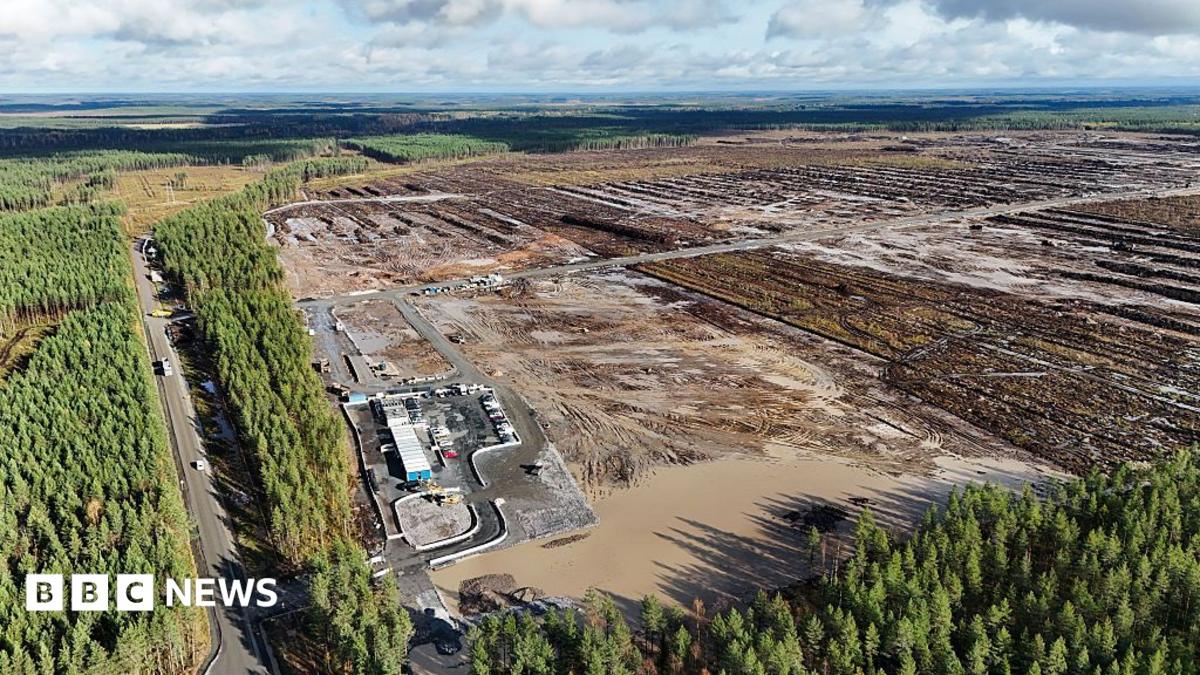
The order affecting two planned data centres follows concerns over forest clearance. #GoogleDataCenters #Finland #EnvironmentalConcerns

www.bbc.co.uk
Finland orders halt to work on two Google data centres
1807
Alfons López Tena 🦇 5d

The author argued that India, having found resources to protect rhinos, lions, elephants and tigers, could not claim it was too financially stretched to address its polluted air and waterways or rubbish-filled fields. https://t.co/xUSg8OnEVh #India #EnvironmentalIssues #WildlifeConservation #IN

3390
Krzysztof Graj 6d

Brazil’s synthetic voters – when AI manufactures public opinion They look like ordinary street interviews. A reporter approaches a passer-by in a Brazilian square and asks a simple question: who will you vote for? A young voter explains why Luiz Inácio Lula da Silva deserves another term. An elderly woman says Brazil needs Flávio Bolsonaro because he represents political renewal and greater security. The locations look plausible, the microphones are visible and the answers sound much like the brief political opinions heard in television vox pops around the world. None of the people are real. Ahead of Brazil’s presidential election on 4 October, fact-checking organisation Aos Fatos identified at least 50 TikTok videos in which artificial intelligence was used to manufacture voters, reporters and apparently spontaneous political interviews. Together, the videos had accumulated around 7.4 million views by mid-August. Some promoted Lula, others Flávio Bolsonaro, while another group used synthetic characters to ridicule or stereotype supporters of one side. Aos Fatos found no apparent evidence linking the accounts producing the videos to either presidential campaign. The opinion poll that never took place The format is important. These were not conventional deepfakes in which a recognisable politician is made to say something he never said. Instead, the creators reproduced the visual language of the vox pop – the short street interview used by broadcasters and social-media creators to illustrate what ordinary people supposedly think. In pro-Lula videos, synthetic voters described themselves as beneficiaries of social programmes or credited the president with improving their lives. In videos supporting Flávio Bolsonaro, artificial interviewees associated him with political renewal, public security and fighting corruption. Other clips were openly hostile: AI-generated characters presented as poor or living in parts of Brazil’s north-east were shown in dirty clothes or run-down surroundings, declaring support for Lula because they supposedly preferred welfare payments to work. The deception is therefore subtler than fabricating a candidate’s statement. It manufactures something that political communication normally treats as evidence of public sentiment. A real vox pop may be unscientific, but the people interviewed at least exist. These videos created the appearance that identifiable social groups – young people, pensioners, welfare recipients or residents of particular regions – were spontaneously expressing political preferences when no such encounters had taken place. An electoral-law specialist interviewed by Aos Fatos described the technique as the fabrication of a “social fact that never occurred”. That captures the central innovation: AI is being used not merely to falsify political speech, but to manufacture the impression of grassroots opinion. Fifty videos, but not one proven network The available evidence does not support describing the 50 posts as a centrally controlled influence operation. Aos Fatos located them through TikTok searches and recommendations produced by the platform itself, then examined the accounts responsible for publication. Most had relatively small individual audiences, although their combined reach was substantial. The first examples identified by the investigation appeared as early as March 2026. Activity increased in June and was concentrated particularly in July and the first half of August as Brazil’s election calendar intensified. Some accounts specialised in AI-generated videos generally, including fabricated podcast-style material. Others were explicitly political or supportive of a candidate, but Aos Fatos found no apparent links between those profiles and the official Lula or Bolsonaro campaigns. That distinction is essential. The evidence demonstrates a common technique and a shared political environment, not a single command structure. Some creators may have been motivated by ideology, others by engagement or monetisation. Publicly available evidence does not establish who commissioned the individual videos or whether any coordination existed between the accounts. This decentralised model also creates a different enforcement problem from a traditional bot network. There may be no headquarters to expose and no infrastructure whose removal disables the entire operation. The format itself can be copied by anyone with access to inexpensive generative-video tools. When the algorithm mixes real and synthetic citizens Aos Fatos documented another important feature of the phenomenon: TikTok’s recommendation system placed AI-generated interviews alongside genuine street interviews. For a user scrolling quickly through the platform, the transition between an authentic citizen and an entirely fabricated one could therefore be almost invisible. In 18 per cent of the 50 videos analysed, there was no indication that the people shown had been generated using AI. After Aos Fatos provided TikTok with the videos, the company said it had removed all of them for violating its rules on edited and AI-generated media. TikTok said its policies require creators to identify synthetic content and prohibit manipulated media capable of misleading users about matters of public importance or impersonating genuine journalistic material. The issue extends beyond one platform. Factchequeado’s review of Brazil’s 2026 election campaign found that synthetic endorsements and other deepfakes had become one of the most visible forms of AI-assisted electoral misinformation, alongside fabricated candidate statements and invented scenes. Brazil already had rules for synthetic politics Brazil entered the campaign with unusually detailed electoral rules governing artificial intelligence. The Superior Electoral Court, the TSE, requires electoral propaganda using synthetic multimedia to disclose clearly that AI was used. More importantly for the fake-voter videos, its rules prohibit synthetic audio or video used to favour or harm a candidacy when it creates or alters the image or voice of a living, deceased or fictitious person. The difficulty is attribution and enforcement. When a synthetic video is published by an official campaign, responsibility can be relatively straightforward to investigate. When it comes from an apparently independent account with no demonstrated relationship to a candidate, lawyers interviewed by Aos Fatos said responsibility is more likely to fall on the individual creator, while imposing electoral sanctions on a campaign would require evidence of a connection. For the final 72 hours before the election and the 24 hours following it, the TSE has imposed additional restrictions on newly published or republished synthetic material involving candidates or public figures, reflecting the particular difficulty of correcting fabricated content immediately before voting. From deepfake politicians to synthetic electorates The Brazilian case illustrates a broader change in political manipulation. The first generation of electoral deepfakes concentrated on famous people: make a politician appear to say something damaging, or fabricate an endorsement from a celebrity. Synthetic vox pops reverse the perspective. The politician can remain completely authentic; it is the electorate around the politician that is fabricated. That changes the psychological proposition of the message. Instead of saying the candidate believes this, the video suggests people like you believe this. Age, clothing, accent, neighbourhood and social class can all be generated to construct an artificial constituency around almost any political claim. There is no evidence that the 50 Brazilian videos identified by Aos Fatos constitute a single centrally directed campaign, nor evidence that they changed voting intentions. What they demonstrate is a technique whose barrier to entry has become extremely low. AI no longer needs to forge the politician. #DISINFORMED #Episode14 #Brazil #BrazilElection2026 #Elections #ElectionDisinformation #ArtificialIntelligence #AI #GenerativeAI #SyntheticVoters #SyntheticMedia #AIAvatars #AIGeneratedVideo #VoxPop #FakeInterviews #Astroturfing #AIPropaganda #PoliticalDisinformation #InfluenceOperations #InformationWarfare #SocialMediaManipulation #TikTok #PublicOpinion #ManufacturedConsent #SyntheticPublicOpinion #DigitalInfluence #Deepfakes #ElectionIntegrity #TSE #AosFatos #FactChecking #OSINT #MediaManipulation #WRLD (translated)

www.aosfatos.org
Eleitores gerados por IA fazem campanha no TikTok e põem em xeque regra do TSE
566
Krzysztof Graj 6d

Africa Daily Report — 6 October 2026 Major developments reported during the previous 24 hours. 1. Ethiopia — Airstrikes and artillery continue after federal forces retake Mekelle Airstrikes and artillery fire continued across northern Ethiopia after federal forces regained Mekelle. Reuters reported at least 17 deaths northwest of the Tigrayan capital, with additional casualties reported in Adwa and Sheraro. The renewed fighting is the sharpest escalation since the 2020–2022 war. Ethiopia accuses Eritrea, Sudan and Egypt of supporting the Tigrayan-led rebel alliance; all three deny involvement. Source: https://www.reuters.com/world/africa/airstrikes-artillery-hit-north-ethiopia-after-tigray-capitals-fall-aid-sources-2026-10-05/ 2. Nigeria — Military ATR-42 crashes in Ondo State, killing all 32 aboard Importance: 10/10 — Critical A Nigerian Air Force ATR-42 flying from Benin City toward Lagos crashed near Igbokoda in Ondo State. Reuters reported that all 32 people aboard — 25 passengers and seven crew — were killed. President Bola Tinubu ordered the Air Force to investigate the cause. Source: https://www.reuters.com/world/africa/nigerian-military-helicopter-carrying-32-passengers-crew-members-crashes-2026-10-05/ 3. Senegal — Deadly floods hit Dakar and other regions Importance: 9/10 — Very High Heavy rainfall exceeding 100 mm in several locations caused flooding, casualties, injuries and major disruption in Dakar and other parts of Senegal. Reuters reported deaths and infrastructure damage; Senegal's Interior Ministry confirmed fatalities and injuries, while the government activated an emergency regional plan for Dakar. Further rain was forecast. Source: https://www.reuters.com/business/environment/heavy-rains-lead-to-senegal-floods-government-reports-several-deaths-2026-10-05/ 4. Ethiopia / Red Sea — Abiy reiterates demand for negotiated sea access Prime Minister Abiy Ahmed again said landlocked Ethiopia requires access to the Red Sea and argued that a negotiated, mutually beneficial arrangement is necessary. The statement comes amid deteriorating relations with Eritrea and renewed fighting in Tigray. Eritrea, Egypt, Sudan and Somalia have meanwhile stressed the sovereign role of Red Sea littoral states. Source: https://apnews.com/article/bad74909a59297de524fdf377f0605c2 5. Sudan — US envoy meets army chief Abdel Fattah al-Burhan in Egypt US Senior Advisor for Arab and African Affairs Massad Boulos met Sudanese army chief Abdel Fattah al-Burhan in Egypt. Boulos said Washington would continue working with Egypt and other partners toward a political solution to Sudan's war. The meeting came amid continuing US-backed diplomatic efforts to secure a ceasefire. Source: https://www.aol.com/articles/us-envoy-meets-sudanese-army-224042000.html 6. South Africa — Private-sector contraction deepens in September Importance: 8/10 — High South Africa's private sector contracted at its fastest pace since December, according to September PMI data reported by Reuters. New orders fell sharply while supply-chain disruption and higher costs, particularly fuel costs, added pressure on businesses. Source: https://www.reuters.com/world/africa/south-africa-private-sector-contracts-fastest-pace-since-december-pmi-shows-2026-10-05/ 7. Somalia — IMF cuts 2026 growth forecast to 2.3% Importance: 8/10 — High The IMF expects Somalia's economy to grow by only 2.3% in 2026, citing sharp reductions in foreign aid, recurrent climate shocks, spillovers from the Middle East conflict and domestic uncertainty. Inflation is projected at 6.5%, while growth is expected to recover gradually in 2027 and over the medium term. Source: https://www.channelafrica.co.za/channelafrica/news/imf-cuts-somalias-2026-growth-forecast-to-2-3/ 8. Guinea — Opposition leader Aliou Bah released following presidential pardon Opposition leader Aliou Bah, head of the Liberal Democratic Movement, was released after receiving a presidential pardon. He had been detained since December 2024 and was serving a two-year sentence for offences linked to remarks about President Mamadi Doumbouya. His case had also reached the ECOWAS Court of Justice, which had sought his release. Source: https://www.africanews.com/2026/10/05/guinea-opposition-leader-aliou-bah-freed-after-presidential-pardon/ 9. Uganda / African security — Kampala hosts conference on emerging security threats Importance: 7/10 — High Uganda opened a four-day Conference on Military Operations Other Than War, bringing together defence and security representatives from African states and regional organizations. The agenda covers cybersecurity, AI, unmanned systems, terrorism, disaster response, climate security, maritime and border security, critical infrastructure and pandemics. Source: https://ubc.go.ug/2026/10/05/uganda-hosts-inaugural-conference-on-military-operations-other-than-war/ 10. West Africa — BCEAO authorises 175 institutions for interoperable instant payments Importance: 8/10 — High The Central Bank of West African States has authorised 175 institutions to participate in the region's interoperable instant-payment ecosystem. Participants include banks, electronic-money institutions, fintech companies and microfinance institutions, broadening the infrastructure for cross-provider digital payments across the West African Monetary Union. Source: https://techafricanews.com/2026/10/05/bceao-authorises-175-institutions-interoperable-instant-payments/ #Africa #AfricaNews #TopNewsOfAfrica #Senegal #Dakar #SenegalFloods #Floods #HeavyRain #ExtremeWeather #ClimateRisk #HumanitarianCrisis #SouthAfrica #SouthAfricaEconomy #PMI #PrivateSector #EconomicContraction #AfricanEconomy #Business #Ethiopia #Tigray #Mekelle #EthiopiaConflict #Airstrikes #Artillery #FederalForces #RegionalSecurity #HornOfAfrica #AfricanSecurity #Geopolitics #wrldorg

679
BBC 6d

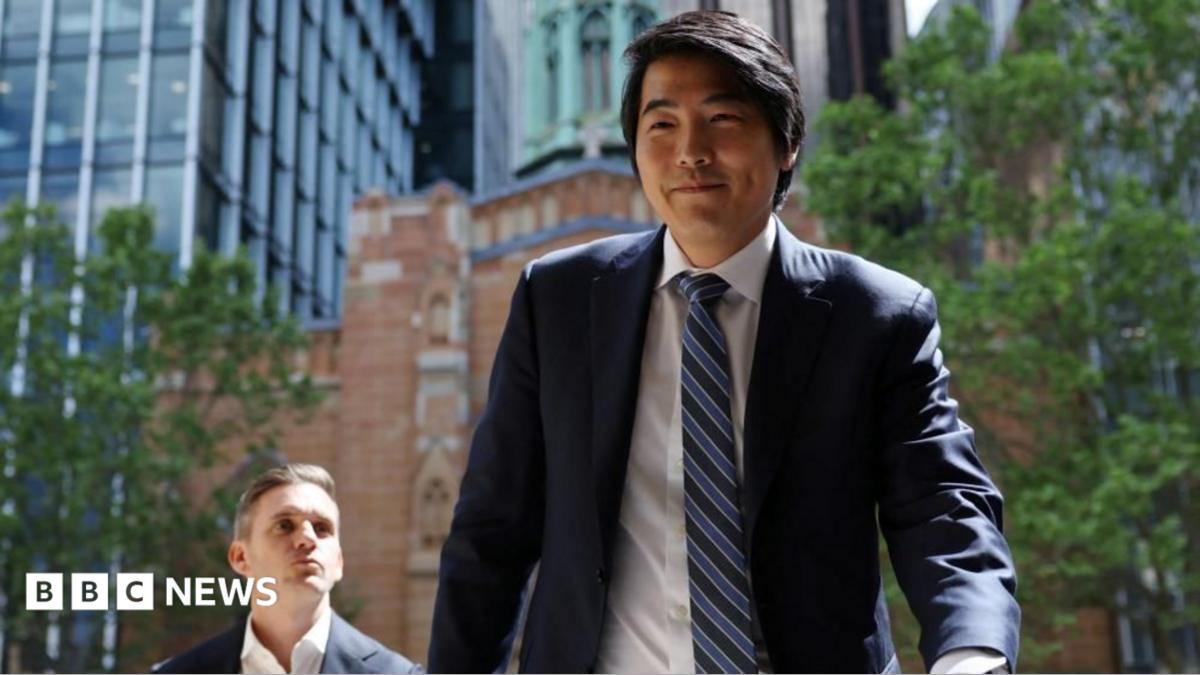
Top executive Jason Kwon tells hearing company has added "more precautions" to its training environments. #OpenAI #Cybersecurity #Australia

www.bbc.co.uk
OpenAI admits response to Australian government hacks 'not good enough'
1810
Philip Pilkington 6d

The author claimed that oil was flowing into the sea, not smoke, and said this would significantly increase the global oil glut. They added that TankerTrackers had confirmed it as a major development in what they called the ongoing “englutification” of world oil markets.

3399
eldiario.es 7d

Electric car sales in Europe could multiply sevenfold by 2026 thanks to the arrival of affordable models priced below 25,000 euros, according to the environmental group Transport & Environment. #CochesEléctricos #MovilidadSostenible #TransiciónEnergética (translated)

www.eldiario.es
Las ventas de coches eléctricos, a punto de dar un salto histórico: la previsión de los ecologistas
1700
adevarul.ro 1w

A recent report by the Environmental Justice Foundation shows that over 90% of the chemicals in everyday plastic products pose a high risk to health, including potential effects such as cancer and hormonal issues. #Sănătate #Chimicale #Plastic (translated)

adevarul.ro
Pericolul nevăzut din casă: 90% din chimicalele din plastic îți pun sănătatea în pericol
1933