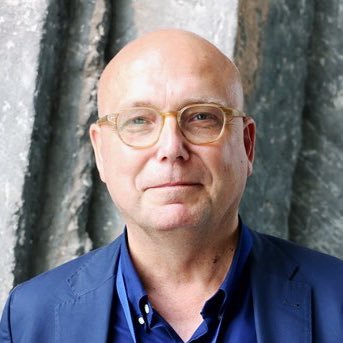
The sender urged journalists to ask the politicians why they had voted against an investigation into the Muslim Brotherhood and on what basis they made their decision. #politk #journalistik #MuslimskaBrödraskapet #SE (translated)
The sender urged journalists to ask the politicians why they had voted against an investigation into the Muslim Brotherhood and on what basis they made their decision. #politk #journalistik #MuslimskaBrödraskapet #SE (translated)

The review echoed a testimony from a woman who, according to her account, had been raped while another attacker cut off her breasts with a knife. The assaults continued before she was killed, the review stated. The author described the massacre on October 7 as a deep trauma for Israeli society and wrote that this year's memorial ceremony was particularly significant because all surviving hostages had returned from Gaza and the remains of the murdered had been brought home. The review believed the day should have focused on the victims, the survivors, and the relatives. The review criticized Sveriges Radio for instead directing attention towards employee Sami Abu Salem in Gaza. The author also questioned why SVT Rapport, after a segment from the memorial ceremony in Tel Aviv, had presented Gilda Hamidi-Nia's documentary "The World's Most Hated?", which according to the review had been published three days before the anniversary and dealt with how Israeli soldiers were mapped on social media and accused of suspected war crimes in Gaza. The review stated that SVT's live broadcast from the ceremony repeatedly shifted the focus from the victims and their relatives to Israel's warfare, genocide allegations against Israel and the IDF, as well as the war in Gaza. The author argued that the coverage showed a lack of judgment, proportion, and respect, and asked why the victims were not allowed to be at the center of the memorial day. https://t.co/unFDFBluFH #Hamas #Israel #minnesdag (translated)

Ledarsidorna.se wrote that Magnus Ranstorp articulated the writer's thoughts on why SVT and SVT Nyheter did not get a day to themselves to grieve. The writer asked what one got for the money and described journalism as operating in the "swamps" along with Cecilia Uddén. #svpol #journalistik #sverige #svt (translated)
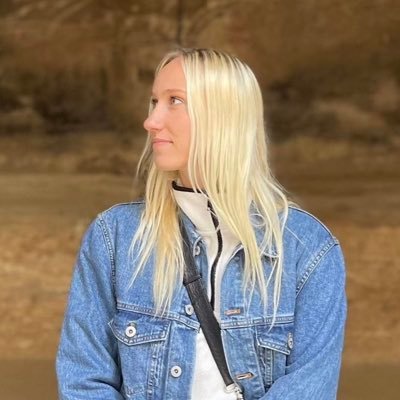
Emilie Jäger wrote that she was proud to work at B.T., which she described as a free and independent media outlet with a civic foundation. According to her, this was reflected both in the newspaper's debate section and in the choice of topics. She believed that Denmark needed different media and mentioned Information, Politiken, DR, and B.T. as examples. Jäger wrote that she often received calls from dissatisfied politicians and their advisers, and occasionally even ministers. However, she had not experienced internal pressure from bosses regarding her political beliefs or about covering anyone in a certain way. She believed that B.T. also adhered to fundamental journalistic principles of hearing all parties, faithfully representing their viewpoints, and describing facts. According to Jäger, sources she interviewed both within and outside Christiansborg were sometimes dissatisfied, but her impression was that sources on both the right and left generally felt professionally treated. She also wrote that her management and colleagues, along with her, had turned a large deficit into a million-dollar surplus, while the newspaper played an important role in Danish democracy. #journalistik #demokrati #BorgerligtMedie (translated)


Jotam Confino wrote that several B.T. employees had publicly criticized the development of the media. According to him, they believed that B.T. had been used for an ideological project, that journalistic independence had been compromised, and that employees had allegedly been called in for discussions about their opinions. Confino wrote that he was not aware of any of the critics resigning, and that he personally believed it was free for both employees and others to criticize the media. As one of B.T.'s public profiles, Confino described his own experiences. He wrote that he had never received instructions about journalistic angles or been pressured to follow an ideological line. He also had not been in a conversation about his opinions or been told to be more critical of the left than the right, he wrote. Confino described his bosses as skilled and professional and said that he felt he had full journalistic freedom. Confino highlighted B.T.'s bourgeois profile and wrote that an editorial line did not in itself mean that the media was politically controlled. He asked why there was no corresponding criticism of Information, Politiken, or TV 2. He also criticized colleagues from other media, ministers, and party leaders for, in his opinion, contributing to doubts about B.T.'s independence. He pointed to B.T.'s coverage of the mink scandal, Enhedslisten's support for a terrorist organization, which according to his post was involved in the murder of a 21-year-old student from Tanzania, and anti-Semitism, among other things, in Mellemfolkeligt Samvirke. Confino wrote that B.T. had made significant progress both in readership and economy, and that he was proud to be part of the media and supported the management. #BT #journalistik #medier (translated)

The review stated that SVT posed a relevant question to the leader of the Center Party about how the Green Party's higher tax proposal compared to that of the Left Party. https://t.co/gGvFXjcbsa https://t.co/zllVWwRUYK #svpol #politik #val2026 (translated)


Julie Grove wrote that she had never seen a better advertisement for B.T. than that the newspaper's center-left journalists could not endorse the product. She called it fantastic. #BT #journalistik #reklame (translated)

The article discusses the importance of media criticism for democracy, emphasizing that media should withstand scrutiny and that silencing criticism can harm democracy rather than protect it. #Mediekritik #Demokrati #Journalistik (translated)
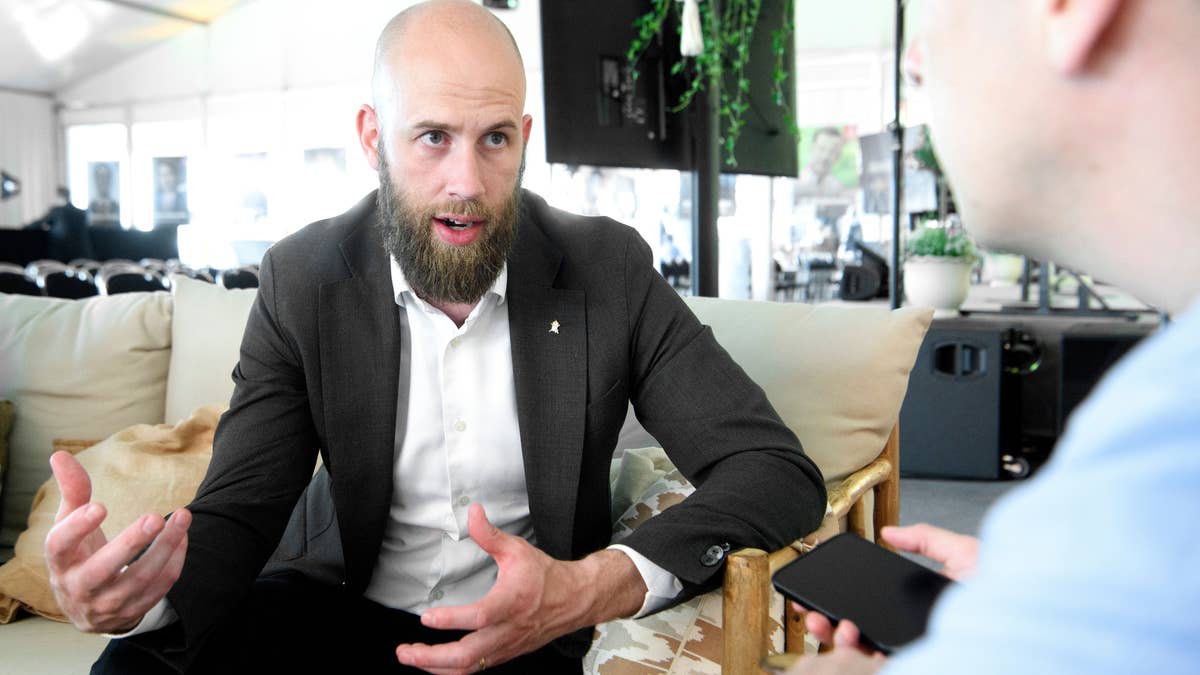
Joachim B. Olsen asked why Pelle Dragsted had given incorrect information from the podium of the Folketing, in his opinion. Olsen wrote that Dragsted had said that journalists could gain access to the Danish People's Party annual meeting if they came from B.T. and wanted to give a speech. Olsen stated that he spoke at the part of the annual meeting that all journalists had access to, and that he did not participate in the other parts. He also wrote that he did not cover the annual meeting journalisticly, but was present as an editorial writer for B.T. #journalistik #politikk #medier (translated)
Joachim B. Olsen wrote to Magnus Barsøe that he could call BT whatever he wanted. Olsen said that the media had gained many more readers and listeners in recent years and that the line and style of Borgerlig Tabloid would remain unchanged. #BT #journalistik #medier (translated)

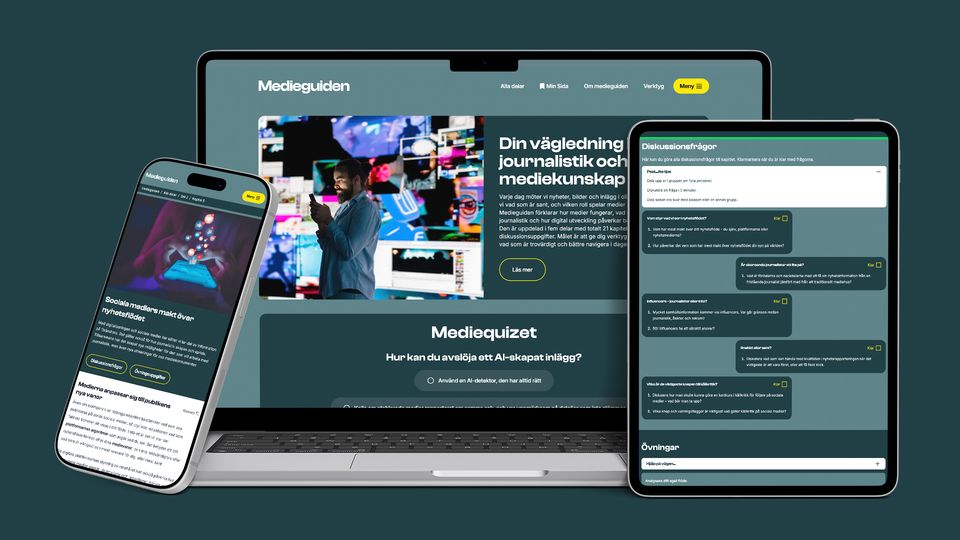
The Media Authority has launched Medieguiden.se, a new website aimed at educating the public about journalism, the media's role in democracy, and source criticism, especially in a time characterized by AI-generated content. #mediekunskap #journalistik #källkritik (translated)

Carl Eos wrote that the Swedish Academy had decided to award Cecilia Uddén the Nobel Prize in Literature and described her Middle Eastern reporting for Sveriges Radio as fiction that had freed itself from reality. He claimed that events and causal relationships in her reporting were subordinated to an internal narrative logic and mentioned Gaza, Beirut, and Damascus as environments that served as backdrops. According to Eos, the award rewarded a literary development in which the outside world no longer corrected what was depicted. #Nobelpriset #Litteratur #Journalistik (translated)

The review asked SVT journalists where the boundary between the Centre Party and the Green Party lay. The writer claimed that the Green Party was a particularly unsuitable partner if the Centre Party's main goals were the Swedish economy, growth, and entrepreneurship. According to the review, the Green Party combined the Left Party's anti-capitalism with a critique of civilization that viewed humanity's use of the earth as an intrusion. The review stated that the Green Party openly supported that view and wondered why the Centre Party nonetheless sought out the party to avoid collaborating with the Left Party. The writer questioned how the Centre Party reconciled its priorities with that choice. https://t.co/WCGhU4K3nM #politk #Sverige #journalistik (translated)


The writer wondered why Aftonbladet, which they described as closely related to TV4, and SVT/SR did not ask questions to the leader of the V party about the matter. They also asked why national media stayed silent. #journalistik #media #Vpartiet #SE (translated)

Kasper Støvring wrote that when 80 percent of journalists were left-leaning, it required strong editorial control to ensure that conservative media remained conservative. #journalistik #medier #venstreorienteret (translated)
Ledarsidorna.se wrote that a number of questions had been prepared for Cecilia Uddén in a live broadcast on Sveriges Radio Ekot. The sender claimed to have taken an interrogator training course during their training to become a non-commissioned officer and believed they could handle the question session. A live broadcast in prime time on SVT Nyheter was also suggested, with a challenge to the media to accept the offer. #svpol #journalistik #debatt #direktsändning (translated)

Peter Rasmussen wrote that several employees at B.T. had sent a so-called "concern letter" to editor-in-chief Simon Richard Nielsen because they believed, according to his presentation, that the newspaper's editorial line was too right-leaning. He described it as a showdown between the newspaper's line and left-leaning journalists. Rasmussen believed that B.T. lacked enough value-politically right-leaning journalists to run the newspaper without such a showdown. He also wrote that the newspaper was under pressure to moderate its line but claimed that the Danish population lay significantly to the right of the media. According to him, B.T. therefore filled a gap in the media landscape that no other media covered. He urged Simon Richard Nielsen to maintain the editorial line and wrote that a change could make B.T. unnecessary. #dkmedier https://t.co/IZEtDErAVd #dkmedier #journalistik #venstreorienteret (translated)

Magnus Ranstorp asked if the 170 individuals were included and referred to what he described as Israel's complete list of affected journalists. According to him, the list provided names and images of the individuals, as well as, where available, pictures of them in uniform, alleged terrorist connections, and which news organization they worked for. https://t.co/zTlO9gF7Ie #journalistik #Israel #media (translated)
Daniel Schatz wrote that Sweden commemorated the third anniversary of the massacre on October 7 while antisemitism reached record levels. He criticized public service for airing a strongly biased documentary about the IDF and critical segments in Aktuellt about Israeli soldiers, stating that the victims of the attack were missing. He described the coverage as campaign journalism. #antisemitism #journalistik #historia (translated)

Simone Svensson wrote that the attempt to build a cult of personality around Andersson was doomed to fail. She described Andersson as confrontational and vengeful, arguing that she focused more on resisting the Sweden Democrats than on presenting her own policies. Svensson also claimed that Andersson lacked her own visions and ideas, was suspicious of investigative journalism, and was perceived as a poor loser. #politik #Sverige #opinion (translated)