God's whip Jaro Camaro wrote that there was no agreement between Kyiv and Moscow regarding not attacking fuel infrastructure. He accused an unspecified person of having invented such an agreement a day earlier and then accused Ukraine of a lack of goodwill. He also expressed extreme outrage towards that person, using offensive language. #Ukraina #Rosja #konflikt (translated)

The author of the post criticized European leaders, arguing that their fear of Donald Trump's reaction was preventing them from firmly defending Europe's interests. He cited examples such as Venezuela, Greenland, economic pressure on European allies, strategic fuel reserves, interest in Russian oil assets, and decisions regarding Russia and Ukraine. The author emphasized that he understood the importance of the American military presence for Poland's security, but questioned the value of assurances to maintain or expand bases if economic interests or ad hoc political calculations could outweigh commitments to allies. He also assessed that Europe remained too dependent on the United States and Trump's decisions. He stressed that solidarity with Ukraine requires action, not just declarations. He called for open debate in Europe and greater independence on security issues. #Polityka #Europa #Bezpieczeństwo (translated)
I just finished a very successful conversation with the President of Russia, Vladimir Putin, during which we agreed that Russia will immediately supply over 300,000 tons of diesel fuel to the American and global markets, another 500,000 tons in November, and 1 million tons directly after that deadline. On Friday, Donald Trump, the American president, announced in his social media platform Truth Social the conclusion of a new fuel agreement. #Trump #Putin #wybory2024 (translated)
Donald Trump announced a new fuel agreement with Vladimir Putin, aimed at ensuring oil supplies to the USA, but its impact on the fuel market may be limited, and this decision seems to have mainly propaganda significance ahead of the upcoming elections. #Trump #Putin #wybory2024 (translated)
The author assessed that Donald Trump's recent decisions might have been aimed at rebuilding Republican support before the Congress elections on November 3. He pointed to the promise of a $5,000 payout, Trump's change of stance on mail-in voting, and the energy agreement with Vladimir Putin, which was purportedly meant to help lower fuel prices. According to the author, the supply of Russian oil could have had a minimal impact on prices but serious political consequences. The author wrote that Europe is bearing the costs of sanctions, and Ukraine continues to face Russian aggression, while Trump presented the agreement as a way to combat inflation. He also noted a decline in support for the president and growing social discontent, as well as some Republican politicians publicly distancing themselves from the administration's decisions. According to the author, Trump's actions did not fit into a long-term economic strategy but were aimed at regaining voters and maintaining a Republican majority in Congress. He argued that the president was primarily concerned with his own political survival and the interests of his family and friends. He warned that the security of allies, sanctions, and the international credibility of the USA should not be used to achieve such goals. The author concluded that Trump should not be trusted or relied upon for long-term agreements. In his view, cooperation with him should be limited to the bare minimum, as his position could change depending on current political interests. #Trump #Polityka #Geopolityka (translated)
The ORLEN Press Office alleged that in 2023 the company, without a legal basis and in violation of its own procedures, artificially lowered fuel prices to influence the outcome of the parliamentary elections. According to the office, these actions led to violations of fuel reserves, problems for drivers with refueling, and sales below market prices. ORLEN's losses were estimated at 3.5 billion PLN, and Poland's western neighbors reportedly bought over 80 million liters of fuel in the country at that time. The office claimed that selling below market prices halved the fuel import to Poland. It pointed out that imports covered one third of domestic consumption, and prices in Poland had to follow the quotes of refined fuels in global markets so that importers would not have to sell them cheaper than they bought them. The Polish Organization of the Oil Industry and Trade reported the cessation of imports, and the matter was handled by the prosecutor's office. The office stated that from the beginning of July to the end of September 2023, global diesel prices increased by about 40%, while Poland was the only EU country where fuel prices fell. It also noted that the fuel crisis it described at the time was due to a shortage of refining capacity and the supply of refined fuels, rather than oil prices. #Polska #kryzys #paliwa (translated)
Tomasz Trela accused the right wing of being ready to sacrifice Poland for power, even though it speaks of patriotism and sovereignty. He wrote that Błaszczak is striving to make the military dependent on the American arms industry, Nawrocki protects foreign oil companies, and Bielan is conspiring to overthrow the democratically elected government. He summarized his assessment as a disgrace. #Polska #patriotyzm #demokracja (translated)
The Kremlin has announced plans to increase attacks on Kyiv and other regions in response to the intensification of Ukrainian strikes on Russian refineries, leading to a fuel crisis in Russia. #Ukraina #Kijów #wojna (translated)
The Russian Ministry of Defense announced an increase in attacks on Kyiv in response to President Zelensky's announcements regarding the intensification of Ukrainian airstrikes on Russian refineries, which occurred in the context of the fuel crisis in Russia and the deliberate targeting of strategic bridges in the capital of Ukraine. #Ukraina #Kijów #atakionRosji (translated)

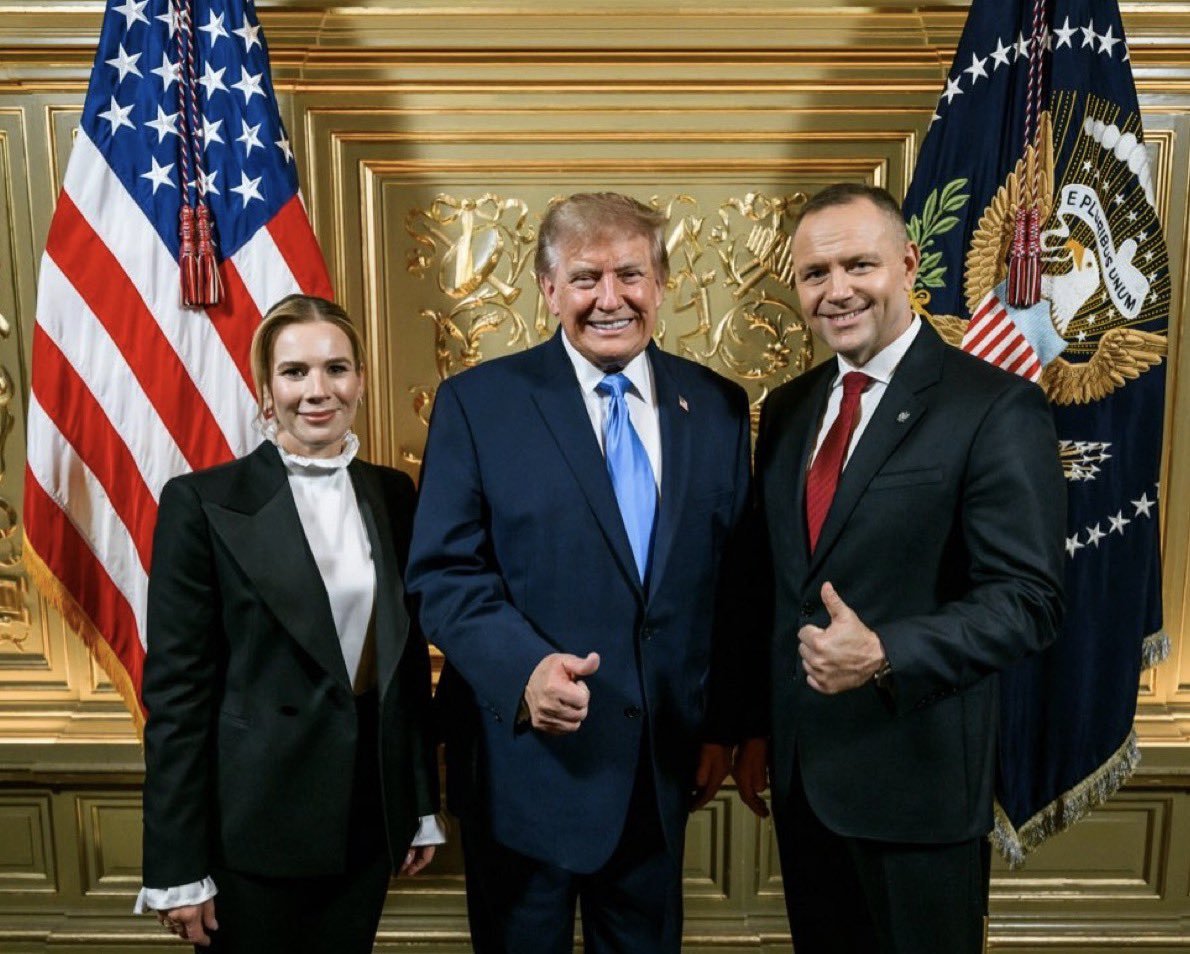
A connoisseur of the Soviet Union sharply criticized Nawrocki for posing for a friendly photo with a person whom the author deemed the main culprit of the global fuel crisis. He wrote that Nawrocki then delayed for two months before signing, during which time Poles paid more for fuel. He added that now Nawrocki agreed to a solution, but accused Tusk of it being insufficient. https://t.co/P2LxSfqEJO #kryzys #paliwa #Polska (translated)
The ORLEN Press Office reported that Poland was among the cheapest EU countries in terms of fuel prices: diesel was said to cost 2.7 PLN less than in Germany and 1.5 PLN less than the EU average. However, it noted that fuels were significantly more expensive than a year earlier. According to the office, the global fuel crisis, record-low reserves in Europe, the shutdown of additional refining installations, and supply disruptions are driving prices up on the markets. The office claimed that fuel companies and governments can mitigate the effects of the crisis but cannot completely eliminate them. It also accused the authors of false information of spreading AI-generated graphics suggesting fuel shortages and false reports about exports to Ukraine. In response to calls for reducing margins, ORLEN pointed out that over 1/3 of the fuels sold in Poland come from abroad, and prices depend on the global market. As a way to lower prices, the office mentioned reducing VAT and excise duties, referring to this as CPN. It also explained that, in its opinion, current fuel prices resulted not only from oil prices but also from the limited availability of refineries. Over the year, oil prices were expected to rise by 56%, and global diesel prices by 100%. Regarding supplies to Ukraine, the office stated that fuels were sold there at a higher profit than in Poland, and recipients paid in advance. It added that trains did not leave the terminal before recording payment, and the export prices compared by critics did not take into account local taxes. It also accused them of comparing last year's pre-war prices with current ones and attempting to undermine confidence in the state. #Polska #paliwa #kryzys (translated)
The government restored the package after Karol Nawrocki signed the law introducing a tax on excess profits, which fuel companies are to pay. #CPN #CenyPaliw #VAT (translated)
Summary info from the world 🌎. Friday, October 2 - 🇫🇷 France: uprising in 640 schools. Arson. - 🗳️ In 32 days elections in the USA - 🧑🍳 Restaurants pay 30-40% to delivery apps - ⛽️ Emergency meeting of EU states: fuel shortages and prices - 🏥 Hospital in Miastko went bankrupt - ✈️ The ninth F-35 landed in Łask - 🛢️ USA: "let the 🇪🇺 free its own diesel reserves" - 🇪🇺 ECB: Europe must develop its own AI - 🇵🇱 Trump: "I am watching the construction of a base in Poland" - 💻 Trump: we are buying shares in Anthropic and OpenAI - 🇨🇳 China banned the export of all fuels - 🇺🇸 IPO debut of Anthropic before November 26 - ☢️ Iran will allow inspectors when the USA lifts sanctions - 🚢 Aircraft carrier Roosevelt is heading to Iran - 🇮🇷 USA imposes new sanctions on Iran - 🇵🇱 Goldman is the leader in trading on the WSE - ⛽️🇵🇱 Fuel companies will pay an extra tax - ⚒️ KGHM is looking for investment opportunities - NATO meeting in Poland without key allies - 🇷🇺 Putin: diesel will not leave Russia until the end of sanctions - 🚀 SpaceX sends the 13th crew of astronauts - 🇱🇹 Lithuania is building a Leopard 2A8 tank facility - Day of Smiles. Worldwide. Wiesiek's daughter had straight A's in elementary school, which is why she didn't like to smile. 🙃 #świat #informacje #aktualności (translated)
On Thursday, October 1, 2026, President Karol Nawrocki announced in a message the signing of a law imposing a tax on extraordinary profits of fuel companies. #paliwa #DonaldTusk #podatek (translated)
"The government (on high fuel prices) earns huge billions of zlotys from additional revenues from VAT, excise duty, and fuel fees," assessed Jacek Sasin, an MP from PiS, in a Morning Conversation on RMF FM. #CenyPaliw #ObniżkiPodatków #GospodarkaPolska (translated)
I'm already a bit tired of this war Nawrocki–Tusk over who wants to lower fuel prices more and who will hit their opponent harder. On a daily basis, I deal with law and legislation, so instead of another press conference, I prefer to try to do something more useful. Let's think about whether it is possible to create a mechanism that works independently of who is currently in power and who lives in the Presidential Palace. Let's tentatively call it the Fuel Price Stabilization Mechanism - nothing more spectacular comes to mind. I’m not talking about flashy slogans like administrative price setting or the prime minister should lower it, or the president presented a bill, so the problem is solved. I’m talking about an automatic system established in law. I imagined it so that if for a certain period, the reference price of oil or wholesale fuel exceeds a set threshold, a temporary reduction in excise tax is automatically triggered. Without a political decision being made anew each time, because that leads to endless arguments at the expense of citizens. The law specifies in advance: - when the mechanism is triggered, - by how much the burden is reduced, - how long it operates, - when it automatically expires. Of course, within the limits of EU law. Because it is worth reminding a rather prosaic fact - a member state cannot arbitrarily eliminate fuel taxation. Here the 2003/96/EC directive comes in, determining minimum levels of taxation for gasoline and diesel. So just as it should be done - first the law and only then the slogans - I’m directing this to my favorite camp, the surroundings of the office. Now there remains a more important problem. If we lower the excise tax, the budget receives less money. This cost does not disappear, it does not magically evaporate. You can't just move it to the "someone may pay later" column. That’s why the mechanism should have a second arm - a temporary levy on the truly extraordinary portion of profits in the fuel sector. But not on the entire profit and definitely not on the normal operation of the enterprise. Not because the company dared to make a profit but solely from that portion that exceeds the previously defined reference level. The current government project wants to use a similar construct - the reference point is margins from 2025 increased by 20%, and only the excess is taxed. The tax rate in the project is 60%, and the projected revenues are about 4 billion PLN. The government indicates that the funds are meant to compensate for the loss of VAT and excise tax revenue resulting from protective actions. However, I would change one fundamental thing. Only PROSPECTIVELY. First, we establish the rule, then we apply it. Not the other way around. This significantly reduces the dispute over retroactivity and legal safety - the reason for Mr. Nawrocki's veto. Revenues from such a levy should be additionally separated and accounted for solely for the purposes of the stabilization mechanism. Then we can show the citizen a simple calculation: - the budget lost X from the temporary excise tax reduction, - the extraordinary levy brought Y, - and the difference is Z. No miracles or political alchemy - simplicity in full scope. But there is still one problem. If the state reduces the burden by 20 groszy per liter, it doesn’t automatically mean that the driver will see 20 groszy less on the sign. Part of the relief may be taken by the margin because who doesn’t want to make a profit... That’s why there should be parallel, public monitoring: - raw material price, - wholesale price, - taxes, - average margin, - retail price. If there is an anomaly, we have UOKiK and competition law instruments. There’s no need to immediately create a state office to set the price of diesel at 7:43 in the morning. And a final safeguard. The price returns below the statutory threshold for a certain period? The reduction expires, the levy expires. The system returns to normal mode. #ustawy #ceny #paliwa (translated)
Blocking government laws by Karol Nawrocki is pure madness when you calmly look at specific laws. In most cases, the same pattern occurs—ordinary people lose out while large corporations or the old system gain. Below are examples: 1. Tax Code Gained: the tax authorities, penalties for formal violations become harsher. Lost: taxpayers and companies that were supposed to receive lower penalties for formal shortcomings. 2. Oil, fuel, and gas reserves Gained: no one Lost: Poles, new rules were supposed to apply during the crisis 3. Mandatory insurance Gained: Insurance companies Lost: drivers and the market, if the amendment really simplified the OC; this was not checked before coming into effect. 4. Water supply and sewage Gained: the current tariff and municipal company system. Lost: municipalities and consumers, the law was supposed to regulate tariffs in their favor. 5. Road Traffic Law Gained: the old system Lost: carriers counting on EU e-permits that were to be implemented immediately. 6. Electoral Code Gained: the current, narrower voting model. Lost: voters who were supposed to receive a more widespread postal vote. 7. CIT and family foundations Gained: family foundations and individuals using them for optimization. Lost: the budget, i.e. Poles 8. Crypto-assets market Gained: crypto companies Lost: clients and supervision 9. Education Law Gained: schools and teachers sticking to the old calendar. Lost: the government's schedule for the new basis and the postponement of the eighth-grade exam. 10. Sugar tax and PIT on winnings Gained: beverage producers, stores, casino players; Lost: Poles, NFZ, and the budget 11. Alcohol excise tax Gained: breweries, distilleries, trade, alcohol buyers Lost: Poles, the budget 12. NCBR Gained: the current setup in the agency. Lost: greater oversight over NCBR 13. Active farmer Gained: individuals benefiting from agriculture without real farming Lost: farmers actively working, whom the law was supposed to strengthen. 14. SAFE Gained: Russia, USA Lost: Poland 15. Family Code Gained: no one Lost: childless couples who could part without court. 16. Shaping the agricultural system Gained: current land turnover restrictions. Lost: land buyers and companies wanting cheaper, simpler transactions. 17. SENT Gained: companies trading concrete and transport outside the broader SENT. Lost: Poles (1.2 billion) to the budget from tightening 19. Health care benefits Gained: the current NFZ benefits system. Lost: patients and facilities 20. Status of a close person Gained: no one Lost: couples, including same-sex ones, without a cohabitation agreement and the rights that come with it. 21. Public transport Gained: carriers with longer, 10-year contracts. Lost: eventually, passengers 22. Energy law Gained: the old system Lost: ultimately Poles 23. tax on extraordinary profits of fuel companies. Gained: big oil corporations, Lost: the budget. #Polska #Prawo #Społeczeństwo (translated)
Karol Nawrocki is facing criticism due to his veto of the fuel law, which could negatively affect the financial situation of Poles, who may blame him for the increase in prices at stations. #KarolNawrocki #PolskaPolityka #CenyPaliw (translated)

"paradoks polega na tym, że w czasie takiego kryzysu, gdzie te ceny światowe są bardzo, bardzo wysokie, to ci, którzy sprzedają produkt, tak jak Orlen i inne firmy paliwowe w Polsce, mają ten sam procent i im wyższa jest ta cena, tym oczywiście są wyższe zyski"Donald Tusk za namowami współpracowników wystąpił na YouTube, gdzie tłumaczy, dlaczego paliwo jest takie drogie. #cenyPaliw #DonaldTusk #PolitykaPolska