WRLD

Search

#sustainability
Gunther Fehlinger-Jahn 9h

The post’s author called on the United States to end sales of new diesel passenger cars by 2030, while retaining diesel for agriculture, trucks and tanks. They wrote that agriculture needed reliable heavy-duty machinery. https://t.co/QanyI19MMn #Diesel #Agriculture #Sustainability #US

1846
Jozef Síkela 12h

The author wrote that the Arctic’s future should be shaped by its people, saying their approach involved listening to and working with Arctic communities to keep the region secure, prosperous and sustainable.

1981
Krzysztof Iwanek 3d

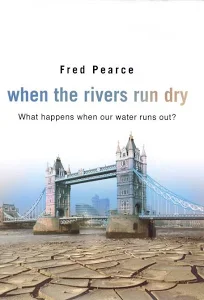
The post’s author said they had enjoyed Fred Pearce’s *When the Rivers Run Dry*, describing it as a book about shrinking water resources and their effect on relations between states. They said it also covered problems involving large dams, techniques for salvaging or recycling water, and India. https://t.co/BvOntbTEL6 #WaterCrisis #Sustainability #India #IN

2904
Alex is fine 3d

The author described the climate crisis as a water crisis, saying the Morava River near the Czech, Slovak and Austrian border, close to where it enters the Danube, had never been so low in the time they had lived there since 1980. They said it looked almost possible to cross on foot and called the level unprecedented. The author added that their mother had sent the image the previous day. https://t.co/U0j41B7AY3 #ClimateCrisis #WaterScarcity #Sustainability #CZ #SK #AT

3574
We Don't Have Time 4d

The post said that the expansion of AI and cloud computing was increasing data centres’ energy and water footprints. It added that Munters had highlighted the need for resource-efficient solutions to manage digital growth at Climate Week NYC 2026 and linked to further information from its partner.

3141
Daniel Obajtek 4d

The author referred to estimates by the International Energy Agency, which indicate that it would be possible to sustainably produce nearly 900 billion cubic meters of biogas, covering over 20% of the world's natural gas demand. He wrote that Poland should also focus on biogas and added that he mentioned this during the congress. https://t.co/j7xtADX4nr #biogaz #energia #sustainability #PL (translated)

2918
We Don't Have Time 4d

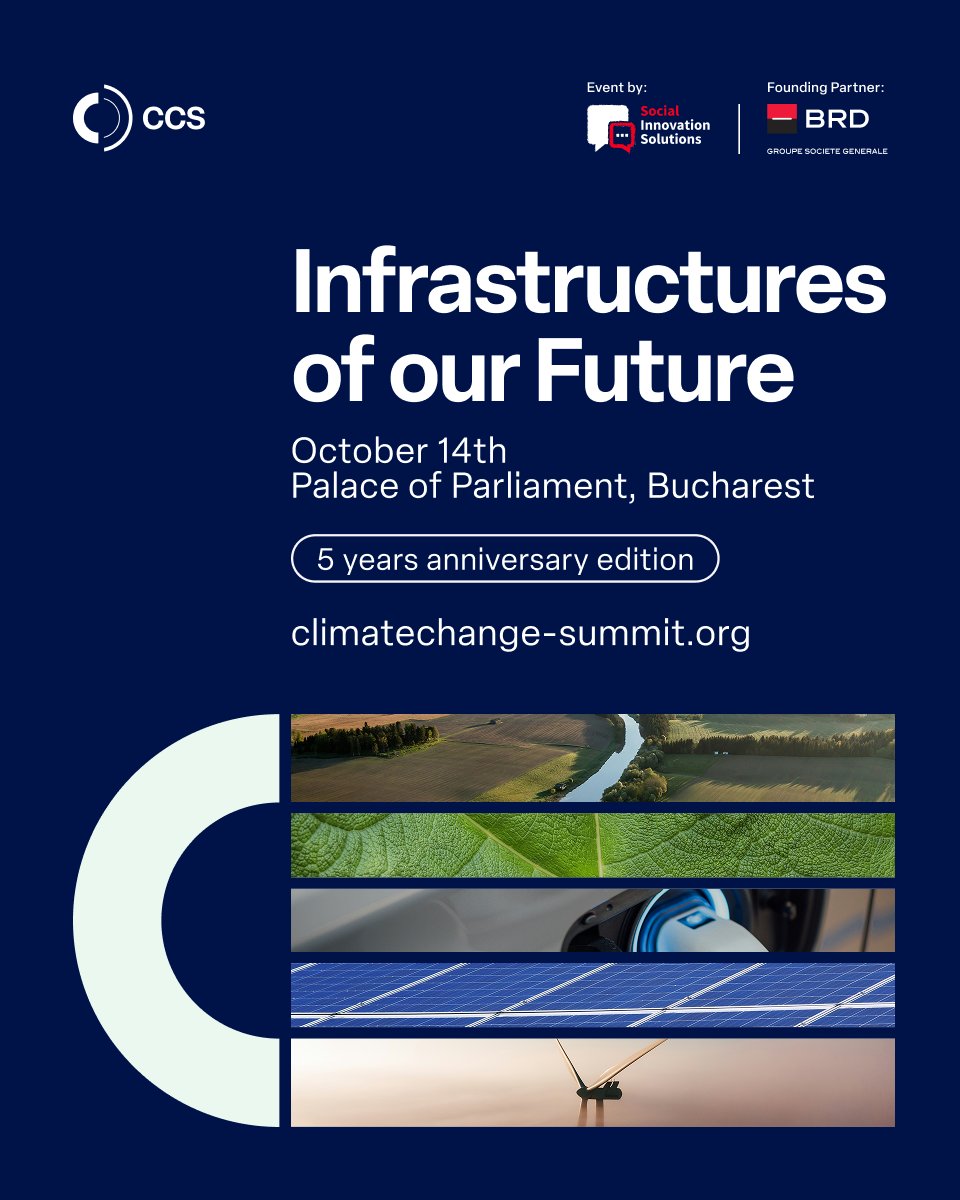
The author announced that the Climate Change Summit, which they described as Central and Eastern Europe’s leading event on climate action, would return on October 14 from Bucharest. They said discussions would cover biodiversity, the circular economy, agriculture, ESG and other topics, and invited readers to register. https://t.co/m0eVtaG1rK https://t.co/52g1ZQmuex #ClimateAction #Biodiversity #Sustainability #RO

3031
Paul Murphy 🇵🇸 4d

The author argued that the government had abandoned even the pretence of tackling the climate crisis, while selling increasing amounts of electricity, water and people’s data to data centres and AI. The post referenced Budget 2027.

3828
ERR 5d

The Estonian national football team rose five places in the FIFA rankings, achieving one win and three draws in the Nations League from four matches. #rannakalandus #kalapüük #Eesti (translated)

www.err.ee
Valmar Veste: rannakalandus vajab uute kohustuste asemel kaitset
1577
Dubravka Šuica 5d

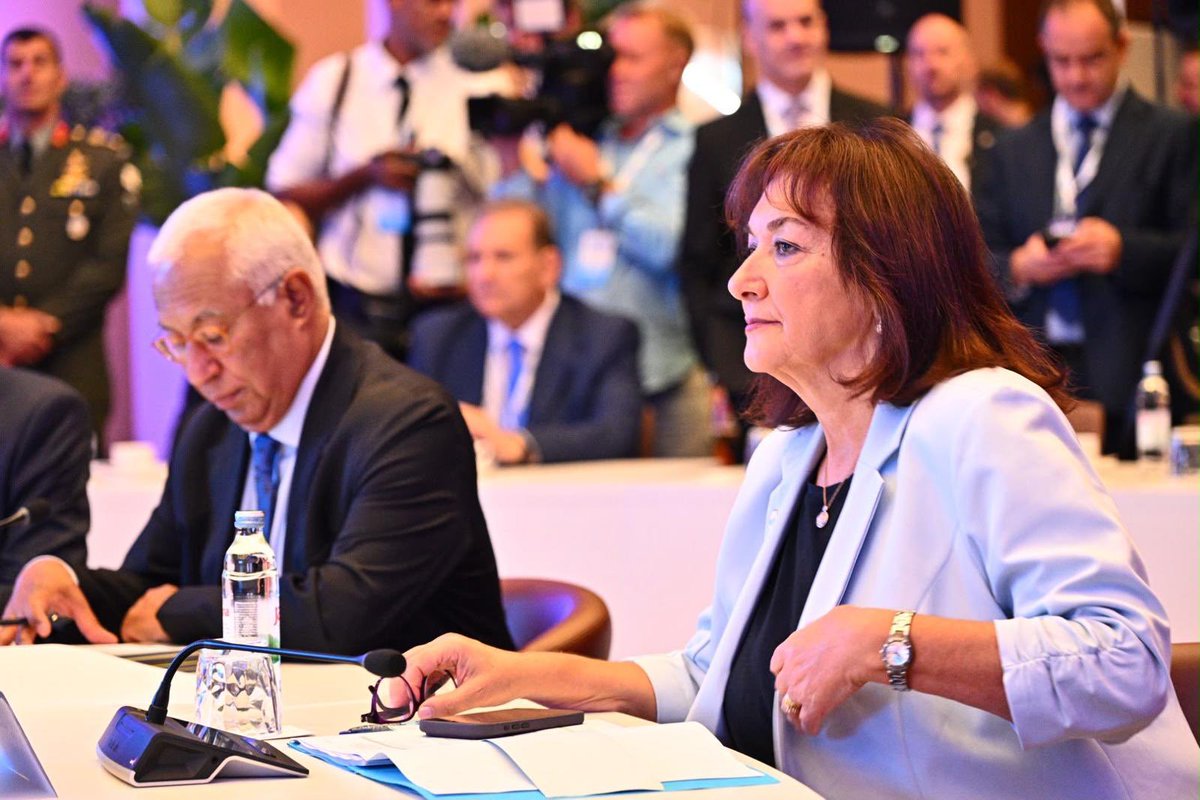
The author wrote that a safer, more sustainable and resilient Mediterranean meant a stronger Europe. At the MED9 Summit in Split, they said they were bringing a Mediterranean perspective to challenges including security, migration, energy, connectivity, water and climate. https://t.co/gG7qrJ30Rb #Mediterranean #Europe #Sustainability #EU #HR

2930
Gunther Fehlinger-Jahn 5d

The author called for an immediate halt to sales of new diesel passenger cars in Europe and the retirement of 10 million older diesel cars. They said Europe had around 98.3 million diesel passenger cars, representing about 38.4% of the EU-27 car fleet. https://t.co/hYhGfUwXhc #Diesel #Europa #Sustainability #EU

3389
Luciano Magaldi Sardella (PhD) 7d

CIVICO 33 — “ORTA NOVA SOUND LAB”: FROM CAPITANATA TO “BROADWAYWORLD”, THE “COMMUNITY BAND” PROJECT CONQUERS NEW YORK SOURCE: https://www.civico93.it/orta-nova-sound-laab-dalla-capitanata-a-broadwayworld-il-progetto-banda-di-comunita-conquista-new-york/ The social laboratory promoted by ANBG and the Ministry of Culture has landed on the world’s largest theatre network, thanks to the article co-authored by Chris Rabinowitz and the Orta Nova-born author Luciano Magaldi Sardella. There is a brass thread linking Piazza Mario Frasca to Broadway. It is called “Orta Nova Sound Lab” — the Community and Social Regeneration Band through Music — the project officially presented on 21 September last at the C-Lab MAO FM 19.77 of brothers Luca and Erminio Ferrandina, which is enjoying unprecedented media coverage for a band-cultural initiative born in the Province of Foggia. Its journalistic success was sealed on 28 September last by its arrival on BroadwayWorld, the world’s most authoritative portal dedicated to theatre and live performance, based in New York with over 1.5 million global monthly visits. A result that was by no means a foregone conclusion, which projects a story from the Apulian periphery into the international cultural news circuit. The article, entitled Orta Nova Sound Lab Launches Youth Community Band in Southern Italy, is jointly by-lined by New York editor Chris Rabinowitz, journalist for the American publication, and his Italian co-author Luciano Magaldi Sardella, an international author originally from Orta Nova, engineer, academic journalist, and researcher active between Italy and abroad. The dual Italo-American by-line symbolises how a “local good practice” can become global news when it is recounted with expertise and rootedness. The Project: The Band as Social Regeneration “Orta Nova Sound Lab” is promoted by the Associazione Nazionale Bande da Giro (ANBG), chaired by Benedetto Grillo, and was admitted for funding under the public call of the Ministry of Culture pursuant to Director General Decree of 7 April 2026, reg. no. 149, aimed at the “Strengthening of research activities and dissemination of musical practices in peripheries and in areas of high social vulnerability”. It is realized with the support of the Comune di Orta Nova and with the collaboration of a solid civic network: A.P.S. MAO FM 19.77, the Istituto di Istruzione Superiore “A. Olivetti”, the Istituto Comprensivo “Sandro Pertini”, the Music Art association, and the C.I.S.A. of Foggia. As BroadwayWorld itself emphasised, this is the first initiative in Italy to reinterpret the distinctive tradition of touring bands (bande da giro) and youth orchestras within a ministerial call dedicated to urban peripheries and social vulnerability. A model that dialogues explicitly with the spirit of the so-called “Caivano Decree” (Law Decree 123/2023) for combating youth distress, educational poverty, and juvenile crime. The idea, in its disarming simplicity, was summarised by the project director for ANBG, Antonella Spagnoletti: “The band is aggregation! The band is cohesion. Bringing these youngsters together, educating them, and enabling them to live in a manner different from the social-media world is among the primary objectives of our association.” A concept reiterated by the Mayor of Orta Nova, Eng. Domenico Di Vito: “This is an important project that can certainly make a difference compared with the past, because all the ingredients are there to network the entire cultural and social world that exists in Orta Nova and that must be valorised. The administration’s commitment is to ensure sustainability, structure, and continuity over time.” Taking part in the launch press conference, moderated by journalist Giuseppe Di Bisceglie, in addition to President Grillo, Director Spagnoletti, and Mayor Di Vito, were Regional Councillor Grazia Maria Starace, Councillor for relations with the third sector Sebastiano Battista, Councillor for Culture Vittoria Mastrogiacomo, and educational professor Alfredo Coppola, contact person for the Olivetti Institute. Why the Story Went International The “Orta Nova Sound Lab” band project demonstrates that when a project has anti-mafia roots, pedagogical value, and a credible institutional network, the press responds. From local and national titles such as Cassa Armonica, Ansa Puglia, TGNorba, Corriere della Sera Bari, RaiNews TGR Puglia, La Gazzetta del Mezzogiorno, Amica9TV, Brindisi In, Blasting News Italia, TRM Network, Secolo XIX, FoggiaToday, PlayNews24, Stato Quotidiano, and many others, which thoroughly documented the conference, the coverage reached “Broadway World”, which read the Orta Nova experience as a “social laboratory” capable of answering the mafia with music. This change of scale derives from joint work and also from the liaison work carried out by Luciano Magaldi Sardella, who, together with New York editor Chris Rabinowitz, succeeded in translating for an Anglophone audience the profound meaning of a town band which, in Apulia, is not folklore, but a civil garrison, a concrete alternative to the screen and to social disintegration. In a South often narrated only for its emergencies, Orta Nova chooses to be recounted for its capacity to generate community. And this time, the news has travelled around the world, starting from a piazza in the Daunia. The Calendar The pathway, which is entirely free of charge, provides instrumental workshops for wind and percussion, ensemble music lessons, and collective rehearsals with qualified teachers and conductors, open to aspiring musicians, families, schools, and citizens. The programme that has attracted the attention of the national and now international press is structured as follows: October 2026: parade of marching bands through the streets and public spaces of Orta Nova, to recover the historic value of the band as a popular and identity-based expression. November–December 2026: high-profile concert season with the Gran Concerto Bandistico di Conversano and the Gran Concerto Bandistico “Biagio Abbate” Città di Bisceglie, an artistic training ground for young pupils. Inclusion Focus: a special evening dedicated to women in music with the Orchestra Note di Puglia, an ensemble composed entirely of professional women musicians, to reinforce the values of equal opportunities. January 2027: first official concert of the newborn Community Band of Orta Nova, a foundational act and public restitution of the work accomplished. (translated)

www.civico93.it
"ORTA NOVA SOUND LaAB": DALLA CAPITANATA A "BROADWAYWORLD", IL PROGETTO “BANDA DI COMUNITA’ CONQUISTA NEW YORK - Civico93 | Be original
794
Jean Marc Morandini 1w

The author stated that the main French distributors had created an observatory aimed at measuring and accelerating their efforts against food waste. https://t.co/RRAhFHXRME #GaspillageAlimentaire #Alimentation #Sustainability #FR (translated)

We Don't Have Time 1w

Heidi Peltonen of Outokumpu said circularity had primarily been a business decision for the company. She explained that access to Europe’s only chromium mine and the use of material with up to 97% recycled content helped Outokumpu cut stainless steel’s carbon footprint by up to 75%. https://t.co/bVzf0MPcc9 #CircularEconomy #Sustainability #Recycling #EU

114
Krzysztof Graj 1w

AFRICA DAILY REPORT — 2 OCTOBER 2026 Major developments reported during the previous 24 hours. 1. ETHIOPIA / ERITREA — Diplomatic ties severed as northern conflict escalates Ethiopia ordered 10 Eritrean diplomats to leave within 48 hours and closed its embassy in Asmara, accusing Eritrea of supporting forces fighting the federal government. Eritrea responded by severing diplomatic ties. Explosions were also reported in Addis Ababa amid the renewed Tigray conflict, increasing concern that the fighting could broaden into a regional confrontation. Source: https://www.reuters.com/world/africa/explosions-heard-overnight-ethiopias-capital-diplomatic-sources-say-2026-10-01/ Additional source: https://apnews.com/article/a864e8cd442bade4531b8e7609f3216c 2. DR CONGO — Ebola response faces new risks as thousands flee affected camp Importance: 10/10 (Critical) Thousands of displaced residents fled the Kigonze camp in eastern DRC after soldiers entered the site and clashes followed, raising fears that Ebola transmission could spread further. The ongoing Bundibugyo Ebola outbreak has exceeded 8,000 confirmed cases and is already the largest Ebola outbreak recorded in DRC. Source: https://currently.att.yahoo.com/att/thousands-flee-congo-ebola-hit-161039707.html 3. DR CONGO — MSF staff member infected with Ebola Importance: 10/10 (Critical) Médecins Sans Frontières confirmed that a staff member working on the Ebola response tested positive for Bundibugyo virus disease and is being evacuated under strict medical protocols to the Netherlands. The latest reported national figures cited by Reuters were 8,067 confirmed cases and 3,901 deaths. Source: https://www.channelafrica.co.za/channelafrica/news/msf-staff-member-tests-positive-for-ebola-in-drc/ 4. ZAMBIA — IMF confirms talks on a successor support programme Importance: 9/10 (Very High) The IMF confirmed that a team is in Lusaka discussing a possible successor to Zambia's previous IMF-supported programme. Talks are focused on fiscal and debt sustainability, rebuilding reserves, and supporting more inclusive, private-sector-led growth. Source: https://www.imf.org/en/news/articles/2026/10/01/tr-10012026-imf-press-briefing-transcript-october-01-2026 5. KENYA / EAST AFRICA — $16 billion Lamu refinery project moves forward Importance: 9/10 (Very High) Five African heads of state joined the groundbreaking of Dangote Group's planned $16 billion refinery in Lamu. The planned 700,000-barrel-per-day facility could materially reshape East African fuel supply and reduce dependence on imported refined products, although land-rights litigation and environmental concerns remain. Source: https://apnews.com/article/a0ae7108ae4f4144222aea101baed3a5 6. SOUTH AFRICA — Gender-based violence drives new national response South African President Cyril Ramaphosa announced measures in response to a series of killings of women, after 11 women's bodies were found in Ekurhuleni since July, many showing signs of sexual violence. Investigators have made arrests in connection with several cases, while authorities continue investigating whether the murders are linked. Source: https://www.reuters.com/world/africa/violence-against-women-south-africa-is-national-shame-president-says-2026-09-30/ 7. ZAMBIA — Cholera outbreak reaches 304 cases and 11 deaths Importance: 8/10 (High) Zambian health authorities reported 304 cholera cases and 11 deaths as of September 29, with Lusaka the most affected province. Authorities have expanded case finding, water chlorination, household interventions and treatment services while assessing whether to deploy reactive oral cholera vaccination. Source: https://cajnewsafrica.com/2026/10/01/11-die-in-zambia-cholera-outbreak/ 8. UGANDA / REGIONAL MARKETS — Shilling hits record low as African currencies face pressure Importance: 8/10 (High) Uganda's shilling fell to a record low against the US dollar as importers, particularly in the energy sector, increased demand for foreign currency. Reuters also reported pressure on Zambia's kwacha and Ghana's cedi, while Kenya's shilling remained comparatively stable. Source: https://www.reuters.com/world/africa/africa-fx-ugandas-currency-seen-extending-losses-after-hitting-record-low-2026-10-01/ 9. MALI — More than 2,400 schools remain closed as academic year begins Importance: 8/10 (High) Mali began the 2026–27 school year with more than 2,400 schools still closed amid continuing insecurity. More than 733,000 children are directly affected, highlighting the long-term educational consequences of instability across the country. Source: https://fr.allafrica.com/stories/202610010154.html 10. ZIMBABWE — Investigation begins after fatal helicopter crash Importance: 7/10 (High) Zimbabwean authorities are investigating a helicopter crash near Marondera that killed prominent businessman Wicknell Chivayo, his wife and other occupants. Aviation investigators and forensic specialists have been deployed, while the cause remains under investigation. Source: https://www.dw.com/en/zimbabwe-helicopter-crash-wicknell-chivayo/a-79501691 Keywords: #Africa #AfricaNews #TopNewsOfAfrica #DRCongo #Ebola #EbolaOutbreak #EbolaResponse #PublicHealth #HealthSecurity #MSF #HumanitarianCrisis #Displacement #Uganda #UgandanShilling #AfricanCurrencies #ForeignExchange #FXMarkets #CurrencyPressure #AfricanMarkets #Zambia #Ghana #Kenya #Ethiopia #Eritrea #Tigray #HornOfAfrica #DiplomaticCrisis #RegionalConflict #RegionalSecurity #AfricanSecurity #Geopolitics #AfricaToday #wrldorg

1256
Maroš Šefčovič🇪🇺 2w

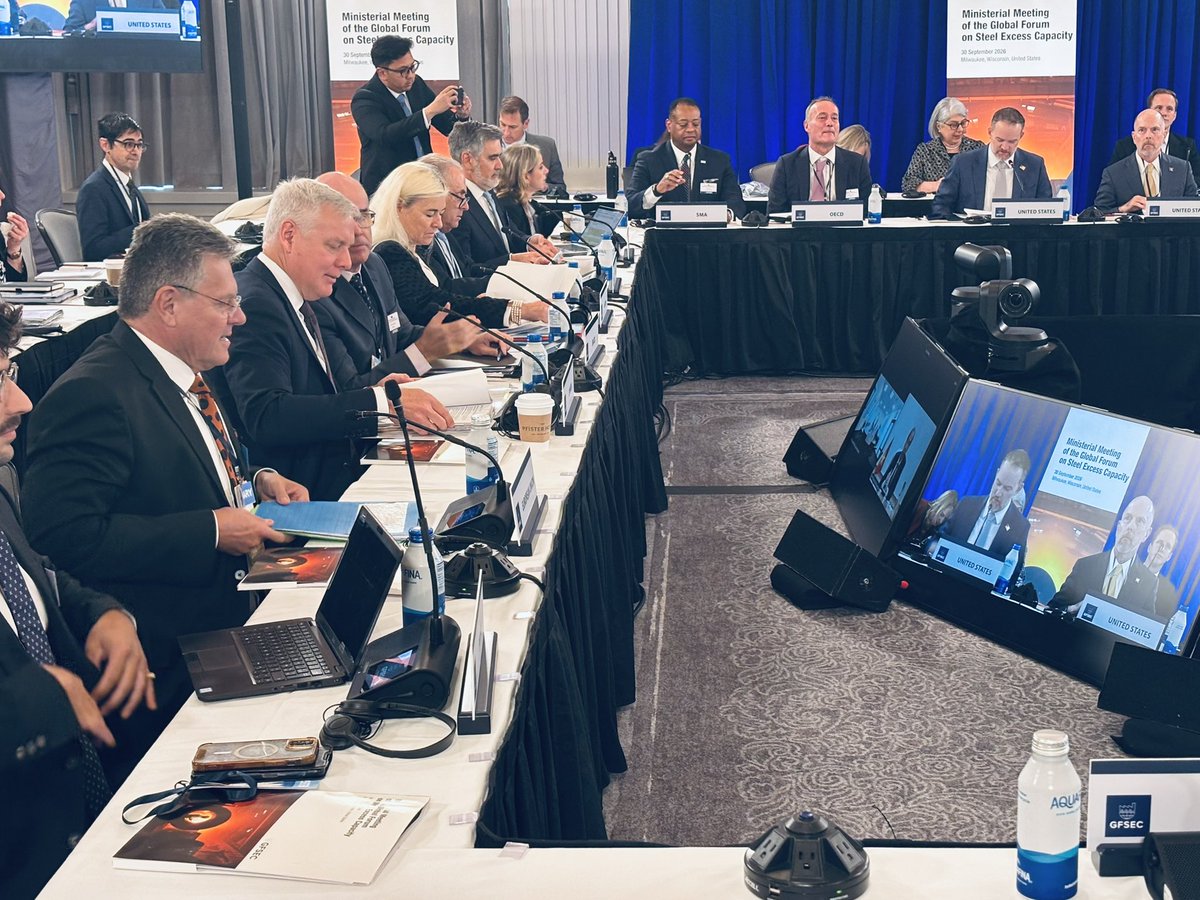
The author said global excess steel capacity would reach 725 million tonnes by 2028 and argued that collective action was necessary. They wrote that they had attended the Global Forum on Excess Steel Capacity (GFSEC), adding that the EU was stepping up and working with partners on solutions. https://t.co/guK576BjIc #Sustainability #ClimateAction #GlobalForum #EU

229
We Don't Have Time 2w

At Climate Week NYC, Martina Otto of the Climate and Clean Air Coalition warned that the number of air-conditioning units in Europe could rise from 1.6 billion to 5.6 billion, putting pressure on the grid and worsening urban heat. She said more urban greenery could lower temperatures by 4 to 12 degrees. https://t.co/pQZOtOnBo1 #ClimateChange #UrbanGreenery #Sustainability #EU

Luciano Magaldi Sardella (PhD) 2w

Mitico Magazine - The Teatro Edicola of San Severo: A Model of Cultural Revolution for Stanford University as Well Source: https://www.miticomagazine.com/territorio-e-sociale/teatro-edicola-di-san-severo-un-modello-di-rivoluzione-culturale-anche-per-la-stanford-university/ The Teatro Edicola in Via Tondi In San Severo, a singular metamorphosis has taken place: a newsstand abandoned for at least six years has found a new function and a new identity, transforming into one of the smallest and most unusual theatre stages in the world. An experiment born in the heart of the town which, in just a few months, has moved beyond local boundaries, attracting attention even overseas. It is called Teatro Edicola and it is a project conceived by the company Foyer '97, artistically directed by Francesco Gravino, which has brought the old newsstand in Via Tondi back to life through a formula that is both essential and surprising. Foyer '97 Foyer '97 APS was established as a formally constituted association active in the cultural sector in San Severo in 1997, born from the vocation of a group of actors, directors and theatre enthusiasts, with the aim of building a "living" and accessible theatre in the town. Over the years the company has developed a repertoire that includes texts from the classical tradition, contemporary dramaturgy, comedy and experimental projects, not limiting itself to the mere production of theatre shows, but also organising theatre courses and workshops and educational and cultural projects characterised by a strong inclusive ethos, particularly in schools. Foyer '97 does not always have a fixed artistic ensemble, but works with different performers and collaborators depending on the project; the only indispensable presence is that of Francesco Guido Gravino himself, actor, director and artistic director of the theatre company. The distinctive feature of Foyer '97 is certainly the value of social and cultural promotion attributed to theatre, the extremely close relationship with the audience and the search for a type of theatre outside conventional spaces, with cemeteries, trains, bell towers, and now a newsstand, as its backdrop. Six spectators, a few minutes and a minimal distance between stage and audience The project was launched on 27 March 2026, on the occasion of World Theatre Day, offering a theatrical experience built around a radical reduction of the conventional spaces and times of performance. The idea was born not only from the search for unconventional spaces, but also from "Edicola Fiore", the morning press review with a strongly ironic tone presented by Rosario Fiorello and Stefano Meloccaro, which was broadcast first only on Fiorello's social channels between 2011 and 2014, and then also on radio and television between 2016 and 2018. The review took its name from the diminutive of its founder, Fiore, and from the newsstand of a friend of Fiorello's in Via Flaminia Nuova in Rome, where the showman would meet early in the morning with a group of friends to read the newspapers. The San Severo newsstand was granted free of charge by its owner Pino Frau to the theatre group which, after obtaining temporary authorisation and institutional support from the Municipality of San Severo, refurbished it within two weeks at a cost of less than €3,000. Just six seats, a total surface area of 4 sq m, of which only 2 are for the stage area, less than a metre between actors and audience, a curtain, a lectern, two lights, performances lasting between 5 and 15 minutes, audience rotation every quarter of an hour: apparently minimal elements that end up subverting the usual relationship between stage and auditorium. Spectators, in fact, find themselves immersed in the stage action, in such proximity to the actors that every gesture, expression and word becomes immediately perceptible. In this way, theatre abandons its traditional spaces and insinuates itself into the everyday life of the street, becoming an intimate, concentrated and almost participatory experience. During the inaugural period admission was free with a subsequent voluntary donation from spectators; in the event of a more stable and longer-term concession, which could lead to seasonal theatre performances, the proposed ticket price would be €5. Audiences reward the experiment Foyer '97's gamble met with public interest right from the start: over 60 people attended the shows in a single afternoon, while the three days that inaugurated the season sold out. From a singular local experiment, the Teatro Edicola thus began to arouse curiosity even outside the province of Foggia, gradually transforming into a case of cultural and social interest, until it reached the American continent. From the province of Foggia to the "Stanford Social Innovation Review" The San Severo experience has now come under the international spotlight: in September 2026, the Stanford Social Innovation Review, an international journal and platform dedicated to social innovation published by the Stanford Center on Philanthropy and Civil Society at Stanford University in California, published on its website and in the Fall 2026 print edition the reportage "The Six-Seat Revolution", written by Dr Luciano Magaldi Sardella, independent journalist and researcher affiliated with the European Open University, and editorially supervised by deputy editor David V. Johnson. In the article, it is argued that the Teatro Edicola attracted attention overseas because the project concentrates cultural innovation, urban regeneration and proximity theatre into just a few square metres: starting from a real urban problem, it recovers an abandoned place with a modest investment, brings performance directly into public space and experiments with a much closer relationship between actors and spectators. From the point of view of theatrical representation, it also highlights how the format, based on micro-stories of five to twelve minutes, taken from great classics such as Goldoni, Chekhov, Ibsen, Euripides and Benni, and on audience rotation every fifteen minutes, transforms the physical limitations of the space into a precise dramaturgical choice, proving to be extremely innovative. All of this makes it possible to address some of the main critical issues in the sector: falling audience numbers, an exclusively elderly audience, reduced resources and distance from traditional cultural venues. The journal also highlights, however, the potential problems: economic sustainability, the need for stable institutional support and the difficulty of replicating the model, which is closely linked to the community and territory of San Severo. A model looking beyond San Severo Despite the difficulties, initial requests for information have already arrived from Lucca and Rome, where there is curiosity about the possibility of getting to know the model more closely and the steps needed to replicate it. The replicability formula, in fact, does not seem to require particularly costly infrastructure: an unused space, a targeted intervention, a cultural idea, in-depth knowledge of the surrounding area and a willingness to return that place to the community can be enough to trigger a new urban function. It is precisely in the disproportion between the modesty of the resources employed and the resonance generated by the initiative that perhaps the most original feature of the Teatro Edicola lies, certainly unique of its kind; there are, however, other examples in Italy of newsstands reused for other purposes: "Edicola 518", a twentieth-century kiosk abandoned in the centre of Perugia, now dedicated to independent publishing, art and cultural production; and in Rome itself, the abandoned newsstand in Piazza Testaccio used temporarily as a stage for a show by Fabio Morgan and the Erno newsstand in the Prati district, which almost every month offers a calendar of events, exhibitions, pop-ups and collaborations with artists and creative enterprises. Small revolutions, therefore, that tell stories of the reappropriation of urban spaces, of creativity and social innovation. And which, it is hoped, will take root in order to look ever further afield.

www.miticomagazine.com
Teatro Edicola di San Severo: un modello di rivoluzione culturale anche per la Stanford University
1032
Luciano Magaldi Sardella (PhD) 2w

Mitico Magazine - The Teatro Edicola of San Severo: A Model of Cultural Revolution for Stanford University as Well Source: https://www.miticomagazine.com/territorio-e-sociale/teatro-edicola-di-san-severo-un-modello-di-rivoluzione-culturale-anche-per-la-stanford-university/ The Teatro Edicola in Via Tondi In San Severo, a singular metamorphosis has taken place: a newsstand abandoned for at least six years has found a new function and a new identity, transforming into one of the smallest and most unusual theatre stages in the world. An experiment born in the heart of the town which, in just a few months, has moved beyond local boundaries, attracting attention even overseas. It is called Teatro Edicola and it is a project conceived by the company Foyer '97, artistically directed by Francesco Gravino, which has brought the old newsstand in Via Tondi back to life through a formula that is both essential and surprising. Foyer '97 Foyer '97 APS was established as a formally constituted association active in the cultural sector in San Severo in 1997, born from the vocation of a group of actors, directors and theatre enthusiasts, with the aim of building a "living" and accessible theatre in the town. Over the years the company has developed a repertoire that includes texts from the classical tradition, contemporary dramaturgy, comedy and experimental projects, not limiting itself to the mere production of theatre shows, but also organising theatre courses and workshops and educational and cultural projects characterised by a strong inclusive ethos, particularly in schools. Foyer '97 does not always have a fixed artistic ensemble, but works with different performers and collaborators depending on the project; the only indispensable presence is that of Francesco Guido Gravino himself, actor, director and artistic director of the theatre company. The distinctive feature of Foyer '97 is certainly the value of social and cultural promotion attributed to theatre, the extremely close relationship with the audience and the search for a type of theatre outside conventional spaces, with cemeteries, trains, bell towers, and now a newsstand, as its backdrop. Six spectators, a few minutes and a minimal distance between stage and audience The project was launched on 27 March 2026, on the occasion of World Theatre Day, offering a theatrical experience built around a radical reduction of the conventional spaces and times of performance. The idea was born not only from the search for unconventional spaces, but also from "Edicola Fiore", the morning press review with a strongly ironic tone presented by Rosario Fiorello and Stefano Meloccaro, which was broadcast first only on Fiorello's social channels between 2011 and 2014, and then also on radio and television between 2016 and 2018. The review took its name from the diminutive of its founder, Fiore, and from the newsstand of a friend of Fiorello's in Via Flaminia Nuova in Rome, where the showman would meet early in the morning with a group of friends to read the newspapers. The San Severo newsstand was granted free of charge by its owner Pino Frau to the theatre group which, after obtaining temporary authorisation and institutional support from the Municipality of San Severo, refurbished it within two weeks at a cost of less than €3,000. Just six seats, a total surface area of 4 sq m, of which only 2 are for the stage area, less than a metre between actors and audience, a curtain, a lectern, two lights, performances lasting between 5 and 15 minutes, audience rotation every quarter of an hour: apparently minimal elements that end up subverting the usual relationship between stage and auditorium. Spectators, in fact, find themselves immersed in the stage action, in such proximity to the actors that every gesture, expression and word becomes immediately perceptible. In this way, theatre abandons its traditional spaces and insinuates itself into the everyday life of the street, becoming an intimate, concentrated and almost participatory experience. During the inaugural period admission was free with a subsequent voluntary donation from spectators; in the event of a more stable and longer-term concession, which could lead to seasonal theatre performances, the proposed ticket price would be €5. Audiences reward the experiment Foyer '97's gamble met with public interest right from the start: over 60 people attended the shows in a single afternoon, while the three days that inaugurated the season sold out. From a singular local experiment, the Teatro Edicola thus began to arouse curiosity even outside the province of Foggia, gradually transforming into a case of cultural and social interest, until it reached the American continent. From the province of Foggia to the "Stanford Social Innovation Review" The San Severo experience has now come under the international spotlight: in September 2026, the Stanford Social Innovation Review, an international journal and platform dedicated to social innovation published by the Stanford Center on Philanthropy and Civil Society at Stanford University in California, published on its website and in the Fall 2026 print edition the reportage "The Six-Seat Revolution", written by Dr Luciano Magaldi Sardella, independent journalist and researcher affiliated with the European Open University, and editorially supervised by deputy editor David V. Johnson. In the article, it is argued that the Teatro Edicola attracted attention overseas because the project concentrates cultural innovation, urban regeneration and proximity theatre into just a few square metres: starting from a real urban problem, it recovers an abandoned place with a modest investment, brings performance directly into public space and experiments with a much closer relationship between actors and spectators. From the point of view of theatrical representation, it also highlights how the format, based on micro-stories of five to twelve minutes, taken from great classics such as Goldoni, Chekhov, Ibsen, Euripides and Benni, and on audience rotation every fifteen minutes, transforms the physical limitations of the space into a precise dramaturgical choice, proving to be extremely innovative. All of this makes it possible to address some of the main critical issues in the sector: falling audience numbers, an exclusively elderly audience, reduced resources and distance from traditional cultural venues. The journal also highlights, however, the potential problems: economic sustainability, the need for stable institutional support and the difficulty of replicating the model, which is closely linked to the community and territory of San Severo. A model looking beyond San Severo Despite the difficulties, initial requests for information have already arrived from Lucca and Rome, where there is curiosity about the possibility of getting to know the model more closely and the steps needed to replicate it. The replicability formula, in fact, does not seem to require particularly costly infrastructure: an unused space, a targeted intervention, a cultural idea, in-depth knowledge of the surrounding area and a willingness to return that place to the community can be enough to trigger a new urban function. It is precisely in the disproportion between the modesty of the resources employed and the resonance generated by the initiative that perhaps the most original feature of the Teatro Edicola lies, certainly unique of its kind; there are, however, other examples in Italy of newsstands reused for other purposes: "Edicola 518", a twentieth-century kiosk abandoned in the centre of Perugia, now dedicated to independent publishing, art and cultural production; and in Rome itself, the abandoned newsstand in Piazza Testaccio used temporarily as a stage for a show by Fabio Morgan and the Erno newsstand in the Prati district, which almost every month offers a calendar of events, exhibitions, pop-ups and collaborations with artists and creative enterprises. Small revolutions, therefore, that tell stories of the reappropriation of urban spaces, of creativity and social innovation. And which, it is hoped, will take root in order to look ever further afield.

www.miticomagazine.com
Teatro Edicola di San Severo: un modello di rivoluzione culturale anche per la Stanford University
1032
Mariya Gabriel 2w

AI needs trusted journalism, and trusted journalism needs a sustainable future. Timely piece by @orskov's (@NewspaperWorld CEO) on fairer value exchange between AI, tech platforms and news publishers, and @UNESCO’s work on Fair Compensation for News. 👉https://t.co/kD6xylEwrJ #AI #Journalism #Sustainability #Therearenospecificcountryreferencesinthetweetyouprovided.Hence #therearenocountrycodestoreturn.