WRLD

Search

#Abundance
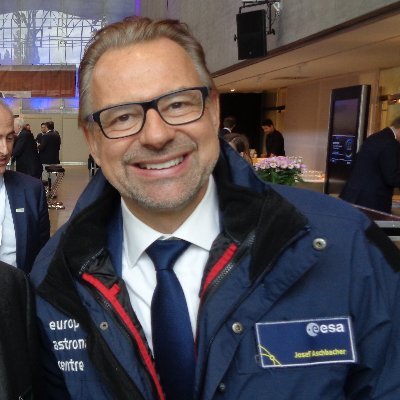
Josef Aschbacher 3d

The author said Sophie had returned safely to Earth after a record-breaking 237-day mission. They said she had completed three spacewalks, set a European endurance record and delivered a substantial amount of scientific work, adding that she had made Europe proud. #Espace #ExplorationSpatiale #RetourSurTerre #EU (translated)

3810
We Don't Have Time 4d

The author argued that “clean versus cheap” was a false choice, saying a post-fossil society would involve not only reducing emissions but also enabling abundant clean energy. The post directed readers to an article for further reading.

2694
David Marcus 2w

The author wrote that there was still some time, but not much, and argued that abundance and progress would rapidly accumulate for those equipped with the best AI-powered tools.

Anna-Kaisa Ikonen Sep 9

Technology is not the goal. It is a means to build better services and stronger communities. This requires strong trust; something Finland has in abundance. The UN’s ITU and UN-Habitat gathered in Tampere for an AI conference, in a city at the forefront of digitalisation and AI. https://t.co/r36KyIvcx5 #Digitalisation #AI #TrustInTech #FI

S
Sandfeen Aug 28

The Deadly Seduction of Democratic Socialism Young people are being urged to support “democratic” socialism—ideas blamed for tens of millions of deaths in the last century—promising that consent will make it work this time. But consent cannot make an economic system wise. A ballot cannot set the right prices for wages, goods, or services, nor prevent shortages, repression, or famine. This isn’t fringe. New York elected Zohran Mamdani, who says there should be no billionaires and backs rent freezes, state-run grocery stores, free CUNY, and higher taxes. Polling shows strong support for socialism and communism among Americans under 30. The core error is believing resources can be taken from creators and transferred without losing the knowledge that made them productive. Mao’s China illustrates the outcome: land reform dispossessed and killed landowners, production collapsed as local expertise was treated as an enemy, and grain seizures during the Great Leap Forward worsened a catastrophic famine. The lesson: destroying incentives, property rights, and local knowledge destroys production itself. Envy is often disguised as justice. Communist regimes cultivated resentment and turned grievance into political energy, making societies less focused on creating wealth and more focused on making others lose it. Even when central planners tried to subordinate families to the state, people preserved knowledge through markets, private plots, and community practice. Civilization isn’t a machine bureaucrats can redesign. Take away property and you don’t automatically transfer knowledge—abundance can vanish with it. Redistribution may promise equality, but if it destroys the people, incentives, and knowledge that produce abundance, the result is a hungry one.

820
S
Sandfeen Aug 28

Five Thomas Sowell Lessons the West Refuses to Learn The West has proven Thomas Sowell right: “compassionate” policies often ignore trade-offs and incentives. Sowell offers no villains—only reality. 1) **Ask the right question.** Poverty is the default; prosperity is what needs explaining. Study what creates abundance, not inequality as automatic proof of injustice. 2) **Pick your poison.** There are no perfect solutions, only costs and benefits. Every policy uses scarce resources and shifts who pays. No free lunch. 3) **Leaders need skin in the game.** It’s dangerous to grant power to people insulated from consequences. When decision-makers aren’t harmed by error, bad choices spread. 4) **Keeping what you earn isn’t greed.** Treating production as selfish and redistribution as virtue inverts morals—and concentrates power in those who control taking and giving. 5) **Judge ideas by outcomes, not vibes.** The West keeps discarding institutions that worked because their reasoning feels unfashionable. Sowell’s core point: reality ignores intentions—scarcity, incentives, and consequences still rule.

469
S
Sandfeen Aug 28

Why Weak Societies Choose Tyranny The pinnacle of tyranny would be a system that allows politicians, elites, and bureaucrats to control a population without force or coercion because the people love their servitude. Aldous Huxley wrote Brave New World, an eerily relatable dystopian novel, with this idea at the forefront. Unlike Orwell’s 1984, there is no overt oppression. The state does not have to stamp on human faces with its jackboots or erect an inescapable surveillance state. Rather, the people of Brave New World happily chain themselves with meaningless pleasure and distractions. The authorities do not rule through terror and rage, the central elements of 1984, but instead give the people everything they ever wanted. A pharmaceutical called Soma becomes the opiate of the masses. Mustapha Mond, the World Controller, likens it to Christianity without tears. While religion requires years of moral training, Soma allows citizens to achieve peace simply by swallowing tablets. It is the perfect escape from reality, a holiday from the facts. Lenina, the female counterpart to the protagonist Bernard, cannot comprehend why he refuses Soma, preferring discomfort to something that can remove it. When Bernard states, “I’d rather be myself, myself and nasty, not somebody else, however jolly,” Lenina sees this as a sort of pathology and repeatedly encourages him to take the wonder drug. Bernard explains, “I want to know what passion is.” He understands that there is more to life than merely being content, craving genuine experience, including suffering and intensity, rather than being emotionally regulated by the World State. Lenina’s bewilderment stems from her conditioning to regard unhappiness as a technical problem, encapsulated in the society’s common saying that “a gram is better than a damn.” The people of Brave New World are not captives but satisfied customers. Children are produced by the scientific state, relieving people of the responsibility of parenthood. This grants them the ability to engage in promiscuity, where everyone belongs to everyone else, while filling their free time with cheap entertainment and endless sporting events—what would be referred to as slop today. As Neil Postman observed, Orwell saw totalitarianism through the lens of fear, while Huxley saw it through pleasure. There was no need to ban a book in Brave New Worldbecause there was no one who wanted to read one. An abundance of low-quality information rendered censorship unnecessary because no one could hear the truth through all the noise. Huxley threw shade at civil libertarians who passionately opposed tyranny because they failed to take into account man’s almost infinite appetite for distractions. Humanity in its rawest form is portrayed by John the Savage, an outsider free from the World State’s conditioning. Upon coming face-to-face with this spiritually neutered society, he completely rejects it: “I don’t want comfort, I want God, I want poetry, I want real danger, I want freedom, I want goodness, I want sin.” Huxley’s dystopia is not imposed on an unwilling population but instead requested by a hollow one. Which leads us to the question: How do people become so weak that they get on their knees and beg for totalitarianism? Good times make bad times possible. Once a certain level of luxury and safety is achieved, people start to resemble the hobbits from the Shire. They are so far removed from evil that they forget it even exists and become defenseless in the face of it. Andrew Lobaczewski, who studied the psychology of totalitarianism from inside Poland’s communist takeover, wrote: “During good times, people progressively lose sight of the need for profound reflection. They lose the capacity to differentiate human nature, and emotion begins to dominate intellect. Once a critical mass starts operating on the pleasure principle, any excess mental effort seems like pointless labor.” Lobaczewski warned that it is not as simple as some people losing the ability to think rationally. It is worse, because those people then shame anyone capable of doing so. A clever, liberal, and merry individual is a good sport. A more far-sighted person predicting dire results becomes a wet blanket, a killjoy. The ability to have uncomfortable conversations without emotion taking over is, in Lobaczewski’s view, an indicator of whether a society’s future will be good or bad. It is easier to think about pleasant things. This leads people to eliminate any data or facts that cause them discomfort. That becomes a habit and eventually a custom accepted by society at large. Once the general populace accepts that inconvenient truths should be left unsaid, it becomes incapable of reaching correct conclusions. After all, how could you ever describe a picture that you refuse to look at? “Catastrophe waits in the wings of the communities that lose the capacity for psychological reason and moral criticism,” Lobaczewski wrote. “It is on the other side of this weakening of thought that the processes of the generation of evil are intensified at every social scale until they give rise to bad times.” It is precisely man’s dreams of happiness that can lead to chaos and suffering. This hedonistic view of happiness contains the seeds of misery, feeding the eternal cycle whereby good times give birth to bad times. Friedrich Nietzsche viewed socialism as demanding comfort for the greatest number of people possible. To question whether it is good for the masses to live in comfort has become a form of heresy. This reveals the spiritual atrophy that so many suffer from. Considering only the weak believe comfort to be a virtue, it is what Carl Jung would describe as the infantile dream state of mass dependency: the desire to gently slip back into the kingdom of childhood, into the paradise of parental care. Except this lack of friction has consequences. The perfect state destroys the soil in which great intellect grows. Genius, struggle, passion, strength, and wisdom are required to build a safe and abundant society. Yet once a certain level of comfort is achieved, it can destroy the very virtues required to obtain it. Nietzsche observed that it is the warmest heart that aims to alleviate suffering and hardship but fails to realize that it thereby wills the destruction of its own foundation. Comfort breeds mediocrity, which is then called good. Small people want one thing above all: that no one hurt them. We have taken this pathology to such a degree that we now obsess over hurt feelings and call this virtue. Pleasure, in its proper place, is a byproduct of meaningful goals, not a goal in itself. Aristotle saw that pleasure and comfort distort perception and proper judgment. While they do not cause us to misjudge something like geometry or mathematics, they can destroy our ability to decide what is worth pursuing and, therefore, what to do. Consider The Odyssey. Homer depicts Odysseus’ men on the island of the Lotus-Eaters, where they taste the fruit and lose all desire to go home. Much like Huxley’s Brave New World, they are not imprisoned. Rather, they simply stop wanting anything more. Odysseus has to drag his men back to the ships while they weep to stay. This is what comfort can do to men. It empties them of purpose. We intuitively understand this but fail to apply it to our own lives. We must make the same choice as Odysseus when he refuses Calypso’s offer of endless comfort and immortality. He knows she is more beautiful than his wife Penelope waiting at home. He knows that he and Penelope will grow old and die, a fate he could avoid by staying with Calypso. No one who reads these stories wishes he had stayed. We want him to choose the hard way home because if he took the offer, he would stop being admirable. Yet staying is exactly what our modern society asks of us. We are told that the island is the good life. But what happens to the man who caves to this temptation? In Thus Spoke Zarathustra, Nietzsche imagines a risk-averse society taken to its logical endpoint. The elimination of all struggle produces a man so diminished that he fails to possess even self-contempt or higher aspiration. Safety and sameness become the highest goals, creating “no shepherd in one herd.” Anyone who seeks to be anything more than normal becomes an aberration to be dealt with. Or, as Nietzsche puts it, they have “made the wolf a dog in man himself, man’s best domestic animal.”

1055
S
Sandfeen Aug 28

The Pinnacle of Tyranny The pinnacle of tyranny would allow politicians, elites, and bureaucrats to control a population without force or coercion—because the people love their servitude. Aldous Huxley’s *Brave New World* explores this idea through an eerily relatable dystopian society. Unlike Orwell’s *1984*, Huxley’s world contains no obvious oppression. The state does not need to “stamp on a human face—forever.” Instead, citizens willingly chain themselves to pleasure and distraction. Authorities do not rule through terror, but by giving people everything they think they want. Soma, a government-approved drug, becomes the opiate of the masses. Mustafa Mond, the World Controller, compares it to Christianity without the suffering. By swallowing a few tablets, citizens can escape reality—a temporary holiday from the facts. Lenina cannot understand why Bernard refuses Soma, preferring discomfort to something that can remove it. When Bernard says, “I’d rather be myself, myself and nasty, not somebody else, however jolly,” Lenina views his desire for authenticity as a kind of illness. Bernard wants to experience passion and recognizes that life involves more than contentment. He craves genuine experience, including suffering and intensity, rather than emotional regulation by the World State. Lenina’s confusion results from her conditioning, which teaches her to view unhappiness as a technical problem. This belief is captured by the saying, “A gram is better than a dam.” The citizens of *Brave New World* are not captives but satisfied customers. Children are produced by the state, relieving people of the responsibilities of parenthood. Their free time is filled with promiscuity, cheap entertainment, and endless sporting events—what might be called “slop” today. As Neil Postman observed, Orwell saw totalitarianism through fear, while Huxley imagined a society where oppression would be unnecessary because people would willingly surrender themselves to pleasure. There would be no need to ban books, because no one would want to read them. An abundance of low-quality information would make censorship unnecessary; the truth would be drowned out by noise. Huxley warned that people’s “almost infinite appetite for distractions” could make tyranny not only possible, but welcome.

938
Gunther Fehlinger-Jahn Aug 21

CO₂ IS NOT THE ENEMY. PUTIN IS THE ENEMY. Europe needs climate realism, energy abundance, industrial strength and strategic clarity. CO₂ is a greenhouse gas. Yes, Europe should reduce emissions. We should electrify transport and heating, expand nuclear energy and renewables, https://t.co/XeLj7DbPjw #ClimateRealism #EnergyAbundance #StrategicClarity

235
Isabella M Weber Aug 18

The absurd thing about this whole Ordinary Abundance hype is that the life it portrays is actually out of reach for too many. Instead of a peaceful apartment you are dealing with loud neighbors in a crowded space, pollution and perhaps traffic noise, and are worried that your https://t.co/V1Qn7pLhKh #OrdinaryAbundance #UrbanLiving #RealLifeStruggles #Thetweetdoesnotmentionanyspecificcountries.Therefore #therearenocountrycodestoreturn.

353
S
Sandfeen Jul 16

Bret Weinstein said something that won’t leave my head: For the first time in 300,000 years of human evolution, we removed the cost from the single biggest reward nature ever invented — sex and pair-bonding. Reliable birth control + abortion = you can now cash the evolutionary lottery ticket without paying the 20-year mortgage of pregnancy, diapers, sleepless nights, and college funds. Result? An entire generation of 18–35-year-olds walking around with the energy, libido, hormones, and protective instincts that evolution spent millions of years calibrating for child-rearing… but with zero actual children. That energy didn’t disappear. It got redirected. Heather Heying’s observation is brutal: young women especially began treating ideologies the exact way evolution wired them to treat babies. Climate change, social justice, whatever the cause of the month is — it gets defended with literal mama-bear ferocity, the same neurochemistry that once guarded a toddler from predators now guards an abstract idea from wrong think. And now Elon is promising the second shoe is about to drop: AI-driven abundance will make money as “free” as sex became in the 1970s. Both of evolution’s primary carrots — mating and resource acquisition suddenly cost almost nothing. Weinstein’s ice-cold question: When producing and protecting actual children is no longer the central organizing principle of adult life… and when creating wealth is no longer required for status, security, or attracting a mate…What is left to give a human life direction, meaning, and structure? https://x.com/Bitcoin_Teddy/status/2077512782430486720

x.com
Teddy - PolyBackTest.com (@Bitcoin_Teddy) on X
Oficina de Respuesta Oficial Jun 27

El Presidente @JMilei, en The Abundance Revolution con Ismael Cala, sobre la transformación de la política social argentina, el fin de los intermediarios que se apropiaban de los planes y la filosofía liberal que guía al Ministerio de Capital Humano, orientada a construir individuos libres en lugar de eternizar la dependencia del Estado: “Nosotros, como liberales, queremos individuos libres. Entonces desarrollamos el Ministerio de Capital Humano. Tiene un bloque que es Niñez y Familia, para que cuando llegan los niños al mundo tengan asistencia, porque sus primeros tres años son fundamentales. El otro bloque, que por las complejidades que tiene su ministerio aparte, es el tema de la salud, porque si vos no estás bien en términos de salud no vas a poder formarte, no vas a poder desarrollarte. El tercer bloque tiene que ver con la educación. De hecho, estamos haciendo una revolución educativa. Y eso después tiene que enlazar con el mundo del trabajo. Y eso, digamos, no solo implica —por ejemplo, nosotros recientemente sacamos una Modernización Laboral— porque el 50% de la fuerza laboral en Argentina está en el mercado informal. Nosotros logramos sacar 14 millones de personas de la pobreza”. #RevoluciónEducativa #LibertadIndividual #PolíticaSocial

12610
SAPO Apr 27

Robin Wall Kimmerer's book "The Economy of the Gift" explores the intersection of science and Indigenous knowledge, advocating for a new economic perspective rooted in reciprocity and the natural world's abundance, contrasting it with contemporary market-based economies that prioritize scarcity and accumulation. #EcologicalEconomics #IndigenousWisdom #Sustainability

sapo.pt
Robin Wall Kimmerer, professora de Biologia Ambiental: a economia está errada e a natureza diz-nos porquê
8989
Watcher.Guru Jan 22

JUST IN: Elon Musk says AI and robots will cause an "explosion" in the global economy. "This is the path to abundance for all." https://t.co/m8cT63jNOS -

55547
J
jack Dec 8

Why We Feel Overwhelmed <p><em>We’re overwhelmed by all the things we have on our plates, all the interruptions and messages and emails, all the things online and on social media, all the news, and chaos of the world, and all the things going on in our relationships. It’s a lot! We can celebrate the abundance of our lives, but often we bemoan it.</em></p><p><strong>The problem isn’t the abundance, but our fear and anxiety about all of it.</strong> Actually, for most of us, the fear is that we’ll let people down. We’ll drop one of the many balls we have in the air and let people down, or worse yet, we’ll drop them all and we’ll be exposed as inadequate!</p>

olda2 Dec 4

Abundance - Károly Lotz - , genre: allegorical painting, style: Academicism, completition: 1884.