WRLD

Search

#Consumption
Gunther Fehlinger-Jahn 3d

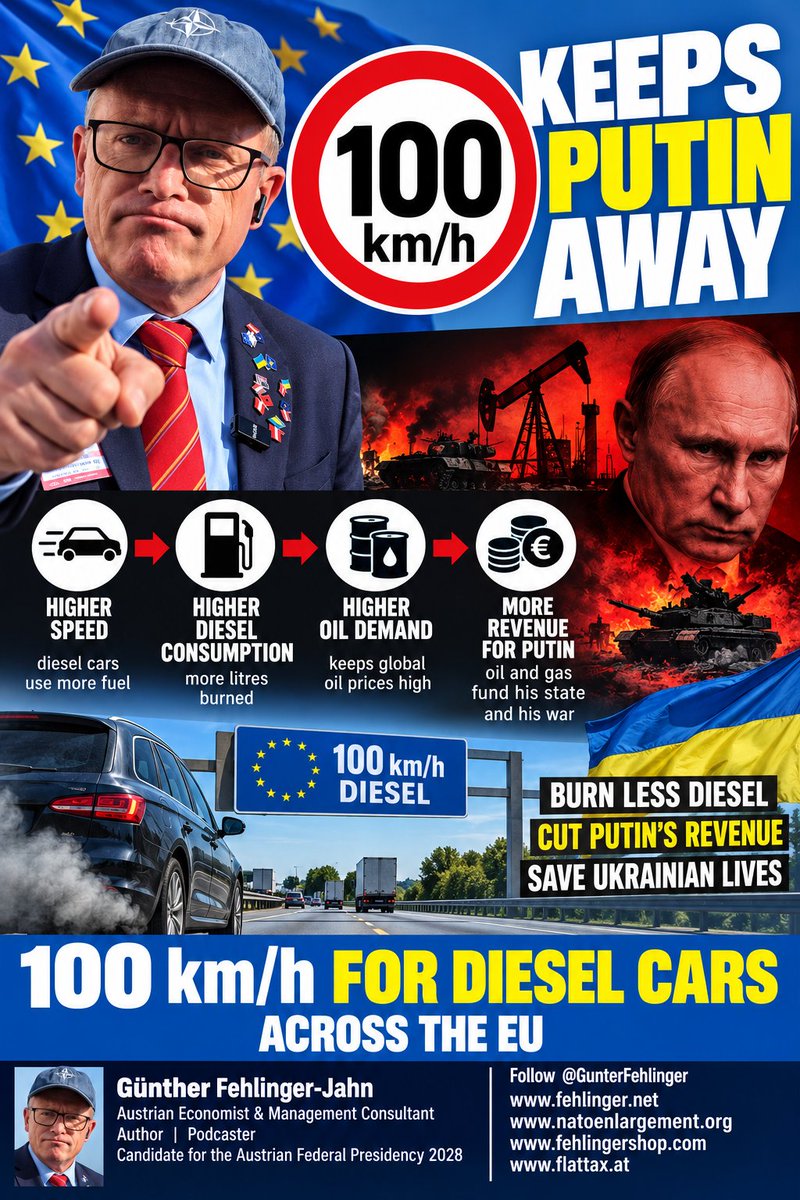
The post argued that driving at 100 km/h would help limit diesel consumption and oil demand, which it said supported Russia’s oil revenues. It added that Russia relied heavily on energy income to finance its state and its war against Ukraine. https://t.co/WaZrSJwVqj #UkrainianWar #EnergyCrisis #RussiaUkraineConflict #EU #UA #RU
2911
Spiegel Online 1w

Alkohol consumption during pregnancy can lead to severe consequences for children and results in substantial societal costs, as highlighted in a study urging the need for appropriate responses to this issue. #FASD #Alkoholverzehr #Schwangerschaft

www.spiegel.de
FASD: Alkohol in der Schwangerschaft erzeugt Kosten in Milliardenhöhe
1712
Maurizio Martina 2w

The author wrote that coffee supported the livelihoods of up to 25 million farmers, while the sector faced climate and market volatility. They said sustainable production and consumption could help protect coffee’s future and the people behind it.

Philip Pilkington 2w

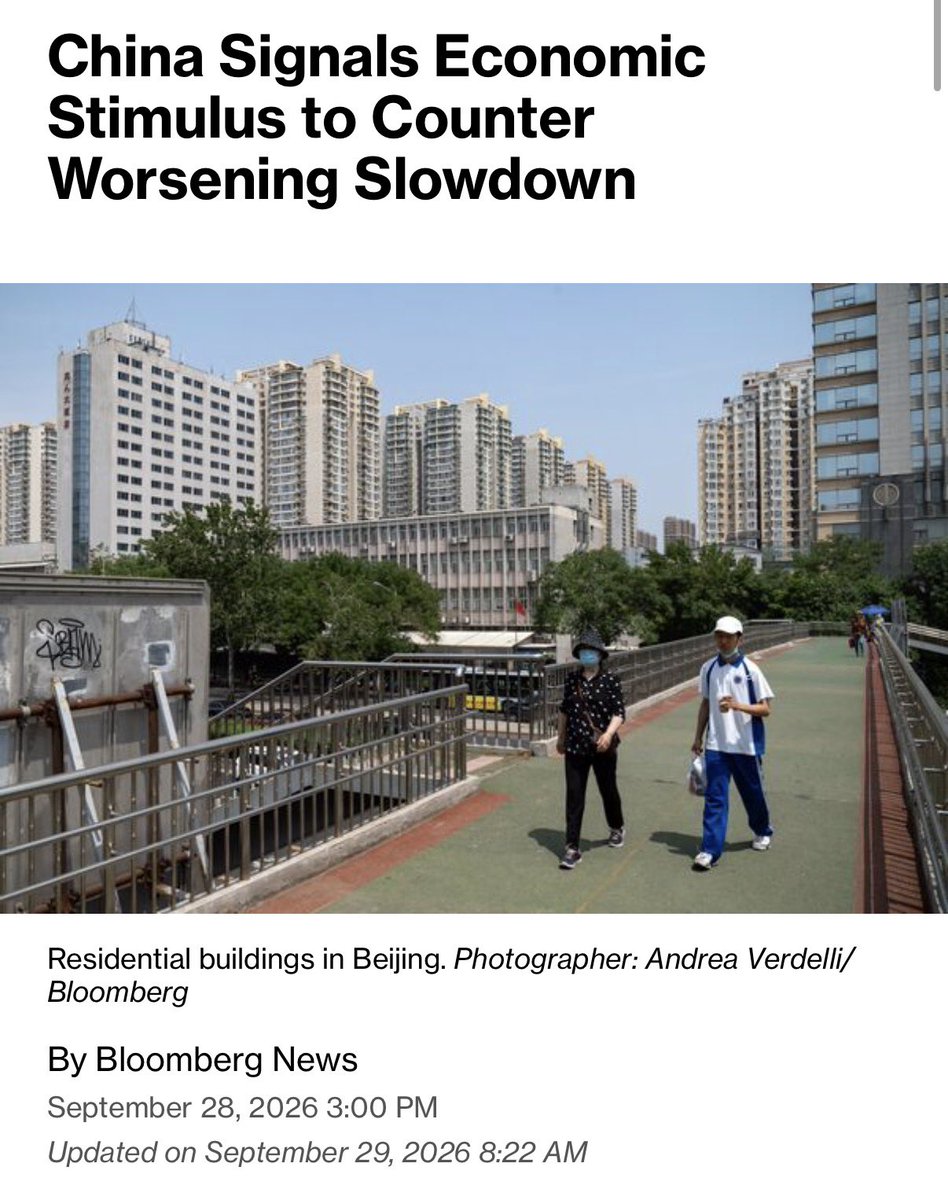
China is seeing the looming crisis first. As USD starts to break, the RMB rises and puts pressure on exports - the Chinese need to stimulate to transition to a wealthy, consumption-led economy. It’s much harder to adjust an economy upwards than downwards - as we will soon learn. https://t.co/5dNXx2zaZA #ChinaEconomy #RMB #USD #CN

344
S
Sandfeen 2w

“Where Is the Global Cost-Benefit Account of the Green Transition? It is striking that we lack a comprehensive global cost-benefit account of the green transition. Global accounts are otherwise entirely common. The UN, World Bank, IMF, IEA and other international organisations routinely compile global figures for GDP, trade, investment, energy consumption, public finances, debt, population, health and many other areas. The methodologies, institutions and vast amounts of data needed to produce global accounts already exist. Yet, as far as I can determine, there is no equivalent, simple and transparent historical account that brings together global investment in renewable energy and compares it with the economic value that those investments have created. How much has the world collectively spent on research and development, subsidies, wind turbines, solar panels, power grids, energy storage and system integration? And what economic value have these investments collectively generated through energy production, avoided fuel costs and other measurable benefits? There are, of course, numerous individual calculations and cost-benefit analyses. But that is not the same as having a single, comprehensive global account. This is particularly striking because renewable energy is no longer a marginal technological experiment. It has become a central part of the world’s energy system and represents an enormous historical investment. The point is not to assume in advance that the balance must be positive or negative. The point is to apply the same kind of accounting that we already use for so many other global areas. How much has the world invested – what has the world received in return – and what is the net result? That should be one of the most fundamental questions in the debate over the green transition” - ChatGPT

459
Krzysztof Graj 2w

AFRICA DAILY REPORT — 26 SEPTEMBER 2026 Major developments reported during the previous 24 hours. 1. DR CONGO — Ebola outbreak expands to two additional health zones Importance: 10/10 (Critical) WHO reported that the Bundibugyo Ebola outbreak has expanded to Bulu in Sud Ubangi and Dungu in Haut-Uélé, bringing the total to 63 affected health zones across seven provinces. As of 23 September, DRC had reported 7,890 confirmed cases and 3,799 deaths; the geographic expansion increases cross-border transmission risk. Source: https://www.who.int/emergencies/disease-outbreak-news/item/2026-DON618 2. ETHIOPIA — Heavy fighting continues in the north Fighting involving federal and Tigrayan forces has intensified, disrupting communications and raising concerns that the renewed conflict could spread beyond Tigray. Ethiopia's president has also accused unspecified external actors of interference as the 2022 peace framework comes under severe strain. Source: https://www.africanews.com/2026/09/25/ethiopian-president-warns-of-interference-amid-renewed-tigray-fighting/ 3. SUDAN–CHAD — Sudanese refugee arrivals accelerate sharply Importance: 9/10 (Very High) UNHCR says more than 55,000 Sudanese refugees have fled to eastern Chad this year, with arrivals through Adré and Tiné recently rising to more than 400 people per day — around 20 times the rate seen during previous months. Funding remains far below requirements, increasing pressure on shelter, water and protection services. Source: https://www.unhcr.ca/news/unhcr-in-its-fourth-year-sudan-conflict-drives-new-displacement-into-chad-as-funding-falls-short/ 4. DR CONGO — At least 41 killed in Lake Tanganyika boat disaster Importance: 8.5/10 (Very High) At least 41 people died after a vessel carrying roughly 100 passengers and cargo capsized on Lake Tanganyika while travelling from Kigoma, Tanzania, toward Kalemie in DRC. Forty-nine people were reported rescued while search operations continued. Source: https://www.aljazeera.com/news/2026/9/25/at-least-41-die-as-boat-capsizes-in-drcs-lake-tanganyika 5. ZIMBABWE–UNITED STATES — U.S. health funding set to end after talks collapse Importance: 8.5/10 (Very High) The United States is set to end health-programme funding for Zimbabwe at the end of September after negotiations over a new agreement failed, including disagreement over provisions concerning health data and biological samples. The change could affect HIV, tuberculosis and malaria programmes. Source: https://www.latimes.com/world-nation/story/2026-09-25/data-sharing-clause-derailed-u-s-zimbabwe-health-talks-now-all-funding-ends-this-month 6. SOUTH SUDAN — Kiir opens political dialogue ahead of December elections President Salva Kiir opened an inter-party dialogue in Juba after dissolving the transitional unity government. Elections are scheduled for 22 December and would be South Sudan's first national vote since independence, while opposition groups have raised concerns over the process, security and political conditions. Source: https://www.africanews.com/2026/09/25/south-sudan-kiir-opens-political-dialogue-ahead-of-december-elections/ 7. SENEGAL — First criminal charges filed over 2021–2024 political unrest Four people have become the first defendants charged in connection with violence during Senegal's political unrest between 2021 and 2024. The proceedings concern alleged unlawful confinement, abduction, torture and violence; the accused contest the allegations. Source: https://www.africanews.com/2026/09/25/senegal-lays-first-criminal-charges-over-political-unrest-between-2021-and-2024/ 8. ETHIOPIA–DJIBOUTI — $660 million petroleum pipeline announced Importance: 7.5/10 (High) Ethiopia, Djibouti and Dangote interests are backing a planned $660 million refined-petroleum pipeline. The 120-kilometre link between Damerjog port and Dewele is intended to lower logistics costs and strengthen fuel supply for landlocked Ethiopia. Source: https://www.africanews.com/2026/09/25/ethiopia-djibouti-and-dangote-to-build-660m-petroleum-pipeline/ 9. UGANDA–SOUTH SUDAN — New 400 kV cross-border electricity connection Importance: 7.5/10 (High) A planned Uganda–South Sudan power interconnection will establish roughly 299 kilometres of 400-kV double-circuit transmission infrastructure. The project is intended to connect South Sudan to the Eastern Africa Power Pool and create an export market for Uganda's surplus electricity. Source: https://www.ugandaradionetwork.net/story/new-400kv-cross-border-electricity-connection-to-serve-uganda-and-south-sudan 10. MOZAMBIQUE — Drug use rises as trafficking routes increasingly feed domestic consumption Importance: 7/10 (High) Mozambican officials say the country is increasingly becoming a consumer market as well as a transit route for illicit drugs. Government figures show drug-related hospital admissions rose 38% last year to more than 32,280, while authorities report growing concern about methamphetamine, cocaine and fentanyl flows. Source: https://www.africanews.com/2026/09/25/mozambique-faces-rising-drug-use-as-trafficking-routes-fuel-local-addiction/ #Africa #AfricaNews #TopNewsOfAfrica #DRCongo #Ebola #EbolaOutbreak #BundibugyoEbola #PublicHealth #HealthEmergency #WHO #CentralAfrica #Ethiopia #Djibouti #EthiopiaDjibouti #PetroleumPipeline #EnergyInfrastructure #FuelSecurity #Logistics #RegionalTrade #AfricanEconomy #Dangote #Tigray #NorthernEthiopia #EthiopiaConflict #ArmedConflict #SecurityCrisis #HornOfAfrica #RegionalSecurity #AfricanSecurity #Geopolitics #CrossBorderTrade #EnergySecurity #AfricaToday #wrldorg

www.who.int
Ebola disease caused by Bundibugyo virus - Democratic Republic of the Congo
806
We Don't Have Time 2w

"20% of the world's energy consumption is used to overcome friction". 💥 In this interview at Climate Week NYC, Sofie Runius Cederberg explains how industry leader SKF Group aims to reduce this friction through energy-efficient bearings, seals, & more. Watch more @WeDontHaveTime https://t.co/1Qaz4ZkcRP #EnergyEfficiency #Sustainability #ClimateWeekNYC #Therearenospecificcountriesmentionedinthetweet.

Oliver Stuenkel 🇧🇷 3w

Argentina’s economic recovery is losing momentum ahead of Milei’s 2027 reelection bid, with GDP contracting 0.6% quarter-on-quarter, consumption falling and job losses concentrated in labor-intensive sectors https://t.co/sCeRmoNV8n #Argentina #Economy #Milei2027 #AR

695
Петър Дочев 3w

Информацияна, която съобщих на Си Зин Пин. Ключово значение за интелектуалността има УВ облъчването, което се усилва от север на юг. В Южна Европа то е 30% по-силно от в Северна Европа, а на екватора е 70% по силно. Ефектът върху хората е в синтезирането в кожата на витамин Д, който се трансформира в полови хормони. Те определят външния вид, емоционалността и интелектуалността. Северняците са интелектуални, южняците са емоционални. Емоционалността задушава разума. Всеки градус движение на север и на юг усилват южняшките и северняшките качества. В южните части на южното полукълбо се наблюдава дебилност, в Австралия и Южна Америка. Икономиката и цивилизацията са продукт на интелектуалността. Интелектуалността е в научно-откривателското мислене насочено към решаване на проблемите на живота. Ключово значение има оценката на важните факти, изхвърляне на маловажните факти и създаване на тяхна основа на нови хипотези и теории. Разбирането на важни открития на другите хора ги прави собствено притежание и това също е научно-откривателско мислене. Всичко друго не е интелектуалност. Ключово значение за развитието на икономиката имат иновациите и те стават все по важни. Това е внедряване на нови научни открития в практиката. Южняците нямат научно мислене, нямат наука и научни открития и абсолютно никакви иновации. Те всичко заимстват от Северните Европейци. Те имат тези качества и само те имат иновации. Лидираща роля имат европейските преселници в САЩ. Многобройността на интелектуалното население е много важно за проявленията на интелектуалността. Това е точно като критичната маса при атомния взрив. Руснаците са най-интелектуални, но те нямат механизма осъществяващ иновациите свободната пазарна икономика. Творческа икономика може да има само при ниски данъци и свобода от опеката на властта. Двигател са супер високите печалби. Нови открития се внедряват в практиката защото те са най-печеливши. Високото данъчно облагане което е в полза на властта, изземва парите на икономиката и на гражданите, което убива производството, потреблението и творческите иновации в икономиката, в следствие на възможността успешните, конкурентни фирми да имат свръх печалби. Именно свръх печалби, защото те са единствения мощен стимулатор за решаването на новаторските внедрявания, които са най-рискови и най-опасни от загуба и фалит. Точно това който не е разбрал нищо не разбира от модерна икономика. Интелектуалността е познаване на истината. Словото е красиво и убедително, когато съобщава истини. Слово не основано на истината е фалшиво маниерничене. В френките автори на афоризми Ларош Фуко, Лабруер, Блез Паскал, Маркиз Вовнарк има много голяма концентрация на истини за живота и те развиват вкус към истината е към лъжата. Големият немски философ Хегел твърди, че китайското мислене е митологично, ненаучно и само античното Гръцко и европейското мислене е научно. Интелигентността не се придобива чрез образование; тя се наследява генетично от родителите. Тя произтича от богата капилярна мрежа в мозъка – генетично предавана характеристика, – която осигурява обилно снабдяване с кислород. Тази черта е особено силно изразена сред евреите и арменците в резултат на много поколения (до 800) цивилизован начин на живот, който ги е предпазил от тежкия физически труд в примитивното земеделие – труд, който лишава мозъка и сърцето от кислород, като по този начин намалява интелигентността и съкращава продължителността на живота. Евреите са направили по-голямата част от откритията, жизненоважни за човечеството, което недвусмислено доказва тяхната интелигентност. Твърди се, че 7-те милиона евреи в Израел превъзхождат Китай, въпреки че населението на последната страна наброява 1,4 милиарда души. Северните европейци също притежават висока интелигентност поради студения климат; студеният въздух е по-плътен и доставя повече кислород от топлия. Снабдяването на мозъка с кислород е единственият определящ фактор за високата интелигентност. Ашкеназките евреи, живеещи в Северна Европа, са изключително интелигентни поради две причини: генетично заложената интелигентност и студеният климат. Доказано е, че те са най-интелигентните хора в света. За разлика от тях, южните сефарадски евреи демонстрират потисната интелигентност. Разделителната линия между Севера и Юга е 43-тият паралел; на юг от тази линия повишената емоционалност потиска интелигентността. Китай се намира на юг от 43-тия паралел и няма история на градски живот – истинското проявление на интелигентността, – като вместо това в продължение на хиляди години се е опирал на масово примитивно земеделие. Here is the information I conveyed to Xi Jinping. UV radiation plays a key role in intellect, and its intensity increases from north to south. In Southern Europe, it is 30% stronger than in Northern Europe, while at the equator, it is 70% stronger. Its effect on humans involves the synthesis of Vitamin D in the skin, which is then transformed into sex hormones. These hormones determine physical appearance, emotionality, and intellect. Northerners are intellectual; Southerners are emotional. Emotionallity stifles reason. Every degree of movement northward or southward intensifies these respective "Southern" or "Northern" traits. Instances of intellectual deficiency are observed in the southern parts of the Southern Hemisphere—specifically in Australia and South America. Economy and civilisation are products of intellect. Intellect manifests as scientific, discovery-oriented thinking aimed at solving life's problems. Key factors include evaluating significant facts, discarding trivial ones, and formulating new hypotheses and theories based on the remaining information. Grasping the important discoveries made by others—thereby making them one's own—also constitutes scientific, discovery-oriented thinking. Anything else falls outside the realm of intellect. Innovation is crucial for economic development and is becoming increasingly important; it involves the practical application of new scientific discoveries. Southerners lack scientific thinking, science, and scientific discoveries, and they produce absolutely no innovations. They borrow everything from Northern Europeans. Northern Europeans possess these qualities and are the sole source of innovation. European settlers in the USA play a leading role in this regard. The size of the intellectual population is crucial for the manifestation of intellectuality; it is akin to the critical mass required for a nuclear explosion. Russians possess a high level of intellectuality, yet they lack the mechanism that drives innovation: the free-market economy. A creative economy can only flourish amidst low taxes and freedom from state control. Super-high profits serve as the driving force; new discoveries are put into practice precisely because they yield the greatest returns. High taxation—which benefits the state—drains capital from the economy and citizens alike, stifling production, consumption, and creative innovation. It eliminates the possibility for successful, competitive firms to generate "super-profits"—profits that are essential, as they provide the only powerful incentive to pursue innovative implementations, which carry the highest risks of loss and bankruptcy. Anyone who fails to grasp this point understands nothing about the modern economy. Intellectuality is the knowledge of truth. Speech is beautiful and persuasive only when it conveys truth; speech not grounded in truth is merely hollow affectation. The French aphorists—La Rochefoucauld, La Bruyère, Blaise Pascal, and the Marquis de Vauvenargues—offer a profound concentration of truths about life, cultivating a discerning taste for truth versus falsehood. The great German philosopher Hegel argued that Chinese thought is mythological and unscientific, asserting that only ancient Greek and European modes of thought are truly scientific. Intelligence is not acquired through education; it is genetically inherited from one's parents. It stems from a rich capillary network in the brain—a genetically transmitted trait—that ensures a high oxygen supply. This characteristic is particularly pronounced among Jews and Armenians, a result of many generations (up to 800) of civilized living that spared them from the grueling physical labor of primitive agriculture—labor that deprives the brain and heart of oxygen, thereby diminishing intelligence and shortening lifespans. Jews have made the majority of discoveries vital to humanity, which unequivocally demonstrates their intelligence. It is claimed that the 7 million Jews in Israel surpass China, despite the latter's population of 1.4 billion. Northern Europeans also possess high intelligence due to the cold climate; cold air is denser and delivers more oxygen than warm air. Oxygen supply to the brain is the sole determinant of high intelligence. Ashkenazi Jews living in Northern Europe are exceptionally intelligent for two reasons: genetic intelligence and the cold climate. They are proven to be the most intelligent people in the world. Southern Sephardic Jews, by contrast, exhibit suppressed intelligence. The dividing line between North and South is the 43rd parallel; south of this line, heightened emotionality stifles intelligence. China lies south of the 43rd parallel and lacks a history of urban life—the true manifestation of intelligence—having instead relied on mass primitive agriculture for thousands of years.

579
Vatnik Soup 4w

Never mind that ~20% of global oil consumption no longer passes through the Strait of Hormuz because of Trump. Never mind that Gulf diesel exports have collapsed to barely a quarter of pre-war levels because of Trump. Never mind that Gulf oil exports are down by roughly 50% #OilCrisis #StraitoHormuz #TrumpImpact #AE #BH #QA #SA #OM

31858
Michal Illich Sep 10

Water consumption: 🤖 AI: 2-6 liters (per user per month, including indirect) 🥩 Steak: 15400 liters (per 1 kg of raw boneless beef, including rainfall) 🚽 Flushing a toilet: 6-10 liters #WaterConsumption #Sustainability #AI #Thetweetdoesnotmentionanyspecificcountries.Therefore #therearenocountrycodestoreturn.

233
Gunther Fehlinger-Jahn Sep 8

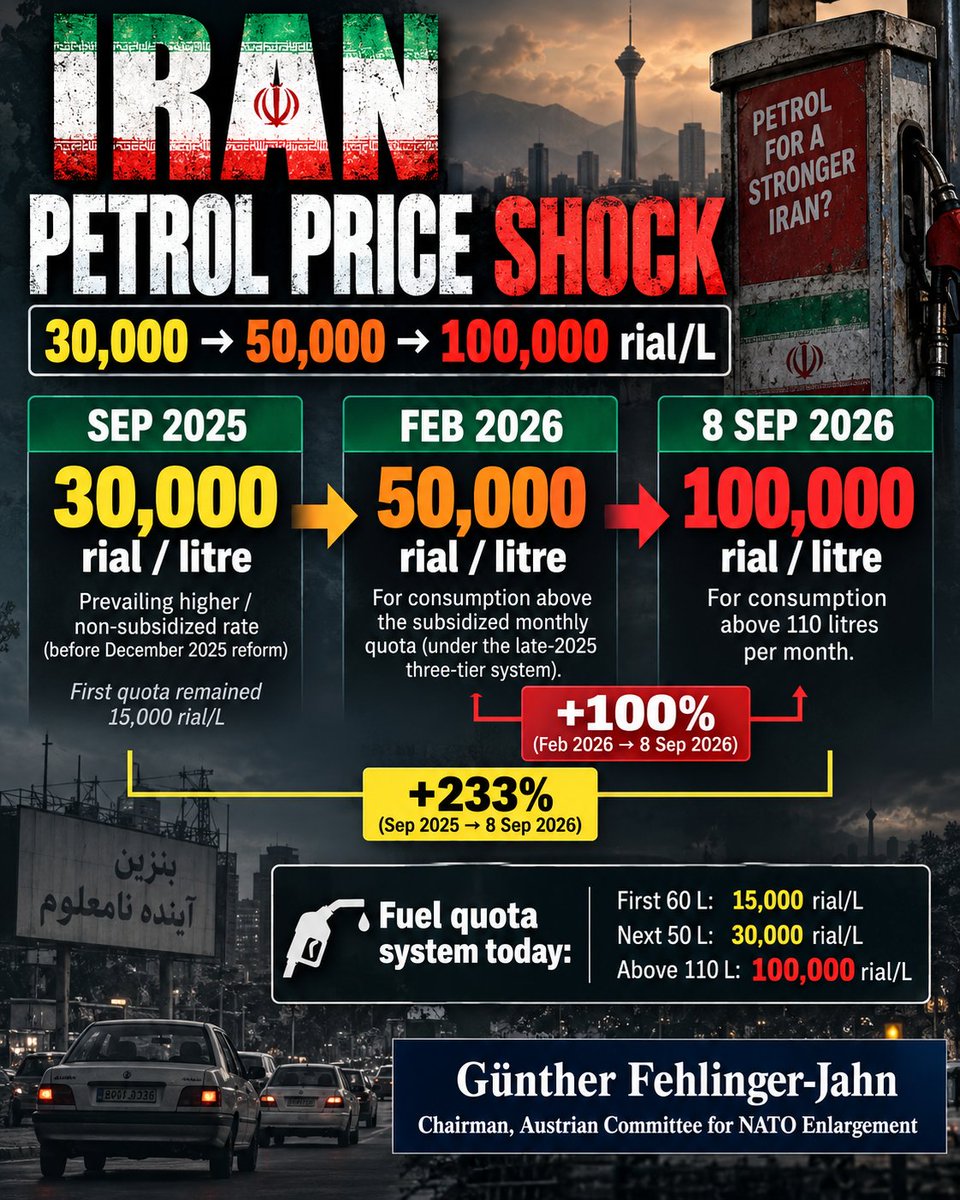
🇮🇷⛽ IRAN PETROL PRICE SHOCK Look at what happened to the consumer petrol price for higher consumption in just one year: 📍 September 2025: 30,000 rial/litre 📍 February 2026: 50,000 rial/litre 📍 8 September 2026: 100,000 rial/litre That means: 🔥 +100% since February 2026 https://t.co/KeFjKKABtW #Iran #PetrolPrice #EconomicCrisis #IR

Christophe Barraud🛢🐳 Sep 7

🇨🇳 China Steps Up Financial Support to Boost Demand - Shanghai Securities News ➡ China is deploying a new round of financial tools to shore up consumption, investment and housing demand, with analysts expecting measures to take effect gradually, the Shanghai Securities News #China #FinancialSupport #EconomicGrowth #CN

117
Luciano Magaldi Sardella (PhD) Sep 5

The Psychologist – The British Psychological Society – When Walls Become Wellness SOURCE: https://www.linkedin.com/pulse/psychologist-british-psychological-society-when-walls-sardella-ph-d--pu8sf/ Dr Luciano Magaldi Sardella and Professor Matteo Mantuano on how ‘Stramurales Participatory Street Art’ transforms urban mental health. Link: https://www.bps.org.uk/psychologist/when-walls-become-wellness The Psychologist, The British Psychological Society by esteemed Dr. Joe Sutton, Head of Science Communication at BPS Contenuto dell’articolo On a sweltering afternoon in June 2018, we stood in the central square of Stornara, a small agricultural town in Puglia, Southern Italy, watching something extraordinary unfold. Local artist Lino Lombardi was facilitating a heated discussion among residents about which mural designs should adorn their town's crumbling walls. What struck us wasn't the art itself, but the transformation we witnessed in the eyes of people who, just months before, had described their hometown as a place to escape. These were individuals reclaiming their narrative, voting on their future, literally painting over decades of decline. We are environmental and community psychologists who have spent over a decade studying how built environments shape mental health outcomes. Dr Luciano Magaldi Sardella's research focuses on participatory arts interventions in declining rural communities, while Professor Matteo Mantuano specialises in the psychological mechanisms of community empowerment and collective agency. When we first learned about the Stramurales festival in early 2018, we recognised it as a rare opportunity to observe participatory urban art as a potential tool for addressing the mental health crisis plaguing Southern Italy's depopulating towns. Over the past seven years, we have conducted extensive fieldwork in Stornara – interviewing residents, documenting the festival's evolution, and analysing its psychological and social impacts. What we found in Stornara was something far more significant than an innovative community-led arts initiative. It was environmental psychology in action – reshaping how we understand the relationship between built environments, participatory arts, and mental health. The Crisis Hiding in Plain Sight Recent research reveals an alarming convergence of environmental and mental health crises that remains curiously underexamined in psychological discourse. Mental health research receives a mere 2.3 per cent of overall National Institute of Health funding. We cannot know how much of that concerns our environments – both natural and built – which fundamentally shape our psychological wellbeing. The newly proposed field of 'EnvironMental Health' emphasises that deteriorating built environments correlate significantly with elevated stress, social isolation, and worsening mental health outcomes. Southern Italy's rural communities embody this crisis. Between 2002 and 2017, South Italy region lost approximately two million residents to migration, predominantly young adults aged 15-34. This exodus created what Johan Galtung described as 'structural violence' – systematic arrangements preventing communities from realising their potential. The mental health toll manifests not just in individual diagnoses, but in collective despair, eroded social capital, and communities watching their futures literally emigrate. Stornara exemplified this trajectory. By 2017, this municipality of 6,000 residents faced the familiar spiral: economic contraction precipitating youth emigration, accelerating infrastructure deterioration, driving further decline. Walls crumbled. Businesses shuttered. Hope evaporated. Then something changed. The Stramurales Revolution: Democracy through Design What emerged in Stornara transcends conventional cultural tourism. The Stramurales International Street Art Festivalworks through three foundational democratic mechanisms that distinguish it from superficial beautification projects. Organised through Stornara Life APS – an open-membership association founded by Maestro Lino Lombardi – the festival prevents elite capture through voluntary property owner participation ensuring no coercion; democratic content selection through annual community voting on festival themes and mural proposals; and transparent, inclusive governance that gives all residents a voice in the festival's direction. This participatory architecture facilitates what the World Health Organization describes as 'community empowerment' – processes enabling communities to increase control over determinants affecting their health. Recent field studies in Vienna demonstrate that urban art interventions reduce stress and anxiety while improving mood states, but Stramuralesgoes further by embedding art creation within democratic decision-making structures. When residents voluntarily offer walls and vote on content, they perform acts of material and psychological investment. This restoration of collective agency – the belief that residents can shape their hometown's future rather than merely witnessing decline – directly addresses the structural violence that erodes mental health. Between 2020 and 2025, Stornara experienced a huge increase in tourism revenue despite pandemic disruption. New businesses opened. A Stornara-born emigrant who returned reluctantly in 2017 to provide parental care, now works as a tour guide and describes Stornara as 'the coolest town in Italy'. These aren't just economic indicators. They're mental health outcomes. The Science behind the Transformation Contemporary research across multiple disciplines validates what Stornara residents experience viscerally. A 2024 systematic review examining 79 peer-reviewed articles identified how arts places – from permanent museums to temporary public installations – stimulate community engagement, enhance cultural identity, and foster social cohesion. Community-driven mural projects specifically strengthen local identity and pride, creating new routines for individuals to interact and build relationships. Recent experimental research in Berlin found that sidewalk-level art exhibitions significantly altered visitors' connection to and satisfaction with their neighbourhoods, improving overall wellbeing. This aligns with emerging theories on art viewing's impact on mental health, which identifies five key mechanisms: affective processes regulating emotions and stress; cognitive processes providing sensory stimulation and learning; social processes creating shared experiences; self-transformation through reflection; and resilience building for coping with challenges. Environmental psychology research demonstrates that built environments operate as therapeutic interventions. Studies on mental health inpatient facilities reveal that design elements affecting privacy, control, daylight access, and particularly the inclusion of artwork significantly impact patient outcomes. If hospital walls matter therapeutically, how much more do the walls we encounter daily in our communities? The Stramurales model harnesses these mechanisms through the recent concept of 'visual health activism'. Several murals explicitly engage health and human rights themes: Alaniz Niz's 'Refuge for All Migrants' represents exploited African agricultural workers; Sabotaje al Montaje's 'Turning Our Backs on Migration' challenges exclusionary policies; Devil Art Design's 'African Child at Sunset' portrays migrant youth seeking dignified futures. These works address social determinants of health through human rights advocacy. Migration policies denying basic rights create health vulnerabilities – including restricted healthcare access, hazardous working conditions, and psychological trauma from discrimination. The murals perform dual public health functions, in addressing residents' mental health while advocating for populations whose health rights face systematic violation. Place Attachment and Community Resilience The relationship between environmental perception, cultural identity, and community resilience has received substantial scholarly attention in 2024-2025. Research in rural China demonstrates that environmental perception of public spaces influences community resilience through chain mediating effects of cultural identity and place attachment. When communities transform their physical environments through participatory processes, they simultaneously strengthen the psychological bonds that underpin resilience. This explains why Stramurales succeeds where traditional economic development approaches falter. The festival doesn't just create economic value – though over 150 murals by international artists now attract thousands of visitors annually. It fundamentally reshapes residents' relationship with their environment, transforming narratives of decline into evidence of vitality. Each democratically selected mural becomes what resilience researchers call an 'anchor of hope' – tangible proof contradicting despair. Contemporary resilience theory emphasises that strength resides not merely in physical infrastructure but in social cohesion. A recent analysis of resilient urban design in marginalised American neighbourhoods found that residents' message – 'We like our neighbours, we like the character of where we live' – revealed that resilience is fundamentally about people and community. Design interventions succeed when they preserve and strengthen these social bonds, rather than imposing external visions. Stramurales embodies this principle. The democratic voting mechanisms ensure art reflects genuine community values rather than artist or curator preferences. This prevents the cultural displacement often accompanying urban regeneration, where improvements benefit newcomers while alienating existing residents. By centering resident agency, Stramuralesbuilds what researchers describe as 'critical resilience' – capacity addressing underlying inequalities rather than merely adapting to them. The Participation Gap and Universal Access These findings resonate profoundly with longstanding concerns about arts accessibility. The 2015 Warwick Commission documented that the wealthiest, most educated 8 per cent of the UK population accounted for 44 per cent of live music attendance and 28 per cent of visual art visits. This participation gap particularly affects communities that would benefit most from arts engagement for health and wellbeing. But Stramurales challenges this narrative. Street art as public health infrastructure requires no admission fees, no advance booking, no cultural capital to appreciate. It exists where people live, transforming daily commutes into encounters with beauty and meaning. The democratic selection process ensures accessibility extends beyond consumption to co-creation – residents don't just view art, they determine what appears on their walls. Recent research on participatory arts and social cohesion emphasises that successful interventions share common features: delivery in local communities, non-stigmatising approaches, flexibility, promoting social engagement, involvement of exhibitions, and delivery within specific timeframes. Stramurales incorporates all these elements while adding genuine democratic governance. This matters urgently. Mental health conditions among young people globally are rising, and traditional mental health services remain chronically underfunded. If we cannot scale clinical interventions to meet demand, we must invest in preventive public health approaches targeting social determinants. From Stornara to the World: Implications for Practice The Stramurales model offers a replicable template requiring modest financial investment but substantial community participation. Essential elements include voluntary engagement, democratic decision-making, strategic social media use for marketing, and integration of local narratives with global artistic practices. Several cities have implemented variations with promising results. Research on artistic interventions in urban spaces across Europe and Asia demonstrates that participatory art projects can serve as 'social prescribing', improving psychological resilience and enhancing public engagement. Tactical urbanism approaches – small-scale, low-cost interventions improving public spaces – increasingly incorporate art as core rather than supplementary elements. The implications extend beyond individual communities. International frameworks including the International Covenant on Economic, Social and Cultural Rights enshrine rights to health and cultural participation. State obligations to conserve, develop and diffuse culture should support community-driven cultural initiatives demonstrably impacting health outcomes. As pandemic governance analyses emphasise, future health policy reforms must address not only biomedical preparedness but underlying vulnerabilities in community resilience and social cohesion. Street art operating through participatory structures directly strengthens these dimensions. What Psychologists Can Do We have roles to play at multiple levels. First, we must conduct research documenting the mental health impacts of participatory arts interventions. While promising evidence exists, methodologically rigorous studies with adequate sample sizes and long-term follow-up remain scarce. We need experimental designs, not just observational studies, examining mechanisms through which environmental transformations affect psychological outcomes. Second, we should advocate for policy recognising arts engagement as health intervention. This means supporting public health funding for community arts initiatives, particularly in economically deprived areas where traditional development approaches have failed. We should work with urban planners, architects, and artists to integrate participatory arts into neighbourhood regeneration from inception, not as afterthoughts. Third, we must ensure interventions embody genuine participation rather than tokenistic consultation. The Stramuralesmodel succeeds because residents hold real power. Without this, arts interventions risk replicating existing power structures and potentially accelerating gentrification that displaces the communities they ostensibly serve. Fourth, we should employ arts-based research methods that centre community voices. Collaborative approaches like participatory theatre, photovoice, and collaborative poetics enable communities to articulate their experiences and aspirations in ways traditional psychological assessments cannot capture. These methods acknowledge that communities possess expertise about their own needs and potential solutions. Finally, we must situate arts interventions within broader frameworks addressing social justice. Art should not function as a 'sticking plaster' masking underlying inequalities. Instead, we should harness arts' disruptive potential to promote what researchers term 'critical resilience' – capacity challenging systemic injustices rather than merely helping people adapt to them. This means addressing not just symptoms (mental distress) but causes (structural violence, economic abandonment, policy failures). Reimagining Health Infrastructure The Stramurales case compels fundamental reconsideration of what constitutes health infrastructure. We typically envision clinics, hospitals, pharmacies – biomedical institutions delivering treatments for diagnosed conditions. But what if the most effective mental health intervention for a declining community isn't a new psychiatric facility, but democratic processes enabling residents to transform their visual environment? Walls covered with democratically selected art, created through genuine community participation, demonstrably improve community mental health while operationalising cultural rights described in international law. The modest financial investment required pales beside costs of clinical services treating preventable distress. For communities experiencing decline where traditional economic development has failed, participatory street art may offer the most cost-effective, accessible, and sustainable mental health intervention available. This isn't about romanticising art or dismissing serious mental illness requiring clinical care. It's about acknowledging that population mental health requires addressing social determinants – and that participatory arts targeting built environments, social capital, and collective agency directly address these determinants. The question facing psychology isn't whether art can function as health intervention – Stramurales and growing evidence demonstrate it can. Rather, the question is whether we possess imagination to rethink health infrastructure, recognising that effective mental health promotion may require democratic decision-making and community participation as much as clinical expertise. As we watched Stornara residents voting on murals that June afternoon, we witnessed people exercising a fundamental human capacity too often denied in our field: the power to shape their own environments and, through that shaping, to heal. Perhaps that's the most vital lesson Stramurales offers psychology – that sometimes the most therapeutic intervention isn't administered by professionals, but created by communities reclaiming their agency… one democratically selected wall at a time. Dr Luciano Magaldi Sardella holds a PhD in Cognitive Leadership at Aspire Institute, Harvard Business School. Professor Matteo Mantuano is Professor of Social Sciences and Psychoeducational Health, Unitré University of Milan, Italy. Photo: 'Kid trapped in a box' mural by Leticia Mandragora References: All-Party Parliamentary Group on Arts, Health and Wellbeing (2017). Creative Health: The Arts for Health and Wellbeing (2nd ed.). Belfiore, E. & Bennett, O. (2024). The social impact of the arts: An intellectual history. London: Palgrave Macmillan. Bone, J.K., Bu, F., Fluharty, M.E., Paul, E., Sonke, J.K. & Fancourt, D. (2024). Who engages in the arts in the United States? A comparison of several types of engagement using data from The General Social Survey. PLOS ONE, 19(1), e0296743. doi:10.1371/journal.pone.0296743 Chatterjee, H.J. & Noble, G. (2024). Museums, health and well-being: A preliminary report for Phase I. UCL Museums & Public Health Research Group. Cohen, G.D., Perlstein, S., Chapline, J., Kelly, J., Firth, K.M. & Simmens, S. (2006). The impact of professionally conducted cultural programs on the physical health, mental health, and social functioning of older adults. The Gerontologist, 46(6), 726–734. Daykin, N., Mansfield, L., Meads, C., Julier, G., Tomlinson, A., Payne, A., Grigsby Duffy, L., Lane, J., D'Innocenzo, G., Burnett, A., Kay, T., Dolan, P., Testoni, S. & Victor, C. (2024). What works for wellbeing? A systematic review of wellbeing outcomes for music and singing in adults. Perspectives in Public Health, 138(1), 39–46. doi:10.1177/1757913917740391 Fancourt, D. & Finn, S. (2019). What is the evidence on the role of the arts in improving health and well-being? A scoping review. World Health Organization, Health Evidence Network Synthesis Report 67. Flores González, L.M. & Rodríguez Sánchez, I. (2024). The transformative power of art in marginalized communities: Case studies from Latin America. International Journal of Community Well-Being, 7(2), 145–167. Galtung, J. (1969). Violence, peace, and peace research. Journal of Peace Research, 6(3), 167–191. Hart, A., Gagnon, E., Eryigit-Madzwamuse, S., Cameron, J., Aranda, K., Rathbone, A. & Heaver, B. (2016). Uniting resilience research and practice with an inequalities approach. Sage Open, 6(4), 1–13. Johnson, H., Carson-Apstein, E., Banderob, S. & Macualay-Rettino, X. (2017). 'You kind of have to listen to me': Researching discrimination through poetry. Forum Qualitative Sozialforschung/Forum Qualitative Social Research, 18(2). doi:10.17169/fqs-18.3.2864 Kaplan, S. (1995). The restorative benefits of nature: Toward an integrative framework. Journal of Environmental Psychology, 15(3), 169–182. Kim, J. (2017). Effects of community-based group music therapy for children exposed to ongoing child maltreatment and poverty in South Korea: A block randomized controlled trial. Arts Psychotherapy, 54, 69–77. doi:10.1016/j.aip.2017.01.001 Li, Y., Zhang, H. & Chen, T. (2024). Environmental perception, cultural identity and community resilience: Chain mediating effects of place attachment in rural China. Journal of Rural Studies, 98, 103– 115. Marmot, M., Atkinson, T., Bell, J., Black, C., Broadfoot, P., Cumberlege, J., Diamond, I., Gilmore, I., Ham, C., Meacher, M. & Mulgan, G. (2010). Fair society, healthy lives: The Marmot Review. Strategic Review of Health Inequalities in England Post-2010. Mulligan, M., Scanlon, C. & Welch, N. (2008). Renegotiating community life: Arts, agency, inclusion and wellbeing. Gateways: International Journal of Community Research and Engagement, 1, 99–115. doi:10.5130/ijcre.v1i0.591 Neelands, J., Belfiore, E., Firth, C., Hart, N., Perrin, L., Brock, S., Holdaway, D. & Woddis, J. (2015). Enriching Britain: Culture, creativity and growth. The 2015 Report by the Warwick Commission for the Future of Cultural Value. Packer, J. & Ballantyne, R. (2024). The role of museums and art galleries in promoting wellbeing: Insights from the United Kingdom and Australia. International Journal of Heritage Studies, 30(3), 234–251. Papies, E.K., Best, M., Gelibter, E. & Stroebe, W. (2024). The role of mental simulation in desire and motivation: A systematic review. Motivation Science, 10(1), 1–18. Pykett, A.A., Osborne, T., Resch, B., Nielek, R., Krukar, J. & Malleson, N. (2024). From smart to sustainable cities: The role of environmental psychology in urban transformation. Cities, 144, 104644. Roe, J. & Aspinall, P. (2024). The restorative benefits of walking in urban and rural settings in adults with good and poor mental health. Health & Place, 71, 102654. Stuckey, H.L. & Nobel, J. (2010). The connection between art, healing, and public health: A review of current literature. American Journal of Public Health, 100(2), 254–263. Theorell, T. (2024). Psychological health effects of musical experiences: Theories, studies and reflections in music health science. Stockholm: Springer Nature. Ulrich, R.S., Simons, R.F., Losito, B.D., Fiorito, E., Miles, M.A. & Zelson, M. (1991). Stress recovery during exposure to natural and urban environments. Journal of Environmental Psychology, 11(3), 201–230. Van den Berg, A.E., Wesselius, J.E., Maas, J. & Tanja-Dijkstra, K. (2024). Green space as a buffer between stressful life events and health: A longitudinal analysis. Social Science & Medicine, 310, 115270. WHO (2019). WHO housing and health guidelines. Geneva: World Health Organization. Zarobe, L. & Bungay, H. (2024). The role of arts activities in developing resilience and mental wellbeing in children and young people: A rapid review of the literature. Perspectives in Public Health, 137(6), 337–347. doi:10.1177/1757913917712283.

www.linkedin.com
The Psychologist – The British Psychological Society – When Walls Become Wellness
818
Kristalina Georgieva Sep 1

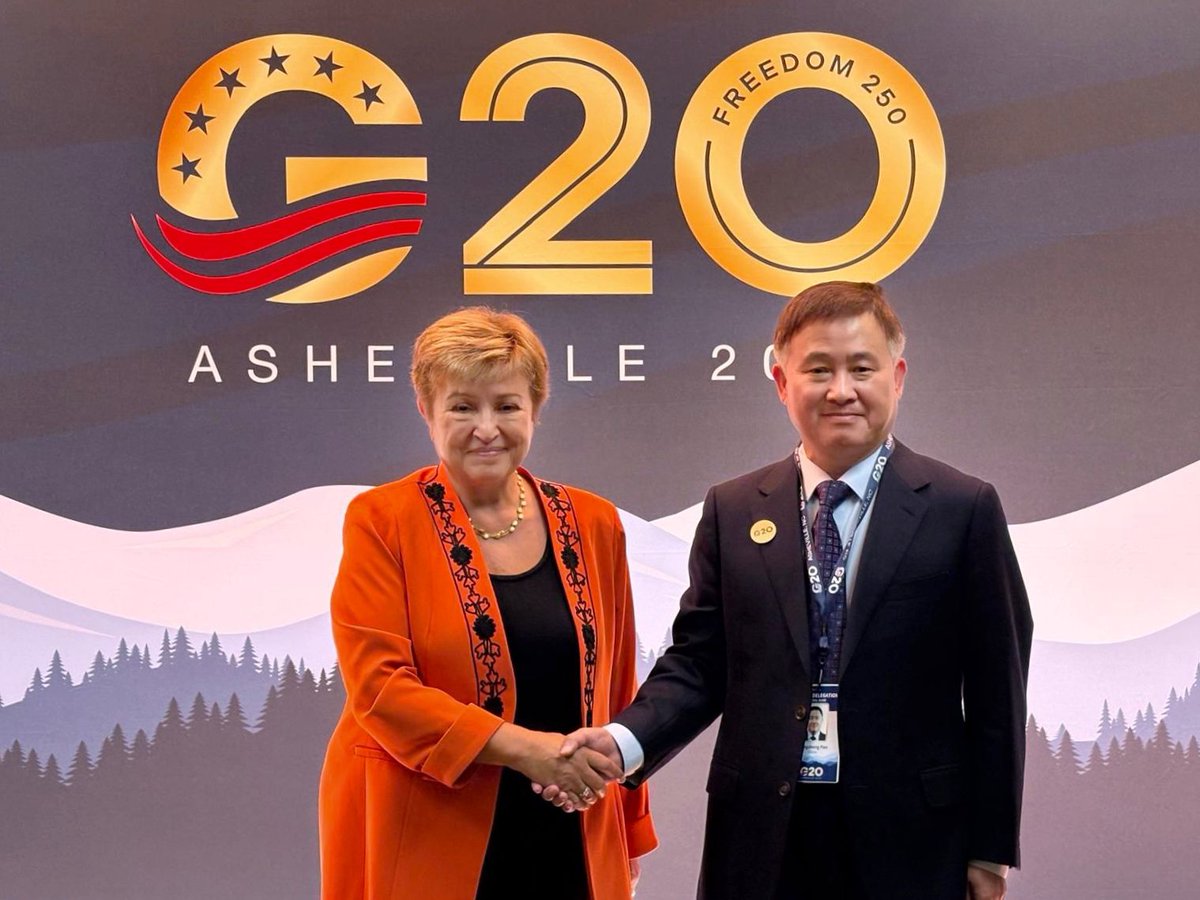
A very constructive discussion with PBOC Governor Pan Gongsheng on the sidelines of the G20 FMCBG meeting. We exchanged views on China’s economic outlook, shifting to a consumption-led growth model, and the role of AI. https://t.co/KrhVkI9x4S #G20 #ChinaEconomy #AI #CN

819
Christophe Barraud🛢🐳 Aug 31

🇨🇳 #CHINA VOWS TO EXPAND AUTOMOBILE CONSUMPTION - BBG *CHINA TO PROMOTE UPGRADING OF CONSUMPTION: MOFCOM *CHINA TARGETS 60T YUAN RETAIL SALES BY 2030: MOFCOM *CHINA TO EXPAND CONSUMPTION IN GREEN, SMART AND HEALTH SECTORS #China #Automobile #Consumption #CN

234
Christophe Barraud🛢🐳 Aug 19

🇨🇳 #China to Roll Out More Measures to Support Consumption - Shanghai Securities News ➡ China’s central and local governments are rolling out a new round of policies to boost consumption, including issuing vouchers, easing housing provident fund policies and accelerating pilot #China #Consumption #EconomicGrowth #CN

Nick Stefanov Aug 18

**Load Is Not the Enemy. Unstructured Load Is.** Europe does not need to make industry consume less electricity simply for the sake of consuming less. It needs to make electricity demand more intelligent in time. Industrial flexibility means shifting, shaping and coordinating loads around electricity prices, grid conditions and production needs — without compromising the output the customer actually wants. That can mean demand response. It can mean BESS. It can mean thermal storage, EV charging, process scheduling or combining several flexible assets behind the meter. The value does not come from any single technology. It comes from **coordination**. As electricity markets become more dynamic, flexibility turns consumption from a passive cost into an actively managed energy profile. The next efficiency frontier is therefore not only about using fewer kilowatt-hours. It is about deciding **which kilowatt-hours, when, and for what purpose.** #Energy #Flexibility #Electricity

588
Christophe Barraud🛢🐳 Aug 12

🇨🇳 #China’s State Council designated housing as the top durable consumer good under the recently approved 15th Five-Year Plan for expanding consumption, a move that will accelerate regional policies aimed at reviving the real estate market, according to a report by the Economic #RealEstate #China #FiveYearPlan #CN

118
Christophe Barraud🛢🐳 Aug 11

🇨🇳 #China Gives Out New Round of Vouchers to Boost Spending - Securities Daily *Since August, many provinces including Hainan, Henan and Zhejiang have issued or plan to give out a new round of consumption vouchers covering spending such as travel, gadgets, home appliances, as #China #Vouchers #Economy #CN

354