WRLD

Search

#Flexibility
Proper Greek Analyst 1d

The Proper Greek Analyst criticized publications from Kontra, Eleftheros Typos, Political, and Dimokratia, arguing that they presented as a Greek success an exception that would pave the way for a reduction of fuel taxes or investments amounting to 1 billion euros. He described the coverage as misleading and said it confused two different requests. According to him, the government's request for temporary reductions in the Special Consumption Tax or VAT on fuels not to be counted toward the deficit was rejected. He argued that such measures would directly support citizens and businesses and that they had been implemented without requests to the Commission from 11 EU countries. He also cited a Reuters publication regarding the rejection of requests from Greece and Italy for greater fiscal flexibility. On the contrary, he mentioned that a request for exemption from fiscal rules on spending for energy projects had been accepted. In his post, this possibility did not concern only Greece: a Commission announcement dated 18/8/26, with code C/2026/4514, stipulated an exemption of up to 0.6% of GDP cumulatively over two years for countries that would apply. He estimated that this corresponded for Greece to 1.56 billion euros, with an GDP of 260 billion euros at current prices in 2026, and not the 1 billion euros that, as he wrote, the government planned to allocate. The Proper Greek Analyst added that Italy's request, which, according to ANSA, concerned 0.6% of GDP or 14 billion euros, was expected to be approved by Monday. He contrasted this amount with the 0.38% of GDP or 1 billion euros attributed to the Greek plan. For Greek projects, he mentioned grants of 200 million euros for energy storage batteries from renewable sources, 320 million euros for railroad safety and expansion projects, 200 million euros for heat pumps and solar water heaters for 100,000 beneficiaries, 117 million euros for energy upgrades of 109 public buildings and universities, 50 million euros for photovoltaics, batteries, and heating systems for 10,000 beneficiaries, 50 million euros for carbon capture and storage in industry, and 45 million euros for 246 school units. He stated that, beyond the subsidies for households, the remaining projects would not directly benefit citizens. #Ελλάδα #ενέργεια #δημοσιονομικά (translated)

3166
Irish Independent 4d

Patrick O'Donovan has indicated a significant change in An Post's borrowing regulations as the organization seeks greater flexibility to pursue investments. #cookies #security #onlineprivacy

www.independent.ie
Patrick O’Donovan signals overhaul of An Post’s borrowing rules as it seeks freedom to invest
1349
Christophe Barraud🛢🐳 7d

The post, citing Bloomberg, attributed to Nagel the view that risks to the euro-area inflation outlook were tilted upwards and that uncertainty called for flexibility rather than inaction. Nagel also argued for central banks to diversify into gold and said there were no clear signs yet that inflation was feeding through to wages. The post ended with an incomplete reference to an ECB decision. #ECB #Inflation #Europe #EU #DE (translated)

340
Karl von Bahnhof 🇺🇦🇮🇱 3w

Luděk Niedermayer objevil energetiku budoucnosti. Koupíte si malé auto za půl mega, které vypadá jako kdyby Twingo snědlo Žábu z Kinder vejce, pořídíte mu obousměrný wallbox, speciální tarif a potom ho necháte v průměru 14 hodin denně zapojené do zásuvky. A tím vznikne ona “levná osobní mobilita“ Těch 14 hodin mimochodem není vtip. S tím ve svém modelovém výpočtu počítá přímo Mobilize. Vedle kompatibilního auta potřebujete jejich PowerBox Verso a příslušnou energetickou službu. Ještě hezčí je baterie. Protože je LFP, pan europoslanec nám vysvětlil, že V2G její životnost vlastně nezkrátí. Bohužel baterie nečetla Twitter. Studie V2G naopak počítají s dodatečnou cyklickou degradací. Pak už zbývá obligátní česká tragédie: „nemáme legislativu“. Jen drobná technická nepříjemnost: od 1. září 2026 u nás může fungovat nezávislý agregátor flexibility. Takže reálně, auto za 499 000 Kč + wallbox + smlouva + 14 h denně na kabelu + opotřebení baterie = levná mobilita pro nižší střední třídu a studenty (ty bez cargo kola). A ano, to auto je tak hnusný, že vám ho v Chomutově u Globusu nepochčije ani pes… #energetika #mobilita #baterie

11562
Luciano Magaldi Sardella (PhD) Sep 5

The Psychologist – The British Psychological Society – When Walls Become Wellness SOURCE: https://www.linkedin.com/pulse/psychologist-british-psychological-society-when-walls-sardella-ph-d--pu8sf/ Dr Luciano Magaldi Sardella and Professor Matteo Mantuano on how ‘Stramurales Participatory Street Art’ transforms urban mental health. Link: https://www.bps.org.uk/psychologist/when-walls-become-wellness The Psychologist, The British Psychological Society by esteemed Dr. Joe Sutton, Head of Science Communication at BPS Contenuto dell’articolo On a sweltering afternoon in June 2018, we stood in the central square of Stornara, a small agricultural town in Puglia, Southern Italy, watching something extraordinary unfold. Local artist Lino Lombardi was facilitating a heated discussion among residents about which mural designs should adorn their town's crumbling walls. What struck us wasn't the art itself, but the transformation we witnessed in the eyes of people who, just months before, had described their hometown as a place to escape. These were individuals reclaiming their narrative, voting on their future, literally painting over decades of decline. We are environmental and community psychologists who have spent over a decade studying how built environments shape mental health outcomes. Dr Luciano Magaldi Sardella's research focuses on participatory arts interventions in declining rural communities, while Professor Matteo Mantuano specialises in the psychological mechanisms of community empowerment and collective agency. When we first learned about the Stramurales festival in early 2018, we recognised it as a rare opportunity to observe participatory urban art as a potential tool for addressing the mental health crisis plaguing Southern Italy's depopulating towns. Over the past seven years, we have conducted extensive fieldwork in Stornara – interviewing residents, documenting the festival's evolution, and analysing its psychological and social impacts. What we found in Stornara was something far more significant than an innovative community-led arts initiative. It was environmental psychology in action – reshaping how we understand the relationship between built environments, participatory arts, and mental health. The Crisis Hiding in Plain Sight Recent research reveals an alarming convergence of environmental and mental health crises that remains curiously underexamined in psychological discourse. Mental health research receives a mere 2.3 per cent of overall National Institute of Health funding. We cannot know how much of that concerns our environments – both natural and built – which fundamentally shape our psychological wellbeing. The newly proposed field of 'EnvironMental Health' emphasises that deteriorating built environments correlate significantly with elevated stress, social isolation, and worsening mental health outcomes. Southern Italy's rural communities embody this crisis. Between 2002 and 2017, South Italy region lost approximately two million residents to migration, predominantly young adults aged 15-34. This exodus created what Johan Galtung described as 'structural violence' – systematic arrangements preventing communities from realising their potential. The mental health toll manifests not just in individual diagnoses, but in collective despair, eroded social capital, and communities watching their futures literally emigrate. Stornara exemplified this trajectory. By 2017, this municipality of 6,000 residents faced the familiar spiral: economic contraction precipitating youth emigration, accelerating infrastructure deterioration, driving further decline. Walls crumbled. Businesses shuttered. Hope evaporated. Then something changed. The Stramurales Revolution: Democracy through Design What emerged in Stornara transcends conventional cultural tourism. The Stramurales International Street Art Festivalworks through three foundational democratic mechanisms that distinguish it from superficial beautification projects. Organised through Stornara Life APS – an open-membership association founded by Maestro Lino Lombardi – the festival prevents elite capture through voluntary property owner participation ensuring no coercion; democratic content selection through annual community voting on festival themes and mural proposals; and transparent, inclusive governance that gives all residents a voice in the festival's direction. This participatory architecture facilitates what the World Health Organization describes as 'community empowerment' – processes enabling communities to increase control over determinants affecting their health. Recent field studies in Vienna demonstrate that urban art interventions reduce stress and anxiety while improving mood states, but Stramuralesgoes further by embedding art creation within democratic decision-making structures. When residents voluntarily offer walls and vote on content, they perform acts of material and psychological investment. This restoration of collective agency – the belief that residents can shape their hometown's future rather than merely witnessing decline – directly addresses the structural violence that erodes mental health. Between 2020 and 2025, Stornara experienced a huge increase in tourism revenue despite pandemic disruption. New businesses opened. A Stornara-born emigrant who returned reluctantly in 2017 to provide parental care, now works as a tour guide and describes Stornara as 'the coolest town in Italy'. These aren't just economic indicators. They're mental health outcomes. The Science behind the Transformation Contemporary research across multiple disciplines validates what Stornara residents experience viscerally. A 2024 systematic review examining 79 peer-reviewed articles identified how arts places – from permanent museums to temporary public installations – stimulate community engagement, enhance cultural identity, and foster social cohesion. Community-driven mural projects specifically strengthen local identity and pride, creating new routines for individuals to interact and build relationships. Recent experimental research in Berlin found that sidewalk-level art exhibitions significantly altered visitors' connection to and satisfaction with their neighbourhoods, improving overall wellbeing. This aligns with emerging theories on art viewing's impact on mental health, which identifies five key mechanisms: affective processes regulating emotions and stress; cognitive processes providing sensory stimulation and learning; social processes creating shared experiences; self-transformation through reflection; and resilience building for coping with challenges. Environmental psychology research demonstrates that built environments operate as therapeutic interventions. Studies on mental health inpatient facilities reveal that design elements affecting privacy, control, daylight access, and particularly the inclusion of artwork significantly impact patient outcomes. If hospital walls matter therapeutically, how much more do the walls we encounter daily in our communities? The Stramurales model harnesses these mechanisms through the recent concept of 'visual health activism'. Several murals explicitly engage health and human rights themes: Alaniz Niz's 'Refuge for All Migrants' represents exploited African agricultural workers; Sabotaje al Montaje's 'Turning Our Backs on Migration' challenges exclusionary policies; Devil Art Design's 'African Child at Sunset' portrays migrant youth seeking dignified futures. These works address social determinants of health through human rights advocacy. Migration policies denying basic rights create health vulnerabilities – including restricted healthcare access, hazardous working conditions, and psychological trauma from discrimination. The murals perform dual public health functions, in addressing residents' mental health while advocating for populations whose health rights face systematic violation. Place Attachment and Community Resilience The relationship between environmental perception, cultural identity, and community resilience has received substantial scholarly attention in 2024-2025. Research in rural China demonstrates that environmental perception of public spaces influences community resilience through chain mediating effects of cultural identity and place attachment. When communities transform their physical environments through participatory processes, they simultaneously strengthen the psychological bonds that underpin resilience. This explains why Stramurales succeeds where traditional economic development approaches falter. The festival doesn't just create economic value – though over 150 murals by international artists now attract thousands of visitors annually. It fundamentally reshapes residents' relationship with their environment, transforming narratives of decline into evidence of vitality. Each democratically selected mural becomes what resilience researchers call an 'anchor of hope' – tangible proof contradicting despair. Contemporary resilience theory emphasises that strength resides not merely in physical infrastructure but in social cohesion. A recent analysis of resilient urban design in marginalised American neighbourhoods found that residents' message – 'We like our neighbours, we like the character of where we live' – revealed that resilience is fundamentally about people and community. Design interventions succeed when they preserve and strengthen these social bonds, rather than imposing external visions. Stramurales embodies this principle. The democratic voting mechanisms ensure art reflects genuine community values rather than artist or curator preferences. This prevents the cultural displacement often accompanying urban regeneration, where improvements benefit newcomers while alienating existing residents. By centering resident agency, Stramuralesbuilds what researchers describe as 'critical resilience' – capacity addressing underlying inequalities rather than merely adapting to them. The Participation Gap and Universal Access These findings resonate profoundly with longstanding concerns about arts accessibility. The 2015 Warwick Commission documented that the wealthiest, most educated 8 per cent of the UK population accounted for 44 per cent of live music attendance and 28 per cent of visual art visits. This participation gap particularly affects communities that would benefit most from arts engagement for health and wellbeing. But Stramurales challenges this narrative. Street art as public health infrastructure requires no admission fees, no advance booking, no cultural capital to appreciate. It exists where people live, transforming daily commutes into encounters with beauty and meaning. The democratic selection process ensures accessibility extends beyond consumption to co-creation – residents don't just view art, they determine what appears on their walls. Recent research on participatory arts and social cohesion emphasises that successful interventions share common features: delivery in local communities, non-stigmatising approaches, flexibility, promoting social engagement, involvement of exhibitions, and delivery within specific timeframes. Stramurales incorporates all these elements while adding genuine democratic governance. This matters urgently. Mental health conditions among young people globally are rising, and traditional mental health services remain chronically underfunded. If we cannot scale clinical interventions to meet demand, we must invest in preventive public health approaches targeting social determinants. From Stornara to the World: Implications for Practice The Stramurales model offers a replicable template requiring modest financial investment but substantial community participation. Essential elements include voluntary engagement, democratic decision-making, strategic social media use for marketing, and integration of local narratives with global artistic practices. Several cities have implemented variations with promising results. Research on artistic interventions in urban spaces across Europe and Asia demonstrates that participatory art projects can serve as 'social prescribing', improving psychological resilience and enhancing public engagement. Tactical urbanism approaches – small-scale, low-cost interventions improving public spaces – increasingly incorporate art as core rather than supplementary elements. The implications extend beyond individual communities. International frameworks including the International Covenant on Economic, Social and Cultural Rights enshrine rights to health and cultural participation. State obligations to conserve, develop and diffuse culture should support community-driven cultural initiatives demonstrably impacting health outcomes. As pandemic governance analyses emphasise, future health policy reforms must address not only biomedical preparedness but underlying vulnerabilities in community resilience and social cohesion. Street art operating through participatory structures directly strengthens these dimensions. What Psychologists Can Do We have roles to play at multiple levels. First, we must conduct research documenting the mental health impacts of participatory arts interventions. While promising evidence exists, methodologically rigorous studies with adequate sample sizes and long-term follow-up remain scarce. We need experimental designs, not just observational studies, examining mechanisms through which environmental transformations affect psychological outcomes. Second, we should advocate for policy recognising arts engagement as health intervention. This means supporting public health funding for community arts initiatives, particularly in economically deprived areas where traditional development approaches have failed. We should work with urban planners, architects, and artists to integrate participatory arts into neighbourhood regeneration from inception, not as afterthoughts. Third, we must ensure interventions embody genuine participation rather than tokenistic consultation. The Stramuralesmodel succeeds because residents hold real power. Without this, arts interventions risk replicating existing power structures and potentially accelerating gentrification that displaces the communities they ostensibly serve. Fourth, we should employ arts-based research methods that centre community voices. Collaborative approaches like participatory theatre, photovoice, and collaborative poetics enable communities to articulate their experiences and aspirations in ways traditional psychological assessments cannot capture. These methods acknowledge that communities possess expertise about their own needs and potential solutions. Finally, we must situate arts interventions within broader frameworks addressing social justice. Art should not function as a 'sticking plaster' masking underlying inequalities. Instead, we should harness arts' disruptive potential to promote what researchers term 'critical resilience' – capacity challenging systemic injustices rather than merely helping people adapt to them. This means addressing not just symptoms (mental distress) but causes (structural violence, economic abandonment, policy failures). Reimagining Health Infrastructure The Stramurales case compels fundamental reconsideration of what constitutes health infrastructure. We typically envision clinics, hospitals, pharmacies – biomedical institutions delivering treatments for diagnosed conditions. But what if the most effective mental health intervention for a declining community isn't a new psychiatric facility, but democratic processes enabling residents to transform their visual environment? Walls covered with democratically selected art, created through genuine community participation, demonstrably improve community mental health while operationalising cultural rights described in international law. The modest financial investment required pales beside costs of clinical services treating preventable distress. For communities experiencing decline where traditional economic development has failed, participatory street art may offer the most cost-effective, accessible, and sustainable mental health intervention available. This isn't about romanticising art or dismissing serious mental illness requiring clinical care. It's about acknowledging that population mental health requires addressing social determinants – and that participatory arts targeting built environments, social capital, and collective agency directly address these determinants. The question facing psychology isn't whether art can function as health intervention – Stramurales and growing evidence demonstrate it can. Rather, the question is whether we possess imagination to rethink health infrastructure, recognising that effective mental health promotion may require democratic decision-making and community participation as much as clinical expertise. As we watched Stornara residents voting on murals that June afternoon, we witnessed people exercising a fundamental human capacity too often denied in our field: the power to shape their own environments and, through that shaping, to heal. Perhaps that's the most vital lesson Stramurales offers psychology – that sometimes the most therapeutic intervention isn't administered by professionals, but created by communities reclaiming their agency… one democratically selected wall at a time. Dr Luciano Magaldi Sardella holds a PhD in Cognitive Leadership at Aspire Institute, Harvard Business School. Professor Matteo Mantuano is Professor of Social Sciences and Psychoeducational Health, Unitré University of Milan, Italy. Photo: 'Kid trapped in a box' mural by Leticia Mandragora References: All-Party Parliamentary Group on Arts, Health and Wellbeing (2017). Creative Health: The Arts for Health and Wellbeing (2nd ed.). Belfiore, E. & Bennett, O. (2024). The social impact of the arts: An intellectual history. London: Palgrave Macmillan. Bone, J.K., Bu, F., Fluharty, M.E., Paul, E., Sonke, J.K. & Fancourt, D. (2024). Who engages in the arts in the United States? A comparison of several types of engagement using data from The General Social Survey. PLOS ONE, 19(1), e0296743. doi:10.1371/journal.pone.0296743 Chatterjee, H.J. & Noble, G. (2024). Museums, health and well-being: A preliminary report for Phase I. UCL Museums & Public Health Research Group. Cohen, G.D., Perlstein, S., Chapline, J., Kelly, J., Firth, K.M. & Simmens, S. (2006). The impact of professionally conducted cultural programs on the physical health, mental health, and social functioning of older adults. The Gerontologist, 46(6), 726–734. Daykin, N., Mansfield, L., Meads, C., Julier, G., Tomlinson, A., Payne, A., Grigsby Duffy, L., Lane, J., D'Innocenzo, G., Burnett, A., Kay, T., Dolan, P., Testoni, S. & Victor, C. (2024). What works for wellbeing? A systematic review of wellbeing outcomes for music and singing in adults. Perspectives in Public Health, 138(1), 39–46. doi:10.1177/1757913917740391 Fancourt, D. & Finn, S. (2019). What is the evidence on the role of the arts in improving health and well-being? A scoping review. World Health Organization, Health Evidence Network Synthesis Report 67. Flores González, L.M. & Rodríguez Sánchez, I. (2024). The transformative power of art in marginalized communities: Case studies from Latin America. International Journal of Community Well-Being, 7(2), 145–167. Galtung, J. (1969). Violence, peace, and peace research. Journal of Peace Research, 6(3), 167–191. Hart, A., Gagnon, E., Eryigit-Madzwamuse, S., Cameron, J., Aranda, K., Rathbone, A. & Heaver, B. (2016). Uniting resilience research and practice with an inequalities approach. Sage Open, 6(4), 1–13. Johnson, H., Carson-Apstein, E., Banderob, S. & Macualay-Rettino, X. (2017). 'You kind of have to listen to me': Researching discrimination through poetry. Forum Qualitative Sozialforschung/Forum Qualitative Social Research, 18(2). doi:10.17169/fqs-18.3.2864 Kaplan, S. (1995). The restorative benefits of nature: Toward an integrative framework. Journal of Environmental Psychology, 15(3), 169–182. Kim, J. (2017). Effects of community-based group music therapy for children exposed to ongoing child maltreatment and poverty in South Korea: A block randomized controlled trial. Arts Psychotherapy, 54, 69–77. doi:10.1016/j.aip.2017.01.001 Li, Y., Zhang, H. & Chen, T. (2024). Environmental perception, cultural identity and community resilience: Chain mediating effects of place attachment in rural China. Journal of Rural Studies, 98, 103– 115. Marmot, M., Atkinson, T., Bell, J., Black, C., Broadfoot, P., Cumberlege, J., Diamond, I., Gilmore, I., Ham, C., Meacher, M. & Mulgan, G. (2010). Fair society, healthy lives: The Marmot Review. Strategic Review of Health Inequalities in England Post-2010. Mulligan, M., Scanlon, C. & Welch, N. (2008). Renegotiating community life: Arts, agency, inclusion and wellbeing. Gateways: International Journal of Community Research and Engagement, 1, 99–115. doi:10.5130/ijcre.v1i0.591 Neelands, J., Belfiore, E., Firth, C., Hart, N., Perrin, L., Brock, S., Holdaway, D. & Woddis, J. (2015). Enriching Britain: Culture, creativity and growth. The 2015 Report by the Warwick Commission for the Future of Cultural Value. Packer, J. & Ballantyne, R. (2024). The role of museums and art galleries in promoting wellbeing: Insights from the United Kingdom and Australia. International Journal of Heritage Studies, 30(3), 234–251. Papies, E.K., Best, M., Gelibter, E. & Stroebe, W. (2024). The role of mental simulation in desire and motivation: A systematic review. Motivation Science, 10(1), 1–18. Pykett, A.A., Osborne, T., Resch, B., Nielek, R., Krukar, J. & Malleson, N. (2024). From smart to sustainable cities: The role of environmental psychology in urban transformation. Cities, 144, 104644. Roe, J. & Aspinall, P. (2024). The restorative benefits of walking in urban and rural settings in adults with good and poor mental health. Health & Place, 71, 102654. Stuckey, H.L. & Nobel, J. (2010). The connection between art, healing, and public health: A review of current literature. American Journal of Public Health, 100(2), 254–263. Theorell, T. (2024). Psychological health effects of musical experiences: Theories, studies and reflections in music health science. Stockholm: Springer Nature. Ulrich, R.S., Simons, R.F., Losito, B.D., Fiorito, E., Miles, M.A. & Zelson, M. (1991). Stress recovery during exposure to natural and urban environments. Journal of Environmental Psychology, 11(3), 201–230. Van den Berg, A.E., Wesselius, J.E., Maas, J. & Tanja-Dijkstra, K. (2024). Green space as a buffer between stressful life events and health: A longitudinal analysis. Social Science & Medicine, 310, 115270. WHO (2019). WHO housing and health guidelines. Geneva: World Health Organization. Zarobe, L. & Bungay, H. (2024). The role of arts activities in developing resilience and mental wellbeing in children and young people: A rapid review of the literature. Perspectives in Public Health, 137(6), 337–347. doi:10.1177/1757913917712283.

www.linkedin.com
The Psychologist – The British Psychological Society – When Walls Become Wellness
818
Simon Harris TD Aug 31

It will bring different types of investments together in one account, take the tax administration away from the individual and give people flexibility to access their money when they need it. #Investments #FinancialFreedom #TaxSimplification #Therearenospecificcountriesmentionedinthetweetprovided.

Nick Stefanov Aug 18

**Load Is Not the Enemy. Unstructured Load Is.** Europe does not need to make industry consume less electricity simply for the sake of consuming less. It needs to make electricity demand more intelligent in time. Industrial flexibility means shifting, shaping and coordinating loads around electricity prices, grid conditions and production needs — without compromising the output the customer actually wants. That can mean demand response. It can mean BESS. It can mean thermal storage, EV charging, process scheduling or combining several flexible assets behind the meter. The value does not come from any single technology. It comes from **coordination**. As electricity markets become more dynamic, flexibility turns consumption from a passive cost into an actively managed energy profile. The next efficiency frontier is therefore not only about using fewer kilowatt-hours. It is about deciding **which kilowatt-hours, when, and for what purpose.** #Energy #Flexibility #Electricity

588
Nick Stefanov Aug 17

Cold Beer and Hot Showers - Not Kilowatt-Hours All That Consumers Want The energy sector spends an extraordinary amount of time talking about generation, transmission, storage, flexibility, markets, tariffs, balancing, ancillary services, carbon emissions, batteries, hydrogen, demand response, electrification pathways, system costs, capacity mechanisms, investment signals, market design and regulation. All of these things matter. Some of them matter enormously. But there is a simple question that often disappears somewhere between the conference room, the policy paper and the technical model: What does the customer actually want? The answer is surprisingly simple. Most people do not wake up in the morning thinking about kilowatt-hours. They do not dream about capacity markets. They do not worry about frequency stability. They do not spend their evenings comparing balancing mechanisms. They want cold beer and hot showers. They want a warm home in winter and a cool home in summer. They want the lights to turn on when they press the switch. They want their phone charged, their food refrigerated and their car ready when they need it. In other words, they do not want energy. They want what energy allows them to do. That distinction may sound trivial, but it changes almost everything. For more than a century, the energy industry has been organized around the production, transportation and sale of energy itself. Electricity became measured in kilowatt-hours. Gas became measured in cubic meters. Fuel became measured in litres or tonnes. Markets, regulations and business models were built around those units. The customer, however, never experienced life in kilowatt-hours. The customer experienced comfort. Convenience. Mobility. Reliability. Security. The units used by the industry and the outcomes desired by the customer were never the same thing. For a long time, this mismatch was not particularly important. Energy was relatively scarce, flexibility was limited, and the dominant challenge was supplying enough fuel to satisfy demand. The system could afford to focus on production because production was the central problem. Today the situation is changing. Electrification is transforming energy systems around the world. Renewable generation is increasing rapidly. Batteries are appearing in homes, businesses and vehicles. Buildings are becoming smarter. Heat pumps are replacing boilers. Electric vehicles are becoming mobile storage assets. Customers are increasingly able not only to consume energy but also to store it, shift it, manage it and sometimes even sell it. As this happens, the most valuable question is no longer simply how much energy is produced. The more important question becomes: How well is energy aligned with what people actually need? A family does not care whether its water heater operates at noon or at two in the afternoon if hot water is available when someone steps into the shower. A homeowner does not care whether a battery charges at 1 p.m. or 3 p.m. if electricity costs less and reliability improves. An electric vehicle owner does not care when charging occurs as long as the vehicle is ready when needed. The objective is not the kilowatt-hour. The objective is the service. This is why many of the most important developments in modern energy systems are not really about producing more energy. They are about matching energy to the service required, at the right time, in the right place and in the right form. The technical term for this is often hidden behind complicated language. Experts discuss flexibility, demand management, dynamic pricing, distributed energy resources and system optimization. Consumers experience something much simpler. They experience agency. They experience the ability to save money without sacrificing comfort. They experience the ability to make choices. They experience the ability to benefit from technologies that work for them rather than asking them to work for the technology. This is where many debates become confused. Consumers do not want to be coordinated. They want agency. Good energy systems do not force people to behave differently. They make beneficial behaviour easier, more natural and more rewarding. The best systems do not rely on control. They rely on alignment. When the customer’s interest aligns with the system’s interest, remarkable things become possible. Demand shifts naturally. Storage becomes useful. Flexibility appears. Costs decline. Reliability improves. The customer does not need to understand the complexity underneath. Just as nobody needs to understand how the internet routes packets around the globe in order to send a message, nobody should need to understand wholesale electricity markets in order to enjoy affordable energy services. Success is not measured by how much complexity consumers are asked to absorb. Success is measured by how much complexity the system absorbs on their behalf. The future energy system will undoubtedly involve more digital technology, more electrification, more storage, more automation and more coordination. But none of those are the destination. They are merely tools. The destination remains exactly what it has always been. Cold beer. Hot showers. Comfortable homes. Reliable mobility. Affordable bills. Everything else is infrastructure. And perhaps that is the simplest way to understand the energy transition. People do not want kilowatt-hours. They want the life that kilowatt-hours make possible.

235
Judit Polgar Aug 14

Are you holding onto a strategy just because you’ve spent a lot of time on it? 🛑 Psychologists call it the "sunk cost fallacy." Chess teaches us the value of flexibility: the moment a strategy stops working, you need to let it go and find a new approach. Train your mind to think https://t.co/gskiAXoaJp #SunkCostFallacy #Flexibility #ChessWisdom #Therearenospecificcountriesmentionedinthetweet.Therefore #theresultis:

Alfons López Tena 🦇 Jul 11

The populist spiral: How populist rethoric spreads within party systems — Populism's simplicity and flexibility make it an attractive tool for parties seeking to mobilize voters, disrupt competitors, and respond to systemic pressures https://t.co/Rqneyilhi1 #Populism #PoliticalStrategy #VoterMobilization #Nospecificcountrycodesarementionedinthetweet.

Sven Clement Jul 9

Flexibility at work shouldn't mean: Employer: "Can you stay two extra hours?" Employee: “Sure. Can I leave early Friday?" Employer: "Absolutely not." Employee: 😒 #LabourRights #WorkLifeBalance #Homeoffice #LabourRights #WorkLifeBalance #Flexibility #Nospecificcountriesarementionedinthetweet.Therefore #therearenocountrycodestoreturn.

Sven Clement Jul 9

If companies can ask for flexible working hours, employees should also have the right to temporarily reduce their hours and later return to full-time work. Flexibility must go both ways. 🔄 #LabourRights #WorkLifeBalance #Homeoffice #LabourRights #WorkLifeBalance #Flexibility #Thetweetdoesnotmentionanyspecificcountries.Therefore #theresponseis:

Seznam Zprávy Jul 8

Článek kritizuje český rodičovský systém, který, ačkoliv poskytuje delší dobu podpory než v mnoha jiných zemích, selhává v nabídce flexibility a dostupnosti služeb pro rodiče, čímž přispívá k neefektivnímu využívání těchto prostředků a omezuje možnost žen vrátit se do práce. #RodičovskáPodpora #SociálníPolitika #ČeskáRodina

www.seznamzpravy.cz
Rodičovská? Pusťte matky do práce. A otce pusťte domů!
16622
Sven Clement Jul 8

Flexibility at work should benefit both employers and employees. Modern labour policy isn't about choosing sides, it's about creating balance. ⚖️💼 #LabourRights #WorkLifeBalance #Homeoffice #WorkLifeBalance #LabourRights #Flexibility #Therearenospecificcountrymentionsinthetweet.Therefore #therearenocountrycodestoreturn.

Margus Tsahkna Jul 8

The #NATOSummit delivered concrete results for Estonia. NATO is transitioning the Baltic Air Policing mission into an air defence mission, giving the Alliance greater flexibility and faster response to air threats. At the same time, Ämari Air Base will become an official NATO https://t.co/5YBmv4qoJC #NATOSummit #AirDefence #Estonia #EE

119
Sven Clement Jul 6

Civil servants doing the same job should have the same opportunities. Today, cross-border staff often can't enjoy the same home office flexibility as resident colleagues because of tax rules… That's an inequality worth addressing. ☝🏻 #PublicSector #Frontaliers #Homeoffice #Inequality #PublicSector #Homeoffice #Nospecificcountrycodesarementionedinthetweet.

Bayern & Germany Jun 23

Bayern have registered for the new U21 league, called "Bundesliga Talent Series". Union Berlin, Werder Bremen, Borussia Dortmund, SV Elversberg, Eintracht Frankfurt, HSV, RB Leipzig, Borussia Mönchengladbach, SC Paderborn and Schalke 04 are the other Bundesliga clubs set to take part. From the 2. Bundesliga, there's Hertha BSC, Arminia Bielefeld, VfL Bochum, Eintracht Braunschweig, Energie Cottbus, Darmstadt 98, Dynamo Dresden, Greuther Fürth, Hannover 96, FC Heidenheim, Holstein Kiel, FC Magdeburg, FC Nürnberg, FC St. Pauli and VfL Wolfsburg. The league begins in September in the form of two halves of a season, using a Swiss league format, similar to the new Champions League format. The top teams from each half of the season, which runs from September to December and February to April, will qualify for a final tournament The regular league matches will be played behind closed doors in order to keep costs and organizational effort low. The final tournament will be played in front of fans Clubs have considerable flexibility in selecting their squads, although it is clear that players from the U17 to U21 age groups should be given priority. In addition, a limited number of older players will be granted access to provide match practice for those recovering from injuries and to facilitate their return to the first team [@kicker] #Bundesliga #U21 #Football

14164
Novinky Jun 17

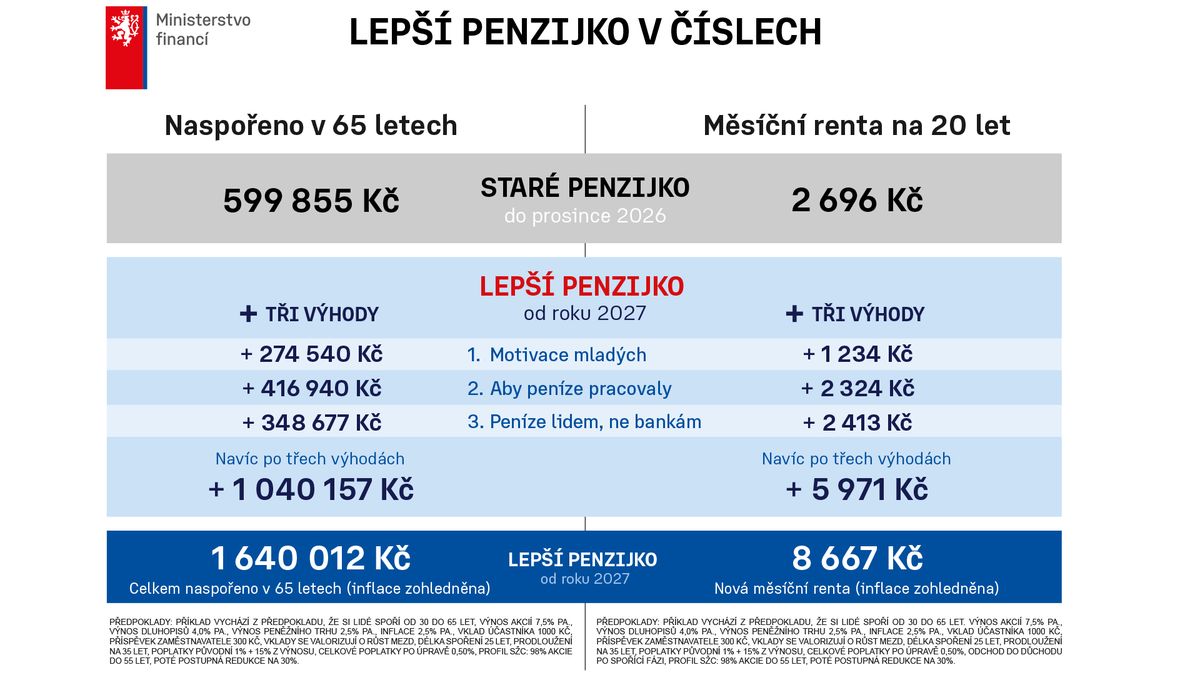
Reforma penzijního spoření, kterou představila ministryně financí Alena Schillerová, zavádí nová zvýhodnění pro mladé účastníky a podporu životního cyklu investic, ačkoliv opozice navrhuje další změny pro zvýšení flexibility a konkurence v systému, zahrnující větší motivaci pro mladé spořitele a úpravy v poplatcích. #penzijnireforma #mladistav #investice

www.novinky.cz
Reforma penzijního spoření má podporu opozice. Ta chce zapojit fondy i do výstavby bytů
17274
Giorgia Meloni Jun 12

Vyžaduji řídicí model schopný vyvážit potřebu flexibility a pohody zaměstnanců s nutností zajistit včasné reakce na institucionální priority.

Italové se bouří proti Meloniové. Nutí je chodit do práce čtyři dny v týdnu 
zpravy.aktualne.cz
11325
E15.cz May 20

Článek se zabývá debatou o regulaci platformové práce v Česku, přičemž manažerka Woltu, Veronika Bush, upozorňuje na důležitost zachování flexibility, kterou si kurýři vybírají, a varuje před možnými negativními dopady přísnějších pravidel na celý trh práce, když většina kurýrů preferuje zůstat nezávislými živnostníky. #platformováPráce #flexibilita #Wolt

www.e15.cz
Práce na šest hodin týdně. Většina kurýrů nechce klasické zaměstnání, tvrdí manažerka Woltu
16141