WRLD

Search

#Criticism
Gunther Fehlinger-Jahn 1d

The author said their post had been blocked in India under Indian Information Technology rules after they criticised political detentions and called for freedom of protest. They wrote that the restriction showed why free speech mattered and said democracies must tolerate criticism. https://t.co/BCuYZECeCF #FreedomOfSpeech #Democracy #India #IN

3042
Fabrizio Romano 4d

Aurelien Tchouaméni said Real Madrid had to win trophies this season, describing that ambition as part of what made the club the biggest in the world. Speaking to France 24, he said criticism should be assessed at the end of the season and added that the team needed to perform better, which he said it had failed to do over the previous two seasons. https://t.co/dEuwQPj3LI #RealMadrid #Trophies #LaLiga #FR #ES

3368
Петър Дочев 6d

Arthur Schopenhauer: Knowing too many truths about man, I cannot expect anything good from him. Absolute proof of the truth of this statement is the contemplation and possibility of realizing the greatest crime of the destruction of the Earth and all humanity by the ruling global elite, as well as the endless wars and genocides committed by it. What negative qualities in humans did Schopenhauer discover that deeply disappointed him? A blind, irrational, and insatiable drive that governs all people and pushes them towards selfishness and suffering. Inherent selfishness and malice Selfishness is the main driving force of man. It is the desire for one's own well-being, which is often limitless. A person is willing to sacrifice the happiness of others to satisfy even the smallest whims. Malice (malevolence): The desire to cause harm or suffering to another without any personal gain, simply out of envy or sheer cruelty. Schopenhauer believes that humans are the only beings that take pleasure in the suffering of their kind. Lack of true morality. Most people do not possess true compassion. They behave "morally" or "civilized" only out of fear of the law, public opinion, or loss of reputation. If these external constraints are removed, a person quickly reveals their true, savage nature. Intellectual superficiality and stupidity. Schopenhauer was deeply disappointed by the low intellectual level of the majority. According to him, most people are: Herd animals: Prone to blindly follow fashion, authorities, and public opinion rather than think critically. Incapable of higher spiritual pleasures: Satisfied only with material goods, sensory pleasures, and empty conversations. Hypocrisy and falseness The philosopher views social rituals and etiquettes as a mask behind which people hide their hostility and selfishness. Politeness is merely "artificial skin," protecting us from mutual harm with our true intentions. Insatiability and eternal dissatisfaction Humans are doomed to an eternal cycle between desire (which brings pain until fulfilled) and boredom, devaluation, and weariness (which occur immediately after the desire is satisfied). This psychological trap makes people eternally grumbling, ungrateful, and unhappy beings. (translated)

youtu.be
ЕФРЕМОВ доказал: ПОДЛЫЕ люди живут лучше ЧЕСТНЫХ. Спустя 40 лет учёные ПРИЗНАЛИ его правоту!
792
Kurier 6d

The prices for eggs in supermarkets are expected to rise by up to 20 cents per pack due to increased feed costs and a drought summer, while the domestic poultry industry is expanding its production with more laying hens, especially in the organic and free-range sector, to avoid future shortages. #SPÖ #MichaelLudwig #AndreasRudas (translated)

kurier.at
Ex-Spindoktor Rudas: „Ludwig hat die SPÖ wieder zusammengeführt“
1698
Euronews English 1w

The new guidance comes as the Trump administration faces mounting criticism over a string of deadly incidents involving ICE officers. The agency downplayed the new measures, insisting they’re mere reminders and that current protocols will continue. #ICE #VehicleStops #LawEnforcement

www.euronews.com
New ICE guidance sets tighter rules for vehicles stops, bans officers from high-speed chases, memo reveals
1599
Sabine Hossenfelder 2w

The post said Silicon Valley’s most popular nuclear fusion project had received heavy scientific criticism.

573
Gunther Fehlinger-Jahn 2w

Turkey’s inflation crisis remains severe. Official CPI inflation was 31.51% year-on-year in August 2026, while the Central Bank kept its policy rate at 37% in September. My criticism of Erdoganomics is clear: years of unconventional monetary policy, political pressure on https://t.co/BRsELx1c4O #Turkey #InflationCrisis #Erdoganomics #TR

S
Sandfeen 2w

The Death of the Insult There was a time when being called an idiot was not a public-health emergency. You were called an idiot. You called the other person an idiot. Perhaps you argued, perhaps you fought, perhaps you laughed, had a beer and forgot about it. That may sound primitive. It was also a social technology. In traditional honor culture, an insult was a challenge: if someone attacked your status, you were expected to answer. Men in particular developed cultures of teasing, mockery and competitive abuse in which the ability to give and take an insult could itself demonstrate confidence. Then came dignity culture, with a liberating idea: you don’t have to care what everyone thinks of you. An insult does not necessarily diminish you. Someone else’s contempt does not become your inferiority simply because they express it. Now something else is emerging. Sociologists Bradley Campbell and Jason Manning describe victimhood culture, in which interpersonal offences increasingly become public grievances. The offended party seeks recognition, an audience and sometimes institutional intervention. The old question was: “Are you going to say that to my face?” The dignity question was: “Why should I care what you think?” The new question increasingly seems to be: “Who can I report this to?” This may illuminate an uncomfortable gender difference. Men have historically been more permitted to insult and confront one another directly, while women have often had greater incentives to avoid direct confrontation and use social pressure, criticism and complaint. Neither pattern is exclusively male or female, but cultural habits matter. The danger is a society so determined to protect people from offence that it forgets to teach them how to withstand it. There is a difference between being harmed and being insulted, between injustice and discomfort, and between demanding justice and demanding that nobody make you uncomfortable. We may have travelled from honor, to dignity, to grievance. And perhaps the most subversive sentence left is also the simplest: “Yes, he insulted you. So what?”

921
ERR 2w

Jean-Luc Mélenchon, the leader of the left-populist movement in France, has proposed that part of the country's national debt, particularly that owed to the French central bank, be cancelled or frozen, a suggestion that has sparked criticism from both political opponents and bankers while gaining some public support. #Prantsusmaa #JeanLucMelchon #riigivõlg

www.err.ee
Mélenchon tahab osa Prantsusmaa riigivõlast kustutada
1499
Gunther Fehlinger-Jahn 3w

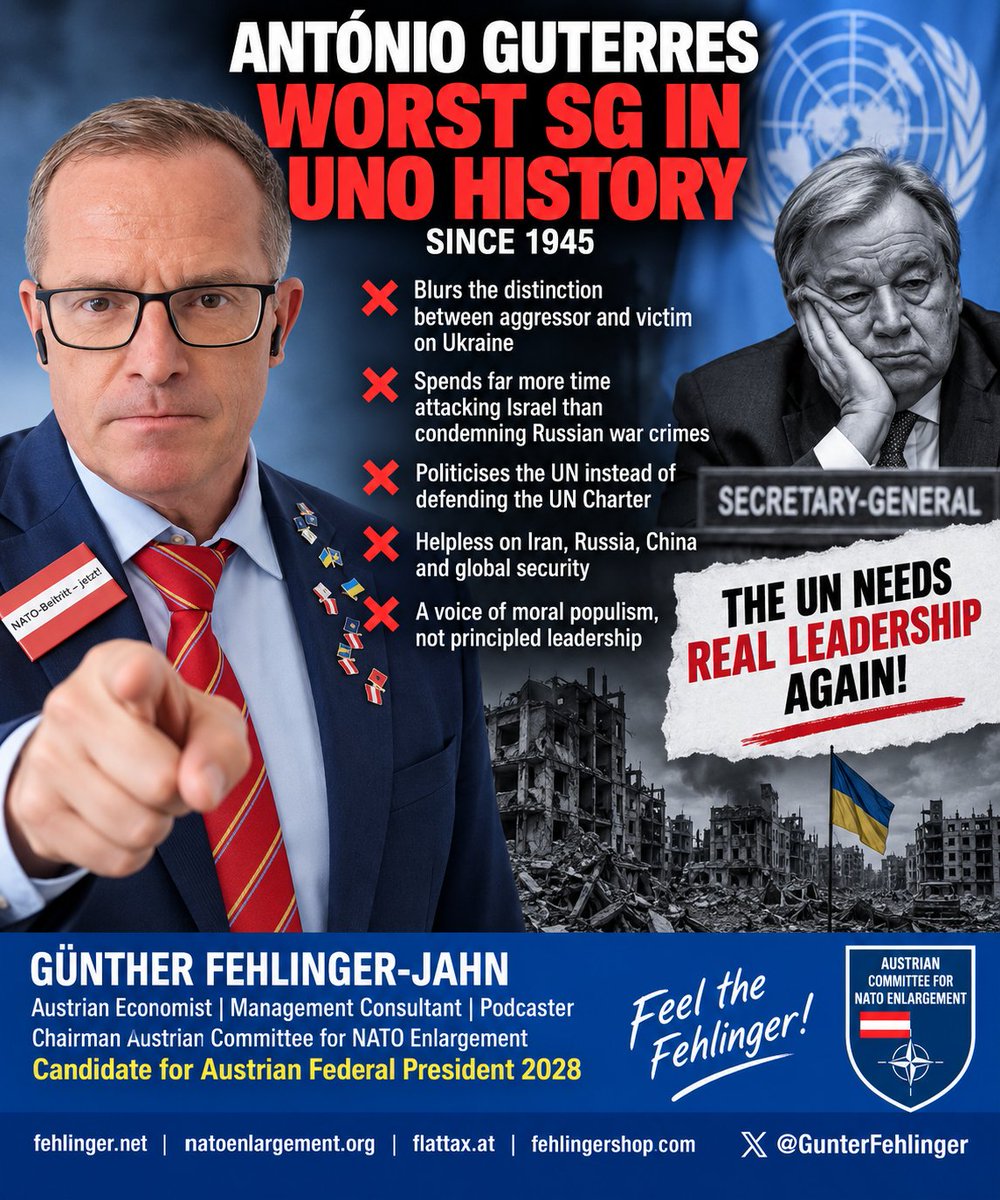
My criticism of António Guterres is fundamental: the UN Secretary-General must defend the UN Charter with absolute clarity, especially when Russia wages a full-scale war against Ukraine. Guterres himself called Russia’s invasion a “blatant violation” of the Charter, but I reject https://t.co/83952tYQST #UNCharter #Guterres #UkraineWar #RU #UA

S
Sandfeen 3w

The Death of the Insult There was a time when being called an idiot was not a public-health emergency. You were called an idiot. You called the other person an idiot. Perhaps you argued, perhaps you fought, perhaps you laughed, had a beer and forgot about it. That may sound primitive. It was also a social technology. In traditional honor culture, an insult was a challenge: if someone attacked your status, you were expected to answer. Men in particular developed cultures of teasing, mockery and competitive abuse in which the ability to give and take an insult could itself demonstrate confidence. Then came dignity culture, with a liberating idea: you don’t have to care what everyone thinks of you. An insult does not necessarily diminish you. Someone else’s contempt does not become your inferiority simply because they express it. Now something else is emerging. Sociologists Bradley Campbell and Jason Manning describe victimhood culture, in which interpersonal offences increasingly become public grievances. The offended party seeks recognition, an audience and sometimes institutional intervention. The old question was: “Are you going to say that to my face?” The dignity question was: “Why should I care what you think?” The new question increasingly seems to be: “Who can I report this to?” This may illuminate an uncomfortable gender difference. Men have historically been more permitted to insult and confront one another directly, while women have often had greater incentives to avoid direct confrontation and use social pressure, criticism and complaint. Neither pattern is exclusively male or female, but cultural habits matter. The danger is a society so determined to protect people from offence that it forgets to teach them how to withstand it. There is a difference between being harmed and being insulted, between injustice and discomfort, and between demanding justice and demanding that nobody make you uncomfortable. We may have travelled from honor, to dignity, to grievance. And perhaps the most subversive sentence left is also the simplest: “Yes, he insulted you. So what?”

462
Krzysztof Graj 3w

Russia’s fake African newsrooms – propaganda designed to look local A Facebook user in Nairobi, Accra, Johannesburg or Luanda encounters what appears to be a local news page. It publishes stories about African politics, Western influence and relations with Russia. The language is tailored to an African audience and the page presents itself not as a foreign broadcaster, but as part of the local information landscape. Behind some of these outlets, however, Meta found operators based in Russia. In its 2026 threat research, the company disclosed a Coordinated Inauthentic Behaviour network targeting audiences in Angola, Ghana, Kenya and South Africa. Meta removed 37 Facebook accounts and 29 Pages connected to the operation. Around 30,000 users followed at least one of the Pages, while the operators spent approximately $7,000 on Facebook and Instagram advertising, mostly in euros and US dollars. The numbers are relatively modest. The method is considerably more important. Rather than openly distributing Russian state messaging, the network posed as local African news sources and grassroots organisations, promoting narratives about Western colonialism and political interference while presenting Russia as a credible economic and political alternative. It was an old geopolitical message delivered through a much more effective identity: not Moscow speaking to Africa, but Africans apparently speaking to one another. A news outlet that was actually an influence operation Meta's investigation found that the network attempted to conceal its Russian origin while creating media brands that appeared indigenous to the countries they targeted. Its content amplified historical grievances against former colonial powers, criticised Western involvement in Africa and promoted closer relations with Russia. One example helps illustrate how the infrastructure was assembled. A Facebook Page targeting Kenya was called Kenya Watchtower. According to OpenAI's subsequent investigation, Facebook transparency records showed that the Page had previously been named “Farmtown5”. It appears to have been acquired or repurposed rather than built from scratch as a Kenyan news organisation. Some Pages also exposed administrator locations in Russia and Ukraine. Other elements of the network had previously targeted audiences in Zambia and Namibia. This use of apparently local identities is particularly important in the African information environment. A story published by RT or another identifiable Russian outlet arrives with an obvious geopolitical provenance. The same narrative presented by something resembling an independent Kenyan, Ghanaian or South African newsroom carries a different kind of credibility. The source appears closer to the reader, and the geopolitical interest behind the message becomes less visible. Then investigators found Dr Manuel Godsin The Facebook operation was only one part of a broader information ecosystem. OpenAI investigated related activity after receiving information from Meta and subsequently banned a ChatGPT account it assessed as likely originating in Russia. OpenAI called the campaign Operation No Bell. The account was being used to generate long-form articles and social-media posts about African geopolitics. Prompts were primarily written in English, but OpenAI also observed Russian-language instructions that the user described as coming from a manager. The operator sometimes explicitly asked the model to make the material appear less AI-generated – including requests to avoid stylistic features associated with machine-generated text and to write more like a human journalist. Many articles appeared under the name “Dr Manuel Godsin”, presented as an academic with a PhD from the University of Bergen and an affiliation with an organisation called the International Centre for Political and Strategic Studies. OpenAI could find no credible evidence that Godsin existed. Searches of Norway's National Research Information Repository and the University of Bergen library produced no record of him. Investigators subsequently discovered that a photograph used to represent Godsin had appeared years earlier on a Russian professional networking site and apparently belonged to a law student in St Petersburg. The fabricated academic identity was nevertheless remarkably productive. OpenAI identified 53 online articles carrying the Godsin byline. The fiction had moved beyond fake social-media pages and into the real media ecosystem. When propaganda enters genuine newsrooms This is the most consequential aspect of the operation. The articles were not confined to websites controlled by the influence network. Some were published by genuine African news organisations, including established South African outlets. The content mixed local political issues with broader geopolitical narratives. Some pieces criticised the United States and Britain or defended Russia's role in Africa. One accused the British NGO Crisis Action of fomenting protests in South Africa. Another praised Russia's presence in the Central African Republic. Other material addressed Kenya, Angola and relations between African governments and Washington. The mechanism represents a significant evolution from the classic troll-farm model. Instead of building an audience entirely on its own platforms, an influence operator can manufacture an apparently credible expert, generate articles in his name and persuade genuine news organisations to publish them. Once this happens, the propaganda acquires something a fake Facebook Page cannot provide: the institutional credibility of a real newsroom. OpenAI assessed No Bell's social-media impact as limited. One Facebook Page had around 3,000 followers before Meta removed it, while several others had very small audiences. But the operation was more successful in placing material in established media. In OpenAI's impact framework, it approached the level at which an influence operation breaks into mainstream media. For information operators, a single article published by a recognised outlet can potentially be more valuable than thousands of impressions generated by an obviously artificial account. A much larger network of ghost journalists Subsequent research suggests that Manuel Godsin was not an isolated experiment. In August 2026, Graphika, working with Code for Africa and with support from Meta, published a much broader investigation into Russian ghostwriting operations across African media. Researchers identified 44 ghost writers and fake experts, 38 of them assessed as high-confidence fabricated personas, operating between 2021 and 2026. Their material appeared or was quoted across 138 websites and was subsequently republished through at least 113 Facebook accounts and Pages, including authentic users, coordinated inauthentic networks and official Russian communication channels. The narratives were strikingly consistent. They included criticism of France, Ukraine and the United States; attacks on organisations such as ECOWAS and the International Criminal Court; positive portrayals of Russian involvement in Africa; praise for Russian paramilitary forces; and support for sovereignty-oriented political projects such as the Alliance of Sahel States. The operation therefore extends beyond creating fake news websites. It attempts to insert Russian-aligned narratives into the legitimate African media ecosystem using identities that appear African, independent or academically authoritative. This also explains why measuring reach through the original Facebook network alone is misleading. A fabricated article may begin with an influence operator, appear in a genuine African publication, be republished elsewhere and eventually circulate without any visible connection to Russia. At that point, the provenance of the narrative has effectively been laundered. An old Russian strategy with increasingly local faces Russia's use of local intermediaries in Africa is not new. Meta documented Russian networks using African nationals as early as 2019. In 2020 it dismantled another operation involving people in Ghana and Nigeria working on behalf of individuals in Russia, with links to previous activity associated with the Internet Research Agency. More recent Meta investigations suggest that this model has continued to evolve. Networks have increasingly relied on local freelancers, social-media managers and authentic media outlets rather than exclusively operating armies of obviously fake Russian-controlled accounts. This decentralisation offers several advantages. Local operators understand language, political sensitivities and cultural references. Authentic accounts are harder to identify than newly created synthetic personas. Local media brands can also deliver narratives without immediately triggering the scepticism associated with Russian state outlets. There is no evidence that every African journalist, freelancer or publication carrying such material knowingly participates in Russian influence activity. Meta explicitly notes in its investigations that some local contractors may not know who ultimately commissioned their work. That distinction is essential. The operation's effectiveness partly depends on precisely this ambiguity between deliberate participation, commercial content placement and unwitting amplification. The objective is to make Russian narratives look African The significance of this network is therefore not its 30,000 Facebook followers or its $7,000 advertising budget. Those figures are small compared with the audiences of major African media organisations. What matters is the distribution model. Traditional foreign propaganda asks an audience to trust a foreign source. These operations attempt to remove the foreign source from the equation altogether. A Russian geopolitical narrative can be generated with AI, attributed to an expert who does not exist, published by a media organisation that does, amplified through a Facebook Page presenting itself as local, and then rediscovered elsewhere as apparently independent African analysis. By the time the reader encounters it, Moscow may have disappeared completely from the chain of attribution. The resulting information operation is therefore less about making Russian propaganda more persuasive than about making it look as though it is no longer Russian propaganda at all. In an increasingly fragmented African media environment, that may be the more important evolution to watch. SOURCES: Meta Threat Research https://threatresearch-team.github.io/indicators/meta-h1-2026-russia-based-cib-network-1/ OpenAI — Operation “No Bell” https://openai.com/index/disrupting-malicious-uses-of-ai-no-bell/ Graphika — Umbrae Ex Machina https://www.graphika.com/reports/umbrae-ex-machina News24 https://www.news24.com/southafrica/news/ai-expert-exposed-fake-kremlin-linked-analyst-planted-stories-in-african-media-20260318-0560 Vanguard https://www.vanguardngr.com/2026/03/ai-expert-exposed-fake-kremlin-linked-analyst-planted-stories-in-african-media/ Meta — Russian Coordinated Inauthentic Behaviour, 2019 https://about.fb.com/news/2019/10/removing-more-coordinated-inauthentic-behavior-from-russia/ Meta — Russian Coordinated Inauthentic Behaviour, 2020 https://about.fb.com/news/2020/03/removing-coordinated-inauthentic-behavior-from-russia/ Meta Threat Research — Russian Use of Authentic Operators in Sub-Saharan Africa https://threatresearch-team.github.io/indicators/meta-h2-2025-russia-based-cib-network-2/ KEYWORDS: #DISINFORMED #Episode7 #Russia #Africa #RussianDisinformation #RussianInfluence #Disinformation #InformationWarfare #InfluenceOperations #ForeignInterference #FIMI #CoordinatedInauthenticBehaviour #CIB #FakeNews #FakeMedia #FakeNewsrooms #MediaImpersonation #GrassrootsManipulation #Astroturfing #ArtificialIntelligence #AI #AIPropaganda #SyntheticMedia #FakeInfluencers #SocialMediaManipulation #Facebook #Meta #OperationNoBell #AfricanMedia #MediaManipulation #Propaganda #DigitalInfluence #Angola #Ghana #Kenya #SouthAfrica #OSINT #WRLD

threatresearch-team.github.io
Russia-Based Influence Operation Network Targeting Sub-Saharan Africa
1040
Krzysztof Graj 3w

Mali – a war where some of the people fighting do not exist In Mali's war, an apparently simple question is becoming increasingly difficult to answer: who exactly is speaking to us? A real person? A rebel organisation? A Russian influence operation? A supporter of the military junta? Or somebody who has never existed at all? In September 2026, the Dakar-based Timbuktu Institute published Des algorithmes en guerre, a report examining the use of generative artificial intelligence by actors involved in the Malian conflict. Its researchers describe the country as a potential laboratory for AI-assisted information warfare. Separatist networks are deploying synthetic fighters on TikTok. Jihadist propagandists are experimenting with AI-generated imagery. Pro-government accounts are producing large quantities of content celebrating the Malian armed forces. Russia, meanwhile, operates the most developed influence infrastructure of all: pseudo-media outlets, inauthentic accounts, AI-generated text, images and video, and systems designed to artificially amplify their visibility. Artificial intelligence did not create Mali's conflict. The war has been under way since 2012, and its participants have always fought with propaganda as well as weapons. What AI has changed is the economics of that struggle. A new “witness”, commentator, fighter, poster or video can now be produced in minutes. For audiences watching from a phone, distinguishing between genuine documentation, propaganda and material created entirely by an algorithm is becoming progressively harder. Azzghim – the fighter who cannot be killed or interrogated The most striking case documented by the Timbuktu Institute involves accounts associated with supporters of the Azawad Liberation Front, or FLA, a Tuareg separatist movement fighting the authorities in Bamako. A figure called “Azzghim” appeared on TikTok. He looks like a Tuareg fighter and regularly features in videos attacking Mali's government and Russia's Africa Corps, commenting on the conflict and promoting the cause of Azawad. There is one problem: Azzghim does not exist. Analysis of the videos identified anomalies characteristic of generative AI, including unnatural body movements, visual inconsistencies, irregular colouring and problems with audio synchronisation. According to the Timbuktu Institute, Azzghim is a synthetic character being used as the digital face of a political narrative. The propaganda advantages are considerable. An organisation no longer needs to expose a real spokesman. A synthetic personality can be designed to look exactly as its creators require, speak the appropriate language and appeal to a particular audience. Different characters could potentially be created for younger viewers, traditional communities or different ethnic and social groups. There is another advantage: a synthetic spokesman cannot be arrested, identified or interrogated. Researchers also identified accounts amplifying the material. At the time of the study, TikTok account @tawri.n.azawad had around 207,000 followers and was almost entirely devoted to publishing or repackaging content involving Azzghim. Another account, @asnan831, used a similar synthetic teenage character. An important distinction is necessary. Researchers describe these profiles as belonging to supporters or individuals associated with the FLA. The available evidence does not establish that every account is part of an operation centrally directed by the Front's leadership. The information effect, however, remains significant: a digital community can be constructed around the Azawad cause in which some of the apparent participants may not be real people at all. The jihadists are learning too The picture is different for Jama'at Nusrat al-Islam wal-Muslimin, or JNIM, the al-Qaeda-affiliated coalition that has become one of the most powerful armed groups in the Sahel. Its confirmed use of generative AI remains considerably less sophisticated. In June 2026, JNIM's Az-Zallaqa media apparatus published AI-generated posters promoting material about previous attacks. The images showed fighters in combat but contained familiar generative artefacts: buildings and vegetation merging unnaturally, blurred details and unnaturally smooth surfaces. More important than JNIM's current capabilities is what AI could add to an already sophisticated propaganda apparatus. The organisation already tailors communications to different audiences. UN reporting has documented its use of media channels for broader propaganda while other outlets increasingly distribute material in local languages, including Bambara. Generative AI could dramatically reduce the cost of this strategy, translating material into Fulfulde, Hausa, Zarma or Tamasheq, generating synthetic dubbing and producing multiple versions of the same message. The Timbuktu Institute also considers the future possibility of AI chatbots being used to personalise recruitment. That should not be presented as a capability JNIM has already demonstrated. At present, it is a risk scenario rather than a confirmed operation. Russia has the most sophisticated machine At the other end of the spectrum lies Russia's influence ecosystem. Here, AI is not an isolated experiment but another component of an infrastructure previously developed by Wagner-linked networks, Russian media operations and influence organisations operating across Africa. After Wagner's withdrawal from Mali in 2025, its military role was taken over by the Russian state-controlled Africa Corps. The information infrastructure evolved alongside it. Of particular importance is African Initiative, which presents itself as a news agency but has been identified by France's VIGINUM, the UK's Foreign, Commonwealth & Development Office and the European External Action Service as an important component of Russia's newer influence architecture in Africa. One of the most interesting elements of this ecosystem is a network researchers call AI-Freak. The operation uses generative AI to produce text, images and videos, places them on fake or apparently independent news websites and distributes them through inauthentic accounts. This is supplemented by so-called Black Hat SEO – techniques intended to artificially increase the visibility of content in search engines. Elements of this infrastructure have previously been identified by Meta and OpenAI. In 2024, OpenAI disrupted Russian accounts using ChatGPT to generate articles and comments in English, French and Russian. Some of the French-language content targeted audiences in West Africa. In a later iteration of the operation, AI models were also used to draft scripts for short videos praising the Russian Africa Corps, translate them into French and generate descriptions optimised for social media. This illustrates an important difference between the Russian approach and Azzghim. The separatist ecosystem uses AI primarily to manufacture convincing digital personalities. The Russian model increasingly resembles an industrial production line: text, image, video, pseudo-news website, distribution account, search optimisation and additional channels amplifying the narrative. The objective is not merely to convince someone of a single claim. It is to occupy as much of the information environment as possible with narratives advantageous to Moscow: Russia as an effective security partner, the West as a neo-colonial aggressor, France as a source of instability and Russian forces as defenders of African sovereignty. Yet VIGINUM also warns against equating technological sophistication with actual impact. Some Russian influence channels still attract relatively small audiences. A sophisticated operation is not automatically a successful one. The junta is building its own digital reality Mali's military authorities operate within the same contested information environment. Since breaking with France and moving closer to Moscow, Bamako has increasingly restricted independent media space while promoting a narrative built around restored sovereignty, military success and the benefits of its Russian partnership. The Timbuktu Institute highlights the TikTok account @6tm_officiel. At the time of the study, it had more than 436,000 followers and published substantial amounts of AI-generated material presenting Mali's armed forces, the FAMa, and the Africa Corps in a favourable light. One video concerning the battle for Kidal accumulated around 4.7 million views. Again, attribution requires care. Researchers describe the account as being operated by an individual based in Bamako; they do not provide evidence that it is officially managed by the Malian government. It is better understood as part of a wider pro-government information ecosystem in which the boundaries between state communications, supporters and co-ordinated propaganda can be difficult to establish. The Africa Center for Strategic Studies has previously identified the military regimes in Mali and Burkina Faso as important sources of disinformation campaigns in West Africa. Recurring narratives target France, the United Nations, ECOWAS, human-rights organisations and independent media, while presenting criticism of the authorities as part of a foreign conspiracy. Generative AI allows such narratives to be produced faster, more cheaply and in far more variations. Everyone is fighting over a different version of the same war What makes Mali particularly revealing is that multiple actors are using similar technology for very different objectives. FLA-linked networks need digital faces capable of humanising the Azawad cause and attacking Russia's presence. JNIM needs propaganda material and increasingly localised communications. The pro-government ecosystem seeks to portray Mali's armed forces as victorious and reinforce the junta's legitimacy. Russia possesses the broadest infrastructure, in which AI is merely one component of a larger system involving media outlets, websites, local partners, social-media profiles and technical amplification. The result is a war taking place simultaneously in two realities. In the first, soldiers and civilians are killed, towns change hands and the army, separatists and jihadists fight for territory. In the second, every side is trying to determine what the first reality will look like on a smartphone screen. Generative AI does not need to create a perfect deepfake to be effective. It merely needs to increase the number of competing versions of events until an ordinary viewer can no longer easily determine which one deserves to be trusted. That is why Mali matters. It is not showing us the future of information warfare. It is showing us its present. One TikTok video may feature a real soldier. Another may feature a propagandist. A third may feature a fighter who has never existed. And all three can tell completely different stories about the same war. Sources Timbuktu Institute – Des algorithmes en guerre: Comment l'IA générative rebat les cartes du conflit malien https://timbuktu-institute.org/index.php/toutes-l-actualites/item/1731-rapport-des-algorithmes-en-guerre-comment-l-ia-generative-rebat-les-cartes-du-conflit-malien AfricaNews/AFP – “Mali's information war is increasingly being shaped by AI” https://www.africanews.com/2026/09/09/malis-information-war-is-increasingly-being-shaped-by-ai/ OpenAI – research on Russia-origin influence activity and Operation Stop News https://openai.com/index/disrupting-malicious-uses-of-ai-stop-news-2024/ VIGINUM / FCDO / EEAS – technical report on African Initiative and the AI-Freak network https://www.sgdsn.gouv.fr/files/files/Publications/20250612_TLP-CLEAR_VIGINUM_FCDO_EEAS_Technical_Report_African_Initiative_EN.pdf Africa Center for Strategic Studies – Mapping a Surge of Disinformation in Africa https://africacenter.org/spotlight/mapping-a-surge-of-disinformation-in-africa/ Timbuktu Institute – analysis of AI use by JNIM https://timbuktu-institute.org/index.php/toutes-l-actualites/item/1735-artificial-intelligence-a-new-propaganda-lever-for-jnim-in-mali?print=1&tmpl=component #Disinformation #Mali #Sahel #Africa #ArtificialIntelligence #AI #GenerativeAI #AIPropaganda #InformationWarfare #InfluenceOperations #Propaganda #Deepfakes #SyntheticMedia #Azawad #FLA #JNIM #AfricaCorps #Russia #RussianInfluence #TikTok #DigitalWarfare #MediaManipulation #WRLD

timbuktu-institute.org
Rapport - DES ALGORITHMES EN GUERRE : Comment l'IA générative rebat les cartes du conflit malien
1623
Gerd Leonhard 4w

One of AI’s Fiercest Critics Says All the Doom Talk Is ‘Meant to Distract Us’ | WIRED https://t.co/K1uvtLfkH8 #AI #Doomsday #Criticism #Nospecificcountrycodesarementionedinthetweet.

Paul Murphy 🇵🇸 4w

Fair play to the tens of thousands on the streets today. Even if Martin couldn't bring himself to utter a single word of criticism, the message to Epstein-Island Trump is clear. We reject his imperialist wars, his cost of living crisis, climate denialism, racism, & misogyny. https://t.co/IeALMa8bpq #FairPlay #JusticeForAll #RejectImperialism #US

698
Paul Murphy 🇵🇸 4w

I'm so proud of the tens of thousands who turned out to oppose Trump. Even if Micheál Martin couldn't bring himself to utter a single word or criticism, the people's message is clear. We reject Trump's wars, his cost of living crisis, climate denalism, racism and misogyny. https://t.co/PgdHIp5YX0 #OpposeTrump #ClimateAction #StandTogether #IE

349
S
Sandfeen 4w

Leszek Kołakowski: Marxism, Historical Truth, and the Dangers of Political Absolutism Kołakowski was a major intellectual figure because he combined serious philosophical training, firsthand experience of communism, and the courage to revise his own convictions. He was not an anti-communist attacking Marxism from outside. He had once believed in Marxism and understood its appeal from within. After the 1956 thaw, he initially tried to recover a more humane Marxism based on freedom, dignity, and opposition to bureaucratic tyranny. His later criticism therefore carried unusual weight: it came from someone who had taken the doctrine seriously and tried to save it. His importance also lies in the distinctions he made. He did not simply equate Marx, Lenin, Stalin, and every form of socialism. In *Main Currents of Marxism*, he traced the development of Marxist ideas and examined how concepts such as historical necessity, class conflict, ideological truth, and the revolutionary party could encourage political intolerance. His central warning was that a movement claiming privileged access to historical truth may eventually treat disagreement not as legitimate opinion but as error, reaction, or treason. Once one party claims to represent history or humanity, it can justify controlling the press, courts, universities, civil society, and private life. This helps explain why communist regimes so often produced censorship, one-party rule, political policing, and coercive social transformation. My evaluation is that Kołakowski identified a genuine danger in Marxist political theory: the tendency to subordinate individual freedom and institutional pluralism to an allegedly necessary historical goal. His critique also makes the phrase “that was not real Marxism” inadequate on its own. Kołakowski’s greatest achievement was therefore not proving that “Marxism equals terror.” It was showing why a doctrine promising total liberation can become dangerous when it also claims total knowledge and gives one political organization the authority to impose that promise.

466
(fan) Gabby Sep 10

🚨 Arsène Wenger talks about the connection between Tzolis and Ødegaard: “Ødegaard has found his Bergkamp in Tzolis” — Arsenal will win the Champions League! 🗣️ Arsene Wenger: “I was in Italy yesterday night with Mesut Özil and before the game, Özil told me this Øde x Tzolis relationship is special and they would have a say in this game. I wasn’t really sure because obviously Tzolis didn’t start.” But the moment he came on from the bench and dropped that assist I smiled, I looked at Özil and told him this Tzolis is special. In 1996 they said ‘Anelka who?’ Same thing they said when they signed Tzolis, ‘Tzolis who?’ this is the same feeling. You see a boy come on and change the game with one touch, you know he is different. He has 4 assists and out of the 4, 3 has been for Ødegaard. This reminded me of Özil x Sanchez. When Alexis arrived he was good, but when Mesut started feeding him he became unplayable. Now Tzolis is doing the same for Martin — he is feeding him every game and Martin is thriving again. He didn’t need to look, Tzolis didn’t need to stop running. That is the secret of a great partnership. It was the same with Henry and Bergkamp Dennis didn’t need to look, Thierry was already running. One has the eyes, one has the legs. You cannot coach that, you can only feel it. And if Arsenal wants to retain the league and win that Champions League, Ødegaard will be very important because he is the best of this team. He took last season’s criticism personal. Now with Tzolis, he has found his Bergkamp, unplayable like Henry x Bergkamp and sensational like Özil x Sanchez all over again.” #Arsenal #ChampionsLeague #Football

12236
Francesca Albanese, UN Special Rapporteur oPt Sep 9

Why do western governments: - partner with Israel against Intl Law/despite widespread public opposition? - restrict criticism of Israel despite its crimes? - repress citizens protesting those crimes? They seem able to afford ignoring their people. Quite illiberal for democracies. #Israel #InternationalLaw #Democracy #IL #US

8860
Francesca Albanese, UN Special Rapporteur oPt Sep 9

Criminalising ideas does not protect people from racism. Education and social cohesion do. Italy's Antisemitism DDL does the opposite: by conflating antisemitism with criticism of Israel/Zionism, it violates freedom of expression, fuels social division, and harm Jewish people. #FreedomOfExpression #Antisemitism #SocialCohesion #IT

16437