The article by Sinéad Ring discusses how messages exchanged on dating apps are undermining legal protections for individuals who report rape. #SeguridadEnLinea #ProteccionWeb #Cookies
Singapore has introduced a government dating app to increase the birth rate, which is at a historic low of just 0.87 children per woman, and is using an algorithm to match potential couples. #Singapur #Geburtenrate #DatingApp (translated)

Disinformation for hire – the network of 70 fake newsrooms sold as a service The websites looked local. Naija Pulse appeared to cover Nigeria, Echo Berlin Germany, The British Daily Britain, Fifty States the United States and Commonwealth Post Australia. Each had its own branding, articles, supposed journalists and matching social-media presence. Taken individually, they resembled small independent news outlets. According to Anthropic, however, they were parts of a single commercial influence network spanning six continents. Anthropic’s September 2026 threat report identifies the operation as GTG-54002, a commercial “influence-as-a-service” network that used Claude to generate and rewrite political content at industrial scale. Investigators linked roughly 70 fabricated news websites to around 70 matching X accounts and more than 250 additional inauthentic commenting accounts designed to create the appearance of genuine public engagement. The network produced at least 8,913 articles in about 20 languages before Anthropic disrupted the activity. The significance of the case is not simply the number of fake sites. It is the business model. The network did not consistently promote one government, party or ideology. Anthropic found that its political position changed according to the apparent interests of different customers. The company therefore described it as a commercial influence operation: political manipulation offered in much the same way as other outsourced digital services. A fake media ecosystem built at scale Anthropic says the infrastructure was created rapidly. Domains were registered from France during a roughly ten-week period in mid-2025 and deployed through shared technical infrastructure, allowing investigators to connect publications that outwardly appeared unrelated. Most of the supporting social-media accounts were also created within a narrow timeframe in June and July 2025. The sites were designed to look like functioning local newsrooms rather than anonymous propaganda pages. Articles carried fabricated bylines belonging to journalists who, according to Anthropic, did not exist. Each outlet had a corresponding account on X, while a second layer of fake profiles commented on and amplified the articles. Many of those accounts used AI-generated profile photographs. The result was a three-tier structure: the newsroom published the story, the branded social account distributed it, and apparently ordinary users supplied the appearance of public reaction. Some of those sites remained publicly visible after the operation was exposed. The British Daily, for example, described itself as providing “conservative insights” on British sovereignty and migration, while Commonwealth Post presented itself as an Australian liberal publication focused on democracy, migration and regional security. Those contrasting editorial identities illustrate the central feature identified by Anthropic: the network was capable of taking different political positions in different markets. Claude as a publishing engine Claude was not simply asked to draft occasional articles. The operators built a structured production pipeline around it. Prompts required fixed JSON outputs, formatted HTML, precise character limits and internal links, allowing articles to move directly into an automated publishing workflow. The system could generate entirely new material or take reporting produced by legitimate journalists and rewrite it to fit a desired political perspective. Anthropic identified three recurring techniques. The same source article could be rewritten in opposite ideological directions for different audiences; a political interpretation could be added to a story that originally contained none; and material could be moved from one country to another after its original context had been removed. The articles were also structured to improve the apparent authority of the sites in search engines, helping the network imitate ordinary digital publishing practices rather than simply broadcasting propaganda. This is where generative AI changes the economics of an influence operation. A conventional network of dozens of supposedly local publications would normally require writers, translators, editors and social-media staff. Here, much of that production could be standardised and automated while human operators concentrated on political direction, customer requirements and distribution. The DRC–Rwanda conflict as a test case The clearest concentration of activity involved the Democratic Republic of Congo. Anthropic identified 318 articles concerning the DRC across the fake-news network. The material generally supported positions aligned with the Congolese government, particularly on regional mineral agreements and tensions with Rwanda. Early in the network’s growth, many of the fake social-media personas following and amplifying its accounts also presented themselves as Congolese. Investigators observed one especially revealing episode on 11 September 2025, when multiple sites published almost identical articles about the DRC–Rwanda conflict within approximately three minutes of one another. The wording and political tone were adjusted for different regional audiences, while associated X accounts distributed the links in a coordinated pattern. Anthropic said the activity contained signals suggesting that one or more customers had interests connected to the DRC–Rwanda conflict. It did not, however, identify those customers and explicitly stated that it found no evidence that any government had directed the operation. That distinction is essential. The content may have benefited a political actor without demonstrating that the actor commissioned or controlled it. Influence without ideology Commercialisation is what distinguishes GTG-54002 from many state-linked information operations. A government propaganda network usually has an identifiable strategic direction. A commercial influence provider does not need one. Its infrastructure can support one position in one country and the opposite position somewhere else, provided different customers are willing to pay. That makes attribution more difficult. Analysts cannot necessarily infer the operator from the ideology of the content because ideology may simply be part of the service package. The enduring asset is the infrastructure: domains, publishing systems, fake journalists, social-media accounts and automated amplification. Anthropic says the operation was disrupted before it achieved significant genuine reach. It classified GTG-54002 as Category Two on the Brookings Breakout Scale: material circulated across the network’s own sites and associated social accounts but showed no evidence of substantial penetration into authentic communities. Most of the 8,913 articles generated little observable engagement from real users. That limited impact is important. The case should not be presented as a successful global manipulation campaign. It is better understood as evidence that the infrastructure required to run such campaigns has become cheaper, faster and increasingly commoditised. The deeper shift is that a fake media ecosystem no longer has to be built around a single political cause. It can be built once, automated and then repurposed for the next customer. Disinformation, in this model, is no longer only a political instrument as it turend into the service. Sources: Anthropic — Countering misuse of AI: September 2026 https://www.anthropic.com/threat-intelligence-report-september-2026 Business Standard — AI scaling fake newsrooms, surveillance and online scams https://www.business-standard.com/technology/tech-news/anthropic-report-ai-fake-newsrooms-dating-surveillance-scams-126091100730_1.html Mimikama — KI baut 70 erfundene Nachrichtenportale https://www.mimikama.org/ki-netzwerk-erfundene-nachrichtenportale-echo-berlin/ Poliscoop Media — Anthropic exposes DRC propaganda network https://www.poliscoopmedia.com/articles/anthropic-exposes-drc-propaganda-network-20260911 The British Daily — example of a fabricated outlet identified in the network https://www.british-daily.com/contact Commonwealth Post — example of a fabricated outlet identified in the network https://commonwealth-post.com/category/science MalPulse — infrastructure references for network domains https://www.malpulse.com/infra-pivots/usom-pivots/list/?page=1105 Keywords: #DISINFORMED #Episode13 #DisinformationAsAService #InfluenceAsAService #FakeNewsrooms #FakeMedia #SyntheticMedia #ArtificialIntelligence #AI #GenerativeAI #ClaudeAI #Anthropic #Disinformation #InfluenceOperations #InformationWarfare #FIMI #CommercialInfluence #PoliticalManipulation #NarrativeManipulation #NarrativeLaundering #SourceLaundering #MediaImpersonation #FakeJournalists #SyntheticPersonas #Astroturfing #SocialMediaManipulation #CoordinatedInauthenticBehaviour #CIB #DigitalInfluence #AutomatedPropaganda #ContentAutomation #AIPropaganda #LKMCompany #NaijaPulse #AxumVoices #JamboJournal #EchoBerlin #TheBritishDaily #FiftyStates #CommonwealthPost #DRC #Rwanda #OSINT #WRLD

PHILIPE ARIAS wrote that a foreigner was looking for someone to impregnate on SCRUFF Latino and claimed that he offered himself. https://t.co/p3uvaBm6ct #Citas #Dating #Amor (translated)
ich checke wenn männer sagen frauen im online dating sind schlimm, weil als ich mal hinge für beide geschlechter benutzt hab, waren es fast immer die frauen die geghostet haben und absolut keine konversation am laufen halten konnten #Dating #OnlineDating #Ghosting
no in realtà significa solo che avete rotto le palle di venire qua da noi che abbiamo due date in croce #dating #relazioni #comunicazione
Der Artikel untersucht, wie junge Männer durch Fitnessvideos und Dating-Tipps auf TikTok in die Manosphere hineingezogen werden und dabei eine frauenverachtende Radikalisierung erfahren, die oft nicht auf Hass, sondern auf der Suche nach Identität und Anerkennung basiert. #Medienkompetenz #Manosphere #TikTok

Die Dating-App Grindr hat zugestimmt, 26 Millionen Pfund zu zahlen, um eine Gruppenklage in Großbritannien beizulegen, die Vorwürfe über die unerlaubte Weitergabe sensibler Nutzerdaten, einschließlich des HIV-Status, erhebt. #Grindr #Datenschutz #Sammelklage

Die Dating-App Grindr hat einem Vergleich über 26 Millionen Pfund zugestimmt, um eine Gruppenklage in Großbritannien wegen der angeblichen Weitergabe von Nutzerdaten ohne erforderliche Einwilligung beizulegen. #Grindr #Datenschutz #Schadensersatz

🚨 ÇA C’EST DU DIVERTISSEMENT ! Le streamer NICO a organisé un Pop The Balloon avec un casting fou de streamers pendant le ZEVENT 😭 C’est un concept de dating où tu gardes ton ballon si la personne te plaît et tu le fais éclater si elle ne te plaît pas. https://t.co/8ZjkFnezlX #ZEVENT #streaming #divertissement
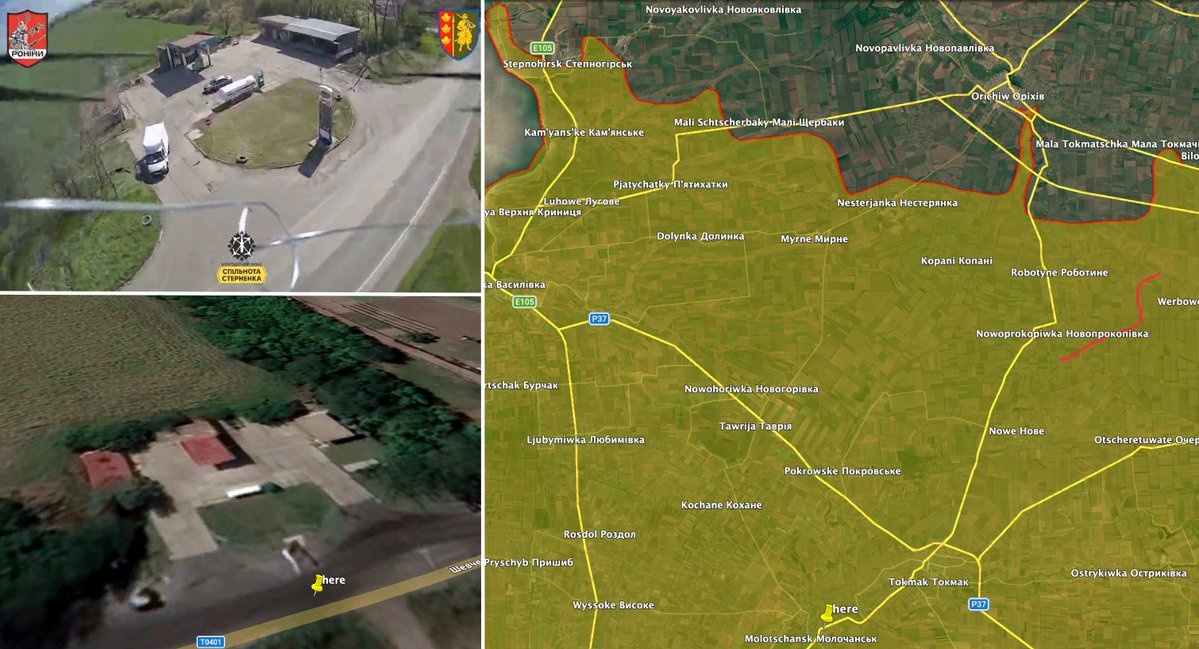
#NewsMap Ukraine reveals it mass-uses 50-km fiber-optic-guided drones since early summer this year. Latest publications from "Ronin" in Zaporizhzhia and "Signum" in Donetsk show dozens of attacks n Russian logistics, dating back several months. https://t.co/Bf5BLgOCbi #Ukraine #Drones #MilitaryStrategy #UA #RU
Junger Mann (28) wohnt noch bei seinen Eltern. Reaktion von Frauen. 🇩🇪 Deutschland: "Was? Der wohnt noch Zuhause?! Hotel Mama oder was?! Sorry, so jemanden date ich nicht!" 🇮🇹 Italien: "Wow, ihm ist Familie wichtig und er hat dadurch bestimmt viel Geld angespart um uns später mal ein eigenes Haus kaufen zu können" #Familie #Dating #Wohnsituation
The Downward Spiral of Gender Polarization The growing divide between men and women resembles less a debate than a divorce involving millions. Both sides escalate, talk past each other, and blame the other gender amid a mental-health crisis. Depression among Americans under thirty has doubled in eight years, while anxiety continues to rise. Each gender has failure modes and one successful path. Carl Jung called it individuation; a simpler term is integration. The integrated are not leading the conversation. The disordered are. Every man carries an inner feminine—the part that feels, intuits, and creates meaning. Jung called it the anima. Cut off from it, he becomes cold and contemptuous; overwhelmed by it, passive and moody. Every woman carries an inner masculine—the part that decides, asserts, and holds the line. Jung called it the animus. Cut off from it, she defers to stronger people; possessed by it, argumentative and rigid. I believe the four failure modes pair off. The cold, contemptuous man finds a timid woman who cannot challenge him; the red-pill industry calls this manhood. The passive man finds a domineering woman who can run his life; the feminist industry calls this liberation. A 2025 Nature Human Behaviour study of 14.8 million people in Taiwan, Denmark, and Sweden found that disordered individuals consistently marry one another across cultures and generations dating back to the 1930s. My theory is that integrated people increasingly date within a pool dominated by the disordered. They try, fail, and get hurt, then drift toward the same patterns. The pool corrupts those who might have healed it, creating a feedback loop. We are in a downward spiral: integrated people encounter disordered partners and become disordered themselves, while the already disordered grow worse. Reversal requires enough people to reject cynicism. When every encounter feels like proof that the other gender is broken, our own drift toward disorder begins to feel justified.
The Fracture That Kills the Family The West’s deepest divide may not be left versus right, but whether young men and women still share a vision of the good life. The nuclear family is society’s foundation, yet households struggle to form when the sexes view each other as opponents. Many women see marriage as patriarchal; many men see women as manipulative or exploitative. Relationships shift from mutual union to zero-sum power struggles. Christianity framed marriage as union—two people becoming one. Nietzsche warned the death of God would remove a shared moral foundation, leaving society vulnerable to nihilism and fragmentation. We are living that fragmentation. Young men often retreat into pornography, gaming, and prolonged adolescence. Young women increasingly frame sexual liberation as empowerment. Both chase proximate pleasures while losing ultimate purposes: family, responsibility, continuity, and creating life. Dating data reflects the fracture: among unmarried Americans aged 22–35, only 26% of women and 36% of men are actively dating. Ideology filters matches too—Gen Z and young millennials cite political compatibility far more than Boomers. Research also finds a mismatch: only 0.6 single liberal men per single liberal woman, and only 0.5 single conservative women per conservative man. Cross-ideological pairing has risen from 6% in the 1970s to 22% today. The consequences extend beyond dating: fertility has fallen below replacement across much of the West, and 42% of American adults were unpartnered in 2023. Policy responses—tax incentives, parental leave, baby bonuses—miss the deeper cultural and spiritual problem: you can debate taxes, but it’s hard to build a family when you disagree on masculinity, whether marriage is oppressive, or whether family is worth sacrificing for. The values gap is the disease. The political divide is the symptom. The household is the casualty—and when it cracks, everything built above it loses stability. The question is whether a civilization can survive when the two people it most needs to unite can no longer agree why they should.
The Pathology of Masculinity and Femininity Without Cultural Restraint Both sexes have evolutionary roles: men developed strength for protection, provision, and competition; women developed beauty and selectiveness for pair-bonding and survival. Culture channels these drives—family structure, dating norms, fatherhood, shame, religion—guiding strength toward building and beauty toward commitment. Remove the norms and the drives seek new avenues. For men, the open channel becomes force: aggression and risk can detach from responsibility, yielding robbery, assault, gang violence, and predation. The shadow side of masculinity is strength used to take rather than protect. For women, the channel shifts to extraction through simulated intimacy: monetized desire via platforms and influencer economies can turn closeness into leverage, often without the pair-bonding or family life it was built to support. The masculine ideal is protector and disciplined provider; its pathology is thug or criminal. The feminine ideal is nurturer and guardian of commitment; its pathology is the seller of simulated intimacy and extractor of attention. Both are corruptions of genuine virtues. Three accelerants intensified these patterns: stigma’s collapse, technology’s scalability of desire, and weakened communities and absent fathers. The root cause is the breakdown of family norms. Men are less destructive when bonded and mentored; women are less exploitative when raised to value enduring commitment. Consequences mirror each other: unchecked male pathology produces violence; unchecked female pathology produces mistrust, loneliness, and demographic decline. Both arise when culture denies that masculine and feminine virtues must be shaped and channeled rather than suppressed.
Jag till tinderdejten när hon mitt i min 2 timmar långa monolog om Napoleon frågar ”vad tänkte du ta till förrätt?” https://t.co/xAKtoLws2Z #Tinder #Dating #Humor
NOVITÀ A UOMINI E DONNE! Oggi ricominciano le registrazioni del dating show condotto da Maria De Filippi. Dopo tantissimi anni arriva una nuova opinionista che affiancherà Tina Cipollari e Gianni Sperti. #uominiedonne #anteprima #uominiedonne #dating #televisione
Men strive for greater physical attractiveness in a mate than the partner market provides, and the pickiest men spent more time in singledom. Humans seek to spend considerable portions of their lives in long-term mating relationships, yet remain selective about whom #Dating #Relationships #Attractiveness #Nospecificcountrycodescanbeidentifiedintheprovidedtweet.
Eine Analyse von Datenlecks zeigt, dass jede zwölfte betriebliche E-Mail-Adresse in Österreich für die Anmeldung bei Porno- oder Datingseiten genutzt wird, was erhebliche Risiken für Unternehmen und deren Mitarbeiter birgt, darunter mögliche Cyberangriffe und Reputationsschäden. #Cyberrisiken #Datenschutz #MailAdressen

Dnes si povíme o jednom z nejzajímavějších míst pro digitální nomády – o neobjeveném klenotu, který v podstatě není zmíněn v žádných žebříčcích nebo fórech pro digitální nomády, ale podle mého skromného názoru jde o absolutní banger, zvlášť pro Středoevropany a speciálně pro muže (ale i ženám se tam bude líbit). Jde samozřejmě o můj milovaný Užhorod, kde jsem v minulé dekádě prožil pět let života. Dodnes tam jednou dvakrát ročně jezdím a zažil jsem osobně neuvěřitelnou proměnu z polorozbitého města s hororovými silnicemi a smečkami pouličních psů na velmi důstojnou středoevropskou metropoli. Takže si bez falešné skromnosti troufám tvrdit, že mám o městě expertní znalosti, o které se rád podělím :) Na úvod se sluší zmínit, že na Ukrajině probíhá válka, ale samotné boje jsou od Užhorodu dál než Praha (!). Rakety do samotného Užhorodu za celou dobu války přiletěly pouze jednou – jedna trefila transformátor za městem, druhá sklad munice v průmyslové zóně. Navíc se to stalo pár dní po nástupu Pétera Magyara k moci, takže ten útok byl tak trochu i ruský vzkaz Maďarům - "ať moc nezlobí nebo bude zle". Zakarpatí, potažmo Užhorod (maď. Ungvár), vnímají Maďaři historicky jako svou sféru vlivu. Odhaduje se, že 20 % obyvatel Zakarpatí má druhý, maďarský pas, a některé obce jsou plně maďarské (především zemědělské vesnice na jihu u maďarských hranic). Rusové tento maďarský pocit respektují, a protože Maďaři byli a nejspíš stále jsou ze zemí EU k Rusku nejvstřícnější, na Zakarpatí až na pár výjimek neútočí. Nebezpečí pro cizince je proto absolutně minimální, případná rizika si ale samozřejmě musí každý soudruh/soudružka uvědomit sám. V Užhorodu maká elektřina, jsou pohonné hmoty, a kromě občasných sirénových výstrah nelze fakt, že v zemi probíhá válka, vůbec postřehnout. Z etického hlediska rozhodně není nic špatného na tom, že tam nomád nebo turista pojede – hlavně přiveze peníze místnímu byznysu. Nesetkal jsem se ze strany místních s jakoukoli antipatií, a to jsem tam byl od začátku války zhruba desetkrát, v souhrnu přes tři měsíce. Čím je Užhorod pro digitální nomády atraktivní? 1. Nízké ceny bydlení, gastra a kávy Nájemné za zařízený byt 1+1 v novostavbě začíná zhruba na 500 $ měsíčně + služby (od cca 100 $), byt v původním stavu někde v paneláku nebo staré chrušcovce lze sehnat za $250-400 + služby. Ceny uvádím v dolarech, protože je tamním zvykem fixovat nájemné v zahraniční valutě kvůli volatilitě hřivny. Ve městě jsou bez přehánění vyšší desítky kaváren, z toho 10–15 s výběrovou kávou a řemeslnou přípravou včetně různých V60, batchů, cold brew,… V kavárnách se dá samozřejmě pracovat na počítadle. Espresso z kvalitních zrn v dobré kavárně začíná na cca 25 korunách, ve večerkách Zina stojí espresso z velké italské mašiny 12 kaček – otevřeno 24/7/365, po městě desítky poboček, ale směs arabika+robusta, sám beru jen v nouzi (např. brzy ráno při výjedu na výlet) Stejně tak je ve městě velké množství opravdu kvalitních restaurací (ukrajinské, italské, asijské, gruzínské, burgery, maďarské, uzbecké…) se zhruba polovičními cenami v porovnání s ČR. V Užhorodu je také celá řada levných jídelen, resp. poledních menu, kde se člověk slušně naobědvá řekněme od 60 Kč; v restauraci Driva stojí slušné polední menu (polévka, hlavní jídlo, nealko nápoj) 85 Kč. Na ukrajinské gastronomii je zajímavé, že tam prakticky neexistují polomonopolní gastrododavatelé surovin pro restaurace a jídelny jako u nás (Bidfood, Makro a pár dalších), kteří hodně cpou své polotovary a kuchaři to kvitují, protože to šetří čas. Na Ukrajině se téměř vše dělá z primárních surovin – když si objednáte bramboráky, tak fakt někdo v kuchyni nakrouhá brambory a udělá je od nuly. Stejně tak si každý podnik "lepí pelměně". Zkrátka domácí vaření. Je to dost znát na chuti. 2. Velmi kvalitní potraviny (na trzích) Poměrně zajímavé je, že ceny drogerie a potravin jsou stejné, v některých případech i lehce vyšší než v ČR, ale zároveň je v Užhorodu několik old-school trhů, kde se dají kupovat domácí potraviny (často sezónní přebytky individuálních pěstitelů a chovatelů), tzn. v super bio kvalitě za velmi rozumné ceny (v porovnání s EU). Lze koupit domácí zeleninu, ovoce, mléčné produkty (smetana, že v ní lžíce stojí), mléko, sýry, brynzu, vejce, drůbeží maso i domácí víno (ve smyslu nápoje, za mě chuťově nic moc). Velmi levně jsem v porovnání s EU kupoval kozí mléko a čerstvé kozí sýry v super kvalitě, navíc bez toho klasického kozího duncu. V Užhorodu je také mnoho pekáren, od normálních po nóbl, velké množství různých chlebů s akcentem na tmavé a žitné, ceny opět o dost nižší než v ČR. Řemeslnej chleba vysoké kvality do padesáti českých vočí. 3. Široké možnosti volnočasového vyžití Užhorod je krajské město, takže je tam plno sportovních zařízení – dá se chodit do bazénu (soukromý, trochu dražší než městské bazény v ČR), jsou tam dobře vybavené posilovny (t. č. plné jedničkových koc, čávové nejsou, o tom dále), několik tenisových areálů, krytý padel, squash, sauny/báni, stolní tenis, fotbal… Mimo to dobrá péče o tělo pro muže i ženy (ceny neznám, kadeřník mě stojí už jako v ČR), velmi kvalitní masáže za polovinu toho co v ČR, velké množství kvalitních stomatologů (takže je možné nechat si dát do pořádku chrup za zlomek cen v ČR/EU) a vůbec dobrá soukromá zdravotní péče – nedávno tam byl na nějakém zákroku Jean-Claude Van Damme, hovoří se o hemeroidech :-) Samozřejmě je tam i plno kulturních akci, ale to je většinou omezené na znalost ukrajinštiny. 4. Dobré jméno a zvuk Čechů/ČR Češi mají v Užhorodu stále velmi dobré renomé, jednak historicky, jednak díky pomoci během války (letos mi a českému národu pan fízl během silniční kontroly poděkoval za podporu Ukrajiny proti agresorovi!). V podstatě se dá říct, že s českým pasem se ve společenském žebříčku posunete o příčku nahoru. Je ale dobré vědět, že čeští muži mají z pohledu datingu docela blbou pověst jako kolenovrti (i když by to mohlo některé zle smýšlející lidi napadnout, tak já jsem se na tomto stereotypu svých chováním nepodílel :), Ukrajinci jsou minimálně v prvotní fázi randění daleko velkorysejší než čeští muži, často ale i v manželství - je poměrně běžné, že pokud to jen trochu jde, zůstavá žena s křiklounem doma do nástupu na základku ... 5. Informační odstavec pro čáva Užhorod je samozřejmě město plné krásných dívek a žen. Je to dáno genetikou, domácím vařením, pohybem (holky choděj pěšky) a v neposlední řadě tím, že fyzická krása je často jediný kapitál, resp. šance na dobrý život, kterou reálně mají. Bez peněz, kontaktů nebo silného rodinného zázemí je pro mladé lidi (muže i ženy) velmi těžké prosadit se přímo v Užhorodu stylem selfmade a nejde to moc zlomit ani dobrým vzděláním, pokud nejde o IT a remote jobík pro EU/US firmu za juráše/dolcky. Takže holky se o sebe dost starají, cíleně limitují kalorický příjem, investují do péče o tělo atd. Mně osobně vadilo, že jak jsou hezké, tak nejsou úplně nejchytřejší, a navíc ty nehezké maloměstské manýry. K tomu ty jejich zakarpatské tradice, vysoká religiozita, po prvním sexu se začaly ptát na svatbu (to bohužel není nadsázka) a další istá kulturná špecifika. V tomto ohledu se situace výrazně zlepšila, protože po začátku války se do Užhorodu přestěhovaly dívky a ženy z větších ukrajinských měst včetně Kyjeva, a to je už jiná písnička – vzdělané, zajímavé, zcestovalé a jazykově vybavené, ničím se nelišící třeba od svých českých kolegyň. Navíc je nyní v Užhorodu na dating marketu pro ukrajinské kolegyně velmi zapeklitá situace, bo nejsou čávové 25+, protože od pětadvaceti začíná odvodový věk – kořeni se buď schovávají doma, nebo už bojují, nebo jsou za hranicí. Není koho datovat. Takže můžete pomoci rozšiřovat středoevropský genofond :-)) Sluší se dodat, že pro většinu užhorodských žen zahraniční čávo rozhodně není snový partner, většina preferuje hezkého, lovatého Ukrajince – jenže těch s krupicou, na nějaké úrovni a hlavně nezadaných … je málo. 6. Ukrajinština vs. angličtina Trochu trabl pro lidi pod 45, tzn. skoro všechny nomády, je v Užhorodu jazyk. Mluví se ukrajinsky (a rusky) a používají cyrilici (ukrajinskou azbuku). Při kratším i delším pobytu je důležité se ukrajinskou azbuku naučit, protože to každému instantně otevře nový svět – díky tomu, že jde o slovanský jazyk, se dá čtením mnohému hned porozumět, třeba menu v hospodách/kavárnách. Základy se člověk naučí za pár dní, u rychlejšího čtení celých vět chvíli trvá, než se to dostane do hlavy. Já sám bych se v případě nomádského pobytu v Užhorodu hned začal učit ukrajinsky se soukromou učitelkou (cca 2 hodiny denně). Tímto tempem + nějaká domácí příprava + poslech rádia/TV/podcastů + ideálně slovník s dlouhými vlasy se dá dostat na úroveň B2 v mluvení a poslechu za 3–6 měsíců, podle intenzity a řekněme talentu. Vzhledem k geopolitické situaci je ten jazyk pro Čechy poměrně atraktivní, třeba i kvůli potenciálnímu budoucímu byznysu při obnově Ukrajiny atd. A hlavně Čech/Češka s plynulou znalosti ukrajinštiny (aspoň té mluvené) si bude místní vodit jak Kirschner Hurvínka! Když jsem do Užhorodu přijel v roce 2013 poprvé a od roku 2015 tam začal žít, byla znalost angličtiny mezi místními katastrofální, anglicky umělo v podstatě pár vzdělanějších lidí. Dnes je to už lepší, ale plnohodnotný život tam pouze s angličtinou možný není. Na druhou stranu plno místních rozumí a někdy dokonce mluví česky/slovensky, takže pro Čecha/Čobolka není velký problém se tam na základní úrovni domluvit – spíš bude někdy problém porozumět místním. To je asi vše, co mě takhle z hlavy napadá. Pokud máte dotazy, ptejte se. Každopádně pokud nomádíte, doporučuju vyzkoušet, budete na 100 % spoko. #DigitálníNomádi #Užhorod #StředníEvropa