WRLD

Search

#Eea
Karol Nawrocki - popieramy 1w

The profile "Karol Nawrocki - we support" wrote that several thousand residents of Koszalin and the surrounding area came that day to Góra Chełmska to meet with President Karol Nawrocki. The author enthusiastically assessed the attendance. https://t.co/eEAKhHm1Ih #Koszalin #Prezydent #Wydarzenia (translated)

14703
Krzysztof Graj 3w

Storm-1516 – Russia’s information war arrives early in France’s 2027 election France will not elect its next president until April 2027, but the information operations surrounding the campaign have already begun. In late July and August 2026, fabricated stories targeted several prominent figures associated with the presidential race, including Raphaël Glucksmann, Gabriel Attal and former prime minister Édouard Philippe. The methods included fake news websites copying established French media, impersonated journalists, AI-generated voices and manipulated video. French authorities identified the Russian operation known as Storm-1516 behind several of these campaigns. Other attacks were linked to Matryoshka, another Russia-aligned influence network. The timing is significant. Storm-1516 began targeting the French presidential environment roughly nine months before the first round, scheduled for 18 April 2027. Rather than a single disinformation campaign, the activity demonstrates how Russian influence networks can establish narratives and infrastructure long before an election reaches its decisive phase. A fake scandal targeting Raphaël Glucksmann One of the clearest examples appeared at the end of July. A website impersonating the French independent outlet Blast published a fabricated investigation claiming that journalist Léa Salamé had attempted to bribe media organisations in exchange for favourable coverage of her partner, Raphaël Glucksmann. The operation went beyond copying the appearance of a legitimate news site. The identities of real journalists were appropriated and a manipulated video used an AI-generated imitation of the voice of Edwy Plenel, founder of Mediapart, supposedly confirming the allegations. The accusation was false. On 4 August, Glucksmann said France's General Secretariat for Defence and National Security, the SGDSN, had informed him that he had been targeted by Storm-1516. Two days later, the Paris prosecutor's office opened an investigation into suspected Russian interference. The importance of the operation was not the quality of one particular deepfake but the construction of several mutually reinforcing elements: a fake media organisation, impersonated journalists, synthetic audio and social-media accounts distributing the material. Together they created the impression that the allegation had been independently corroborated. Different candidates, overlapping Russian networks Édouard Philippe was also targeted by fabricated stories claiming that he suffered from dementia and was medically incapable of running for president. VIGINUM attributed the operation to Storm-1516. Gabriel Attal faced another wave of false content, including fabricated stories mimicking the identities of French outlets such as RFI, BFM TV, France 24, AFP, Le Parisien, Libération and Le Monde. Some claimed that Attal had symptoms of Parkinson's disease or links to drug trafficking. Attribution here is more complicated. French reporting connected at least part of the campaign against Attal to Matryoshka, rather than Storm-1516. A later digitally manipulated video, apparently associated with Storm-1516, used genuine LCI footage from an August debate but added a white earpiece to Attal, suggesting that someone had secretly been feeding him answers. NewsGuard compared the circulating clip with authentic LCI footage and found no earpiece in the original. The distinction is important. France is not facing a single Russian propaganda operation but several overlapping networks using similar techniques and narratives. Treating every manipulation as Storm-1516 would obscure how this ecosystem actually functions. The real weapon is media impersonation The most interesting feature of Storm-1516 is not artificial intelligence itself. It is the systematic appropriation of the credibility of established journalism. Instead of relying only on anonymous Telegram channels or social-media profiles, operators create material that looks as though it originated from organisations audiences already recognise. A fabricated investigation can resemble Blast, a manipulated television report can borrow LCI's visual identity, while fake journalists and social-media accounts provide additional layers of apparent confirmation. VIGINUM has documented this architecture extensively. Its 2025 investigation analysed 77 Storm-1516 information operations and described a mature Russian system using fabricated media, websites and distribution networks to promote anti-Ukrainian and anti-Western narratives. The European External Action Service found that the infrastructure continued to expand. According to its 2026 FIMI Threat Report, Storm-1516 almost doubled its output during 2025. Five networks created that year to target French, German, American, Moldovan and international audiences comprised 453 websites, including fictional news organisations and sites impersonating genuine media or political platforms. A typical operation therefore follows a recognisable pattern: a fabricated allegation is supported by synthetic or manipulated evidence, published through an apparently legitimate source and then distributed by networks of accounts that create the appearance of wider discussion. AI makes this process faster and cheaper, but the fundamental objective remains the same – to manufacture credibility. Why begin nine months before an election? VIGINUM concluded that Storm-1516 is capable both of reacting rapidly to current events and of conducting longer campaigns aimed at discrediting Western institutions and public figures, particularly around elections and other major political events. This provides important context for France. Storm-1516 activity around the presidential race became visible in July 2026, approximately nine months before voting begins. There is no public evidence of a predetermined Russian “nine-month plan”, and the timing should not be presented as such. Early activity nevertheless provides operational advantages: narratives can be tested, websites and accounts established, audience reactions measured and the responses of journalists, authorities and fact-checkers observed. The first operations may therefore also provide information about which themes and techniques are most effective before the campaign enters its decisive months. This remains an analytical interpretation rather than a demonstrated statement of the operators' intentions. Russian operation, but what about the GRU? Attribution requires similar precision. VIGINUM explicitly describes Storm-1516 as a Russian information operation, and French authorities have attributed individual campaigns to it with high confidence. Connections with Russian military intelligence have also been reported. Glucksmann said the SGDSN informed him that the network targeting him was controlled by Russia's GRU, while French media have repeatedly described Storm-1516 as linked to Russian military intelligence. However, VIGINUM's publicly available technical documentation describes Storm-1516 primarily as a Russian information modus operandi, rather than identifying it as a formally established GRU unit. It is therefore well supported to describe Storm-1516 as a Russian influence operation with reported links to military intelligence. Saying simply that Storm-1516 is a GRU unit would go beyond what France's published technical evidence currently establishes. An early warning for the French election There is also no evidence that the operations have so far had a significant effect on French voters. Some of the fabricated material generated only limited engagement, and measuring the real impact of foreign information operations remains extremely difficult. Even a video attracting hundreds of thousands of views does not establish how many viewers believed it or whether it changed political attitudes. The significance of Storm-1516 lies instead in the infrastructure already being deployed. Months before the election, Russian influence networks have been able to test fake newsrooms, synthetic voices, manipulated television footage, candidate-specific narratives and systems for distributing them. The French case illustrates a broader evolution in election interference. The objective is no longer simply to place false claims on social media. Modern operations can manufacture an entire chain of apparent evidence in which a fake journalist cites a fake investigation, synthetic audio appears to confirm it and networks of accounts give the impression that an authentic controversy is unfolding. France still has months to go before its presidential election. The information environment surrounding it is already being contested. Sources: VIGINUM / SGDSN — Storm-1516 analysis https://www.sgdsn.gouv.fr/publications/analyse-du-mode-operatoire-informationnel-russe-storm-1516 VIGINUM / SGDSN — Full Storm-1516 technical report https://www.sgdsn.gouv.fr/files/files/Publications/20250507_TLP-CLEAR_NP_SGDSN_VIGINUM_Technical%20report_Storm-1516.pdf VIGINUM / SGDSN — Storm-1516 operation targeting Emmanuel Macron https://www.sgdsn.gouv.fr/publications/storm-1516-detection-dune-operation-dingerence-numerique-etrangere-ciblant-emmanuel EEAS — 4th Report on FIMI Threats https://www.eeas.europa.eu/sites/default/files/2026/documents/EEAS%204th%20Threat%20Report_web.pdf Le Monde — Russian interference targeting Philippe, Glucksmann and Attal https://www.lemonde.fr/politique/article/2026/08/07/presidentielle-2027-glucksmann-attal-philippe-les-ingerences-russes-s-invitent-dans-la-campagne_6740451_823448.html Le Monde — Storm-1516 and Matryoshka analysis https://www.lemonde.fr/pixels/article/2026/08/06/ingerences-russes-pourquoi-il-ne-faut-pas-nourrir-le-troll_6739956_4408996.html NewsGuard Risk Briefing — Russian activity targeting the French election https://newsguardriskbriefing.substack.com/p/russia-targets-french-elections-iran Euronews — Operation targeting Raphaël Glucksmann https://fr.euronews.com/my-europe/2026/08/04/presidentielle-de-2027-raphael-glucksmann-vise-par-une-operation-de-destabilisation-russe Télérama / AFP — Glucksmann deepfake investigation https://www.telerama.fr/debats-reportages/presidentielle-2027-raphael-glucksmann-vise-par-un-deepfake-d-origine-russe-7032318.php Le Parisien — Operation targeting Gabriel Attal https://www.leparisien.fr/elections/presidentielle/presidentielle-2027-gabriel-attal-a-son-tour-vise-par-une-ingerence-en-provenance-de-russie-05-08-2026-I3Z67Z7ZUBDUVBXUNDARI5KGPA.php Euronews — Paris prosecutor investigations into suspected Russian interference https://fr.euronews.com/my-europe/2026/08/18/soupcons-dingerence-russe-visant-attal-et-philippe-le-parquet-de-paris-ouvre-dune-enquete Keywords: #DISINFORMED #Episode6 #Storm1516 #France #FrenchElection2027 #Disinformation #InformationWarfare #InfluenceOperations #ForeignInterference #FIMI #RussianInfluence #RussianDisinformation #Propaganda #Deepfakes #ArtificialIntelligence #AI #SyntheticMedia #FakeNews #MediaImpersonation #FakeMedia #DigitalManipulation #ElectionInterference #PoliticalDisinformation #Matryoshka #VIGINUM #OSINT #CyberInfluence #DigitalInfluence #MediaManipulation #EuropeanSecurity #Democracy #WRLD

www.sgdsn.gouv.fr
Analyse du mode opératoire informationnel russe Storm-1516 | SGDSN
1273
Krzysztof Graj 3w

Mali – a war where some of the people fighting do not exist In Mali's war, an apparently simple question is becoming increasingly difficult to answer: who exactly is speaking to us? A real person? A rebel organisation? A Russian influence operation? A supporter of the military junta? Or somebody who has never existed at all? In September 2026, the Dakar-based Timbuktu Institute published Des algorithmes en guerre, a report examining the use of generative artificial intelligence by actors involved in the Malian conflict. Its researchers describe the country as a potential laboratory for AI-assisted information warfare. Separatist networks are deploying synthetic fighters on TikTok. Jihadist propagandists are experimenting with AI-generated imagery. Pro-government accounts are producing large quantities of content celebrating the Malian armed forces. Russia, meanwhile, operates the most developed influence infrastructure of all: pseudo-media outlets, inauthentic accounts, AI-generated text, images and video, and systems designed to artificially amplify their visibility. Artificial intelligence did not create Mali's conflict. The war has been under way since 2012, and its participants have always fought with propaganda as well as weapons. What AI has changed is the economics of that struggle. A new “witness”, commentator, fighter, poster or video can now be produced in minutes. For audiences watching from a phone, distinguishing between genuine documentation, propaganda and material created entirely by an algorithm is becoming progressively harder. Azzghim – the fighter who cannot be killed or interrogated The most striking case documented by the Timbuktu Institute involves accounts associated with supporters of the Azawad Liberation Front, or FLA, a Tuareg separatist movement fighting the authorities in Bamako. A figure called “Azzghim” appeared on TikTok. He looks like a Tuareg fighter and regularly features in videos attacking Mali's government and Russia's Africa Corps, commenting on the conflict and promoting the cause of Azawad. There is one problem: Azzghim does not exist. Analysis of the videos identified anomalies characteristic of generative AI, including unnatural body movements, visual inconsistencies, irregular colouring and problems with audio synchronisation. According to the Timbuktu Institute, Azzghim is a synthetic character being used as the digital face of a political narrative. The propaganda advantages are considerable. An organisation no longer needs to expose a real spokesman. A synthetic personality can be designed to look exactly as its creators require, speak the appropriate language and appeal to a particular audience. Different characters could potentially be created for younger viewers, traditional communities or different ethnic and social groups. There is another advantage: a synthetic spokesman cannot be arrested, identified or interrogated. Researchers also identified accounts amplifying the material. At the time of the study, TikTok account @tawri.n.azawad had around 207,000 followers and was almost entirely devoted to publishing or repackaging content involving Azzghim. Another account, @asnan831, used a similar synthetic teenage character. An important distinction is necessary. Researchers describe these profiles as belonging to supporters or individuals associated with the FLA. The available evidence does not establish that every account is part of an operation centrally directed by the Front's leadership. The information effect, however, remains significant: a digital community can be constructed around the Azawad cause in which some of the apparent participants may not be real people at all. The jihadists are learning too The picture is different for Jama'at Nusrat al-Islam wal-Muslimin, or JNIM, the al-Qaeda-affiliated coalition that has become one of the most powerful armed groups in the Sahel. Its confirmed use of generative AI remains considerably less sophisticated. In June 2026, JNIM's Az-Zallaqa media apparatus published AI-generated posters promoting material about previous attacks. The images showed fighters in combat but contained familiar generative artefacts: buildings and vegetation merging unnaturally, blurred details and unnaturally smooth surfaces. More important than JNIM's current capabilities is what AI could add to an already sophisticated propaganda apparatus. The organisation already tailors communications to different audiences. UN reporting has documented its use of media channels for broader propaganda while other outlets increasingly distribute material in local languages, including Bambara. Generative AI could dramatically reduce the cost of this strategy, translating material into Fulfulde, Hausa, Zarma or Tamasheq, generating synthetic dubbing and producing multiple versions of the same message. The Timbuktu Institute also considers the future possibility of AI chatbots being used to personalise recruitment. That should not be presented as a capability JNIM has already demonstrated. At present, it is a risk scenario rather than a confirmed operation. Russia has the most sophisticated machine At the other end of the spectrum lies Russia's influence ecosystem. Here, AI is not an isolated experiment but another component of an infrastructure previously developed by Wagner-linked networks, Russian media operations and influence organisations operating across Africa. After Wagner's withdrawal from Mali in 2025, its military role was taken over by the Russian state-controlled Africa Corps. The information infrastructure evolved alongside it. Of particular importance is African Initiative, which presents itself as a news agency but has been identified by France's VIGINUM, the UK's Foreign, Commonwealth & Development Office and the European External Action Service as an important component of Russia's newer influence architecture in Africa. One of the most interesting elements of this ecosystem is a network researchers call AI-Freak. The operation uses generative AI to produce text, images and videos, places them on fake or apparently independent news websites and distributes them through inauthentic accounts. This is supplemented by so-called Black Hat SEO – techniques intended to artificially increase the visibility of content in search engines. Elements of this infrastructure have previously been identified by Meta and OpenAI. In 2024, OpenAI disrupted Russian accounts using ChatGPT to generate articles and comments in English, French and Russian. Some of the French-language content targeted audiences in West Africa. In a later iteration of the operation, AI models were also used to draft scripts for short videos praising the Russian Africa Corps, translate them into French and generate descriptions optimised for social media. This illustrates an important difference between the Russian approach and Azzghim. The separatist ecosystem uses AI primarily to manufacture convincing digital personalities. The Russian model increasingly resembles an industrial production line: text, image, video, pseudo-news website, distribution account, search optimisation and additional channels amplifying the narrative. The objective is not merely to convince someone of a single claim. It is to occupy as much of the information environment as possible with narratives advantageous to Moscow: Russia as an effective security partner, the West as a neo-colonial aggressor, France as a source of instability and Russian forces as defenders of African sovereignty. Yet VIGINUM also warns against equating technological sophistication with actual impact. Some Russian influence channels still attract relatively small audiences. A sophisticated operation is not automatically a successful one. The junta is building its own digital reality Mali's military authorities operate within the same contested information environment. Since breaking with France and moving closer to Moscow, Bamako has increasingly restricted independent media space while promoting a narrative built around restored sovereignty, military success and the benefits of its Russian partnership. The Timbuktu Institute highlights the TikTok account @6tm_officiel. At the time of the study, it had more than 436,000 followers and published substantial amounts of AI-generated material presenting Mali's armed forces, the FAMa, and the Africa Corps in a favourable light. One video concerning the battle for Kidal accumulated around 4.7 million views. Again, attribution requires care. Researchers describe the account as being operated by an individual based in Bamako; they do not provide evidence that it is officially managed by the Malian government. It is better understood as part of a wider pro-government information ecosystem in which the boundaries between state communications, supporters and co-ordinated propaganda can be difficult to establish. The Africa Center for Strategic Studies has previously identified the military regimes in Mali and Burkina Faso as important sources of disinformation campaigns in West Africa. Recurring narratives target France, the United Nations, ECOWAS, human-rights organisations and independent media, while presenting criticism of the authorities as part of a foreign conspiracy. Generative AI allows such narratives to be produced faster, more cheaply and in far more variations. Everyone is fighting over a different version of the same war What makes Mali particularly revealing is that multiple actors are using similar technology for very different objectives. FLA-linked networks need digital faces capable of humanising the Azawad cause and attacking Russia's presence. JNIM needs propaganda material and increasingly localised communications. The pro-government ecosystem seeks to portray Mali's armed forces as victorious and reinforce the junta's legitimacy. Russia possesses the broadest infrastructure, in which AI is merely one component of a larger system involving media outlets, websites, local partners, social-media profiles and technical amplification. The result is a war taking place simultaneously in two realities. In the first, soldiers and civilians are killed, towns change hands and the army, separatists and jihadists fight for territory. In the second, every side is trying to determine what the first reality will look like on a smartphone screen. Generative AI does not need to create a perfect deepfake to be effective. It merely needs to increase the number of competing versions of events until an ordinary viewer can no longer easily determine which one deserves to be trusted. That is why Mali matters. It is not showing us the future of information warfare. It is showing us its present. One TikTok video may feature a real soldier. Another may feature a propagandist. A third may feature a fighter who has never existed. And all three can tell completely different stories about the same war. Sources Timbuktu Institute – Des algorithmes en guerre: Comment l'IA générative rebat les cartes du conflit malien https://timbuktu-institute.org/index.php/toutes-l-actualites/item/1731-rapport-des-algorithmes-en-guerre-comment-l-ia-generative-rebat-les-cartes-du-conflit-malien AfricaNews/AFP – “Mali's information war is increasingly being shaped by AI” https://www.africanews.com/2026/09/09/malis-information-war-is-increasingly-being-shaped-by-ai/ OpenAI – research on Russia-origin influence activity and Operation Stop News https://openai.com/index/disrupting-malicious-uses-of-ai-stop-news-2024/ VIGINUM / FCDO / EEAS – technical report on African Initiative and the AI-Freak network https://www.sgdsn.gouv.fr/files/files/Publications/20250612_TLP-CLEAR_VIGINUM_FCDO_EEAS_Technical_Report_African_Initiative_EN.pdf Africa Center for Strategic Studies – Mapping a Surge of Disinformation in Africa https://africacenter.org/spotlight/mapping-a-surge-of-disinformation-in-africa/ Timbuktu Institute – analysis of AI use by JNIM https://timbuktu-institute.org/index.php/toutes-l-actualites/item/1735-artificial-intelligence-a-new-propaganda-lever-for-jnim-in-mali?print=1&tmpl=component #Disinformation #Mali #Sahel #Africa #ArtificialIntelligence #AI #GenerativeAI #AIPropaganda #InformationWarfare #InfluenceOperations #Propaganda #Deepfakes #SyntheticMedia #Azawad #FLA #JNIM #AfricaCorps #Russia #RussianInfluence #TikTok #DigitalWarfare #MediaManipulation #WRLD

timbuktu-institute.org
Rapport - DES ALGORITHMES EN GUERRE : Comment l'IA générative rebat les cartes du conflit malien
1624
Yanis Varoufakis 4w

EEA-membership is not associated EU membership. It is membership of the Single Market - which Canada will NEVER join (as it would condemn Canada to accepting rules, standards and regulations over which it would not be consulted - and for which it would have to pay billions to the #EEAmembership #SingleMarket #Canada #CA

1394
Flamengo Sep 7

Com o reforço de Plata, o Mengão treinou no Baenão antes de seguir viagem para o Equador! #Treino https://t.co/eeaf4cB0Yd #Mengão #Futebol #Equador

112868
A von Beckerath Sep 7

EU/EEAS Spokesperson Statement on the death of Ratko Mladić: ”Any glorification of war criminals, genocide denial and revisionism contradict the most fundamental European values and have no place in the EU or in EU candidate countries. Reconciliation and good neighbourly #Mladić #WarCrimes #EuropeanValues #EU #BA #RS #ME #XK

D
de Volkskrant Sep 2

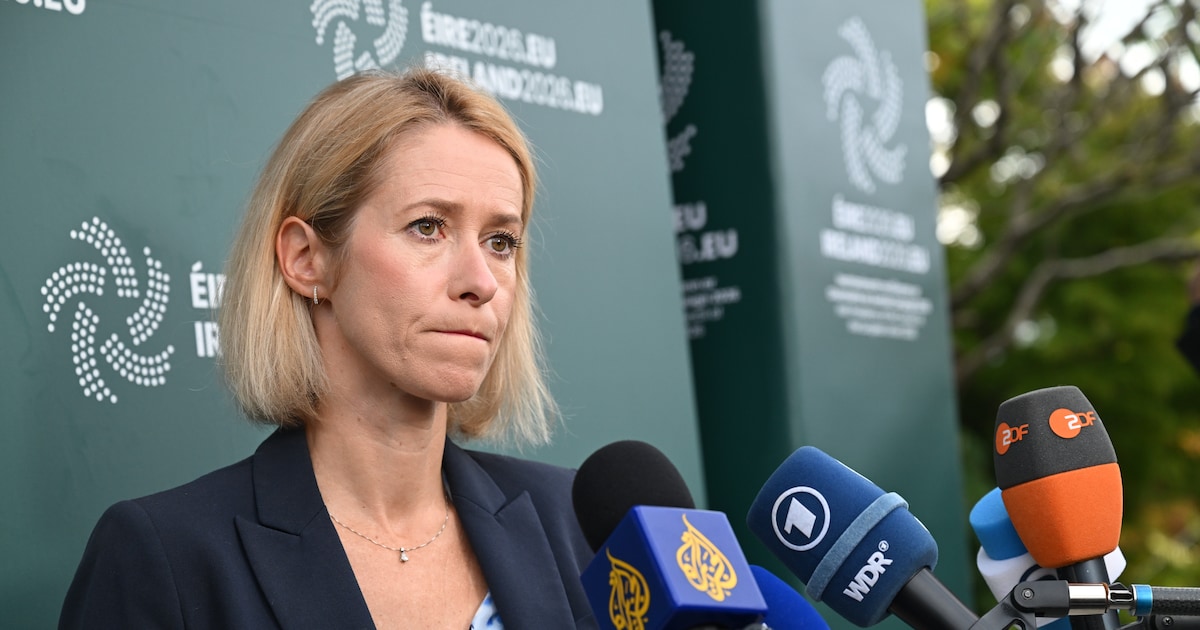
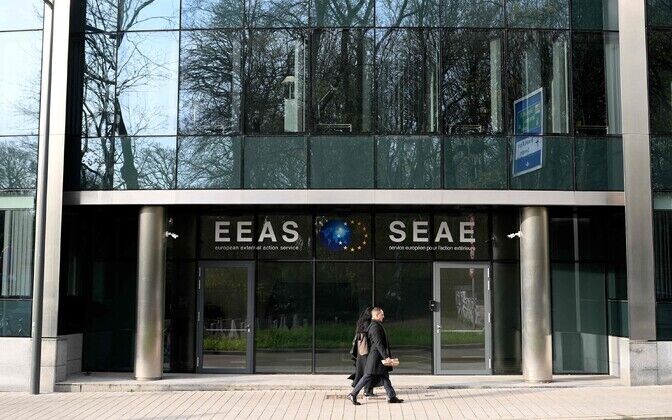
De EU-leiders menen dat de EU zich moet transformeren van een speelbal in de internationale politiek naar een invloedrijke speler, en dit werd besproken door buitenlandchef Kaja Kallas tijdens een bijeenkomst met ministers van Buitenlandse Zaken, waarbij zorgen over de effectiviteit en efficiëntie van de Europese Diplomatieke Dienst (EEAS) aan de orde kwamen. #EU #buitenlandsbeleid #EEAS

www.volkskrant.nl
De EU moet een speler worden in de wereld, vinden de EU-leiders, geen speeltje zijn
14039
Jack van Gelder Sep 1

Komt er voordat eea wordt toegezegd en uitgegeven een duidelijk inzicht in de besteding van maar liefst 1 miljard ontwikkelingshulp?! #ontwikkelingshulp #transparantie #financiën

13459
Rus.Postimees.ee Sep 1

Эстонские власти объявили о возможной воздушной угрозе в восьми уездах, включая Ида-Вирумаа и Ляэне-Вирумаа, после получения уведомлений о потенциальных дронах, связанных с российской агрессией против Украины. #EEALARM #воздушнаяугроза #Эстония

pmo.ee
В восьми уездах Эстонии объявлено о возможности воздушной угрозы
18145
Ilhan Kyuchyuk Aug 31

A close vote and a clear democratic verdict, and it has our full respect. Like NATO, the EU is built by and for democracies. Through the EEA, Iceland stays inside our single market and close to Brussels. That partnership isn't going anywhere. #Democracy #EU #Iceland #IS #EU #NATO

Łukasz Kohut 🇪🇺 Aug 30

🇮🇸The Icelanders made a sovereign choice that must be fully and unconditionally respected. Nearly half of Iceland's population supports European integration, and Reykjavik is eager to cooperate with the EU through the EEA Agreement. Geopolitical instability reminds us that #Iceland #EuropeanIntegration #EEAAgreement #IS

Arek Szymanowski Aug 13

Abstrahując od tego, czy Lech Poznań powinien lecieć we wtorek czy nie. To są te europejskie puchary. Zupełnie inny poziom emocji i zainteresowania (także ze strony Polski). To właśnie eliminacje budują medialność klubu, generują największe zainteresowanie kibiców i windują wskaźnik EEAT wiadomo gdzie. Emocje i zainteresowanie choćby tym, co się dzisiaj dzieje, są nieporównywalne z żadnym spotkaniem ligowym czy z sytuacją, gdy rozgrywa się trzy mecze w miesiącu, i to w weekend (jeszcze bez gwarancji wygranej). Po przeczytaniu wielu komentarzy na TT i paru odpowiedzi mam wrażenie, że 99% ludzi obserwujących sytuację nadal czeka na walkowera, który był wykluczony od początku. Generalnie złośliwość w tym kraju i czekanie na potknięcia Lecha Poznań jest wyraźne. Mam wrażenie, że wśród niektórych osób to jedyne marzenie w życiu – by po walkowerze sobie lajki pozbierać i zasięgi, z których przecież nic nie ma. Jeszcze mi ktoś tweety do zakładek dodawał o braku walkowera, by później je wyjmować 😵‍💫 W skrócie: Lech już wcześniej przekazał KI Klaksvik, że nie będzie trenował na Tórsvøllur, dla Farerów nie był to problem, a tym bardziej, że z ich strony nie było zainteresowania medialnego (tam się nie organizuje konferencji prasowych itp.). Lech mógł trenować w Torshavn, ale nie musiał. Lech zaplanował sobie wylot dzień przed meczem, czyli zgodnie z zaleceniem UEFA. Tym samym o walkowerze już wtedy nie było mowy. Kiedy byłby walkower? Przykładowo, gdyby Lech teraz wrócił z Bergen do Poznania, a nie podejmował kolejnej próby dotarcia do Vagar. UEFA przyznałaby walkower wyłącznie wtedy, gdy Lech Poznań odmówiłby gry z KI Klaksvik. Mecz bez problemu mógłby się odbyć nawet w sobotę czy w niedzielę. Ligowe spotkanie KI zostałoby w takim przypadku przełożone przez UEFA, ponieważ jej rozgrywki są ponad każdą ligą w Europie. Wczoraj pisałem tu o możliwe grze z KI Klaksvik nawet 3-4 godziny przed meczem. Niedawno UEFA już to stosowała. FC Koper czy Hamrun Spartans musiał grać na Wyspach Owczych niedługo po dotarciu. Dziś ma być podobnie. Moim zdaniem - szkoda. Dla bezpieczeństwa wyniku lepszy byłby mecz jutro rano. Na pewno w weekend wrócę do tematu tego zamieszania na https://t.co/KFw5DB5yC1, a zwłaszcza wtedy, gdy Lech Poznań przejdzie, zrealizuje cel i cała sytuacja będzie dla niego bagażem doświadczeń na przyszłość. Europejskie puchary to inny świat, emocje i zainteresowanie. Chyba wszyscy sami to dziś zauważyli 👍 A wyciąg z regulaminu, kiedy jest walkower, kiedy nie, był parę miesięcy w którymś z tekstów na temat regulaminu. Zainteresowanym jak zwykle polecam dział: https://t.co/6apQl1lSND Hej Lech! 🤠 #LechPoznań #UEFA #EuropeanFootball

15079
widtvoet Jul 10

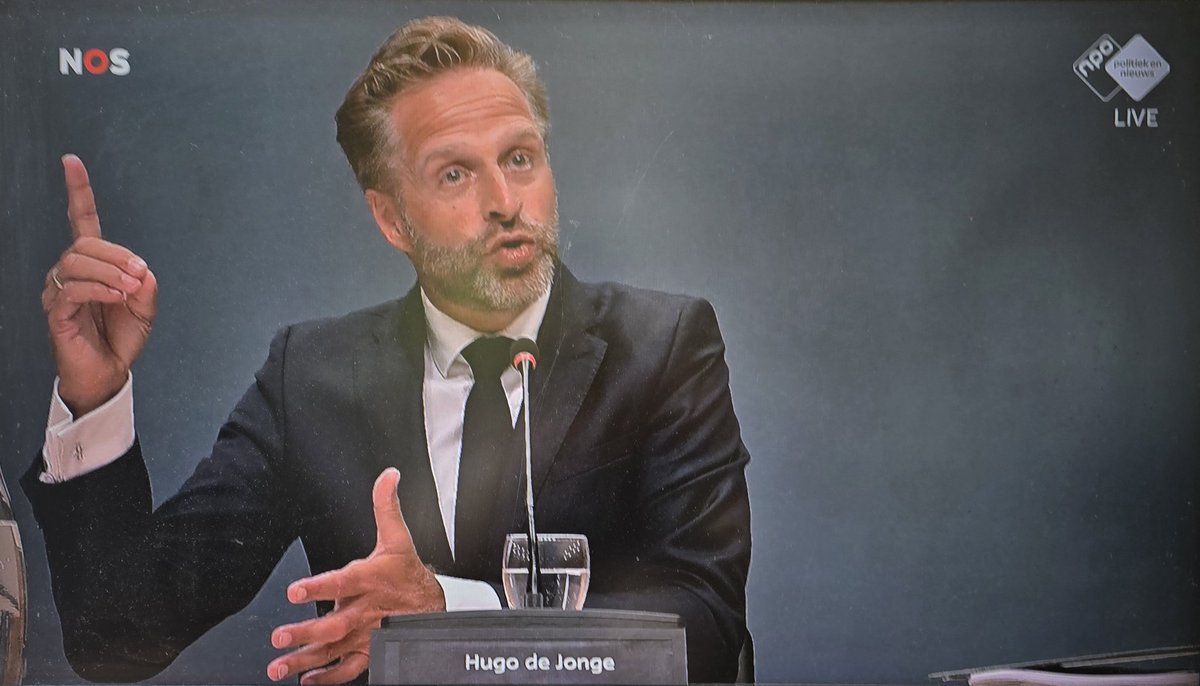
"De invoering van de coronapas die verplicht was voor mensen om deel te kunnen nemen aan bepaalde sociale activiteiten was helemaal niet bedoeld om vaccinatie op te dringen maar eea. was wel een mooie bijvangst." Joe. #coronaenquête #Hugo #coronaenquête https://t.co/AjI4qxqqoY #corona #vaccinatie #sociaal

15431
newsORF.at Jul 3

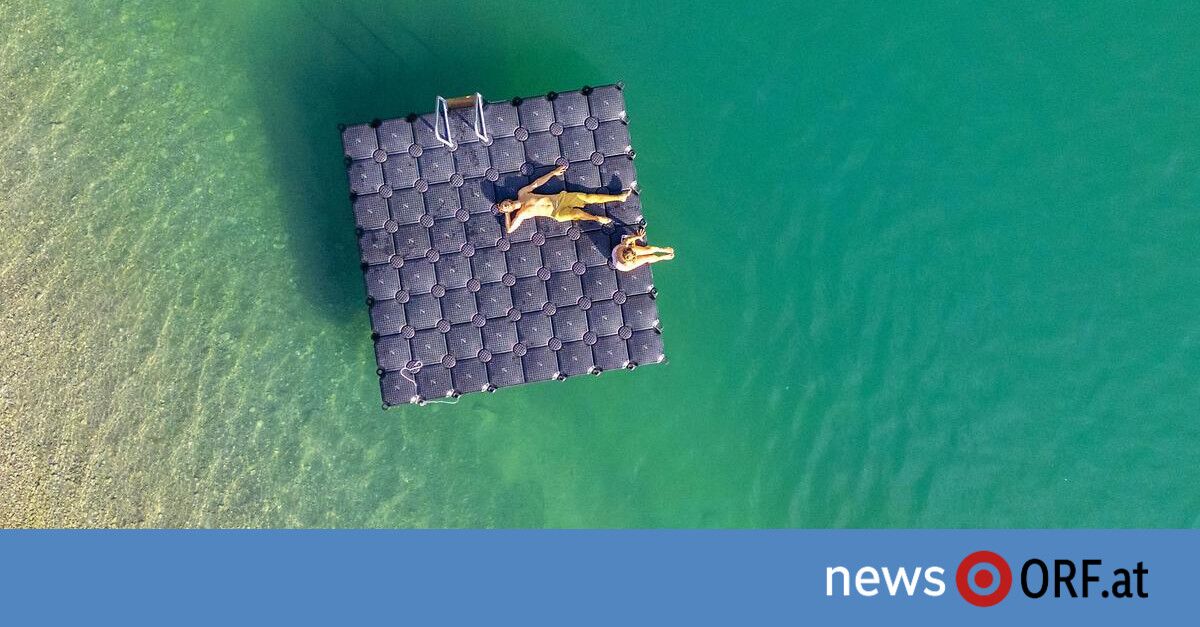
Die aktuelle Bewertung der europäischen Badegewässer durch die Europäische Umweltagentur (EEA) ist laut einer Recherche des gemeinnützigen Zentrums Correctiv irreführend, da sie nur zwei Fäkalbakterien berücksichtigt und andere gesundheitlich bedenkliche Erreger sowie chemische Schadstoffe ignoriert, während in vielen Ländern, einschließlich Österreich, alle erfassten Badestellen an Gewässern liegen, die den guten chemischen Zustand nicht erreichen. #Badegewässer #Wasserqualität #Gesundheitsrisiko

orf.at
Badegewässer „doch nicht so unbedenklich“
11884
ERR Jul 2

Artiklis käsitletakse Euroopa Liidu välisteenistuse (EEAS) pikaajalisi probleeme, sealhulgas sisepingeid, madalat töömeeleolu ja juhtimisvaidlusi, mis tulenevad algsest ebamugavast kompromissist ametiasutuse loomisel, mille tulemuseks on olnud madal efektiivsus ja suurte ootuste rahuldamine piiratud volitustega. #EuroopaLiit #välisteenistus #diplomaatië

www.err.ee
Politico: EL-i välisteenistust on selle loomisest saadik saatnud segadus
11293
Dnevnik Jun 28

Elektrifikacija voznega parka v Evropi je v letu 2025 bistveno znižala povprečne izpuste ogljikovega dioksida novih avtomobilov, ki so dosegli 96,7 grama na kilometer, kar je skoraj 10 gramov manj kot v prejšnjem letu, predvsem zaradi povečanja deleža popolnoma električnih vozil, ki je dosegel skoraj 20 odstotkov. #ElektričnaVozila #Izpusti #Eea

www.dnevnik.si
Elektrifikacija voznega parka že bistveno znižuje emisije v Evropi
16652
Kajsa Ollongren Jun 24

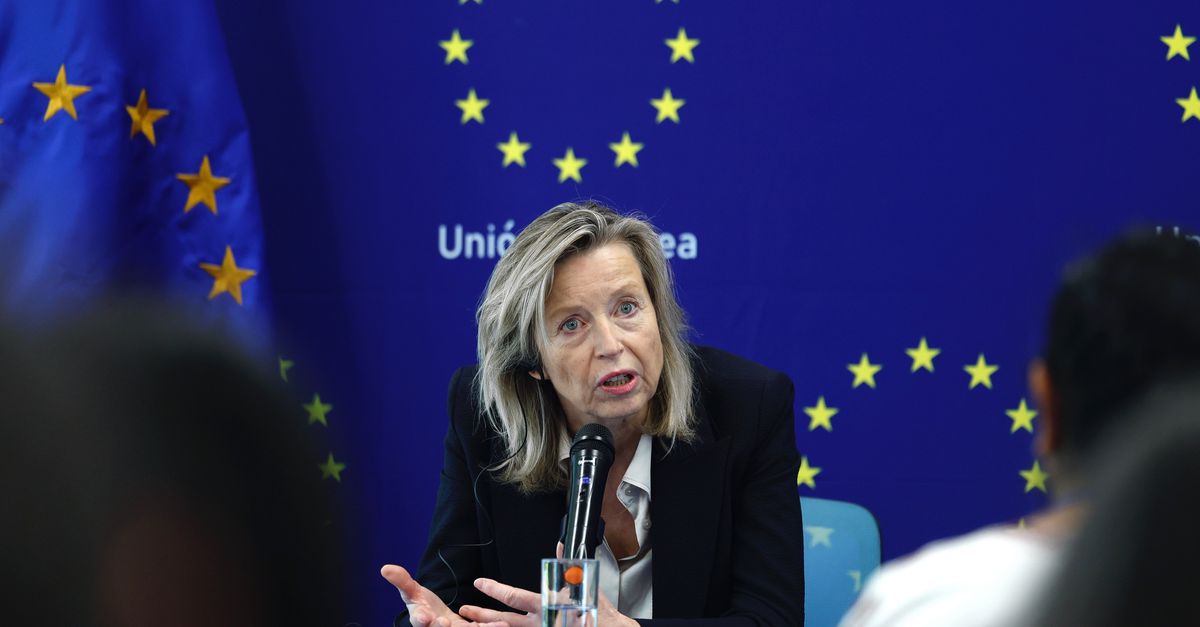
Ik ben aangesteld als secretaris‑generaal bij de Europese Buitenlanddienst (EEAS) en zal onder meer EU‑buitenlandchef Kaja Kallas ondersteunen en leiding geven aan speciale vertegenwoordigers van de Europese Unie in andere landen.

Oud-minister en vicepremier Kajsa Ollongren wordt hoogste ambtenaar bij Europese buitenlanddienst
www.nrc.nl
17852
NRC Jun 24

Oud-minister Kajsa Ollongren is aangesteld als secretaris-generaal bij de Europese Buitenlanddienst (EEAS), waar ze EU-buitenlandchef Kaja Kallas zal ondersteunen en leidinggeven aan speciale vertegenwoordigers in andere landen. #KajsaOllongren #EuropeseBuitenlanddienst #EUBuitenlandsbeleid

www.nrc.nl
Oud-minister en vicepremier Kajsa Ollongren wordt hoogste ambtenaar bij Europese buitenlanddienst
17852
Vatnik Soup Jun 12

Without commenting on the usefulness of the EEAS, attacking Kaja Kallas has long been one of the Kremlin's favorite activities. She has taken a strong stance on Russia and China, helped deliver several hard-hitting sanctions packages, and given some extremely powerful speeches https://t.co/Ev3C7Gni0D #KajaKallas #Russia #Sanctions #EE #RU #CN

Christophe Barraud🛢🐳 Jun 12

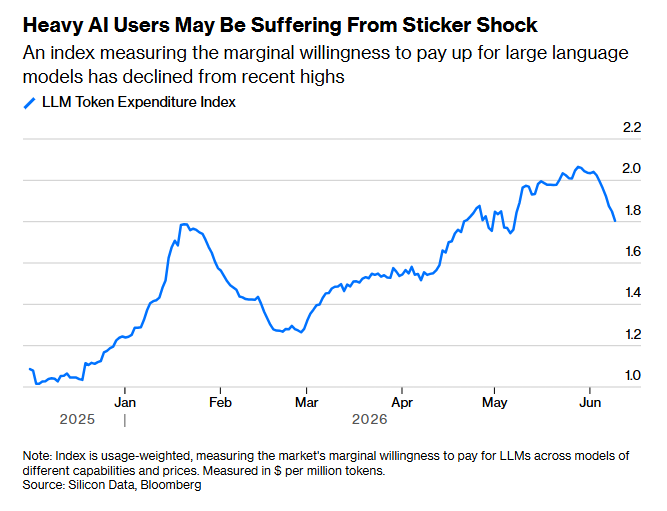
🇺🇸 An #Anthropic-#OpenAI Price War Would Be Brutal - Bloomberg https://t.co/gSfgmZ7t2K https://t.co/eEajYkliSi #AI #PriceWar #TechNews #US