WRLD

Search

#Matryoshka
Krzysztof Graj 2w

Russia’s influence operation arrives ahead of the US midterms With weeks remaining before America's November midterm elections, a familiar type of content has begun appearing online. Videos resembling reports from CNN, the BBC and The New York Times accuse candidates of corruption, antisemitism and misconduct. Hollywood actors appear to denounce Democrats. Other clips claim that warnings about Russian interference are themselves a Democratic disinformation campaign. The reports are fabricated. Graphika, which tracks online influence operations, says it has identified a coordinated campaign targeting candidates in competitive US Senate races. It assesses with high confidence that the material was produced by Operation Overload, also known as Matryoshka – a long-running Russia-aligned influence operation previously active against elections and political debates in Europe and the United States. The activity coincides with a broader warning from American intelligence officials. Classified assessments reported by The New York Times conclude that the Kremlin has authorised another digital influence campaign ahead of the 2026 midterms, aimed primarily at exploiting existing divisions and undermining confidence in American democracy. There is an important distinction. US officials have not reported evidence that Russia is attempting to manipulate voting machines or alter the counting of votes. The operation is about influencing the information environment surrounding the election. Fake scandals for competitive Senate races Graphika traced a concentrated wave of activity between 10 and 14 September. Likely inauthentic or repurposed accounts distributed videos accusing Democratic politicians of corruption, antisemitism and other misconduct. The targets included Senator Jon Ossoff in Georgia, Representative Chris Pappas in New Hampshire and Texas state representative James Talarico, as well as Senate candidates Sherrod Brown in Ohio, Roy Cooper in North Carolina, Mary Peltola in Alaska, Abdul El-Sayed in Michigan, Joshua Turek in Iowa and Troy Jackson in Maine. The selection was not random. These were politicians involved in Senate contests where the result could matter to control of the chamber. The campaign did not rely on a single political narrative. Instead, it attached different accusations to different candidates – corruption, social issues, antisemitism or personal misconduct – while maintaining a consistent production and distribution model. That model is characteristic of Matryoshka: create apparently independent pieces of evidence, disguise them as journalism and distribute them through networks of disposable accounts. Hollywood celebrities who never said what the videos claimed One of the campaign's more distinctive techniques involved genuine footage of American actors. Videos featuring celebrities including Sarah Jessica Parker and Julia Roberts were altered with captions and other material to suggest they were promoting the slogan #AllDemocratsAreCriminals. The technique continued in subsequent material. Fact-checkers identified fabricated New York Times-branded videos using footage of Alyssa Milano, Sean Astin, Rachael Harris, Leonardo DiCaprio, Eric Braeden, Annie Potts and Patrick Fabian. Some of the original footage came from Cameo, where actors record personalised video messages. Their authentic images were retained while fabricated audio, captions or surrounding material changed the meaning entirely. Lead Stories compared several of the clips with the originals and found that the supposed political statements did not appear in the genuine recordings. Eric Braeden's representative separately confirmed that the claim he had joined the anti-Democratic campaign was false. The advantage of the technique is straightforward. Generative AI does not need to create a convincing celebrity from nothing. The operator can begin with authentic footage of a recognisable person and manipulate only the elements necessary to manufacture a political statement. Stealing the authority of real newsrooms Celebrity impersonation was only one layer. The operation repeatedly borrowed the visual identity of established media organisations. Graphika identified material impersonating or falsely citing the BBC, CNN and Politico, alongside references to France's VIGINUM foreign-interference agency and journalist Brandy Zadrozny. Other material reproduced New York Times-style branding. Some fabricated reports made an unusual claim: that Democrats themselves were organising disinformation or “false-flag operations” and then blaming Russia. This creates a defensive layer around the influence operation. Instead of merely distributing false political allegations, the campaign also attempts to discredit future reporting about the manipulation itself. If successful, evidence exposing foreign interference can be reframed as part of the conspiracy. Graphika says it assesses with high confidence that Operation Overload produced these videos. The technique is well established. Earlier investigations by CheckFirst and Reset Tech documented hundreds of falsified pieces of content produced by Operation Overload, often impersonating journalists, institutions and major media brands. AI-generated or manipulated material has increasingly become part of that production system. What US intelligence says Russia is trying to achieve The broader strategic picture comes from American intelligence assessments reported on 18 September. According to US officials familiar with classified findings, the Kremlin has authorised a covert digital influence campaign aimed at Americans during the 2026 election season. Its apparent objective is to seed or amplify domestic divisions and weaken confidence in the political process. Some officials described the principal aim as creating disorder rather than helping a single political party. The publicly identified Matryoshka material examined so far, however, has targeted Democratic candidates. Those two findings should not be treated as contradictory. An operation can exploit partisan divisions while serving the broader objective of making the electoral system appear corrupt, chaotic or illegitimate. US officials also reportedly assess the current Russian campaign as less extensive or coordinated than some previous election operations. Moscow is considered less focused on congressional elections than presidential contests and remains heavily occupied by its war against Ukraine. Russia has denied previous US accusations of election interference. An operation with limited reach – so far There is another reason for caution: producing large quantities of disinformation is not the same as successfully influencing voters. Matryoshka has repeatedly demonstrated an ability to manufacture content at industrial speed, but much of its material receives little genuine engagement. Researchers monitoring the network have previously warned against confusing automated distribution and platform view counts with authentic audience penetration. There are exceptions. A fabricated New York Times-style video featuring Jamie Lee Curtis had accumulated nearly 200,000 views on X by the end of 17 September, according to reporting by The New York Times. Other pieces attracted considerably less attention. There is currently no public evidence demonstrating that the campaign has changed voting intentions or will affect election results. What the September activity demonstrates is something narrower but important: a Russia-aligned influence infrastructure previously used against European elections has now turned significant attention towards the American midterms. The basic method has changed little – impersonate trusted media, manufacture scandals and use networks of inauthentic accounts to distribute them. What has changed is the production technology. Authentic celebrity footage, synthetic voices, manipulated video and rapidly generated fake journalism allow the same operation to produce more tailored material for more candidates at lower cost. The objective does not require Americans to believe every fabrication. Creating uncertainty over which videos, news reports and public statements are authentic can itself degrade trust in the information environment surrounding an election. Sources - Graphika — Russia-Aligned Influence Operation Targets US Midterm Candidates, German State Elections https://www.graphika.com/insights/russia-aligned-influence-operation-targets-us-midterm-candidates-german-state-elections - The New York Times — Russia Aims to Inject Chaos Into Elections, U.S. Intelligence Finds https://www.nytimes.com/2026/09/18/us/politics/russia-election-disinformation-us-intelligence.html - Kathimerini / The New York Times — Russia Aims to Inject Chaos Into Elections https://www.ekathimerini.com/nytimes/1315792/russia-aims-to-inject-chaos-into-elections-us-intelligence-finds/ - CheckFirst — Operation Overload: An AI-fuelled escalation of the Kremlin-linked propaganda effort https://checkfirst.network/operation-overload-an-ai-fuelled-escalation-of-the-kremlin-linked-propaganda-effort/ - CheckFirst — Operation Overload targeting the US election https://checkfirst.network/operation-overload-a-growing-disinformation-threat-now-targeting-the-u-s-presidential-election/ - Lead Stories — Fake NYT videos: Alyssa Milano, Rachael Harris and Sean Astin https://leadstories.com/hoax-alert/2026/09/fact-check-fake-new-york-times-videos-of-alyssa-milano-rachael-harris-sean-astin-falsely-claim-they-support-all-democrats-are-criminals.html - Lead Stories — Fake NYT videos: Leonardo DiCaprio, Eric Braeden and other celebrities https://leadstories.com/hoax-alert/2026/09/fact-check-fake-new-york-times-videos-of-leonardo-dicaprio-eric-braeden-other-celebs-falsely-claim-they-support-all-democrats-are-criminals.html - Brennan Center for Justice — AI Is Changing Foreign Election Influence https://www.brennancenter.org/our-work/analysis-opinion/ai-changing-foreign-election-influence - ODNI — previous US intelligence assessment of foreign election information operations https://www.dni.gov/files/ODNI/documents/assessments/NICM-Declassified-Foreign-Threats-to-US-Elections-After-Voting-Ends-in-2024.pdf - FBI / ODNI / CISA — previous joint assessment of Russian election influence operations https://www.fbi.gov/news/press-releases/joint-odni-fbi-and-cisa-statement-110424 #DISINFORMED #Episode9 #Russia #UnitedStates #USMidterms #Midterms2026 #USElections #ElectionInterference #ForeignInterference #RussianInfluence #RussianDisinformation #OperationOverload #Matryoshka #Disinformation #InformationWarfare #InfluenceOperations #FIMI #ArtificialIntelligence #AI #AIPropaganda #Deepfakes #SyntheticMedia #MediaImpersonation #FakeMedia #FakeNews #PoliticalDisinformation #CelebrityDeepfakes #SocialMediaManipulation #DigitalInfluence #ElectionSecurity #CognitiveWarfare #Graphika #OSINT #Democracy #WRLD


www.graphika.com
Russia-Aligned Influence Operation Targets US Midterm Candidates, German State Elections | Graphika
1381
Krzysztof Graj 3w

Storm-1516 – Russia’s information war arrives early in France’s 2027 election France will not elect its next president until April 2027, but the information operations surrounding the campaign have already begun. In late July and August 2026, fabricated stories targeted several prominent figures associated with the presidential race, including Raphaël Glucksmann, Gabriel Attal and former prime minister Édouard Philippe. The methods included fake news websites copying established French media, impersonated journalists, AI-generated voices and manipulated video. French authorities identified the Russian operation known as Storm-1516 behind several of these campaigns. Other attacks were linked to Matryoshka, another Russia-aligned influence network. The timing is significant. Storm-1516 began targeting the French presidential environment roughly nine months before the first round, scheduled for 18 April 2027. Rather than a single disinformation campaign, the activity demonstrates how Russian influence networks can establish narratives and infrastructure long before an election reaches its decisive phase. A fake scandal targeting Raphaël Glucksmann One of the clearest examples appeared at the end of July. A website impersonating the French independent outlet Blast published a fabricated investigation claiming that journalist Léa Salamé had attempted to bribe media organisations in exchange for favourable coverage of her partner, Raphaël Glucksmann. The operation went beyond copying the appearance of a legitimate news site. The identities of real journalists were appropriated and a manipulated video used an AI-generated imitation of the voice of Edwy Plenel, founder of Mediapart, supposedly confirming the allegations. The accusation was false. On 4 August, Glucksmann said France's General Secretariat for Defence and National Security, the SGDSN, had informed him that he had been targeted by Storm-1516. Two days later, the Paris prosecutor's office opened an investigation into suspected Russian interference. The importance of the operation was not the quality of one particular deepfake but the construction of several mutually reinforcing elements: a fake media organisation, impersonated journalists, synthetic audio and social-media accounts distributing the material. Together they created the impression that the allegation had been independently corroborated. Different candidates, overlapping Russian networks Édouard Philippe was also targeted by fabricated stories claiming that he suffered from dementia and was medically incapable of running for president. VIGINUM attributed the operation to Storm-1516. Gabriel Attal faced another wave of false content, including fabricated stories mimicking the identities of French outlets such as RFI, BFM TV, France 24, AFP, Le Parisien, Libération and Le Monde. Some claimed that Attal had symptoms of Parkinson's disease or links to drug trafficking. Attribution here is more complicated. French reporting connected at least part of the campaign against Attal to Matryoshka, rather than Storm-1516. A later digitally manipulated video, apparently associated with Storm-1516, used genuine LCI footage from an August debate but added a white earpiece to Attal, suggesting that someone had secretly been feeding him answers. NewsGuard compared the circulating clip with authentic LCI footage and found no earpiece in the original. The distinction is important. France is not facing a single Russian propaganda operation but several overlapping networks using similar techniques and narratives. Treating every manipulation as Storm-1516 would obscure how this ecosystem actually functions. The real weapon is media impersonation The most interesting feature of Storm-1516 is not artificial intelligence itself. It is the systematic appropriation of the credibility of established journalism. Instead of relying only on anonymous Telegram channels or social-media profiles, operators create material that looks as though it originated from organisations audiences already recognise. A fabricated investigation can resemble Blast, a manipulated television report can borrow LCI's visual identity, while fake journalists and social-media accounts provide additional layers of apparent confirmation. VIGINUM has documented this architecture extensively. Its 2025 investigation analysed 77 Storm-1516 information operations and described a mature Russian system using fabricated media, websites and distribution networks to promote anti-Ukrainian and anti-Western narratives. The European External Action Service found that the infrastructure continued to expand. According to its 2026 FIMI Threat Report, Storm-1516 almost doubled its output during 2025. Five networks created that year to target French, German, American, Moldovan and international audiences comprised 453 websites, including fictional news organisations and sites impersonating genuine media or political platforms. A typical operation therefore follows a recognisable pattern: a fabricated allegation is supported by synthetic or manipulated evidence, published through an apparently legitimate source and then distributed by networks of accounts that create the appearance of wider discussion. AI makes this process faster and cheaper, but the fundamental objective remains the same – to manufacture credibility. Why begin nine months before an election? VIGINUM concluded that Storm-1516 is capable both of reacting rapidly to current events and of conducting longer campaigns aimed at discrediting Western institutions and public figures, particularly around elections and other major political events. This provides important context for France. Storm-1516 activity around the presidential race became visible in July 2026, approximately nine months before voting begins. There is no public evidence of a predetermined Russian “nine-month plan”, and the timing should not be presented as such. Early activity nevertheless provides operational advantages: narratives can be tested, websites and accounts established, audience reactions measured and the responses of journalists, authorities and fact-checkers observed. The first operations may therefore also provide information about which themes and techniques are most effective before the campaign enters its decisive months. This remains an analytical interpretation rather than a demonstrated statement of the operators' intentions. Russian operation, but what about the GRU? Attribution requires similar precision. VIGINUM explicitly describes Storm-1516 as a Russian information operation, and French authorities have attributed individual campaigns to it with high confidence. Connections with Russian military intelligence have also been reported. Glucksmann said the SGDSN informed him that the network targeting him was controlled by Russia's GRU, while French media have repeatedly described Storm-1516 as linked to Russian military intelligence. However, VIGINUM's publicly available technical documentation describes Storm-1516 primarily as a Russian information modus operandi, rather than identifying it as a formally established GRU unit. It is therefore well supported to describe Storm-1516 as a Russian influence operation with reported links to military intelligence. Saying simply that Storm-1516 is a GRU unit would go beyond what France's published technical evidence currently establishes. An early warning for the French election There is also no evidence that the operations have so far had a significant effect on French voters. Some of the fabricated material generated only limited engagement, and measuring the real impact of foreign information operations remains extremely difficult. Even a video attracting hundreds of thousands of views does not establish how many viewers believed it or whether it changed political attitudes. The significance of Storm-1516 lies instead in the infrastructure already being deployed. Months before the election, Russian influence networks have been able to test fake newsrooms, synthetic voices, manipulated television footage, candidate-specific narratives and systems for distributing them. The French case illustrates a broader evolution in election interference. The objective is no longer simply to place false claims on social media. Modern operations can manufacture an entire chain of apparent evidence in which a fake journalist cites a fake investigation, synthetic audio appears to confirm it and networks of accounts give the impression that an authentic controversy is unfolding. France still has months to go before its presidential election. The information environment surrounding it is already being contested. Sources: VIGINUM / SGDSN — Storm-1516 analysis https://www.sgdsn.gouv.fr/publications/analyse-du-mode-operatoire-informationnel-russe-storm-1516 VIGINUM / SGDSN — Full Storm-1516 technical report https://www.sgdsn.gouv.fr/files/files/Publications/20250507_TLP-CLEAR_NP_SGDSN_VIGINUM_Technical%20report_Storm-1516.pdf VIGINUM / SGDSN — Storm-1516 operation targeting Emmanuel Macron https://www.sgdsn.gouv.fr/publications/storm-1516-detection-dune-operation-dingerence-numerique-etrangere-ciblant-emmanuel EEAS — 4th Report on FIMI Threats https://www.eeas.europa.eu/sites/default/files/2026/documents/EEAS%204th%20Threat%20Report_web.pdf Le Monde — Russian interference targeting Philippe, Glucksmann and Attal https://www.lemonde.fr/politique/article/2026/08/07/presidentielle-2027-glucksmann-attal-philippe-les-ingerences-russes-s-invitent-dans-la-campagne_6740451_823448.html Le Monde — Storm-1516 and Matryoshka analysis https://www.lemonde.fr/pixels/article/2026/08/06/ingerences-russes-pourquoi-il-ne-faut-pas-nourrir-le-troll_6739956_4408996.html NewsGuard Risk Briefing — Russian activity targeting the French election https://newsguardriskbriefing.substack.com/p/russia-targets-french-elections-iran Euronews — Operation targeting Raphaël Glucksmann https://fr.euronews.com/my-europe/2026/08/04/presidentielle-de-2027-raphael-glucksmann-vise-par-une-operation-de-destabilisation-russe Télérama / AFP — Glucksmann deepfake investigation https://www.telerama.fr/debats-reportages/presidentielle-2027-raphael-glucksmann-vise-par-un-deepfake-d-origine-russe-7032318.php Le Parisien — Operation targeting Gabriel Attal https://www.leparisien.fr/elections/presidentielle/presidentielle-2027-gabriel-attal-a-son-tour-vise-par-une-ingerence-en-provenance-de-russie-05-08-2026-I3Z67Z7ZUBDUVBXUNDARI5KGPA.php Euronews — Paris prosecutor investigations into suspected Russian interference https://fr.euronews.com/my-europe/2026/08/18/soupcons-dingerence-russe-visant-attal-et-philippe-le-parquet-de-paris-ouvre-dune-enquete Keywords: #DISINFORMED #Episode6 #Storm1516 #France #FrenchElection2027 #Disinformation #InformationWarfare #InfluenceOperations #ForeignInterference #FIMI #RussianInfluence #RussianDisinformation #Propaganda #Deepfakes #ArtificialIntelligence #AI #SyntheticMedia #FakeNews #MediaImpersonation #FakeMedia #DigitalManipulation #ElectionInterference #PoliticalDisinformation #Matryoshka #VIGINUM #OSINT #CyberInfluence #DigitalInfluence #MediaManipulation #EuropeanSecurity #Democracy #WRLD

www.sgdsn.gouv.fr
Analyse du mode opératoire informationnel russe Storm-1516 | SGDSN
1272
Krzysztof Graj 4w

Matryoshka – rosyjska operacja wpływu przed wyborami w Niemczech „Rosja nie musi przekonać Niemców do jednej historii. Wystarczy, że przekona ich, że żadnej historii nie można już ufać.” Matryoshka to rosyjska operacja informacyjna aktywna co najmniej od 2023 roku, znana również jako Operation Overload lub Storm-1679. Jej operatorzy produkują spreparowane materiały podszywające się pod prawdziwe media i osoby publiczne, a następnie próbują sztucznie zwiększać ich widoczność w mediach społecznościowych. Latem 2026 roku jednym z głównych celów operacji stały się wybory regionalne i lokalne w Niemczech. Institute for Strategic Dialogue (ISD) zidentyfikował 269 postów opublikowanych w ciągu 21 dni aktywności między 24 czerwca a 1 września. Kampania dotyczyła m.in. wyborów w Saksonii-Anhalt i Meklemburgii-Pomorzu Przednim oraz głosowań lokalnych w Dolnej Saksonii i Berlinie. Atakowano przede wszystkim CDU, SPD, Zielonych, Die Linke i FDP oraz rząd kanclerza Friedricha Merza. Zwraca uwagę niemal całkowity brak podobnych ataków na AfD i BSW – partie znacznie bardziej krytyczne wobec sankcji na Rosję i niemieckiego wsparcia dla Ukrainy. Fabryka politycznych skandali Matryoshka nie próbowała przekonać odbiorców do jednej konkretnej historii. Operatorzy produkowali wiele różnych oskarżeń dotyczących tych samych polityków. Dobrym przykładem był Eric Stehr, kandydat Die Linke w Saksonii-Anhalt. W spreparowanych materiałach oskarżano go m.in. o zamordowanie własnej babci dla mieszkania, zabójstwo internetowej modelki, antysemityzm, przemoc polityczną czy organizowanie tajnych imprez seksualnych. Fałszywe informacje przedstawiano jako materiały takich mediów jak FAZ, ARD, „Stern” czy „Der Spiegel”. Niemieccy dziennikarze sprawdzili część tych historii w policji i na uczelni – zarzuty okazały się bezpodstawne. Podobny schemat stosowano wobec innych kandydatów. Najczęściej pojawiały się historie dotyczące korupcji, narkotyków, przemocy seksualnej, zabójstw, manipulowania wyborami i przestępstw z nienawiści. Wspólny przekaz był prosty: politycy demokratycznego establishmentu są skorumpowani, niebezpieczni i niegodni zaufania. Operacja wykorzystywała również istniejące podziały między wschodnimi i zachodnimi Niemcami. W fałszywych materiałach pojawiały się hasła sugerujące, że „Zachód nienawidzi Wschodu”, a nawet wezwania do ponownego zbudowania muru dzielącego Niemcy. To charakterystyczny mechanizm operacji wpływu: zamiast tworzyć konflikt od podstaw, wykorzystuje się prawdziwe społeczne frustracje i próbuje je pogłębiać. Fałszywe media i sztuczna inteligencja Jedną z najważniejszych technik Matryoshki było podszywanie się pod wiarygodne media. ISD zidentyfikował wykorzystanie identyfikacji wizualnej 31 redakcji, w tym 20 niemieckich. Operatorzy kopiowali logotypy, układ grafik i wygląd materiałów telewizyjnych, zmieniając ich treść tak, aby wyglądały jak prawdziwe publikacje. Coraz większą rolę odgrywa przy tym generatywna sztuczna inteligencja. Według ISD około 40 proc. analizowanych filmów dotyczących niemieckich wyborów zawierało głosy wygenerowane przez AI. Wykorzystywano również prawdziwe nagrania celebrytów, które następnie przerabiano. W kampanii #StopMerzToday użyto wizerunków m.in. Sarah Jessiki Parker i Mike'a Tysona. Spreparowane nagrania przedstawiały także aktora Daniela Brühla jako osobę grożącą zabiciem Merza, a Heidi Klum przypisywano życzenie śmierci czołowym niemieckim politykom. Treści były często absurdalne i ekstremalne, ale właśnie to zwiększało ich potencjał do przyciągania uwagi. Operatorzy nie potrzebowali, aby wszystkie materiały były wiarygodne. Wystarczyło, że jeden z nich został podchwycony przez popularne konto, dziennikarza lub polityka. Operacja działająca jak firma Analiza czasu publikacji wskazuje, że za Matryoshką stoi zorganizowana infrastruktura, a nie spontaniczna aktywność internautów. Posty pojawiały się przede wszystkim od poniedziałku do piątku między 9:00 a 21:00 czasu środkowoeuropejskiego. Ponad 60 proc. publikowano między 15:00 a 19:00, często seriami w regularnych odstępach. Następnie do działania wchodziły konta wzmacniające. Udostępniały spreparowane materiały, generowały reakcje i oznaczały dziennikarzy oraz redakcje. To istotny element Operation Overload: przeciążanie mediów i organizacji fact-checkingowych ogromną liczbą materiałów wymagających weryfikacji. Paradoksalnie rosyjska operacja może osiągnąć sukces również wtedy, gdy duża redakcja publikuje artykuł wyjaśniający, że konkretny film jest fałszywy – sama informacja o jego istnieniu trafia wtedy do znacznie większej publiczności. Setki tysięcy wyświetleń, ale ilu prawdziwych odbiorców? To najważniejsze zastrzeżenie dotyczące całej operacji. Matryoshka wygląda na potężną machinę propagandową, ale jej rzeczywisty wpływ jest trudniejszy do udowodnienia. ISD znalazł liczne przykłady sztucznego pompowania statystyk. Jeden z postów miał ponad 110 tys. wyświetleń i 405 polubień, ale ani jednego komentarza, mimo że konto posiadało zaledwie dwóch obserwujących. W innym przypadku liczba wyświetleń wzrosła w kilka minut z dziewięciu do ponad 114 tys. Wszystko wskazuje więc na wykorzystanie botów lub kontrolowanych kont do stworzenia wrażenia ogromnego zainteresowania. Wcześniejsze badania Operation Overload również pokazywały niewielkie organiczne zaangażowanie, a platformy usuwały znaczną część materiałów. Nie ma podstaw, aby twierdzić, że Matryoshka przekonała setki tysięcy niemieckich wyborców albo zdecydowała o wyniku wyborów. Nie oznacza to jednak, że operacja jest niegroźna. Dzięki AI koszt produkcji kolejnych fałszywych filmów, artykułów i nagrań gwałtownie spada. Jeden zespół może atakować dziesiątki polityków, działać w wielu językach i jednocześnie obsługiwać kampanie dotyczące kilku państw. Nie chodzi o jeden fake news Matryoshka dobrze pokazuje, jak zmienia się rosyjska dezinformacja. Dawna farma trolli opierała się na ludziach piszących posty i komentarze. Dziś powstaje przemysłowy model produkcji: sztuczna inteligencja generuje materiał, kopiowana jest identyfikacja prawdziwego medium, syntetyczny głos uwiarygadnia nagranie, sieć kont sztucznie zwiększa jego popularność, a oznaczanie dziennikarzy ma przenieść historię do głównego obiegu informacji. Celem nie musi być przekonanie Niemców, że konkretny polityk naprawdę popełnił przestępstwo. Znacznie bardziej wartościowe może być wywołanie przekonania, że politykom, mediom i instytucjom demokratycznym w ogóle nie można ufać. I właśnie dlatego Matryoshka jest interesującym przykładem współczesnej operacji wpływu. Rosja nie musi sprawić, żeby odbiorca uwierzył w jedną fałszywą historię. Wystarczy, że po setkach podobnych historii zacznie się zastanawiać, czy można jeszcze uwierzyć w jakąkolwiek. ŹRÓDŁA: https://www.isdglobal.org/digital-dispatch/investigation-an-old-dog-with-no-new-tricks-matryoshka-targets-regional-elections-in-germany/ https://www.lfv.bayern.de/aktuelle-meldung-zur-informationsmanipulationskampagne-matryoshka/?utm_source=chatgpt.com https://amp.dw.com/pl/operacja-matrioszka-wybory-w-niemczech-na-celowniku-rosyjskich-s%C5%82u%C5%BCb/a-78223923?utm_source=chatgpt.com

www.isdglobal.org
Investigation | An old dog with no new tricks: Matryoshka targets regional elections in Germany - Institute for Strategic Dialogue
582
Novinky May 30

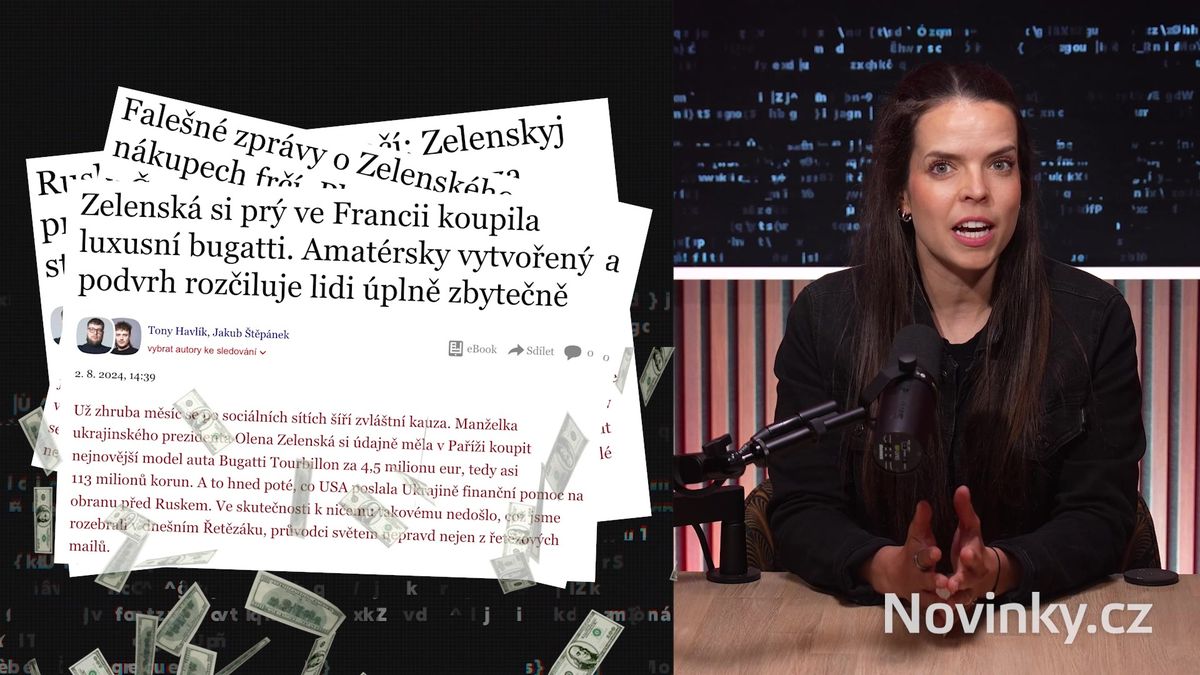
Video, které se šíří na sociálních sítích a tvrdí, že ukrajinský prezident Zelenskyj má ve své kanceláři visící ukradený obraz Cézanna, bylo vytvořeno pomocí umělé inteligence a obsahuje digitální úpravy skutečných záběrů, přičemž bylo potvrzeno, že je falešné a jeho autorem je proruská síť Matryoshka. #dezinformace #fakevideo #ukrajina

www.novinky.cz
Zelenskyj obětí umělé inteligence. Kradený obraz se ve falešné reportáži objevil za jeho zády
10151