WRLD

Search

#Fatos
Pedro Menin 22h

Pedro Menin stated that the text was not a report based on facts, but an opinion piece. He also said that the journalist was engaging in activism and hoping for a scenario that, according to him, would not happen. #jornalismo #opinião #fatos (translated)

2373
Partido Liberal - PL 22 1d

The Liberal Party stated that Bolsa Família, the Popular Pharmacy, and the SUS continued. The party also accused Lula and the PT of trying to scare the population and said that Brazilians wanted to work, prosper, and have dignity. The party argued that Brazil needed truth, opportunities, and freedom. #BolsaFamilia #Vote22 #OBrasilvaiVencer #BolsaFamilia #Brasil #Liberdade (translated)

2500
JH Fonseca 1d

JH Fonseca questioned whether justice would ever be served based on the facts and stated that children would learn in schools that Jair Bolsonaro had been the victim of a coup committed by corrupt judges. He also said that Bolsonaro had told the truth when he claimed that he was not a judge and that he had a wife who was a lawyer with million-dollar contracts. #Justiça #Educação #Política (translated)

2442
Alfredo Gaspar 1d

Alfredo Gaspar stated that fake news spread to confuse, provoke fear, and manipulate public opinion. He recommended that people check the sources and verify the facts before believing in or sharing information. https://t.co/2HI9BnhJZU #FakeNews #Desinformação #VerifiqueAFonte (translated)

2653
Xico Graziano 2d

Xico Graziano stated that a report by the magazine VEJA about supposed payments linked to Lula had provoked a reaction within the PT. According to him, PT members denied the accusations, said there was no evidence, and echoed a contestation from the Federal Police. In summarizing the report, Graziano said that banker Vorcaro reported having negotiated with João Vaccari Neto, former treasurer of the PT, payments to obtain access to pension funds for federal employees. According to the excerpt of the article he shared, it would amount to R$ 30 million in cash destined for the Lula Institute to fund a documentary about Lula abroad, in addition to another undisclosed amount paid directly to the institute, managed by Paulo Okamotto. Graziano added that Vorcaro had provided details to the Attorney General's Office (PGR), which did not proceed with the case as it deemed there was insufficient evidence. The banker’s defense, according to the account reproduced by the author, mentioned WhatsApp messages and records of withdrawals and deliveries of money. Graziano expressed belief that VEJA would not publish the report without confidence in the material and assessed that the published piece would merely be a preview of new revelations. He considered the story credible, although there might not be definitive proof, and compared the case to the Atibaia site, which, according to him, was not registered in Lula's name in the registry office. In Graziano's view, the report would harm the PT and Lula's campaign, discouraging voters and causing some to give up on voting. He stated that the case would reduce Lula's chances of reversing a defeat in the first round. #Lula #Petismo #VEJA (translated)

3240
Flavia Ferronato 2d

Flavia Ferronato wrote that deleting a post and saying it was false would not prevent it from being retrieved by archiving sites, which, according to her, were considered evidence in court. She also stated that accusing someone of making something up while knowing it was true constituted a crime. #Justiça #Fatos #Direitos (translated)

3006
Felipe Leme 3d

Felipe Leme criticized the denial of a statement attributed to Ana Elisa, saying there was evidence everywhere. He stated that she should acknowledge what she said, explain that she was a teenager at the time, and say that she has matured and wants to bring that experience to the political debate. Leme accused the PT of trying to replace facts with false narratives and compared this strategy to cancer for Brazil. He also said he would present a cure at the polls on the 25th. #Política #PósVerdade #Eleições2024 (translated)

2789
Karina Michelin 3d

Karina Michelin stated that images from an assembly at the Federal University of Paraná (UFPR) in Curitiba showed speeches against Flávio Bolsonaro and in defense of Lula's reelection. She said that organizations had announced more than 40 acts at universities across the country and criticized statements that, according to her, advocated for the radicalization of activism and referenced the kidnapping of an ambassador during the dictatorship. Michelin recalled that American ambassador Charles Burke Elbrick was kidnapped in 1969 by members of the ALN and MR-8, and not by the National Union of Students (UNE). She also classified predictions about a potential victory of Flávio Bolsonaro as false and alarmist, stating that the remarks about loss of rights and threats to democracy did not present concrete measures to support them. She mentioned that she did not question the right of students to protest or support candidates but criticized speeches that, in her view, replaced arguments with slogans and romanticized armed struggle. Michelin advocated for universities to shape professionals, researchers, and free citizens and stated that glorifying guerrilla practices and treating opponents as enemies denied democracy. #Educação #Democracia #Política (translated)

3237
Iane menezes 3d

Iane Menezes wrote that, according to reports from Daniel Vorcaro which the magazine VEJA claims to have accessed, the banker negotiated with the former treasurer of the PT, João Vaccari Neto, payments to facilitate access to pension funds for federal employees. Among the amounts mentioned would be a payment of R$ 30 million in cash to the Lula Institute, in addition to other undisclosed sums. According to Menezes, Vorcaro stated that the approach to the PT was orchestrated by Augusto Lima, then partner and CEO of Master, with the mediation of Jaques Wagner, who was then the leader of the Lula government in the Senate. She said that the information was included in an annex delivered to the Attorney General's Office last June, when Vorcaro's second plea proposal was dismissed. Menezes added that, according to Vorcaro, the money would be intended for expenses of a documentary about Lula filmed abroad. The banker allegedly mentioned the film *Lula*, directed by Oliver Stone and composed of testimonies from friends and allies of the president. #Lula #Corrupção #PolíticaBrasil (translated)

3352
VEJA 3d

VEJA reported that it had access to accounts from banker Daniel Vorcaro in which he claimed to have negotiated with the former treasurer of the PT, João Vaccari Neto, payments to gain access to pension funds for federal employees. Among the amounts mentioned would be a transfer of R$ 30 million in cash to the Lula Institute, in addition to other undisclosed amounts. According to Vorcaro, the approach to the PT was orchestrated by Augusto Lima, then partner and CEO of Banco Master, with the mediation of Jaques Wagner, then leader of the Lula government in the Senate. The magazine stated that the information was included in an attachment submitted to the Attorney General's Office last June, when the second plea bargain proposal from the banker was discarded. According to the accounts attributed to Vorcaro, the funds would be allocated to expenses for a documentary about Lula filmed abroad. The mentioned film was *Lula*, directed by Oliver Stone and composed of testimonies from friends and allies of the president. #DanielVorcaro #BancoMaster #Brasil #Brasil #corrupção #Lula (translated)

3353
juridico jake gyllenhaal 4d

The legal profile Jake Gyllenhaal released a website about Flávio Bolsonaro before the second round, scheduled, according to the publication, for 10/25. It said that the page gathered short cards with facts and links to the sources, in addition to options to download posters in PDF with a code about each topic and share the cards on social networks. The author stated that the website was independent and had no paid advertisements. He also invited readers to send corrections, suggestions, or new facts accompanied by sources to [email protected]. The publication reported that the project was created by Saltynicsz and presented it as an initiative in defense of the Brazilian people, workers, and democracy. #Eleições2023 #FlávioBolsonaro #Democracia (translated)

2915
Natália Bonavides 4d

Natália Bonavides stated that the fire at UFPE should be investigated and said that the fire occurred after a protest by students against Flávio. According to her, hours earlier there were reports of threats to blow up a department. The parliamentarian described the sequence as alarming and associated it with the actions of people who, as she wrote, plotted to assassinate President Lula. #Incêndio #UFPE #Investigação (translated)

3589
newscolina 4d

newscolina stated that, from another angle, Lescano's goal looked even more beautiful and emphasized that Bruno Duarte made the pass at the right moment. The publication mentioned a video from fatosfutfc on Instagram. https://t.co/OcySSgNt2G #futebol #gol #futebolbrasileiro (translated)

2693
História No Paint 5d

History in Paint stated that if Flávio fulfilled 30% of what he claimed he would do, the country would enter a civil war in six months. He also assessed it as likely that his government would be similar to his father's, with some privatizations, agreements with the Centrão, and widespread corruption. #Política #Brasil #Governo (translated)

2935
Carlos Bolsonaro 6d

Carlos Bolsonaro stated that the current political movement was cyclical and that there was a sneaky action around the imprisonment and isolation of Jair Bolsonaro, the exile of Eduardo Bolsonaro, and what, according to him, some considered the capture of Flávio Bolsonaro. He said it was not speculation, but facts, and described the dispute as a new confrontation between Jair Bolsonaro and the people on one side and the system on the other. He stated that there was still a mission to fulfill and that previous attempts had failed. He also reported realizing, at a certain moment, that he was at the center of an environment he described as hostile. He said that since then, he had survived and continued to follow Jair Bolsonaro's orders. Finally, he asserted that there was an obligation to save Brazil. #Brasil #Bolsonaro #Política (translated)

3505
Krzysztof Graj 6d

Brazil’s synthetic voters – when AI manufactures public opinion They look like ordinary street interviews. A reporter approaches a passer-by in a Brazilian square and asks a simple question: who will you vote for? A young voter explains why Luiz Inácio Lula da Silva deserves another term. An elderly woman says Brazil needs Flávio Bolsonaro because he represents political renewal and greater security. The locations look plausible, the microphones are visible and the answers sound much like the brief political opinions heard in television vox pops around the world. None of the people are real. Ahead of Brazil’s presidential election on 4 October, fact-checking organisation Aos Fatos identified at least 50 TikTok videos in which artificial intelligence was used to manufacture voters, reporters and apparently spontaneous political interviews. Together, the videos had accumulated around 7.4 million views by mid-August. Some promoted Lula, others Flávio Bolsonaro, while another group used synthetic characters to ridicule or stereotype supporters of one side. Aos Fatos found no apparent evidence linking the accounts producing the videos to either presidential campaign. The opinion poll that never took place The format is important. These were not conventional deepfakes in which a recognisable politician is made to say something he never said. Instead, the creators reproduced the visual language of the vox pop – the short street interview used by broadcasters and social-media creators to illustrate what ordinary people supposedly think. In pro-Lula videos, synthetic voters described themselves as beneficiaries of social programmes or credited the president with improving their lives. In videos supporting Flávio Bolsonaro, artificial interviewees associated him with political renewal, public security and fighting corruption. Other clips were openly hostile: AI-generated characters presented as poor or living in parts of Brazil’s north-east were shown in dirty clothes or run-down surroundings, declaring support for Lula because they supposedly preferred welfare payments to work. The deception is therefore subtler than fabricating a candidate’s statement. It manufactures something that political communication normally treats as evidence of public sentiment. A real vox pop may be unscientific, but the people interviewed at least exist. These videos created the appearance that identifiable social groups – young people, pensioners, welfare recipients or residents of particular regions – were spontaneously expressing political preferences when no such encounters had taken place. An electoral-law specialist interviewed by Aos Fatos described the technique as the fabrication of a “social fact that never occurred”. That captures the central innovation: AI is being used not merely to falsify political speech, but to manufacture the impression of grassroots opinion. Fifty videos, but not one proven network The available evidence does not support describing the 50 posts as a centrally controlled influence operation. Aos Fatos located them through TikTok searches and recommendations produced by the platform itself, then examined the accounts responsible for publication. Most had relatively small individual audiences, although their combined reach was substantial. The first examples identified by the investigation appeared as early as March 2026. Activity increased in June and was concentrated particularly in July and the first half of August as Brazil’s election calendar intensified. Some accounts specialised in AI-generated videos generally, including fabricated podcast-style material. Others were explicitly political or supportive of a candidate, but Aos Fatos found no apparent links between those profiles and the official Lula or Bolsonaro campaigns. That distinction is essential. The evidence demonstrates a common technique and a shared political environment, not a single command structure. Some creators may have been motivated by ideology, others by engagement or monetisation. Publicly available evidence does not establish who commissioned the individual videos or whether any coordination existed between the accounts. This decentralised model also creates a different enforcement problem from a traditional bot network. There may be no headquarters to expose and no infrastructure whose removal disables the entire operation. The format itself can be copied by anyone with access to inexpensive generative-video tools. When the algorithm mixes real and synthetic citizens Aos Fatos documented another important feature of the phenomenon: TikTok’s recommendation system placed AI-generated interviews alongside genuine street interviews. For a user scrolling quickly through the platform, the transition between an authentic citizen and an entirely fabricated one could therefore be almost invisible. In 18 per cent of the 50 videos analysed, there was no indication that the people shown had been generated using AI. After Aos Fatos provided TikTok with the videos, the company said it had removed all of them for violating its rules on edited and AI-generated media. TikTok said its policies require creators to identify synthetic content and prohibit manipulated media capable of misleading users about matters of public importance or impersonating genuine journalistic material. The issue extends beyond one platform. Factchequeado’s review of Brazil’s 2026 election campaign found that synthetic endorsements and other deepfakes had become one of the most visible forms of AI-assisted electoral misinformation, alongside fabricated candidate statements and invented scenes. Brazil already had rules for synthetic politics Brazil entered the campaign with unusually detailed electoral rules governing artificial intelligence. The Superior Electoral Court, the TSE, requires electoral propaganda using synthetic multimedia to disclose clearly that AI was used. More importantly for the fake-voter videos, its rules prohibit synthetic audio or video used to favour or harm a candidacy when it creates or alters the image or voice of a living, deceased or fictitious person. The difficulty is attribution and enforcement. When a synthetic video is published by an official campaign, responsibility can be relatively straightforward to investigate. When it comes from an apparently independent account with no demonstrated relationship to a candidate, lawyers interviewed by Aos Fatos said responsibility is more likely to fall on the individual creator, while imposing electoral sanctions on a campaign would require evidence of a connection. For the final 72 hours before the election and the 24 hours following it, the TSE has imposed additional restrictions on newly published or republished synthetic material involving candidates or public figures, reflecting the particular difficulty of correcting fabricated content immediately before voting. From deepfake politicians to synthetic electorates The Brazilian case illustrates a broader change in political manipulation. The first generation of electoral deepfakes concentrated on famous people: make a politician appear to say something damaging, or fabricate an endorsement from a celebrity. Synthetic vox pops reverse the perspective. The politician can remain completely authentic; it is the electorate around the politician that is fabricated. That changes the psychological proposition of the message. Instead of saying the candidate believes this, the video suggests people like you believe this. Age, clothing, accent, neighbourhood and social class can all be generated to construct an artificial constituency around almost any political claim. There is no evidence that the 50 Brazilian videos identified by Aos Fatos constitute a single centrally directed campaign, nor evidence that they changed voting intentions. What they demonstrate is a technique whose barrier to entry has become extremely low. AI no longer needs to forge the politician. #DISINFORMED #Episode14 #Brazil #BrazilElection2026 #Elections #ElectionDisinformation #ArtificialIntelligence #AI #GenerativeAI #SyntheticVoters #SyntheticMedia #AIAvatars #AIGeneratedVideo #VoxPop #FakeInterviews #Astroturfing #AIPropaganda #PoliticalDisinformation #InfluenceOperations #InformationWarfare #SocialMediaManipulation #TikTok #PublicOpinion #ManufacturedConsent #SyntheticPublicOpinion #DigitalInfluence #Deepfakes #ElectionIntegrity #TSE #AosFatos #FactChecking #OSINT #MediaManipulation #WRLD (translated)

www.aosfatos.org
Eleitores gerados por IA fazem campanha no TikTok e põem em xeque regra do TSE
566
Carlos Bolsonaro 6d

Carlos Bolsonaro wrote that public statements about the protection of women should be confronted with the facts and the history of those making them. He asked the public to watch the video until the end and draw their own conclusions, tagging Flávio Bolsonaro and identifying him as "President 22." https://t.co/NzRucwveTF #ProteçãoÀsMulheres #DireitosDasMulheres #JustiçaSocial (translated)

2720
Claudio Dantas 1w

Claudio Dantas asked Flávio Dino to investigate an alleged interference by the United States in the “painho” election in 2022 and said that he should address the facts with intellectual honesty. The publication also shared a link titled “Operation Uncle Joe.” https://t.co/EMwUHgOxeq #Política #Eleições2022 #Investigação (translated)

25754
Observador 1w

The article by Alberto Gonçalves discusses the complexity of the situation in Gaza, questioning the allegations of genocide by Israel and highlighting the growth of the local population, while criticizing the inability of some activists to recognize the presented facts. #Gaza #Israel #Hamas (translated)

observador.pt
O Ocidente que resistiu a bordo de um Boeing
1369
Pri 1w

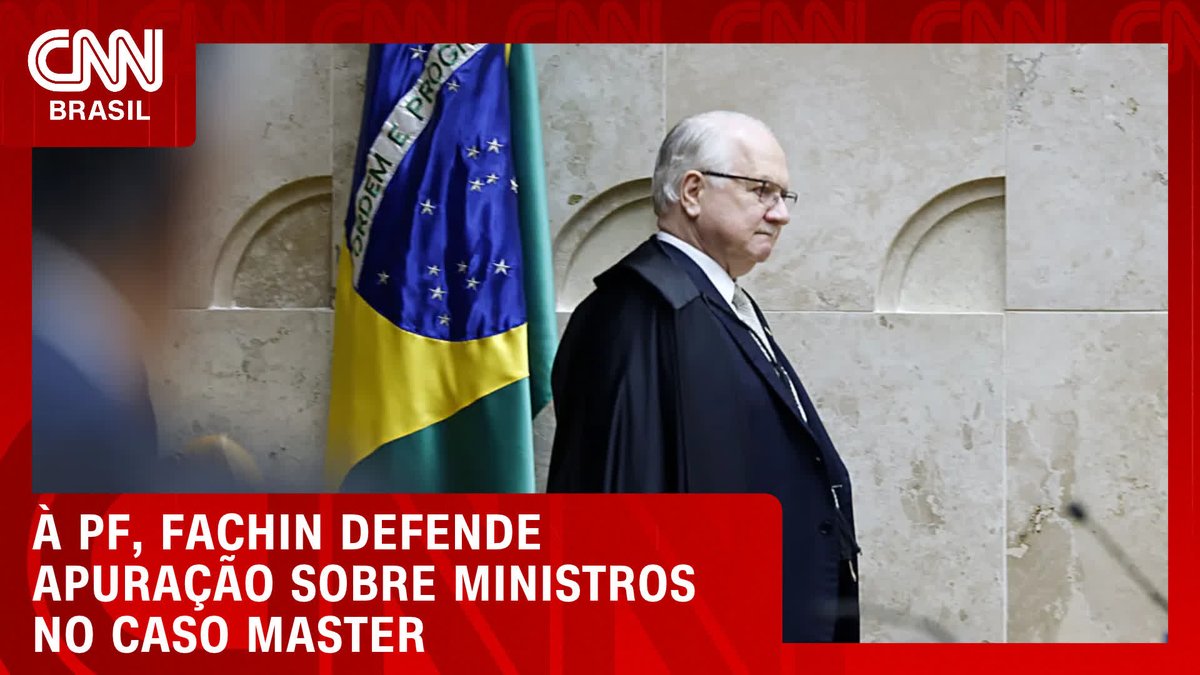
Pri wrote that Edson Fachin sent a letter to the Federal Police, stating that any events involving members of the Court in the Banco Master case should be clarified without exception. According to her, the Federal Police would have to forward the reports and documents to the Presidency of the Supreme Court. https://t.co/re72TxBVdN #Justiça #SupremoTribunal #BancoMaster (translated)

14826