Shane Lowry shows a strong performance but finds himself eight shots behind in the Open de España. #cookies #security #accessblock
www.independent.ie
Shane Lowry rallies but trails by eight shots in Open de Espana
Shane Lowry shows a strong performance but finds himself eight shots behind in the Open de España. #cookies #security #accessblock
The post claimed Cristiano Ronaldo had been provisionally suspended by the Portuguese Federation after a disciplinary case was opened. It said he was awaiting a final verdict and decisions in the case. https://t.co/xfUjxqhEIh #CristianoRonaldo #Futebol #Suspensão #PT


The author criticized a mayor of a city with nearly one million Jewish residents across its five boroughs, saying he had not used the word “Jew” on the anniversary of what the author called the greatest loss of Jewish life since the Nazi genocide. #JewishCommunity #NewYork #HolocaustRemembrance #DE #US

The author described Milorad Dodik as an ally of Vladimir Putin rather than the United States, and agreed with Ivana Stradner that President Trump was right to distance himself from Dodik and his pro-Russian political network. The author also cited a New York Post report about allegations that Trump campaign advisers were working for an entity linked in the post. https://t.co/2rOO3jOwch #Dodik #Putin #Trump #US #BA #EU #RU


The author accused Tucker Carlson of exploiting the death of someone he had called a friend, describing the act as a profound moral failure. They said Carlson deserved neither excuses nor sympathy and could not recover from it. #moralabyss #betrayal #RIP
This is the kind of "gift" Putin gave himself for his birthday. Moscow launched dozens of missiles and drones against targets in 12 regions, with Volodymyr Zelensky accusing Russia of consciously choosing "absolute terror" and sarcastically describing the attack as a "gift" for Vladimir Putin's 74th birthday. #Ουκρανία #Ρωσία #Πούτιν (translated)
The author said Vladimir Putin had given himself a “present” for his 74th birthday in the form of what they described as a massive attack on Kyiv and other parts of Ukraine. They wrote that sirens were still sounding in Kyiv and the attack was continuing, and claimed a Russian ballistic missile had landed among apartment buildings in the city. https://t.co/whGChqrYyf #Ukraine #Putin #Kyiv #UA #RU


Seven people were killed in a bloody attack on a bus in Homs, including an employee of a state company, and four others were injured, which fits into the growing wave of violence against the Alawite minority in Syria. #Syria #przemoc #Hims (translated)

The post said Cristiano Ronaldo had returned to Madrid, landing at 2am local time, and had withdrawn himself from Portugal’s national team squad. https://t.co/MAzJUeqXTG #CristianoRonaldo #Madrid #Portugal #PT

Dodik flies to Moscow to meet Vladimir Putin on Tuesday, 29 September — just five days before Bosnia and Herzegovina votes on Sunday, 4 October. The timing is extraordinary. Dodik himself describes the relationship as “continuing cooperation” with Russia. Bosnia and Herzegovina https://t.co/0Q0QOYuUq2 #BosniaHerzegovina #Dodik #Russia #BA #RU


Mitico Magazine - The Teatro Edicola of San Severo: A Model of Cultural Revolution for Stanford University as Well Source: https://www.miticomagazine.com/territorio-e-sociale/teatro-edicola-di-san-severo-un-modello-di-rivoluzione-culturale-anche-per-la-stanford-university/ The Teatro Edicola in Via Tondi In San Severo, a singular metamorphosis has taken place: a newsstand abandoned for at least six years has found a new function and a new identity, transforming into one of the smallest and most unusual theatre stages in the world. An experiment born in the heart of the town which, in just a few months, has moved beyond local boundaries, attracting attention even overseas. It is called Teatro Edicola and it is a project conceived by the company Foyer '97, artistically directed by Francesco Gravino, which has brought the old newsstand in Via Tondi back to life through a formula that is both essential and surprising. Foyer '97 Foyer '97 APS was established as a formally constituted association active in the cultural sector in San Severo in 1997, born from the vocation of a group of actors, directors and theatre enthusiasts, with the aim of building a "living" and accessible theatre in the town. Over the years the company has developed a repertoire that includes texts from the classical tradition, contemporary dramaturgy, comedy and experimental projects, not limiting itself to the mere production of theatre shows, but also organising theatre courses and workshops and educational and cultural projects characterised by a strong inclusive ethos, particularly in schools. Foyer '97 does not always have a fixed artistic ensemble, but works with different performers and collaborators depending on the project; the only indispensable presence is that of Francesco Guido Gravino himself, actor, director and artistic director of the theatre company. The distinctive feature of Foyer '97 is certainly the value of social and cultural promotion attributed to theatre, the extremely close relationship with the audience and the search for a type of theatre outside conventional spaces, with cemeteries, trains, bell towers, and now a newsstand, as its backdrop. Six spectators, a few minutes and a minimal distance between stage and audience The project was launched on 27 March 2026, on the occasion of World Theatre Day, offering a theatrical experience built around a radical reduction of the conventional spaces and times of performance. The idea was born not only from the search for unconventional spaces, but also from "Edicola Fiore", the morning press review with a strongly ironic tone presented by Rosario Fiorello and Stefano Meloccaro, which was broadcast first only on Fiorello's social channels between 2011 and 2014, and then also on radio and television between 2016 and 2018. The review took its name from the diminutive of its founder, Fiore, and from the newsstand of a friend of Fiorello's in Via Flaminia Nuova in Rome, where the showman would meet early in the morning with a group of friends to read the newspapers. The San Severo newsstand was granted free of charge by its owner Pino Frau to the theatre group which, after obtaining temporary authorisation and institutional support from the Municipality of San Severo, refurbished it within two weeks at a cost of less than €3,000. Just six seats, a total surface area of 4 sq m, of which only 2 are for the stage area, less than a metre between actors and audience, a curtain, a lectern, two lights, performances lasting between 5 and 15 minutes, audience rotation every quarter of an hour: apparently minimal elements that end up subverting the usual relationship between stage and auditorium. Spectators, in fact, find themselves immersed in the stage action, in such proximity to the actors that every gesture, expression and word becomes immediately perceptible. In this way, theatre abandons its traditional spaces and insinuates itself into the everyday life of the street, becoming an intimate, concentrated and almost participatory experience. During the inaugural period admission was free with a subsequent voluntary donation from spectators; in the event of a more stable and longer-term concession, which could lead to seasonal theatre performances, the proposed ticket price would be €5. Audiences reward the experiment Foyer '97's gamble met with public interest right from the start: over 60 people attended the shows in a single afternoon, while the three days that inaugurated the season sold out. From a singular local experiment, the Teatro Edicola thus began to arouse curiosity even outside the province of Foggia, gradually transforming into a case of cultural and social interest, until it reached the American continent. From the province of Foggia to the "Stanford Social Innovation Review" The San Severo experience has now come under the international spotlight: in September 2026, the Stanford Social Innovation Review, an international journal and platform dedicated to social innovation published by the Stanford Center on Philanthropy and Civil Society at Stanford University in California, published on its website and in the Fall 2026 print edition the reportage "The Six-Seat Revolution", written by Dr Luciano Magaldi Sardella, independent journalist and researcher affiliated with the European Open University, and editorially supervised by deputy editor David V. Johnson. In the article, it is argued that the Teatro Edicola attracted attention overseas because the project concentrates cultural innovation, urban regeneration and proximity theatre into just a few square metres: starting from a real urban problem, it recovers an abandoned place with a modest investment, brings performance directly into public space and experiments with a much closer relationship between actors and spectators. From the point of view of theatrical representation, it also highlights how the format, based on micro-stories of five to twelve minutes, taken from great classics such as Goldoni, Chekhov, Ibsen, Euripides and Benni, and on audience rotation every fifteen minutes, transforms the physical limitations of the space into a precise dramaturgical choice, proving to be extremely innovative. All of this makes it possible to address some of the main critical issues in the sector: falling audience numbers, an exclusively elderly audience, reduced resources and distance from traditional cultural venues. The journal also highlights, however, the potential problems: economic sustainability, the need for stable institutional support and the difficulty of replicating the model, which is closely linked to the community and territory of San Severo. A model looking beyond San Severo Despite the difficulties, initial requests for information have already arrived from Lucca and Rome, where there is curiosity about the possibility of getting to know the model more closely and the steps needed to replicate it. The replicability formula, in fact, does not seem to require particularly costly infrastructure: an unused space, a targeted intervention, a cultural idea, in-depth knowledge of the surrounding area and a willingness to return that place to the community can be enough to trigger a new urban function. It is precisely in the disproportion between the modesty of the resources employed and the resonance generated by the initiative that perhaps the most original feature of the Teatro Edicola lies, certainly unique of its kind; there are, however, other examples in Italy of newsstands reused for other purposes: "Edicola 518", a twentieth-century kiosk abandoned in the centre of Perugia, now dedicated to independent publishing, art and cultural production; and in Rome itself, the abandoned newsstand in Piazza Testaccio used temporarily as a stage for a show by Fabio Morgan and the Erno newsstand in the Prati district, which almost every month offers a calendar of events, exhibitions, pop-ups and collaborations with artists and creative enterprises. Small revolutions, therefore, that tell stories of the reappropriation of urban spaces, of creativity and social innovation. And which, it is hoped, will take root in order to look ever further afield.


Mitico Magazine - The Teatro Edicola of San Severo: A Model of Cultural Revolution for Stanford University as Well Source: https://www.miticomagazine.com/territorio-e-sociale/teatro-edicola-di-san-severo-un-modello-di-rivoluzione-culturale-anche-per-la-stanford-university/ The Teatro Edicola in Via Tondi In San Severo, a singular metamorphosis has taken place: a newsstand abandoned for at least six years has found a new function and a new identity, transforming into one of the smallest and most unusual theatre stages in the world. An experiment born in the heart of the town which, in just a few months, has moved beyond local boundaries, attracting attention even overseas. It is called Teatro Edicola and it is a project conceived by the company Foyer '97, artistically directed by Francesco Gravino, which has brought the old newsstand in Via Tondi back to life through a formula that is both essential and surprising. Foyer '97 Foyer '97 APS was established as a formally constituted association active in the cultural sector in San Severo in 1997, born from the vocation of a group of actors, directors and theatre enthusiasts, with the aim of building a "living" and accessible theatre in the town. Over the years the company has developed a repertoire that includes texts from the classical tradition, contemporary dramaturgy, comedy and experimental projects, not limiting itself to the mere production of theatre shows, but also organising theatre courses and workshops and educational and cultural projects characterised by a strong inclusive ethos, particularly in schools. Foyer '97 does not always have a fixed artistic ensemble, but works with different performers and collaborators depending on the project; the only indispensable presence is that of Francesco Guido Gravino himself, actor, director and artistic director of the theatre company. The distinctive feature of Foyer '97 is certainly the value of social and cultural promotion attributed to theatre, the extremely close relationship with the audience and the search for a type of theatre outside conventional spaces, with cemeteries, trains, bell towers, and now a newsstand, as its backdrop. Six spectators, a few minutes and a minimal distance between stage and audience The project was launched on 27 March 2026, on the occasion of World Theatre Day, offering a theatrical experience built around a radical reduction of the conventional spaces and times of performance. The idea was born not only from the search for unconventional spaces, but also from "Edicola Fiore", the morning press review with a strongly ironic tone presented by Rosario Fiorello and Stefano Meloccaro, which was broadcast first only on Fiorello's social channels between 2011 and 2014, and then also on radio and television between 2016 and 2018. The review took its name from the diminutive of its founder, Fiore, and from the newsstand of a friend of Fiorello's in Via Flaminia Nuova in Rome, where the showman would meet early in the morning with a group of friends to read the newspapers. The San Severo newsstand was granted free of charge by its owner Pino Frau to the theatre group which, after obtaining temporary authorisation and institutional support from the Municipality of San Severo, refurbished it within two weeks at a cost of less than €3,000. Just six seats, a total surface area of 4 sq m, of which only 2 are for the stage area, less than a metre between actors and audience, a curtain, a lectern, two lights, performances lasting between 5 and 15 minutes, audience rotation every quarter of an hour: apparently minimal elements that end up subverting the usual relationship between stage and auditorium. Spectators, in fact, find themselves immersed in the stage action, in such proximity to the actors that every gesture, expression and word becomes immediately perceptible. In this way, theatre abandons its traditional spaces and insinuates itself into the everyday life of the street, becoming an intimate, concentrated and almost participatory experience. During the inaugural period admission was free with a subsequent voluntary donation from spectators; in the event of a more stable and longer-term concession, which could lead to seasonal theatre performances, the proposed ticket price would be €5. Audiences reward the experiment Foyer '97's gamble met with public interest right from the start: over 60 people attended the shows in a single afternoon, while the three days that inaugurated the season sold out. From a singular local experiment, the Teatro Edicola thus began to arouse curiosity even outside the province of Foggia, gradually transforming into a case of cultural and social interest, until it reached the American continent. From the province of Foggia to the "Stanford Social Innovation Review" The San Severo experience has now come under the international spotlight: in September 2026, the Stanford Social Innovation Review, an international journal and platform dedicated to social innovation published by the Stanford Center on Philanthropy and Civil Society at Stanford University in California, published on its website and in the Fall 2026 print edition the reportage "The Six-Seat Revolution", written by Dr Luciano Magaldi Sardella, independent journalist and researcher affiliated with the European Open University, and editorially supervised by deputy editor David V. Johnson. In the article, it is argued that the Teatro Edicola attracted attention overseas because the project concentrates cultural innovation, urban regeneration and proximity theatre into just a few square metres: starting from a real urban problem, it recovers an abandoned place with a modest investment, brings performance directly into public space and experiments with a much closer relationship between actors and spectators. From the point of view of theatrical representation, it also highlights how the format, based on micro-stories of five to twelve minutes, taken from great classics such as Goldoni, Chekhov, Ibsen, Euripides and Benni, and on audience rotation every fifteen minutes, transforms the physical limitations of the space into a precise dramaturgical choice, proving to be extremely innovative. All of this makes it possible to address some of the main critical issues in the sector: falling audience numbers, an exclusively elderly audience, reduced resources and distance from traditional cultural venues. The journal also highlights, however, the potential problems: economic sustainability, the need for stable institutional support and the difficulty of replicating the model, which is closely linked to the community and territory of San Severo. A model looking beyond San Severo Despite the difficulties, initial requests for information have already arrived from Lucca and Rome, where there is curiosity about the possibility of getting to know the model more closely and the steps needed to replicate it. The replicability formula, in fact, does not seem to require particularly costly infrastructure: an unused space, a targeted intervention, a cultural idea, in-depth knowledge of the surrounding area and a willingness to return that place to the community can be enough to trigger a new urban function. It is precisely in the disproportion between the modesty of the resources employed and the resonance generated by the initiative that perhaps the most original feature of the Teatro Edicola lies, certainly unique of its kind; there are, however, other examples in Italy of newsstands reused for other purposes: "Edicola 518", a twentieth-century kiosk abandoned in the centre of Perugia, now dedicated to independent publishing, art and cultural production; and in Rome itself, the abandoned newsstand in Piazza Testaccio used temporarily as a stage for a show by Fabio Morgan and the Erno newsstand in the Prati district, which almost every month offers a calendar of events, exhibitions, pop-ups and collaborations with artists and creative enterprises. Small revolutions, therefore, that tell stories of the reappropriation of urban spaces, of creativity and social innovation. And which, it is hoped, will take root in order to look ever further afield.
The Deconstructionists and the Preservers The average person assumes that everyone wants the same things and merely disagrees about how to achieve them. But the social fracture we are living through is deeper: people no longer agree on what they want at all. Consider the conflicts dominating the news—crime, the border, online speech, and who raises children. Beneath each is a question rarely acknowledged: Does society corrupt human beings, or does it elevate them above their animal nature? If social constructs are oppressive, then every institution becomes suspect. Hierarchy, cultural norms, the family, and the nation appear to be cages designed to restrain a free creature. The only honest response, in this view, is to tear them down. The belief that society corrupts the individual is not fringe doctrine. It is the creed of much of the elite class governing the West. From Rousseau, who argued that man was born free until society placed him in chains, through Marx, who identified those chains as capital and class, to the postmodernists, who reduced institutions to masks for power, the thread remains unbroken. It is the philosophy of universities, the cultural industry, and the bureaucrats shaped by both. Opposing it is the older conviction of Hobbes and Hegel: that a person stripped of structure is not free, but frightened and dangerous, and that order is what improves him. Hobbes saw that without order, life becomes a war of all against all. Hegel believed that people become fully themselves through family, community, and the rational state. The divide, then, is not simply left against right. It is the deconstructionists against the preservers. The irony the demolishers never grasp is that freedom does not remain after every structure is cleared away. It requires personal responsibility as a cultural habit. When order is destroyed in the name of liberty, society begins to collapse. Something must bear the weight, and the state eventually fills the void—without moving gently. Liberty pursued through demolition produces, with grim reliability, the conditions of slavery. The deconstructionist imagines himself a liberator striking mankind’s chains. In truth, he is the architect of the cage.
My criticism of António Guterres is fundamental: the UN Secretary-General must defend the UN Charter with absolute clarity, especially when Russia wages a full-scale war against Ukraine. Guterres himself called Russia’s invasion a “blatant violation” of the Charter, but I reject https://t.co/83952tYQST #UNCharter #Guterres #UkraineWar #RU #UA


Swedish media report suspected electoral fraud in Dalarna, including alleged vote-buying and pre-marked ballots favouring Left Party candidate Mohamed Abdukardir Ali. Ali himself is not reported to be suspected of any crime. Voters were allegedly driven to polling stations, #Sweden #Elections #VoteFraud #SE
🚨 BREAKING: The Trump DOJ has charged 12 IMMIGRANTS from Somalia, Syria, Afghanistan, Sudan, and Iraq for running $10 MILLION-worth of FAKE daycare fraud schemes in California 9 of them came into the country as "ASYLUM SEEKERS" or TPS NEWSOM IS COMPLICIT by working to COVER ALL OF THIS UP, and should face charges HIMSELF. Per @AAGMcDonald: "These 12 ghost daycares billed the taxpayer more than $10 million. Money that should have gone to feeding, protecting, and supporting our children." One man, Mohamad Alawad, received over $1.2 MILLION for purportedly providing daycare services. Yet, Alawad WASN'T EVEN IN AMERICA for 120 days he was billing taxpayers for his "home daycare" services. THE CHARGES ARE AS FOLLOWS: WIRE FRAUD – Title 18, U.S.C., Section 1343 • Maximum penalty: Twenty years in prison and $500,000 fine MONEY LAUNDERING – Title 18, U.S.C., Section 1957 • Maximum penalty: Twenty years in prison and $500,000 fine And of course, they'll be forced to pay restitution to taxpayers. Throw the BOOK at them! https://x.com/nicksortor/status/2099943188173594800


A conclusion which follows from the assumption that "the war is embedded in Putinism, just as Putinism is embedded in the war" is that Russia's failure to subjugate Ukraine would inevitably lead to the collapse of Putinism and of Putin himself. This, therefore, should be the goal #Putinism #Ukraine #Russia #RU #UA
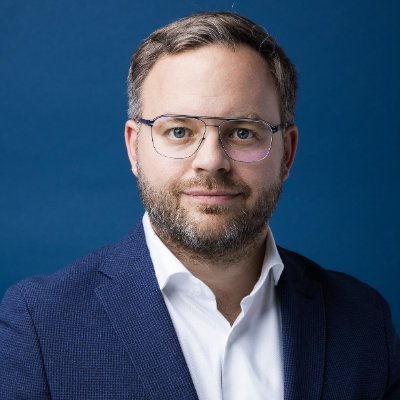
He is not in good shape. Today, the Hungarian prime minister voted in Parliament holding a teddy bear. TV Maci, the iconic children’s character from Hungary’s public television, whose editor-in-chief was fired after the prime minister himself called for his dismissal in a https://t.co/YSvP82OUxc #Hungary #PrimeMinister #TeddyBear #HU

Again, even just focusing on Trump himself, the current move is inevitable. I am mystified at how the British deluded themselves into thinking that official US policy for nearly a century isn’t to completely dissolve their influence in the world. They say it OVER AND OVER. 🇺🇸🇬🇧 https://t.co/kPLcERgImG #Trump #USUKRelations #GlobalInfluence #US #GB