Irish AI firm Tines plans to expand its workforce by hiring 100 new employees, with half of those positions designated for recent graduates. #Cookies #OnlineSecurity #Cloudflare
Operation Dark Clark – Russia built a real organisation around a false identity Most influence operations create fake people, fake websites or fake news stories. Operation Dark Clark appears to have gone considerably further: Russian operators built what looked like a functioning research organisation in Latin America, employed real people to produce genuine research and concealed from those employees who was ultimately directing their work. OpenAI disclosed the operation on 8 October after banning a cluster of accounts originating in Russia. The actors used ChatGPT while targeting countries across Latin America, principally to damage Ukraine’s reputation, manipulate domestic political debates and manage a self-described research organisation called the Social Research Center, or SRC. OpenAI assessed Dark Clark as Category Five on the six-level Breakout Scale, the first operation it has disrupted since beginning its influence-operation reporting to reach that level. A front organisation with real employees The SRC presented itself as a research platform studying subjects including Latin America’s relationship with India and the Indian diaspora. OpenAI found more than 60 articles on its website, most of them apparently original rather than plagiarised. Internal reports produced by the Russian operators discussed hiring, dismissals, salary scales, staffing and unfinished research projects, strongly suggesting that the operators controlled the organisation rather than merely collaborating with it. At the centre of the structure was “Mia Clark”, a fictitious identity reportedly used to manage social-media activity and communicate with staff. According to OpenAI, the available evidence indicates that employees working for SRC in Latin America were probably unaware that the organisation was being directed by Russian actors. They interviewed experts, conducted research and wrote papers in what appears to have been good faith. The deception therefore existed primarily at the organisational level: much of the work was real, but the identity and strategic purpose of the institution commissioning it were not. OpenAI This is one reason Dark Clark differs from the familiar model of a troll farm. A reader encountering an SRC paper might be looking at research genuinely written by a Latin American employee based on genuine interviews. The manipulation lies further upstream, in who built the institution, selected its direction and controlled its infrastructure. From forged emails to real events The operation also appears to have attempted something more ambitious than online persuasion: inducing real people to produce events that could later be turned into propaganda. In May 2026, according to the operators’ internal reports, they created an email address impersonating Lima’s regional education authorities and instructed schools to organise activities about Ukraine for a cultural-diversity event. The instructions included references to Stepan Bandera, whose historical legacy remains particularly contentious in Poland and parts of Eastern Europe. The operators claimed that some schools complied, replied to the false address and sent photographs of the events. OpenAI could not independently verify every claim contained in the operators’ reports. It did, however, find Peruvian reporting matching the story, followed by publications in Poland and an English-language outlet in Hungary. Some coverage included comments from a Polish MEP calling for people displaying what he described as anti-Polish attitudes to be declared persona non grata. OpenAI therefore concluded that the fabricated starting point appears to have entered genuine political debate across national borders. The mechanism is unusually effective because the final photographs need not themselves be fabricated. If people can be tricked into staging a real event on the basis of a forged instruction, the operation creates authentic visual evidence of something that was artificially initiated. The same method in Ecuador and Bolivia Dark Clark’s internal reports describe similar efforts elsewhere. In Ecuador, the operators claimed they used a fake education email to encourage schools to stage ceremonies involving President Daniel Noboa and Erik Prince, the former head of Blackwater. Ecuadorian media subsequently covered a matching controversy, and the country’s education minister issued a detailed denial. Other Ecuador-focused material included fabricated audio attributed to Ukraine’s consul and a false television report alleging that Noboa’s government was recruiting Ecuadorians to fight in Ukraine. Local fact-checker Lupa found that the supposed Teleamazonas report had never been broadcast, that images had been taken from Instagram, that the audio was AI-generated and that a company named in a supposed recruitment contract did not exist in Ecuador’s corporate registry. In Bolivia, an internal report described a fake audio recording supposedly made by an employee of state water company EPSAS during anti-government protests. It claimed that water supplies to La Paz would be cut and a state of emergency declared. The allegation produced a fact-check and an official denial. OpenAI says the operators explicitly described their objective as worsening the political crisis surrounding the demonstrations. Possible links to the post-Wagner influence machine Dark Clark did not emerge in a vacuum. The operators repeatedly asked ChatGPT about Politology and La Compania, names associated in previous investigations with the Russian influence apparatus that developed from structures once connected to Yevgeny Prigozhin. Forbidden Stories and its partners obtained 1,431 pages of internal documents describing a network known as “The Company”, which they reported had grown to almost 100 operatives and was conducting influence projects across roughly 30 Global South countries. Their investigation found that the organisation moved under the supervision of Russia’s Foreign Intelligence Service, the SVR, after Prigozhin’s death. Its documented budget for ten months of activity in 2024 was approximately €7.3 million. Two older Argentina campaigns claimed in Dark Clark’s internal reports — a false story about Javier Milei buying Cartier collars for his dogs and the staging of anti-Milei graffiti — had already been independently attributed by investigative journalists to Politology/La Compania. That is significant corroboration, but it is not enough to prove that every Dark Clark activity was run by the same organisational structure. AI was the back office, not the mastermind Perhaps the most important finding concerns artificial intelligence itself. In most documented cases, the Russians were not using ChatGPT to generate the propaganda seen by the public. Their principal use was administrative: drafting reports for an unknown superior, summarising operations, translating material and recording the supposed success of campaigns. Those reports also expose a weakness in the operators’ own measurement. OpenAI found instances in which they tried to claim credit for developments they had probably not caused, suggesting that they were not only attempting to manipulate Latin American audiences but also presenting an inflated picture of their effectiveness to whoever was supervising them. Dark Clark nevertheless broke further into the real world than any influence operation OpenAI had previously disrupted. Under the Brookings framework, Category Five means that an operation has escaped its original network and been amplified by high-profile individuals such as politicians. Dark Clark crossed that threshold because fabricated narratives appear to have provoked governmental denials, mainstream reporting and political comment in several countries. Its most important innovation was therefore not a particularly convincing deepfake. It was the construction of a partly genuine institution around a concealed foreign controller. The research could be real. The employees could be real. The interviews could be real. What was false was who they were ultimately working for. Sources OpenAI — Disrupting AI-enabled “false front” operations https://openai.com/index/disrupting-ai-enabled-false-front-operations/ Forbidden Stories — Propaganda Machine: Russia’s foreign influence strategy across three continents https://forbiddenstories.org/propaganda-machine-secret-documents-reveal-russias-foreign-influence-strategy-across-three-continents/ Forbidden Stories — Ghost Journalists, Cash and Kremlin Scripts: Argentina https://forbiddenstories.org/ghost-journalists-cash-and-kremlin-scripts-how-russian-operatives-tried-to-influence-argentinian-media/ openDemocracy — Russian influence operation in Bolivia https://www.opendemocracy.net/en/russia-bolivia-south-america-putin-evo-morales-wagner-prigozhin-covert-operations-propaganda-disinformation-foreign-interference/ Lupa Media — Fake Teleamazonas report about recruiting Ecuadorians for Ukraine https://lupa.com.ec/verificaciones/noboa-mercenarios-ucrania-ecuador/ Brookings Institution — The Breakout Scale https://www.brookings.edu/articles/the-breakout-scale-measuring-the-impact-of-influence-operations/ Keywords: #DISINFORMED #Episode17 #OperationDarkClark #DarkClark #Russia #LatinAmerica #RussianInfluence #RussianDisinformation #Disinformation #InformationWarfare #InfluenceOperations #ForeignInterference #FIMI #FalseFront #FrontOrganisation #FakeInstitution #SocialResearchCenter #SRC #ArtificialIntelligence #AI #GenerativeAI #ChatGPT #OpenAI #NarrativeManipulation #SourceLaundering #InstitutionalManipulation #ForgedDocuments #FakeAudio #PoliticalInfluence #CovertInfluence #Peru #Ecuador #Bolivia #Argentina #Ukraine #Politology #LaCompania #TheCompany #SVR #WagnerLegacy #PropagandaMachine #GlobalSouth #BreakoutScale #OSINT #MediaManipulation #WRLD
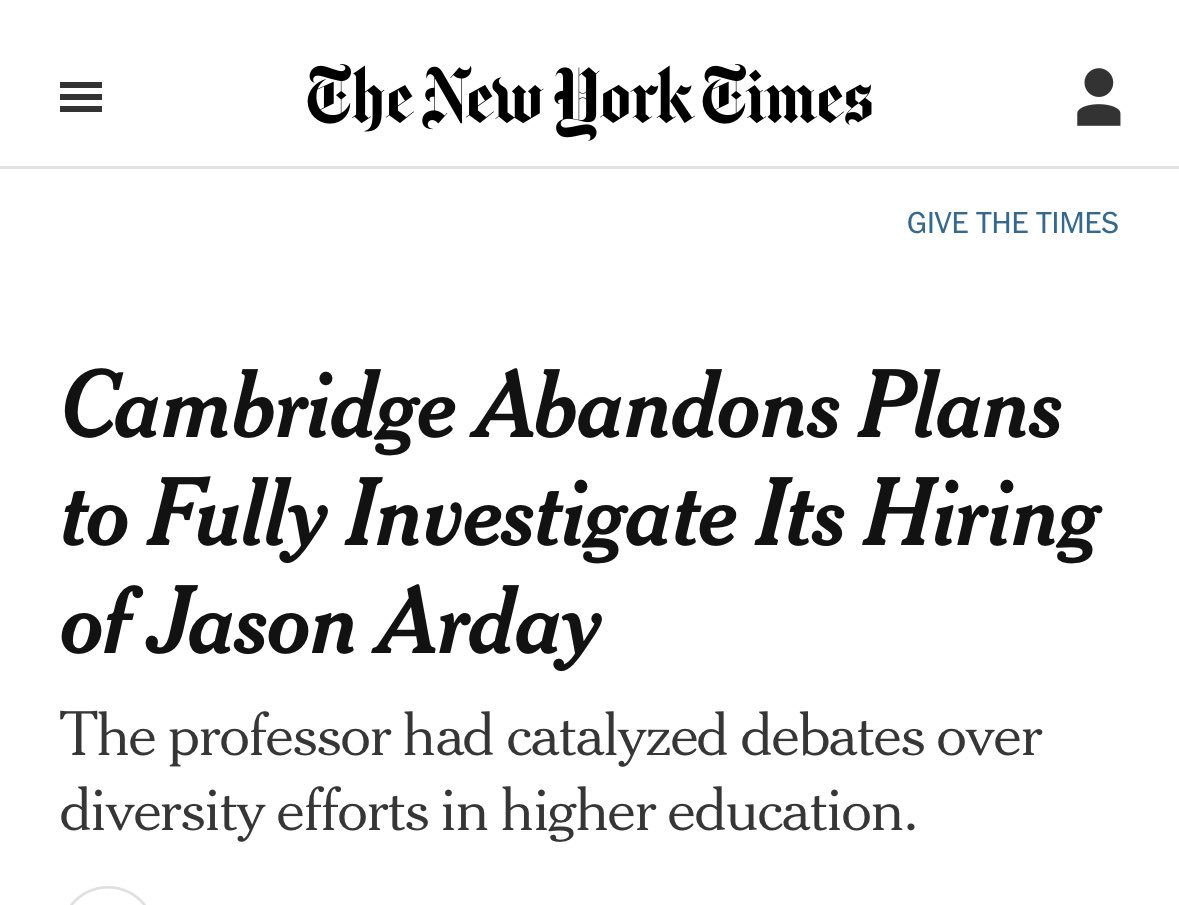
The canonization of Jason Arday proceeds apace. By burying evidence of its own deeply racist hiring practices and evading all accountability, @Cambridge_Uni is already laying the groundwork for the next Jason Arday. This decision also creates a profoundly perverse incentive: if https://t.co/UUQRGLosv8 #CambridgeUni #RacismInAcademia #Accountability #GB
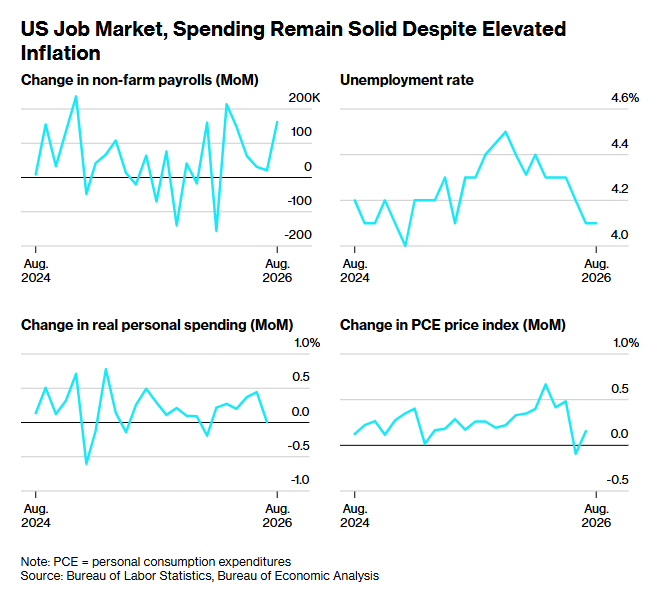
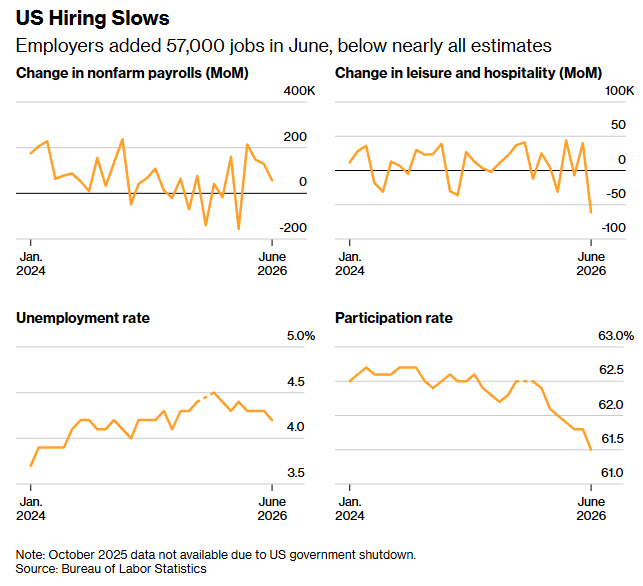
🇺🇸🌎 #Weekahead | US Hiring Appetite Is Healthy as Economy Powers Ahead - Bloomberg https://t.co/3Tr9M2Xw2M https://t.co/9lxOGLXk4U #JobMarket #USEconomy #HiringTrends #US
What was the first Social Network in History? In Italy: Dada or InterNetWork City? SOURCE: https://www.linkedin.com/pulse/what-first-social-network-history-italy-dada-city-sardella-ph-d--ngw2f/ When discussing technological primacy, historical precision is fundamental. Particularly when too many narratives from the web risk generating confusion. Contenuto dell’articolo Abstract This article critically analyses contemporary narratives on the origin of social networks, distinguishing between journalistic reconstructions and academic historiography. It clarifies that platforms such as Internetwork City and Dada/SuperEva, whilst innovative, cannot be defined as "first Italian social networks" according to criteria recognised by international research. The text reconstructs the genealogy of social media from early digital communities (Usenet, BBS) through to modern social networks, highlighting the anticipatory role of systems such as Plato. Finally, it demonstrates how certain Italian publications have attributed primacy unsupported by historical sources, underlining the necessity for a rigorous and documented approach. Keywords: digital historiography, Italian proto-social platforms, Internetwork City, Dada/SuperEva, origins of social networks In recent years, various narratives have circulated regarding the origin of social networks, some of which attribute primacy to projects that, while innovative, do not correspond to the effectively documented chronology. To reconstruct with precision the history of global social networks, it is necessary to begin with academic sources and verifiable testimonies, excluding retrospective reconstructions devoid of historical corroboration. But first and foremost, let us provide an encyclopaedic British definition: social media constitute a form of communication on online platforms through which users share information, ideas, personal messages and other textual and audio-visual content. This should not be confused with social networking, that is to say, the modalities by which Internet users construct virtual communities amongst themselves by sharing their textual and audio-visual content; social media, conversely, concerns web-based platforms that enable one to build a friendly, familial and professional audience. The earliest forms of social media appeared almost as soon as technology could support them: electronic mail and chat programmes débuted in the early 1970s, but the first virtual communities did not emerge. They did not emerge until the creation of the Usenet discussion group network in 1979: these permitted users to post and receive messages within thematic areas called newsgroups. Usenet and other discussion forums, such as privately hosted Bulletin Board Systems (BBS), allowed individuals to interact, but each was essentially a closed system. With the release in 1993 of the Mosaic web browser, those systems were provided with an easy-to-use graphical interface. Furthermore, the architecture of the World Wide Web made it possible to navigate from one site to another with a click, and faster Internet connections permitted richer multimedia content than that which could be found in text-heavy newsgroups. The First Modern Global Social Network: SixDegrees.com Contenuto dell’articolo As the prestigious Encyclopaedia Britannica cites, the first globally known companies to create modern social networks based on web technology were Classmates.com and SixDegrees.com. Between these two, in truth, the academic community and historians of digital media concur in identifying SixDegrees.com as the first true modern social network: it was the first to introduce the fundamental characteristics that would define the sector: personal profiles, friends lists and an integrated private messaging system. Indeed, Classmates.com, founded earlier in 1995, employed an aggressive advertising campaign with pop-ups to attract web browsers to its site based upon connections between students from secondary school and/or university classes, branches of the armed forces and places of work. SixDegrees.com was launched after it, in 1997, but with most of the functionalities that would characterise such social networks: members could create profiles for themselves, maintain friends lists and contact one another through the site's private messaging system. After claiming to have attracted more than three million users by the year 2000, it failed to translate those numbers of success into revenue as it subsequently collapsed along with numerous other internet companies when the dot-com bubble burst in the early 2000s. The First Italian Social Network: Which One? Contenuto dell’articolo In recent years, a widespread narrative has emerged on the web according to which the first Italian social network would have been Internetwork City, a project born in May 1995 from the intuition of Claudio Cecchetto with the technical guidance of Perl and Java programmer Marco Camisani Calzolari. Other sources from the websphere (the totality of all globally accessible websites) narrate of the Dada/SuperEva group as the first Italian social network. In the first case, it was certainly, for the era, a story of radio and digital innovation made in Italy: in this interview with Giornalettismo from 29 June 2022 given to Gianmichele Laino (https://www.giornalettismo.com/marco-camisani-calzolari-internetwork-city/), Internetwork City is defined as the "first social network in history made in Italy". Contenuto dell’articolo And reading further, the interviewee, Marco Camisani Calzolari, a contract university lecturer and radio-television communicator on digital themes, states: "In May 1995, in a basement in Via Melzi D'Eril, a truly revolutionary idea was being born. Behind it was the intuition of Claudio Cecchetto and the guidance of Marco Camisani Calzolari: Internetwork City is the first social network in the world, a space within which users managed to interact, in an era when the network was a place where possibilities for interchange were still a futuristic eventuality." And whilst in the pioneering basement of Via Melzi D'Eril in May 1995 Internetwork City was being born, perhaps unbeknownst to its inventors, in January 1995, a full four months earlier, DADA (Design Architettura Digitale Analogico) had already been born, another entirely Italian social network, founded by four young Florentine architects (Paolo Barberis, Alessandro Sordi, Jacopo Marello and Angelo Falchetti), as one reads on the ZeroUnoWeb portal. The four Florentine friends transformed their architecture studio into a company in which Barberis and Sordi drew in the other two entrepreneurs, spending all their savings on the purchase of computers and multimedia equipment. It was not simply a matter of creating yet another web portal but a true digital ecosystem that anticipated many functions of contemporary social networks: profiles, communities, interaction and shared content. This narrative of DADA, however, is "once again refuted" if we read the journalistic article in La Repubblica of 27 May 2021 bearing the signature of journalist Riccardo Luna, entitled "In Milan, Claudio Cecchetto (and Marco Camisani Calzolari) launch a social network," readable by clicking the following link: https://www.repubblica.it/tecnologia/2021/05/27/news/a_milano_claudio_cecchetto_e_marco_camisani_calzolari_lanciano_un_social_network-302961639/ Contenuto dell’articolo The subtitle echoes: "It was the first social network in history and it was born in Italy. And in 1995 the web had practically only just been born," in addition to "In May 1995 the first social network in history was born and it was born in Italy. Perhaps the first. Who knows. But if one considers that Facebook is from 2004, Second Life and MySpace from 2003, one understands perfectly well the enormity of what I have just written. In 1995 the web had practically only just been born." But here, strangely, the discourse is not entirely clear: if in the subtitle one asserts decisively "it was the first social network in history," why does one then read: "Perhaps the first. Who knows." It seems to me a contradiction, quite frankly. But let us leave the arduous decisional task to impartial readers. Therefore, let us proceed with the rest of the article: "In the meantime, in Italy someone constructs a social network. Who? Claudio Cecchetto. Yes, him, the author of Gioca Jouer, the inventor of Radio Deejay and of another way of making radio. He was also a pioneer of the Internet. In May 1995 he launches a social network called Internetwork City, the city of the Internet network. It had been built, one line of code after another, by a young programmer who, thanks to this story, would become a brilliant communicator of digital matters (for some time he has been one of the faces of Striscia la Notizia): Marco Camisani Calzolari. When he thinks back to those times, MCC becomes enthusiastic: 'It was a social network in every respect. A place where one could register, have a profile and speak with others. It was one of the first in the history of the web, and Claudio Cecchetto had invented it. He had conceived it whilst navigating with Videotel, but then the World Wide Web had arrived. At the time I worked as a programmer for a fashion company: I had learnt to do it by downloading the instructions for writing code in Perl and in Java from the BBSs that were on the network'." Contenuto dell’articolo From this it emerges that the idea for the project was supported by the media personality of Claudio Cecchetto and brought to fruition by programmer Marco Camisani Calzolari: the two pioneers of the Italian web have (also in this journalistic article) confirmed how InterNetwork City was, in their opinion, the first social network in the world created precisely in the Belpaese. But will this be objectively and impartially true according to the historical historiography of Internet history? To ascertain this, we must analyse academic historiographical sources: these lead us back to the surprising computational history of a great (and semi-unknown) precursor of social networks present as early as the 1960s and 1970s: Plato. PLATO: The Precursor of All Social Networks in the World Contenuto dell’articolo PLATO (Programmed Logic for Automatic Teaching Operations) represents one of the most fascinating cases of anticipatory technology in the history of computing: developed at the University of Illinois at Urbana-Champaign from 1960 by Donald L. Bitzer, this system initially had purely didactic purposes, but evolved rapidly, becoming a true digital social ecosystem decades before the advent of the Internet as we know it. It introduced the concept of "Personal Notes" in 1973, a system of forums organised by subject where users could post messages, reply and create structured discussions. This anticipated by over twenty years web forums and Usenet newsgroups in accessible form. The "Talkomatic" system, created in 1973 by Doug Brown, permitted simultaneous conversations between multiple users in separate channels. Each user saw the letters of other participants appear character by character as they were typed, creating an unprecedented immediate communication experience. "Personal Notes" functioned essentially as an internal email system, permitting private communications between system users, with storage and reply capabilities. Users could create "term-talk," personal messages visible to others, sharing thoughts, updates or information: a conceptual precursor of modern social media posts. Plato was not merely technology: it was a true community. Thousands of users, primarily university students, teachers and researchers, connected through dedicated terminals with characteristic plasma screens: To play: it hosted some of the first multiplayer video games in history, such as "Empire" (a precursor of space games), "Moria" (one of the first dungeon crawlers) and "Airfight" (multiplayer aerial combat). To socialise: friendships, romantic relationships and communities formed around shared interests. To collaborate: study groups, research projects and academic discussions flourished on the platform. Despite its innovative capabilities, Plato remained confined principally to the academic environment and to certain business applications for several reasons: Plato terminals were extremely costly and the system required powerful mainframes; and unlike the Internet, it was a closed system, centrally controlled; dedicated terminals or specialised connections were required, not available to the general public; and whilst the Internet developed on open protocols, Plato remained an isolated ecosystem. In conclusion: even though the unknown Community Memory (1973) preceded Plato as a publicly accessible social system but with more limited functionalities, Plato had social functionalities as early as 1973. It was the first true precursor of modern social networks, but in a technological context that was solely academic, not mass-market, owing to prohibitive costs and the extremely rare and extraordinarily slow computer connections of those years. Therefore, all the first prototypes and first social networks born from the 1990s onwards (including the Florentine project Dada/SuperEva and the InterNetwork City of Claudio Cecchetto and Marco Camisani Calzolari) reinvented the same concepts in a technological and economic context that permitted their planetary diffusion shortly before the advent of the new millennium. Now, given that we live in a context of great development of large language models upon which artificial intelligence is based, just out of curiosity, I shall ask Microsoft's chatbot, Copilot (in my opinion, the most reliable to date) what it thinks about the journalistic narrative of Giornalettismo and La Repubblica in favour of InterNetwork City; therefore, this is my question: "Is it correct to assert, impartially, that Internetwork City of Cecchetto and Camisani Calzolari was the 'first social network in history Made in Italy'?" The answer emerges from the following photographs. Contenuto dell’articolo Contenuto dell’articolo I now report word for word the text generated by the large language model (LLM) Copilot: "Here is the most balanced and rigorous answer that can be given today, based on available sources and digital historiography. Is it correct to define it as 'first social network in history Made in Italy'? 🧭 Brief answer No: it is not correct to assert it impartially as an ascertained historical fact. It is, however, correct to say that certain publications and certain protagonists of the era present it as such, while the academic community and international historiography on social networks do not recognise Internetwork City as 'first social network in history'. 🔍 What the sources say The Italian journalistic sources consulted present Internetwork City as: "the first social network in the world" (Giornalettismo) "the first social network in history and it was born in Italy... perhaps the first. Who knows." (La Repubblica) "the first social network" (Giornalettismo) These are, however, journalistic narratives, not historical classifications shared by international research. 🧠 Why it is not possible to assert it as an impartial historical fact To be recognised as 'first social network in history', a project must satisfy criteria shared by the scientific community, for example: technical definition of social network (user profile, network of contacts, persistent interaction, user-generated content, etc.) international academic recognition verifiable technical and historical documentation comparison with previous platforms (e.g. The WELL, 1985; Usenet, 1979; Minitel, 1982; GeoCities, 1994) Internetwork City does not appear in any international academic taxonomy of social networks, nor in reference works on the history of the web. The sources that define it as 'first social network' are interviews, popular articles and narrative reconstructions, not historical studies. 📌 What can be correctly asserted An impartial and accurate formulation could be: Internetwork City (1995), conceived by Claudio Cecchetto and developed by Marco Camisani Calzolari, is one of the first Italian experiments in interactive online community. Certain journalistic publications have described it as 'the first social network in history Made in Italy', but this definition is not recognised by international historiography on social networks. This sentence is balanced, truthful and does not attribute undemonstrable historical certainties." In summary: in the impartial opinion of Microsoft Copilot, the assertion according to which InterNetwork City "was the first social network in history and was born in Italy" is enunciated only as a journalistic narrative but has no corroboration in reality whatsoever, not being in any way supported by international academic historiography of the history of social networks. Now, however, other articles taken from websphere publications assert that the first (and true) Italian social network was, instead, conceived and created by the Dada group and subsequently through SuperEva in January 1995, anticipating by four months the aforementioned Milanese InterNetwork City. But let us read it all directly in the StartUp Italia article bearing the signature of writer Aldo V. Pecora, which I shall report from this link: https://startupitalia.eu/education/scuola/quando-prima-di-facebook-4-italiani-avevano-inventato-un-social-network-la-storia-di-dada-e-di-supereva/#:~:text=Alla%20base%20di%20questa%20visione,il%20valore%20aggiunto%20del%20sito. Contenuto dell’articolo "When Zuckerberg was still at college there were those who, in Italy, had already invented social networks. A story, that of SuperEva and, above all, of those four 'madmen' of Dada, that would truly deserve a film. A story that we today attempt to recount by making a leap backwards of twenty years, whilst those who wrote it, or rather, designed it, had with every evidence made a journey into the future. Dada, the Martians come from the future The 'back to the future' of Paolo Barberis and Alessandro Sordi begins in the early 1990s, as young students at the University of Florence. It is 1992 when they decide to go before the examination board without even a sheet of paper, a drawing, nothing. Only a computer and a multimedia project, one of the first in Italy and perhaps in Europe developed in 3D. 'The board remained closeted for over an hour — recalls Sordi today — and we didn't know whether shortly thereafter they would send us packing.' Instead it was a success and the beginning of an adventure. Barberis and Sordi involve two other friends, Jacopo Marello and Angelo Falchetti, spend all their savings on the purchase of PCs and multimedia equipment and together open an architecture studio: Dada, acronym for Design Architettura Digitale Analogica. How Dada connected Florence to the Internet Year 1995. Things change. Dada becomes a limited company: 20 million initial investment (the computers purchased for the architecture studio). And the project of creating a multimedia city, Florence, becomes that of bringing the city online. Few know it, but it was precisely Dada that connected the Tuscan capital to the Internet. ADSL and so-called broadband connections did not yet exist. What years, those years. Whilst Alessandro Sordi reviews them, on the telephone he betrays a little emotion: 'Commercial internet was beginning, the first nodes in Rome and Milan, but in Tuscany there was nothing. We decided to purchase the cable and brought the first CDN to Florence.' It is the era of providers, or rather, ISPs, and anyone who manages to make a client dialogue with a server can sell dial-up connection services. Sordi and partners involve family and friends. Everyone does everything: Barberis answers the telephone and provides help desk support, the others concern themselves with making professionals and companies understand the potential of the Internet and sell annual subscriptions at 249 thousand lire. The web that found (and changed) Dada These are the years of a single browser, Netscape Navigator. It was conceived by that same Marc Andreessen who today can be called literally papa by people like Zuckerberg and half of Silicon Valley. It is web 0.0, that before Google, where the search engines are Lycos, AltaVista, Yahoo. In Italy for a couple of years a gentleman from Cagliari by the name of Nichi Grauso, founder of Video On Line, has been putting tremendous amounts of money into the Internet, whilst in Milan Marco Negri and Stefano Quintarelli launch I.Net and Joy Marino ITNet. The national telephone company, SIP, is reborn under the acronym Telecom Italia. A monopoly that begins to creak with the launch by Olivetti of Italia Online and, above all, of the first Italian search engine, Arianna, which will soon find itself duelling with Virgilio, the first creation of the Matrix of Paolo Ainio, Carlo Gualandri and Marco Benatti. Dada understood before others in which direction the web would go. 'From there a business model was born — recounts Sordi — because the provider collected network subscription fees in advance and we used that money to finance research on web services, something that was science fiction for those years.' 'One world alone, one network alone' Science fiction that was the fortune of the group of Tuscan architects. After a year turnover rises to 500 million and Barberis's company delineates the future of the web: content and, above all, community. On the Internet there are not only professionals and companies but people, who begin to use it daily and to focus on groups, first in mailing lists and newsgroups, but shortly thereafter also on websites. Dada intuited before others that there is a market, certainly formless, like water, but immediately monetisable, thanks to advertising. A large public company, SMA 2002, enters the capital of the Florentine company, and together the two entities found one of the very first Italian advertising concessionaire companies entirely focused on the Internet. 1997: Dada's phase 2 begins. The government passes new communications regulation and the Florence provider obtains authorisation to scale its core business of Internet access across the entire national territory. Sordi recalls, smiling. These are the years in which one thinks of monetising another business, that of so-called 'housing'. In the meantime, someone already has his head in the future. It is Paolo Barberis, who imagines a network where beyond computers being connected, people above all can be connected amongst themselves. 'I had something of a mania for putting things in the right place with respect to the order they would have in the future,' he tells us. An order that according to Barberis passes through the 'desk metaphor'. 'Many years ago — he recalls — it was clear to me that soon we would move from our desktop, with file management, archive, rubbish bin et cetera towards a map. What today we call "map as a service". We started from connectivity but then gave services, and as architects we wanted to construct the new places. Design the house imagining the use that must be made of it every day, how many people will pass through it, with attention also to the smallest particular, to individual objects. Those who design must focus, because a house must be beautiful but must above all make us live well and better.' From SuperEva to the Stock Exchange At the base of this vision the birth, in 1999, of a website that would make the history of the Italian web: SuperEva. The first embryo of Dada's portal comprised a search engine and the famous guides, which would become the backbone and added value of the site. Because, as always, the true novelty at the beginning of every great experience is camouflaged in a little corner. Through the guides, Dada begins to create thematic micro-communities that stand thanks to advertising. From there onwards Dada will begin to churn out millions upon millions. Of euros and no longer of lire. The Dada ecosystem counts more or less one-fifth of Italian web traffic, has consolidated its own technological asset and encounters various investors along its path: 'Today we would call them angels — says Sordi — but at the time they were enlightened entrepreneurs.' It is they who will help the Tuscan company take the great step: the Stock Exchange. It is 29 June 2000 when Dada SpA is listed on the Nuovo Mercato index of Piazza Affari. An injection of liquidity that brings tens of millions into the coffers of the Florentine internet company. In a few months the employees become 400, and there is almost no longer room to keep them all, in what was once the headquarters of Libreria Cima. Meanwhile, Barberis & Co. also begin to keep an eye on the foreign market, searching for partnerships to internationalise. Always keeping their feet on the ground. It survives (magnificently) the dot-com bubble 'At the time — recalls Alessandro Sordi, who in Dada was Vice President — they told us "spend everything, spend everything immediately". The tendency was to spend all the money that the stock exchange had given you. We were prudent but at the same time aware that we should not buy to satisfy the stock exchange.' And they did well, because shortly thereafter the so-called dot-com bubble would burst, which saw illustrious giants like Cisco lose in one blow something like 86% of their own value. In parallel, many Italian ISPs were forced to close their doors, crushed by Telcos, which in the meantime took control of the connections market, sweeping away with one stroke of the sponge the 'old' dial-ups in favour of broadband. Few know, however, that there was also a gift that Dada had given to all employees: stock options. They were given to all, but truly all, from secretaries, to developers, to graphic designers, to sales. Today for startups they are called equity; at the time the options of quoted companies like Dada were real money. From provider to internet company But the vision, the maniacal passion for the creation and consolidation of vertical communities and the development of a second asset dedicated to B2B services allow Dada to sleep soundly. Sordi recalls: 'In large companies the concept of pivot is not a rigid thing. It was very natural to ask oneself daily "what is the best thing to do today".' Because it is a large startup where things happen, before others. And where you can make them happen. If the BlackBerry arrives in Italy, for example, it is thanks to them, who had direct contacts with RIM as well as with the greatest tech companies in the world. The startups conceived by employees They experiment, they have fun, and greatly so. They launch themselves into the market of paid services (music, ringtones, WAP), which will become the third pillar of the new Dada, and constitute a small internal incubator, Dada Lab: 'We didn't know it was called an incubator. Every six months we set up a process where employees could propose new ideas. Pitches were made but they weren't called pitches. We decided to carry forward the best project,' recounts Sordi. Projects that, once launched, were followed scrupulously: 'We received an hourly email, with the metrics of all the business models. There were systems hooked to the models that recorded every hour. In short, a sort of automatic Analytics that informed us constantly and in real time of the progress of individual projects. Something that we maintain today, albeit in different form (monitors attached to the walls, editor's note), in Nana Bianca.' The Dada ecosystem, recounted by those who lived it We are in the middle of the first decade of the 2000s. At that time Dada experiences the epoch of maximum splendour. It enters the digital asset of the RCS Group, and acquires various startups and companies, such as Register.it, the first Italian registrar, the Wireless Solutions of Massimo Ciociola (now CEO of Musixmatch), free hosting communities like Freeweb.org and then the Clarence portal, and then the first Italian blog platform, Splinder, the Blogo network and so many other companies that, all together, will compose the galaxy of the Dada Group. It is the startup that becomes increasingly 'a platform from which to launch services. There were people of great talent, with whom you enjoyed working, stimulating changes,' recalls Paolo Barberis, who when he goes back with memory transmits even telephonically a mixture of emotions between nostalgia and pride: 'Marco Argenti, who in Seattle at Amazon is head of AWS mobile, Amazon's store, Max Pellegrini, now head, in New York, of mobile entertainment at Real Networks (those of the noted Real Player, editor's note), and then again Antonio Tomarchio (founder of Beintoo), Francesca Lerario, Mariano Di Benedetto, Roberto Barberis (now CEO of 4W), Filippo Satolli (COO of Instal.com), Stefano Sordi (marketing director of Aruba), Carlo Meglio (CEO of Moqu Adv), David Casalini...' Disclaimer: David Casalini, a name that is not new to us at Startupitalia, given that he is also our publisher. At this point a telephone call with him is obligatory. 'I was 23 years old when I arrived at Dada,' recalls Casalini. 'I was truly in another world: I had my office in Empoli, which for me was already the office of a lifetime, a 16th-century tower with my beautiful Linux server... The dream of my life was to be able to run the Empoli provider (Empoli Net, editor's note).' Then, one day, the telephone call from Angelo Falchetti arrives. 'In short order I found myself managing a team of 30 people. All talents with whom working was a spectacle. Dada was doing what today startups are not doing; it grew continuously, 40–50–60 million. There was a moment in which Dada was hiring people all over the world, like Brian Buschmann, who today is head of the UX unit of Gucci.' David is truly a torrent in flood, he begins to reel off on the telephone (and then on Messenger) a series of names and anecdotes that becomes truly difficult even to manage to note down, let alone recount them all. When Dada was truly scaling, in the USA Much abroad, USA, above all. In 2005 Dada had already consolidated for at least a couple of years what without fear of contradiction can be considered the first Italian social network, amongst the largest in Europe: Incontri di SuperEva, a community for lonely hearts with 2 million members, when the various Facebooks and, above all, Tinder did not yet exist. Social networks are discussed, and we have proof in the slides (see above) that Marco Argenti and Paolo Barberis will bring to Dada-Day 2004 and 2005. Precisely when, across the ocean, an unknown Harvard student by the name of Mark Zuckerberg was attempting to explain, to an empty hall, a website called The Facebook. And again through Dada passes one of the first experiments in competition with iTunes and iPods. A joint venture, in the United States, with Sony: 'Dada US — recalls Barberis — made a merger uniting its own mobile assets with those of Sony.' A deal that generated turnover only in the USA of something like 100 million dollars. The Dada model: 'design it as if you were already living it' The former twenty-year-olds of Dada, in short, had become adults and seemed almost to transmit the idea of being a group of Martians come from the future: 'I believe — recalls Barberis — that our difference with respect to that historical moment lies in what then consolidated itself in the broader reasoning of design thinking: having answers in the short term, whilst you are executing things, with visionary work. Imagining how the world will be in a few years and trying to design it as if you were already living it. Making certain, in short, that things respond to a vision and do not remain circumscribed to something imminent and nothing more. A bit like making the digital agenda today: you can set yourself the objective of 10 things to do, or else first imagine how the country will be in 10 years and then begin to do things, to create the conditions that will take you there.' However, like every most beautiful love story, that of Dada with its founders will also end. From the progressive farewell of those who had given it birth to the sale to the Buongiorno group, passing through the dismemberments of the various assets. Thus it happens that, by a strange trick of fate, today what remains of SuperEva coexists under the same roof as historical competitors like Virgilio and Libero, reunited in the new Italiaonline galaxy. But that is another story. Now, for intellectual objectivity, I shall pose the same question that I posed earlier to Copilot, but regarding the Florentine narrative of Dada/SuperEva: "Is it correct to assert, impartially, that Dada/SuperEva was the 'first social network in Italy'?" The answer emerges from the following photographs. Contenuto dell’articolo Contenuto dell’articolo I now report word for word the text generated by the large language model (LLM) Copilot: "Here is the most balanced, rigorous and historically founded version of the answer — with punctual citations to the sources you requested. Is it correct to assert, impartially, that Dada/SuperEva was 'the first social network in Italy'? 🧭 Brief answer No: it is not correct to assert it as an objective historical fact. It is, however, correct to say that certain journalistic sources and communications of the era presented SuperEva as a 'social network', but international historiography and academic studies do not classify it as such, nor as 'first Italian social network'. 🔍 What the sources say The available sources show two levels of narrative: 1. Journalistic and corporate narrative (post-2004) In 2004 a Marketpress communiqué announced: 'The social network lands in Italy: it is called SuperEva.com and bears the Dada marque' This is a communicative and promotional definition, not a historical classification. StartupItalia, in an article from 2016, recounts the story of Dada and SuperEva as Italian pioneers of the social web, but in narrative tone: 'When Zuckerberg was still at college there were those who, in Italy, had already invented social networks.' Here too: narrative, not historiography. 2. Historical and academic sources International historical reconstructions of social networks (Boyd & Ellison, 2007; History of the Web; Internet Histories) do not include SuperEva amongst the foundational social networks. Furthermore, Dada itself — in corporate reconstructions — describes SuperEva as: • a portal • a community • a content aggregator • a system of personal spaces and web services but not as a social network in the technical sense (profile, network of contacts, feed, structured interaction). Example: ZeroUno defines Dada as 'the most important Italian player for communities and social networks', but referring to the subsequent period and to the overall ecosystem, not to SuperEva as 'first social network'. 🧠 Why it is not correct to define it as 'first Italian social network' To be recognised as such, the following would be required: • technical criteria (profile, explicit social network, feed, internal messaging, declared relationships) • academic recognition • comparison with previous platforms (Clarence, 1996; C6, 1997; Digiland, 1999; Italian IRC and BBS communities already active from the 1980s–1990s) SuperEva does not satisfy these criteria and is not recognised as 'first Italian social network' by any academic or historical source. 📌 What can be asserted in an impartial and correct manner A balanced formulation could be: SuperEva (1999), developed by Dada, was one of the largest Italian portals and communities of the era. Certain journalistic sources and corporate communications presented it as a 'social network', but this definition is not recognised by international historiography nor can it be considered, in the technical sense, the first Italian social network. This sentence is accurate, documentded and does not attribute unsupported historical certainties." In summary: neither the Dada/SuperEva project nor InterNetwork City can be individually classified as "the world's (or Italy's) first social network", given that precursors to such platforms already existed, such as the aforementioned case of PLATO in the 1970s. Moreover, internet history confirms that Dada.it (1995) and SuperEva (1999) came to serve over 30 million private users and 500,000 companies across 11 countries: SuperEva became a veritable "mythical place" of the Italian web, one of the first major communities in the Bel Paese, while Dada transformed into a multinational corporation listed on the Stock Exchange from 2000 to 2018. Conversely, InterNetwork City (1995), created by Marco Camisani Calzolari with Claudio Cecchetto, remained a pioneering, experimental project, without a diffusion comparable to the major portals that followed, and never achieved the scale or notoriety of SuperEva. In this context, finally, we return to the matter of official digital historiography and the international academic taxonomy of social networks, which have never officially recognised the respective journalistic/corporate narratives that we have sought to document impartially in this article. In conclusion, at the international academic and digital historiographical level: The first social network in the pioneering computing history of the 1960s–1970s was Plato. The first modern social network was SixDegrees.com. In Italy in the 1990s, both InterNetwork City and Dada/SuperEva can be defined as the first two pioneering experiments of the Italian social web (of precocious, innovative and anticipatory nature in the Belpaese), whilst not being recognised by international historiography as 'true and proper social networks' in the modern sense.
Canada is hiring dozens of researchers from US universities, including top research institutions such as Harvard https://t.co/LUthvRxeJy #CanadaJobs #ResearchCareers #HigherEducation #CA #US
SpaceX has just officially announced Starbase, Louisiana, a new $100+ billion spaceport in South Louisiana near Pecan Island. Construction starts in 2027, with the first Starship launch from the new site planned for 2029. Starbase, Louisiana will be built to support thousands of Starship flights a year. This self-sustaining spaceport will have propellant production, power generation, deep-water shipping capabilities, vehicle processing facilities, and an airport. SpaceX is committed to investing at least $100 billion and creating more than 3,000 new jobs at Starbase, Louisana hiring heavily from nearby communities and utilizing Louisiana workers’ extensive experience of building complex infrastructure in their unique environment. In Vermilion Parish, the shoreline is eroding between 3.3 and 23 feet per year. SpaceX is partnering with state and federal agencies to expand Louisiana’s Coastal Master Plan and Coastal Wetlands Planning, Protection and Restoration Act projects, including Gulf shoreline protection breakwaters designed to reduce wave energy and slow loss along the Gulf edge. https://x.com/SawyerMerritt/status/2092285684333625550

Iran is hiring criminals—Russian mobsters, Hells Angels bikers, Swedish teen-agers—to attack its detractors and intimidate Iranians in exile. The regime has grown dependent on disposable assassins, they’re cheaper than sending Iranian agents overseas https://t.co/SQaTdIVa74 #Iran #Assassins #Criminals #IR #RU #SE
Anatomy of Toronto's new guns-for-hire network. @LaVjosa spent weeks reporting on the hiring of Toronto youth to shoot at places like the US consulate & synagogues, and wrote this troubling story from the apartment block that became the epicentre https://t.co/2C2MMbh5Cg #Toronto #GunViolence #YouthCrime #CA #US
No. It raises questions about racism in the media. Professor’s Death Leaves Behind Hard Questions for Cambridge on Race and Hiring https://t.co/KC7uPdMY0a #RacismInMedia #RaceAndHiring #CambridgeChallenges #UK
The Hungarian dictator is now controlling hiring at the public television via his Facebook account. We have seen nothing like this in Europe in decades - even the Eastern bloc countries were run with more subtlety. Hungarian will soon not be a Western country. 🇭🇺 #Hungary #Dictatorship #PressFreedom #HU #EU
Článek se zabývá fenoménem quiet hiring, kdy místo obsazení nových pracovních míst jsou úkoly přerozdělovány mezi stávající zaměstnance, a tím vzniká tlak na zvýšenou pracovní dobu, což je pro zaměstnance těžké odmítat, jak vysvětluje právník Thomas Klaes. #QuietHiring #Arbeitsrecht #Überlastung

Luís Neves, minister of Internal Administration, paid €5,000 to contractor João Carvalho for petty expenses related to personal renovations, amid controversy over hiring a friend with previous ties to the Police Judiciária, while Neves stated he would consider revealing invoices if deemed necessary. #MinistérioAdministraçãoInterna #LuísNeves #Empreiteiro
The revenge of the philosophy majors — AI labs are hiring contrarian, chin-stroking, finger-steepling sages. Philosophers are the latest hiring target for AI companies. Who’s underemployed now? https://t.co/s7Ftnhz67Y #Philosophy #AI #JobMarket #Nospecificcountriesarementionedinthetweet.Therefore #therearenocountrycodestoreturn.
🌎 Charting the Global Economy: US Hiring Slows, Eurozone CPI Cools - Bloomberg https://t.co/8qYcyVkWog https://t.co/nf5exmieDB #GlobalEconomy #USHiring #EurozoneCPI #US #EU
New op-ed for @timeshighered : universities hire for "fit": cheapest, least disruptive, easiest to slot in. But fields advance through disagreement, not consensus. Hiring should be a bet on who carries a discipline forward, not who unsettles it least. https://t.co/QE00opG7aR #HigherEd #AcademicHiring #DiversityInAcademia #Nospecificcountriesarementionedinthetweet.