WRLD

Search

#Industrialisation
Krzysztof Graj 7d

Africa Daily Report — 5 October 2026 Main developments reported during the previous 24 hours. 1. Ethiopia — Federal forces take control of Mekelle after TPLF withdrawal Ethiopian federal forces and allied fighters took control of Mekelle, the capital of Tigray, after the Tigray People's Liberation Front said it had withdrawn and temporarily relocated the regional administration. The renewed fighting, which began on 23 September, is the most serious breakdown since the 2022 peace agreement and has revived concern about a wider Horn of Africa conflict, particularly after Ethiopia and Eritrea severed diplomatic ties. Source: https://www.reuters.com/world/africa/government-forces-seize-capital-ethiopias-tigray-region-rebels-2026-10-04/ 2. Horn of Africa — Egypt, Eritrea, Somalia and Sudan issue joint declaration The leaders of Egypt, Eritrea, Somalia and Sudan met in New Alamein on 4 October and called for peaceful political solutions to regional conflicts, respect for sovereignty and non-interference. The summit took place amid Ethiopia's renewed Tigray war and escalating diplomatic tensions with Eritrea. The four leaders also called for a political solution to Sudan's civil war. Source: https://www.aljazeera.com/news/2026/10/5/four-african-leaders-issue-joint-declaration-as-ethiopia-war-escalates 3. Sudan — WFP aid trucks attacked in South Kordofan Importance: 10/10 — Critical An aerial attack hit two clearly marked trucks carrying World Food Programme food supplies from Dilling to Kadugli, killing one driver. WFP called for a prompt and impartial investigation and stressed that humanitarian personnel and cargo must be protected. The incident followed another WFP truck striking an explosive device in Dilling one day earlier. Source: https://wfpusa.org/news/wfp-strongly-condemns-attack-trucks-south-kordofan/ 4. Sudan — 32 WFP aid trucks reportedly seized in North Darfur Importance: 10/10 — Critical A Darfur regional humanitarian official accused the Rapid Support Forces of continuing to hold 32 trucks from a WFP convoy carrying relief for famine-threatened communities in North Darfur. The official said a 60-truck convoy entered from Chad through Tina and that dozens of vehicles were diverted. The RSF had not immediately commented on the accusation. Source: https://sudantribune.com/article/319630 5. Kenya — Highway crash kills at least 17, mostly Catholic pilgrims Importance: 9/10 — Very High At least 17 people were killed in a multi-vehicle collision on the Nairobi-Mombasa highway in the Salama area. Most victims were Catholic pilgrims travelling to a prayer site in Nakuru County. Kenya's road-safety authority described the location as a known accident black spot and urged motorists to exercise additional caution. Source: https://apnews.com/article/d2f788a5ab157acec3b5caa3afd5330f 6. Somalia — 366 Shabelle River breach points raise flood risk Importance: 8/10 — High Somalia's Disaster Management Agency warned that the Shabelle River has breached or is vulnerable at 366 major high-risk points. Authorities say the condition of the river is making flood prevention more difficult, raising risks to low-lying communities, farmland, homes and infrastructure along the river system. Source: https://www.dawan.africa/news/shabelle-river-breaches-at-366-points-raising-flood-risk-sodma-warns 7. African Union — Leaders focus on continental integration and value-added production African leaders met in New Alamein for the 8th African Union Mid-Year Coordination Meeting. A major economic theme was the need to move African economies from exporting raw materials toward processing and higher-value production, while improving regional integration and access to development finance. South African President Cyril Ramaphosa participated in his capacity as SADC chair. Source: https://www.sabcnews.com/sabcnews/africa-must-shift-from-raw-exports-to-value-added-products-sisi/ 8. Mozambique — Central bank holds benchmark interest rate at 9.25% Importance: 7/10 — High The Bank of Mozambique kept its MIMO policy rate at 9.25%, while also changing the reserve-requirement framework for banks. The central bank said its decision reflected prevailing risks to the inflation and macroeconomic outlook. Source: https://southafricatoday.net/africa-news/southern-africa/mozambique/mozambique-bank-of-mozambique-holds-interest-rate-at-9-25-percent/ 9. Nigeria — Telecom regulator launches free educational data pilot Importance: 7/10 — High Nigeria's Communications Commission has launched a pilot initiative giving eligible learners up to 100 MB of free daily data for approved educational platforms. The initial phase targets 5,000 learners and involves telecom operators and technology-sector partners. The programme is intended to test whether subsidised connectivity can measurably improve digital-learning access and outcomes. Source: https://brandspurng.com/2026/10/04/ncc-introduces-free-100mb-daily-data-for-mtn-airtel-and-glo-users-under-education-scheme/ 10. Eswatini — Laotian deportee released after more than a year in detention A Laotian national who had been deported from the United States to Eswatini and held there for more than a year has been released, according to Associated Press reporting. The case forms part of continuing scrutiny of arrangements under which migrants removed by the United States have been transferred to third countries in Africa. Source: https://abcnews.com/International/wireStory/immigrant-deported-us-held-african-prison-year-released-136989610 #Africa #AfricaNews #TopNewsOfAfrica #HornOfAfrica #Egypt #Eritrea #Somalia #Sudan #Diplomacy #RegionalCooperation #Sovereignty #NonInterference #AfricanUnion #AU #RegionalIntegration #ValueAddedProduction #Industrialisation #DevelopmentFinance #AfricanEconomy #Ethiopia #Tigray #Mekelle #TPLF #FederalForces #PretoriaPeaceAgreement #RegionalConflict #AfricanSecurity #Geopolitics #AfricaToday #wrldorg

454
Krzysztof Graj 2w

Africa Daily Report — 1 October 2026 Major developments reported during the previous 24 hours 1. Kenya / East Africa — $16 billion Dangote refinery breaks ground in Lamu. Five African heads of state joined the groundbreaking of Dangote Group's planned $16 billion refinery in Lamu. The plant is designed to process 700,000 barrels per day and is expected to take about 40 months to complete. It is intended to reduce East Africa's dependence on imported refined petroleum, but the project still faces land-rights litigation and environmental concerns. Importance: VERY HIGH — the project could materially reshape East African fuel supply, trade flows, infrastructure investment and regional industrialisation. Direct source: https://apnews.com/article/a0ae7108ae4f4144222aea101baed3a5 2. South Africa — Ramaphosa announces response to gender-based violence. President Cyril Ramaphosa announced additional measures after the discovery of multiple murdered women in Ekurhuleni. Measures include a 60-day local-government safety audit and reviews of unresolved murder, rape and other gender-based-violence cases. Police have not established that the recent killings were committed by a single perpetrator. Importance: VERY HIGH — gender-based violence remains a major public-safety and criminal-justice challenge in South Africa. Direct source: https://www.reuters.com/world/africa/violence-against-women-south-africa-is-national-shame-president-says-2026-09-30/ 3. DR Congo — Mistrust complicates Ebola response after politician killed. Congolese politician Marie-Célestin Karondwa was killed after publicly supporting the government's Ebola response, according to AP. The killing illustrates the severe community mistrust confronting health authorities as the Bundibugyo-virus outbreak continues. Congo has recorded more than 8,000 confirmed infections and nearly 4,000 deaths in the current outbreak. Importance: CRITICAL — the combination of rapid transmission, very high mortality, insecurity and resistance to health measures poses a major regional public-health risk. Direct source: https://apnews.com/article/1ff629474298a62db44438c6eb178270 4. Zambia — Government opens talks with IMF on a new programme. Zambia began discussions with a visiting IMF mission on a successor lending programme. The country's previous $1.7 billion IMF arrangement expired in January, and Lusaka wants a new agreement before year-end. The IMF mission is scheduled to remain through October 10. Importance: HIGH — a new IMF programme could affect Zambia's fiscal policy, investment environment and economic strategy after its sovereign-debt restructuring. Direct source: https://www.reuters.com/world/africa/zambia-starts-talks-with-visiting-imf-mission-new-loan-programme-2026-09-30/ 5. South Africa / United States — Pretoria summons US ambassador. South Africa's foreign ministry summoned US Ambassador Leo Brent Bozell III over what it described as “undiplomatic conduct.” It was the third such summons in nine months, reflecting continuing strain in bilateral relations. Both governments have nevertheless indicated that dialogue is continuing. Direct source: https://www.reuters.com/world/africa/south-africa-summons-us-ambassador-again-over-undiplomatic-conduct-official-says-2026-09-30/ 6. South Africa — Anti-immigration protests held in Durban. Hundreds of demonstrators marched in Durban calling for more deportations of undocumented migrants and tighter border controls. The demonstration comes amid heightened tensions over migration and previous violence against foreign nationals. Authorities did not recognise an ultimatum previously issued by organisers demanding that undocumented migrants leave the country. Direct source: https://apnews.com/article/c086e617b555643510541f9c9906ca4b 7. Africa — WHO data show sharp increase in cholera deaths. New WHO surveillance data show that reported cholera deaths globally rose by about 30% in 2025 despite fewer reported cases. The African Region experienced a particularly sharp deterioration: reported cases increased by 34% and deaths by 58%. Angola, DR Congo, Nigeria, South Sudan and Sudan were among seven countries accounting for roughly 90% of reported global cases and deaths. Importance: VERY HIGH — the figures highlight persistent weaknesses in water, sanitation, surveillance and access to timely treatment across several African states. Direct source: https://allafrica.com/stories/202609300113.html 8. Zambia — New cholera outbreak reaches 304 cases and 11 deaths. Zambian health authorities reported 304 cholera cases across seven districts in five provinces as of September 29, with 11 deaths. Lusaka was among the affected areas. The government said eight deaths occurred in communities, pointing to delays in patients reaching treatment. Importance: HIGH — Zambia only recently ended its previous outbreak, making renewed transmission a significant public-health concern. Direct source: https://www.mwebantu.com/11-die-as-cholera-hits-seven-districts-in-five-provinces-says-ministry-of-health/ 9. Burkina Faso — Country opens its first gold refinery. Burkina Faso inaugurated its first domestic gold refinery, RAFFINOR-BF, in Ouagadougou. The facility cost more than 11 billion CFA francs and has an initial annual refining capacity of about 164 tonnes, with plans for substantial expansion. The project is intended to retain more value from the country's gold production through domestic refining, certification and processing. Importance: HIGH — the refinery is part of a wider African trend toward local mineral beneficiation and greater domestic control of commodity value chains. Direct source: https://apnews.com/article/f39f714232e1784bb5051cdf44f0b992 10. Zimbabwe — Helicopter crash reported with six people aboard. A helicopter carrying four passengers and two crew members crashed in Zimbabwe's Marondera district southeast of Harare. Government and police officials said initial information indicated there were no survivors. Authorities had not immediately released all identities or a cause for the crash. Importance: MODERATE — a significant domestic aviation accident, with investigation and identification of those aboard still pending. Direct source: https://abcnews.com/International/wireStory/helicopter-6-aboard-crashes-zimbabwe-survivors-officials-136898678 #Africa #AfricaNews #TopNewsOfAfrica #DRCongo #Ebola #EbolaOutbreak #PublicHealth #HealthSecurity #CommunityTrust #DiseaseResponse #Zambia #IMF #InternationalMonetaryFund #EconomicReform #DebtRestructuring #FiscalPolicy #AfricanEconomy #SouthAfrica #CyrilRamaphosa #GenderBasedViolence #Femicide #PublicSafety #CriminalJustice #Ekurhuleni #ViolenceAgainstWomen #AfricanSecurity #RegionalStability #Geopolitics #AfricaToday #wrldorg

343
Luciano Magaldi Sardella (PhD) Sep 5

Freeman of the City of London: An Ordinary Honour for All, an Honorary One for Few SOURCE: https://www.linkedin.com/pulse/freeman-city-london-ordinary-honour-all-honorary-one-sardella-ph-d--m1alf/ Abstract The Freedom of the City of London is an institution of mediaeval origin, attested as far back as 1237, originally conceived to afford freeborn citizens protection from feudal obligations, the right to trade, and the ownership of property within the bounds of the Square Mile — the territory of the City of London proper. Having evolved progressively from a concrete economic privilege into a civic and symbolic distinction, it has preserved its relevance over the centuries through successive legislative reforms — most notably the extension of eligibility to all nationalities in 1996 — and today records approximately 1,800 to 2,000 new admissions annually. The present article examines the historical and juridical evolution of the title, sets out the several routes of access provided by current regulation (by servitude through apprenticeship, by patrimony, by redemption through direct nomination, by presentation through the Livery Companies, and by registration on the electoral roll), and analyses the contemporary profile of the Freemen in the light of recent admissions of prominent figures from the worlds of finance, culture, sport, and public life. Contrary to the elitist image surrounding many British honours, the ordinary Freedom proves accessible to any person whatsoever, regardless of nationality or financial standing, upon the satisfaction of minimal requirements and the payment of an administrative fee of £180–185. The article concludes by reflecting upon the contemporary significance of the institution: not in the residual privileges, now largely ceremonial, but in its identity-forming, civic-participatory function and its connection to the long history of the oldest and most venerable city in Europe. Keywords: Freedom of the City of London; Livery Companies; City of London Corporation; British honours; urban civic identity. Contenuto dell’articolo Introduction Amongst the historic honours of Britain, few institutions evoke an imaginative world as rich as the Freedom of the City of London. Cited in films, novels, and articles on manners and custom with tones of exclusivity and mystery, it is frequently associated with figures of the very highest standing: sovereigns, heads of state, military commanders returning from the wars. Yet, upon closer and more methodical scrutiny, a markedly different picture emerges: that of a title which, in its ordinary and non-honorary dimension, is today accessible to a considerable number of persons each year, without the requirement of extraordinary merit or elevated financial means. The present contribution aims to examine the institution in its twofold aspect, historical and contemporary, with the object of dispelling the most prevalent misconception: that which confounds the ordinary Freedom with the Honorary Freedom — the latter genuinely rare and reserved for figures of international standing. This article traces the mediaeval origins and legislative evolution (§ 2), sets out the current routes of access (§ 3), discusses requirements, costs, and procedure (§ 4), analyses the contemporary composition of the body of Freemen (§ 5), examines rights, privileges, and obligations (§ 6), reviews the most distinguished recipients of recent decades (§ 7), and concludes with some reflections upon the contemporary significance of the institution (§ 8). Origins and Historical Development of the Institution The Freedom of the City of London is attested from 1237, during the reign of Henry III, as a form of civic status designating individuals not subject to a feudal lord, and therefore entitled to the protections guaranteed by the City's charters. In this original sense, the term freeman denoted the free man in the fullest sense of the word: one who might trade freely within the perimeter of the Square Mile, hold property, and join the trade guilds without external interference. The practical privileges were of concrete scope and directly functional to the mediaeval economy: exemption from certain tolls, including the celebrated right to drive flocks of sheep across London Bridge without payment — a concession rooted in the wool trade that dominated the English economy — protection against arbitrary arrest beyond the jurisdiction of the City, and access to the markets regulated by the guilds. As confirmed by the subsequent reissues of Magna Carta by Henry III in 1225, such liberties were intrinsically bound to the self-governance of the City, which defended them against royal and baronial interference. The progressive codification of the institution took place through royal ordinances from the fourteenth century onwards. In 1319, Edward II issued constitutions restricting access to the Freedom to members of the trade guilds, prohibiting the admission of unaffiliated outsiders, and thereby formalising servitude through apprenticeship as the principal route for new entrants, whilst the patrimonial route ensured continuity for established families. Subsequent monarchs, from Edward III onwards, repeatedly confirmed the civic liberties through charters granted often in exchange for financial loans, consolidating the City's autonomy and its role as creditor to the Crown. In the nineteenth century, with industrialisation and the demographic expansion of London, corporate control over trade proved increasingly unenforceable. The Municipal Corporations Act of 1835 extended eligibility to any person living, working in, or having a significant connection with London, partially detaching the title from corporate membership and progressively transforming it into an honorary distinction of a civic character. During the twentieth century, further reforms rendered access more inclusive. Women, already admitted informally as widows by inheritance in earlier periods but formally excluded from the standard routes, saw their right to ordinary admission recognised — Angela Burdett-Coutts having already received the Honorary Freedom in 1872, and Florence Nightingale in 1908 — while formal equality was consolidated in the twentieth century. Finally, in 1996, the requirement of British or Commonwealth citizenship was abolished, opening the title to any nationality whatsoever. Routes of Access: The Current Regulatory Framework The current regulations, administered by the Court of the Lord Chamberlain of the City of London Corporation, provide for five principal modes of access to the Freedom of the City of London, each reflecting different historical ties between the individual and the City's institutions. By servitude confers the title upon the completion of a formal apprenticeship under the Custom of London, traditionally of seven years' duration, under a master freeman of a Livery Company. This route, the oldest and of the greatest historical significance, verifies merit through practical competence and loyalty to the guild. Completing apprentices are admitted without the need for approval by the Court of Common Council, provided they have been registered on the City's electoral roll for at least one year, and in such cases no financial contribution is required. By patrimony confers automatic eligibility upon the children of Freemen, provided the parent held the title at the time of the candidate's birth and appropriate documentation is furnished. Historically restricted to sons, it was extended to daughters by the Municipal Corporations Act of 1835. The candidate must have attained the age of eighteen, must not be an undischarged bankrupt, and must not have relevant unspent criminal convictions. By redemption constitutes the route open to any person whatsoever. The candidate submits an application to the Court of the Lord Chamberlain, supported by two sponsors — Common Councillors, Aldermen, or Liverymen of at least one year's standing who attest to their reputation — and the matter is examined by the Freedom Applications Sub-Committee and approved by the Court of Common Council. The administrative fee (the Freedom Fine) amounts to £180 following the tariff revision of 1 April 2024 (£185 in the case of direct nomination). For candidates registered on the Ward List, the City's electoral roll, the procedure is free of charge. By presentation through a Livery Company is the route most frequently taken in contemporary practice. The candidate first becomes a member of their relevant guild, following a procedure that varies amongst each of the 113 Livery Companies currently active, and subsequently submits an online application to the Court of the Lord Chamberlain for admission to the Freedom of the City, with approval in the vast majority of cases being a matter of routine. Requirements, Costs, and Procedure The requirements for access to the ordinary Freedom are of a simplicity that may well surprise, given the aura of exclusivity surrounding the title. The candidate must have attained the age of eighteen, must not be an undischarged bankrupt, and must not have unspent criminal convictions within the meaning of the Rehabilitation of Offenders Act of 1974. No requirement of nationality, residence, educational attainment, or financial standing is imposed. The documentation required is of a standard biographical character: a full birth certificate, a marriage certificate or name-change document where applicable, and, where admission is by presentation, the certificate of membership issued by the relevant Livery Company. The application is submitted online through the City of London Corporation's portal. The admission ceremony is held at the Guildhall in London, in the Court Room of the Lord Chamberlain, on every working day between 10.30 and 12.00, and between 14.00 and 15.30. The newly admitted Freeman is invited to read aloud the Declaration of a Freeman and to sign the Admissions' Book, receiving upon its conclusion a calligraphed certificate on vellum and a copy of the Rules for the Conduct of Life — the eighteenth-century document of moral guidance that enjoins the holder to lead a life of rectitude, compassion, and social engagement. For those unable to attend in person, the City Corporation has retained the option of conducting the ceremony virtually, a facility introduced during the pandemic and subsequently preserved. The Contemporary Composition of the Body of Freemen One significant empirical datum serves to diminish the elitist dimension of the title: between 1,800 and 2,000 new persons are admitted each year, within a body that counts over 300,000 documented admissions across the centuries. As the City of London Corporation itself observes, contemporary Freemen comprise 'a broad cross-section of the population', encompassing professionals, students, craftspeople, entrepreneurs, military personnel, and foreign nationals. The growing contribution of university students, frequently presented in groups by their academic institutions, and of international professionals, has further broadened the demographic base. The group ceremony of 2024, in which 40 individuals drawn from fields ranging from science and medicine to entrepreneurship and diversity initiatives received the title simultaneously, is illustrative of this openness. A fundamental distinction must, however, be emphasised. The Honorary Freedom of the City of London constitutes an entirely separate institution of radically different scope. Granted by the Court of Common Council by special resolution, it is reserved for figures of exceptional international stature — typically fewer than a dozen conferred annually — and represents, in the words of the City Corporation itself, the highest honour it is able to bestow. It is this Freedom that has been enjoyed by Winston Churchill, Her Majesty Queen Elizabeth II, and, more recently, the television presenter Rachel Riley (October 2025), in recognition of her commitment to Holocaust education and the combating of antisemitism. The confusion between the two forms is the principal source of the distorted public perception of the institution. The Contemporary Significance: Between Identity and Participation While the great majority of the practical privileges once associated with the condition of Freeman have today disappeared or been reduced to solemn ceremonial form, what persists is the powerful symbolic and identity-forming value of the title. The ceremony retains elements of ritual solemnity — the reading of the Declaration, the signing of the historic Admission Register, the receipt of the calligraphed certificate on vellum — which inscribe the new Freeman within a chain of continuity of nearly eight centuries, linking diverse figures through a shared bond with the history of the Square Mile. This venerable London institution also performs a cohesive function within the ecosystem of the City and the Livery Companies. The 113 active guilds collectively disbursed over £81 million in charitable activities in 2024, through programmes of vocational training, scholarships, and technical apprenticeships that preserve specialist skills in economically significant sectors. Being a Freeman constitutes a formal prerequisite for advancement to Liveryman, and therefore for the exercise of voting rights in the governance of the City: a vestige of corporate democracy which, however distant from the models of universal suffrage, retains its own institutional logic within the unique legal architecture of the London Square Mile. Critics of a progressive persuasion have observed that the system favours established networks and access by hereditary or professional routes, potentially excluding broader strata of the London population, with the pool of living Freemen well below one per cent of the nine million residents of Greater London. Nevertheless, the data on recent admissions — encompassing recognition spanning African entrepreneurship, community sport, broadcasting, and medicine — suggest a trajectory of progressive opening which, whilst falling short of full demographic representativeness, attests to the institutional will to maintain the institution as a living tradition rather than an exclusive relic. Conclusions The foregoing analysis permits the formulation of several concluding observations. The Freedom of the City — the ordinary Freedom — is today an honour accessible to a far wider audience than the collective imagination suggests. The admission requirements are minimal, the costs modest, the procedures relatively streamlined and open to any nationality. The persistent confusion with the Honorary Freedom, reserved for figures of exceptional international eminence, is the principal source of a distorted perception that merits correction. The contemporary value of the title resides not in the residual privileges, now largely solemn and ceremonial, but in three complementary dimensions: the identity-forming, which connects the holder to nearly eight centuries of institutional history; the civic-participatory, which through access to the Livery Companies and the City's electoral system inserts the Freeman into genuinely operative networks; and the communitarian, which through the mechanisms of honorary recognition celebrates contributions of an ever more varied scope and provenance. In this respect, the Freedom represents an instructive case study in how historic institutions may reinvent themselves without losing authenticity, preserving their significance through inclusion rather than exclusion. References and Sources: City of London Corporation. (2024). Freedom of the City of London. https://www.cityoflondon.gov.uk/about-us/law-historic-governance/freedom-of-the-city Guild of Freemen of the City of London. (2025). Freedom of the City. https://www.guild-freemen-london.co.uk/freedom-of-the-city Livery Committee. (2025). Freedom of the City. https://liverycommittee.org/about/membership-freedom-and-livery-clothing/freedom-of-the-city/ Municipal Corporations Act 1835. UK Parliament. Rehabilitation of Offenders Act 1974. UK Parliament. Grokipedia. (2025). Freedom of the City of London. https://grokipedia.com/page/Freedom_of_the_City_of_London City Solicitors' Educational Trust. (2025). Applying for the Freedom of the City of London. LondradaVivere.com. (2025). La 'Freedom of the City of London': un'antica libertà ancora viva. City of London Corporation. (2023). Livery Companies: Charitable Activities Report 2024. ONS / City of London Corporation. (2023). Financial Services Contribution to UK GDP.

www.linkedin.com
Freeman of the City of London: An Ordinary Honour for All, an Honorary One for Few
935
BFMTV Aug 19

L'article analyse l'augmentation alarmante des cyberattaques, avec environ 14 attaques significatives rapportées depuis début 2026, soulignant une tendance vers l'industrialisation du cybercrime et l'importance accrue de la cybersécurité étatique face à des accès non autorisés. #cybersécurité #cybercrime #attaques

www.bfmtv.com
Cybersécurité : vers une "industrialisation" du cybercrime
12347
Franceinfo Aug 8

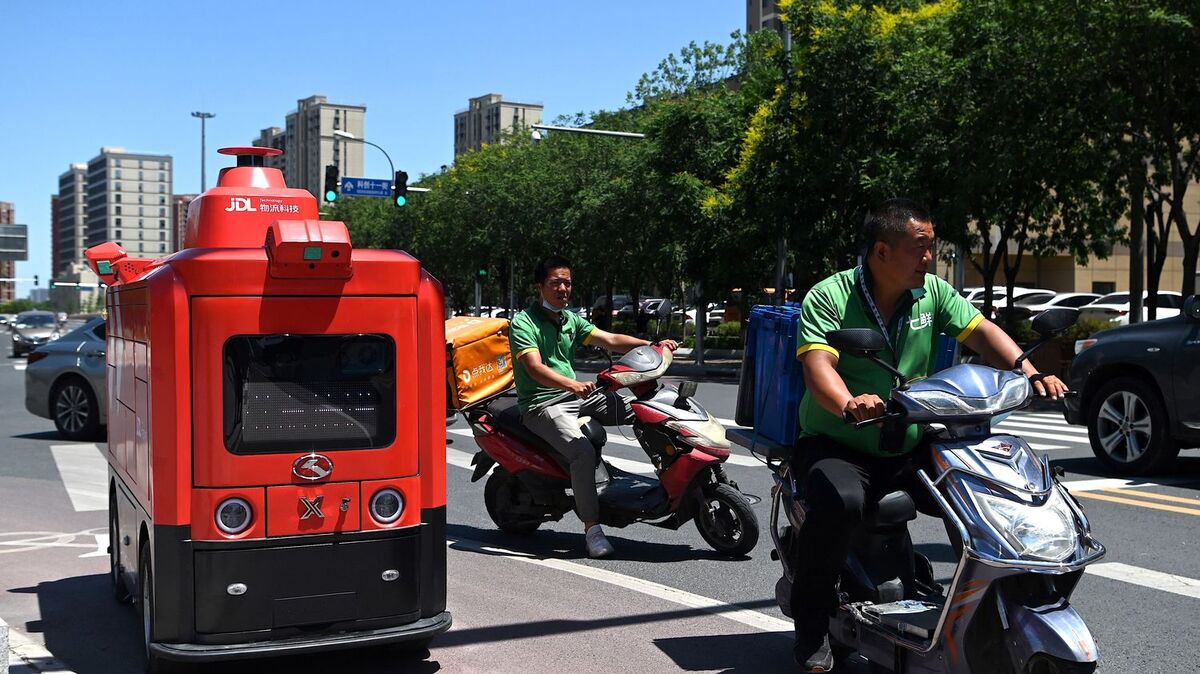
Le gouvernement français a approuvé l'homologation des premiers robots de livraison autonomes, marquant ainsi le passage de l'expérimentation à l'industrialisation, afin de faciliter une livraison plus efficace et moins polluante. # livraisonautonome # industrialisation # technologie

www.franceinfo.fr
"On passe de l'expérimentation à l'industrialisation" : le gouvernement français donne le feu vert à l'homologation des premiers robots de livraison autonomes
18283
BFMTV Aug 3

Le 3 août, Jacques Lemoisson, fondateur de GATE Capital Management, a discuté de l'intervention historique sur le Yen japonais et de l'industrialisation de l'IA par Pékin dans l'émission Good Morning Market sur BFM Business. #Yen #Devises #IA

www.bfmtv.com
En portefeuille : Devises, intervention historique sur le Yen - 03/08
12402
2
20minutes Jul 30

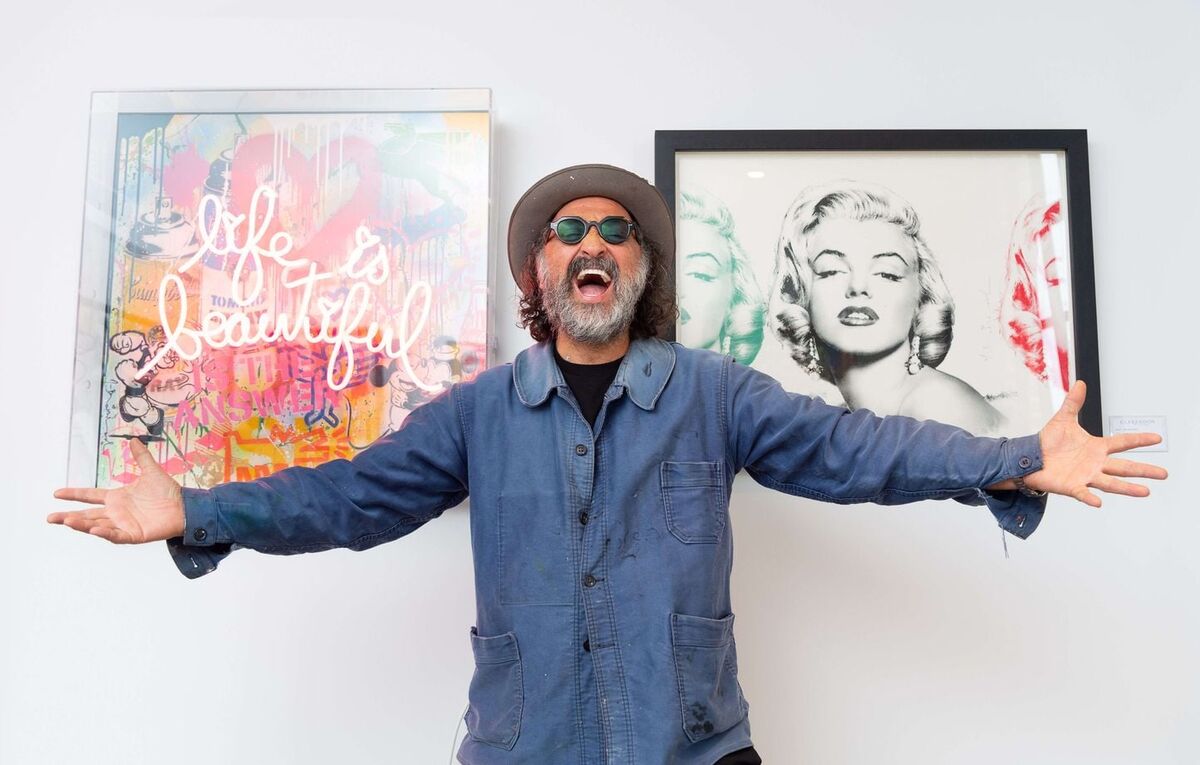
Cet article examine comment Banksy aurait pu orchestrer la montée en puissance du street artist Mr. Brainwash pour critiquer l'industrialisation du marché de l'art, en utilisant le documentaire « Exit through the gift shop » pour illustrer la transformation d'un simple observateur en un artiste commercial à succès. #MrBrainwash #Banksy #StreetArt

www.20minutes.fr
« Faites-le mur ! » ou comment Banksy a dupé le marché de l'art en créant de toutes pièces un street artiste
11231
Damien Rieu Jul 11

La robotisation sera à l’immigration ce que l’industrialisation était à l’esclavage. Nos descendants regarderont avec le même jugement moral ce qui est dans les deux cas une exploitation humaine immonde. #Robotisation #Immigration #ExploitationHumaines #Thetweetdoesnotmentionanyspecificcountries.Therefore #theresponseis:

1661
BFMTV Jun 25

IBM a présenté une nouvelle architecture de puces 0,7 nm qui promet d'augmenter la puissance de 50% et de réduire la consommation d'énergie, avec une industrialisation prévue dans cinq ans et un potentiel de miniaturisation jusqu'à 0,1 nm d'ici 2040. #IBM #nanostack #puces

www.bfmtv.com
Des puces jusqu’à 50% plus puissantes et plus économes en énergie: IBM a dévoilé une nouvelle architecture qui permettra aux géants du secteur d'aller en deçà du nanomètre
18443
BFMTV Jun 20

Les micro-dramas, un format de fiction ultra-court popularisé par les plateformes occidentales, véhiculent des stéréotypes sexistes à travers des récits simplistes et accrocheurs, soulevant des inquiétudes quant à leur impact sur la société et à l'industrialisation de leur production. #MicroDramas #Stéréotypes #Émotionnel

www.bfmtv.com
"Fast-foods émotionnels", les micro-dramas imposent des imaginaires sexistes et stéréotypés, mais derrière "l’industrialisation et la facilité" une autre voie est peut-être possible
11313
L'Obs Jun 10

Le projet de loi d'urgence agricole, récemment adopté par les députés, est critiqué par Olivier Hébrard et Juliette Duquesne pour son inclination vers l'industrialisation de l'agriculture, au détriment des nécessités écologiques et humaines, alors qu'ils plaident pour une agroécologie paysanne capable de répondre aux défis alimentaires de l'Europe. #Agroécologie #AgricultureDurable #Biodiversité

www.nouvelobs.com
La loi d’urgence agricole : un projet aux antipodes des nécessités écologiques et humaines
10136
E
Emmanuel Macron Jun 1

Un montant record de 93 milliards d’euros d’investissements confirmés Nous sommes clairement en train de combler le retard que nous avions en matière de capacités de calcul en Europe Je compte entre autres sur ces projets d’investissement pour faire de la France le point avancé de la production de robots IA, d’industrialisation par l’IA

Choose France : data centers, IA, … Quelles sont les principales annonces du sommet ?
www.nouvelobs.com
17311
BFMTV May 29

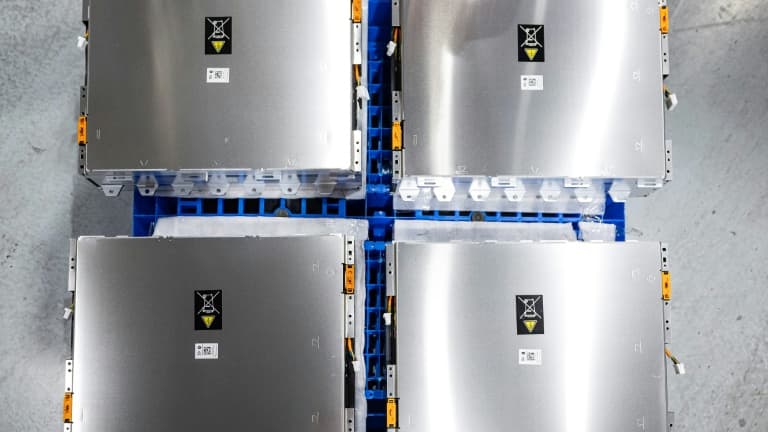
La construction d'une usine franco-chinoise de matériaux de batteries à Dunkerque, capable d'équiper jusqu'à 500.000 véhicules électriques par an, a été lancée, avec une production prévue pour 2028 et un investissement de 500 millions d'euros, générant 400 emplois locaux. #BatteriesÉlectriques #Dunkerque #Industrialisation

www.bfmtv.com
Le site permettra d'équiper jusqu'à 500.000 véhicules électriques par an: une usine franco-chinoise de matériaux de batteries sort de terre à Dunkerque
19109
BFMTV May 27

L'Ukraine prévoit de produire plus de missiles de croisière que tous les pays européens réunis, ce qui incite Bruxelles à demander aux États membres de réévaluer leur production d'armements en faveur d'une industrialisation plus efficace pour soutenir l'Ukraine dans le conflit actuel. #Ukraine #Défense #IndustrieMilitaire

www.bfmtv.com
L'Ukraine va produire plus de missiles de croisière que l'ensemble des pays européens réunis: les industriels doivent arrêter de faire de la "haute couture" et industrialiser, demande Bruxelles
12544
L
Le Soir May 26

La Société fédérale de participations et d'investissement (SFPIM) a récemment investi 17,5 millions d'euros dans D-CRBN, une entreprise belge développant une technologie de plasma électrifié pour recycler le CO2 et les hydrocarbures en molécules de carbone circulaires, afin de soutenir l'industrialisation de ses projets et d'améliorer la durabilité dans les secteurs énergétiques et chimiques. #Durabilité #Innovation #EnergieRenouvelable

www.lesoir.be
La SPFIM investit dans une entreprise produisant des molécules de carbone circulaires
17922
Jaf May 26

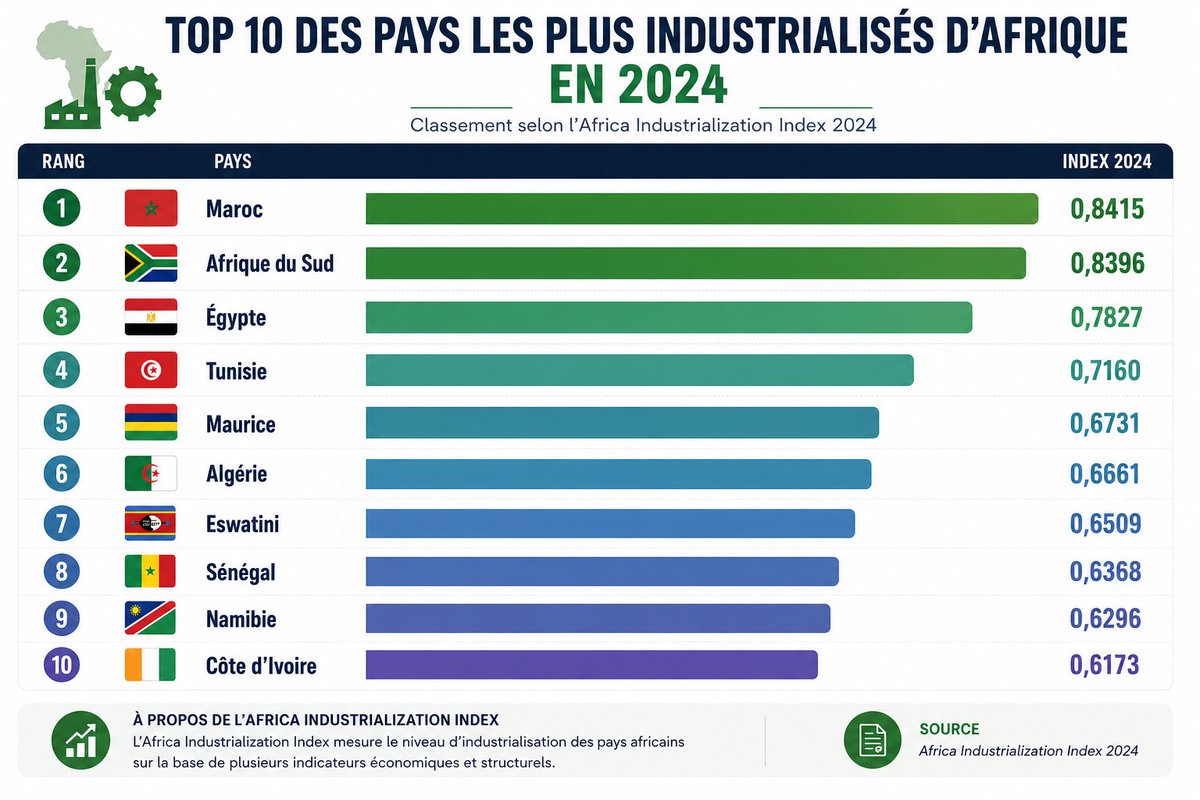
🥇C'est fait ! Le Maroc depasse l'Afrique du Sud et devient officiellement le pays le plus industrialisé d'Afrique ! ✅ Top 5: 1️⃣Maroc 🇲🇦 2️⃣Afrique du Sud 🇿🇦 3️⃣Egypte 🇪🇬 4️⃣Tunisie 🇹🇳 5️⃣Ile Maurice 🇲🇺 🔗 Source: Africa Industrialisation index sorti il y a 2 jours https://t.co/zmbZ2dWomc #Maroc #Industrialisation #Afrique

22940
BFMTV May 21

L'entreprise française Cerbair, spécialisée dans la neutralisation des drones de guerre, connaît une forte augmentation de son chiffre d'affaires face à l'industrialisation de ces technologies, qui réduit considérablement le coût d'action militaire, estimé à environ 1.000 dollars par soldat tué, ce qui souligne les enjeux contemporains de la robotisation du champ de bataille. #Drones #LutteAntiDrones #Cerbair

www.bfmtv.com
"Le coût pour tuer un soldat est chiffré autour de 1.000 dollars, c'est dramatique": face à l'industrialisation des drones de guerre, le spécialiste français de leur neutralisation Cerbair voit son chiffre d'affaires exploser
12553
Franceinfo May 19

Le collectif Nourrir s'inquiète que le projet de loi d'urgence agricole, examiné à l'Assemblée nationale, favorise l'industrialisation de l'élevage en France, remettant en question les types d'élevage et d'alimentation souhaités par les Français. #Agriculture #Élevage #SouverainetéAlimentaire

www.franceinfo.fr
Le projet de loi d'urgence agricole "va encourager l'industrialisation de l'élevage", craint le collectif Nourrir
10762
Alexandre Jardin May 11

À LIRE - PAPIER REMARQUABLE La puissance publique est devenue le problème - Kafka a pris les rênes. Il n’y aura pas de ré industrialisation dans ce système là. La bonne nouvelle : on va s’en débarrasser entre citoyens - forcément #PublicPower #Kafkaesque #CitizenAction #Nocountrycodesfound.

120
J
jack Dec 2

Hyderabad - "the city of pearls" and other economic importance <ul><li>Until the 19th century Hyderabad was known for the <a href="https://en.wikipedia.org/wiki/Hyderabad_pearl" target="_self">pearl industry</a> and was nicknamed the "City of Pearls", and was the only <a href="https://en.wikipedia.org/wiki/Golconda_Diamonds" target="_self">Golconda Diamonds</a> trading centre in the world.</li><li>Hyderabad's central location and industrialisation throughout the 20th century attracted major Indian research, manufacturing, educational and financial institutions. Since the 1990s, the city has emerged as an Indian hub of <a href="https://en.wikipedia.org/wiki/Genome_Valley" target="_self">pharmaceuticals and biotechnology</a>. The formation of <a href="https://en.wikipedia.org/wiki/Hardware_Park,_Hyderabad" target="_self">special economic zones</a> and <a href="https://en.wikipedia.org/wiki/HITEC_City" target="_self">HITEC City</a> dedicated to information technology has encouraged <a href="https://en.wikipedia.org/wiki/Big_Four_tech_companies" target="_self">leading multinationals</a> to set up operations in Hyderabad.</li></ul>