WRLD

Search

#Inquiry
Gunther Fehlinger-Jahn 3d

The author said they would push for a legally constituted Presidential Inquiry Commission in Austria to bring transparency to Russian and Ukrainian oligarch networks, assets, influence structures, corruption allegations and possible safe-haven arrangements. https://t.co/gosVEGkKL9 #Österreich #Korruption #Transparenz #AT #RU #UA

2901
Gunther Fehlinger-Jahn 3d

The author called the decision to award Navi Pillay the 2026 Nobel Peace Prize a grave mistake. They wrote that Pillay was a former ICC judge and had chaired the UN Commission of Inquiry, which accused Israel of genocide in Gaza—an accusation Israel had categorically rejected. The post also included a link labelled “International justice.” https://t.co/ea6Z5NVsUL #NobelPrize #InternationalJustice #Gaza #IL

2678
BBC 4d

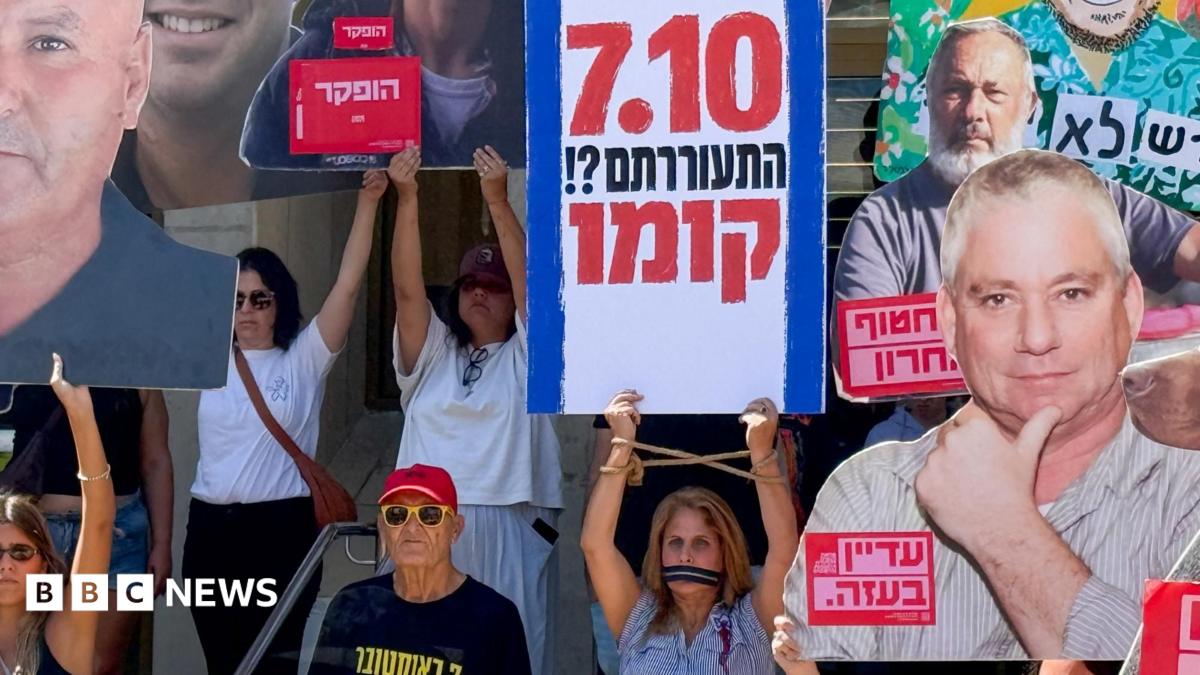
Prime Minister Benjamin Netanyahu has refused to take any personal responsibility for what happened or order a state inquiry. #Israel #HamasAttack #Accountability

www.bbc.co.uk
Israelis demand accountability over 7 October failures three years after attacks
2247
BBC 4d

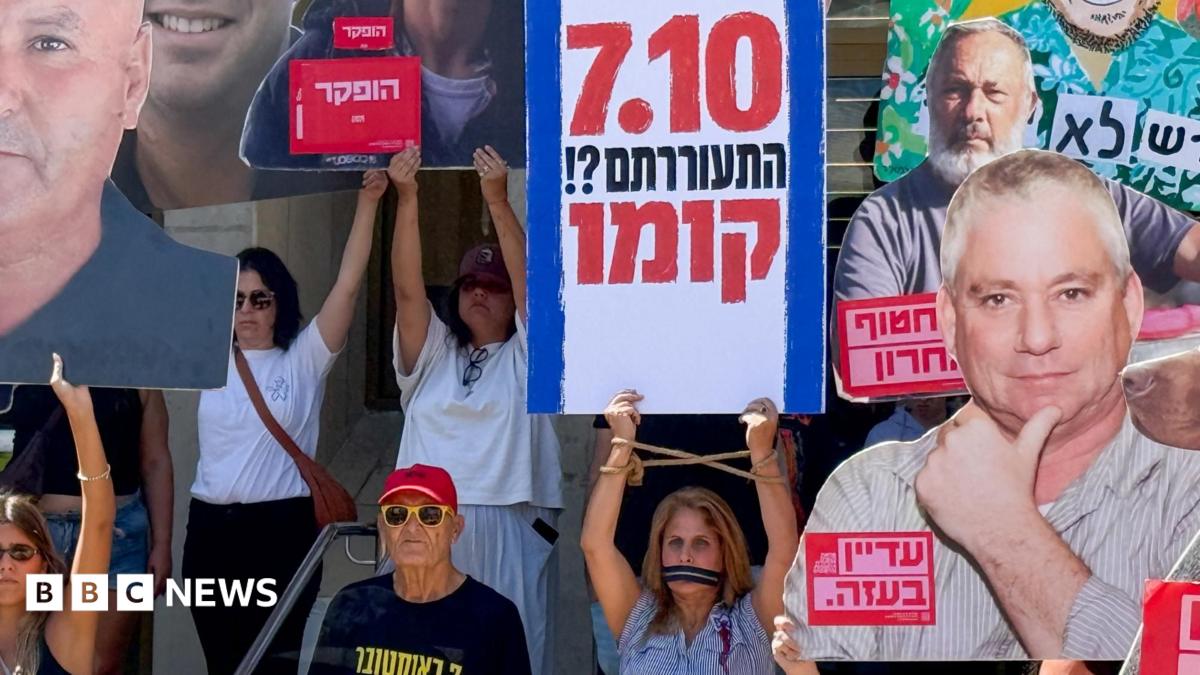
Prime Minister Benjamin Netanyahu has refused to take any personal responsibility for what happened or order a state inquiry. #Israel #Hamas #Accountability

www.bbc.co.uk
Israelis demand accountability over 7 October failures three years after attacks
2248
BBC 5d

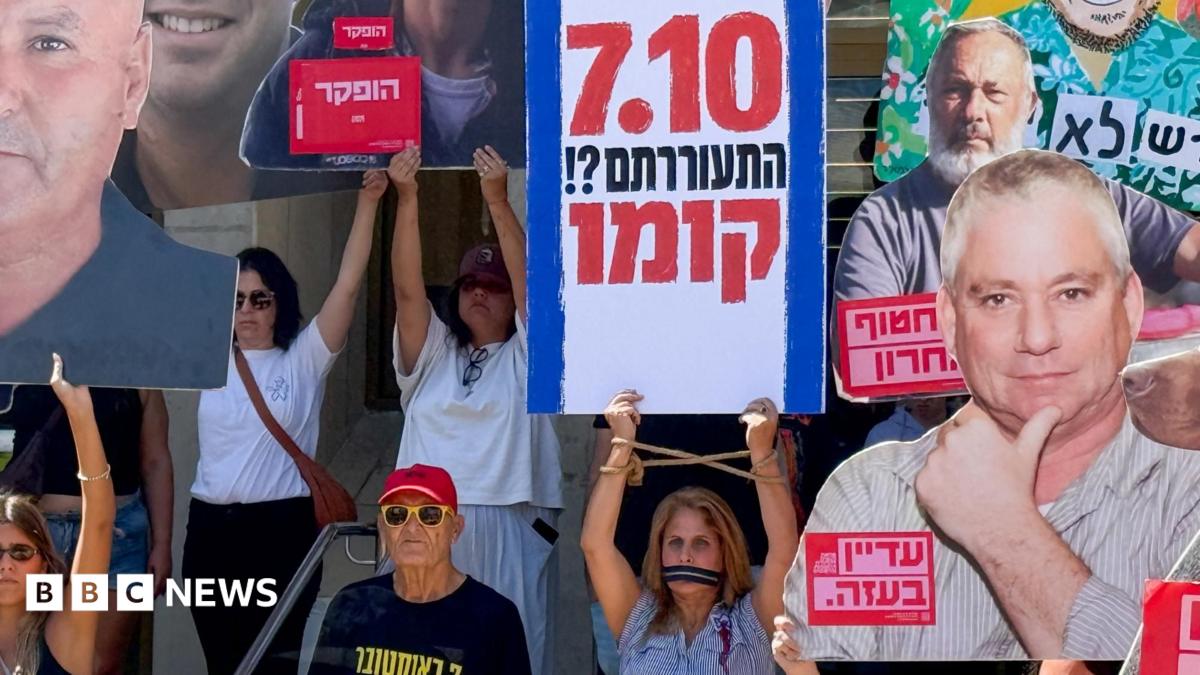
Prime Minister Benjamin Netanyahu has refused to take any personal responsibility for what happened or order a state inquiry. #Israel #Hamas #Accountability

www.bbc.co.uk
Israelis demand accountability over 7 October failures three years after attacks
2253
Paul Murphy 🇵🇸 2w

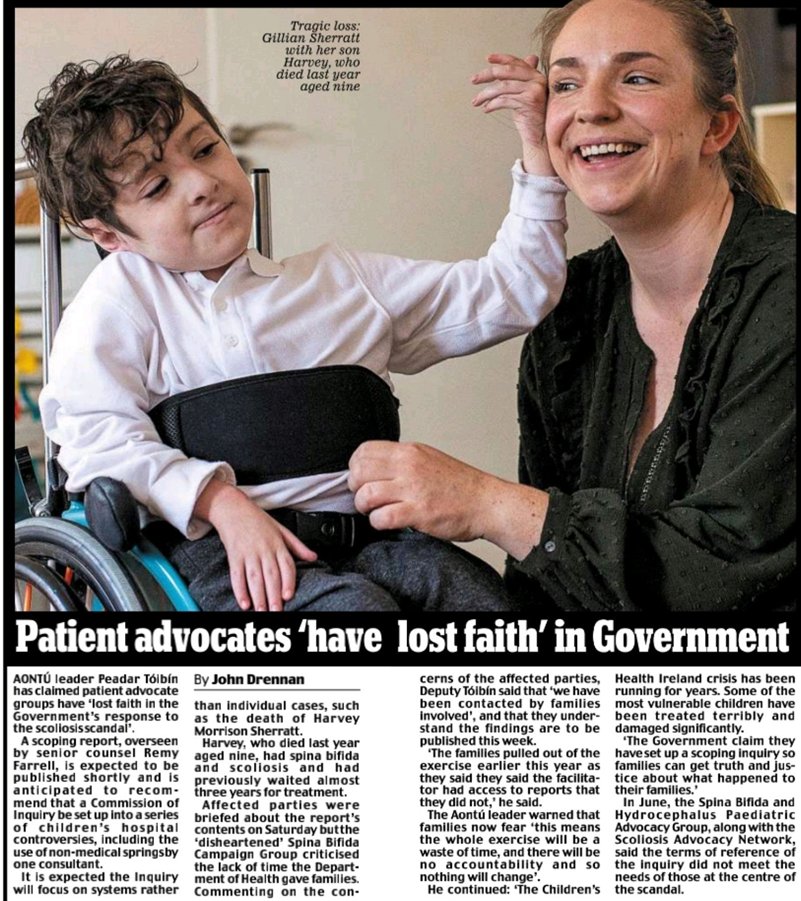
The author said that all the families and advocacy groups they knew of considered a public Tribunal of Inquiry into spinal care for children with scoliosis and spina bifida essential. They also argued that its scope should be broader than the limited one currently being discussed.

802
Peadar Tóibín TD 2w

This time last year Aontú brought forward a motion of no confidence in Simon Harris on the damage done to children through CHI. His government then promised the families of children damaged a full public inquiry. This week the government have reneged on that commitment. https://t.co/DU6tMNJpWk #Aontú #NoConfidence #PublicInquiry #IE

459
Peadar Tóibín TD 2w

“families have pushed for truth & justice. In order to get that, it requires transparency & accountability. The gov has promised to do what’s right, only for those wronged to feel let down. This has been an ongoing scandal & now a closed door inquiry makes it ever worse.” https://t.co/7LLV3Eq7kx #Truth #Justice #Transparency #Thetweetdoesnotmentionanyspecificcountries;therefore #therearenocountrycodestoprovide.

459
BBC 3w

The penalty follows an inquiry launched into the tech giant six years ago, following complaints from several European consumer rights organisations. #Google #GDPR #DataProtection

www.bbc.co.uk
Google hit with €403m fine by Irish data watchdog over GDPR violations
8675
Paul Murphy 🇵🇸 4w

Joined the protest for Justice for Terence Wheelock. He died 21 years ago after being wrongly arrested by Gardaí and brought to Store St. Garda station. His family have been forced to fight for justice ever since. We will continue to campaign for an independent inquiry. https://t.co/yFk6nkYgLW #JusticeForTerence #IndependentInquiry #Protest #IE

815
Luciano Magaldi Sardella (PhD) Sep 5

LONDON SCHOOL OF ECONOMICS REVIEW OF BOOKS for MIT (MASSACHUSSETS INTITUTE OF TECHNOLOGY) PRESS by Dr. Luciano Magaldi Sardella SOURCE: https://medium.com/@ingnucllms/london-school-of-economics-review-of-books-for-mit-massachussets-intitute-of-technology-press-by-95330de802b5 SOURCE: https://blogs.lse.ac.uk/.../book-review-the-credibility.../ “The Credibility Crisis in Science: Tweakers, Fraudsters, and the Manipulation of Empirical Results” by Thomas Plümper, Eric Neumayer, pubblicato dal prestigioso “The MIT Press”. DOI: https://lnkd.in/e-eUHf-5 ISBN elettronico: 9780262051293 Publication date: 2026 FONTE: https://lnkd.in/eK3pimi3... “The Credibility Crisis in Science: Tweakers, Fraudsters, and the Manipulation of Empirical Results” by Thomas Plümper, Eric Neumayer, published on The MIT Press DOI: https://lnkd.in/e-eUHf-5 ISBN electronic: 9780262051293 Publication date: 2026 Thanking in advance: - Eric Neumayer, Deputy President and Vice Chancellor & Vice President (Planning and Resources) at The London School of Economics and Political Science (LSE); - Thomas Plümper, Professor of Quantitative Social Research at the Vienna University of Economics, Department of Socioeconomics. - Anna D’Alton, Managing Editor at London School of Economics (LSE) Review of Books. Sources: https://lnkd.in/eUFy-AB2, https://lnkd.in/eBy5XZB4, https://lnkd.in/eg4dCNND, https://lnkd.in/ebwPrUSa, I am genuinely delighted — and deeply grateful — for the gracious words shared by Eric Neumayer regarding my review of The Credibility Crisis in Science, co‑authored with Thomas Plümper and published by The MIT Press. To read that my analysis was received as “crisp” and “clearly written” is profoundly rewarding, particularly when such appreciation comes directly from the authors themselves. Their book confronts a question of pressing significance: what becomes of scientific inquiry when the imperative to publish begins to overshadow the pursuit of truth? For anyone interested in understanding the structural pressures that shape contemporary research practices, I warmly encourage you to explore my review for the LSE Review of Books, and then immerse yourselves in the book itself. It is a lucid, incisive, and essential contribution to an increasingly urgent debate. My sincere thanks once again to the authors for their generosity of spirit and for the intellectual rigour they continue to bring to the international conversation on scientific credibility.

701
Sophie Wilmès Sep 4

I express my deep support and solidarity with the family of Daphne Caruana Galizia. I will propose to hold an urgent DRFMG meeting on the situation in Malta, the follow-up to the recommendations of the public inquiry and the Commission’s Rule of Law Report. @EP_Justice #JusticeForDaphne #Malta #RuleOfLaw #MT

468
Paul Murphy 🇵🇸 Aug 31

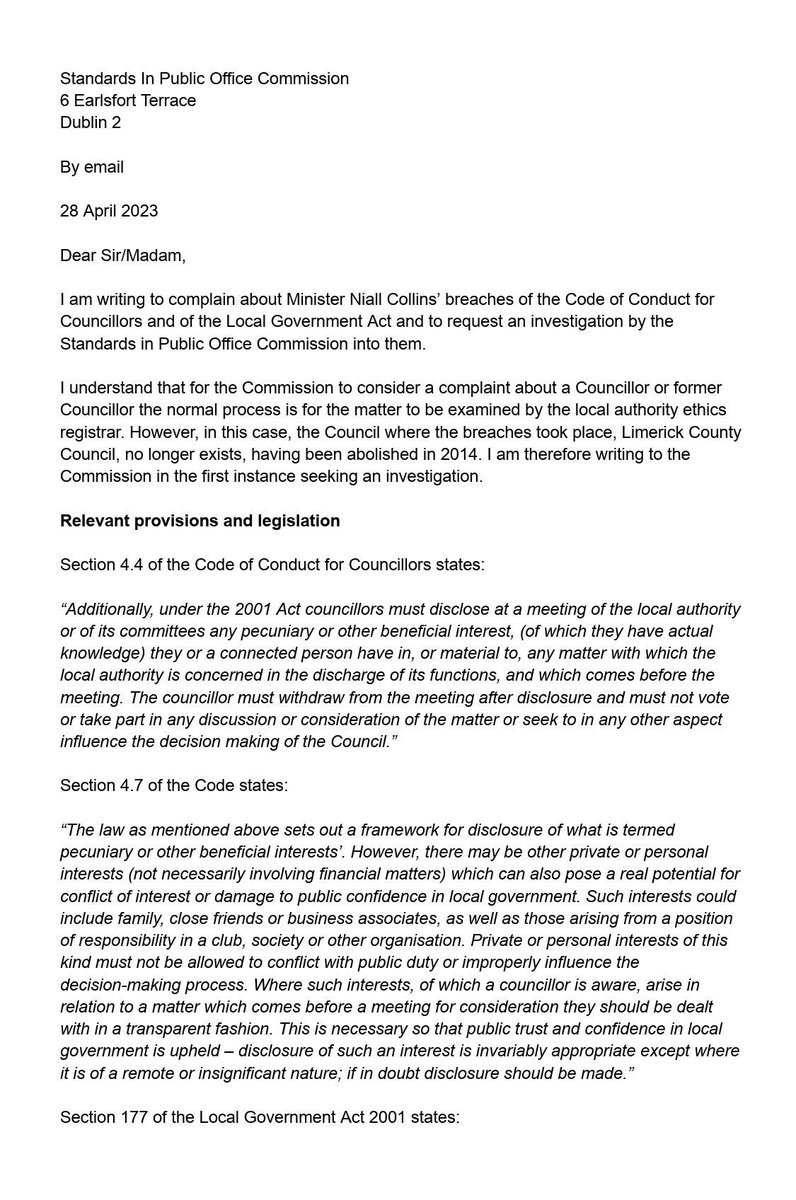
More than three years after I complained to SIPO about Niall Collins, they have finally said they will start an inquiry. Because of reporting by the Ditch, we know that as a Councillor he voted to sell land to his wife without declaring his interest. Here is my complaint. https://t.co/hbR8g6NtgR #NiallCollins #SIPO #CorruptionInquiry #IE

117
Australischer Austauschstudent Aug 28

Wenn ich solche Videos sehe, schaue ich mir immer genau das Publikum an. Ich wette, dass in der ganzen Kirche niemand den Namen Henry Nowak kennt, vom Rape Gang Inquiry Report gehört hat, weiß, wer Anthony Fauci ist oder mitbekommen hat, dass sich Schüler in Kleve während Ramadan beim Essen wegdrehen mussten. Diese Leute leben im Tal der Ahnungslosen. In einem Elfenbeinturm, den -wenn überhaupt- nur noch „eingeordnete“ Nachrichten der Tagesschau erreichen. Genau deshalb ist es so elementar, den Rundfunk zu zerstören. Ist mir scheißegal, ob sie aber doch so gerne den Tatort schauen. Man muss ihnen ihre Dauerbeschallung abdrehen. Endgültig. https://t.co/ANUOhagxM1 #Medienkritik #Gesellschaft #Bildung

18869
Balázs Orbán Aug 28

Madness The Tisza government has created an asset-confiscation super-authority whose powers should never be concentrated in the hands of a single institution in a democracy governed by the rule of law. The NVVH can open an inquiry without any established suspicion that a crime https://t.co/rmGCUNRX6B #Democracy #RuleOfLaw #Accountability #Nospecificcountrycodescanbeidentifiedinthetweet.

352
Balázs Orbán Aug 28

Madness The Tisza government has created an asset-confiscation super-authority with powers no institution in a rule of law based democracy should ever possess. It can open an inquiry without any established suspicion that a crime has been committed. It can compel banks to https://t.co/9KLupGZKyy #TiszaGovernment #AssetConfiscation #RuleOfLaw #Nospecificcountriesarementionedinthetweet.Therefore #therearenocountrycodestoreturn.

352
Australischer Austauschstudent Aug 18

Der durchschnittliche Tagesschau-Konsument hat bis zum heutigen Tage keine Ahnung, was es mit Rupert Lowes Rape Gang Inquiry Report auf sich hat und wird davon wohl auch nie erfahren. Eine Gesellschaft im Tal der Ahnungslosen. #Tagesschau #Gesellschaft #Nachrichten

17644
Gerd Leonhard Aug 16

Opinion | Open the Files: Fauci Should Not Take the Fifth on the Truth About COVID-19 Origins:We should have an independent inquiry with subpoena power, insulated from the agencies whose own conduct is in question, and let the evidence fall where it falls. https://t.co/GC7Nl9nrdT #COVID19 #Fauci #Inquiry #Thetweetdoesnotmentionanyspecificcountries.Therefore #therearenocountrycodestoreturn.

Adham Hasanin Jul 21

| JULY 2026 | The Guard State How the largest Arab nation became a security contractor at the gates of its own people By Adham Hasanin Egyptian journalist and political writer, based in the Netherlands In June 2025, hundreds of activists from forty countries landed at Cairo airport. Doctors from France, lawyers from Australia, students from the United States, pensioners from the Netherlands. They carried no weapons and no banned slogans; they carried backpacks, walking shoes, and a single intention: to march from Arish to the Rafah crossing — entirely on Egyptian soil — to demand that food be allowed through to a people starving behind the gate. Not one of them reached Rafah. More than two hundred were detained before the march could begin. Around five hundred foreign nationals were deported from airports, hotels, and checkpoints. Passports were confiscated, activists were pulled out of downtown Cairo cafés, and the Global March to Gaza was cancelled on 16 June without taking its first step. And the world watched. This was no secret operation in a dark basement; it happened in the open, documented by the deportees’ own phone cameras, carried by every international news agency. The world watched an Arab state arrest Europeans, Americans, and Africans for wanting to walk towards Palestine. A state guarding the gate of a siege — from the side that was supposed to be the side of rescue. Hold that image, because it is the key to everything that follows. This was not an aberration in Egyptian policy, nor an isolated security decision. It is the function — the complete function around which the Egyptian state has been redefined over the past decade, and which it is time to call by its proper name: the Guard State. I. The Name — What Do We Mean by the Guard State? Political economy has long described states that live off the rent of their location rather than the production of their people. But what has crystallised in Egypt over the past decade goes beyond traditional geographic rent — the Suez Canal, say — into something far graver: the conversion of sovereignty itself into a commodity for hire. The Guard State does not sell its location; it sells its function. It collects its wages not for what it produces, but for what it prevents: it prevents the refugee from reaching Europe, the activist from reaching Gaza, its own people from reaching politics, and the resistance’s weapons from reaching their destination. Four gates, guarded by a single machine, whose wages are paid in loans, deposits, and perpetually renewed rescue packages. This is not a rhetorical metaphor; it is an economic structure with numbers attached. When the Egyptian economy collapsed in 2024, it was rescued not by productive reform but by a single deal whose subject was location: Ras el-Hekma — thirty-five billion dollars for a stretch of coastline. And whenever negotiations with the IMF stall, the tranches are unlocked by explicit European pressure whose subject is migration: nine billion euros from the European Union in the 2024 “Strategic Partnership,” whose own documents place “migration management” at its core. Europe does not pay Egypt to prosper. It pays Egypt to guard. Thus the model is complete: income in exchange for prevention, external legitimacy in exchange for guarding, and international silence about domestic tyranny in exchange for keeping the gates controlled. To see how the model works on the ground, consider the bloodiest gate of all: the gate of Gaza. II. The Gaza Gate — The Guard Who Is Himself Searched The first paradox must be nailed down with facts: Egypt is not a sovereign guard of its own crossing; it is a searched guard. Egyptian relief trucks — ninety-two thousand food parcels in a single convoy this month — are subject to Israeli inspection before entering the Strip: from Egyptian soil, through a crossing that bears an Egyptian name. The state that guards the gate does not hold its key. It owns the threshold, but not the door. Then the October 2025 truce added a new layer to the function. Under the fifteen-point roadmap sponsored by the international envoy together with the “guarantor states” — Egypt foremost among them — Cairo is to train the civilian police force that will replace Hamas in administering the Strip, under the slogan of “one authority, one law, one weapon.” Let us call things by their names: the state that could not — or would not — deliver a loaf of bread without Israeli permission is now qualifying to graduate the security apparatus that will oversee the disarming of the resistance. From guarding the siege to administering what comes after the siege — a promotion within the same project. And meanwhile, what is happening behind the guarded gate? Since the truce, more than one thousand one hundred Palestinians have been killed by Israeli fire — the latest, just two days ago, a ten-year-old boy named Motaz Abu Shaar, carried to his grave in Khan Younis by his mother, Warda. A United Nations commission of inquiry has concluded that Israel is “deliberately targeting children in an ongoing genocide.” This is what the guarantors’ official language calls a “ceasefire.” What meaning is left in the word “guarantor”? A guarantor that the gate stays firmly shut — however high the dead pile up behind it. III. The Mediterranean Gate — The Guard Europe Pays For The second gate faces north. Since 2016, Cairo has boasted — through its officials at every European forum — that “not a single irregular migration boat has departed from Egyptian shores.” This is very nearly true. But the forbidden question is: at what political price has this “efficiency” become an instrument of mutual blackmail? Europe — which condemns Egypt’s human rights record in its parliamentary resolutions — is the same Europe that signed the nine-billion-euro partnership, and the same Europe that stays silent about sixty thousand political prisoners because the alternative, in its calculations, is boats that never stop. And Cairo understands the game and has mastered it: whenever human rights pressure intensifies, the official discourse turns up the volume on “Egypt hosts millions of refugees” and “the last line of defence.” The result is a perfect structure of mutual blackmail: Europe buys its conscience’s silence, the regime sells its location, and the people — Egyptian and refugee alike — are the commodity in the transaction. The democracies that lecture on values are financing the guard who keeps the victims from knocking on their doors. This is not passing hypocrisy; it is a structural partnership in the Guard State model — one that makes Brussels and Berlin shareholders in everything this state produces, from domestic repression to external siege. IV. The Interior Gate — Guarding the People Against Politics But the most dangerous gate is not on any border; it is inside. The Guard State cannot perform its external function unless it first guards an internal gate: the people’s gate to politics. The function requires a people that does not ask: why are we guarding the siege of our brothers? Why are our trucks searched on our own soil? Why are guests deported for coming to walk in peace? To guarantee the question is never asked, the largest silencing machine in the country’s history was built: sixty thousand prisoners of opinion, a press ranked 166th out of 180 worldwide, and a state security case number waiting for anyone who writes. I write these lines from experience, not from reading reports. When I continued writing from my Dutch exile, the machine reached me across continents: accounts shut down by coordinated mass-reporting campaigns, documented threats, a family harassed inside Egypt as leverage — and my name entered into Case 1282 of 2024, not for any act I committed, but for opinions written from free European soil. This is not a personal complaint; it is a job description: the Guard State guards even beyond its borders, because the free word — wherever it is written — threatens the entire contract of guardianship. The logic is perfectly self-consistent: a regime that sells “stability” abroad cannot tolerate a voice revealing that the stability on offer is the stillness of graveyards. This is why the arrest of the foreign activists in June 2025 was inevitable, not incidental: a peaceful march reaching Rafah would have revealed, before the world’s cameras, that the gate opens when it is wanted open — and that the one keeping it shut is a partner, not a mediator. V. What Has Egypt Lost? — The Guard’s Bill An apologist might argue: what is the harm? A state monetising its location as Norway monetises its oil. The answer lies in the essential difference: Norway sells a resource; Egypt leases its will. And the difference between the two is the difference between trade and bondage. Let us tally what Egypt has paid for this model, in bare facts. It lost its water sovereignty: the Renaissance Dam was completed and filled without the state — owner of “the largest defence headquarters in the world” — daring anything beyond statements of concern; for the guard does not make trouble for the international order that employs him. It lost its regional standing: in the Iran–America war halted just weeks ago, Cairo was neither party nor mediator nor even consultant — Pakistan brokered the deal, while Egypt absorbed the economic shrapnel of Hormuz’s closure like a bystander caught in a battle whose parties it does not know. It lost its place in the conscience of its nation: the state that liberated its land in 1973 and led the Arab world for a century has become, in the eyes of the Arab street from the Atlantic to the Gulf, the gatekeeper of the siege. This loss, specifically, no loan or deposit can repay — because it is the only capital that cannot be printed. And it lost — here is the crux — the very national security in whose name the guarding is justified. The model proved its fragility at the moment of testing: when Israel feared an Iranian response last year, it cut off Egypt’s gas by unilateral decision within hours. The guard who believed himself a partner discovered he was merely a hireling whose wages stop the moment danger arrives. VI. The Alternative Is Not a Slogan — It Is the Recovery of the Original Function I will not close with an essay on “the solution lies in Arab unity”; worn-out words kill more surely than silence. The alternative is specific, and it begins with redefining the function. The state is not a guard; the state is the agent of its people’s will. Every foreign policy not derived from that will is — by definition — functional servitude, however it is wrapped in the language of wisdom and moderation. And the Egyptian will is known and needs no referendum: no people in this region accepts that its country serve as warden of the siege of Gaza, or as Europe’s border post. Practically, the recovery begins with three measurable steps. Open the Rafah crossing fully and sovereignly, by purely Egyptian decision — that alone would overturn the equation of the siege. Break the negotiating bondage by linking any cooperation on migration to concrete European positions on Palestine, not statements of concern. And open the interior gate — release the prisoners and lift the hand from the written word — because a state that fears an article will never dare face an occupier. I know the current regime will do none of this; guarding is its founding contract and its financial artery. But this article is not written for the regime. It is written for memory, and for the generation that will inherit the gates — so that it knows that what is presented to it today as “the fate of geography” is no fate at all. It is an employment contract, signed by a regime without a mandate from its people. And contracts, however long they run, end when one of their parties does. And the world — I return to where I began — is a witness that requires no further proof. It watched the deportees at Cairo airport; it watched the searched trucks; it watched Warda Abu Shaar carry her son to his grave behind a firmly guarded gate. The question is no longer: what is happening? The only question left is: who dares to name it? This article is a naming. Adham Hasanin is an Egyptian journalist and political writer based in the Netherlands, covering Arab and European political affairs.

474