WRLD

Search

#Insider
Björn Harms 4h

Björn Harms announced that his new book "The Asylum Complex" would be available in stores the following day; he already had some freshly printed copies in hand. He wrote that the book includes, among other things, a detailed overall calculation of the asylum costs of past years and an overview of the number of asylum accommodations in Germany. According to him, the federal government does not know this number. According to Harms, the book also addresses real estate companies and hoteliers who earn millions by renting to the state, as well as home operators, welfare associations, lawyer networks, and state companies that benefit from the growing market or mass immigration. He announced interviews with insiders from the social industry and the real estate market, as well as insights into asylum NGOs, refugee councils, and million-euro funding programs from the EU and the federal government. Additionally, the book aims to address legal questions related to the topic of asylum. Harms requested feedback on the book. #Asylkomplex #Buchneuerscheinung #Asylpolitik (translated)


1600
ÖRR Blog. 7h

The ÖRR Blog wrote that, according to MDR Investigativ, 5 to 10 AfD representatives in the state parliament of Saxony-Anhalt could switch to the CDU. This is more likely than a change in the opposite direction. The blog cited party insiders of the AfD as the source for MDR Investigativ. #OerrBlog https://t.co/RuIWkaf8fM #SachsenAnhalt #AfD #Politik (translated)
1766
jacopo iacoboni 3d

Jacopo Iacoboni wrote that a Russian drone, Geran-4, had been found with a 32-element anti-jamming GPS antenna. He reported that, according to The Insider, the device resembled a Chinese Harxon model, but could have been produced by the Russians in Alabuga. Iacoboni added that, in his opinion, the evidence of China's and Iran's role as suppliers to Russia was increasing. https://t.co/Hmc0c1N7KU #drone #Russia #GPS (translated)

3571
Di.se 3d

Martin Rex discusses the latest updates in the investigation regarding the insider scandal involving Raysearch in a segment on Börsmorgon. #Raysearchhärvan #Börsmorgon #Insiderhärvan (translated)

www.di.se
Martin Rex om senaste turerna i Raysearchhärvan
2790
tagesschau.de 3d

The financial supervisory authority BaFin has imposed a fine of 1.2 million euros on Volkswagen for violating ad-hoc obligations by failing to disclose a positive annual forecast as relevant insider information. #Volkswagen #BaFin #AdhocPflicht (translated)

www.tagesschau.de
Finanzaufsicht verhängt 1,2-Millionen-Euro-Strafe gegen Volkswagen
2791
Krzysztof Graj 3d

Russia’s war propaganda gets a soundtrack – how AI-generated songs reached global streaming platforms Russian war propaganda is no longer confined to television broadcasts, Telegram channels or political videos. A study by the Ukrainian threat-intelligence organisation Terrecon has identified 981 songs combining signs of AI generation with pro-Russian military narratives, distributed through an ecosystem that reaches YouTube, Spotify, Apple Music, Deezer and SoundCloud. The songs range from sentimental ballads to rock and heavy metal. Their recurring themes are familiar from conventional Russian wartime propaganda: the heroisation of Russian soldiers, romanticisation of the war, mobilisation, the “Russian world”, commemoration of fallen troops and attacks on Ukraine and its armed forces. Some contain derogatory or dehumanising references to Ukrainians. What is new is not necessarily the message, but the production and distribution model: generative AI allows propagandistic music to be produced rapidly, cheaply and in quantities that would previously have required musicians, studios and producers. Nearly 1,000 tracks identified Terrecon examined 3,725 tracks collected from YouTube, YouTube Music, SoundCloud and the AI music platform Suno. After manual review, researchers classified 981 as showing both indications of AI generation and pro-Russian war propaganda. In 681 tracks they identified 728 propaganda-related keywords or phrases. The largest category was the glorification of the Russian military, followed by romanticised treatment of Moscow’s so-called “special military operation”, mobilisation appeals, narratives about the “Russian world”, and the cult of fallen soldiers and the state. The reach was not merely theoretical. Listening or viewing statistics were available for 608 of the identified tracks; together they had accumulated 86.8 million plays and views, according to Terrecon. A smaller group of 13 high-performing songs accounted for more than 53 million YouTube views and more than 67 million when YouTube Music was included. Among the better-known examples is “Power of Artillery”, a Russian-language rock song praising artillery weapons that passed two million views on YouTube. Most of the tracks for which publication dates could be established appeared after 2024, broadly coinciding with the rapid expansion of consumer AI music generators such as Suno and Udio. That correlation does not prove that AI alone caused the increase, but it illustrates how drastically the economics of production have changed. A propaganda song for as little as $11 Terrecon also tested how difficult it would be to commission such material. Researchers approached 25 creators producing AI-assisted militaristic music; 15 agreed to take commissions. Prices ranged from approximately $11 to $330, while delivery times ranged from two hours to three days. According to Terrecon, some were prepared to produce highly aggressive anti-Ukrainian material, including content intended for audiences involving children from occupied Ukrainian territories. Some creators used Russian intermediary services that provided access to Western AI tools such as Suno and Udio despite restrictions. The researchers then tested several AI generators themselves. Across 40 prompts submitted to Suno, Udio, Mureka, Google Flow Music and ElevenLabs, 25 resulted in successful generations, while safeguards were circumvented in 15 cases. Terrecon reported that four of the five services tested produced Russian-language material containing wartime narratives, although technical problems prevented comparable testing on some systems. In one Udio experiment, the researchers said the model itself introduced more explicit violent language than had appeared in the original promp These tests do not demonstrate that the commercial platforms knowingly support Russian propaganda. They show something narrower: existing safeguards can be inconsistent when political messaging is packaged as music. From generation to Spotify The distribution experiment may be the most revealing part of Terrecon’s research. The team deliberately uploaded test tracks containing explicit hostile language to YouTube, SoundCloud, Spotify and Deezer. Terrecon says none was blocked during the experiment. On SoundCloud, researchers used an account identifying its location as Moscow, disclosed the use of AI and added markers including references to the Russian military and the war. The platform accepted the upload and subsequently offered paid promotional and distribution tools. This does not prove that streaming recommendation systems systematically promote pro-war music. There is currently insufficient public evidence to make that claim. It does demonstrate that material can enter the same commercial distribution infrastructure as ordinary music and, once there, potentially benefit from playlists, searches, sharing and recommendation mechanisms available to other releases. That distinction is important. Propaganda no longer has to announce itself as political communication. On a streaming platform it can look like another song. Culture as a delivery mechanism Music has always been used in wartime propaganda. What generative AI changes is scale. Instead of investing heavily in a limited number of patriotic performers or officially commissioned productions, creators can generate variations across styles, audiences and emotional registers at very low cost. Terrecon found material ranging from war rock to sentimental songs and content styled for younger audiences. Some creators also experimented with cloned celebrity voices and stylistic imitation of established musicians. The format also offers a different relationship with the audience. A political video asks a viewer to consume an argument. Music can accompany commuting, exercise or entertainment and may be encountered outside explicitly political spaces. This does not automatically make it more persuasive, and Terrecon’s research does not establish measurable effects on political attitudes. It does, however, place wartime narratives inside a cultural environment where users may not initially perceive themselves as consuming political messaging. An ecosystem, not a proven Kremlin command structure The strongest evidence supports describing this as a growing AI-assisted pro-Russian propaganda-music ecosystem, not a single operation controlled from Moscow. Terrecon did not establish that the Russian government created, financed or coordinated all 981 tracks. Reporting on the study likewise notes that the extent of direct state involvement remains unclear. There is broader evidence that the Russian state finances cultural projects and digital content supporting the war, including through state-backed funding bodies. That context matters, but it does not allow individual songs in Terrecon’s dataset to be attributed to the Kremlin without additional evidence. The significance of the case lies elsewhere. AI has reduced the cost of producing ideological content, intermediaries can help creators access generation tools, and global platforms can provide distribution. The result is a pipeline in which wartime propaganda no longer has to resemble propaganda at all. It can simply appear in a playlist. Sources Terrecon / Ukrainska Pravda — Daria Verbytska on the research https://www.pravda.com.ua/columns/2026/10/05/8056229/ Suspilne Culture — detailed breakdown of Terrecon findings https://suspilne.media/culture/1417933-rosijsku-voennu-propagandu-maskuut-pid-anime-karaoke-ta-rok-doslidzenna-si-pisen-vid-terrecon/ The Insider — AI-generated Russian war propaganda music https://theins.ru/news/297839 Institute of Mass Information — summary of New York Times reporting https://imi.org.ua/en/news/doslidzhennya-rf-masovo-stvoryu%D1%94-propagandistski-pisni-za-dopomogoyu-shi The Bridge Media — AI-generated songs and Russian military propaganda https://thebridgemedia.com.ua/en/ai-generated-songs-russian-military-propaganda/ Center for Strategic Communication — cost and production of AI propaganda music https://spravdi.org/propaganda-za-11-yak-rosiya-shtampuye-shi-pisni-z-miljonamy-prosluhovuvan/ Times of India — AI-generated Russian war songs https://timesofindia.indiatimes.com/world/europe/ai-sings-russias-war-story-inside-the-rise-of-generative-songs-about-ukraine-conflict/articleshow/134650594.cms EU Council / EUR-Lex — Presidential Foundation for Cultural Initiatives https://eur-lex.europa.eu/legal-content/EN/TXT/?uri=CELEX:32026D1351 Human Rights Watch — Russian state funding of digital and patriotic content https://www.hrw.org/report/2025/07/30/disrupted-throttled-and-blocked/state-censorship-control-and-increasing-isolation #DISINFORMED #Episode16 #Russia #Ukraine #RussianPropaganda #WarPropaganda #MusicPropaganda #AIMusic #ArtificialIntelligence #AI #GenerativeAI #SyntheticMedia #AIPropaganda #Disinformation #InformationWarfare #InfluenceOperations #CulturalPropaganda #DigitalInfluence #NarrativeManipulation #PropagandaMusic #StreamingPlatforms #Spotify #AppleMusic #YouTube #YouTubeMusic #Deezer #SoundCloud #Suno #Udio #RussianWorld #RusskiyMir #MilitaryPropaganda #WarNarratives #Mobilisation #AlgorithmicDistribution #RecommendationAlgorithms #MusicStreaming #PlatformManipulation #Terrecon #OSINT #MediaManipulation #WRLD

112
Die Presse 3d

Volkswagen was fined 1.2 million euros by the financial supervision authority Bafin for violations of the market abuse regulation, as the company did not promptly and adequately disclose insider information. #Volkswagen #Bafin #Marktmissbrauch (translated)

www.diepresse.com
Volkswagen zu einer Strafe von 1,2 Millionen Euro verurteilt
2792
Janusz Piechociński 3d

The author of the entry, citing material from Business Insider, wrote that nearly 800,000 Polish households do not have a toilet. https://t.co/rnLWhyeCbP #Polska #toalety #gospodarstwa #PL (translated)

3351
Grzegorz Kowalczyk 4d

Grzegorz Kowalczyk, journalist at Business Insider Poland: Alcohol consumption in Poland is declining, and Maspex, as one of the leading producers, sees this up close. #systemkaucyjny #napoje #handel (translated)

WYWIAD System kaucyjny czeka rewolucja. Prezes Maspeksu o planie rządu: opamiętajcie się
businessinsider.com.pl
1683
Dr. Nahid Bhadelia 4d

It's a strange situation that requires greater transparency and additional information to be explained— says Dr. Nahid Bhadelia, founder of the Boston University Center on Emerging Infectious Diseases, to Business Insider. #dżuma #Rosja #zdrowiepubiczne (translated)

Dżuma w Rosji. Wszystko, co wiemy i czego nie wiemy do tej pory
businessinsider.com.pl
1909
Di.se 4d

SEB decided late on Monday evening to keep insider information about Johan Torgeby's departure confidential, and published the information at 10 PM the same evening, according to a notification to the Financial Supervisory Authority. #SEB #JohanTorgeby #Affärsnyheter (translated)

www.di.se
Sena kvällsbeslutet före Torgebys plötsliga avgång
1802
K
Kronen Zeitung 5d

Laut Insidern erwägt die EU anstelle einer Digitalsteuer die Einführung einer Abgabe für Großkonzerne. It seems you didn't provide the article text. Please share the content you'd like to have hashtags for, and I'd be happy to help!

Laut Insidern: - Statt Digitalsteuer: EU erwägt Großkonzern-Abgabe
1803
Onet.pl 5d

Bruno Macaes, a recognized geopolitical expert, predicts in an interview with Business Insider that the wars in Ukraine and with Iran may last at least another two years, and in the coming years we can expect serious social tensions and financial crises caused by the rapid development of technology. #geopolityka #technologia #konfliktymiędzynarodowe (translated)

businessinsider.com.pl
Ceniony geopolityk o Ukrainie i Iranie. Mówi, ile potrwają wojny
1692
David Rangl 5d

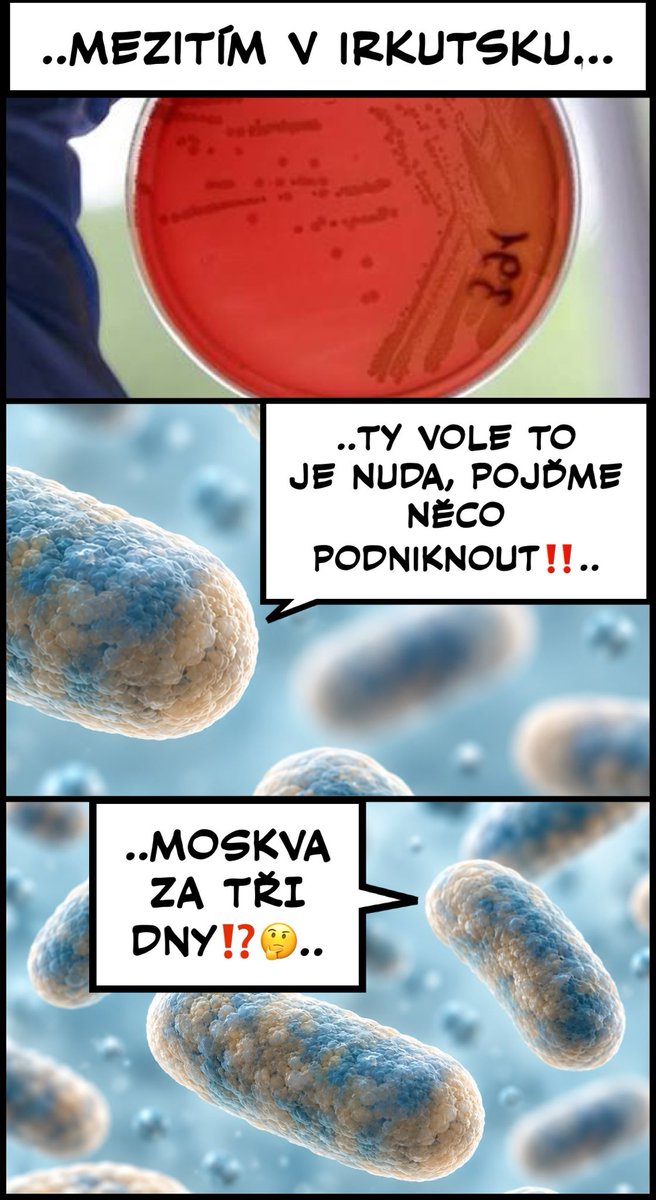
David Rangl wrote that the British Daily Mail reported on Tuesday, citing Russian media, about a possible second death from the plague. According to these reports, another patient was said to have died in a hospital in the Irkutsk region, though Russian authorities have not confirmed this. The Insider reported according to Rangl that the report was published by REN TV and later removed; the station had previously deleted five posts about suspected plague cases. Rangl also wrote that Kazakhstan, Kyrgyzstan, and Uzbekistan have tightened sanitary and quarantine controls at their borders, and that according to the Daily Mail, Mongolia has done the same. The Irkutsk branch of Rospotrebnadzor labeled reports of the introduction of stricter sanitary measures in the region as "fake" on Tuesday, he noted. Finally, he added that Roman Prymula had reserved a table at the Rio's restaurant in Prague's Vyšehrad for January. #mor #Rusko #novinky (translated)

2936
Matt Keogh 5d

The percentage of drone threats is increasing— The percentage of drone threats is increasing — said Lieutenant Colonel Matt Keogh to the American Business Insider, who is responsible for acquiring drone technology for the British army. #drony #wojna #ukraina (translated)

Rosyjskie drony nabrały prędkości. Zachód szykuje odpowiedź
businessinsider.com.pl
1921
Di.se 6d

Swedish industrial companies have become better at protecting themselves against external threats, but are now facing an increased risk from insider attacks where criminals exploit employees to gain access to sensitive information. #Insiderhot #Säkerhet #Industriföretag (translated)

www.di.se
Säkerhetsbolaget: Hotet kommer inifrån ditt företag
1584
Andrej Fiskovec 6d

Andrej Fiskovec stated that if the Republicans are defeated in the midterm elections, Ukraine will be blamed for defending itself against Russian aggression by targeting the economic base of the aggressor. He added that, in his opinion, no credit will be given to the war against Iran, insider trading by the Trump family, or incompetent international trade policies. He expected the situation to remain chaotic. #politika #Ukrajina #midterms (translated)

2945
newsORF.at 7d

The co-pilot of a Flydubai flight reportedly planned a terrorist act even before his hiring, attacking the captain during the flight to Tel Aviv, which led to dramatic intervention by passengers and crew to prevent a catastrophe with over 170 people on board. #Terroranschlag #Flydubai #Luftfahrt (translated)

orf.at
Insider: Flydubai-Kopilot plante Terrorakt lange
2268
💙💛 Regina Laska 1w

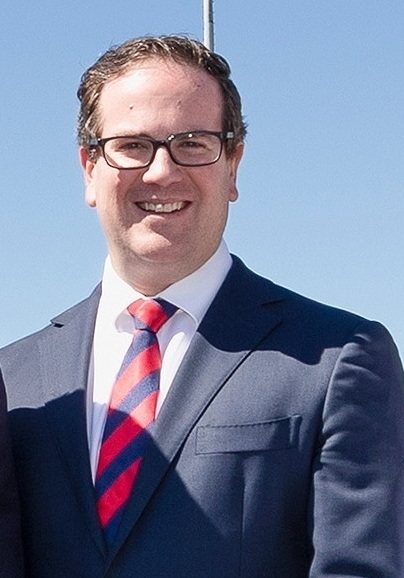
Regina Laska wrote to Alice Weidel that the Day of German Unity had been the day before and Friedrich Merz had arrived in Kyiv that morning – just hours after Moscow had warned against a stay there and announced further massive attacks. The one billion euros, according to reports, was not an additional sum but rather planned military aid. Laska stated that aid to Ukraine is often pitted against pensions, health insurance, and the cost of living. According to The Insider, Russian Telegram networks are currently spreading this narrative in Latvia as well. There, the explicitly pro-Ukrainian government won decisively the day before. Latvians live right next to Russia and not in neutral Switzerland, wrote Laska; apparently, they seem to know better which bill will ultimately be more expensive. #Deutschland #Ukraine #Politik (translated)
11936
Otherland Bookshop Berlin 1w

The Nerd Reich: Silicon Valley Fascism and the War on Democracy by Gil Duran A fearless and urgent exposé of technofascism – and a road map to resistance. When Silicon Valley ‘moves fast and breaks things’, the world interprets the chaos as a necessary cost of innovation. Gil Durán reveals something far more sinister a decades-long campaign to replace elected governments with corporate rule. Drawing on insider political experience and new investigations, Durán traces this ideology from its philosophical roots in The Sovereign Individual by James Dale Davidson and Lord William Rees-Mogg. He introduces its modern apostles – Peter Thiel, Marc Andreessen, Balaji Srinivasan and Elon Musk – and shows how the promise of technological liberation has transformed into a global movement for digital feudalism, powered by cryptocurrency, artificial intelligence and algorithmically driven propaganda on social media. The Nerd Reich explains the origins, strategies and ambitions of Silicon Valley’s war on democracy for the first time. From San Francisco’s weaponised elections and secret billionaire projects to the White House, Durán exposes how the world’s richest men are building a new political order. The Nerd Reich is more than a hidden history; it’s an urgent democracy is being dismantled, not by coups or tanks but by code, capital and the illusion of innovation. Durán insists there is still time to fight back – if we act now.

682