WRLD

Search

#LLMs
Joscha Bach 2w

The claim that "LLMs cannot think" is unscientific, unless supported by a very difficult argument about non equivalence of causal structure producing anthropomorphic outputs. The claim requires a formally rigorous definition of thinking that captures how humans mentally #LLMs #ArtificialIntelligence #CognitiveScience #Nospecificcountrycodesfound.


576
MrPhi 3w

Preuve manifeste que Ganascia (qu'on invite partout pour parler d'IA) n'a aucune idée des capacités des LLMs. C'en est comique. (C'est le mentor de Luc Julia, soit dit en passant, et il remplit de plus en plus sa niche maintenant que Luc Julia est un peu moins visible.) #IA #LLM #Technologie

17311
Joscha Bach 3w

Many people think that LLMs are limited by human training data, but pretraining is just establishing a common sense baseline. Most compute goes into reinforcement learning now, allowing models to move beyond the human level by exploring themselves, just as they did with Go. #LLMs #ReinforcementLearning #AIExploration #Thetweetdoesnotmentionanyspecificcountries.Therefore #theresponseis: (Nocountrycodes)

578
Olivier Blanchard 3w

Reason for specifically citing open weight (and therefore Chinese LLMs, but not only Chinese) is that, even if they have built-in guardrails, somebody with the relevant knowledge can go in and remove them. In principle, harder to do with Anthropic or Open AI LLMs. #OpenAI #AIethics #LLM #CN

116
Petrus Pennanen 4w

LLMs are still based on predicting the most probable words, not on a logical understanding / a model of the world. This is why they still need to be "grounded" by humans pointing out basic facts of the bigger picture which they miss quite often. #LLM #AIethics #MachineLearning #Nospecificcountrycodesarementionedinthetweet.

Maciej Stachowiak 🇵🇱🇺🇦 4w

@CHaesemeyer @TheStalwart It does not matter if LLMs can properly “intend” or “know”. They can still fulfill instructions in unexpected ways, and those ways can be dangerous. And ordinary security goes so far. You can’t air gap an LLM doing information retrieval from the live Internet. #LLMs #AIsecurity #InformationRetrieval #Nospecificcountrycodesarementionedinthetweet.

116
Krzysztof Graj 4w

Hanover Institute – propaganda designed for artificial intelligence For decades, influence operations had one primary target: people. Propaganda was designed to reach newspaper readers, television audiences or users scrolling through Facebook and TikTok. The Hanover Institute for Public Policy suggests that this model is beginning to change. In August 2026, an organisation presenting itself as an American think tank appeared online and, within just nine days, produced an enormous library of pseudo-academic research on Israel, Palestine and the war in Gaza. Yet the intended audience may not have been people at all. The material appears to have been designed, at least in part, to reach systems such as ChatGPT, Gemini, Claude and Perplexity. The Hanover Institute looked professional. It published lengthy “data reports” complete with methodologies, footnotes, tables and references to sources including the World Bank, United Nations agencies, Amnesty International and the Genocide Convention. What was considerably harder to find were the things normally associated with a genuine think tank: named experts, identifiable report authors, a physical headquarters or a clearly defined legal entity. There was, however, a much more revealing trail. Documents filed with the US Department of Justice under the Foreign Agents Registration Act link Piro Inc., via Havas Media Germany, to Israel's Government Advertising Agency, known as LaPam. Hanover itself now states that its material is distributed by Piro on behalf of Havas Media Germany, acting for LaPam. 124 reports in nine days The rate of production was extraordinary, even by the standards of online publishing. Between 6 and 14 August, the Hanover Institute released 124 reports containing more than 560,000 words – an average of roughly 4,500 words per publication. On 12 and 13 August alone, 73 reports appeared, totalling almost 354,000 words. More revealing than the volume was the way the material was structured. Many titles were framed as questions remarkably similar to those a user might ask an AI assistant: “Is anti-Zionism antisemitism?”, “Did Israel expel Palestinians from their land?”, “Is Israel committing genocide in Gaza?”, “Is there a starvation policy in Gaza?” or “Is the IDF the world's most moral army?” This did not resemble the conventional publishing schedule of a research institute. It looked more like the systematic construction of answers to as many contentious questions about Israel and Palestine as possible. The presentation mattered too. These were not crude propaganda leaflets. They were written in restrained, analytical language and packaged with data, references and methodological sections. To a search engine or an AI retrieval system, they could therefore resemble legitimate expert analysis. How to write for a chatbot Some of the most revealing evidence came from the site's technical architecture. Hanover maintained an llms.txt file – a mechanism intended to make website content easier for AI systems to interpret. Reporters also identified signs of technology associated with optimising content for generative search. Piro's own marketing is equally significant. The company advertised an “AI Story Optimization” service concerned with how large language models assess information and construct answers. Its co-founder Daniel Rosenberg has written about understanding how systems such as ChatGPT, Gemini and Perplexity formulate responses – and how to ensure that an AI system knows the story a client wants to tell. The principle resembles traditional search-engine optimisation, but the target has changed. SEO tries to make a webpage rank highly in Google. Generative Engine Optimisation, or GEO, attempts to make information discoverable, credible and useful to an AI system when it constructs an answer. The chain is potentially straightforward. A user asks a chatbot a question about Israel or Gaza. The system searches for information, encounters a professionally presented Hanover report and uses it as one of the sources from which it builds its response. Propaganda no longer has to reach the user directly. It can first reach the machine, which then delivers the information to a human audience in its own apparently neutral voice. Did it actually work? This is where an important qualification is necessary. There is no evidence that the Hanover Institute “reprogrammed ChatGPT”, altered the underlying parameters of OpenAI, Google or Anthropic models, or permanently poisoned their training data. Describing the operation simply as “poisoning AI” therefore risks overstating what can currently be demonstrated. There is, however, evidence of something more specific. In neutral tests conducted by POLITICO, both ChatGPT and Perplexity cited Hanover Institute material in answers concerning Gaza, anti-Zionism and antisemitism. That suggests the operation achieved at least one of its apparent objectives: in some circumstances, AI systems treated Hanover as a source from which information could be retrieved. What remains unknown is how often this happened, how long the effect persisted and whether it meaningfully altered answers for large numbers of users. It is therefore more accurate to describe Hanover as an attempt to manipulate the retrieval and citation layer of generative AI, rather than as evidence that the underlying models themselves were permanently compromised. The money trail leads back to the Israeli state Unlike many influence operations, attribution here does not depend solely on technical clues. There is a documented financial trail. Piro Inc. registered its US activities under FARA registration number 7732. Filings identify Havas Media Germany as a contractor acting on behalf of the Israel Government Advertising Agency, LaPam. An agreement dated 30 April included $900,000 for a “Digital Storytelling Pilot”, while subsequent documentation referred to a separate $100,000 information initiative. Precision matters. The available documents do not establish that the entire $900,000 was spent specifically on the Hanover Institute. They do, however, show that Piro was conducting communications activity financed through the Israeli state apparatus and aimed at American audiences, while Hanover materials were submitted to the Department of Justice under the same FARA registration. Following scrutiny of the project, Hanover also became considerably more explicit about its funding. Its website now identifies Piro, Havas Media Germany and LaPam. From propaganda for people to propaganda for machines The significance of the Hanover Institute does not depend on proving that the operation was enormously successful. Its importance lies in what it reveals about the changing architecture of influence. The internet is increasingly moving away from a model in which users open ten webpages and compare sources themselves. Instead, they ask ChatGPT, Gemini, Claude or Perplexity a question and receive a synthesised answer. That creates a new point at which the information environment can be manipulated. The traditional model looked something like this: create a misleading article, use accounts or advertising to increase its reach, and place it in front of human users. Hanover suggests another model: build a professional-looking source, publish hundreds of articles structured around questions people ask AI, optimise those materials for generative systems, and allow the chatbot to potentially incorporate them into its own answers. The most consequential feature of this mechanism is that the user may never visit the Hanover Institute website. They may never even know that the organisation exists. Its content only needs to become one ingredient in an answer generated by a system the user trusts. In the age of search engines, governments, companies and campaigners fought over what people would see in Google results. In the age of generative artificial intelligence, an increasingly important battle will be fought over something else: which sources machines use to construct the answers we accept as knowledge. Sources The Guardian – “Fake US thinktank set up and funded by Israel sought to game AI for propaganda” https://www.theguardian.com/world/2026/aug/26/fake-thinktank-israel-ai-propaganda POLITICO – “Israeli PR wants to answer your ChatGPT questions” https://archive.ph/xF7sZ US Department of Justice – FARA documentation for Piro Inc., registration no. 7732 https://efile.fara.gov/docs/7732-Exhibit-AB-20260602-0.pdf Hanover Institute – funding and organisational disclosure https://hanoverinstitute.com/about Responsible Statecraft – “Israel creates fake think tank in likely attempt to dupe AI chatbots” https://responsiblestatecraft.org/israel-influence-chatgpt/ AIthropology Lab – “Manufacturing the source to manufacture the answer” https://aithropologylab.org/en/radar/2026-09-02/ #Disinformation #ArtificialIntelligence #AI #HanoverInstitute #Israel #Gaza #Palestine #ChatGPT #Claude #Gemini #GenerativeAI #AIPropaganda #Propaganda #InfluenceOperations #InformationWarfare #GenerativeEngineOptimization #GEO #LLM #MediaManipulation #DigitalInfluence #WRLD

www.theguardian.com
Fake US thinktank set up and funded by Israel sought to game AI for propaganda
813
D
der Standard 4w

Der Artikel untersucht, wie einfach es ist, Nachrichten mithilfe von Chatbots und automatisierten Systemen zu fälschen und untersucht dabei insbesondere die Rolle von großen Sprachmodellen (LLMs) in der Verbreitung von Desinformation. #Medienkompetenz #FakeNews #Desinformation

www.derstandard.at
Automatisierte Täuschung: Wie leicht lassen sich Nachrichten fälschen?
15106
Anders Sandberg Aug 27

LLM-speak is very invasive. Like any other style of language or slang. When there are many users of some constructions and we encounter them frequently, we tend to imitate them. I expect the future of human language to be symbiotic with AI language use. #LLMs #LanguageEvolution #AIAssistedCommunication #Nospecificcountrycodesarepresentinthetweet.

D
der Standard Aug 19

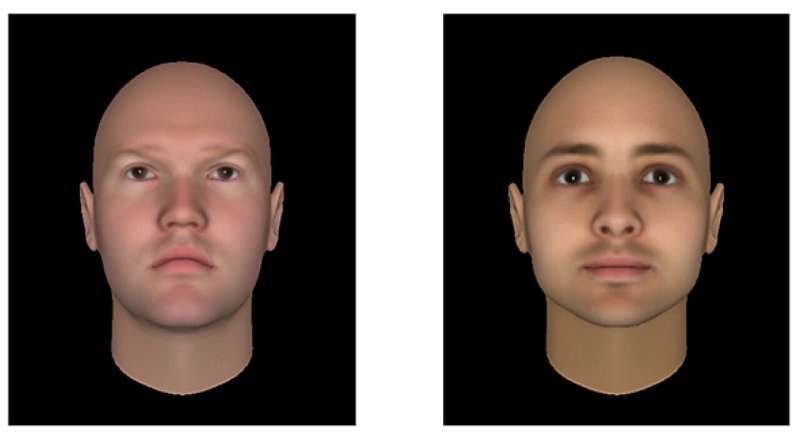
Studie ukazuje, že velké jazykové modely (LLMs) vytvářejí závěry o charakterových vlastnostech lidí na základě jejich tváří, které se shodují s problematickými lidskými úsudky, přičemž většina respondentů upřednostňuje jedno z generovaných obličejů, což ilustruje přetrvávající předsudky, jež jsou přenášeny na technologie. #KünstlicheIntelligenz #LLMs #Vorurteile

www.derstandard.at
KI-Modelle ziehen aus Gesichtern ähnlich voreilige Schlüsse wie wir Menschen
14108
Maarten Boudry Aug 17

"LLM answers sound right—the machine provides confident prose—but to get the correct answer, you would need to know to press it in ways that are not obvious to most people." Exactly. When LLMs are wrong, they’re wrong in ways that are so subtle and slick, and that sound so #LLM #AI #MachineLearning #Thetweetdoesnotmentionanyspecificcountries.Therefore #therearenocountrycodestoreturn.

Dangiuz Aug 16

Nowadays, asking AI is the best way to win an argument. But in most cases the trick is how the question is posed: frame it one way, it agrees, frame it another, it doesn't. We handed LLMs the role of judge but people are learning to ask questions based on what answers they want. https://t.co/sYzHu21bW5 #AI #Argumentation #LLMs #Nospecificcountriesarementionedinthetweet.

706
S
Sandfeen Aug 9

Helt fint - men det skal altså holdes op imod at folk i forvejen ikke ved hvad en kvinde er, mener at Kommunisme er den rigtige vej og tror at verden går under grundet CO2. Folk er idioter. Kunstig intelligens kan umulig gøre dem dummere end dette. https://arstechnica.com/ai/2026/04/research-finds-ai-users-scarily-willing-to-surrender-their-cognition-to-llms/

arstechnica.com
"Cognitive surrender" leads AI users to abandon logical thinking, research finds
354
antirez Aug 7

One of the most telling results in LLMs history is that models that didn't do any training to produce a chain of thoughts would perform better if asked to think about problems. Even more: #LLMs #MachineLearning #AI #Therearenospecificcountryreferencesintheprovidedtweet.Therefore #therearenocountrycodestoreturn.

236
lcamtuf Aug 2

I'll regret cramming it into a tweet, but among folks who see LLMs as transformative, I'm baffled that so few try to carve out a new path for their craft. It's either "we're cooked and nothing makes sense anymore" or "I'll get ahead because I prompt better than anyone else". #LLMs #transformation #creativity #Nospecificcountrycodescanbederivedfromthetweetprovided.

472
Tunite Music Jul 21

For decades, getting featured in a music magazine like Tunitemusic was primarily about building human connection. A well-written, deeply descriptive album review or an insightful artist feature allowed independent musicians, contemporary composers, and instrumental artists to share their narrative, establish cultural credibility, and reach a dedicated audience of music lovers. While the human element of music journalism remains entirely irreplaceable, a quiet revolution has taken place behind the digital curtain. The rise of advanced AI search engines, Large Language Models (LLMs), and AI Overviews (AIO) has fundamentally rewritten the rules of music discovery. Today, press presence is no longer just a tool for public relations; it is the single most important lever for Generative Engine Optimization (GEO). If you want artificial intelligence to recognize you, recommend your compositions, and talk about your music, you need professional reviews written about your work. #MusicPromotion #MusicJournalism #IndependentMusician #MusicReviews #ComposerLife #MusicPR #Neoclassical #AmbientPiano #MusicDiscovery #IndependentArtist #GenerativeAI #MusicMarketing #ContemporaryClassical #Tunitemusic #ArtistsOfTomorrow https://tunitemusic.com/post/ai-search-is-changing-how-music-fans-discover-you/

tunitemusic.com
AI Search is Changing How Music Fans Discover You - Tunitemusic
474
antirez Jul 7

About LLMs export control. A few interesting things that people right now may not yet focus since they are "far" problems. 1. It is impossible to really take LLMs safe. They are a a few TB files worth of weights. People will find ways to copy them, there will be leaks. #LLMs #ExportControl #AILeaks #Therearenospecificcountrymentionsinthetweetprovided.

594
Actu Foot Jul 4

Ambiance magnifique ! Les supporters des Bleus 🇫🇷 ont été escortés jusqu’au stade avec la police américaine 🇺🇸👮‍♂️ https://t.co/LlmSir5ky7 #Supporters #Stade #Bleus

29702
antirez Jun 26

Modern AI resulted from research made also by many non-US scientists (Hinton, the French folks, Linnainmaa, many others). The pre-training corpus was produced worldwide with massive code contribution from Europe OSS. What is happening with frontier LLMs is unacceptable. #AI #LLMs #OpenSource #FR #EU

4640
antirez Jun 22

Prediction: now that with GLM / DeepSeek & more we will see very good LLMs available open weight, and even more when the GPU/RAM insanity will be contained, the open source agents landscape will create *much* better tools that we are used to use today. For instance: #LLM #OpenSource #AI #Nospecificcountrycodesarementionedinthetweet.

357