Halzen states that his ignorance helped him with the idea. According to Halzen, the project simply got lucky that the ice was so clear – the scientists did not know this in advance. #NobelovaCena #astronomie #neutrina (translated)
However, the chairman of the Nobel Committee for Physics, Mark Pearce, also mentioned Halzen's tenacity and vision, which paved the way for a new kind of astronomy. #NobelovaCena #astronomie #neutrina (translated)
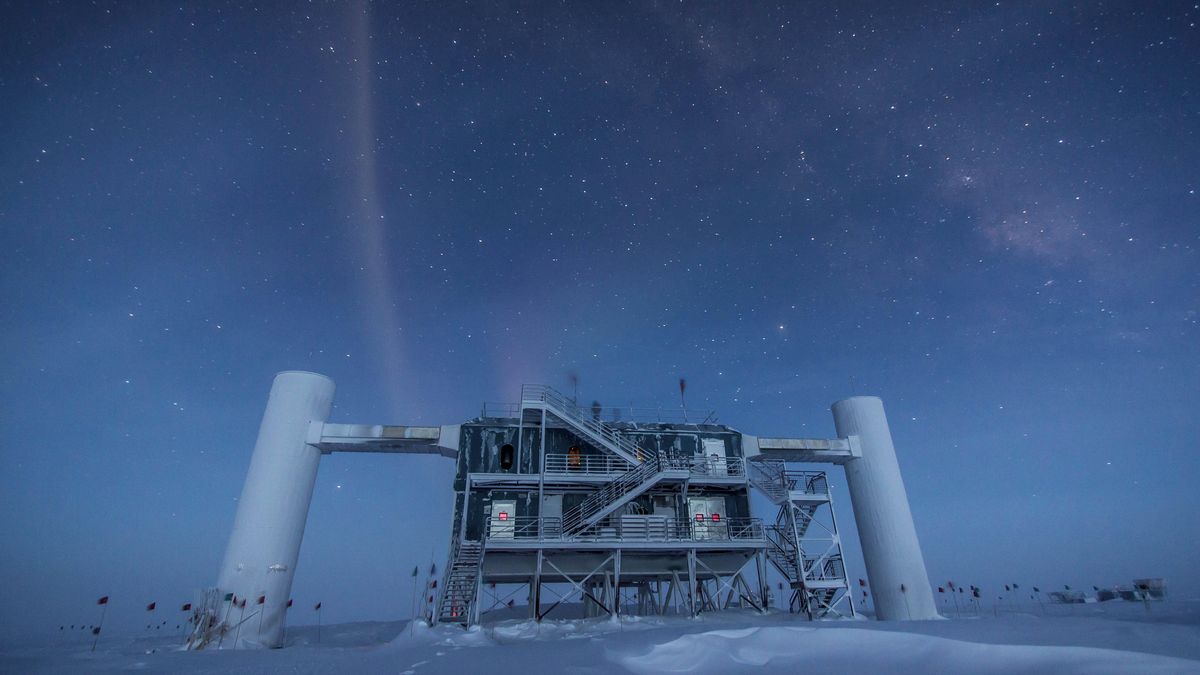
Francis Halzen won the Nobel Prize in Physics for the development of the IceCube detector, which discovered high-energy neutrinos coming from space, thus opening new possibilities in astronomy. #NobelovaCena #astronomie #neutrina (translated)

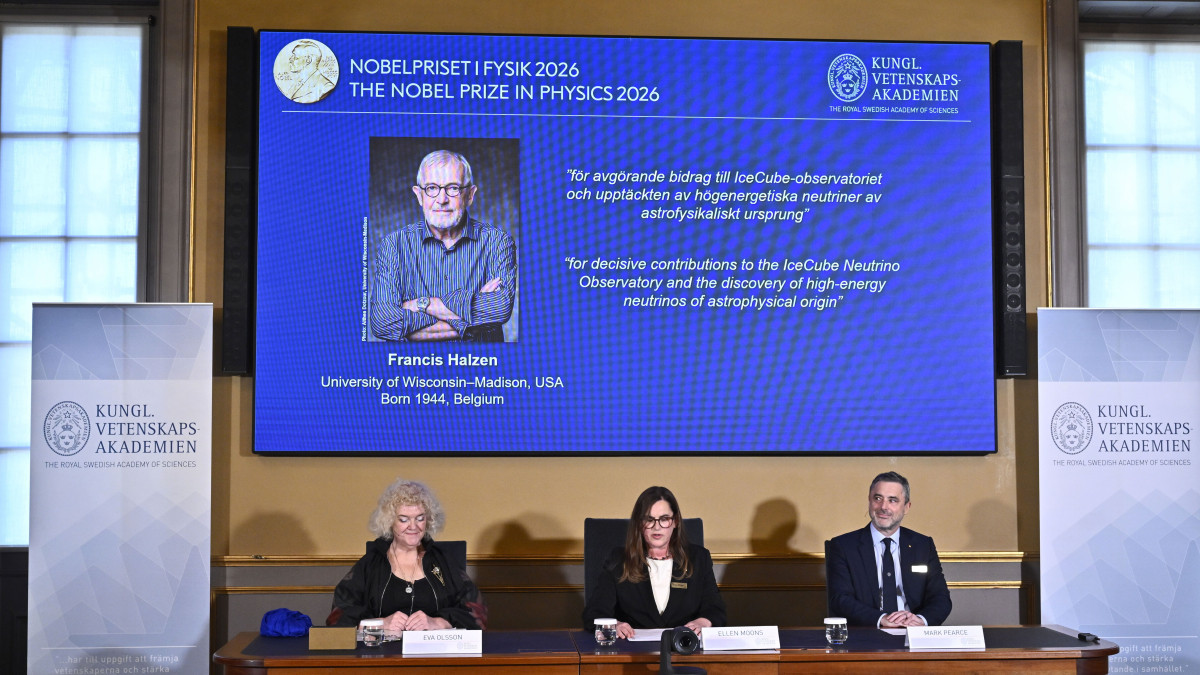
Francis Halzen was awarded the Nobel Prize in Physics 2026 for his fundamental contribution to the creation of the Antarctic neutrino observatory IceCube and for the discovery of high-energy neutrinos of astrophysical origin. #NobelovaCena #Fyzika #Neutrina (translated)

The author stated that Francis Halzen had won the Nobel Prize in Physics the day before for his fundamental contribution to the establishment of the IceCube observatory and the discovery of high-energy neutrinos from space. On this occasion, he recalled his earlier thread about what he believes is located 2.5 kilometers under the ice at the South Pole. #NobelovaCena #fyzika #neutrina #SJ #PL (translated)
The 2026 Nobel Prize in Physics was awarded for the use of neutrinos to observe the Universe, opening up new possibilities to understand extreme cosmic conditions and processes that cannot be investigated with conventional methods. #neutrinai #astrofizika #IceCube (translated)
Belgian physicist Francis Halzen won the Nobel Prize in Physics for 2026 for the creation of the IceCube neutrino observatory in Antarctica, which enables the research and detection of high-energy neutrinos, thus contributing to the discovery of the mysteries of the universe. #NobelovaCena #Neutrína #Fyzika (translated)

"In the 1980s, Francis Halzen realized that Antarctic ice could be ideal for capturing 'elusive' neutrinos, allowing researchers to learn more about their distant origins," explained Professor Eva Olsson, a board member. #nobelovanagrada #fizika #neutrini (translated)
Belgian scientist Francis Halzen won the Nobel Prize in Physics in 2026 for his pioneering research on astrophysical neutrinos, using the IceCube observatory at the South Pole. #nobelovanagrada #fizika #neutrini (translated)
"The main pleasure, apart from winning the Nobel Prize, is that it hopefully reflects the merits of those truly brave people who joined me at the beginning of this project," Halzen also noted that some of his friends talk about how observing neutrinos could be a way to potentially communicate with other distant civilizations in the universe. #NobelovaCena #Astrofyzika #Neutrina (translated)
"Francis Halzen led an international team of scientists and engineers who provided us with a fantastic tool. His persistence and scientific vision paved the way for a new kind of astronomy," said Pearce, "which can bring rare information about events in the distant universe, including the area of black holes, where neutrinos can be traced." #NobelovaCena #Astrofyzika #Neutrina (translated)
Belgian astrophysicist Francis Halzen won the Nobel Prize in Physics for the discovery of high-energy neutrinos of astrophysical origin thanks to his IceCube observatory, which allows the study of the interactions of these rare particles in Antarctic ice. #NobelovaCena #Astrofyzika #Neutrina (translated)

"For me, apart from winning the Nobel Prize, the greatest joy comes from the hope that this award will draw attention to truly brave people who, together with me, undertook this project from the very beginning," said F. Halzen. #NobelioPremija #Fizika #Neutrinai (translated)
"This year's prize is awarded for ghostly messengers from space," said Ellen Moons, the general secretary of the Royal Swedish Academy of Sciences, at a press conference. #NobelioPremija #Fizika #Neutrinai (translated)
Belgian physicist Francis Halzen received the Nobel Prize in Physics for innovative research related to the detection of neutrinos coming from space at the IceCube observatory in Antarctica. #NobelioPremija #Fizika #Neutrinai (translated)
The Nobel Prize in Physics was awarded for discoveries related to the IceCube detector, which enables the study of neutrinos – extremely mysterious elementary particles from distant corners of the universe, allowing scientists to analyze extreme processes such as supernova explosions. #neutrina #fizyka #IceCube (translated)

ČT24 reported that the Nobel Prize in Physics was awarded to American Francis Halzen for the discovery of high-energy particles called neutrinos. https://t.co/VwEYEKlj0x #NobelovaCena #fyzika #neutrina (translated)
His perseverance and scientific vision paved the way for a new type of astronomy, said Mark Pearce, chairman of the Nobel Committee for Physics. #Nobel2026 #FrancisHalzen #neutrina (translated)
Belgian physicist Francis Halzen has been awarded the Nobel Prize in Physics for his groundbreaking contribution to the IceCube observatory and the discovery of high-energy neutrinos. #Nobel2026 #FrancisHalzen #neutrina (translated)