WRLD

Search

#Partnerships
Jozef Síkela 3d

The author wrote that strong strategic partnerships were an investment in Europe’s prosperity, resilience and security, and said Global Gateway was the way to build them. They added that it would take a united Team Europe with a clear strategic vision for the initiative to deliver. https://t.co/udBpvqYyv7 #Europa #Strategie #Partnerschaft #EU

2900
Dubravka Šuica 5d

The author wrote that Europe could not be strong while the Mediterranean remained vulnerable and said the MED9 Summit in Split was important. They said the participants were bringing together their strengths in energy, security, connectivity and partnerships to make the region a place of stability and opportunity. https://t.co/b5FoPX734N #Mediterranean #Europe #Stability #HR #ES #IT #MT #FR #GR #PT #SI #CY

3043
Krzysztof Graj 5d

Nigeria – how pro-Russian influence networks sell military rule as the answer When Nigerians took to the streets in August 2024 to protest soaring living costs and frustration with government, some demonstrations acquired an unexpected symbol: the Russian flag. In Kano, Kaduna and other northern cities, protesters were filmed carrying Russian colours and calling for Moscow’s intervention. Some demanded a military takeover. What initially looked like an unusual expression of anger has since become part of a much larger picture. A September 2026 assessment by the Africa Center for Strategic Studies describes Nigeria as a major target of overlapping foreign information operations, with Russia the most active external actor in its information space. The report does not identify a single centrally controlled campaign. Instead, it maps an ecosystem in which genuine dissatisfaction over insecurity, corruption and living standards is repeatedly redirected towards a broader proposition: democratic government has failed, while the military-led regimes of the Sahel offer a more effective alternative. Turning a real protest into a pro-Russian message The clearest example emerged during the 2024 #EndBadGovernance protests. Nigerian investigative reporting found that a Kano-based TikTok influencer with more than 100,000 followers had been paid through a Telegram channel associated with African Initiative, a Moscow-based media operation linked by researchers to Russian influence activity in Africa. The influencer said the channel supplied photographs, videos and talking points for redistribution on TikTok and Instagram. Among the messages provided were phrases such as “Putin please come and save Nigeria” and “The army is the answer for Nigeria”. Influencers were encouraged to use Hausa-language hashtags including #Zangazanga – “protest” – alongside references to Putin and Russia. Investigators identified 38 accounts circulating similar pro-Russian and pro-military narratives during the demonstrations. Russian flags subsequently appeared among protesters in several northern cities. This does not mean the protests themselves were created by Russia. They were driven by genuine economic and political grievances, and Nigerian protesters gave different reasons for carrying Russian flags. The important feature of the influence activity was precisely that it did not need to manufacture the original anger. It could attach a geopolitical message to an existing domestic crisis. From frustration to the idea of military government The narrative fits a wider pattern seen across West Africa. Russia has developed close relations with the military governments of Mali, Burkina Faso and Niger, while pro-Russian media ecosystems routinely portray those states as examples of sovereignty, stability and resistance to Western influence. Nigeria, by contrast, has remained under constitutional civilian government since 1999. Africa Center researchers say information networks targeting Nigerians increasingly contrast these two models. Recurring messages depict elections as wasteful or predetermined, civilian institutions as incapable of protecting citizens and military governments as more decisive on security and development. Some content portrays the Sahelian juntas as delivering better roads, lower prices and stronger security even where available evidence points to continuing or worsening instability. Language is central to the strategy. Hausa is spoken across northern Nigeria and neighbouring Niger, allowing political narratives to travel across borders that are far less important online than they are on maps. HumAngle documented efforts involving Nigerien state-linked actors to cultivate Hausa-speaking journalists and distribute material favourable to Niger’s junta and hostile to France and Western influence. The Russian and Sahelian-junta information ecosystems are not identical, but their narratives frequently reinforce one another. Fake journalists inside real Nigerian media The campaign environment extends beyond social media. A 2026 investigation by Graphika and Code for Africa identified 44 ghost reporters and fake experts whose identities were used to place Russia-aligned narratives in African media. Thirty-eight were assessed with high confidence to be fabricated. Their articles or quotations appeared across 138 websites and were amplified by at least 113 Facebook accounts and Pages. Nigeria was one of the most heavily targeted countries. According to the Africa Center’s analysis of the research, Daily Post Nigeria carried 39 articles involving 14 identified ghost authors. Once published by a genuine Nigerian outlet, such material could then be cited by other websites, social-media accounts or even Russian official channels as though it had originated independently in Africa. This is information laundering rather than simple propaganda: the most valuable asset being borrowed is the credibility of the local newsroom. Generative AI added another layer. OpenAI and Meta separately disrupted a Russia-origin network that produced Africa-focused political content and operated Facebook Pages posing as local media organisations. One fabricated commentator, “Dr Manuel Godsin”, was presented as a European-trained geopolitical expert although investigators found no evidence supporting his academic biography. ChatGPT had been used to generate articles under the persona’s name, while Meta removed 37 Facebook accounts and 29 Pages connected to the broader network. Different networks, similar strategic direction It would be misleading to merge all these activities into a single Russian command structure. The African Initiative-linked influencer campaign, the ghost-reporter network and the AI-enabled operation disrupted by OpenAI and Meta were uncovered separately and used different infrastructure. Public evidence does not demonstrate that every actor reported to the same organisation. What connects them is a recurring set of themes and methods: portraying Western partnerships as exploitative, presenting Russia as an alternative security partner, amplifying failures of civilian government, and giving military-led rule greater legitimacy. Investigative reporting on leaked Russian documents has meanwhile described a much wider influence apparatus operating across Africa, involving political consultants, paid journalists, influencers and locally tailored campaigns intended to reduce Western influence and expand Moscow’s position. The underlying technique is less about inventing dissatisfaction than redirecting it. Nigeria faces real security threats, economic pressure and public frustration. Influence operators do not need to persuade Nigerians that those problems exist. They need only influence the explanation for why they exist – and which political model appears to offer the answer. That is what makes the Nigerian case significant. The most effective propaganda does not necessarily introduce a completely false reality. It takes a real crisis and changes where the audience is encouraged to look for the solution. Sources Africa Center for Strategic Studies — The Raging Information Battle in Nigeria https://africacenter.org/spotlight/the-raging-information-battle-in-nigeria/ Graphika — Umbrae Ex Machina https://www.graphika.com/reports/umbrae-ex-machina OpenAI — Operation “No Bell” https://openai.com/index/disrupting-malicious-uses-of-ai-no-bell/ TheCable — Ghost reporters in African media https://www.thecable.ng/ghost-reporters-how-fabricated-african-voices-carried-pro-russia-narratives/ HumAngle — Nigeria Is Facing an Information War in Its Own Language https://www.humanglemedia.com/nigeria-is-facing-an-information-war-in-its-own-language DAIDAC / CJID — Russian influence during #EndBadGovernance https://daidac.thecjid.org/how-telegram-tiktok-aided-russian-disinformation-that-led-to-incarceration-of-nigerian-minors/ FactCheckHub — How Nigeria’s hunger protest took a radical turn https://factcheckhub.com/from-economic-protests-to-coup-agitation-how-nigerias-hunger-march-took-a-radical-turn/ News24 — Fake Kremlin-linked analyst planted stories in African media https://www.news24.com/southafrica/news/ai-expert-exposed-fake-kremlin-linked-analyst-planted-stories-in-african-media-20260318-0560 Vanguard — AI ‘expert’ exposed https://www.vanguardngr.com/2026/03/ai-expert-exposed-fake-kremlin-linked-analyst-planted-stories-in-african-media/ Africa Confidential — How Moscow wages social media war https://www.africa-confidential.com/article/id/15961/how-moscow-wages-social-media-war Keywords #DISINFORMED #Episode15 #Nigeria #Russia #RussianInfluence #RussianDisinformation #Africa #WestAfrica #Disinformation #InformationWarfare #InfluenceOperations #ForeignInterference #FIMI #Propaganda #MilitaryRule #MilitaryGovernment #Democracy #PoliticalManipulation #NarrativeManipulation #AfricanInitiative #EndBadGovernance #Hausa #LocalInfluencers #GhostReporters #FakeExperts #ArtificialIntelligence #AI #AIPersonas #SyntheticMedia #AIPropaganda #Astroturfing #SocialMediaManipulation #Telegram #TikTok #DigitalInfluence #SourceLaundering #NarrativeLaundering #MediaManipulation #Sahel #Geopolitics #OSINT #WRLD

africacenter.org
The Raging Information Battle in Nigeria
903
S
Sandfeen 2w

They want you to believe that Israel is isolated on the world stage. Here we list what the leaders of 75 nations around the world have said about strengthening relations with Israel since 2023. It is difficult to think of any other country as small as Israel inspiring such warm friendship and admiration from around the world. Whether you are a friend of Israel or not, you owe it to yourself to sit down, have a cup of tea and scan down our list! Northern Ireland Friends of Israel Albania Name & Title: Edi Rama, Prime Minister Date: 26 January 2026 Quote: Albania is ""a serious and reliable friend of Israel and the Israeli people across the entire political spectrum." Angola Name & Title: Leo Vinovezky (representing the newly established, active diplomatic mandate on behalf of the State) Date: November 2025 Quote:"Angola and Israel have much to do together. The future is prosperous... We are together, and this will translate into action." Argentina Name & Title: Javier Milei, President Date: 10 March 2026 Quote: "I am sincerely proud to be the most Zionist president in the world." Armenia Ministry of Foreign Affairs (MFA) of Armenia Date: 21 April 21 2026 Quote: "Armenia stands ready to expand Armenia-Israel ties and explore new opportunities for cooperation." Azerbaijan Name & Title: Jeyhun Bayramov, Foreign Minister Date: 26 January 2026 Quote: "Relations between our two states are steadily improving and are strategically significant." Bhutan Name: Prime Minister's Office (PMO) / Royal Government of Bhutan Date: September 23, 2024 Quote: "...reiterate the shared desire of the two countries to further strengthen bilateral cooperation to the benefit of both peoples." Bolivia Name & Title: Rodrigo Paz, President Date: October 2025 Quote: I wish “to lead Bolivia toward a reopening to the world and re-establishing ties with Israel.” Bulgaria Name & Title: Rosen Zhelyazkov, Prime Minister Date: 23 September 2025 Quote: "Bulgaria regards the State of Israel as a key strategic partner, and the excellent relations between the two countries will provide a strong impetus in trade, innovation, education, agriculture and tourism." Burundi Burundian Ministry of Foreign Affairs Date: 21 March 2024 Quote "Burundi and the State of Israel maintain good diplomatic relations. Israel supports Burundi in the education sectors... in the field of agriculture, in the field of defense, in the field of energy production... social entrepreneurship, community development, health, and hydrometeorology." Cambodia Name & Title: Hun Manet, Prime Minister Date: June 2026 Quote:"...reaffirmed the Royal Government's continued support for existing partnerships while encouraging greater connectivity and cooperation in emerging areas." Cameroon Name & Title: Dr Taïga, Minister acting on behalf of the Cabinet Date: 13 February 2026 Quote: "The Republic of Cameroon and the State of Israel have maintained cooperative ties since Cameroon's independence... Israel's willingness to promote economic relations between Israel and Cameroon will further take root in agriculture and livestock." Chile Name & Title: José Antonio Kast, President Date: December 15, 2025 Quote: [Agreed] "to work together to put Israel-Chile relations back on track for the good of both nations." (Following his election, Kast moved to rapidly strengthen ties, stating his intent to increase cooperation in agriculture, healthcare, AI, technology, and security). Colombia Name & Title: Abelardo de la Espriella, President Date: 14 September 2026 Quote: "I will never stop defending Israel because it is the people of God, and I will always stand with Israel." Costa Rica Name & Title: Rodrigo Chaves Robles, President Date: 11 May 2025 Quote: "Our historical alliance with Israel remains an unbreakable pillar of Costa Rican democracy and values." Cote d'Ivoire Name & Title: Tiémoko Meyliet Koné, Vice-President Date: July 2023 Quote: "The historical ties linking Côte d'Ivoire and Israel are excellent and deep, and our government is resolutely committed to bringing this strategic partnership into a dynamic new phase of modern economic and technological development." Cyprus Name & Title: Nikos Christodoulides, President Date: 10 September 2026 Quote: "I am looking forward to our discussion on how to enhance our strategic partnership at all levels. Tourism, trade, security, energy, defence." Czech Republic Name & Title: Andrej Babiš, Prime Minister Date: 14 April 2026 Quote: "Our support follows a very long tradition... it is a moral partnership that has been proven by time." Democratic Republic of the Congo Name & Title: Félix Tshisekedi, President Date: 3 September 2026 Quote: "I reaffirm [our] shared commitment to strengthening diplomatic relations between our countries and relocating our embassy to Jerusalem." Ecuador Name & Title: Daniel Noboa, President Date: 4 May 2025 Quote: the President stressed that “Israel and Ecuador have the same enemies” while pledging his country's “unwavering support and friendship.” El Salvador Name & Title: Nayib Bukele, President Date: 18 April 2025 Quote: "As a Salvadoran with Palestinian ancestry, I'm sure the best thing that could happen to the Palestinian people is for Hamas to completely disappear…" Equatorial Guinea Name & Title: Eustaquio Nseng Esono, Ambassador to Israel (representing President Teodoro Obiang Nguema Mbasogo and the state executive) Date: 13 March 2024 Quote:"We want to enhance the friendship between our countries." Estonia Name & Title: Margus Tsahkna, Foreign Minister Date: 18 March 2026 Quote: "Estonia understands the battlefield... and offers full, unequivocal support for Israel." Ethiopia Name & Title: Abiy Ahmed, Prime Minister Date: 14 November 2025 Quote: "We look forward to expanding our historic bilateral ties and technology cooperation with Israel." Fiji: Name & Title: Sitiveni Rabuka, Prime Minister Date: July 16, 2026 Quote: The opening of Fiji's new embassy in Jerusalem marks"a new chapter in our relations and reaffirms our commitment to deeper diplomatic engagement." Gabon Name & Title: Alexandre Barro Chambrier, Deputy Prime Minister Date: May 3, 2025 Quote: "Israel's relations with African countries are a strategic asset and an integral part of our effort to strengthen Israel's standing internationally." Georgia Name & Title: Irakli Kobakhidze, Prime Minister Date: August 2025 Quote: "We want to strengthen the bond between our countries and peoples." Germany Name & Title: Olaf Scholz, Chancellor Date: 12 October 2024 Quote: "...there is only one place for Germany: alongside Israel..." Ghana Name & Title: Kenneth Gilbert Adjei, Minister of Works, Housing and Water Resources (representing the Presidency and the Government of Ghana) Date: 5 May 2026 Quote:"...reiterate Ghana’s commitment to strengthening bilateral relations through sustained dialogue, meaningful partnership and a shared sense of purpose." Greece Name & Title: Kyriakos Mitsotakis, Prime Minister Date: 6 September 2026 Quote: "Greece will press ahead with its strategic defense cooperation with Israel..." Guatemala Name & Title: Bernardo Arévalo, President Date: 24 July 2026 Quote: "Today, standing on its oldest ground, we reaffirm the enduring friendship between Guatemala and Israel..." Honduras Name & Title: Xiomara Castro, President Date: 29 January 2025 Quote: "Honduras seeks to maintain respectful and progressive cooperation frameworks with Israel." Hungary Name & Title: Sándor Pintér, Acting Premier / Interior Minister Date: 12 May 2026 Quote: "Hungary remains Europe's safest partner for Israel, dedicated to deepening our strategic defence and cultural ties." India: Name & Title: Narendra Modi, Prime Minister Date: February 25, 2026 Quote: "India stands with Israel firmly, with full conviction, in this moment and beyond... Let us ensure that the friendship between India and Israel remains a source of strength in an uncertain world." Kazakhstan Name & Title: Kassym-Jomart Tokayev, President Date: 6 November 2025 Quote: "Kazakhstan's accession to the [Abraham] accords represents a new chapter... we are turning the page toward more peace, economic development, and deep cooperation in the region." Kenya Name & Title: William Ruto, President Date: 6 June 2024 Quote: "We believe in the existence of Israel as a nation and as a friend..." Kosovo Name & Title: Albin Kurti, Prime Minister Date: 18 June 2024 Quote: "Mutual visits and agreements signed in different fields and sectors between us are the result of the expansion of relations between Kosovo and Israel." Lesotho Name & Title: Mpotjoane Lejone, Minister of Foreign Affairs Date: August 2025 Quote:"...strengthen diplomatic, economic, and religious connections with Israel... driven by shared values like freedom, faith, and innovation." Liberia Name & Title: Joseph Boakai, President Date: 15 September 2025 Quote: "Liberia is certainly among the closest allies of Israel... and the sky is the limit in our cooperation in agriculture, education, defense, and strategic engagement." Malawi Name & Title: Lazarus Chakwera, President Date: 7 April 2025 Quote: "Malawi is a true friend of Israel, and our relationship is built on shared goals and values." Micronesia Name & Title: Wesley Simina, President Date: 5 March 2025 Quote: "At the bilateral level, the FSM is keen on re-engaging with Israel to explore a more progressive and productive partnership." Moldova Name & Title: Mihai Popșoi, Deputy Prime Minister & Foreign Minister Date: 28 May 2025 Quote: "The embassy opening is a clear sign that our relationship is moving in a positive direction... through thick and thin, we've supported Israel's right to defend itself..." Morocco Name & Title: Nasser Bourita, Foreign Minister in a Joint statement by Governments Date: 16 September 2026 Quote: "...establishment of full diplomatic, peaceful and friendly relations between Morocco and Israel is in the common interest of both countries and will advance the cause of peace." Nauru Name & Title: Lionel Aingimea, Foreign Minister & Vice President Date: 7 September 2026 Quote: "Our motto is 'God first,' and Israel has always held a special place in our hearts. We believe with all our hearts that supporting Israel brings us God's blessing." Nepal Name & Title: Sushila Kari, Prime Minister Date: 12 January 2026 Quote: the Prime Minister urged "continued efforts to further strengthen bilateral ties” while celebrating 65 years of Nepal–Israel relations. Nigeria Name & Title: Bola Tinubu, President Date: 22 June 2025 Quote: "Nigeria is ready to advance partnership with Israel in agricultural technology and security innovation." North Macedonia Name & Title: Timčo Mucunski, Foreign Minister Date: 25 August 2026 Quote: "Since the formation of our government, we have made the bilateral relationship with Israel one of the priorities of our foreign policy...My nation and Israel – both on the basis of political ideology, but also on the basis of our global outlook – have more things that unite them rather than divide them." Palau Name & Title: Surangel Whipps Jr., President Date: 12 September 2025 Quote: "Palau's friendship with Israel is deep-rooted, and we will continue to stand firmly by its side on the international stage." Panama Name & Title: José Raúl Mulino, President Date: 6 May 2026 Quote: "This encounter represents much more than a ceremonial act, it is the reaffirmation and renewal of a solid relationship between our two nations, built on trust, mutual respect, and cooperation..." Papua New Guinea Name & Title: James Marape, Prime Minister Date: 10 June 2026 Quote: "We will advance bilateral relations! And offer moral support to the good citizens of Israel " Paraguay Name & Title: Santiago Peña, President Date: 12 December 2024 Quote: "The present brings us together. But the future will have us more closer that we've been ever before." Peru Name & Title: Dina Boluarte, President Date: 30 August 2025 Quote: "Peru wishes to strengthen our traditional bonds of friendship and cooperative development with Israel." Romania Name & Title: Nicușor Dan, President Date: 29 June 2026 Quote: "The Romania-Israel relationship is strong... Romania and Israel have a solid collaboration in several fields - economy, security, defence industry, agriculture and information technology." Rwanda Name & Title: Olivier Nduhungirehe, Minister of Foreign Affairs and International Cooperation Date: July 6, 2026 Quote: "Rwanda and Israel share strong ties that go beyond diplomacy. What defines us is the resilience of our peoples and our determination to turn adversity into progress, to transform the tragedy of genocide into socio-economic transformation, resilience and innovation." Samoa Name & Title: Laʻaulialemalietoa Leuatea Polataivao Fosi Schmidt, Prime Minister Date: 18 September 2025 Quote: "So diplomatically, religiously, culturally, we stand with Israel... in my time as Prime Minister, I will declare this, that Samoa will not withdraw from supporting Israel as the country of God's people." Serbia Name & Title: Aleksandar Vučić, President Date: 5 June 2025 Quote: "We will always stand with Israel and the Jewish people..." Sierra Leone Name & Title:: Kenyeh Barlay, Minister of Planning and Economic Development Date: 5 June 2025 Quote:"...expressed mutual interest in deepening technical and development cooperation between their countries [specifically targeting agriculture, fisheries, and human capital development]" Slovakia Name & Title: Robert Fico, Prime Minister Date: June 26, 2025 Quote: "The bilateral relations between Slovakia and Israel are constructive, have a historical background, and there is a large Slovak diaspora living in Israel." Slovenia Name & Title: Janez Janša, Prime Minister (represented by Foreign Minister Anže Kajzer) Date: 9 September 2026 Quote: "Today sends a clear message that we seek more concrete cooperation... in new partnerships, investments, joint projects and tangible results... we want today's opening [of the new Israeli embassy] to mark the beginning of a period of greater dialogue, stronger cooperation and, above all, more tangible results for the benefit of our people." Somaliland Name & Title: Abdirahman Mohamed Abdullahi (Irro), President Date: 14 September 2026 Quote: "Somaliland chose to pursue this relationship [with Israel]... to support an organized economic, institutional and security relationship." South Sudan Name & Title: James Pitia Morgan, Minister for Foreign Affairs Date: 28 June 2026 Quote: "Israel is South Sudan’s best friend in the world.” Taiwan Name & Title: Lai Ching-te, President Date: 28 October 2025 Quote: "Israel's determination and capacity to defend its territory provides a valuable model for Taiwan..." Tajikistan Name & Title: Sirojiddin Muhriddin, Foreign Minister Date: September 2025 Quote: "tourism is a bridge between peoples" (stated during the signing of their first-ever bilateral treaty with Israel) Tanzania Name & Title: Hon. Mahmoud Thabit Kombo, Minister for Foreign Affairs Date: March 27, 2026 Quote: "Israel has been an important partner across various sectors, including agriculture, health, defense, and security, contributing to the strengthening of longstanding bilateral relations between the two countries." Togo Name & Title: Faure Gnassingbé, President Date: 4 November 2025 Quote: "Togo values its historical friendship with Israel and remains committed to strengthening our economic partnership." Tonga Name & Title: Dr. 'Aisake Eke, Prime Minister Date: 3 October 2025 Quote: "Tonga has always supported what we believe is right for us, in that regard we have always supported Israel." Trinidad and Tobago Name & Title: Kennedy Swaratsingh Minister of Planning, Economic Affairs and Development Date: 30 July 2026 Quote: "We acknowledge Israel's global leadership in innovation and sustainable development, and wish to deepen collaboration in economic diversification, food security, digital transformation, and climate resilience." Uganda Name & Title: Yoweri Museveni, President Date: 24 June 2025 Quote: "Iran and the Islamists should listen to our advice to recognise Israel..." Ukraine Name & Title: Volodymyr Zelenskyy, President Date: August 2026 Quote:"Ukraine shares deep bonds with Israel, rooted in shared security challenges and historic connections. Emphasizing those ties sends a clear message: Ukraine sees Israel as more than just another international partner." United Arab Emirates Ministry of Foreign Affairs Date: 8 September 2026 Statement:"[UAE and the Israeli government] have maintained open and direct lines of communication since the inception of our relationship more than five years ago. When necessary, all relevant intelligence has been and continues to be communicated between the relevant entities." United States Name & Title: Donald Trump, President Date: 20 January 2026 Quote: "We will continue to stand firmly with Israel and ensure its absolute security and peace." Uruguay Name & Title: Luis Lacalle Pou, President Date: 19 November 2025 Quote: "Uruguay is firmly committed to furthering our commercial and technology exchange with Israel." Uzbekistan Ministry of Investment, Industry, and Trade of Uzbekistan Date: December 30, 2025 Quote: "Following the talks, the parties confirmed their mutual interest in further strengthening practical cooperation and continuing constructive dialogue on key areas of the bilateral agenda." Venezuela Government of the Bolivarian Republic of Venezuela / Ministry of Foreign Affairs Joint Declaration (issued with Israel's Ministry of Foreign Affairs to formally resume consular ties after a 17-year break) Date: 11 August 2026 Quote: "Both governments recognize the importance of the relationship between the State of Israel and the Jewish community in Venezuela, which constitutes an important historic bridge of friendship between the two countries." Vietnam Name & Title: Bùi Thanh Sơn, Minister of Foreign Affairs Date: 2 July 2026 Quote: "Vietnam values its friendship and broad-based cooperation with Israel... call on both nations ... to scale up investment." Zambia Name & Title: Hakainde Hichilema, President Date: 13 November 2025 Quote:"To the people of Israel, I say — you are welcome in Zambia. Come discover our natural wonders and build with us a shared future."

1036
Dubravka Šuica 2w

Day 3 at #UNGA81 - another full day for the Mediterranean. Today we worked with our partners on stability and security across the region - from Gaza’s recovery to food security and strategic maritime routes. We strengthened regional and bilateral partnerships and also engaged https://t.co/cZN04O960m #UNGA81 #Mediterranean #FoodSecurity #IL #PS #EG

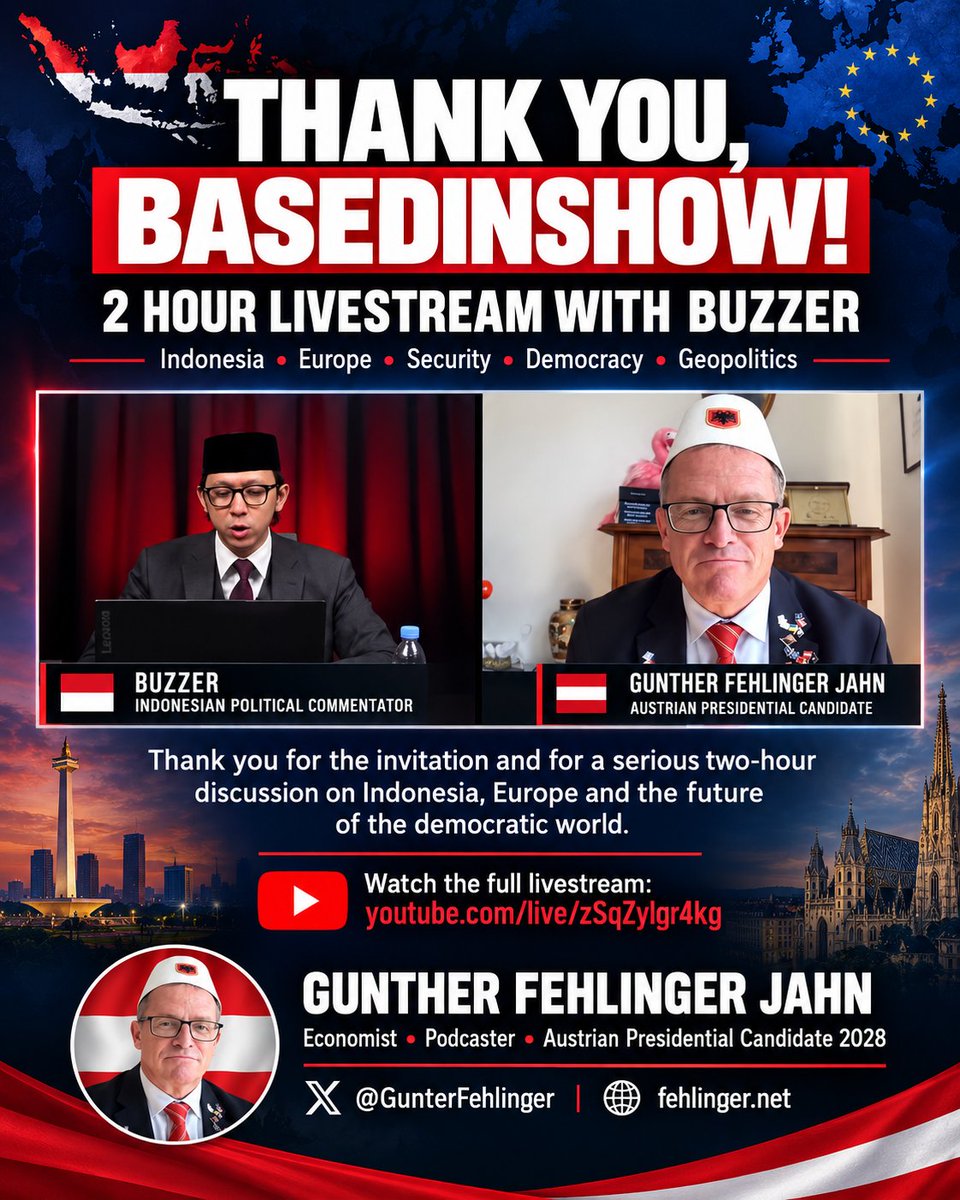
Gunther Fehlinger-Jahn 2w

Two hours live with Buzzer of Indonesia / @BasedInShow — a serious and wide-ranging conversation about Indonesia, Europe, NATO, Ukraine, Russia, the future of the democratic world and why Europe must build much stronger partnerships with Indonesia and the wider Indo-Pacific. https://t.co/3sUxnJvJrV #Indonesia #Europe #NATO #ID #EU #UA #RU

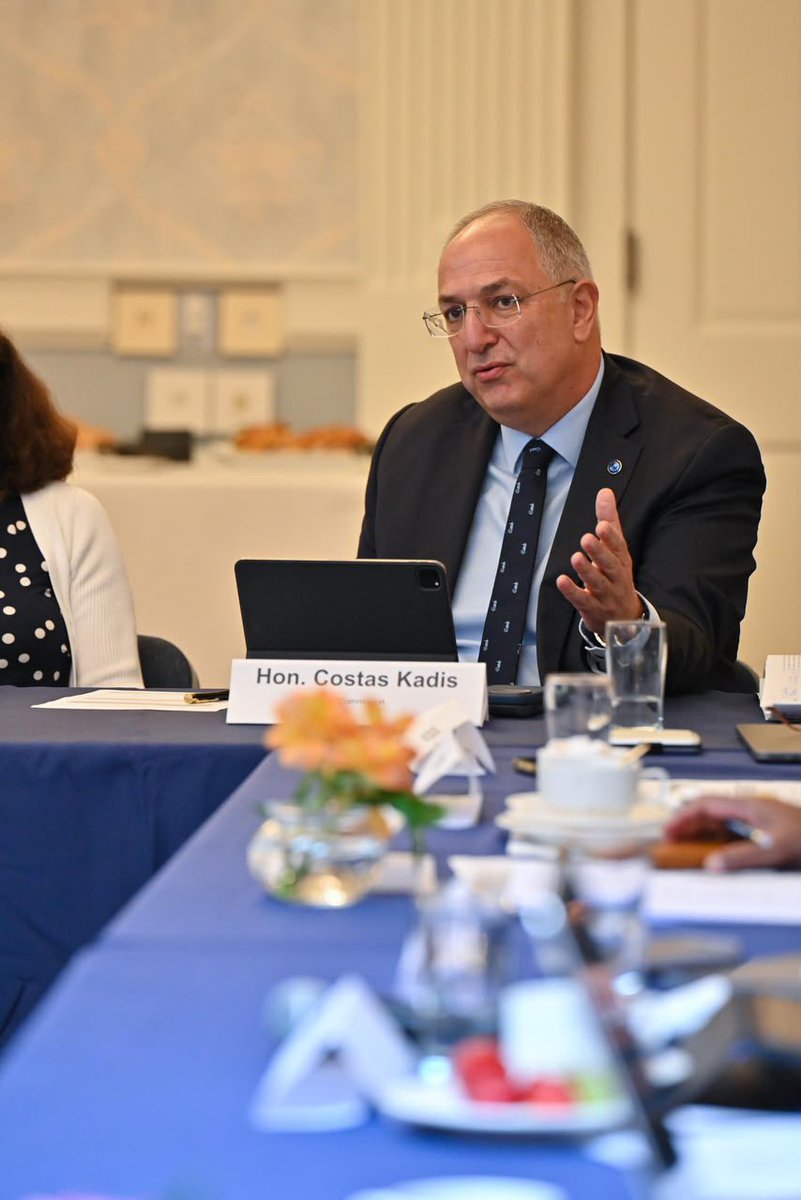
Costas Kadis 3w

We are decisively laying out the pathway for ocean-climate outcomes at the forthcoming COP31. At the #UNGA81 High-Level meeting on Accelerating Blue Climate Solutions I made clear that only through multilateral cooperation and strong partnerships will we be able to address the https://t.co/g58ng7pHwQ #OceanClimate #COP31 #BlueClimateSolutions #Thetweetdoesnotmentionanyspecificcountries #sotherearenocountrycodestoreturn.

Dubravka Šuica 3w

In New York for #UNGA81. 🇺🇳 At a time of major global challenges, dialogue and cooperation matter more than ever. This week, I am working with our @UN and international partners to advance peace and stability, strengthen our partnerships across the Mediterranean and the Gulf, https://t.co/TYdxcCU3F8 #UNGA81 #GlobalChallenges #PeaceAndStability #US #UN

116
Ursula von der Leyen 4w

We want to bring the relationship with Canada to the highest level possible. And dear Mark, I said we must urgently reimagine our partnerships. So I would like to work with you on opening the door for Canada to being the first associate member of the European Union.

O CANADÁ ESTÁ A CAMINHO DA UNIÃO EUROPEIA?
observador.pt
15785
Jozef Síkela 4w

In her SOTEU address today, President @vonderleyen described a Europe that has chosen its own path and is growing stronger and more independent. Strong, strategic partnerships are a big part of that path. Here is what that means in practice. https://t.co/kx6vonB2w3 #SOTEU #EUIndependence #StrategicPartnerships #EU

116
Gunther Fehlinger-Jahn 4w

SOTEU 2026 🇪🇺 @vonderleyen Europe’s defence and strategic independence are at the centre of this year’s State of the Union. The Commission highlights stronger European defence, continued support for Ukraine, reduced strategic dependencies, global partnerships and protection of https://t.co/MWJroiHePf #SOTEU2026 #EuropeanDefence #UkraineSupport #EU #UA

Henna Virkkunen 4w

Security, Ukraine, competitiveness, trade and partnerships, and safer online spaces for everyone. Tune in on Wednesday at 9 AM as President @vonderleyen delivers her State of the Union address, setting out concrete steps to shape Europe’s future. https://t.co/8ubyqORX9A https://t.co/ilbE42aCGc #Ukraine #Security #EU2023 #UA #EU

116
Luciano Magaldi Sardella (PhD) Sep 5

What was the first Social Network in History? In Italy: Dada or InterNetWork City? SOURCE: https://www.linkedin.com/pulse/what-first-social-network-history-italy-dada-city-sardella-ph-d--ngw2f/ When discussing technological primacy, historical precision is fundamental. Particularly when too many narratives from the web risk generating confusion. Contenuto dell’articolo Abstract This article critically analyses contemporary narratives on the origin of social networks, distinguishing between journalistic reconstructions and academic historiography. It clarifies that platforms such as Internetwork City and Dada/SuperEva, whilst innovative, cannot be defined as "first Italian social networks" according to criteria recognised by international research. The text reconstructs the genealogy of social media from early digital communities (Usenet, BBS) through to modern social networks, highlighting the anticipatory role of systems such as Plato. Finally, it demonstrates how certain Italian publications have attributed primacy unsupported by historical sources, underlining the necessity for a rigorous and documented approach. Keywords: digital historiography, Italian proto-social platforms, Internetwork City, Dada/SuperEva, origins of social networks In recent years, various narratives have circulated regarding the origin of social networks, some of which attribute primacy to projects that, while innovative, do not correspond to the effectively documented chronology. To reconstruct with precision the history of global social networks, it is necessary to begin with academic sources and verifiable testimonies, excluding retrospective reconstructions devoid of historical corroboration. But first and foremost, let us provide an encyclopaedic British definition: social media constitute a form of communication on online platforms through which users share information, ideas, personal messages and other textual and audio-visual content. This should not be confused with social networking, that is to say, the modalities by which Internet users construct virtual communities amongst themselves by sharing their textual and audio-visual content; social media, conversely, concerns web-based platforms that enable one to build a friendly, familial and professional audience. The earliest forms of social media appeared almost as soon as technology could support them: electronic mail and chat programmes débuted in the early 1970s, but the first virtual communities did not emerge. They did not emerge until the creation of the Usenet discussion group network in 1979: these permitted users to post and receive messages within thematic areas called newsgroups. Usenet and other discussion forums, such as privately hosted Bulletin Board Systems (BBS), allowed individuals to interact, but each was essentially a closed system. With the release in 1993 of the Mosaic web browser, those systems were provided with an easy-to-use graphical interface. Furthermore, the architecture of the World Wide Web made it possible to navigate from one site to another with a click, and faster Internet connections permitted richer multimedia content than that which could be found in text-heavy newsgroups. The First Modern Global Social Network: SixDegrees.com Contenuto dell’articolo As the prestigious Encyclopaedia Britannica cites, the first globally known companies to create modern social networks based on web technology were Classmates.com and SixDegrees.com. Between these two, in truth, the academic community and historians of digital media concur in identifying SixDegrees.com as the first true modern social network: it was the first to introduce the fundamental characteristics that would define the sector: personal profiles, friends lists and an integrated private messaging system. Indeed, Classmates.com, founded earlier in 1995, employed an aggressive advertising campaign with pop-ups to attract web browsers to its site based upon connections between students from secondary school and/or university classes, branches of the armed forces and places of work. SixDegrees.com was launched after it, in 1997, but with most of the functionalities that would characterise such social networks: members could create profiles for themselves, maintain friends lists and contact one another through the site's private messaging system. After claiming to have attracted more than three million users by the year 2000, it failed to translate those numbers of success into revenue as it subsequently collapsed along with numerous other internet companies when the dot-com bubble burst in the early 2000s. The First Italian Social Network: Which One? Contenuto dell’articolo In recent years, a widespread narrative has emerged on the web according to which the first Italian social network would have been Internetwork City, a project born in May 1995 from the intuition of Claudio Cecchetto with the technical guidance of Perl and Java programmer Marco Camisani Calzolari. Other sources from the websphere (the totality of all globally accessible websites) narrate of the Dada/SuperEva group as the first Italian social network. In the first case, it was certainly, for the era, a story of radio and digital innovation made in Italy: in this interview with Giornalettismo from 29 June 2022 given to Gianmichele Laino (https://www.giornalettismo.com/marco-camisani-calzolari-internetwork-city/), Internetwork City is defined as the "first social network in history made in Italy". Contenuto dell’articolo And reading further, the interviewee, Marco Camisani Calzolari, a contract university lecturer and radio-television communicator on digital themes, states: "In May 1995, in a basement in Via Melzi D'Eril, a truly revolutionary idea was being born. Behind it was the intuition of Claudio Cecchetto and the guidance of Marco Camisani Calzolari: Internetwork City is the first social network in the world, a space within which users managed to interact, in an era when the network was a place where possibilities for interchange were still a futuristic eventuality." And whilst in the pioneering basement of Via Melzi D'Eril in May 1995 Internetwork City was being born, perhaps unbeknownst to its inventors, in January 1995, a full four months earlier, DADA (Design Architettura Digitale Analogico) had already been born, another entirely Italian social network, founded by four young Florentine architects (Paolo Barberis, Alessandro Sordi, Jacopo Marello and Angelo Falchetti), as one reads on the ZeroUnoWeb portal. The four Florentine friends transformed their architecture studio into a company in which Barberis and Sordi drew in the other two entrepreneurs, spending all their savings on the purchase of computers and multimedia equipment. It was not simply a matter of creating yet another web portal but a true digital ecosystem that anticipated many functions of contemporary social networks: profiles, communities, interaction and shared content. This narrative of DADA, however, is "once again refuted" if we read the journalistic article in La Repubblica of 27 May 2021 bearing the signature of journalist Riccardo Luna, entitled "In Milan, Claudio Cecchetto (and Marco Camisani Calzolari) launch a social network," readable by clicking the following link: https://www.repubblica.it/tecnologia/2021/05/27/news/a_milano_claudio_cecchetto_e_marco_camisani_calzolari_lanciano_un_social_network-302961639/ Contenuto dell’articolo The subtitle echoes: "It was the first social network in history and it was born in Italy. And in 1995 the web had practically only just been born," in addition to "In May 1995 the first social network in history was born and it was born in Italy. Perhaps the first. Who knows. But if one considers that Facebook is from 2004, Second Life and MySpace from 2003, one understands perfectly well the enormity of what I have just written. In 1995 the web had practically only just been born." But here, strangely, the discourse is not entirely clear: if in the subtitle one asserts decisively "it was the first social network in history," why does one then read: "Perhaps the first. Who knows." It seems to me a contradiction, quite frankly. But let us leave the arduous decisional task to impartial readers. Therefore, let us proceed with the rest of the article: "In the meantime, in Italy someone constructs a social network. Who? Claudio Cecchetto. Yes, him, the author of Gioca Jouer, the inventor of Radio Deejay and of another way of making radio. He was also a pioneer of the Internet. In May 1995 he launches a social network called Internetwork City, the city of the Internet network. It had been built, one line of code after another, by a young programmer who, thanks to this story, would become a brilliant communicator of digital matters (for some time he has been one of the faces of Striscia la Notizia): Marco Camisani Calzolari. When he thinks back to those times, MCC becomes enthusiastic: 'It was a social network in every respect. A place where one could register, have a profile and speak with others. It was one of the first in the history of the web, and Claudio Cecchetto had invented it. He had conceived it whilst navigating with Videotel, but then the World Wide Web had arrived. At the time I worked as a programmer for a fashion company: I had learnt to do it by downloading the instructions for writing code in Perl and in Java from the BBSs that were on the network'." Contenuto dell’articolo From this it emerges that the idea for the project was supported by the media personality of Claudio Cecchetto and brought to fruition by programmer Marco Camisani Calzolari: the two pioneers of the Italian web have (also in this journalistic article) confirmed how InterNetwork City was, in their opinion, the first social network in the world created precisely in the Belpaese. But will this be objectively and impartially true according to the historical historiography of Internet history? To ascertain this, we must analyse academic historiographical sources: these lead us back to the surprising computational history of a great (and semi-unknown) precursor of social networks present as early as the 1960s and 1970s: Plato. PLATO: The Precursor of All Social Networks in the World Contenuto dell’articolo PLATO (Programmed Logic for Automatic Teaching Operations) represents one of the most fascinating cases of anticipatory technology in the history of computing: developed at the University of Illinois at Urbana-Champaign from 1960 by Donald L. Bitzer, this system initially had purely didactic purposes, but evolved rapidly, becoming a true digital social ecosystem decades before the advent of the Internet as we know it. It introduced the concept of "Personal Notes" in 1973, a system of forums organised by subject where users could post messages, reply and create structured discussions. This anticipated by over twenty years web forums and Usenet newsgroups in accessible form. The "Talkomatic" system, created in 1973 by Doug Brown, permitted simultaneous conversations between multiple users in separate channels. Each user saw the letters of other participants appear character by character as they were typed, creating an unprecedented immediate communication experience. "Personal Notes" functioned essentially as an internal email system, permitting private communications between system users, with storage and reply capabilities. Users could create "term-talk," personal messages visible to others, sharing thoughts, updates or information: a conceptual precursor of modern social media posts. Plato was not merely technology: it was a true community. Thousands of users, primarily university students, teachers and researchers, connected through dedicated terminals with characteristic plasma screens: To play: it hosted some of the first multiplayer video games in history, such as "Empire" (a precursor of space games), "Moria" (one of the first dungeon crawlers) and "Airfight" (multiplayer aerial combat). To socialise: friendships, romantic relationships and communities formed around shared interests. To collaborate: study groups, research projects and academic discussions flourished on the platform. Despite its innovative capabilities, Plato remained confined principally to the academic environment and to certain business applications for several reasons: Plato terminals were extremely costly and the system required powerful mainframes; and unlike the Internet, it was a closed system, centrally controlled; dedicated terminals or specialised connections were required, not available to the general public; and whilst the Internet developed on open protocols, Plato remained an isolated ecosystem. In conclusion: even though the unknown Community Memory (1973) preceded Plato as a publicly accessible social system but with more limited functionalities, Plato had social functionalities as early as 1973. It was the first true precursor of modern social networks, but in a technological context that was solely academic, not mass-market, owing to prohibitive costs and the extremely rare and extraordinarily slow computer connections of those years. Therefore, all the first prototypes and first social networks born from the 1990s onwards (including the Florentine project Dada/SuperEva and the InterNetwork City of Claudio Cecchetto and Marco Camisani Calzolari) reinvented the same concepts in a technological and economic context that permitted their planetary diffusion shortly before the advent of the new millennium. Now, given that we live in a context of great development of large language models upon which artificial intelligence is based, just out of curiosity, I shall ask Microsoft's chatbot, Copilot (in my opinion, the most reliable to date) what it thinks about the journalistic narrative of Giornalettismo and La Repubblica in favour of InterNetwork City; therefore, this is my question: "Is it correct to assert, impartially, that Internetwork City of Cecchetto and Camisani Calzolari was the 'first social network in history Made in Italy'?" The answer emerges from the following photographs. Contenuto dell’articolo Contenuto dell’articolo I now report word for word the text generated by the large language model (LLM) Copilot: "Here is the most balanced and rigorous answer that can be given today, based on available sources and digital historiography. Is it correct to define it as 'first social network in history Made in Italy'? 🧭 Brief answer No: it is not correct to assert it impartially as an ascertained historical fact. It is, however, correct to say that certain publications and certain protagonists of the era present it as such, while the academic community and international historiography on social networks do not recognise Internetwork City as 'first social network in history'. 🔍 What the sources say The Italian journalistic sources consulted present Internetwork City as: "the first social network in the world" (Giornalettismo) "the first social network in history and it was born in Italy... perhaps the first. Who knows." (La Repubblica) "the first social network" (Giornalettismo) These are, however, journalistic narratives, not historical classifications shared by international research. 🧠 Why it is not possible to assert it as an impartial historical fact To be recognised as 'first social network in history', a project must satisfy criteria shared by the scientific community, for example: technical definition of social network (user profile, network of contacts, persistent interaction, user-generated content, etc.) international academic recognition verifiable technical and historical documentation comparison with previous platforms (e.g. The WELL, 1985; Usenet, 1979; Minitel, 1982; GeoCities, 1994) Internetwork City does not appear in any international academic taxonomy of social networks, nor in reference works on the history of the web. The sources that define it as 'first social network' are interviews, popular articles and narrative reconstructions, not historical studies. 📌 What can be correctly asserted An impartial and accurate formulation could be: Internetwork City (1995), conceived by Claudio Cecchetto and developed by Marco Camisani Calzolari, is one of the first Italian experiments in interactive online community. Certain journalistic publications have described it as 'the first social network in history Made in Italy', but this definition is not recognised by international historiography on social networks. This sentence is balanced, truthful and does not attribute undemonstrable historical certainties." In summary: in the impartial opinion of Microsoft Copilot, the assertion according to which InterNetwork City "was the first social network in history and was born in Italy" is enunciated only as a journalistic narrative but has no corroboration in reality whatsoever, not being in any way supported by international academic historiography of the history of social networks. Now, however, other articles taken from websphere publications assert that the first (and true) Italian social network was, instead, conceived and created by the Dada group and subsequently through SuperEva in January 1995, anticipating by four months the aforementioned Milanese InterNetwork City. But let us read it all directly in the StartUp Italia article bearing the signature of writer Aldo V. Pecora, which I shall report from this link: https://startupitalia.eu/education/scuola/quando-prima-di-facebook-4-italiani-avevano-inventato-un-social-network-la-storia-di-dada-e-di-supereva/#:~:text=Alla%20base%20di%20questa%20visione,il%20valore%20aggiunto%20del%20sito. Contenuto dell’articolo "When Zuckerberg was still at college there were those who, in Italy, had already invented social networks. A story, that of SuperEva and, above all, of those four 'madmen' of Dada, that would truly deserve a film. A story that we today attempt to recount by making a leap backwards of twenty years, whilst those who wrote it, or rather, designed it, had with every evidence made a journey into the future. Dada, the Martians come from the future The 'back to the future' of Paolo Barberis and Alessandro Sordi begins in the early 1990s, as young students at the University of Florence. It is 1992 when they decide to go before the examination board without even a sheet of paper, a drawing, nothing. Only a computer and a multimedia project, one of the first in Italy and perhaps in Europe developed in 3D. 'The board remained closeted for over an hour — recalls Sordi today — and we didn't know whether shortly thereafter they would send us packing.' Instead it was a success and the beginning of an adventure. Barberis and Sordi involve two other friends, Jacopo Marello and Angelo Falchetti, spend all their savings on the purchase of PCs and multimedia equipment and together open an architecture studio: Dada, acronym for Design Architettura Digitale Analogica. How Dada connected Florence to the Internet Year 1995. Things change. Dada becomes a limited company: 20 million initial investment (the computers purchased for the architecture studio). And the project of creating a multimedia city, Florence, becomes that of bringing the city online. Few know it, but it was precisely Dada that connected the Tuscan capital to the Internet. ADSL and so-called broadband connections did not yet exist. What years, those years. Whilst Alessandro Sordi reviews them, on the telephone he betrays a little emotion: 'Commercial internet was beginning, the first nodes in Rome and Milan, but in Tuscany there was nothing. We decided to purchase the cable and brought the first CDN to Florence.' It is the era of providers, or rather, ISPs, and anyone who manages to make a client dialogue with a server can sell dial-up connection services. Sordi and partners involve family and friends. Everyone does everything: Barberis answers the telephone and provides help desk support, the others concern themselves with making professionals and companies understand the potential of the Internet and sell annual subscriptions at 249 thousand lire. The web that found (and changed) Dada These are the years of a single browser, Netscape Navigator. It was conceived by that same Marc Andreessen who today can be called literally papa by people like Zuckerberg and half of Silicon Valley. It is web 0.0, that before Google, where the search engines are Lycos, AltaVista, Yahoo. In Italy for a couple of years a gentleman from Cagliari by the name of Nichi Grauso, founder of Video On Line, has been putting tremendous amounts of money into the Internet, whilst in Milan Marco Negri and Stefano Quintarelli launch I.Net and Joy Marino ITNet. The national telephone company, SIP, is reborn under the acronym Telecom Italia. A monopoly that begins to creak with the launch by Olivetti of Italia Online and, above all, of the first Italian search engine, Arianna, which will soon find itself duelling with Virgilio, the first creation of the Matrix of Paolo Ainio, Carlo Gualandri and Marco Benatti. Dada understood before others in which direction the web would go. 'From there a business model was born — recounts Sordi — because the provider collected network subscription fees in advance and we used that money to finance research on web services, something that was science fiction for those years.' 'One world alone, one network alone' Science fiction that was the fortune of the group of Tuscan architects. After a year turnover rises to 500 million and Barberis's company delineates the future of the web: content and, above all, community. On the Internet there are not only professionals and companies but people, who begin to use it daily and to focus on groups, first in mailing lists and newsgroups, but shortly thereafter also on websites. Dada intuited before others that there is a market, certainly formless, like water, but immediately monetisable, thanks to advertising. A large public company, SMA 2002, enters the capital of the Florentine company, and together the two entities found one of the very first Italian advertising concessionaire companies entirely focused on the Internet. 1997: Dada's phase 2 begins. The government passes new communications regulation and the Florence provider obtains authorisation to scale its core business of Internet access across the entire national territory. Sordi recalls, smiling. These are the years in which one thinks of monetising another business, that of so-called 'housing'. In the meantime, someone already has his head in the future. It is Paolo Barberis, who imagines a network where beyond computers being connected, people above all can be connected amongst themselves. 'I had something of a mania for putting things in the right place with respect to the order they would have in the future,' he tells us. An order that according to Barberis passes through the 'desk metaphor'. 'Many years ago — he recalls — it was clear to me that soon we would move from our desktop, with file management, archive, rubbish bin et cetera towards a map. What today we call "map as a service". We started from connectivity but then gave services, and as architects we wanted to construct the new places. Design the house imagining the use that must be made of it every day, how many people will pass through it, with attention also to the smallest particular, to individual objects. Those who design must focus, because a house must be beautiful but must above all make us live well and better.' From SuperEva to the Stock Exchange At the base of this vision the birth, in 1999, of a website that would make the history of the Italian web: SuperEva. The first embryo of Dada's portal comprised a search engine and the famous guides, which would become the backbone and added value of the site. Because, as always, the true novelty at the beginning of every great experience is camouflaged in a little corner. Through the guides, Dada begins to create thematic micro-communities that stand thanks to advertising. From there onwards Dada will begin to churn out millions upon millions. Of euros and no longer of lire. The Dada ecosystem counts more or less one-fifth of Italian web traffic, has consolidated its own technological asset and encounters various investors along its path: 'Today we would call them angels — says Sordi — but at the time they were enlightened entrepreneurs.' It is they who will help the Tuscan company take the great step: the Stock Exchange. It is 29 June 2000 when Dada SpA is listed on the Nuovo Mercato index of Piazza Affari. An injection of liquidity that brings tens of millions into the coffers of the Florentine internet company. In a few months the employees become 400, and there is almost no longer room to keep them all, in what was once the headquarters of Libreria Cima. Meanwhile, Barberis & Co. also begin to keep an eye on the foreign market, searching for partnerships to internationalise. Always keeping their feet on the ground. It survives (magnificently) the dot-com bubble 'At the time — recalls Alessandro Sordi, who in Dada was Vice President — they told us "spend everything, spend everything immediately". The tendency was to spend all the money that the stock exchange had given you. We were prudent but at the same time aware that we should not buy to satisfy the stock exchange.' And they did well, because shortly thereafter the so-called dot-com bubble would burst, which saw illustrious giants like Cisco lose in one blow something like 86% of their own value. In parallel, many Italian ISPs were forced to close their doors, crushed by Telcos, which in the meantime took control of the connections market, sweeping away with one stroke of the sponge the 'old' dial-ups in favour of broadband. Few know, however, that there was also a gift that Dada had given to all employees: stock options. They were given to all, but truly all, from secretaries, to developers, to graphic designers, to sales. Today for startups they are called equity; at the time the options of quoted companies like Dada were real money. From provider to internet company But the vision, the maniacal passion for the creation and consolidation of vertical communities and the development of a second asset dedicated to B2B services allow Dada to sleep soundly. Sordi recalls: 'In large companies the concept of pivot is not a rigid thing. It was very natural to ask oneself daily "what is the best thing to do today".' Because it is a large startup where things happen, before others. And where you can make them happen. If the BlackBerry arrives in Italy, for example, it is thanks to them, who had direct contacts with RIM as well as with the greatest tech companies in the world. The startups conceived by employees They experiment, they have fun, and greatly so. They launch themselves into the market of paid services (music, ringtones, WAP), which will become the third pillar of the new Dada, and constitute a small internal incubator, Dada Lab: 'We didn't know it was called an incubator. Every six months we set up a process where employees could propose new ideas. Pitches were made but they weren't called pitches. We decided to carry forward the best project,' recounts Sordi. Projects that, once launched, were followed scrupulously: 'We received an hourly email, with the metrics of all the business models. There were systems hooked to the models that recorded every hour. In short, a sort of automatic Analytics that informed us constantly and in real time of the progress of individual projects. Something that we maintain today, albeit in different form (monitors attached to the walls, editor's note), in Nana Bianca.' The Dada ecosystem, recounted by those who lived it We are in the middle of the first decade of the 2000s. At that time Dada experiences the epoch of maximum splendour. It enters the digital asset of the RCS Group, and acquires various startups and companies, such as Register.it, the first Italian registrar, the Wireless Solutions of Massimo Ciociola (now CEO of Musixmatch), free hosting communities like Freeweb.org and then the Clarence portal, and then the first Italian blog platform, Splinder, the Blogo network and so many other companies that, all together, will compose the galaxy of the Dada Group. It is the startup that becomes increasingly 'a platform from which to launch services. There were people of great talent, with whom you enjoyed working, stimulating changes,' recalls Paolo Barberis, who when he goes back with memory transmits even telephonically a mixture of emotions between nostalgia and pride: 'Marco Argenti, who in Seattle at Amazon is head of AWS mobile, Amazon's store, Max Pellegrini, now head, in New York, of mobile entertainment at Real Networks (those of the noted Real Player, editor's note), and then again Antonio Tomarchio (founder of Beintoo), Francesca Lerario, Mariano Di Benedetto, Roberto Barberis (now CEO of 4W), Filippo Satolli (COO of Instal.com), Stefano Sordi (marketing director of Aruba), Carlo Meglio (CEO of Moqu Adv), David Casalini...' Disclaimer: David Casalini, a name that is not new to us at Startupitalia, given that he is also our publisher. At this point a telephone call with him is obligatory. 'I was 23 years old when I arrived at Dada,' recalls Casalini. 'I was truly in another world: I had my office in Empoli, which for me was already the office of a lifetime, a 16th-century tower with my beautiful Linux server... The dream of my life was to be able to run the Empoli provider (Empoli Net, editor's note).' Then, one day, the telephone call from Angelo Falchetti arrives. 'In short order I found myself managing a team of 30 people. All talents with whom working was a spectacle. Dada was doing what today startups are not doing; it grew continuously, 40–50–60 million. There was a moment in which Dada was hiring people all over the world, like Brian Buschmann, who today is head of the UX unit of Gucci.' David is truly a torrent in flood, he begins to reel off on the telephone (and then on Messenger) a series of names and anecdotes that becomes truly difficult even to manage to note down, let alone recount them all. When Dada was truly scaling, in the USA Much abroad, USA, above all. In 2005 Dada had already consolidated for at least a couple of years what without fear of contradiction can be considered the first Italian social network, amongst the largest in Europe: Incontri di SuperEva, a community for lonely hearts with 2 million members, when the various Facebooks and, above all, Tinder did not yet exist. Social networks are discussed, and we have proof in the slides (see above) that Marco Argenti and Paolo Barberis will bring to Dada-Day 2004 and 2005. Precisely when, across the ocean, an unknown Harvard student by the name of Mark Zuckerberg was attempting to explain, to an empty hall, a website called The Facebook. And again through Dada passes one of the first experiments in competition with iTunes and iPods. A joint venture, in the United States, with Sony: 'Dada US — recalls Barberis — made a merger uniting its own mobile assets with those of Sony.' A deal that generated turnover only in the USA of something like 100 million dollars. The Dada model: 'design it as if you were already living it' The former twenty-year-olds of Dada, in short, had become adults and seemed almost to transmit the idea of being a group of Martians come from the future: 'I believe — recalls Barberis — that our difference with respect to that historical moment lies in what then consolidated itself in the broader reasoning of design thinking: having answers in the short term, whilst you are executing things, with visionary work. Imagining how the world will be in a few years and trying to design it as if you were already living it. Making certain, in short, that things respond to a vision and do not remain circumscribed to something imminent and nothing more. A bit like making the digital agenda today: you can set yourself the objective of 10 things to do, or else first imagine how the country will be in 10 years and then begin to do things, to create the conditions that will take you there.' However, like every most beautiful love story, that of Dada with its founders will also end. From the progressive farewell of those who had given it birth to the sale to the Buongiorno group, passing through the dismemberments of the various assets. Thus it happens that, by a strange trick of fate, today what remains of SuperEva coexists under the same roof as historical competitors like Virgilio and Libero, reunited in the new Italiaonline galaxy. But that is another story. Now, for intellectual objectivity, I shall pose the same question that I posed earlier to Copilot, but regarding the Florentine narrative of Dada/SuperEva: "Is it correct to assert, impartially, that Dada/SuperEva was the 'first social network in Italy'?" The answer emerges from the following photographs. Contenuto dell’articolo Contenuto dell’articolo I now report word for word the text generated by the large language model (LLM) Copilot: "Here is the most balanced, rigorous and historically founded version of the answer — with punctual citations to the sources you requested. Is it correct to assert, impartially, that Dada/SuperEva was 'the first social network in Italy'? 🧭 Brief answer No: it is not correct to assert it as an objective historical fact. It is, however, correct to say that certain journalistic sources and communications of the era presented SuperEva as a 'social network', but international historiography and academic studies do not classify it as such, nor as 'first Italian social network'. 🔍 What the sources say The available sources show two levels of narrative: 1. Journalistic and corporate narrative (post-2004) In 2004 a Marketpress communiqué announced: 'The social network lands in Italy: it is called SuperEva.com and bears the Dada marque' This is a communicative and promotional definition, not a historical classification. StartupItalia, in an article from 2016, recounts the story of Dada and SuperEva as Italian pioneers of the social web, but in narrative tone: 'When Zuckerberg was still at college there were those who, in Italy, had already invented social networks.' Here too: narrative, not historiography. 2. Historical and academic sources International historical reconstructions of social networks (Boyd & Ellison, 2007; History of the Web; Internet Histories) do not include SuperEva amongst the foundational social networks. Furthermore, Dada itself — in corporate reconstructions — describes SuperEva as: • a portal • a community • a content aggregator • a system of personal spaces and web services but not as a social network in the technical sense (profile, network of contacts, feed, structured interaction). Example: ZeroUno defines Dada as 'the most important Italian player for communities and social networks', but referring to the subsequent period and to the overall ecosystem, not to SuperEva as 'first social network'. 🧠 Why it is not correct to define it as 'first Italian social network' To be recognised as such, the following would be required: • technical criteria (profile, explicit social network, feed, internal messaging, declared relationships) • academic recognition • comparison with previous platforms (Clarence, 1996; C6, 1997; Digiland, 1999; Italian IRC and BBS communities already active from the 1980s–1990s) SuperEva does not satisfy these criteria and is not recognised as 'first Italian social network' by any academic or historical source. 📌 What can be asserted in an impartial and correct manner A balanced formulation could be: SuperEva (1999), developed by Dada, was one of the largest Italian portals and communities of the era. Certain journalistic sources and corporate communications presented it as a 'social network', but this definition is not recognised by international historiography nor can it be considered, in the technical sense, the first Italian social network. This sentence is accurate, documentded and does not attribute unsupported historical certainties." In summary: neither the Dada/SuperEva project nor InterNetwork City can be individually classified as "the world's (or Italy's) first social network", given that precursors to such platforms already existed, such as the aforementioned case of PLATO in the 1970s. Moreover, internet history confirms that Dada.it (1995) and SuperEva (1999) came to serve over 30 million private users and 500,000 companies across 11 countries: SuperEva became a veritable "mythical place" of the Italian web, one of the first major communities in the Bel Paese, while Dada transformed into a multinational corporation listed on the Stock Exchange from 2000 to 2018. Conversely, InterNetwork City (1995), created by Marco Camisani Calzolari with Claudio Cecchetto, remained a pioneering, experimental project, without a diffusion comparable to the major portals that followed, and never achieved the scale or notoriety of SuperEva. In this context, finally, we return to the matter of official digital historiography and the international academic taxonomy of social networks, which have never officially recognised the respective journalistic/corporate narratives that we have sought to document impartially in this article. In conclusion, at the international academic and digital historiographical level: The first social network in the pioneering computing history of the 1960s–1970s was Plato. The first modern social network was SixDegrees.com. In Italy in the 1990s, both InterNetwork City and Dada/SuperEva can be defined as the first two pioneering experiments of the Italian social web (of precocious, innovative and anticipatory nature in the Belpaese), whilst not being recognised by international historiography as 'true and proper social networks' in the modern sense.

www.linkedin.com
What was the first Social Network in History? In Italy: Dada or InterNetWork City?
1051
Ebba Busch Sep 3

Nya avtal för mer kärnkraft! Idag träffade jag Studsvik och deras amerikanska och sydkoreanska partners som nu går vidare med utvecklingen av fyra nya reaktorer – totalt 1 200 MW kärnkraft i Sverige. Ett viktigt kvitto på regeringens arbete för ny kärnkraft och våra fördjupade samarbeten med USA och Sydkorea, inklusive Technology Prosperity Deal. Nu går vi från ord till handling, från planer till konkreta projekt. För Sverige ska inte bara ha en stolt kärnkraftshistoria. Vi ska ha en stark kärnkraftsframtid. Så bygger vi Sverige starkt. ————————————————— New agreements for more nuclear power! Today I met with Studsvik and their American and South Korean partners as they move forward with plans for four new reactors – adding a total of 1,200 MW of nuclear capacity in Sweden. This is a strong vote of confidence in the Government’s work to pave the way for new nuclear power – and in our growing partnerships with the United States and South Korea, including through the Technology Prosperity Deal. We are moving from words to action. From plans on paper to real projects on the ground. Sweden should not only be proud of its nuclear past. We are building a strong nuclear future. #Kärnkraft #Sverige #Energi

13331
Gunther Fehlinger-Jahn Aug 12

No joint venture with the Islamic Republic of Iran. President Trump, this is the wrong strategy. The Islamic Republic must not be rewarded with new revenues, international legitimacy, commercial partnerships or any joint venture connected to the Strait of Hormuz. Our objective #Iran #StraitOfHormuz #Trump #IR

O
Oberlé Daniel Aug 12

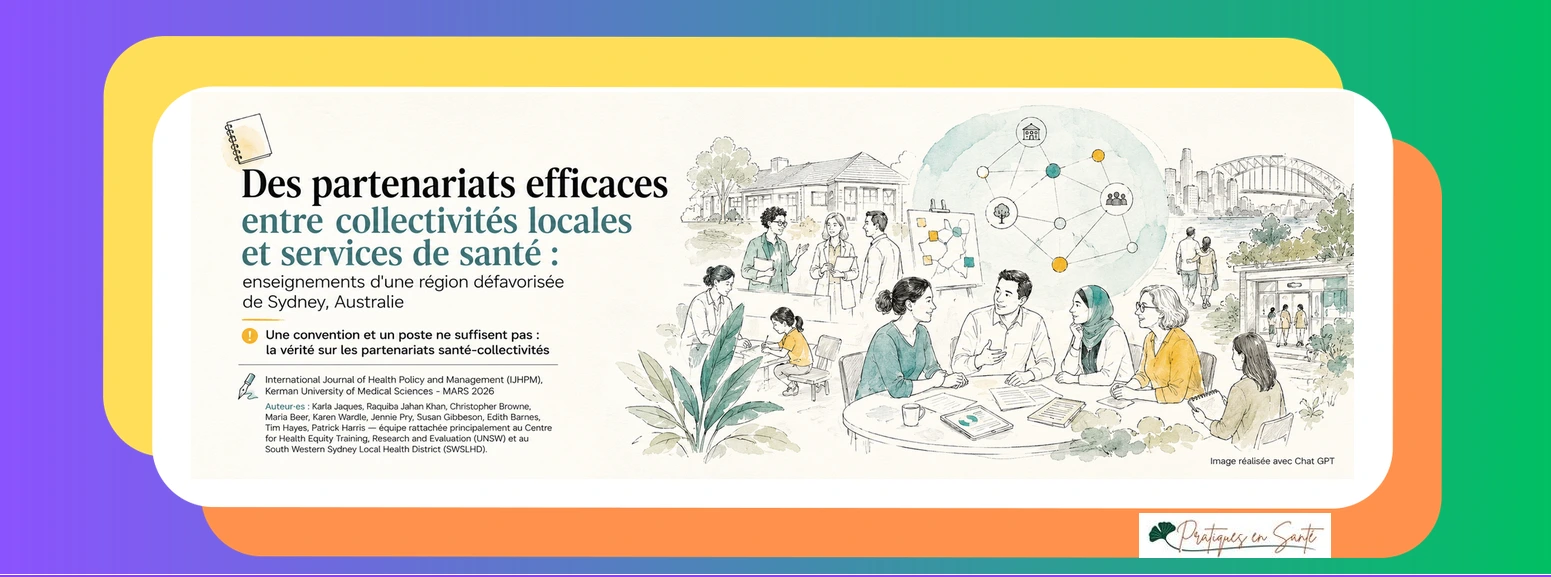
🚨 Une convention et un poste ne suffisent pas : la vérité sur les partenariats santé-collectivités 📒 Des partenariats efficaces entre collectivités locales et services de santé : enseignements d'une région défavorisée de Sydney, Australie ✍️ International Journal of Health Policy and Management (IJHPM), Kerman University of Medical Sciences - MARS 2026 Auteur·es : Karla Jaques, Raquiba Jahan Khan, Christopher Browne, Maria Beer, Karen Wardle, Jennie Pry, Susan Gibbeson, Edith Barnes, Tim Hayes, Patrick Harris — équipe rattachée principalement au Centre for Health Equity Training, Research and Evaluation (UNSW) et au South Western Sydney Local Health District (SWSLHD). Capsules Audio de Pratiques en Santé 🎙️🎥 https://www.pratiquesensante.com/blog/pratiques-15/des-partenariats-efficaces-entre-collectivites-locales-et-services-de-sante-enseignements-d-une-region-defavorisee-de-sydney-australie-6115 🔍💡 Partenariats santé-collectivités : quatre cas australiens révèlent que la convention et le poste dédié sont des points de départ, pas des garanties. Sans portage politique durable ni financement stable, le maillon se fragilise. 🧩 Des leçons directement transposables aux CLS et démarches intersectorielles. Analyse de Pratiques en Santé et lien vers la source ℹ️➕ https://pmc.ncbi.nlm.nih.gov/articles/PMC13338731/pdf/ijhpm-15-9045.pdf 📌 Ce document décortique, à partir de quatre partenariats réels, ce qui fait tenir — ou vaciller — une collaboration structurée entre une collectivité et un service de santé. Il ne s'arrête pas au « il faut travailler ensemble » : il montre qu'une convention formalisée et un poste dédié sont nécessaires mais insuffisants sans portage hiérarchique, plans de travail partagés et temps long. Pour quiconque anime un CLS, un ASV ou un projet « santé dans toutes les politiques », c'est un miroir précis des mécanismes concrets (financement croisé, statut du poste, turnover, cloisonnements sectoriels) et un argumentaire solide pour pérenniser les fonctions de coordination. 🇬🇧: Effective partnerships between local councils and health services: lessons from a disadvantaged region of Sydney, Australia - https://www.pratiquesensante.com/en/blog/practices-15/des-partenariats-efficaces-entre-collectivites-locales-et-services-de-sante-enseignements-d-une-region-defavorisee-de-sydney-australie-6115 #️⃣ #Intersectorialité #SantéDansToutesLesPolitiques #ContratLocalDeSanté #DéterminantsDeSanté #UrbanismeFavorableSanté #GouvernanceTerritoriale #ÉquitéEnSanté #pratiquesensante

www.pratiquesensante.com
Effective partnerships between local councils and health services: lessons from a disadvantaged region of Sydney, Australia
471
O
Oberlé Daniel Aug 9

🚨 105 études, un verdict : on coopère beaucoup, on évalue presque jamais 📒 Systèmes de transition pour l'équité en santé: un examen de la portée des partenariats municipal-santé publique ✍️ Bridging systems for health equity: a scoping review of municipal–public health partnerships - BMC Public Health — Juillet 2026 Capsules Audio de Pratiques en Santé 🎙️🎥 https://www.youtube.com/watch?v=1cQ0Zk84vbk 🔍💡 Partenariats santé–collectivités : 105 études passées au crible identifient 4 freins majeurs (argent, données, culture, gouvernance) et 3 leviers concrets pour le terrain. 🧭 Constat sans détour : seules 9 études sur 105 mesurent un effet réel sur la santé. Analyse de Pratiques en Santé et lien vers la source ℹ️➕ https://www.pratiquesensante.com/blog/pratiques-15/systemes-de-transition-pour-l-equite-en-sante-un-examen-de-la-portee-des-partenariats-municipal-sante-publique-6108 📌 Ce document offre une carte structurée de ce qui fait tenir — ou échouer — les partenariats entre collectivités et santé publique, à partir de 105 études. Il nomme précisément les freins récurrents (financement inadéquat, décalages culturels, cloisonnement des données) et les leviers (participation communautaire, montée en compétences, présence de « champions »). Utile pour argumenter un projet auprès d'élus, anticiper les points de rupture d'une coopération intersectorielle, et objectiver le fait que l'écrasante majorité des dispositifs restent non évalués sur leurs effets réels de santé. À lire comme un diagnostic partagé, pas comme une recette. 🇬🇧: Bridging systems for health equity: a scoping review of municipal–public health partnerships - https://www.pratiquesensante.com/en/blog/practices-15/bridging-systems-for-health-equity-a-scoping-review-of-municipal-public-health-partnerships-6108 #️⃣ #pratiquesensante #SantéCommunautaire #Intersectorialité #PromotionSanté #InégalitésDeSanté #CollectivitésLocales #SantéDansToutesLesPolitiques #ÉvaluationEnSanté

www.youtube.com
Systèmes de transition : 105 études, un verdict : on coopère beaucoup, on évalue presque jamais
354
Alexander De Croo 🇺🇳 Aug 7

Development cannot be built on aid alone. It needs investment, innovation & new private sector partnerships. @UNDP helps countries create conditions to attract capital that drive jobs, growth & lasting impact. Great discussion w. Jim Kelly & Tulsi Caughell of @DFCgov. https://t.co/DtciFJF6Cs #Investment #Innovation #PrivateSector #Nospecificcountrycodesarementionedinthetweet.

118
Mariya Gabriel Jul 29

From dialogue to delivery. Across the Global AI Governance Dialogue, #AIforGood & #WSIS20, @UNESCO advanced human-centred #AI through new partnerships, publications, capacity-building initiatives & global dialogue. Explore the highlights from Geneva ⬇️ https://t.co/yaqSksZDDw https://t.co/d1zvXmxq2L #AIforGood #WSIS20 #GlobalDialogue #CH #US

Jean Todt Jul 24

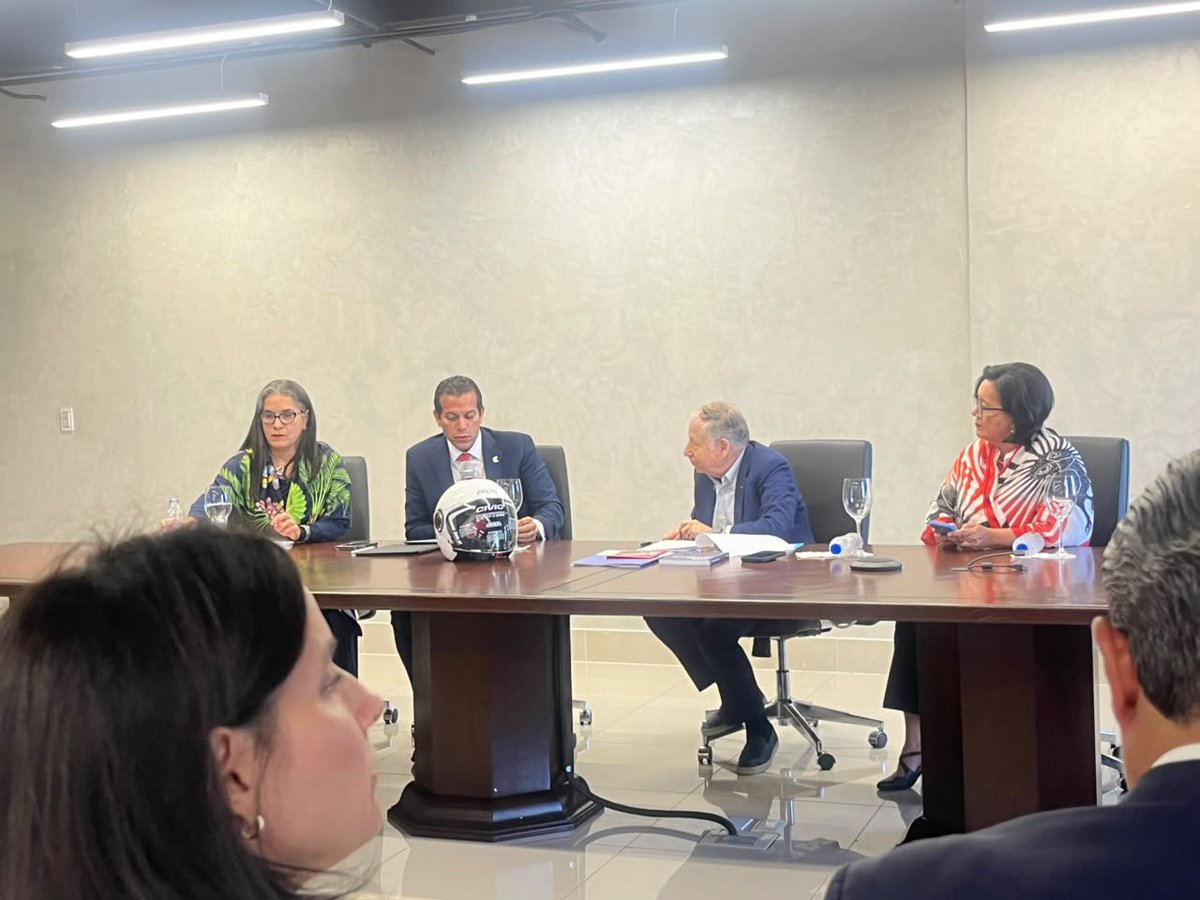
Met with insurance leaders and regulators to discuss how the private sector can contribute to improving road safety. Strong partnerships between governments, industry, and international organizations remain essential to reducing road traffic deaths and injuries. @PNUDRD https://t.co/Xjn8YgnhOK #RoadSafety #Partnerships #TrafficSafety #Nospecificcountrycodesarementionedinthetweet.