WRLD

Search

#Placement
L'Obs 3d

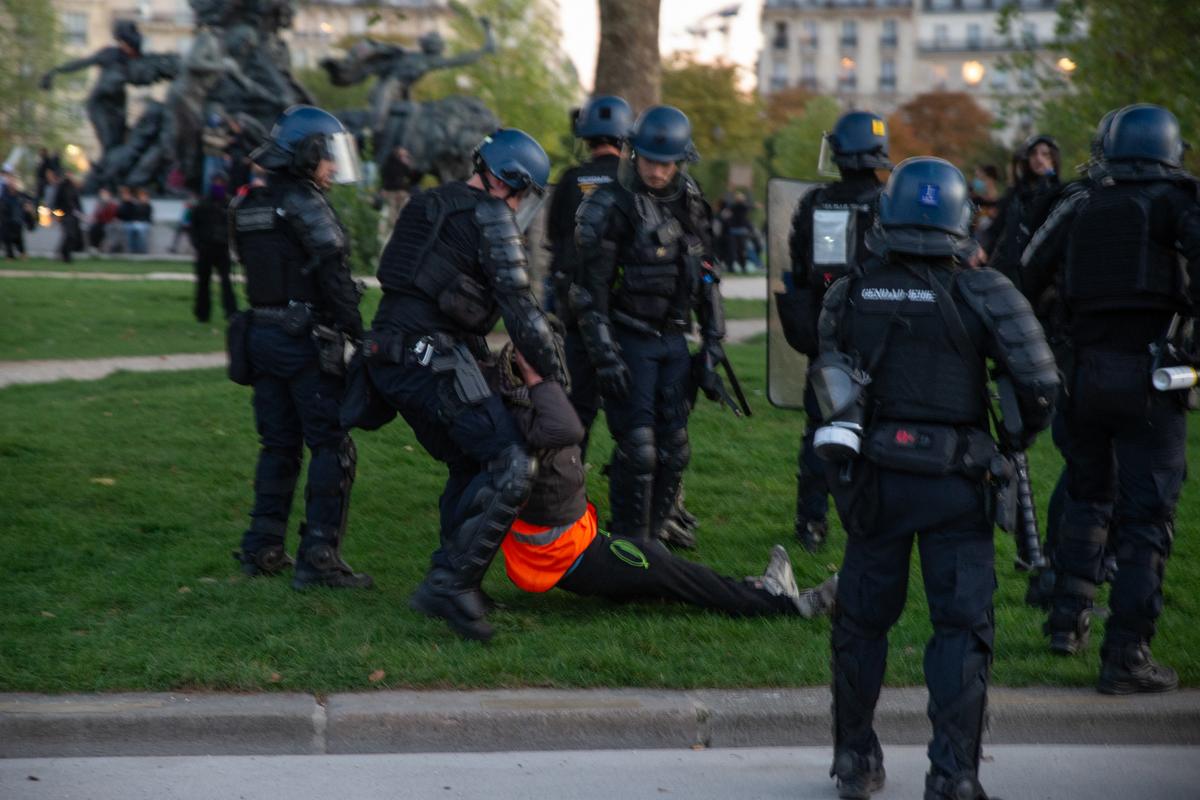
Lawyers denounce the violence, racism, and unacceptable conditions of police custody to which high school students are subjected, with 6,877 placements in police custody since the beginning of the high school movement in September 2026. #GardeÀVue #Lycéens #Justice (translated)
www.nouvelobs.com
Interrogatoires sauvages, violences, racisme... Des avocats dénoncent les conditions de garde à vue de lycéens

2454
Jean Marc Morandini 3d

The post reported that, according to the Ministry of Justice, 6,877 people had been placed in police custody since the beginning of the movement in high schools, of which 86% were minors, and that 21 people had been placed in pre-trial detention. #lycées #ministre #manifestation https://t.co/6ZnefdW8i9 #lycées #ministère #manifestation #FR (translated)

3352
Dividend King 👑 3d

Dividend King provided an update on the amendments concerning investors and entrepreneurs reviewed by the finance committee as part of the 2027 budget. He indicated that nearly all proposals aimed at increasing the flat tax had been rejected, such as the proposals to abolish the single flat-rate tax. A final amendment was supposed to be submitted for a vote that very day, but it had little chance of being adopted. According to his report, the committee had rejected all amendments aimed at tightening the Exit Tax, particularly those seeking to extend its duration from 2 to 15 years. However, it had adopted proposals to include portfolios of cryptocurrencies exceeding €800,000 in this scheme, to tax capital gains realized during conversions into stablecoins, and to impose a declaration to the tax authorities for self-hosted crypto portfolios of at least €100,000. Failure to declare could result in a fine of up to €10,000, he specified. Dividend King also stated that an amendment aimed at extending the 2% tax on holdings to financial investments had been withdrawn and that amendment I-CF1440, which proposed to abolish the tax on certain non-professional assets of wealth management holdings, had not been supported. He added that the amendment on contribution-disposition put forward by the general budget rapporteur, Philippe Juvin, had been adopted. This included stricter controls on donations of holding shares and changes to the taxation deferral regime, with transitional provisions for contributions made before October 7, 2026. The author believed that cryptocurrency holders were, at this stage, the main losers. He emphasized, however, that these results only concerned the finance committee and that the amendments still needed to be examined in a public session. He also reminded that amendments rejected in committee could return during debates and that the government could have its original version of the budget adopted through Article 49.3 or through ordinances. #Budget2027 #Cryptomonnaies #Finances (translated)

3466
La Libre.be 6d

Nizar Trabelsi did not receive the 3 million euros in fines he was claiming from the Belgian state, as the court ruled in favor of the latter, considering that his placement in a closed center did not constitute an expulsion and that the alleged failures of the Belgian authorities were not proven. #NizarTrabelsi #JusticeBelge #Astreintes (translated)

www.lalibre.be
Nizar Trabelsi n'obtiendra pas les 3 millions d'euros d'astreintes réclamés à l'État
1583
Le Parisien 7d

A unique nursery in Garges, which plays a crucial role in preventing child placement, is facing a threat of closure. #AccèsRefusé #GarderieUnique #ProtectionDesEnfants (translated)

www.leparisien.fr
« On évite que certains enfants finissent placés » : à Garges, cette crèche unique en France est menacée de fermeture
1361
Le Crapaud 1w

The Toad wrote that generative AI offered almost infinite possibilities and that he liked to vary styles and experiments. He presented his video as a way to observe the progress and limitations of the technology, particularly in managing fights, character placement and movements, as well as overall coherence. He added that varying approaches allowed him to avoid dullness, even if his short animated sequences were very successful. https://t.co/0KfILATbOs #IAGénérative #Créativité #Technologie (translated)

17282
Franceinfo 1w

A fifteen-and-a-half-year-old adolescent, unknown to the police services, is referred to an investigating judge after attacking a woman with an inflammable spray during high school protests in Marseille, with the prosecution requesting his indictment for acts of barbarism and his placement in provisional detention. #MobilisationLycéenne #Violence #JusticeJuvenile (translated)

www.franceinfo.fr
Mobilisation lycéenne : l'adolescent qui a visé une femme au visage avec un spray inflammable est déféré devant un juge d'instruction
1592
Jean Marc Morandini 2w

The office supply distributor Office Depot France has declared itself insolvent and will seek to be placed in judicial liquidation. https://t.co/THnuuGO2GZ #OfficeDepot #Liquidation #Economie #FR (translated)

La Libre.be 2w

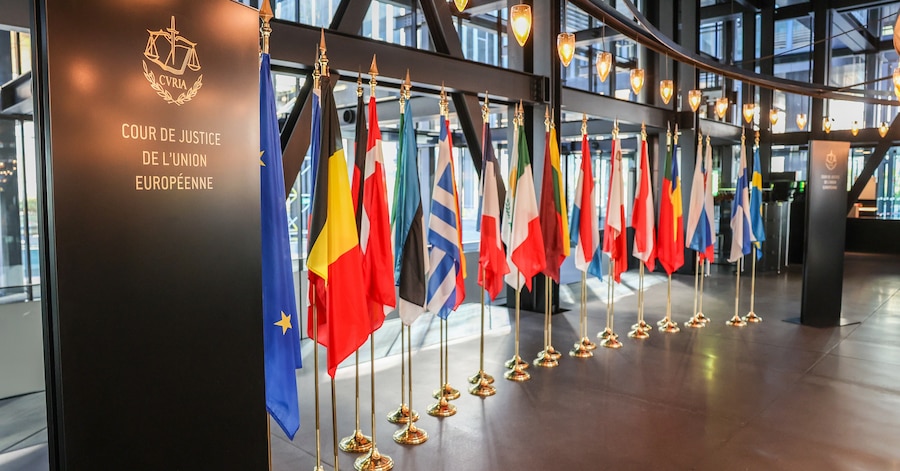
La Cour de justice de l'Union européenne a statué que la législation fiscale espagnole imposant une taxation discriminatoire aux organismes de placement collectif non résidents par rapport à ceux résidents viole les principes de libre circulation des capitaux, contraignant ainsi le législateur espagnol à corriger cette inégalité. #DiscriminationFiscale #UnionEuropéenne #LégislationEspagnole

www.lalibre.be
Un arrêt qui met fin à une des nombreuses discriminations de la législation espagnole
1491
Daniel Pers 2w

W Platformie ktoś postanowił podrapać się po głowie i przypomnieć o komunikacji - ciekawe na jak długo 👀 Kilka spostrzeżeń natury czysto technicznej. Dziwna jest ta reżyserka, w której przez połowę czasu DT przemawia do krawędzi klatki. Wypadałoby zakleić też logo Apple - trochę nie przystoi by Premier RP robił product placement zagranicznej korpo. Szczególnie w podejmowanym temacie. #komunikacja #technologia #media

16650
Jon De Lorraine 2w

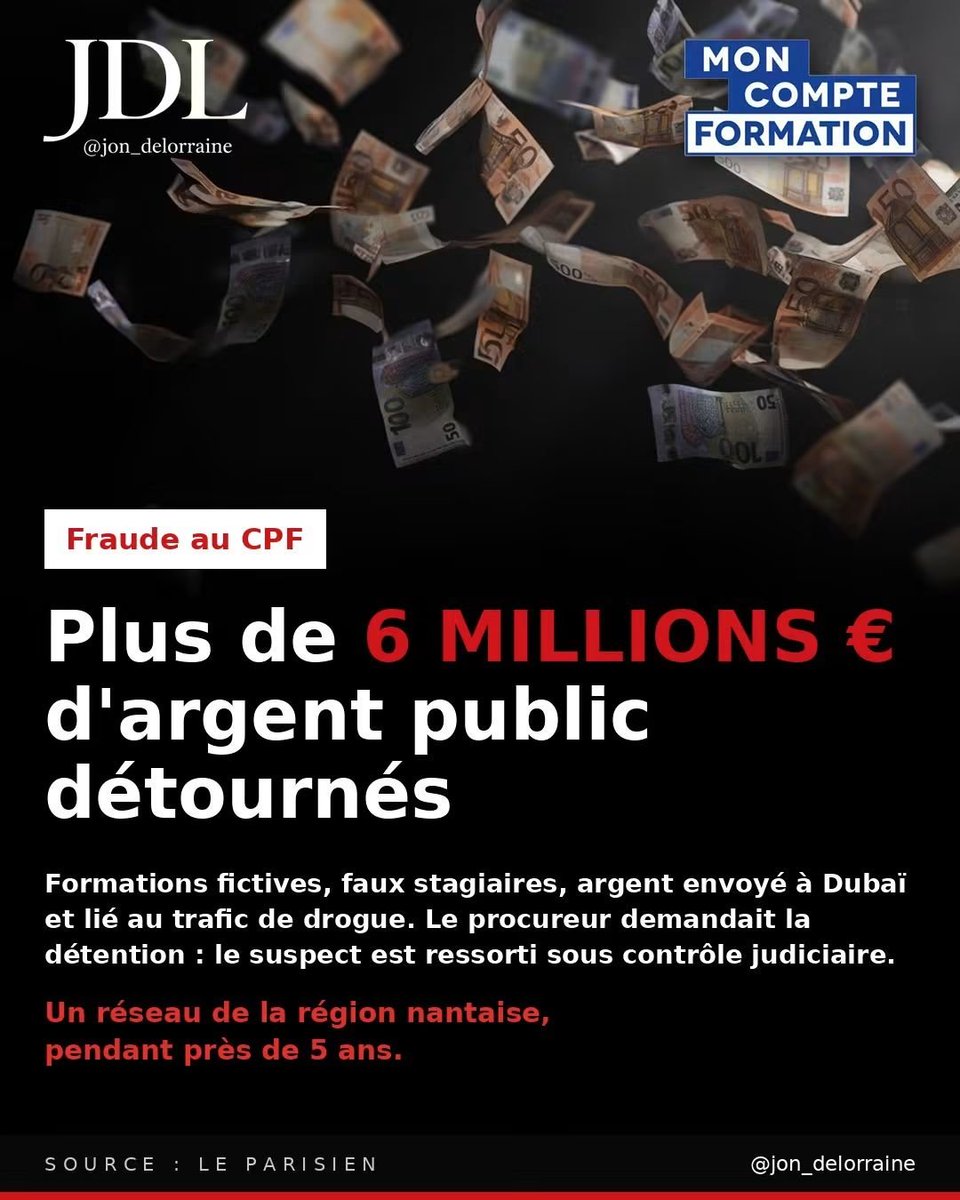
🔴🇫🇷 FLASH - Plus de 6 MILLIONS D’EUROS d’argent public auraient été détournés via le CPF. Un homme de 37 ans, déjà condamné à 4 reprises, est soupçonné d’avoir organisé un vaste système de formations fictives et de faux stagiaires complices. Une partie de l’argent aurait été envoyée à Dubaï, une autre aurait servi aux dépenses de trafiquants de drogue du Grand Ouest. Le procureur réclamait son placement en détention, évoquant notamment un « risque de réitération » élevé. Le suspect a finalement été remis en liberté sous contrôle judiciaire. (Source : Le Parisien) #CPF #Fraude #Justice

12301
BeFootball 2w

🚨 « MAIS VOUS CROYIEZ QUOI ? QUE ÇA ALLAIT ETRE D’UN SEUL COUP LE PRESSING DE L’AJAX DES ANNÉES 70 ? BAH NON !!! 😤 » Dave Apadoo répond à ceux qui tirent déjà des conclusions sur les Bleus de Zidane… après un seul match 🤡 « Tout ce que vous attendez, BAH ÇA SE CONSTRUIT. JE NE SAIS PAS DANS QUEL MONDE VOUS VIVEZ. Depuis toute à l’heure vous m’expliquez qu’on n’a rien vu, qu’il ne s’est rien passé. 🤦‍♂️ Mais le mec est là, il a fait 2 entraînements et demi, il te fait des placements un peu différents.  Il te donne des consignes un peu différentes sans le ballon ET D’AILLEURS C’EST COMME ÇA QU’ON OBTIENT LE BUT. » (@lachainelequipe) #Football #Zidane #Ajax

20497
Jean Bexon 2w

🔴🔴 Affaire Quentin | Parmi les trois antifas placés en détention provisoire hier, figure un certain Arsen Micollet. Il a été identifié par les enquêteurs comme étant sur les lieux le 12 février 2026. Il est suspecté d'avoir participé à l'association de malfaiteur. Le mis en cause, présumé innocent, fait appel de son placement en détention. #AffaireQuentin #Justice #Détention

12906
Krzysztof Graj 3w

Russia’s fake African newsrooms – propaganda designed to look local A Facebook user in Nairobi, Accra, Johannesburg or Luanda encounters what appears to be a local news page. It publishes stories about African politics, Western influence and relations with Russia. The language is tailored to an African audience and the page presents itself not as a foreign broadcaster, but as part of the local information landscape. Behind some of these outlets, however, Meta found operators based in Russia. In its 2026 threat research, the company disclosed a Coordinated Inauthentic Behaviour network targeting audiences in Angola, Ghana, Kenya and South Africa. Meta removed 37 Facebook accounts and 29 Pages connected to the operation. Around 30,000 users followed at least one of the Pages, while the operators spent approximately $7,000 on Facebook and Instagram advertising, mostly in euros and US dollars. The numbers are relatively modest. The method is considerably more important. Rather than openly distributing Russian state messaging, the network posed as local African news sources and grassroots organisations, promoting narratives about Western colonialism and political interference while presenting Russia as a credible economic and political alternative. It was an old geopolitical message delivered through a much more effective identity: not Moscow speaking to Africa, but Africans apparently speaking to one another. A news outlet that was actually an influence operation Meta's investigation found that the network attempted to conceal its Russian origin while creating media brands that appeared indigenous to the countries they targeted. Its content amplified historical grievances against former colonial powers, criticised Western involvement in Africa and promoted closer relations with Russia. One example helps illustrate how the infrastructure was assembled. A Facebook Page targeting Kenya was called Kenya Watchtower. According to OpenAI's subsequent investigation, Facebook transparency records showed that the Page had previously been named “Farmtown5”. It appears to have been acquired or repurposed rather than built from scratch as a Kenyan news organisation. Some Pages also exposed administrator locations in Russia and Ukraine. Other elements of the network had previously targeted audiences in Zambia and Namibia. This use of apparently local identities is particularly important in the African information environment. A story published by RT or another identifiable Russian outlet arrives with an obvious geopolitical provenance. The same narrative presented by something resembling an independent Kenyan, Ghanaian or South African newsroom carries a different kind of credibility. The source appears closer to the reader, and the geopolitical interest behind the message becomes less visible. Then investigators found Dr Manuel Godsin The Facebook operation was only one part of a broader information ecosystem. OpenAI investigated related activity after receiving information from Meta and subsequently banned a ChatGPT account it assessed as likely originating in Russia. OpenAI called the campaign Operation No Bell. The account was being used to generate long-form articles and social-media posts about African geopolitics. Prompts were primarily written in English, but OpenAI also observed Russian-language instructions that the user described as coming from a manager. The operator sometimes explicitly asked the model to make the material appear less AI-generated – including requests to avoid stylistic features associated with machine-generated text and to write more like a human journalist. Many articles appeared under the name “Dr Manuel Godsin”, presented as an academic with a PhD from the University of Bergen and an affiliation with an organisation called the International Centre for Political and Strategic Studies. OpenAI could find no credible evidence that Godsin existed. Searches of Norway's National Research Information Repository and the University of Bergen library produced no record of him. Investigators subsequently discovered that a photograph used to represent Godsin had appeared years earlier on a Russian professional networking site and apparently belonged to a law student in St Petersburg. The fabricated academic identity was nevertheless remarkably productive. OpenAI identified 53 online articles carrying the Godsin byline. The fiction had moved beyond fake social-media pages and into the real media ecosystem. When propaganda enters genuine newsrooms This is the most consequential aspect of the operation. The articles were not confined to websites controlled by the influence network. Some were published by genuine African news organisations, including established South African outlets. The content mixed local political issues with broader geopolitical narratives. Some pieces criticised the United States and Britain or defended Russia's role in Africa. One accused the British NGO Crisis Action of fomenting protests in South Africa. Another praised Russia's presence in the Central African Republic. Other material addressed Kenya, Angola and relations between African governments and Washington. The mechanism represents a significant evolution from the classic troll-farm model. Instead of building an audience entirely on its own platforms, an influence operator can manufacture an apparently credible expert, generate articles in his name and persuade genuine news organisations to publish them. Once this happens, the propaganda acquires something a fake Facebook Page cannot provide: the institutional credibility of a real newsroom. OpenAI assessed No Bell's social-media impact as limited. One Facebook Page had around 3,000 followers before Meta removed it, while several others had very small audiences. But the operation was more successful in placing material in established media. In OpenAI's impact framework, it approached the level at which an influence operation breaks into mainstream media. For information operators, a single article published by a recognised outlet can potentially be more valuable than thousands of impressions generated by an obviously artificial account. A much larger network of ghost journalists Subsequent research suggests that Manuel Godsin was not an isolated experiment. In August 2026, Graphika, working with Code for Africa and with support from Meta, published a much broader investigation into Russian ghostwriting operations across African media. Researchers identified 44 ghost writers and fake experts, 38 of them assessed as high-confidence fabricated personas, operating between 2021 and 2026. Their material appeared or was quoted across 138 websites and was subsequently republished through at least 113 Facebook accounts and Pages, including authentic users, coordinated inauthentic networks and official Russian communication channels. The narratives were strikingly consistent. They included criticism of France, Ukraine and the United States; attacks on organisations such as ECOWAS and the International Criminal Court; positive portrayals of Russian involvement in Africa; praise for Russian paramilitary forces; and support for sovereignty-oriented political projects such as the Alliance of Sahel States. The operation therefore extends beyond creating fake news websites. It attempts to insert Russian-aligned narratives into the legitimate African media ecosystem using identities that appear African, independent or academically authoritative. This also explains why measuring reach through the original Facebook network alone is misleading. A fabricated article may begin with an influence operator, appear in a genuine African publication, be republished elsewhere and eventually circulate without any visible connection to Russia. At that point, the provenance of the narrative has effectively been laundered. An old Russian strategy with increasingly local faces Russia's use of local intermediaries in Africa is not new. Meta documented Russian networks using African nationals as early as 2019. In 2020 it dismantled another operation involving people in Ghana and Nigeria working on behalf of individuals in Russia, with links to previous activity associated with the Internet Research Agency. More recent Meta investigations suggest that this model has continued to evolve. Networks have increasingly relied on local freelancers, social-media managers and authentic media outlets rather than exclusively operating armies of obviously fake Russian-controlled accounts. This decentralisation offers several advantages. Local operators understand language, political sensitivities and cultural references. Authentic accounts are harder to identify than newly created synthetic personas. Local media brands can also deliver narratives without immediately triggering the scepticism associated with Russian state outlets. There is no evidence that every African journalist, freelancer or publication carrying such material knowingly participates in Russian influence activity. Meta explicitly notes in its investigations that some local contractors may not know who ultimately commissioned their work. That distinction is essential. The operation's effectiveness partly depends on precisely this ambiguity between deliberate participation, commercial content placement and unwitting amplification. The objective is to make Russian narratives look African The significance of this network is therefore not its 30,000 Facebook followers or its $7,000 advertising budget. Those figures are small compared with the audiences of major African media organisations. What matters is the distribution model. Traditional foreign propaganda asks an audience to trust a foreign source. These operations attempt to remove the foreign source from the equation altogether. A Russian geopolitical narrative can be generated with AI, attributed to an expert who does not exist, published by a media organisation that does, amplified through a Facebook Page presenting itself as local, and then rediscovered elsewhere as apparently independent African analysis. By the time the reader encounters it, Moscow may have disappeared completely from the chain of attribution. The resulting information operation is therefore less about making Russian propaganda more persuasive than about making it look as though it is no longer Russian propaganda at all. In an increasingly fragmented African media environment, that may be the more important evolution to watch. SOURCES: Meta Threat Research https://threatresearch-team.github.io/indicators/meta-h1-2026-russia-based-cib-network-1/ OpenAI — Operation “No Bell” https://openai.com/index/disrupting-malicious-uses-of-ai-no-bell/ Graphika — Umbrae Ex Machina https://www.graphika.com/reports/umbrae-ex-machina News24 https://www.news24.com/southafrica/news/ai-expert-exposed-fake-kremlin-linked-analyst-planted-stories-in-african-media-20260318-0560 Vanguard https://www.vanguardngr.com/2026/03/ai-expert-exposed-fake-kremlin-linked-analyst-planted-stories-in-african-media/ Meta — Russian Coordinated Inauthentic Behaviour, 2019 https://about.fb.com/news/2019/10/removing-more-coordinated-inauthentic-behavior-from-russia/ Meta — Russian Coordinated Inauthentic Behaviour, 2020 https://about.fb.com/news/2020/03/removing-coordinated-inauthentic-behavior-from-russia/ Meta Threat Research — Russian Use of Authentic Operators in Sub-Saharan Africa https://threatresearch-team.github.io/indicators/meta-h2-2025-russia-based-cib-network-2/ KEYWORDS: #DISINFORMED #Episode7 #Russia #Africa #RussianDisinformation #RussianInfluence #Disinformation #InformationWarfare #InfluenceOperations #ForeignInterference #FIMI #CoordinatedInauthenticBehaviour #CIB #FakeNews #FakeMedia #FakeNewsrooms #MediaImpersonation #GrassrootsManipulation #Astroturfing #ArtificialIntelligence #AI #AIPropaganda #SyntheticMedia #FakeInfluencers #SocialMediaManipulation #Facebook #Meta #OperationNoBell #AfricanMedia #MediaManipulation #Propaganda #DigitalInfluence #Angola #Ghana #Kenya #SouthAfrica #OSINT #WRLD

threatresearch-team.github.io
Russia-Based Influence Operation Network Targeting Sub-Saharan Africa
1040
O
Oberlé Daniel 4w

🚨 Confidentialité, non-jugement, disponibilité : les 5 besoins qu'elles réclament aux intervenants 📒 Analyse des enjeux et des besoins en lien avec le proxénétisme et l'exploitation sexuelle chez les mineurs au Québec ✍️ Bianca Andreea Meszaros — mémoire de maîtrise en criminologie (Maître ès arts, M.A.), Université Laval (Québec, Canada), 2026. Direction : François Fenchel ; co-direction : Mathilde Turcotte. (Provenance Université Laval) Capsules Audio de Pratiques en Santé 🎙️🎥 https://www.youtube.com/watch?v=LFk6iJH-cvo 🔍 Protection de l'enfance & exploitation sexuelle : 24 adolescentes placées disent elles-mêmes ce qui aide — et ce qui aggrave. 🧭 Confidentialité respectée, non-jugement, disponibilité réelle : des leviers de posture concrets, en amont des dispositifs. Analyse de Pratiques en Santé et lien vers la source ℹ️➕ https://www.pratiquesensante.com/blog/pratiques-15/analyse-des-enjeux-et-des-besoins-en-lien-avec-le-proxenetisme-et-l-exploitation-sexuelle-chez-les-mineurs-au-quebec-6196 📌 Ce mémoire renverse la focale habituelle : ce sont 24 jeunes filles (13-17 ans), toutes passées par la protection de la jeunesse et ayant vécu de l'exploitation sexuelle, qui nomment elles-mêmes ce qui aide et ce qui aggrave. On y trouve une matière rare : les besoins relationnels concrets face aux intervenants (confidentialité, non-jugement, disponibilité, écoute, authenticité), utilisables directement pour ajuster une posture d'accompagnement — indépendamment des dispositifs. Le document documente aussi un mécanisme central : le placement comme facteur de vulnérabilité en soi, et l'étiquetage « trouble de comportement » qui masque un statut de victime. Utile pour réinterroger ses propres pratiques d'entrée en relation avec des mineurs vulnérables. 🇬🇧: Analysis of the issues and needs related to pimping and sexual exploitation of minors in Québec - https://www.pratiquesensante.com/en/blog/practices-15/analysis-of-the-issues-and-needs-related-to-pimping-and-sexual-exploitation-of-minors-in-quebec-6196 #️⃣ #PratiquesEnSante #ProtectionEnfance #ExploitationSexuelle #TraumaInformé #ParoleDesJeunes #AideSocialeALEnfance #PostureProfessionnelle #Placement

www.youtube.com
Enjeux et des besoins en lien avec le proxénétisme et l'exploitation sexuelle chez les mineurs
1044
LesFansGones 🦁 Sep 7

J’ai revu le match de l’OL face à Auxerre. Le placement de Pavel Sulc est assez impressionnant. 😳 Il est systématiquement dans la bonne zone, au bon endroit prêt à faire la différence. Une menace permanente pour l’adversaire. 🔥 #TeamOL #Lyon https://t.co/xXVP2jPXsN #OL #Ligue1 #football

19258
Pedro Santa Clara Sep 7

O @FT publicou hoje o ranking mundial dos mestrados em gestão. O Mestrado Internacional em Gestão da @NovaSBE aparece em segundo lugar. A série diz mais do que o número: 2014 — 48.º 2015 — 31.º 2018 — 30.º 2019 — 22.º 2020 — 16.º 2021 — 23.º 2022 — 15.º 2023 — 15.º 2024 — 8.º 2025 — 4.º 2026 — 2.º Rebento de orgulho. Fui aluno desta casa e depois tive um papel no que se seguiu. Em 2014 a Nova SBE era uma escola com uma ideia que na altura parecia excêntrica: construir um campus com donativos privados. Foram cinco anos a bater a portas. Cinquenta empresas. Mais de mil e quinhentas pessoas, muitas delas antigos alunos. Mais de cinquenta milhões de euros. O campus inaugurou em 29 de setembro de 2018. Do 48.º ao 2.º lugar não se chega com um edifício bonito. Chega-se com professores extraordinários. Com career services que fazem placement em todo o mundo. Com 2.000 alunos de mais de cem nacionalidades. Portugal não é segundo do mundo em mais nada que interesse. Nem no futebol. Temos um mestrado, numa escola pública, à frente de quase tudo o que existe no planeta. E quem olhar para a Nova SBE encontra ali a lição que falta à economia portuguesa. A escola recruta professores internacionais e paga-lhe a preço de mercado. Quem contrata um investigador para Carcavelos está a disputá-lo com o resto do mundo. A maioria das empresas portuguesas não faz nada disto. Paga muito abaixo do que se paga na Europa e queixa-se de que não encontra gente. A diferença não está na virtude de umas e no vício das outras. Está no mercado onde cada uma escolheu jogar. A Nova SBE compete internacionalmente por qualidade, e quem compete por qualidade paga por ela. A maioria do tecido empresarial português compete em preço, ou vive em mercados domésticos abrigados sem pressão para subir a fasquia. Os salários baixos refletem onde decidimos jogar. O que me continua a espantar é que ninguém tenha copiado. Passaram oito anos. Está ali, à vista de toda a gente, a prova de que uma faculdade pública portuguesa consegue chegar ao segundo lugar do FT. Não conheço outra faculdade que tenha tentado fazer o mesmo. Não falta talento a Portugal. Falta ambição institucional, e isso não acontece — escolhe-se. E falta dizer a parte que estraga a festa. As propinas de mestrado continuam congeladas. O Governo propôs descongelá-las em setembro do ano passado; o Parlamento chumbou em novembro, com o PS a apresentar o congelamento e o Chega a viabilizá-lo. É populismo bacoco, e é caro. Uma escola que disputa os melhores professores do mundo tem de poder cobrar ao aluno de mestrado o que o serviço vale, e usar a diferença em bolsas para quem tem mérito e não tem meios. Um teto artificial impede exatamente isso. Congelar a propina não protege o aluno pobre: protege o aluno rico, que podia pagar e não paga, e retira à escola o dinheiro com que se financiaria a bolsa do outro. Parabéns Nova SBE 🙌 #NovaSBE #Mestrado #Educação

12372
Luciano Magaldi Sardella (PhD) Sep 5

"RadioText-RadioSoftware (1983–1989)": The First (Forgotten) Radio Programme of Computer Science Dissemination in Italy SOURCE: https://www.linkedin.com/pulse/radiotext-radiosoftware-19831989-first-forgotten-sardella-ph-d--eqief/ Radiosoftware represents Italy's absolute pioneer in broadcasting digital literacy education over the airwaves in the Belpaese. Abstract This paper reconstructs the history of Radiosoftware, the first Italian radio programme which anticipated by over a decade the dissemination of microtelematics, computing, and digital technology, as well as modern methods of digital software distribution. Established in 1983 at Radio Popolare and subsequently developed as a national initiative on Rai Radio 3 from 1984 to 1989, Radiosoftware represents the first Italian radio programme to broadcast educational content and transmit executable software for home computers over the airwaves. Through analysis of its technical evolution, educational content, and cultural impact, this article demonstrates how the initiative constituted a significant precedent in national computer literacy, the democratisation of access to software, and the development of amateur programming communities, establishing itself as the progenitor of a media ecosystem dedicated to technological dissemination that has extended into the contemporary era. Keywords: history of Italian computing, technological dissemination, digital broadcasting, computer literacy, Radio Popolare Introduction: The Dawn of Computing Dissemination in Italy In the landscape of Italian digital media history, a fundamental chapter remains little explored in academic literature: that of computing dissemination through radio broadcasting in the 1980s. In an era characterised by the absence of network connectivity and economic and geographical barriers to accessing computer technologies, radio configured itself as a democratic instrument for the diffusion of nascent digital culture. Radiosoftware emerges in this context as an absolutely pioneering initiative in Italy, anticipating not only analogous Italian experiences but also positioning itself amongst the first European experiments in software transmission over the airwaves. Its genesis at Radio Popolare in 1983 and subsequent evolution as a national programme on Rai Radio 3 bear witness to a trajectory of technical and pedagogical innovation that merits in-depth analysis. Contenuto dell’articolo The Original Phase: Radio Popolare (1983) The birth of Radiosoftware at Radio Popolare in 1983 constitutes the foundational moment of radio-based computing dissemination in Italy. In a period when personal computers still represented niche objects, the programme set out to systematically explore programming languages, hardware architectures, and practical applications of home computing, addressing a heterogeneous audience composed of students, teachers, hobbyists, and professionals. This first incarnation established the conceptual paradigms that would characterise the entire subsequent tradition: linguistic accessibility, pedagogical vocation, attention to the social and cultural dimensions of technology, and promotion of active listener participation. Contenuto dell’articolo The National Evolution: From Radiotext to Radiosoftware (1984–1989) The experience gained at Radio Popolare found systematic development in the national initiative coordinated by Rai Radio 3. The pilot phase, denominated Radiotext, commenced on 11 May 1984 as an experimental segment within the current affairs programme Un certo discorso, presented by Pasquale Santoli. Eight 30-minute episodes, broadcast on Fridays at 16:00 with Sunday repeats, tested the technical feasibility and public interest in the transmission of executable software through audio signals. Curated by Luigi Grimaldi and Giovanni Sighele of the Lega Informatica of Florence, in collaboration with Arci Media, the pilot phase demonstrated the viability of the concept. In autumn 1984, the format consolidated with the definitive denomination Radiosoftware, expanding to one-hour episodes and maintaining its placement within Un certo discorso. Contenuto dell’articolo The third season, inaugurated on 7 February 1986, introduced a thematic structuring articulated in three distinctive segments: "Hard & soft news" (updates and reviews), "Studiare con il computer" (educational applications), and "Radio + informatica" (experimental intersections between broadcasting and computing). This phase evidenced a growing pedagogical sophistication and greater attention to formal educational applications. In late 1986, the programme acquired editorial autonomy, transforming into an independent transmission with nocturnal weekend scheduling. 1987 marked a significant technical innovation with the introduction of the 4800 bit/s hardware interface developed by the RAI Research Centre in Turin, which enabled direct connection to the RS-232 serial port, overcoming the limitations of the audio-cassette method. The concluding phase, from February to June 1989, adopted a brief daily format (10 minutes, Monday to Friday at 19:45), concentrating on MS-DOS-compatible software. Despite the announcement of a cycle for 1990, no national transmission is documented beyond June 1989. Contenuto dell’articolo The Audio-Cassette Method (1984–1987) The initial methodology replicated the cassette loading mechanisms typical of 1980s home computers. Programmes were encoded as sequences of audio impulses—electronic noises incomprehensible to the human ear—which listeners recorded onto blank audiocassettes by connecting a tape recorder to the radio's audio output. The recorded cassette was subsequently played through the computer's cassette interface, which decoded the signals, loading the software into memory. This approach, based on modulation techniques similar to frequency-shift keying (FSK), guaranteed compatibility with heterogeneous platforms such as the ZX Spectrum 48K, Commodore 64, Olivetti M10, subsequently extended to the Apple II, MSX, BBC Micro, Olivetti M24 and M28. Each episode transmitted sequentially platform-specific versions for each system. Whilst accessible and revolutionary for mass distribution in pre-Internet Italy, this method presented significant limitations: low transmission speed, susceptibility to errors induced by radio interference or ambient noise, and the necessity for precise volume and timing adjustments. Contenuto dell’articolo The RAI-Radiosoftware Hardware Interface (1987) In 1987, the RAI Research Centre in Turin developed an advanced interface documented in CCIR reports as the RAI-Radiosoftware system. The principal innovation consisted of direct transmission at 4800 bits/s utilising biphase modulation organised in packets, enabling connection to the computer's RS-232 serial port without cassette intermediation. The interface was designed for operating system independence, with management software adaptable for MS-DOS, CP/M, and potential future extensions to Macintosh. For Olivetti M24 and M28 computers, a version with an internal card was available. The Research Centre additionally developed management software, test cassettes, and manuals, considering initial commercialisation at approximately 90,000 lire. This technical evolution represented a significant advancement in terms of speed, reliability, and usability, whilst maintaining the audio-cassette method in parallel to guarantee universal access. Contenuto dell’articolo Types of Software Transmitted The catalogue of software distributed through Radiosoftware reflected a broad range of applications: practical utilities (thematic databases on fashion, music, itineraries, and personalised diets), educational tools (didactic programmes for secondary schools, upper secondary schools, and conservatoires), recreational software (games such as the Olympic pentathlon for the Commodore 64), graphic demonstrations, and creative tools (bases for musical composition and digital comics). Particularly significant was the introduction, from the third season onwards, of educational software developed in collaboration with the Ministry of Public Education, designed specifically for scholastic use across various disciplines, not limited to computing. Contenuto dell’articolo Community Participation: The ORSA Section The Osservatorio Radiofonico del Software Autoprodotto (ORSA) [Radio Observatory of Self-Produced Software], reintroduced in the third season from February 1986, constituted a space dedicated to the transmission of programmes created by listeners. This feature transformed Radiosoftware into a bidirectional platform, anticipating collaborative logics that would characterise, decades later, open-source communities and participatory digital cultures. The "listeners' post" section within "Hard & soft news" additionally facilitated continuous dialogue with the public, integrating feedback, questions, and suggestions into the programming. Questionnaires distributed at the end of cycles and surveys conducted by specialist magazines such as Sperimentare con l'elettronica e il computer provided further mechanisms for evaluation and editorial orientation. Contenuto dell’articolo Institutional Collaborations and School Experiments In 1987, Radiosoftware collaborated with the ITIS Enrico Fermi in Rome to produce a series of transmissions dedicated to the development and application of educational software in scholastic contexts. The initiative involved experimental reception centres in 60 Italian schools, where students and teachers utilised the specialised interfaces developed by the RAI Research Centre to capture and load directly the transmitted software. These experiments positioned Radiosoftware as an operational instrument of pedagogical innovation, extending its impact beyond the hobbyist user base towards formal integration within the national education system. Contenuto dell’articolo Comparison with European Experiences Although Radiosoftware represents the first Italian national initiative, it was not the first European experiment in radio transmission of software. In the Netherlands, the programme Hobbyscoop on the public broadcaster NOS began transmitting computer programmes via radio around 1979–1980, subsequently developing the Basicode standard (from 1982). This standardised format utilised a restricted subset of BASIC commands and platform-specific translation routines, guaranteeing portability across heterogeneous architectures through FSK modulation at 1200 bps. Contenuto dell’articolo In the United Kingdom, The Chip Shop on BBC Radio 4, presented by Barry Norman and launched in 1984, included a "takeaway" service that transmitted Basicode programmes during nocturnal hours on VHF. Contenuto dell’articolo Technical and Cultural Differentiation Unlike approaches based on Basicode, which privileged portability at the interpreted language level, Radiosoftware transmitted platform-specific executable files, often in machine code, encoded as audio tones analogous to cassette loading signals. This choice reflected different priorities: maximising performance and the specific capabilities of each architecture rather than guaranteeing universal compatibility through a standardised language. The subsequent introduction of the 4800 bit/s interface with RS-232 connection represented a further differentiation, bypassing cassette recording entirely. These technical specificities bear witness to an autonomous development pathway, oriented towards the characteristics of the Italian computing market and ecosystem. Contenuto dell’articolo Transition towards Telesoftware Between 1988 and 1989, Radiosoftware was progressively accompanied and superseded by telesoftware transmitted through Televideo, RAI's teletext system. Technically defined by the RAI Research Centre in collaboration with Olivetti, the system became operational in 1989 following scholastic experiments coordinated with the Ministry of Public Education and Seleco in 1988. Telesoftware represented a natural evolution that shifted distribution from radio to television, offering advantages in terms of bandwidth capacity and already widespread reception infrastructure. This transition reflected broader trends in media convergence and the evolution of digital broadcasting technologies. Contenuto dell’articolo Obsolescence and the Rise of the Internet The emergence of the Internet in the 1990s rendered obsolete both radio-based and teletext-based methods of software distribution. Bidirectional digital networks offered incomparable speed, scalability, and interactivity, radically transforming the paradigms of software access and distribution. However, the conceptual legacy of Radiosoftware persists: the idea of mass distribution of executable digital content through broadcasting channels anticipated logics that re-emerge in modern over-the-air distributions of firmware and software updates for mobile devices and IoT. Contenuto dell’articolo The Ecosystem of Italian Radio-Based Computing Dissemination COMPLETE TIMELINE From the birth of computing dissemination on radio to the contemporary digital ecosystem 🟦 1983 — THE ORIGIN Radiosoftware – Radio Popolare (1983) The first Italian programme entirely dedicated to computing, programming languages, and personal computers. The absolute progenitor of the Italian tradition of radio-based technological dissemination. 🟦 THE 1980s — THE FIRST HEIRS 1984–1989 — Bit, Byte & Musica – Radio Popolare Technology, electronics, early networks, hacker culture. Continues the pioneering spirit of Radiosoftware, exploring the countercultural and communal dimensions of nascent computing. 1987–1990 — Decoder / Cyberpunk – Radio Popolare First systematic discussions of BBS, cryptography, alternative telematics, anticipating themes that would become central in the Internet era. 🟩 THE 1990s — THE INTERNET ERA 1993 — Golem – Radio3 Critical reflection on media and digital technologies, situating technological transformation within a broader cultural and philosophical framework. 1994 — Eta Beta – Radio1 Innovation, information society, digital transformation. Technological dissemination for a general audience in the phase of initial digital literacy. 1995 — Internetworkcity – Radio Deejay Presented by Claudio Cecchetto and Marco Camisani Calzolari, represents the first pop-commercial programme dedicated to the Internet, introducing email, websites, chat, and cyber culture to the mass public with accessible language and a massified educational approach. 1996–1999 — Mediamente (radio version) – RAI Dissemination on the Internet, networks, digital culture, with particular attention to the social and cognitive implications of emerging technologies. 1997–2000 — Cybernet / Tecnologie e Libertà – Radio Sherwood Free software, digital rights, civic networks. Continuation of the critical and communal tradition inaugurated by Radio Popolare, with focus on the political and libertarian dimensions of technology. This timeline evidences how Radiosoftware does not represent an isolated phenomenon, but rather the point of origin of a continuous tradition that has traversed over four decades. From the programming languages and over-the-air software transmission of the 1980s, through explorations of BBS and alternative telematics, to mass literacy on the Internet in the 1990s and critical reflections on free software and digital rights, a connecting thread emerges that testifies to the role of radio as a privileged space for the cultural mediation of emerging technologies. Contenuto dell’articolo Contemporary Recognition and Archival Preservation In recent years, Radiosoftware has acquired renewed attention as a pioneering initiative in the history of Italian computing. In 2024, contributions by scholars such as Andrea Fortuna have described the programme as a fascinating chapter in the diffusion of personal computing in Italy, underscoring its innovative approach to the distribution of executable software in the pre-Internet era. RAI has preserved selections from the initial phase of the programme through digital platforms such as RaiPlay Sound, where a dedicated playlist in the "Via Asiago 10" series includes several pilot episodes from 1984, originally broadcast on Rai Radio 3. Preservation efforts by enthusiasts have further contributed to maintaining accessible portions of the programme's legacy, with partial audio recordings and listener interviews available on dedicated websites. Radiosoftware constitutes a significant case study from multiple disciplinary perspectives. From the standpoint of media history, it represents an innovation in the utilisation of radio broadcasting, extending its functionalities beyond the transmission of audio content towards the distribution of executable code. In computing history, it testifies to strategies of democratisation of software access in contexts characterised by scarcity of resources and infrastructure. From a pedagogical standpoint, it anticipates models of distributed and community learning that re-emerge in modern online educational platforms. The participatory dimension embodied by the ORSA section prefigures collaborative dynamics that would characterise open-source cultures. Its position as progenitor of a continuous media ecosystem dedicated to technological dissemination—from Radio Popolare through national public broadcasters to the experiences of the 1990s—underscores the role of radio broadcasting as essential cultural infrastructure in the processes of national digital literacy. In an era when over-the-air distribution of software updates has become ordinary practice for billions of connected devices, Radiosoftware emerges not as an antiquarian curiosity, but as a conceptual antecedent that illuminates often-neglected technological genealogies. Its rediscovery and archival preservation constitute essential operations for a complete understanding of the roots of Italian digital culture.

www.linkedin.com
"RadioText-RadioSoftware (1983–1989)": The First (Forgotten) Radio Programme of Computer Science Dissemination in Italy
584
Instant Foot ⚽️ Sep 3

Entraînement tactique avec le placement des joueurs sur l’écran géant ! 🧠 « Tout le monde doit être mobile » peut-on entendre de la part du staff de Luis Enrique. https://t.co/mXvp69m6WR #Football #Entraînement #Tactique

23036
Matthieu Valet Aug 26

Le grand n’importe quoi judiciaire continue ! Accusé d’avoir frappé un policier par derrière à Ivry-sur-Seine (94) et de l’avoir laissé le visage en sang, il ressort libre du tribunal et ne sera jugé que fin octobre ! Ça ne s’appelle pas encore du gros foutage de gueule judiciaire ? C’est hallucinant ! Le tribunal de Créteil, surchargé, n’a pas pu juger le prévenu accusé d’avoir fracassé un policier… Ça attendra donc fin octobre pour être jugé : ce n’est visiblement pas urgent… Et pourquoi le placer en détention provisoire en attendant son jugement ? Ça ne sert à rien… Ce n’est pas comme si le prévenu était accusé d’avoir pris la fuite après les faits… D’ailleurs, le parquet avait lui-même requis son placement en détention provisoire. Le tribunal a préféré le placer sous contrôle judiciaire. Bref, ça me dégoûte mais à un point… Alors arrêtez de vous étonner qu’on casse du flic quand on voit (trop) ce genre de réponses pénales, c’est écœurant. À ce rythme-là, ce ne sont même plus les soldes : c’est la braderie judiciaire. Merci à son avocate, @LaraFatimi d’avoir tout fait pour défendre au mieux ce policier. #Justice #Policiers #Droit

11849