WRLD

Search

#Redistribution
Krzysztof Graj 5d

Nigeria – how pro-Russian influence networks sell military rule as the answer When Nigerians took to the streets in August 2024 to protest soaring living costs and frustration with government, some demonstrations acquired an unexpected symbol: the Russian flag. In Kano, Kaduna and other northern cities, protesters were filmed carrying Russian colours and calling for Moscow’s intervention. Some demanded a military takeover. What initially looked like an unusual expression of anger has since become part of a much larger picture. A September 2026 assessment by the Africa Center for Strategic Studies describes Nigeria as a major target of overlapping foreign information operations, with Russia the most active external actor in its information space. The report does not identify a single centrally controlled campaign. Instead, it maps an ecosystem in which genuine dissatisfaction over insecurity, corruption and living standards is repeatedly redirected towards a broader proposition: democratic government has failed, while the military-led regimes of the Sahel offer a more effective alternative. Turning a real protest into a pro-Russian message The clearest example emerged during the 2024 #EndBadGovernance protests. Nigerian investigative reporting found that a Kano-based TikTok influencer with more than 100,000 followers had been paid through a Telegram channel associated with African Initiative, a Moscow-based media operation linked by researchers to Russian influence activity in Africa. The influencer said the channel supplied photographs, videos and talking points for redistribution on TikTok and Instagram. Among the messages provided were phrases such as “Putin please come and save Nigeria” and “The army is the answer for Nigeria”. Influencers were encouraged to use Hausa-language hashtags including #Zangazanga – “protest” – alongside references to Putin and Russia. Investigators identified 38 accounts circulating similar pro-Russian and pro-military narratives during the demonstrations. Russian flags subsequently appeared among protesters in several northern cities. This does not mean the protests themselves were created by Russia. They were driven by genuine economic and political grievances, and Nigerian protesters gave different reasons for carrying Russian flags. The important feature of the influence activity was precisely that it did not need to manufacture the original anger. It could attach a geopolitical message to an existing domestic crisis. From frustration to the idea of military government The narrative fits a wider pattern seen across West Africa. Russia has developed close relations with the military governments of Mali, Burkina Faso and Niger, while pro-Russian media ecosystems routinely portray those states as examples of sovereignty, stability and resistance to Western influence. Nigeria, by contrast, has remained under constitutional civilian government since 1999. Africa Center researchers say information networks targeting Nigerians increasingly contrast these two models. Recurring messages depict elections as wasteful or predetermined, civilian institutions as incapable of protecting citizens and military governments as more decisive on security and development. Some content portrays the Sahelian juntas as delivering better roads, lower prices and stronger security even where available evidence points to continuing or worsening instability. Language is central to the strategy. Hausa is spoken across northern Nigeria and neighbouring Niger, allowing political narratives to travel across borders that are far less important online than they are on maps. HumAngle documented efforts involving Nigerien state-linked actors to cultivate Hausa-speaking journalists and distribute material favourable to Niger’s junta and hostile to France and Western influence. The Russian and Sahelian-junta information ecosystems are not identical, but their narratives frequently reinforce one another. Fake journalists inside real Nigerian media The campaign environment extends beyond social media. A 2026 investigation by Graphika and Code for Africa identified 44 ghost reporters and fake experts whose identities were used to place Russia-aligned narratives in African media. Thirty-eight were assessed with high confidence to be fabricated. Their articles or quotations appeared across 138 websites and were amplified by at least 113 Facebook accounts and Pages. Nigeria was one of the most heavily targeted countries. According to the Africa Center’s analysis of the research, Daily Post Nigeria carried 39 articles involving 14 identified ghost authors. Once published by a genuine Nigerian outlet, such material could then be cited by other websites, social-media accounts or even Russian official channels as though it had originated independently in Africa. This is information laundering rather than simple propaganda: the most valuable asset being borrowed is the credibility of the local newsroom. Generative AI added another layer. OpenAI and Meta separately disrupted a Russia-origin network that produced Africa-focused political content and operated Facebook Pages posing as local media organisations. One fabricated commentator, “Dr Manuel Godsin”, was presented as a European-trained geopolitical expert although investigators found no evidence supporting his academic biography. ChatGPT had been used to generate articles under the persona’s name, while Meta removed 37 Facebook accounts and 29 Pages connected to the broader network. Different networks, similar strategic direction It would be misleading to merge all these activities into a single Russian command structure. The African Initiative-linked influencer campaign, the ghost-reporter network and the AI-enabled operation disrupted by OpenAI and Meta were uncovered separately and used different infrastructure. Public evidence does not demonstrate that every actor reported to the same organisation. What connects them is a recurring set of themes and methods: portraying Western partnerships as exploitative, presenting Russia as an alternative security partner, amplifying failures of civilian government, and giving military-led rule greater legitimacy. Investigative reporting on leaked Russian documents has meanwhile described a much wider influence apparatus operating across Africa, involving political consultants, paid journalists, influencers and locally tailored campaigns intended to reduce Western influence and expand Moscow’s position. The underlying technique is less about inventing dissatisfaction than redirecting it. Nigeria faces real security threats, economic pressure and public frustration. Influence operators do not need to persuade Nigerians that those problems exist. They need only influence the explanation for why they exist – and which political model appears to offer the answer. That is what makes the Nigerian case significant. The most effective propaganda does not necessarily introduce a completely false reality. It takes a real crisis and changes where the audience is encouraged to look for the solution. Sources Africa Center for Strategic Studies — The Raging Information Battle in Nigeria https://africacenter.org/spotlight/the-raging-information-battle-in-nigeria/ Graphika — Umbrae Ex Machina https://www.graphika.com/reports/umbrae-ex-machina OpenAI — Operation “No Bell” https://openai.com/index/disrupting-malicious-uses-of-ai-no-bell/ TheCable — Ghost reporters in African media https://www.thecable.ng/ghost-reporters-how-fabricated-african-voices-carried-pro-russia-narratives/ HumAngle — Nigeria Is Facing an Information War in Its Own Language https://www.humanglemedia.com/nigeria-is-facing-an-information-war-in-its-own-language DAIDAC / CJID — Russian influence during #EndBadGovernance https://daidac.thecjid.org/how-telegram-tiktok-aided-russian-disinformation-that-led-to-incarceration-of-nigerian-minors/ FactCheckHub — How Nigeria’s hunger protest took a radical turn https://factcheckhub.com/from-economic-protests-to-coup-agitation-how-nigerias-hunger-march-took-a-radical-turn/ News24 — Fake Kremlin-linked analyst planted stories in African media https://www.news24.com/southafrica/news/ai-expert-exposed-fake-kremlin-linked-analyst-planted-stories-in-african-media-20260318-0560 Vanguard — AI ‘expert’ exposed https://www.vanguardngr.com/2026/03/ai-expert-exposed-fake-kremlin-linked-analyst-planted-stories-in-african-media/ Africa Confidential — How Moscow wages social media war https://www.africa-confidential.com/article/id/15961/how-moscow-wages-social-media-war Keywords #DISINFORMED #Episode15 #Nigeria #Russia #RussianInfluence #RussianDisinformation #Africa #WestAfrica #Disinformation #InformationWarfare #InfluenceOperations #ForeignInterference #FIMI #Propaganda #MilitaryRule #MilitaryGovernment #Democracy #PoliticalManipulation #NarrativeManipulation #AfricanInitiative #EndBadGovernance #Hausa #LocalInfluencers #GhostReporters #FakeExperts #ArtificialIntelligence #AI #AIPersonas #SyntheticMedia #AIPropaganda #Astroturfing #SocialMediaManipulation #Telegram #TikTok #DigitalInfluence #SourceLaundering #NarrativeLaundering #MediaManipulation #Sahel #Geopolitics #OSINT #WRLD


africacenter.org
The Raging Information Battle in Nigeria
790
Clémence Guetté 2w

Taxing people who have been getting richer for 10 years is a fair redistribution of wealth. The recipes of the so-called genius Macronist financiers do not work. https://t.co/gUeapmiUKU #Redistribution #Économie #JusticeSociale #FR (translated)

4804
L
Le Soir 2w

The Engaged are asking the Belgian federal government to join six European countries to capture part of the energy superprofits generated by the crisis, stating that this represents an opportunity for fair redistribution of the exceptional profits made by certain companies. #RenteDeCrise #Surprofits #Belgique (translated)

www.lesoir.be
« Une rente de la crise » : Les Engagés veulent que la Belgique capte une partie des superprofits énergétiques
1375
𝘿𝙖𝙡𝙞 3w

mdlrkrkrkr jviens d'entendre les chiffres DÉMENTIEL du bundle des Champions et de la redistribution pour chaque équipe Mais vive Valorant, la Kcorp va être pété de thunes #Valorant #Kcorp #Esport

15918
Sarah Knafo 3w

Merci à l’Insee de confirmer mon enquête. La redistribution se fait « au prix d’un endettement public ». Un cadeau payé à crédit par vos enfants n’est pas un cadeau. C’est un casse. #économie #endettement #redistribution

23434
S
Sandfeen 4w

“Socialism Was Good in Theory” That assumes socialism’s theory was never seriously challenged. It was—long before the Soviet Union, Lenin, or any national-scale experiment. Five thinkers attacked its foundations from different directions. Tocqueville: Equality Can Become Servitude In 1848, Alexis de Tocqueville distinguished democracy from socialism. Both pursued equality, but democracy sought it while preserving individual freedom. Socialism risked achieving equality by expanding state power. Equality, he warned, is not automatically liberty. Bastiat: Redistribution Can Become Plunder In 1850, Frédéric Bastiat examined what happens when the state takes from some to give to others in the name of justice. He called this “legal plunder.” His concern was that politics could become a permanent struggle to control redistribution. Nietzsche: Equality Can Become Resentment Nietzsche attacked socialism psychologically. He saw egalitarianism as potentially rooted in resentment toward exceptional individuals, ambition, strength, and hierarchy. The danger was a culture that treated excellence as morally suspect—not lifting people upward, but bringing the exceptional downward. Böhm-Bawerk: Challenge the Economics In 1896, Eugen von Böhm-Bawerk attacked Marx’s economic theory, arguing that Marx’s labor theory of value could not adequately explain the relationship between labor values and actual prices. He challenged socialism’s claim to a scientific economic foundation. Mises: The Calculation Problem In 1920, Ludwig von Mises asked a devastating question: even if socialism is morally desirable, how would planners know what to produce? The sequence is clear: Tocqueville challenged the political premise. Bastiat challenged redistribution. Nietzsche challenged egalitarian psychology. Böhm-Bawerk challenged Marxian economics. Mises challenged central planning. All of them preceded the Soviet experiment. So “socialism was good in theory, but bad in practice” is not an argument. It is a historical claim that requires explaining why these objections were wrong.

582
Restitutor Orientis 🇱🇮 Sep 10

Anthropic dans son rapport imagine 3 futurs possibles pour l’économie américaine en 2030 selon la puissance et l’adoption de l’IA: 1- Scénario modeste: l’IA a un impact comparable à Internet. PIB +1,6%, peu de bouleversements sur l’emploi. 2- Scénario substantiel: l’IA peut réaliser environ la moitié des tâches cognitives et devient largement autonome. PIB: +8,3 %, mais beaucoup de travailleurs de bureau doivent changer de métier. 3- Scénario extrême: l’IA dépasse largement les humains dans les tâches intellectuelles et devient presque entièrement autonome. PIB +32,4 %, mais chômage cognitif autour de 18% et emploi dans ces métiers en forte baisse. L’IA ferait augmenter fortement la richesse totale, mais cela ne signifie pas que tout le monde en profiterait. Dans le scénario extrême: - Les salaires des travailleurs intellectuels pourraient baisser d’environ 11,5% - Les salaires des métiers moins exposés pourraient augmenter jusqu’à 33,6% - La part des revenus allant au travail passerait d’environ 60% à 45% - Les propriétaires du capital (entreprises, investisseurs, machines/IA) récupéreraient donc une part beaucoup plus importante de la richesse. Le rapport dit que le véritable risque de l’IA n’est pas nécessairement une économie qui s’effondre, mais plutôt une économie qui devient beaucoup plus riche tout en créant une forte redistribution des emplois et des revenus du travail vers le capital. #IA #Économie #Futur

12004
Nicolas 💸 Sep 8

Pour une raison mystérieuse, le pays le plus redistributif du monde ne parvient pas à éduquer les enfants correctement. #Éducation #Redistribution #Inégalité

17265
S
Sandfeen Sep 2

“Socialism Was Good in Theory” That sentence assumes the theory was never seriously challenged. It was. Long before the Soviet Union existed, before Lenin seized power, and before socialism had been tested on a national scale, major thinkers were already attacking its foundations—from very different directions. Five of them stand out. Tocqueville: Equality Can Become Servitude In 1848, Alexis de Tocqueville drew a sharp distinction between democracy and socialism. Both spoke about equality. But Tocqueville believed they pursued it in fundamentally different ways. Democracy, in his view, sought equality while preserving individual freedom. Socialism risked achieving equality by expanding the power of the state over the individual. His warning was essentially this: equality is not automatically liberty. A society can pursue equality so aggressively that it begins sacrificing the independence that makes political freedom meaningful. Bastiat: Follow Where Redistribution Leads Two years later, Frédéric Bastiat attacked socialism from a different direction. His question was deceptively simple: What happens when the state acquires the authority to take from some people and give to others in the name of justice? Bastiat called this “legal plunder.” His concern was not merely that redistribution might be expensive. It was that once government becomes the instrument through which competing groups obtain benefits from one another, politics can turn into a permanent struggle over who controls the machinery of redistribution. The problem, therefore, wasn’t simply how much the state redistributed. It was the principle that made redistribution legitimate in the first place. (bastiat.org⁠) Nietzsche: Equality Can Become Resentment Nietzsche approached socialism neither as an economist nor as a constitutional theorist. He attacked its psychology. He saw modern egalitarian movements as part of a much older moral impulse: resentment toward exceptional individuals and suspicion of strength, ambition and hierarchy. For Nietzsche, the danger was not simply that everyone might become economically equal. It was that a culture could begin treating excellence itself as something morally suspect. The goal would cease to be lifting people upward. It would become bringing the exceptional downward. Böhm-Bawerk: Challenge the Economics Then came Eugen von Böhm-Bawerk. In 1896, he turned his attention specifically toward Marx’s economic system. His criticism was not primarily moral or political. It was technical. Böhm-Bawerk argued that Marx’s theory of value did not adequately explain how the labor values developed in Capital could be reconciled with the actual prices Marx subsequently needed to explain. In other words, he attacked socialism where it claimed to possess a scientific economic foundation. The argument became one of the central criticisms of Marxian economics and helped launch a debate that would continue for generations. Mises: The Calculation Problem Then, in 1920, Ludwig von Mises attacked an even more fundamental question: Even if socialism is morally desirable, how would a socialist economy actually know what to produce? A functioning economy has millions of competing uses for scarce resources. Build a bridge or a hospital? Use steel here or there? Produce more machinery or more consumer goods? Under private ownership and markets, prices for capital goods provide information about relative scarcity and opportunity costs. Mises argued that abolishing private ownership of the means of production also removes the genuine market prices necessary for rational economic calculation. The problem wasn’t simply that socialist planners might make bad decisions. It was that the system deprived them of the very economic signals required to systematically compare those decisions. (Mises Institute⁠) And that was the sequence. Tocqueville challenged the political premise. Bastiat challenged the moral and legal mechanism of redistribution. Nietzsche challenged the psychology behind egalitarianism. Böhm-Bawerk challenged Marx’s economic theory. Mises challenged the possibility of rational central economic calculation. Five different thinkers. Five different objections. And all of them came before the Soviet Union had demonstrated what large-scale socialist government would actually look like. So “socialism was good in theory, but bad in practice” is not an argument. It is a historical claim that requires you to explain why these theoretical objections were wrong. The interesting question isn’t whether socialism had critics. It did. The interesting question is whether socialism ever adequately answered them” - ChatGPT

702
Manon Aubry Aug 30

RTL s'offusque dans #LeGrandJury de mes propos sur les milliardaires nuisibles pour l'économie. Continuez de vous étouffer : en 2027 avec @JLMelenchon, il ne sera + possible d'accumuler des méga-fortunes sans redistribuer les richesses. N'en déplaise à l'officialité médiatique. #LeGrandJury #Redistribution #Milliardaires #FR

1405
BFMTV Aug 30

La part de la richesse produite aux États-Unis perçue par les travailleurs atteint son niveau le plus bas depuis 1947, avec seulement 52,9 dollars sur 100 dollars générés, soulignant une tendance inquiétante de redistribution des profits en faveur des entreprises, alors qu'en France cette situation est moins prononcée. #Economie #Travail #Inégalités

www.bfmtv.com
Quand l'Amérique produit 100 dollars, les travailleurs reçoivent 52,90 dollars: pourquoi cette part du gâteau n’a jamais été aussi faible depuis 1947 (contrairement à la France)
12299
S
Sandfeen Aug 28

The Deadly Seduction of Democratic Socialism Young people are being urged to support “democratic” socialism—ideas blamed for tens of millions of deaths in the last century—promising that consent will make it work this time. But consent cannot make an economic system wise. A ballot cannot set the right prices for wages, goods, or services, nor prevent shortages, repression, or famine. This isn’t fringe. New York elected Zohran Mamdani, who says there should be no billionaires and backs rent freezes, state-run grocery stores, free CUNY, and higher taxes. Polling shows strong support for socialism and communism among Americans under 30. The core error is believing resources can be taken from creators and transferred without losing the knowledge that made them productive. Mao’s China illustrates the outcome: land reform dispossessed and killed landowners, production collapsed as local expertise was treated as an enemy, and grain seizures during the Great Leap Forward worsened a catastrophic famine. The lesson: destroying incentives, property rights, and local knowledge destroys production itself. Envy is often disguised as justice. Communist regimes cultivated resentment and turned grievance into political energy, making societies less focused on creating wealth and more focused on making others lose it. Even when central planners tried to subordinate families to the state, people preserved knowledge through markets, private plots, and community practice. Civilization isn’t a machine bureaucrats can redesign. Take away property and you don’t automatically transfer knowledge—abundance can vanish with it. Redistribution may promise equality, but if it destroys the people, incentives, and knowledge that produce abundance, the result is a hungry one.

820
S
Sandfeen Aug 28

Five Thomas Sowell Lessons the West Refuses to Learn The West has proven Thomas Sowell right: “compassionate” policies often ignore trade-offs and incentives. Sowell offers no villains—only reality. 1) **Ask the right question.** Poverty is the default; prosperity is what needs explaining. Study what creates abundance, not inequality as automatic proof of injustice. 2) **Pick your poison.** There are no perfect solutions, only costs and benefits. Every policy uses scarce resources and shifts who pays. No free lunch. 3) **Leaders need skin in the game.** It’s dangerous to grant power to people insulated from consequences. When decision-makers aren’t harmed by error, bad choices spread. 4) **Keeping what you earn isn’t greed.** Treating production as selfish and redistribution as virtue inverts morals—and concentrates power in those who control taking and giving. 5) **Judge ideas by outcomes, not vibes.** The West keeps discarding institutions that worked because their reasoning feels unfashionable. Sowell’s core point: reality ignores intentions—scarcity, incentives, and consequences still rule.

469
S
Sandfeen Aug 28

Mass Migration as a Path to Expanding State Power Western governments have incentives for mass migration. Increasingly staffed by progressives, the state wants to expand its authority over social relations and the economy. Wealth redistribution and equitable representation are easier to claim once the state controls the levers. Many see rising living costs as a failure; for those harmed, it makes sense. From the state’s perspective, however, faster arrivals than can be housed, schooled, or treated strain the system. The state then responds with more spending in those areas, exerting economic control. A state failure becomes the pretext for expanding the state. Higher population also enables misleading “per-capita” narratives. If five people live together making $50,000 each, GDP is $250,000. Add five more and cut everyone to $45,000: GDP becomes $450,000—nearly double—despite lower individual income. Competition for rooms, food, and yard space raises prices while people earn less, producing fewer earnings and higher costs. Rob Henderson calls these “luxury consequences.” Mark Wiseman, co-founder of the Century Initiative, backed a goal of 100 million people in Canada by 2100 (~800,000 per year). What happened in 2022–2024 exceeded targets. After disaster, Wiseman “failed upwards,” later joining Prime Minister Mark Carney’s advisory council. If the state directs social and economic life, it must also prevent revolts when planning fails. Fragmenting society into factions and encouraging their differences weakens cooperation—divide and conquer. The state’s interest was never a thriving citizenry, only a growing one.

703
Isabella M Weber Aug 28

We are witnessing a shock redistribution from the many to the rich: The profit share is at its highest level since WWII. The first bump was sellers’ inflation which ushered in Trump. The second bump is Trump’s chaos casino designed to push up profits. https://t.co/EgfBtz4JgK #WealthInequality #EconomicDisparity #TrumpAdministration #US

1407
Manon Aubry Aug 26

Les 13 335 ménages les plus riches de France ne paient aucun impôt sur le revenu, et c’est la redistribution de leurs richesses qui appauvrirait le Trésor public ? https://t.co/GXqZWz2m3l #richesse #impôts #France #FR

704
Claude Weill Aug 21

Bon sang, mais c’est génial ! Créer quatre nouveaux impôts dans le pays champion de la redistribution et de la pression fiscale, record du monde du nombre de taxes, c’est ÇA la solution. Incroyable que personne n’y ait pensé avant ! Heureusement que M. Brun est là !!! https://t.co/ZhqdeClpMr #Fiscalité #Imposition #Politique

13161
L
Le Soir Aug 21

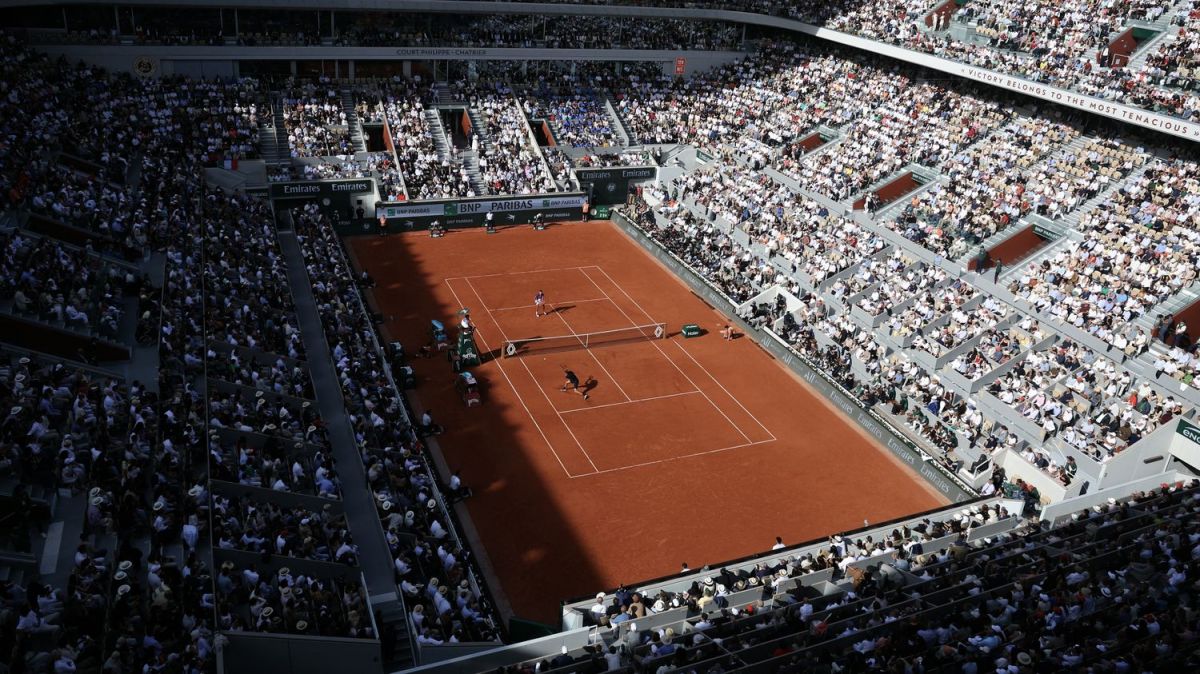
Les quatre tournois du Grand Chelem ont annoncé la création d'un « Conseil consultatif des joueurs » pour mieux répondre aux revendications financières croissantes des joueurs, qui débutera après l'US Open, afin de favoriser un dialogue direct et une redistribution des revenus plus équitable. #Tennis #GrandsChelems #DialogueDesJoueurs

www.lesoir.be
Les stars de tennis ont été entendues : les Grands Chelems créent un conseil pour mieux entendre les revendications des joueurs
16452
Franceinfo Aug 20

Les tournois du Grand Chelem, en réponse aux menaces de boycott des joueurs, dont Aryna Sabalenka, ont annoncé la création d'un Conseil consultatif des joueuses et des joueurs pour améliorer la communication et la redistribution des revenus générés par les compétitions. #RolandGarros2026 #Tennis #ConseilConsultatif

www.franceinfo.fr
Tennis : après les menaces de boycott, les tournois du Grand Chelem vont créer un Conseil consultatif des joueuses et des joueurs
15867
Magnus Ranstorp Aug 12

The UN global picture of the jihadi threat (UN Security Council Monitoring Team’s 38th report on ISIL/Da’esh, Al-Qaida and affiliates) Summary: The report depicts a geographic redistribution of jihadist power. The old IS core in Iraq is exceptionally weak and Al-Qaida’s central https://t.co/FDUmJDacgw #JihadiThreat #UNReport #CounterTerrorism #IQ

118