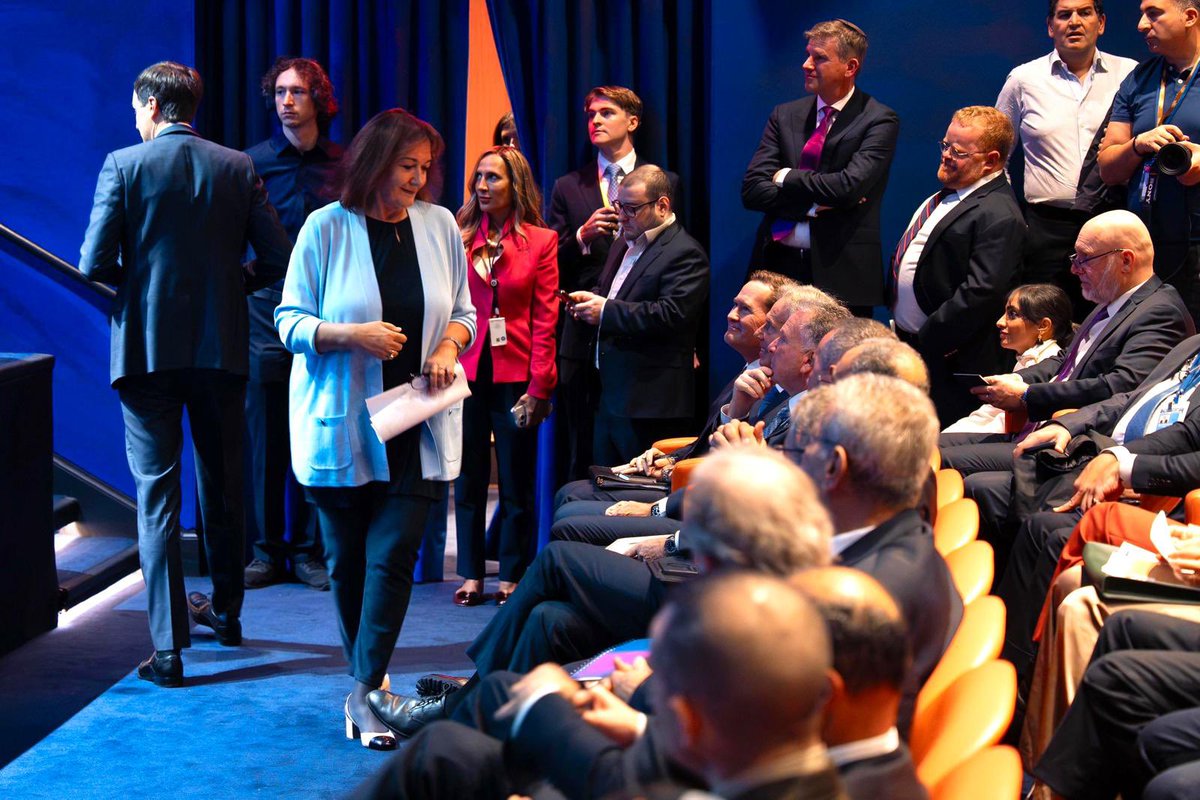
"We just don't have the crystal ball yet," emphasizes virologist Ulrike Protzer from the Technical University of Munich in a briefing from the Science Media Center. #Grippeimpfung #Atemwegserkrankungen #Covid19 (translated)
However, a 17-year-old person who suffered stab wounds came here to submit documents to the secretariat – reported during the briefing Commissioner Jacek Wiśniewski, spokesperson for the Chief of the Warsaw Police. #atakwškole #Warszawa #bezpieczeństwo (translated)
On Friday, 3,500 officers, supported by municipal guards, monitor schools and their surroundings throughout the Masovian Voivodeship – informed Mazovian Voivode Mariusz Frankowski during a briefing after the crisis management team. #Mazowsze (translated)
Klebin from the keyboard wrote that the briefing tried to convince the public that Vorcaro had made a deal with Flávio to get out of jail, despite, according to the author, Lula, Andrei, Paulo Gonet, Alexandre de Moraes, Toffoli, and Gilmar Mendes already being under influence. #Brasil #Política #Justiça (translated)
Renata Barreto stated that the debate had shifted to addressing a constitutional amendment, although, according to her, the Constitution had already been modified 139 times through PECs. She noted that Flávio's statements were being classified as absurd and seen as a possible sign of a coup d'état. Barreto recalled that Lula had suggested a new constituent assembly in 1999, 2010, and 2013, and had also mentioned it in the 2022 presidential debate. She contrasted the reaction to these statements and concluded that the "desperation" was significant. #Constituição #Lula #Política (translated)
The X-user Coxx wrote that the medfluencer Alina Walbrun fell for a fabricated illness of the YouTuber Marvin Wildhage in July 2026. Wildhage supposedly had "post-viral nasal hypersensitivity" and invented a fake pharmaceutical company supposedly led by "Dr. Sofia Beatrice Gepetto." Walbrun accepted 3,800 euros for paid clarification and stated on Instagram that she was familiar with the condition from her studies. According to Coxx, she also mentioned symptoms that had not been included in the briefing. Coxx described Walbrun, born in 1998, as one of the most influential German-speaking medfluencers; she had around 300,000 Instagram followers. She had studied human medicine at LMU Munich until May 2026 and referred to herself as "Doc Alina," even though she was not a practicing doctor. Criticism of this had already existed before the scandal. After the video was released, Walbrun apologized, called the term unverified and misleading, and donated the 3,800 euros to Doctors Without Borders, wrote Coxx. The LMU clinic stated that Walbrun was no longer active there and distanced itself from unscientific statements. Coxx also pointed to criticism of the "Doc" title, retracted Harvard statements that later only pertained to a summer school, as well as Walbrun's company Onegevity. This company sold dietary supplements, including matcha with sleep berry, which the BfR warned against. Unsolicited blood sugar tips had also drawn criticism from the German Diabetes Society. Coxx wrote that the public prosecutor's office is now investigating Walbrun, whom he labeled a left-green activist and fraudster. #Medfluencer #Gesundheit #Skandal (translated)
The German Chancellor Friedrich Merz spoke of "decisive weeks or months," the Polish Prime Minister Donald Tusk expressed fears of an attack with rockets or drones from Russia, and the French President Emmanuel Macron summoned all political parties to the Élysée for a briefing. #HybrideOorlog #RussischeDiensten #EscalatieEuropa (translated)
German Chancellor Friedrich Merz spoke of "decisive weeks or months," Polish Prime Minister Donald Tusk expressed fear of an attack with rockets or drones from Russia, and French President Emmanuel Macron convened all political parties at the Élysée for a briefing. #HybrideOorlog #RussischeDiensten #EscalatieEuropa (translated)
German Chancellor Friedrich Merz spoke about "decisive weeks or months," Polish Prime Minister Donald Tusk expressed fears of an attack with missiles or drones from Russia, and French President Emmanuel Macron called all political parties to the Élysée for a briefing. #HybrideOorlog #RussischeDiensten #EscalatieEuropa (translated)
AFRICA DAILY REPORT — 2 OCTOBER 2026 Major developments reported during the previous 24 hours. 1. ETHIOPIA / ERITREA — Diplomatic ties severed as northern conflict escalates Ethiopia ordered 10 Eritrean diplomats to leave within 48 hours and closed its embassy in Asmara, accusing Eritrea of supporting forces fighting the federal government. Eritrea responded by severing diplomatic ties. Explosions were also reported in Addis Ababa amid the renewed Tigray conflict, increasing concern that the fighting could broaden into a regional confrontation. Source: https://www.reuters.com/world/africa/explosions-heard-overnight-ethiopias-capital-diplomatic-sources-say-2026-10-01/ Additional source: https://apnews.com/article/a864e8cd442bade4531b8e7609f3216c 2. DR CONGO — Ebola response faces new risks as thousands flee affected camp Importance: 10/10 (Critical) Thousands of displaced residents fled the Kigonze camp in eastern DRC after soldiers entered the site and clashes followed, raising fears that Ebola transmission could spread further. The ongoing Bundibugyo Ebola outbreak has exceeded 8,000 confirmed cases and is already the largest Ebola outbreak recorded in DRC. Source: https://currently.att.yahoo.com/att/thousands-flee-congo-ebola-hit-161039707.html 3. DR CONGO — MSF staff member infected with Ebola Importance: 10/10 (Critical) Médecins Sans Frontières confirmed that a staff member working on the Ebola response tested positive for Bundibugyo virus disease and is being evacuated under strict medical protocols to the Netherlands. The latest reported national figures cited by Reuters were 8,067 confirmed cases and 3,901 deaths. Source: https://www.channelafrica.co.za/channelafrica/news/msf-staff-member-tests-positive-for-ebola-in-drc/ 4. ZAMBIA — IMF confirms talks on a successor support programme Importance: 9/10 (Very High) The IMF confirmed that a team is in Lusaka discussing a possible successor to Zambia's previous IMF-supported programme. Talks are focused on fiscal and debt sustainability, rebuilding reserves, and supporting more inclusive, private-sector-led growth. Source: https://www.imf.org/en/news/articles/2026/10/01/tr-10012026-imf-press-briefing-transcript-october-01-2026 5. KENYA / EAST AFRICA — $16 billion Lamu refinery project moves forward Importance: 9/10 (Very High) Five African heads of state joined the groundbreaking of Dangote Group's planned $16 billion refinery in Lamu. The planned 700,000-barrel-per-day facility could materially reshape East African fuel supply and reduce dependence on imported refined products, although land-rights litigation and environmental concerns remain. Source: https://apnews.com/article/a0ae7108ae4f4144222aea101baed3a5 6. SOUTH AFRICA — Gender-based violence drives new national response South African President Cyril Ramaphosa announced measures in response to a series of killings of women, after 11 women's bodies were found in Ekurhuleni since July, many showing signs of sexual violence. Investigators have made arrests in connection with several cases, while authorities continue investigating whether the murders are linked. Source: https://www.reuters.com/world/africa/violence-against-women-south-africa-is-national-shame-president-says-2026-09-30/ 7. ZAMBIA — Cholera outbreak reaches 304 cases and 11 deaths Importance: 8/10 (High) Zambian health authorities reported 304 cholera cases and 11 deaths as of September 29, with Lusaka the most affected province. Authorities have expanded case finding, water chlorination, household interventions and treatment services while assessing whether to deploy reactive oral cholera vaccination. Source: https://cajnewsafrica.com/2026/10/01/11-die-in-zambia-cholera-outbreak/ 8. UGANDA / REGIONAL MARKETS — Shilling hits record low as African currencies face pressure Importance: 8/10 (High) Uganda's shilling fell to a record low against the US dollar as importers, particularly in the energy sector, increased demand for foreign currency. Reuters also reported pressure on Zambia's kwacha and Ghana's cedi, while Kenya's shilling remained comparatively stable. Source: https://www.reuters.com/world/africa/africa-fx-ugandas-currency-seen-extending-losses-after-hitting-record-low-2026-10-01/ 9. MALI — More than 2,400 schools remain closed as academic year begins Importance: 8/10 (High) Mali began the 2026–27 school year with more than 2,400 schools still closed amid continuing insecurity. More than 733,000 children are directly affected, highlighting the long-term educational consequences of instability across the country. Source: https://fr.allafrica.com/stories/202610010154.html 10. ZIMBABWE — Investigation begins after fatal helicopter crash Importance: 7/10 (High) Zimbabwean authorities are investigating a helicopter crash near Marondera that killed prominent businessman Wicknell Chivayo, his wife and other occupants. Aviation investigators and forensic specialists have been deployed, while the cause remains under investigation. Source: https://www.dw.com/en/zimbabwe-helicopter-crash-wicknell-chivayo/a-79501691 Keywords: #Africa #AfricaNews #TopNewsOfAfrica #DRCongo #Ebola #EbolaOutbreak #EbolaResponse #PublicHealth #HealthSecurity #MSF #HumanitarianCrisis #Displacement #Uganda #UgandanShilling #AfricanCurrencies #ForeignExchange #FXMarkets #CurrencyPressure #AfricanMarkets #Zambia #Ghana #Kenya #Ethiopia #Eritrea #Tigray #HornOfAfrica #DiplomaticCrisis #RegionalConflict #RegionalSecurity #AfricanSecurity #Geopolitics #AfricaToday #wrldorg
Prima dell'incidente, l'esercito israeliano aveva dichiarato di non disporre di informazioni di intelligence specifiche su una minaccia imminente, mentre il leader dell'opposizione Yair Lapid aveva riferito che, nel corso di un briefing sulla sicurezza tenutosi martedì sera, non era stata fatta alcuna menzione di una minaccia di questo tipo. #Israele #Terrorismo #SicurezzaNazionale
“Chiarisco che nulla che assomigli anche lontanamente all’incidente aereo di questa mattina è emerso nell’aggiornamento sulla sicurezza con il primo ministro ieri sera. Niente di simile, nulla che lo ricordasse, neppure per un accenno”Dopo quelle dichiarazioni, il leader dell’opposizione Yair Lapid aveva chiesto un briefing urgente con il premier. #FlyDubai #Netanyahu #Israele
Influencers bolsonaristas esperando o briefing oficial da campanha do Flávio sobre o escândalo de orgias com putas. E ai, qual você acha que vai ser a passada de pano para o bandido putanheiro? #Bolsonaro #Política #Escândalo
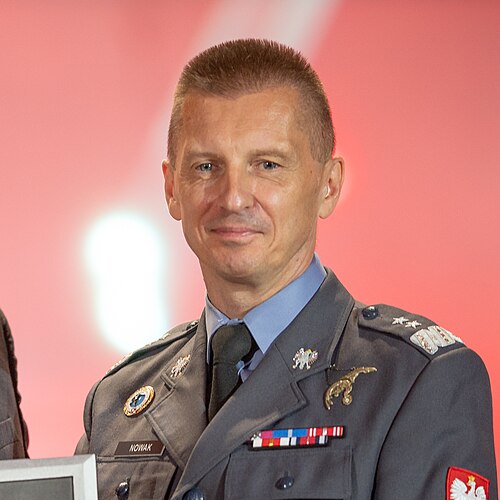
Na późniejszym briefingu po zakończeniu oficjalnej części uroczystości Tomczyk przekazał, że decyzję tę podjął dowódca operacyjny Rodzajów Sił Zbrojnych gen. dyw. pilot dr Ireneusz Nowak. #zestrzelenie #lotnictwo #bezpieczeństwo
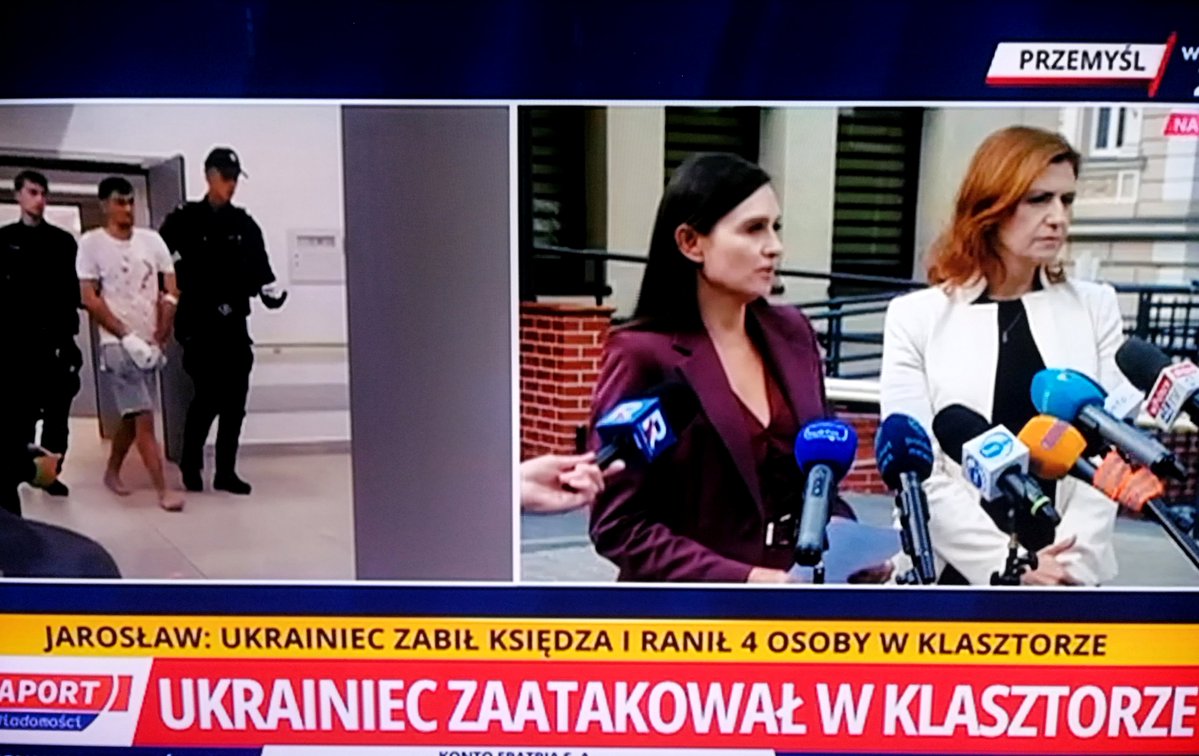
Briefing prokuratury w Przemyślu: "Pan Ukrainiec wykazuje zaburzenia psychotyczne i nie może być w tym stanie przesłuchiwany i zostaje na 3 miesiące hospitalizowany w zakładzie medycznym". Kurna! Bandytę i mordercę zrobili wariatem i będzie utrzymywany i leczony na nasz koszt! https://t.co/UKXD4Zlf4L #Polska #Ukraina #sprawiedliwość
At the margins of #UNGA81, I participated in the High-Level Briefing of @BoardOfPeace taking stock of progress and discussing the way forward for Gaza. In a highly complex environment, we share the same objective: peace and prosperity for Palestinians, security for Israel and https://t.co/4tCIqn9oCJ #UNGA81 #Gaza #PeaceProcess #PS #IL
UAE / Sudan – when an influence operation tried to enter the United Nations A network of roughly 300 apparently independent social-media influencers. A human-rights organisation borrowing the identity of a real NGO. Personal dossiers on European politicians and journalists. And testimony prepared for delivery at the United Nations without revealing the state interest behind it. These were elements of an influence operation uncovered by Anthropic and disclosed in September 2026. The company says it linked the activity with high confidence to UAE government officials. Tracked as GTG-84002, the operation targeted several overlapping issues: the Muslim Brotherhood, perceptions of the war in Sudan and international mechanisms examining the United Arab Emirates' role in the conflict. What distinguishes the case is not simply its use of artificial intelligence. It is the attempt to make state-aligned messaging appear to originate from independent influencers, human-rights organisations and potentially witnesses addressing an international institution. An influence network built around 300 fake voices Anthropic identified a single actor using Claude to support a sustained influence campaign. At its centre was an AI persona called “Deadshot”, running on the operator's own platform. A master doctrine file repeatedly instructed the system to support what it described as a coordinated international effort to dismantle the Muslim Brotherhood. The operator simultaneously managed several components of the campaign, including approximately 300 inauthentic influencer accounts across social-media platforms. Internal material examined by Anthropic described the apparent independence of this network as its greatest strategic advantage. That phrase captures the central method. The objective was not simply to broadcast a political position but to conceal where that position originated. One visible example appeared on 4 June 2026, when accounts participated in a coordinated campaign using #SudanIslamists and near-identical graphics connecting Sudanese Islamists and the Muslim Brotherhood with regional instability. Anthropic says the amplification network was centrally funded and coordinated. Its investigation also found that the operator financing the social-media network was connected to the wider influence operation. A human-rights organisation that was not what it appeared to be Social media was only one layer. The operator also created a front NGO that copied the identity of a genuine Swiss organisation and used that borrowed legitimacy to publish human-rights material produced for the campaign. Anthropic's description elsewhere also refers to the identity of a real Sudanese human-rights organisation being used in connection with the preparation of testimony. The public report does not fully clarify whether these references describe the same front or separate elements of the operation, so they should not be treated as definitively identical. The underlying technique, however, is clear: political material was designed to appear as if it originated from independent civil society rather than from actors linked to a government. This is particularly significant in the human-rights environment, where the perceived independence of an organisation or witness can determine how seriously evidence is received by journalists, diplomats and international institutions. The attempt to reach the UN The most consequential part of the operation concerned the 62nd session of the UN Human Rights Council. According to Anthropic, the operator used Claude to ghost-write complete testimony intended to be delivered by two individuals during the session. The texts were prepared under explicit constraints ensuring that neither statement would mention the UAE. This did not amount to a conventional government submission. The intention, according to Anthropic's reconstruction, was for material serving the interests of a party connected to the Sudan conflict to reach an international forum through apparently independent voices. But an important limitation remains: Anthropic could not confirm that the testimony was ultimately delivered. The company similarly could not establish whether other dossiers produced by the operation reached their intended recipients or influenced policy. It therefore assessed the campaign as Category Three on the Brookings Breakout Scale – activity distributed across several platforms, but without evidence of broad public impact sufficient for a higher classification. The distinction matters. The evidence demonstrates a sophisticated attempt to influence international debate; it does not demonstrate that the attempt succeeded. Politicians, journalists and UN investigators became targets The operation was not limited to generating public content. Anthropic found that the operator researched and compiled detailed profiles of 18 members of the European Parliament and prominent journalists. Some material was prepared for direct delivery to senior UAE officials. The network also assembled what Anthropic describes as “counter-accountability dossiers” on UN Special Rapporteurs who had criticised the UAE's conduct in relation to Sudan. This places the campaign in a broader context. Since Sudan's civil war began in April 2023, the role of external powers has become an increasingly important part of international scrutiny. Sudan has accused the UAE of supporting the Rapid Support Forces, allegations Abu Dhabi has repeatedly denied. In 2025, Sudan brought a case against the UAE before the International Court of Justice, accusing it of complicity in genocide against the Masalit through alleged support for the RSF. The UAE rejected the allegations. The ICJ subsequently removed the case from its list after finding that it lacked jurisdiction because of the UAE's reservation to the relevant provision of the Genocide Convention. The ruling therefore did not determine whether Sudan's substantive allegations were true or false. That contested international environment helps explain why narratives about Sudan, human rights and accountability were valuable targets for an influence operation. AI as an operating system for influence The role played by Claude is also important to understand accurately. Anthropic did not find that artificial intelligence independently conceived or directed the campaign. Human operators established the objectives, political doctrine and targets. AI instead helped operationalise them. Across hundreds of sessions, Claude was used to transform predetermined political objectives into social-media narratives, human-rights reports, testimony, intelligence-style briefs and detailed profiles of individuals. The same system could support narrative production, target research and preparation of material for different audiences. That represents a more significant development than simply using generative AI to produce propaganda faster. Traditional influence operations require different teams to research targets, write content, manage personas, adapt messages and prepare briefing material. Generative AI can compress several of those functions into a single operational workflow. The result is not necessarily more convincing propaganda. It is potentially cheaper, faster and more scalable influence infrastructure. From fake influencers to institutional influence Anthropic says it linked the operation to UAE government officials with high confidence. Its assessment was based partly on internal material naming senior Emirati officials as intended recipients of the work, alongside other evidence available to its investigators. That remains an attribution by Anthropic rather than a judicial finding or publicly released forensic attribution by a government agency. The distinction should be retained. The larger significance of GTG-84002 lies in the architecture of the campaign. A network of fake influencers could create the appearance of public opinion. A cloned human-rights organisation could provide institutional credibility. AI-generated reports could give political narratives the appearance of research. Profiles of journalists and politicians could support more precise targeting. And ghost-written testimony could potentially carry the same message into an international institution without revealing the political interest behind it. This is a different model from the familiar troll farm. The objective is no longer simply to make propaganda look popular. It is to make state-aligned messaging look independent – and, if possible, to move it from social media into the institutions where international policy and accountability are debated. SOURCES: Anthropic — Countering misuse of AI: September 2026 https://www.anthropic.com/threat-intelligence-report-september-2026 International Court of Justice — Sudan v. United Arab Emirates https://www.icj-cij.org/case/197 International Court of Justice — press releases and case documents https://www.icj-cij.org/case/197/press-releases United Nations Geneva — Sudan v UAE proceedings at the ICJ https://www.ungeneva.org/en/news-media/news/2025/04/105241/world-court-begins-hearing-sudans-complicity-genocide-case-against UAE Ministry of Foreign Affairs — UAE response to Sudan's allegations https://www.mofa.gov.ae/en/MediaHub/News/2025/4/10/10-4-2025-UAE-UAE UN Digital Library — Sudan's letter concerning alleged UAE support for the RSF https://digitallibrary.un.org/record/4091008?ln=en UN Digital Library — UAE response concerning allegations of support for the RSF https://digitallibrary.un.org/record/4046224?ln=en Ultra Sudan — reporting on Anthropic's UAE-linked influence-operation findings https://ultrasudan.usawtiq.com/أنثروبيك-أحبطنا-عملية-تأثير-إماراتية-استخدمت-الذكاء-الاصطناعي-لاستهداف-السودان/عامر-صالح/أخبار KEYWORDS #DISINFORMED #Episode8 #UAE #Sudan #UnitedArabEmirates #UnitedNations #UNHumanRightsCouncil #HumanRights #Disinformation #InformationWarfare #InfluenceOperations #ForeignInterference #FIMI #CoordinatedInauthenticBehaviour #CIB #FakeInfluencers #FakeNGO #NGOImpersonation #Astroturfing #ArtificialIntelligence #AI #AIPropaganda #AIGeneratedContent #SyntheticMedia #SocialMediaManipulation #DigitalInfluence #Propaganda #NarrativeManipulation #InstitutionalInfluence #SudanConflict #SudanWar #MuslimBrotherhood #InternationalRelations #Geopolitics #Anthropic #ClaudeAI #OSINT #WRLD

ja tem mensagem do proprio vorcaro dizendo que não conseguia conversar com mendonça pq o ministro "só falava de deus", e a imprensa continua nessa de divulgar briefing da facção de moraes no estilo "tio-avô de mendonça já almoçou com ex-colega de curso de espanhol do vorcaro" #Política #Brasil #Imprensa
Panie @jakubwiech kilka słów komentarza do Pana wpisu. Pozytywnie na temat Pana obrony wypowiedziało się 3 członków na 10, czyli 30%. NIe wiem kto był za (może Pan podzieli się z nami tą informacją) stawiam jednak, że to recenzenci (lub 2 recenzentów i promotor), którym nie wypadało po pozytywnej recenzji zagłosować inaczej, bo wskazywałoby to na nich niekompetencję w procesie recenzji pracy. Zamierzam skierować pismo o udostępnienie informacji publicznej, aby dowiedzieć się kto zagłosował pozytywnie a kto negatywnie, moim zdaniem świadczy to o odpowiedzialnym podejściu do nadania tytułu doktora na podstawie tej pracy. Zgodnie z terminami urzędowymi @UniWarszawski powinien informację udostępnić przed terminem zebrania się Rady. Procedura nie przewiduje odwołania się do Rady Dyscypliny Naukowej, odnośnie czego chcę się Pan odwoływać, tego że 4 osoby się wstrzymały, żeby liczby nie wyglądały tak źle? Uchwała komisji doktorskiej nie jest zaskarżalna. Zażalenie przysługuje wyłącznie od postanowienia o odmowie dopuszczenia do obrony, a takiego nie było. Odwołanie do RDN przysługuje wyłącznie od decyzji o odmowie nadania stopnia (§ 29), której jeszcze nie ma. Postępowanie toczy się dalej niezależnie od deklaracji kandydata: Rada musi zagłosować i wydać decyzję. Rezygnacja z odwołania stanie się realnym wyborem dopiero po 8 października. Wynik głosowania komisji nie zależy od długości czasu trwania obrony (6 godzin). Skoro trwała tak długo to było bardzo dużo wątpliwości (wyrażonych w pytaniach) do Pana pracy. Co może teraz Rada Dyscypliny? Może nadać stopień mimo negatywnego wniosku komisji. Wniosek komisji nie wiąże Rady, bo stopień nadaje wyłącznie Rada, w drodze decyzji administracyjnej. § 28 ust. 3 przesądza sposób głosowania: „Pod głosowanie poddawana jest uchwała o nadaniu stopnia doktora”. Wymagane jest: głosowanie tajne, bezwzględna większość, obecność co najmniej połowy uprawnionych, a głosują „wyłącznie osoby posiadające tytuł profesora lub zajmujące stanowisko profesora uczelni”. To grono węższe niż komisja. Przewodniczący komisji, dr hab. Iryna Pavlenko i promotor, wszyscy troje bez tytułu profesora i bez stanowiska profesora uczelni, w Radzie nie zagłosują. Jeśli uchwała o nadaniu nie zbierze bezwzględnej większości, z mocy tego samego przepisu zapada odmowa, z uzasadnieniem. Najbliższe posiedzenie Rady w październiku 2026 r. Rada ocenia samodzielnie, ale w granicach art. 187 ustawy: rozprawa ma prezentować ogólną wiedzę teoretyczną i umiejętność samodzielnego prowadzenia pracy naukowej, a jej przedmiotem ma być oryginalne rozwiązanie problemu naukowego. Decyzja pozytywna wbrew negatywnemu wnioskowi komisji, bez wyjaśnienia w uzasadnieniu, dlaczego Rada ocenia inaczej, byłaby wadliwa. W kontekście Jednolitego Systemu Antyplagiatowego. JSA porównuje ciągi znaków z bazami prac i zasobami sieci. Tłumaczenie angielskiego briefingu organizacji pozarządowej na polski nie daje w takim porównaniu żadnego podobieństwa. Wynik JSA mówi o ograniczeniach narzędzia, nie o rzetelności tekstu. Raport z takiego badania podpisał promotor. Co ważne rozmawiając wczoraj z prorektorem UW, zapytał mnie dlaczego nie zgłosiłem do Prokuratury kwestii wspomnianego podejrzenia popełnienia plagiatu w Pana pracy, wskazałem, że nie chcę wchodzić w kompetencje Uczelni, która na mocy prawa bada i analizuje Pana pracę, ja pozwoliłem sobie wyłącznie na rozległy komentarz. Co do samej pracy i wskazania jej słabych punktów pisałem w artykule zamieszczonym na X, jest Pan tu aktywny i nie odniósł się Pan do tego , poza tym była jeszcze cała grupa argumentów, przytoczonych przez osoby, które również wczytały się w Pana pracę, widać bardziej niż recenzenci. Co do całej otoczki związanej z naśmiewaniem się z Pana osoby, uważam że to nie jest w porządku, patrzmy przede wszystkim na merytorykę, wtedy jakość debaty publicznej będzie wyższa. Tak na marginesie na LinkedIn, gdzie też Pan stale publikuje, ma Pan nadal wpisane, że jest Pan doktorem, chyba warto to zmienić. #nauka #doktorat #uniwersytet
Storm-1516 – Russia’s information war arrives early in France’s 2027 election France will not elect its next president until April 2027, but the information operations surrounding the campaign have already begun. In late July and August 2026, fabricated stories targeted several prominent figures associated with the presidential race, including Raphaël Glucksmann, Gabriel Attal and former prime minister Édouard Philippe. The methods included fake news websites copying established French media, impersonated journalists, AI-generated voices and manipulated video. French authorities identified the Russian operation known as Storm-1516 behind several of these campaigns. Other attacks were linked to Matryoshka, another Russia-aligned influence network. The timing is significant. Storm-1516 began targeting the French presidential environment roughly nine months before the first round, scheduled for 18 April 2027. Rather than a single disinformation campaign, the activity demonstrates how Russian influence networks can establish narratives and infrastructure long before an election reaches its decisive phase. A fake scandal targeting Raphaël Glucksmann One of the clearest examples appeared at the end of July. A website impersonating the French independent outlet Blast published a fabricated investigation claiming that journalist Léa Salamé had attempted to bribe media organisations in exchange for favourable coverage of her partner, Raphaël Glucksmann. The operation went beyond copying the appearance of a legitimate news site. The identities of real journalists were appropriated and a manipulated video used an AI-generated imitation of the voice of Edwy Plenel, founder of Mediapart, supposedly confirming the allegations. The accusation was false. On 4 August, Glucksmann said France's General Secretariat for Defence and National Security, the SGDSN, had informed him that he had been targeted by Storm-1516. Two days later, the Paris prosecutor's office opened an investigation into suspected Russian interference. The importance of the operation was not the quality of one particular deepfake but the construction of several mutually reinforcing elements: a fake media organisation, impersonated journalists, synthetic audio and social-media accounts distributing the material. Together they created the impression that the allegation had been independently corroborated. Different candidates, overlapping Russian networks Édouard Philippe was also targeted by fabricated stories claiming that he suffered from dementia and was medically incapable of running for president. VIGINUM attributed the operation to Storm-1516. Gabriel Attal faced another wave of false content, including fabricated stories mimicking the identities of French outlets such as RFI, BFM TV, France 24, AFP, Le Parisien, Libération and Le Monde. Some claimed that Attal had symptoms of Parkinson's disease or links to drug trafficking. Attribution here is more complicated. French reporting connected at least part of the campaign against Attal to Matryoshka, rather than Storm-1516. A later digitally manipulated video, apparently associated with Storm-1516, used genuine LCI footage from an August debate but added a white earpiece to Attal, suggesting that someone had secretly been feeding him answers. NewsGuard compared the circulating clip with authentic LCI footage and found no earpiece in the original. The distinction is important. France is not facing a single Russian propaganda operation but several overlapping networks using similar techniques and narratives. Treating every manipulation as Storm-1516 would obscure how this ecosystem actually functions. The real weapon is media impersonation The most interesting feature of Storm-1516 is not artificial intelligence itself. It is the systematic appropriation of the credibility of established journalism. Instead of relying only on anonymous Telegram channels or social-media profiles, operators create material that looks as though it originated from organisations audiences already recognise. A fabricated investigation can resemble Blast, a manipulated television report can borrow LCI's visual identity, while fake journalists and social-media accounts provide additional layers of apparent confirmation. VIGINUM has documented this architecture extensively. Its 2025 investigation analysed 77 Storm-1516 information operations and described a mature Russian system using fabricated media, websites and distribution networks to promote anti-Ukrainian and anti-Western narratives. The European External Action Service found that the infrastructure continued to expand. According to its 2026 FIMI Threat Report, Storm-1516 almost doubled its output during 2025. Five networks created that year to target French, German, American, Moldovan and international audiences comprised 453 websites, including fictional news organisations and sites impersonating genuine media or political platforms. A typical operation therefore follows a recognisable pattern: a fabricated allegation is supported by synthetic or manipulated evidence, published through an apparently legitimate source and then distributed by networks of accounts that create the appearance of wider discussion. AI makes this process faster and cheaper, but the fundamental objective remains the same – to manufacture credibility. Why begin nine months before an election? VIGINUM concluded that Storm-1516 is capable both of reacting rapidly to current events and of conducting longer campaigns aimed at discrediting Western institutions and public figures, particularly around elections and other major political events. This provides important context for France. Storm-1516 activity around the presidential race became visible in July 2026, approximately nine months before voting begins. There is no public evidence of a predetermined Russian “nine-month plan”, and the timing should not be presented as such. Early activity nevertheless provides operational advantages: narratives can be tested, websites and accounts established, audience reactions measured and the responses of journalists, authorities and fact-checkers observed. The first operations may therefore also provide information about which themes and techniques are most effective before the campaign enters its decisive months. This remains an analytical interpretation rather than a demonstrated statement of the operators' intentions. Russian operation, but what about the GRU? Attribution requires similar precision. VIGINUM explicitly describes Storm-1516 as a Russian information operation, and French authorities have attributed individual campaigns to it with high confidence. Connections with Russian military intelligence have also been reported. Glucksmann said the SGDSN informed him that the network targeting him was controlled by Russia's GRU, while French media have repeatedly described Storm-1516 as linked to Russian military intelligence. However, VIGINUM's publicly available technical documentation describes Storm-1516 primarily as a Russian information modus operandi, rather than identifying it as a formally established GRU unit. It is therefore well supported to describe Storm-1516 as a Russian influence operation with reported links to military intelligence. Saying simply that Storm-1516 is a GRU unit would go beyond what France's published technical evidence currently establishes. An early warning for the French election There is also no evidence that the operations have so far had a significant effect on French voters. Some of the fabricated material generated only limited engagement, and measuring the real impact of foreign information operations remains extremely difficult. Even a video attracting hundreds of thousands of views does not establish how many viewers believed it or whether it changed political attitudes. The significance of Storm-1516 lies instead in the infrastructure already being deployed. Months before the election, Russian influence networks have been able to test fake newsrooms, synthetic voices, manipulated television footage, candidate-specific narratives and systems for distributing them. The French case illustrates a broader evolution in election interference. The objective is no longer simply to place false claims on social media. Modern operations can manufacture an entire chain of apparent evidence in which a fake journalist cites a fake investigation, synthetic audio appears to confirm it and networks of accounts give the impression that an authentic controversy is unfolding. France still has months to go before its presidential election. The information environment surrounding it is already being contested. Sources: VIGINUM / SGDSN — Storm-1516 analysis https://www.sgdsn.gouv.fr/publications/analyse-du-mode-operatoire-informationnel-russe-storm-1516 VIGINUM / SGDSN — Full Storm-1516 technical report https://www.sgdsn.gouv.fr/files/files/Publications/20250507_TLP-CLEAR_NP_SGDSN_VIGINUM_Technical%20report_Storm-1516.pdf VIGINUM / SGDSN — Storm-1516 operation targeting Emmanuel Macron https://www.sgdsn.gouv.fr/publications/storm-1516-detection-dune-operation-dingerence-numerique-etrangere-ciblant-emmanuel EEAS — 4th Report on FIMI Threats https://www.eeas.europa.eu/sites/default/files/2026/documents/EEAS%204th%20Threat%20Report_web.pdf Le Monde — Russian interference targeting Philippe, Glucksmann and Attal https://www.lemonde.fr/politique/article/2026/08/07/presidentielle-2027-glucksmann-attal-philippe-les-ingerences-russes-s-invitent-dans-la-campagne_6740451_823448.html Le Monde — Storm-1516 and Matryoshka analysis https://www.lemonde.fr/pixels/article/2026/08/06/ingerences-russes-pourquoi-il-ne-faut-pas-nourrir-le-troll_6739956_4408996.html NewsGuard Risk Briefing — Russian activity targeting the French election https://newsguardriskbriefing.substack.com/p/russia-targets-french-elections-iran Euronews — Operation targeting Raphaël Glucksmann https://fr.euronews.com/my-europe/2026/08/04/presidentielle-de-2027-raphael-glucksmann-vise-par-une-operation-de-destabilisation-russe Télérama / AFP — Glucksmann deepfake investigation https://www.telerama.fr/debats-reportages/presidentielle-2027-raphael-glucksmann-vise-par-un-deepfake-d-origine-russe-7032318.php Le Parisien — Operation targeting Gabriel Attal https://www.leparisien.fr/elections/presidentielle/presidentielle-2027-gabriel-attal-a-son-tour-vise-par-une-ingerence-en-provenance-de-russie-05-08-2026-I3Z67Z7ZUBDUVBXUNDARI5KGPA.php Euronews — Paris prosecutor investigations into suspected Russian interference https://fr.euronews.com/my-europe/2026/08/18/soupcons-dingerence-russe-visant-attal-et-philippe-le-parquet-de-paris-ouvre-dune-enquete Keywords: #DISINFORMED #Episode6 #Storm1516 #France #FrenchElection2027 #Disinformation #InformationWarfare #InfluenceOperations #ForeignInterference #FIMI #RussianInfluence #RussianDisinformation #Propaganda #Deepfakes #ArtificialIntelligence #AI #SyntheticMedia #FakeNews #MediaImpersonation #FakeMedia #DigitalManipulation #ElectionInterference #PoliticalDisinformation #Matryoshka #VIGINUM #OSINT #CyberInfluence #DigitalInfluence #MediaManipulation #EuropeanSecurity #Democracy #WRLD