WRLD

Search

#competitive
Siegfried Muresan 🇷🇴🇪🇺 2d

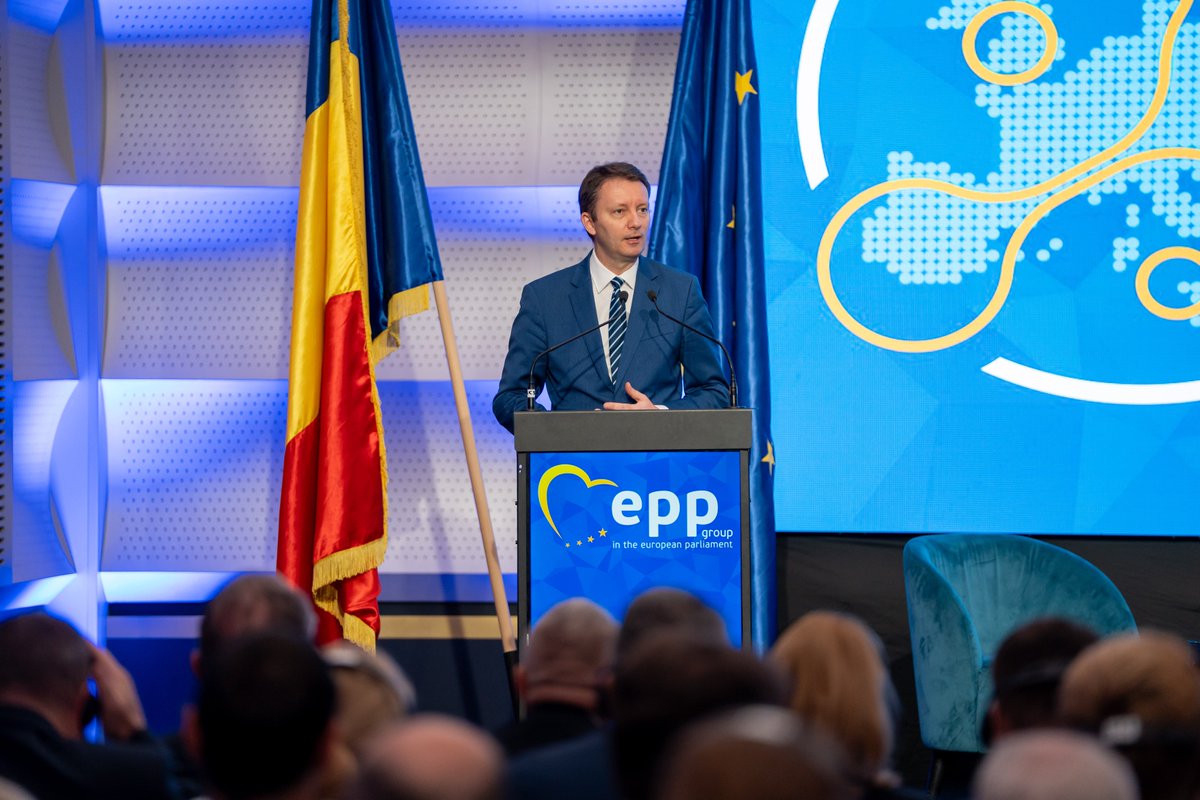
The author said they firmly rejected the Irish Presidency’s negotiating proposal for the next EU budget, arguing that it would cut defence spending as threats increased, reduce investment in competitiveness as Europe lost ground globally, and leave farmers and regions underfunded. #EUBudget #Defence #Investment #IE

2804
E
Emmanuel Macron 3d

Emmanuel Macron thanked German President Frank-Walter Steinmeier for his visit to Bordeaux and presented three sites as symbols of European space and industrial ambitions. He wrote that Ariane 6, at ArianeGroup, affirmed European autonomy in access to space, while the reusable Nyx capsule, developed by the Franco-German company The Exploration Company, foreshadowed, in his view, the space transportation of tomorrow. Macron also mentioned the Laser Mégajoule, where he said that France was mobilizing strategic scientific and technological excellence for its deterrence and sovereignty. He described these three visits as complementary ambitions and presented France and Germany as the engine of a more sovereign, competitive, and independent Europe. #Espace #Industrie #Europe (translated)

3790
David Lisnard 3d

David Lisnard believes that the SCAF and MGCS programs, launched in 2017 by Emmanuel Macron and Angela Merkel to develop the future combat aircraft and tank, are strategic and industrial dead ends. He criticized French leaders for prioritizing Franco-German cooperation without first verifying the convergence of military interests, technological mastery, and the distribution of industrial responsibilities. According to him, a high-level Franco-German seminar held on October 7 would have revealed a different method: starting from the needs of the armed forces and industrial interests, then allowing companies to build viable cooperations before giving them, if necessary, a political translation. Lisnard stated that during the negotiations on the MGCS, Germany was preparing for the succession of the Leopard 2, notably with the Leopard 3 project, and that the delay created a military vulnerability. He called for a break with a conception of European defense that, according to him, confuses cooperation with the dilution of sovereignties. He advocated for a distribution of roles in which the political power sets ambitions and means, the armed forces define their needs, and the industries develop solutions and partnerships. Lisnard also urged for the immediate preparation of the renewal of French ground combat capabilities, beyond the simple replacement of the Leclerc, notably by integrating armored vehicles, drones, robotics, artificial intelligence, and data management. He estimated that this required investments in industry, a recovery of public finances, and a more efficient use of military credits. Finally, he accused the current government of having caused France to lose valuable years and argued that the issue concerned its ability to prepare for future conflicts, ensure the security of the French people, and defend the nation. #Défense #Souveraineté #Coopération (translated)

3472
Riho Terras 3d

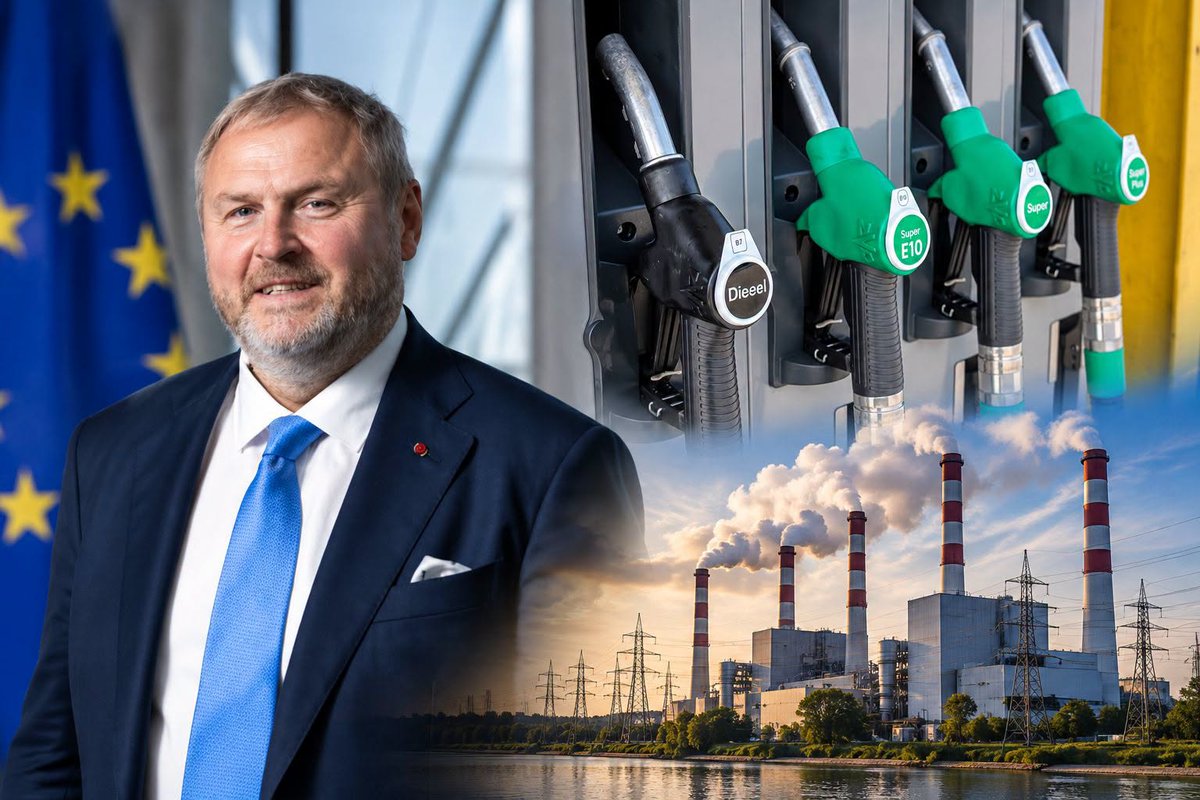
The author said climate policy needed to remain affordable and wrote that they had tabled amendments with colleagues in the EPP Group to delay ETS2 until 2031 and ease ETS1 burdens on industry and backup power. They said the changes were intended to protect households, competitiveness and energy security. https://t.co/eGvGKnT0Mm #Climat #Energie #PolitiqueEuropeenne #EU #BE #DE #FR

2913
David Thunder 4d

The author wrote that the decree could still be reinstated, but described its overturning as a welcome victory and a major setback for what they called the Sanchista regime’s attack on private universities. They characterised the decree as draconian and anti-competitive.

2918
Andrii Sybiha 🇺🇦 4d

Today, at the COREPER level, the Hungarian side gave the “green light” to the negotiating positions on Cluster 2 “Internal Market,” and Cluster 3, “Competitiveness and Inclusive Growth.” Ukrainian Foreign Minister Andrii Sybiha thanked Hungary for its “green light” for opening the second and third clusters of EU accession negotiations with Ukraine, according to MTI. #EUAccession #UkraineHungaryRelations #MinorityRights (translated)

Ukrainian FM thanks Hungary for green light on previously blocked steps in EU accession talks
telex.hu
2022
Siegfried Muresan 🇷🇴🇪🇺 6d

The author said Europe needed to protect its citizens and businesses, invest in security, innovation and competitiveness, and continue supporting farmers and regions. They said this during a plenary session of the European Parliament and argued that asking Europe to do more with less was “not European”. They also began warning about the consequences of an insufficient EU budget, but did not complete the sentence. https://t.co/hRV7Iqp5PY #EUBudget #Europe #Security #EU #Europe

2942
La Libre.be 6d

The Belgian industry, represented by Febeliec, is calling on the Arizona government to prepare for the construction of new nuclear power plants, considered essential to ensure the country's electricity supply by 2050, and more competitive than distant offshore wind turbines. #Nucléaire #Énergie #Belgique (translated)

www.lalibre.be
Nucléaire : l’industrie belge presse l’Arizona d’anticiper la construction de nouvelles centrales
1698
Actualité - Barça 7d

According to Actualité - Barça, Joan Laporta described the match as a great game and a spectacle of football, and said that his team was proud to have broken the attendance record of Liga F. He added that Real Madrid remained a great opponent, but that his team was always very competitive, had played well, and had been effective in front of goal. #Football #LaLiga #FCBarcelona (translated)

14652
Siegfried Muresan 🇷🇴🇪🇺 1w

The European Parliament said the EU needed more resources to meet higher expectations, calling for a larger, more ambitious budget to fund security, defence and competitiveness while maintaining strong support for cohesion and agriculture. It added that new priorities required new resources. https://t.co/YNGa8KydZ9 #EU #Budget #Cohesion #EU #BE #DE #FR #IT #ES

571
Siegfried Muresan 🇷🇴🇪🇺 1w

The European Parliament said that a larger, more ambitious EU budget was needed to give the bloc the means to do more. It called for funding for security, defence and competitiveness, alongside continued strong support for cohesion and agriculture, and said new priorities required new resources. https://t.co/MlbEPuztAh #EUbudget #EuropeanUnion #CohesionPolicy #EU #DE #FR #IT #ES #PL

David Marcus 2w

The author said they were born in Europe and moved to the US in 2008. They wrote that it had been saddening to watch what they described as overregulation drain Europe’s economy and competitiveness, and argued that restricting Europeans’ access to the best AI tools would worsen the decline rather than protect them. #AI #Overregulation #Economy #EU #US

Manfred Weber 2w

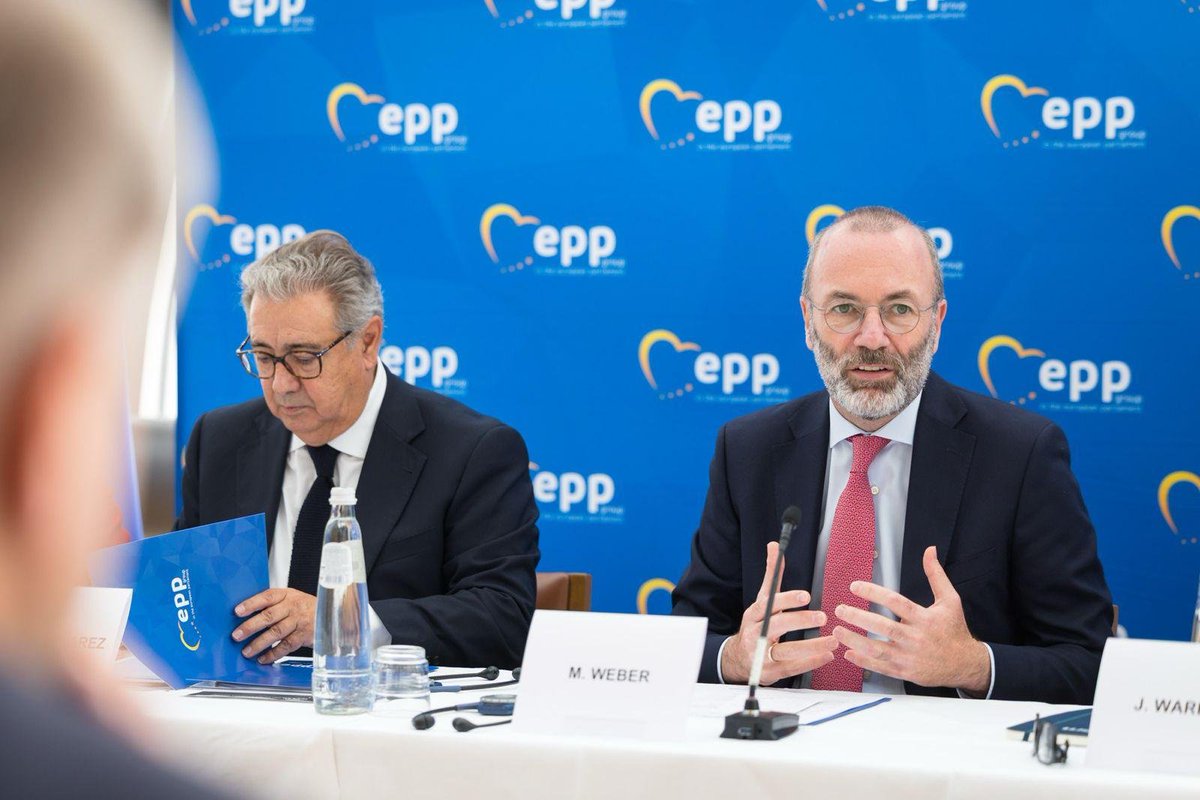
The author argued that Europe should take a less naïve approach to China and defend its own interests. They called for stronger trade-defence measures, more diverse critical supply chains, lower dependence on raw materials, ratification of trade agreements and improved competitiveness within Europe. https://t.co/q7KXLiT74w #Europa #Comercio #InteresesEuropeos #CN #EU

hAdji 2w

I wanted to remain sober at first and not speak, but I have thought a lot about Malek since the announcement of his passing, and I told myself that it was a good thing to pay tribute to him. I met him on a TeamSpeak we called "TS Netteux" back in the day, over 10 years ago now. It was a TS where almost the entire French subtop scene of the early CS:GO was present. I still don't know how I ended up there since I was just a guy who played on FACEIT and had never played as a team. I found myself with pros and semi-pros from the scene, and I was so happy to be with those guys and to be able to play with them. My only obsession was for one of them to give me a chance to play with them as a team. There were several young players in the same situation on the TS, we had no concept of team play, we only thought about individual skill and making highlights to impress the subtop players. I remember one day when Malek had us join a server, with other guys like me who were hanging around on the TS. We were on Dust2, and he was telling us to imagine a line that divides the map in two, the bombsite A and the bombsite B, and that the goal as terrorists was to go to the bombsite where there were the least CTs. He also made comments about our approach to the game: "You only think about shooting and getting kills, but in a round, the time you spend shooting an enemy is 2 seconds. You put all your attention on those 2 seconds, but what are you doing for the next 1 minute and 40 seconds, and what can you do to help your team win the round?" He was teaching us the basics of team play, and we listened to him attentively. I had the opportunity to run into him at LANs from time to time and chat a bit with him. We weren't particularly close, but the exchanges were always fascinating and very direct with him. I think he wanted to be validated by his peers, like all of us, the players and more broadly, the actors of the CS scene in France. And it's true that having a track record helps a lot to obtain that validation, but I think it's important to value his work, and more broadly the work of passionate people in the scene, whether they have a track record or have done great things in the competitive scene or not. Rest in peace, Malek. #CSGO #Hommage #Esport (translated)

14541
Christophe Barraud🛢🐳 2w

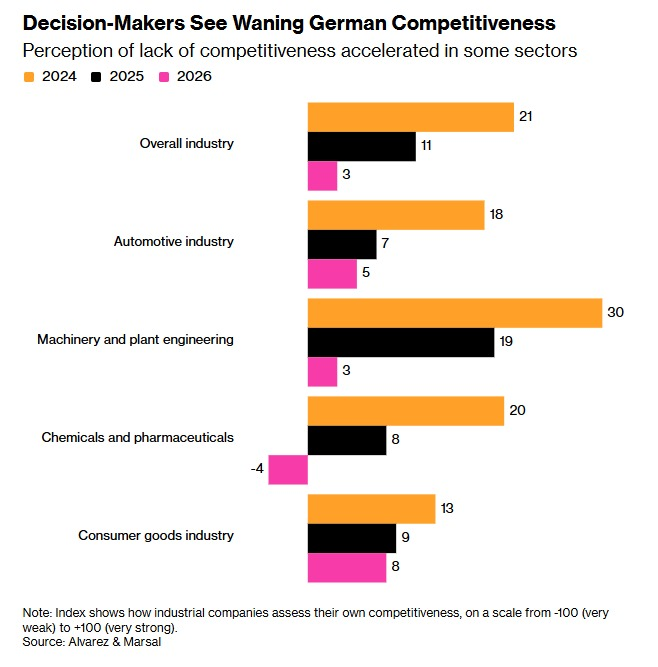
🚨 Germany’s industrial competitiveness index fell from 21 in 2024 to just 3 in 2026. When almost every major industrial sector deteriorates at the same time, it means the problem looks much more structural. 🇩🇪🇨🇳 Germany probably had one of the best suited economic models to the https://t.co/HdZDu20Tmh #Deutschland #Wirtschaft #Industrie #DE #CN

458
Kyriakos Pierrakakis 2w

In a volatile global environment, Europe’s strength lies in its openness, in reducing dependencies and in building up capabilities where it matters. A stimulating discussion with Joachim Nagel of the Bundesbank on how Europe can remain outward looking, resilient and competitive. https://t.co/J28xPHUp8M #Europe #Resilience #Competitiveness #EU #DE

Cristina Andersson 2w

Takeaway from Julia Binders talk: new competitiveness equation is shifting from digital‑only to “AI‑plus‑industrial foundations.” Who controls energy, materials, infrastructure, robotics, and industrial capacity will control the trajectory of AI, autonomy,and strategic resilience #AI #Industry4_0 #StrategicResilience #Nocountrycodesfound.

Krzysztof Graj 2w

AFRICA DAILY REPORT — 27 SEPTEMBER 2026 Major developments reported during the previous 24 hours. 1. SOUTH AFRICA — Police investigate deadly tavern shooting Importance: 10/10 (Critical) South African police launched a manhunt after 17 people were killed at a tavern in Wedela township, southwest of Johannesburg. Police said the motive was not yet known. Source: https://www.reuters.com/world/africa/ 2. DR CONGO — Ebola reaches 63 health zones across seven provinces Importance: 10/10 (Critical) WHO reporting says the Bundibugyo Ebola outbreak has spread to Bulu in Sud Ubangi and Dungu in Haut-Uélé. As of September 23, 7,890 confirmed cases and 3,799 deaths had been reported, while conflict and displacement continue to complicate access and contact tracing. Source: https://www.channelafrica.co.za/ 3. DR CONGO — Mpox confirmed in Bunia while the Ebola response is already under pressure Importance: 9/10 (Very High) A laboratory-confirmed mpox case was identified in Bunia, raising concern about simultaneous infectious-disease pressures on surveillance, laboratories and clinical capacity. Source: https://www.businessday.co.za/ 4. SOUTH AFRICA — Tenth woman's body found in Ekurhuleni investigation Importance: 9/10 (Very High) Police discovered another woman's body east of Johannesburg, bringing the number found during the investigation to ten and intensifying concern over gender-based violence and whether some of the cases are connected. Source: https://www.africanews.com/ 5. NIGERIA–SOUTH AFRICA — Nigeria evacuates another 105 citizens Importance: 8.5/10 (Very High) Nigeria evacuated another group of nationals amid continuing anti-immigrant violence and tensions in South Africa. Nigeria's Foreign Ministry said this was the 13th consular evacuation since June 10, bringing the total evacuated to 1,821 people. Source: https://punchng.com/ 6. KENYA — Report highlights recruitment of Kenyans into Russia's military Importance: 8/10 (High) Reporting by The EastAfrican says Kenya has emerged as a leading African source country in Russian military recruitment, with recruitment practices evolving as African authorities increase scrutiny. Source: https://www.theeastafrican.co.ke/ 7. GUINEA — Former prime minister and opposition leader Sidya Touré dies in Paris Former prime minister and prominent opposition figure Sidya Touré died aged 81. He had led the Union of Republican Forces from exile in Ivory Coast; the UFR was among political parties dissolved earlier this year. Source: https://www.africanews.com/ 8. MADAGASCAR — Youth activists voice disillusionment one year after political upheaval A year after youth-led protests helped force the previous president from power, activists interviewed in Madagascar say the subsequent political transition has not delivered the changes they expected, highlighting continuing questions about governance and the country's transition. Source: https://www.africanews.com/ 9. EAST AFRICA — County levies increase costs along Kenya's regional trade corridors Importance: 7.5/10 (High) Businesses moving goods through Kenya face additional county-level charges along important transport corridors. Because Kenyan roads and the Port of Mombasa serve several landlocked East African economies, higher logistics costs can affect regional trade competitiveness and import prices. Source: https://www.theeastafrican.co.ke/ 10. AFRICA — Governments pursue new financing models for forest protection Importance: 7/10 (High) African governments are developing country-led mechanisms combining domestic expenditure with international climate finance. Kenya is highlighted for its financing approach, while Nigeria is preparing a forest-finance package for COP31. Source: https://capitalethiopia.com/ #Africa #AfricaNews #TopNewsOfAfrica #DRCongo #Bunia #Mpox #Ebola #EbolaOutbreak #PublicHealth #HealthEmergency #DiseaseSurveillance #HealthcareCapacity #OutbreakResponse #CentralAfrica #Ecology #ForestProtection #ClimateFinance #NatureFinance #Conservation #Sustainability #EnvironmentalProtection #Kenya #Russia #MilitaryRecruitment #Security #AfricanSecurity #Geopolitics #EastAfrica #RegionalSecurity #AfricaToday #wrldorg

1725
Krzysztof Graj 2w

Russia’s influence operation arrives ahead of the US midterms With weeks remaining before America's November midterm elections, a familiar type of content has begun appearing online. Videos resembling reports from CNN, the BBC and The New York Times accuse candidates of corruption, antisemitism and misconduct. Hollywood actors appear to denounce Democrats. Other clips claim that warnings about Russian interference are themselves a Democratic disinformation campaign. The reports are fabricated. Graphika, which tracks online influence operations, says it has identified a coordinated campaign targeting candidates in competitive US Senate races. It assesses with high confidence that the material was produced by Operation Overload, also known as Matryoshka – a long-running Russia-aligned influence operation previously active against elections and political debates in Europe and the United States. The activity coincides with a broader warning from American intelligence officials. Classified assessments reported by The New York Times conclude that the Kremlin has authorised another digital influence campaign ahead of the 2026 midterms, aimed primarily at exploiting existing divisions and undermining confidence in American democracy. There is an important distinction. US officials have not reported evidence that Russia is attempting to manipulate voting machines or alter the counting of votes. The operation is about influencing the information environment surrounding the election. Fake scandals for competitive Senate races Graphika traced a concentrated wave of activity between 10 and 14 September. Likely inauthentic or repurposed accounts distributed videos accusing Democratic politicians of corruption, antisemitism and other misconduct. The targets included Senator Jon Ossoff in Georgia, Representative Chris Pappas in New Hampshire and Texas state representative James Talarico, as well as Senate candidates Sherrod Brown in Ohio, Roy Cooper in North Carolina, Mary Peltola in Alaska, Abdul El-Sayed in Michigan, Joshua Turek in Iowa and Troy Jackson in Maine. The selection was not random. These were politicians involved in Senate contests where the result could matter to control of the chamber. The campaign did not rely on a single political narrative. Instead, it attached different accusations to different candidates – corruption, social issues, antisemitism or personal misconduct – while maintaining a consistent production and distribution model. That model is characteristic of Matryoshka: create apparently independent pieces of evidence, disguise them as journalism and distribute them through networks of disposable accounts. Hollywood celebrities who never said what the videos claimed One of the campaign's more distinctive techniques involved genuine footage of American actors. Videos featuring celebrities including Sarah Jessica Parker and Julia Roberts were altered with captions and other material to suggest they were promoting the slogan #AllDemocratsAreCriminals. The technique continued in subsequent material. Fact-checkers identified fabricated New York Times-branded videos using footage of Alyssa Milano, Sean Astin, Rachael Harris, Leonardo DiCaprio, Eric Braeden, Annie Potts and Patrick Fabian. Some of the original footage came from Cameo, where actors record personalised video messages. Their authentic images were retained while fabricated audio, captions or surrounding material changed the meaning entirely. Lead Stories compared several of the clips with the originals and found that the supposed political statements did not appear in the genuine recordings. Eric Braeden's representative separately confirmed that the claim he had joined the anti-Democratic campaign was false. The advantage of the technique is straightforward. Generative AI does not need to create a convincing celebrity from nothing. The operator can begin with authentic footage of a recognisable person and manipulate only the elements necessary to manufacture a political statement. Stealing the authority of real newsrooms Celebrity impersonation was only one layer. The operation repeatedly borrowed the visual identity of established media organisations. Graphika identified material impersonating or falsely citing the BBC, CNN and Politico, alongside references to France's VIGINUM foreign-interference agency and journalist Brandy Zadrozny. Other material reproduced New York Times-style branding. Some fabricated reports made an unusual claim: that Democrats themselves were organising disinformation or “false-flag operations” and then blaming Russia. This creates a defensive layer around the influence operation. Instead of merely distributing false political allegations, the campaign also attempts to discredit future reporting about the manipulation itself. If successful, evidence exposing foreign interference can be reframed as part of the conspiracy. Graphika says it assesses with high confidence that Operation Overload produced these videos. The technique is well established. Earlier investigations by CheckFirst and Reset Tech documented hundreds of falsified pieces of content produced by Operation Overload, often impersonating journalists, institutions and major media brands. AI-generated or manipulated material has increasingly become part of that production system. What US intelligence says Russia is trying to achieve The broader strategic picture comes from American intelligence assessments reported on 18 September. According to US officials familiar with classified findings, the Kremlin has authorised a covert digital influence campaign aimed at Americans during the 2026 election season. Its apparent objective is to seed or amplify domestic divisions and weaken confidence in the political process. Some officials described the principal aim as creating disorder rather than helping a single political party. The publicly identified Matryoshka material examined so far, however, has targeted Democratic candidates. Those two findings should not be treated as contradictory. An operation can exploit partisan divisions while serving the broader objective of making the electoral system appear corrupt, chaotic or illegitimate. US officials also reportedly assess the current Russian campaign as less extensive or coordinated than some previous election operations. Moscow is considered less focused on congressional elections than presidential contests and remains heavily occupied by its war against Ukraine. Russia has denied previous US accusations of election interference. An operation with limited reach – so far There is another reason for caution: producing large quantities of disinformation is not the same as successfully influencing voters. Matryoshka has repeatedly demonstrated an ability to manufacture content at industrial speed, but much of its material receives little genuine engagement. Researchers monitoring the network have previously warned against confusing automated distribution and platform view counts with authentic audience penetration. There are exceptions. A fabricated New York Times-style video featuring Jamie Lee Curtis had accumulated nearly 200,000 views on X by the end of 17 September, according to reporting by The New York Times. Other pieces attracted considerably less attention. There is currently no public evidence demonstrating that the campaign has changed voting intentions or will affect election results. What the September activity demonstrates is something narrower but important: a Russia-aligned influence infrastructure previously used against European elections has now turned significant attention towards the American midterms. The basic method has changed little – impersonate trusted media, manufacture scandals and use networks of inauthentic accounts to distribute them. What has changed is the production technology. Authentic celebrity footage, synthetic voices, manipulated video and rapidly generated fake journalism allow the same operation to produce more tailored material for more candidates at lower cost. The objective does not require Americans to believe every fabrication. Creating uncertainty over which videos, news reports and public statements are authentic can itself degrade trust in the information environment surrounding an election. Sources - Graphika — Russia-Aligned Influence Operation Targets US Midterm Candidates, German State Elections https://www.graphika.com/insights/russia-aligned-influence-operation-targets-us-midterm-candidates-german-state-elections - The New York Times — Russia Aims to Inject Chaos Into Elections, U.S. Intelligence Finds https://www.nytimes.com/2026/09/18/us/politics/russia-election-disinformation-us-intelligence.html - Kathimerini / The New York Times — Russia Aims to Inject Chaos Into Elections https://www.ekathimerini.com/nytimes/1315792/russia-aims-to-inject-chaos-into-elections-us-intelligence-finds/ - CheckFirst — Operation Overload: An AI-fuelled escalation of the Kremlin-linked propaganda effort https://checkfirst.network/operation-overload-an-ai-fuelled-escalation-of-the-kremlin-linked-propaganda-effort/ - CheckFirst — Operation Overload targeting the US election https://checkfirst.network/operation-overload-a-growing-disinformation-threat-now-targeting-the-u-s-presidential-election/ - Lead Stories — Fake NYT videos: Alyssa Milano, Rachael Harris and Sean Astin https://leadstories.com/hoax-alert/2026/09/fact-check-fake-new-york-times-videos-of-alyssa-milano-rachael-harris-sean-astin-falsely-claim-they-support-all-democrats-are-criminals.html - Lead Stories — Fake NYT videos: Leonardo DiCaprio, Eric Braeden and other celebrities https://leadstories.com/hoax-alert/2026/09/fact-check-fake-new-york-times-videos-of-leonardo-dicaprio-eric-braeden-other-celebs-falsely-claim-they-support-all-democrats-are-criminals.html - Brennan Center for Justice — AI Is Changing Foreign Election Influence https://www.brennancenter.org/our-work/analysis-opinion/ai-changing-foreign-election-influence - ODNI — previous US intelligence assessment of foreign election information operations https://www.dni.gov/files/ODNI/documents/assessments/NICM-Declassified-Foreign-Threats-to-US-Elections-After-Voting-Ends-in-2024.pdf - FBI / ODNI / CISA — previous joint assessment of Russian election influence operations https://www.fbi.gov/news/press-releases/joint-odni-fbi-and-cisa-statement-110424 #DISINFORMED #Episode9 #Russia #UnitedStates #USMidterms #Midterms2026 #USElections #ElectionInterference #ForeignInterference #RussianInfluence #RussianDisinformation #OperationOverload #Matryoshka #Disinformation #InformationWarfare #InfluenceOperations #FIMI #ArtificialIntelligence #AI #AIPropaganda #Deepfakes #SyntheticMedia #MediaImpersonation #FakeMedia #FakeNews #PoliticalDisinformation #CelebrityDeepfakes #SocialMediaManipulation #DigitalInfluence #ElectionSecurity #CognitiveWarfare #Graphika #OSINT #Democracy #WRLD

www.graphika.com
Russia-Aligned Influence Operation Targets US Midterm Candidates, German State Elections | Graphika
1382
S
Sandfeen 2w

The Death of the Insult There was a time when being called an idiot was not a public-health emergency. You were called an idiot. You called the other person an idiot. Perhaps you argued, perhaps you fought, perhaps you laughed, had a beer and forgot about it. That may sound primitive. It was also a social technology. In traditional honor culture, an insult was a challenge: if someone attacked your status, you were expected to answer. Men in particular developed cultures of teasing, mockery and competitive abuse in which the ability to give and take an insult could itself demonstrate confidence. Then came dignity culture, with a liberating idea: you don’t have to care what everyone thinks of you. An insult does not necessarily diminish you. Someone else’s contempt does not become your inferiority simply because they express it. Now something else is emerging. Sociologists Bradley Campbell and Jason Manning describe victimhood culture, in which interpersonal offences increasingly become public grievances. The offended party seeks recognition, an audience and sometimes institutional intervention. The old question was: “Are you going to say that to my face?” The dignity question was: “Why should I care what you think?” The new question increasingly seems to be: “Who can I report this to?” This may illuminate an uncomfortable gender difference. Men have historically been more permitted to insult and confront one another directly, while women have often had greater incentives to avoid direct confrontation and use social pressure, criticism and complaint. Neither pattern is exclusively male or female, but cultural habits matter. The danger is a society so determined to protect people from offence that it forgets to teach them how to withstand it. There is a difference between being harmed and being insulted, between injustice and discomfort, and between demanding justice and demanding that nobody make you uncomfortable. We may have travelled from honor, to dignity, to grievance. And perhaps the most subversive sentence left is also the simplest: “Yes, he insulted you. So what?”

921