WRLD

Search

#opinions
2
20minutes 18h

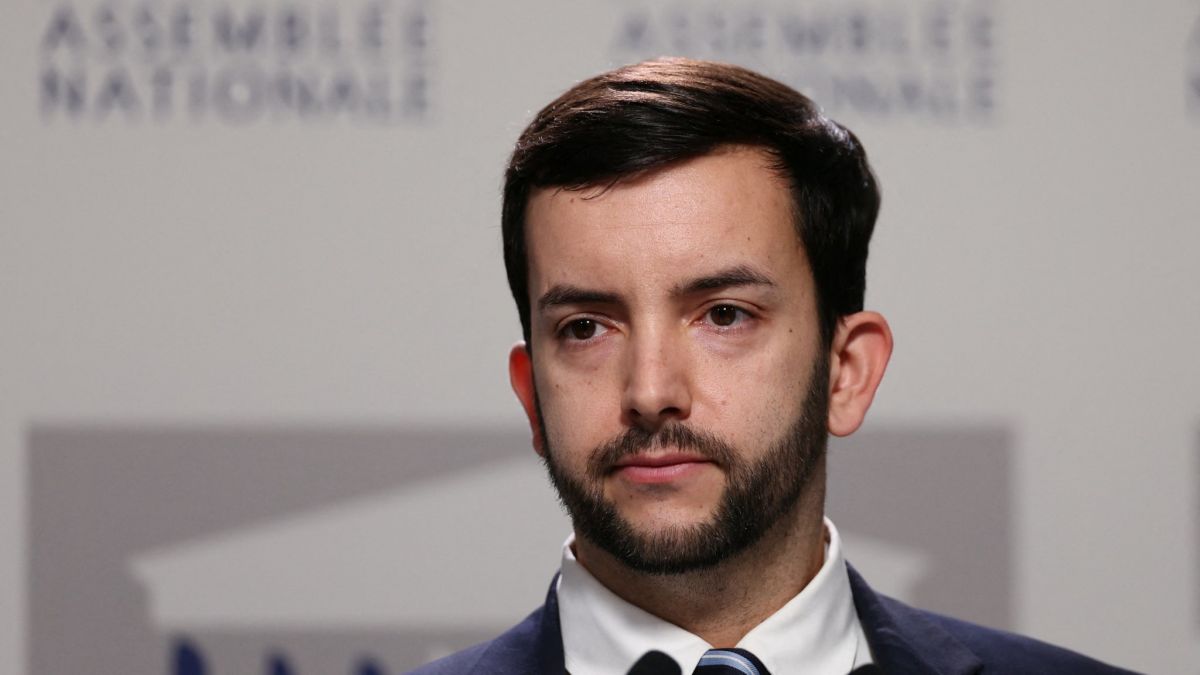
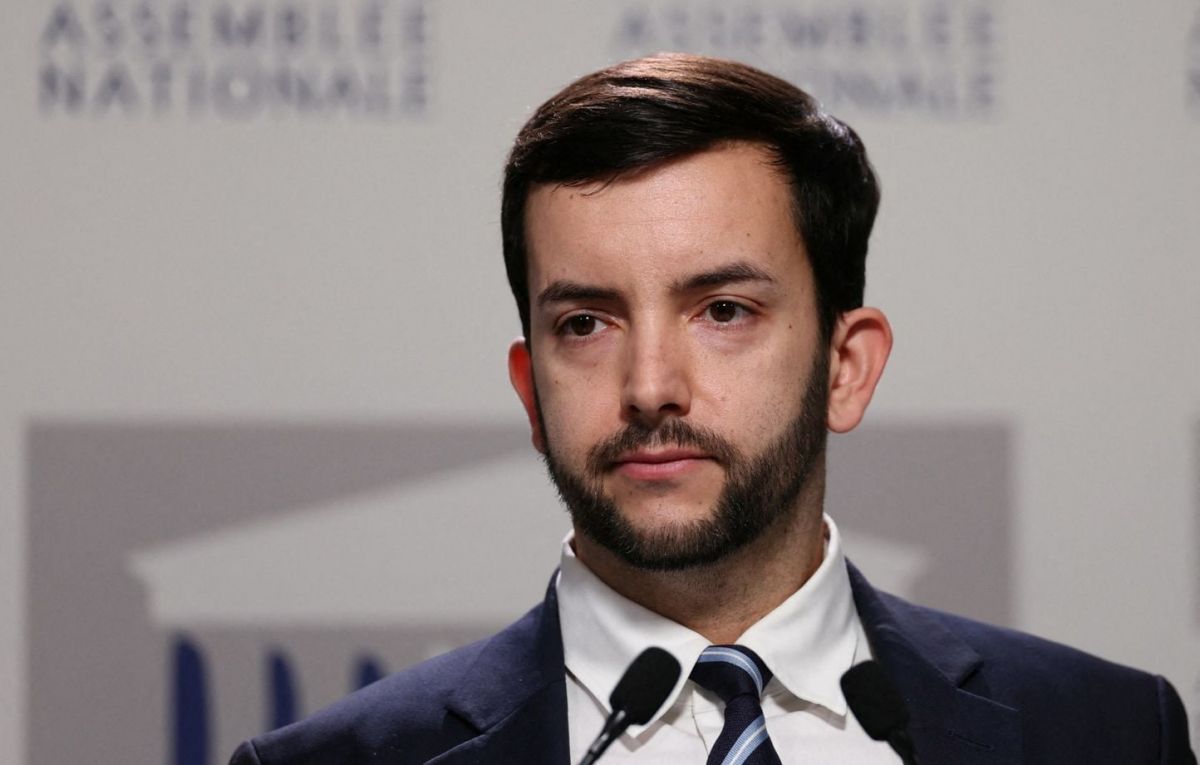
Deputy Jean-Philippe Tanguy of the National Rally admitted that his party attracts extreme individuals, after one of his parliamentary assistants was fired for racist and anti-Semitic views. #RassemblementNational #Racisme #Antisémitisme (translated)

www.20minutes.fr
Rassemblement national : Le député Jean-Philippe Tanguy reconnaît que son parti attire « des dingues »

1996
BFMTV 19h

Jean-Philippe Tanguy, MP of the National Rally, stated that his party attracts infiltrated crazies after the dismissal of a parliamentary attaché for racist and anti-Semitic opinions, while expressing his confidence in Jordan Bardella despite recent controversies. #RassemblementNational #JeanPhilippeTanguy #Politique (translated)

www.bfmtv.com
Attaché parlementaire RN viré: Jean-Philippe Tanguy estime que le parti attire "des dingues"
2037
Peter Johansson 1d

Peter Johansson wrote that the Norwegian part of the Nobel Prize Committee had once again proven unworthy of its mission. He argued that the desire to make a statement against Israel had weighed more heavily than a collective assessment of the person's achievements and referred to compromising information that had been revealed. #Nobelpris #Israel #Opinionsdebatt (translated)

2386
Brèves de presse 1d

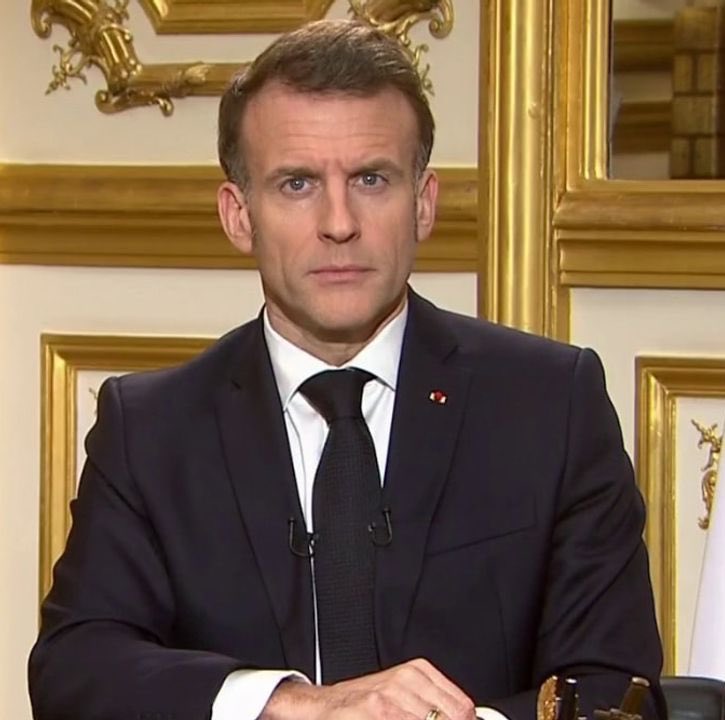
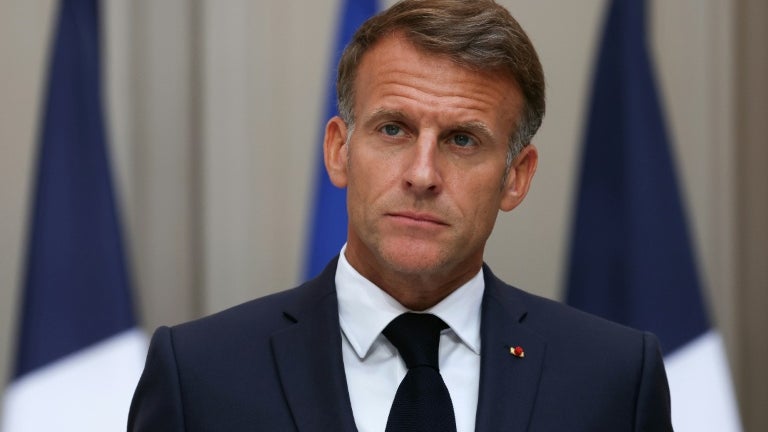
Press reports indicated that, according to Ipsos BVA, Emmanuel Macron's popularity had fallen to its lowest level since he arrived at the Élysée in 2017, with 15% favorable opinions. https://t.co/fTsAMhlPMv #Macron #Politique #France (translated)

2396
Glupatate 1d

Glupatate praised the ability of young people to refute what he considered condescending remarks from right-wing political figures often present on television, mentioning Sofia Tizaoui. https://t.co/LGvcz0fu2q #JeunesTalents #Politique #Opinions (translated)

2589
BFMTV 1d

Emmanuel Macron's popularity has reached a record level of unpopularity with only 15% favorable opinions, according to a survey published by La Tribune Dimanche. #EmmanuelMacron #popularité #sondage (translated)

www.bfmtv.com
Seulement 15% d'opinions favorables: la popularité d'Emmanuel Macron au plus bas depuis 2017, selon un sondage
2581
Le Parisien 2d

Emmanuel Macron's popularity has reached a historically low level with only 15% favorable opinions since 2017. #EmmanuelMacron #Politique #OpinionPublique (translated)

www.leparisien.fr
La popularité d’Emmanuel Macron au plus bas depuis 2017, avec seulement 15 % d’opinion favorable
2639
2
20minutes 2d

The popularity of Emmanuel Macron has reached a historically low level of 15% favorable opinions, while his Prime Minister gained two points after a significant decline the previous month, according to an Ipsos BVA-Cesi survey. #Macron #Popularité #Politique (translated)

www.20minutes.fr
La popularité d’Emmanuel Macron atteint un nouveau cap historique
2858
Le Parisien 2d

In Clermont-Ferrand, the proposal to work three additional Sundays has sparked mixed opinions, particularly due to the economic concerns of the residents. #AccessRefusé #ClermontFerrand #TravailDimanche (translated)

www.leparisien.fr
« Les gens n’ont plus de thunes ! » : à Clermont-Ferrand, les trois dimanches travaillés supplémentaires ne font pas l’unanimité
2445
Per Rosencrantz 3d

Rosencrantz wrote that TV4/Novus's trust measurement showed a significant loss for Andersson, by 11 percentage points. He stated that signs of the development were already visible during the election campaign and assessed that the negative trust development would be very difficult to reverse. https://t.co/cS5YJgKrli https://t.co/5iIChTqlh1 #politik #förtroende #opinionsmätning (translated)

2574
Donald J. Trump 3d

The White House believes that anyone who uses the term 'artificial intelligence', instead of the newer and more precise term 'super-intelligence', is an enemy. But the opinions of experts matter little to Donald Trump, who in his famous book "The Art of the Deal" stated: "I don't rely on sophisticated marketing studies. I do my own polling and I draw my own conclusions." #IntelligenceArtificielle #SuperIntelligence #DonaldTrump (translated)

"Quiconque utilise le terme 'intelligence artificielle' est un ennemi": Donald Trump ne veut plus parler d'IA mais de "super intelligence", Meta et Elon Musk le suivent
www.bfmtv.com
2687
Jacinthe-Eve Arel 🇨🇦🇺🇸🇫🇷 4d

Jacinthe-Eve Arel wrote that Quebec's aspiration for independence did not depend on Elon Musk's opinions and that his support did not make this aspiration more or less legitimate. She added that the future of Quebec deserved a debate focused on substance rather than on the identity of those supporting the idea. #Québec #Indépendance #Identité (translated)

3377
L
Le Soir 4d

The article calls for the restoration of calm in Liège in the face of recent violence, while emphasizing the importance of understanding and engaging in dialogue with young people to avoid polarization of opinions. #Liège #ViolencesUrbaines #DialogueSocial (translated)

www.lesoir.be
Sortir des violences puis de la polarisation
1802
Sakine 5d

Sakine shared a link to Timbro's leader for the day, whose headline described one-sided criticism of Israel as a disgrace. https://t.co/kETMtiTOft #Israel #Timbro #Opinionsartikel (translated)

3274
T
Tobias Rausch 6d

"My door will be open, I will listen, I will take different opinions seriously, and I will try to make decisions in a transparent and understandable way," promised Tobias Rausch in his inaugural speech. #Allemagne #AfD #ExtrêmeDroite (translated)

Allemagne : L’extrême droite décroche la présidence d’un Parlement régional, une première depuis 1945
www.20minutes.fr
2035
Krzysztof Graj 6d

Brazil’s synthetic voters – when AI manufactures public opinion They look like ordinary street interviews. A reporter approaches a passer-by in a Brazilian square and asks a simple question: who will you vote for? A young voter explains why Luiz Inácio Lula da Silva deserves another term. An elderly woman says Brazil needs Flávio Bolsonaro because he represents political renewal and greater security. The locations look plausible, the microphones are visible and the answers sound much like the brief political opinions heard in television vox pops around the world. None of the people are real. Ahead of Brazil’s presidential election on 4 October, fact-checking organisation Aos Fatos identified at least 50 TikTok videos in which artificial intelligence was used to manufacture voters, reporters and apparently spontaneous political interviews. Together, the videos had accumulated around 7.4 million views by mid-August. Some promoted Lula, others Flávio Bolsonaro, while another group used synthetic characters to ridicule or stereotype supporters of one side. Aos Fatos found no apparent evidence linking the accounts producing the videos to either presidential campaign. The opinion poll that never took place The format is important. These were not conventional deepfakes in which a recognisable politician is made to say something he never said. Instead, the creators reproduced the visual language of the vox pop – the short street interview used by broadcasters and social-media creators to illustrate what ordinary people supposedly think. In pro-Lula videos, synthetic voters described themselves as beneficiaries of social programmes or credited the president with improving their lives. In videos supporting Flávio Bolsonaro, artificial interviewees associated him with political renewal, public security and fighting corruption. Other clips were openly hostile: AI-generated characters presented as poor or living in parts of Brazil’s north-east were shown in dirty clothes or run-down surroundings, declaring support for Lula because they supposedly preferred welfare payments to work. The deception is therefore subtler than fabricating a candidate’s statement. It manufactures something that political communication normally treats as evidence of public sentiment. A real vox pop may be unscientific, but the people interviewed at least exist. These videos created the appearance that identifiable social groups – young people, pensioners, welfare recipients or residents of particular regions – were spontaneously expressing political preferences when no such encounters had taken place. An electoral-law specialist interviewed by Aos Fatos described the technique as the fabrication of a “social fact that never occurred”. That captures the central innovation: AI is being used not merely to falsify political speech, but to manufacture the impression of grassroots opinion. Fifty videos, but not one proven network The available evidence does not support describing the 50 posts as a centrally controlled influence operation. Aos Fatos located them through TikTok searches and recommendations produced by the platform itself, then examined the accounts responsible for publication. Most had relatively small individual audiences, although their combined reach was substantial. The first examples identified by the investigation appeared as early as March 2026. Activity increased in June and was concentrated particularly in July and the first half of August as Brazil’s election calendar intensified. Some accounts specialised in AI-generated videos generally, including fabricated podcast-style material. Others were explicitly political or supportive of a candidate, but Aos Fatos found no apparent links between those profiles and the official Lula or Bolsonaro campaigns. That distinction is essential. The evidence demonstrates a common technique and a shared political environment, not a single command structure. Some creators may have been motivated by ideology, others by engagement or monetisation. Publicly available evidence does not establish who commissioned the individual videos or whether any coordination existed between the accounts. This decentralised model also creates a different enforcement problem from a traditional bot network. There may be no headquarters to expose and no infrastructure whose removal disables the entire operation. The format itself can be copied by anyone with access to inexpensive generative-video tools. When the algorithm mixes real and synthetic citizens Aos Fatos documented another important feature of the phenomenon: TikTok’s recommendation system placed AI-generated interviews alongside genuine street interviews. For a user scrolling quickly through the platform, the transition between an authentic citizen and an entirely fabricated one could therefore be almost invisible. In 18 per cent of the 50 videos analysed, there was no indication that the people shown had been generated using AI. After Aos Fatos provided TikTok with the videos, the company said it had removed all of them for violating its rules on edited and AI-generated media. TikTok said its policies require creators to identify synthetic content and prohibit manipulated media capable of misleading users about matters of public importance or impersonating genuine journalistic material. The issue extends beyond one platform. Factchequeado’s review of Brazil’s 2026 election campaign found that synthetic endorsements and other deepfakes had become one of the most visible forms of AI-assisted electoral misinformation, alongside fabricated candidate statements and invented scenes. Brazil already had rules for synthetic politics Brazil entered the campaign with unusually detailed electoral rules governing artificial intelligence. The Superior Electoral Court, the TSE, requires electoral propaganda using synthetic multimedia to disclose clearly that AI was used. More importantly for the fake-voter videos, its rules prohibit synthetic audio or video used to favour or harm a candidacy when it creates or alters the image or voice of a living, deceased or fictitious person. The difficulty is attribution and enforcement. When a synthetic video is published by an official campaign, responsibility can be relatively straightforward to investigate. When it comes from an apparently independent account with no demonstrated relationship to a candidate, lawyers interviewed by Aos Fatos said responsibility is more likely to fall on the individual creator, while imposing electoral sanctions on a campaign would require evidence of a connection. For the final 72 hours before the election and the 24 hours following it, the TSE has imposed additional restrictions on newly published or republished synthetic material involving candidates or public figures, reflecting the particular difficulty of correcting fabricated content immediately before voting. From deepfake politicians to synthetic electorates The Brazilian case illustrates a broader change in political manipulation. The first generation of electoral deepfakes concentrated on famous people: make a politician appear to say something damaging, or fabricate an endorsement from a celebrity. Synthetic vox pops reverse the perspective. The politician can remain completely authentic; it is the electorate around the politician that is fabricated. That changes the psychological proposition of the message. Instead of saying the candidate believes this, the video suggests people like you believe this. Age, clothing, accent, neighbourhood and social class can all be generated to construct an artificial constituency around almost any political claim. There is no evidence that the 50 Brazilian videos identified by Aos Fatos constitute a single centrally directed campaign, nor evidence that they changed voting intentions. What they demonstrate is a technique whose barrier to entry has become extremely low. AI no longer needs to forge the politician. #DISINFORMED #Episode14 #Brazil #BrazilElection2026 #Elections #ElectionDisinformation #ArtificialIntelligence #AI #GenerativeAI #SyntheticVoters #SyntheticMedia #AIAvatars #AIGeneratedVideo #VoxPop #FakeInterviews #Astroturfing #AIPropaganda #PoliticalDisinformation #InfluenceOperations #InformationWarfare #SocialMediaManipulation #TikTok #PublicOpinion #ManufacturedConsent #SyntheticPublicOpinion #DigitalInfluence #Deepfakes #ElectionIntegrity #TSE #AosFatos #FactChecking #OSINT #MediaManipulation #WRLD (translated)

www.aosfatos.org
Eleitores gerados por IA fazem campanha no TikTok e põem em xeque regra do TSE
679
Franceinfo 6d

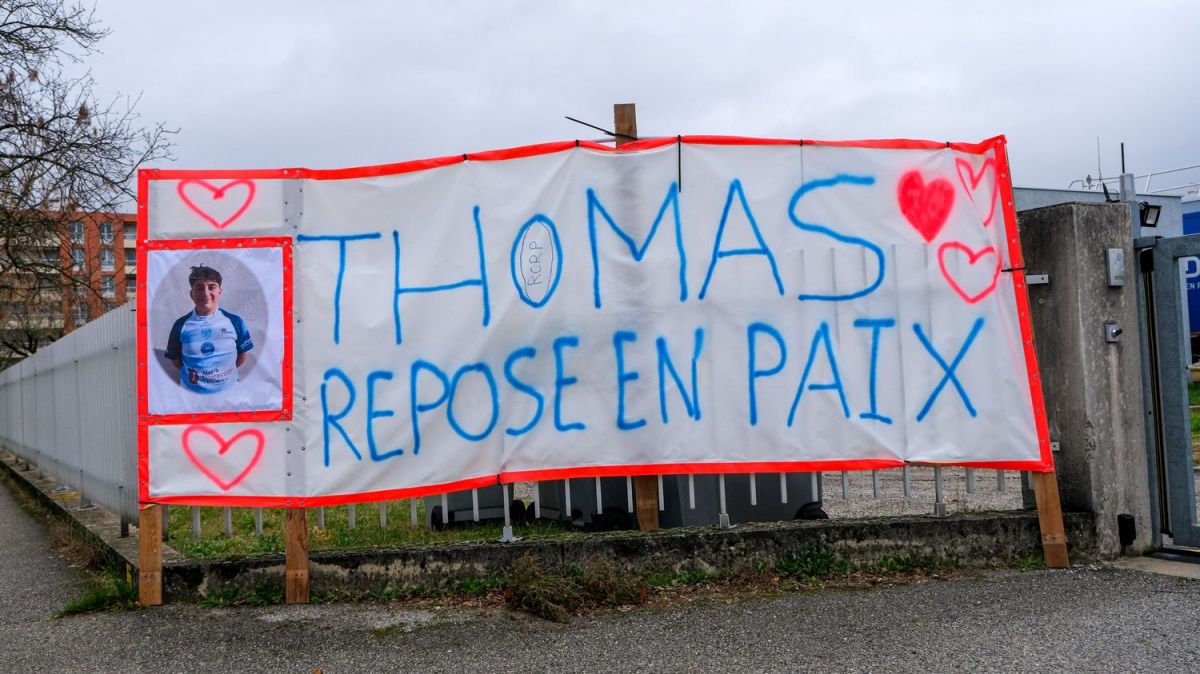
In the documentary After the Anger, Caroline Roux explores the murder of Thomas in Crépol and attempts to revive the dialogue between residents with divergent opinions, while analyzing the social and racial repercussions of this drama. #Crépol #Racisme #Dialogue (translated)

www.franceinfo.fr
"Après la colère" : trois ans après le meurtre de Thomas à Crépol, Caroline Roux tente de faire renaître le dialogue dans un documentaire
1699
Peter Wennblad 7d

Peter Wennblad described the thread as an example of fact resistance and wrote that a recorded and transcribed interview was still not believed because it was conducted by an opinion journalist rather than a reporter. #faktaresistens #media #journalistik (translated)

2948
La Libre.be 7d

A collaborator of Minister Ben Weyts (N-VA) sent a false testimony about homosexuality and Islam to several Flemish media to test their reception of opinions, which was discovered by Knack, leading to apologies from the minister who stated that this personal initiative was not related to his work. #Gay #Islam #Discrimination (translated)

www.lalibre.be
”Gay et musulman": un collaborateur de Ben Weyts (N-VA) derrière un faux témoignage envoyé à plusieurs médias flamands
1476
Josefin Utas 7d

Josefin Utas wrote that Håkan Boström had criticized what she described as bullying in the media. According to her, it paid off to be mean in the media industry, while individuals expressing political opinions not supported by the establishment were thrown out. She argued that it was about power rather than morality and called the analysis in GP Ledare excellent. https://t.co/LjUxXNwTS9 #media #politik #opinionsfrihet (translated)

15100