WRLD

Search

#register
Peter Vesterbacka 21h

The author cited Russian authorities as saying that no plague cases had recently been registered in Irkutsk and that no dangerous infectious disease pathogens had been found among contacts. The author then claimed that plague was spreading rapidly in Russia. https://t.co/r8RPG8WXTz #плутеловирус #инфекциология #Россия #RU

2622
BBC 1d

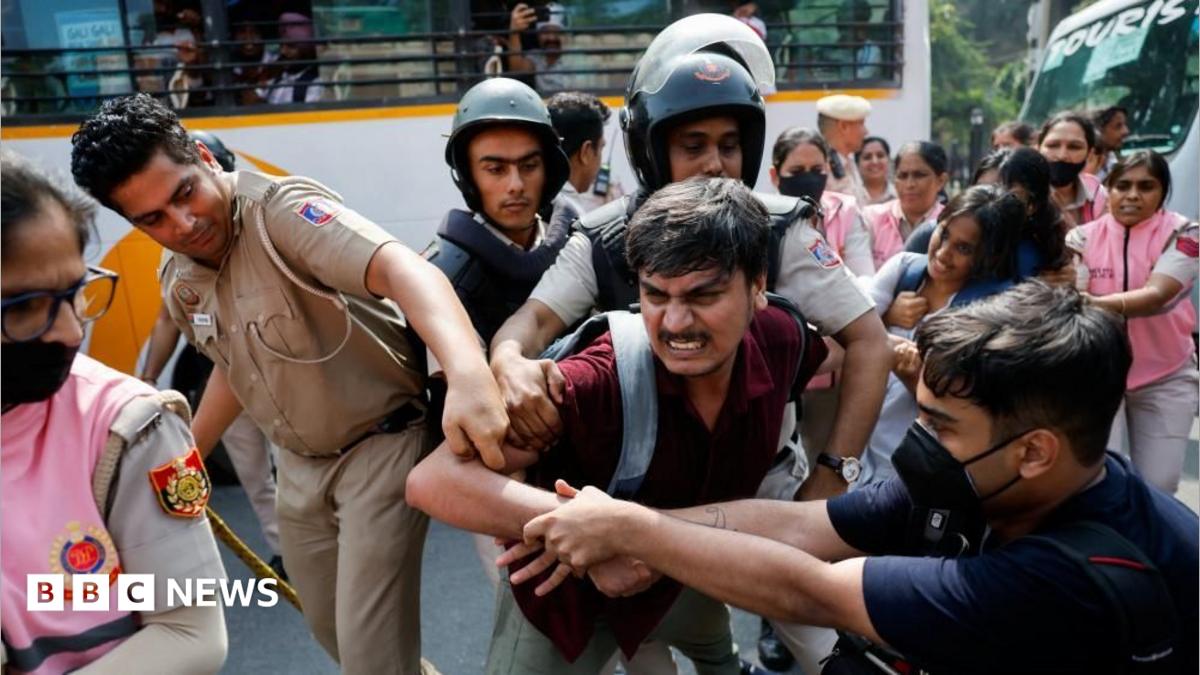
The group - who are not registered as a political party in India - want electoral reforms ahead of crucial state elections. #Protest #ElectoralReforms #Delhi

www.bbc.co.uk
'Cockroach' group leaders among hundreds detained in Delhi protest
2196
Nadja Natalie Isaksen 3d

Nadja Natalie Isaksen shared an open letter from Johan Zedig to Prime Minister Mette Frederiksen and wrote that she hoped Frederiksen would meet with Christian's family. In the letter, Johan Zedig stated that his son Christian, who was a police officer, was assaulted and killed in Copenhagen. According to the father, Christian intervened during a football match to restore order. He claimed that the person who attacked his son had a history of violent crime and that the assault was planned. Johan Zedig requested a face-to-face meeting with Frederiksen, where she would explain how the punishment for a murder could be 12 months in prison. He described the family as being in mourning and wrote that Christian's death should not be in vain. He suggested that the meeting take place at Astrid Lindgren's World in Sweden. #Danmark #Rettigheder #Retssystem (translated)

3347
Hans Jönsson 🇺🇦🇸🇪 3d

Hans Jönsson wrote that Johan Zedig appealed for a meeting with Denmark's Prime Minister Mette Frederiksen after his son Christian was killed in Copenhagen. According to Johan, Christian was a police officer but off duty when he intervened to try to calm a fight during a football match. Johan stated that the person who hit his son had a history of violence and claimed that the attack had been planned. He urged Frederiksen to explain why the punishment for the murder had been 12 months and suggested that they meet in Mariannelund. He described the family's grief and urged people to spread the text. Jönsson said he helped with the dissemination. #fotboll #brott #rättvisa (translated)

2904
ERR 3d

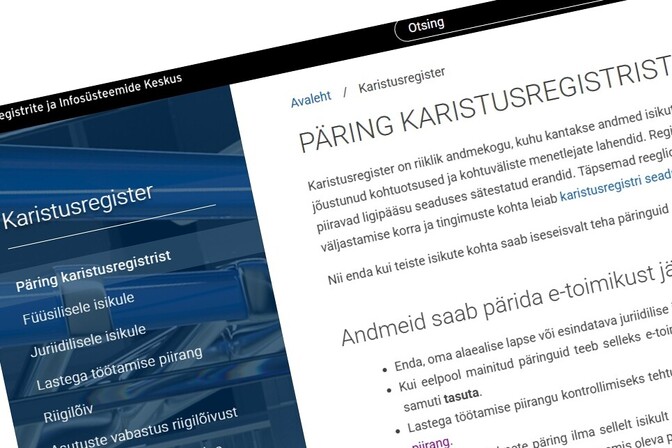
In Estonia, photos of pedophiles will be shown in the criminal records to simplify their identification and protect children, while the control of the system will become automatic and more frequent, but the registry will still remain closed to only authorized individuals. #karistusregister #lastekaitse #seksuaalkuriteod (translated)

www.err.ee
Karistusregister hakkab näitama pedofiilide fotosid
3351
Krzysztof Graj 3d

Russia’s war propaganda gets a soundtrack – how AI-generated songs reached global streaming platforms Russian war propaganda is no longer confined to television broadcasts, Telegram channels or political videos. A study by the Ukrainian threat-intelligence organisation Terrecon has identified 981 songs combining signs of AI generation with pro-Russian military narratives, distributed through an ecosystem that reaches YouTube, Spotify, Apple Music, Deezer and SoundCloud. The songs range from sentimental ballads to rock and heavy metal. Their recurring themes are familiar from conventional Russian wartime propaganda: the heroisation of Russian soldiers, romanticisation of the war, mobilisation, the “Russian world”, commemoration of fallen troops and attacks on Ukraine and its armed forces. Some contain derogatory or dehumanising references to Ukrainians. What is new is not necessarily the message, but the production and distribution model: generative AI allows propagandistic music to be produced rapidly, cheaply and in quantities that would previously have required musicians, studios and producers. Nearly 1,000 tracks identified Terrecon examined 3,725 tracks collected from YouTube, YouTube Music, SoundCloud and the AI music platform Suno. After manual review, researchers classified 981 as showing both indications of AI generation and pro-Russian war propaganda. In 681 tracks they identified 728 propaganda-related keywords or phrases. The largest category was the glorification of the Russian military, followed by romanticised treatment of Moscow’s so-called “special military operation”, mobilisation appeals, narratives about the “Russian world”, and the cult of fallen soldiers and the state. The reach was not merely theoretical. Listening or viewing statistics were available for 608 of the identified tracks; together they had accumulated 86.8 million plays and views, according to Terrecon. A smaller group of 13 high-performing songs accounted for more than 53 million YouTube views and more than 67 million when YouTube Music was included. Among the better-known examples is “Power of Artillery”, a Russian-language rock song praising artillery weapons that passed two million views on YouTube. Most of the tracks for which publication dates could be established appeared after 2024, broadly coinciding with the rapid expansion of consumer AI music generators such as Suno and Udio. That correlation does not prove that AI alone caused the increase, but it illustrates how drastically the economics of production have changed. A propaganda song for as little as $11 Terrecon also tested how difficult it would be to commission such material. Researchers approached 25 creators producing AI-assisted militaristic music; 15 agreed to take commissions. Prices ranged from approximately $11 to $330, while delivery times ranged from two hours to three days. According to Terrecon, some were prepared to produce highly aggressive anti-Ukrainian material, including content intended for audiences involving children from occupied Ukrainian territories. Some creators used Russian intermediary services that provided access to Western AI tools such as Suno and Udio despite restrictions. The researchers then tested several AI generators themselves. Across 40 prompts submitted to Suno, Udio, Mureka, Google Flow Music and ElevenLabs, 25 resulted in successful generations, while safeguards were circumvented in 15 cases. Terrecon reported that four of the five services tested produced Russian-language material containing wartime narratives, although technical problems prevented comparable testing on some systems. In one Udio experiment, the researchers said the model itself introduced more explicit violent language than had appeared in the original promp These tests do not demonstrate that the commercial platforms knowingly support Russian propaganda. They show something narrower: existing safeguards can be inconsistent when political messaging is packaged as music. From generation to Spotify The distribution experiment may be the most revealing part of Terrecon’s research. The team deliberately uploaded test tracks containing explicit hostile language to YouTube, SoundCloud, Spotify and Deezer. Terrecon says none was blocked during the experiment. On SoundCloud, researchers used an account identifying its location as Moscow, disclosed the use of AI and added markers including references to the Russian military and the war. The platform accepted the upload and subsequently offered paid promotional and distribution tools. This does not prove that streaming recommendation systems systematically promote pro-war music. There is currently insufficient public evidence to make that claim. It does demonstrate that material can enter the same commercial distribution infrastructure as ordinary music and, once there, potentially benefit from playlists, searches, sharing and recommendation mechanisms available to other releases. That distinction is important. Propaganda no longer has to announce itself as political communication. On a streaming platform it can look like another song. Culture as a delivery mechanism Music has always been used in wartime propaganda. What generative AI changes is scale. Instead of investing heavily in a limited number of patriotic performers or officially commissioned productions, creators can generate variations across styles, audiences and emotional registers at very low cost. Terrecon found material ranging from war rock to sentimental songs and content styled for younger audiences. Some creators also experimented with cloned celebrity voices and stylistic imitation of established musicians. The format also offers a different relationship with the audience. A political video asks a viewer to consume an argument. Music can accompany commuting, exercise or entertainment and may be encountered outside explicitly political spaces. This does not automatically make it more persuasive, and Terrecon’s research does not establish measurable effects on political attitudes. It does, however, place wartime narratives inside a cultural environment where users may not initially perceive themselves as consuming political messaging. An ecosystem, not a proven Kremlin command structure The strongest evidence supports describing this as a growing AI-assisted pro-Russian propaganda-music ecosystem, not a single operation controlled from Moscow. Terrecon did not establish that the Russian government created, financed or coordinated all 981 tracks. Reporting on the study likewise notes that the extent of direct state involvement remains unclear. There is broader evidence that the Russian state finances cultural projects and digital content supporting the war, including through state-backed funding bodies. That context matters, but it does not allow individual songs in Terrecon’s dataset to be attributed to the Kremlin without additional evidence. The significance of the case lies elsewhere. AI has reduced the cost of producing ideological content, intermediaries can help creators access generation tools, and global platforms can provide distribution. The result is a pipeline in which wartime propaganda no longer has to resemble propaganda at all. It can simply appear in a playlist. Sources Terrecon / Ukrainska Pravda — Daria Verbytska on the research https://www.pravda.com.ua/columns/2026/10/05/8056229/ Suspilne Culture — detailed breakdown of Terrecon findings https://suspilne.media/culture/1417933-rosijsku-voennu-propagandu-maskuut-pid-anime-karaoke-ta-rok-doslidzenna-si-pisen-vid-terrecon/ The Insider — AI-generated Russian war propaganda music https://theins.ru/news/297839 Institute of Mass Information — summary of New York Times reporting https://imi.org.ua/en/news/doslidzhennya-rf-masovo-stvoryu%D1%94-propagandistski-pisni-za-dopomogoyu-shi The Bridge Media — AI-generated songs and Russian military propaganda https://thebridgemedia.com.ua/en/ai-generated-songs-russian-military-propaganda/ Center for Strategic Communication — cost and production of AI propaganda music https://spravdi.org/propaganda-za-11-yak-rosiya-shtampuye-shi-pisni-z-miljonamy-prosluhovuvan/ Times of India — AI-generated Russian war songs https://timesofindia.indiatimes.com/world/europe/ai-sings-russias-war-story-inside-the-rise-of-generative-songs-about-ukraine-conflict/articleshow/134650594.cms EU Council / EUR-Lex — Presidential Foundation for Cultural Initiatives https://eur-lex.europa.eu/legal-content/EN/TXT/?uri=CELEX:32026D1351 Human Rights Watch — Russian state funding of digital and patriotic content https://www.hrw.org/report/2025/07/30/disrupted-throttled-and-blocked/state-censorship-control-and-increasing-isolation #DISINFORMED #Episode16 #Russia #Ukraine #RussianPropaganda #WarPropaganda #MusicPropaganda #AIMusic #ArtificialIntelligence #AI #GenerativeAI #SyntheticMedia #AIPropaganda #Disinformation #InformationWarfare #InfluenceOperations #CulturalPropaganda #DigitalInfluence #NarrativeManipulation #PropagandaMusic #StreamingPlatforms #Spotify #AppleMusic #YouTube #YouTubeMusic #Deezer #SoundCloud #Suno #Udio #RussianWorld #RusskiyMir #MilitaryPropaganda #WarNarratives #Mobilisation #AlgorithmicDistribution #RecommendationAlgorithms #MusicStreaming #PlatformManipulation #Terrecon #OSINT #MediaManipulation #WRLD

224
Euronews English 4d

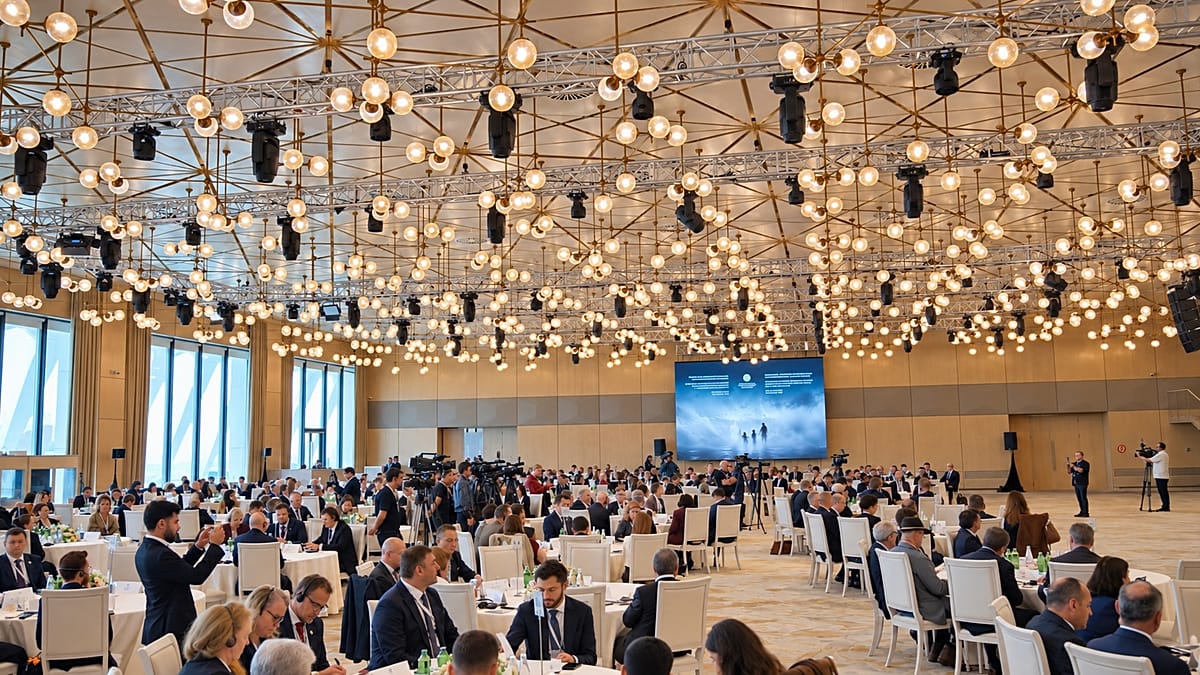
Around 280,000 people are registered as missing in Ukraine alone, with 10,000 new cases added each month, part of a 70% global rise since 2019. Forensic experts meeting in Baku said the obstacle was not forensic capacity but governmental reluctance. #MissingPersons #Ukraine #ForensicScience

www.euronews.com
Experts in Baku urge action as missing persons surge worldwide and in Ukraine
3029
We Don't Have Time 4d

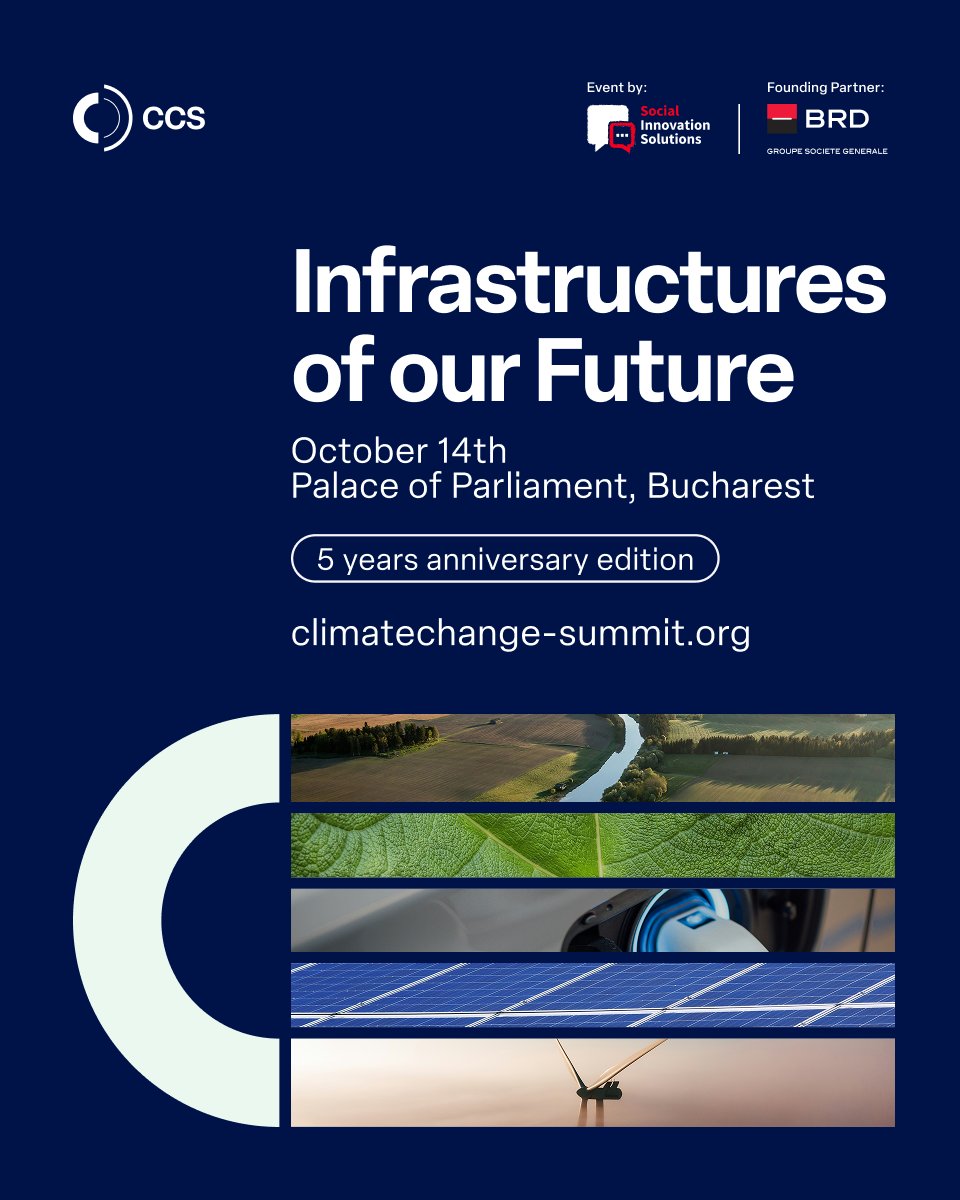
The author announced that the Climate Change Summit, which they described as Central and Eastern Europe’s leading event on climate action, would return on October 14 from Bucharest. They said discussions would cover biodiversity, the circular economy, agriculture, ESG and other topics, and invited readers to register. https://t.co/m0eVtaG1rK https://t.co/52g1ZQmuex #ClimateAction #Biodiversity #Sustainability #RO

3031
René Springer 5d

René Springer wrote that employees of job centers reported daily about Ukrainians who received basic income support and subsequently traveled to Ukraine to work there. He said that these trips home were initially denied; later, Correctiv reported on it, and the federal government acknowledged it. Springer suggested that bus companies should maintain passenger lists that would be cross-referenced with the data of benefit recipients at the job centers. Anyone traveling to Ukraine, according to his plan, should receive a re-entry ban. He estimated the damage at a double-digit billion amount. #Soziales #Arbeitsmarkt #Flüchtlingspolitik (translated)

2933
TV2 ØSTJYLLAND 5d

After a leak of information from the CPR register, pharmacies are tightening their controls when dispensing medication, especially those with abuse potential, which may result in citizens needing to present ID or answer control questions. #CPRlæk #Apoteker #Medicinkontrol (translated)

www.tv2ostjylland.dk
Lastbil beslaglagt efter livsfarlig kørsel
1467
TV2 ØSTJYLLAND 5d

After a leak of information from the CPR register, pharmacies will increase their vigilance when dispensing medication, especially those with potential for abuse, and can now ask control questions and require ID to ensure correct dispensing. #CPRlæk #Apoteker #Medicinkontrol (translated)

www.tv2ostjylland.dk
Oprydning efter spøgelsesbilist spærrer spor
1580
TV2 ØSTJYLLAND 6d

Cyberhotline extends its opening hours to assist citizens after a leak of personal sensitive information from the CPR register. (translated)

www.tv2ostjylland.dk
Cyberhotline udvider åbningstiden efter CPR-læk
1472
Claus Due 7d

Claus Due urged readers to read an article and wrote that the state's security measures had not reacted to the fact that an otherwise legal access to the CPR register had suddenly made 8.8 million queries. He claimed that the activity had been perceived as regular use. https://t.co/S8eL8NIMPW #sikkerhed #data #CPRregister (translated)

11457
Klaus Riskær Pedersen 7d

Klaus Riskær Pedersen criticized the former and current government for the handling of the CPR register. He wrote that systematic data collection could have taken place without being stopped by the security systems and called it a political scandal that required immediate accountability. Pedersen claimed that the problems were due to Minister of Interior and Housing Christian Rabjerg Madsen awarding the operation of the CPR system to the American company DXC Technology in 2022. He also criticized former Minister Kaare Dybvad Bek, stating that the tender in 2021 was carried out under the GPA agreement, which allowed American companies to bid. According to Pedersen, the agreement allowed for the exclusion of foreign bidders on grounds of security and vital national interests, and he believed that the CPR register, which he described as critical infrastructure, should not have been entrusted to a foreign company. He placed the responsibility for the lack of control systems on the Agency for Digitization and believed that the government's leadership bore political accountability for the appointments. He wrote that Prime Minister Mette Frederiksen had not made the decision herself but had appointed a political leadership that he considered lacking in professionalism and experience. He also claimed that the government had been so preoccupied with the war in Europe by the end of 2022 that it had not concerned itself with the CPR system. Furthermore, Pedersen criticized that the Parliament, in his opinion, would choose Henrik Frandsen from the Moderates as chairman, even though Frandsen had only served in Parliament for four years. He described Frandsen as unworthy of the position and accused him of serious moral shortcomings. Pedersen wrote that all Danish citizens must remain vigilant until those responsible figured out whether new CPR numbers were necessary, suggesting that Russia would be to blame. He alleged that businesses' access to the register had been shut down, causing chaos, and that the lack of identity verification could make it difficult for public institutions to hire educators. He compared the situation to previous problems in the police's data systems. #Inkompetence #Politik #Danmark (translated)

12367
Mariya Gabriel 7d

The author said communities lost access to trusted information when a media outlet went dark. The post invited readers to join UNDRR, UNESCO and IFRC on 14 October in Geneva or online for a #DRRDay event on how supporting the media could strengthen risk communication. It included a registration link.

227
Krzysztof Graj 1w

Disinformation for hire – the network of 70 fake newsrooms sold as a service The websites looked local. Naija Pulse appeared to cover Nigeria, Echo Berlin Germany, The British Daily Britain, Fifty States the United States and Commonwealth Post Australia. Each had its own branding, articles, supposed journalists and matching social-media presence. Taken individually, they resembled small independent news outlets. According to Anthropic, however, they were parts of a single commercial influence network spanning six continents. Anthropic’s September 2026 threat report identifies the operation as GTG-54002, a commercial “influence-as-a-service” network that used Claude to generate and rewrite political content at industrial scale. Investigators linked roughly 70 fabricated news websites to around 70 matching X accounts and more than 250 additional inauthentic commenting accounts designed to create the appearance of genuine public engagement. The network produced at least 8,913 articles in about 20 languages before Anthropic disrupted the activity. The significance of the case is not simply the number of fake sites. It is the business model. The network did not consistently promote one government, party or ideology. Anthropic found that its political position changed according to the apparent interests of different customers. The company therefore described it as a commercial influence operation: political manipulation offered in much the same way as other outsourced digital services. A fake media ecosystem built at scale Anthropic says the infrastructure was created rapidly. Domains were registered from France during a roughly ten-week period in mid-2025 and deployed through shared technical infrastructure, allowing investigators to connect publications that outwardly appeared unrelated. Most of the supporting social-media accounts were also created within a narrow timeframe in June and July 2025. The sites were designed to look like functioning local newsrooms rather than anonymous propaganda pages. Articles carried fabricated bylines belonging to journalists who, according to Anthropic, did not exist. Each outlet had a corresponding account on X, while a second layer of fake profiles commented on and amplified the articles. Many of those accounts used AI-generated profile photographs. The result was a three-tier structure: the newsroom published the story, the branded social account distributed it, and apparently ordinary users supplied the appearance of public reaction. Some of those sites remained publicly visible after the operation was exposed. The British Daily, for example, described itself as providing “conservative insights” on British sovereignty and migration, while Commonwealth Post presented itself as an Australian liberal publication focused on democracy, migration and regional security. Those contrasting editorial identities illustrate the central feature identified by Anthropic: the network was capable of taking different political positions in different markets. Claude as a publishing engine Claude was not simply asked to draft occasional articles. The operators built a structured production pipeline around it. Prompts required fixed JSON outputs, formatted HTML, precise character limits and internal links, allowing articles to move directly into an automated publishing workflow. The system could generate entirely new material or take reporting produced by legitimate journalists and rewrite it to fit a desired political perspective. Anthropic identified three recurring techniques. The same source article could be rewritten in opposite ideological directions for different audiences; a political interpretation could be added to a story that originally contained none; and material could be moved from one country to another after its original context had been removed. The articles were also structured to improve the apparent authority of the sites in search engines, helping the network imitate ordinary digital publishing practices rather than simply broadcasting propaganda. This is where generative AI changes the economics of an influence operation. A conventional network of dozens of supposedly local publications would normally require writers, translators, editors and social-media staff. Here, much of that production could be standardised and automated while human operators concentrated on political direction, customer requirements and distribution. The DRC–Rwanda conflict as a test case The clearest concentration of activity involved the Democratic Republic of Congo. Anthropic identified 318 articles concerning the DRC across the fake-news network. The material generally supported positions aligned with the Congolese government, particularly on regional mineral agreements and tensions with Rwanda. Early in the network’s growth, many of the fake social-media personas following and amplifying its accounts also presented themselves as Congolese. Investigators observed one especially revealing episode on 11 September 2025, when multiple sites published almost identical articles about the DRC–Rwanda conflict within approximately three minutes of one another. The wording and political tone were adjusted for different regional audiences, while associated X accounts distributed the links in a coordinated pattern. Anthropic said the activity contained signals suggesting that one or more customers had interests connected to the DRC–Rwanda conflict. It did not, however, identify those customers and explicitly stated that it found no evidence that any government had directed the operation. That distinction is essential. The content may have benefited a political actor without demonstrating that the actor commissioned or controlled it. Influence without ideology Commercialisation is what distinguishes GTG-54002 from many state-linked information operations. A government propaganda network usually has an identifiable strategic direction. A commercial influence provider does not need one. Its infrastructure can support one position in one country and the opposite position somewhere else, provided different customers are willing to pay. That makes attribution more difficult. Analysts cannot necessarily infer the operator from the ideology of the content because ideology may simply be part of the service package. The enduring asset is the infrastructure: domains, publishing systems, fake journalists, social-media accounts and automated amplification. Anthropic says the operation was disrupted before it achieved significant genuine reach. It classified GTG-54002 as Category Two on the Brookings Breakout Scale: material circulated across the network’s own sites and associated social accounts but showed no evidence of substantial penetration into authentic communities. Most of the 8,913 articles generated little observable engagement from real users. That limited impact is important. The case should not be presented as a successful global manipulation campaign. It is better understood as evidence that the infrastructure required to run such campaigns has become cheaper, faster and increasingly commoditised. The deeper shift is that a fake media ecosystem no longer has to be built around a single political cause. It can be built once, automated and then repurposed for the next customer. Disinformation, in this model, is no longer only a political instrument as it turend into the service. Sources: Anthropic — Countering misuse of AI: September 2026 https://www.anthropic.com/threat-intelligence-report-september-2026 Business Standard — AI scaling fake newsrooms, surveillance and online scams https://www.business-standard.com/technology/tech-news/anthropic-report-ai-fake-newsrooms-dating-surveillance-scams-126091100730_1.html Mimikama — KI baut 70 erfundene Nachrichtenportale https://www.mimikama.org/ki-netzwerk-erfundene-nachrichtenportale-echo-berlin/ Poliscoop Media — Anthropic exposes DRC propaganda network https://www.poliscoopmedia.com/articles/anthropic-exposes-drc-propaganda-network-20260911 The British Daily — example of a fabricated outlet identified in the network https://www.british-daily.com/contact Commonwealth Post — example of a fabricated outlet identified in the network https://commonwealth-post.com/category/science MalPulse — infrastructure references for network domains https://www.malpulse.com/infra-pivots/usom-pivots/list/?page=1105 Keywords: #DISINFORMED #Episode13 #DisinformationAsAService #InfluenceAsAService #FakeNewsrooms #FakeMedia #SyntheticMedia #ArtificialIntelligence #AI #GenerativeAI #ClaudeAI #Anthropic #Disinformation #InfluenceOperations #InformationWarfare #FIMI #CommercialInfluence #PoliticalManipulation #NarrativeManipulation #NarrativeLaundering #SourceLaundering #MediaImpersonation #FakeJournalists #SyntheticPersonas #Astroturfing #SocialMediaManipulation #CoordinatedInauthenticBehaviour #CIB #DigitalInfluence #AutomatedPropaganda #ContentAutomation #AIPropaganda #LKMCompany #NaijaPulse #AxumVoices #JamboJournal #EchoBerlin #TheBritishDaily #FiftyStates #CommonwealthPost #DRC #Rwanda #OSINT #WRLD

www.anthropic.com
Countering misuse of AI: September 2026 / Anthropic
569
Kurier 1w

Starting in 2029, a water management register will be introduced in Austria to systematically record large water extractions, which, however, is criticized by environmental organizations due to the high thresholds and late start. #Wasserentnahme #Klimawandel #Digitalisierung (translated)

kurier.at
Register kommt: Bald wissen wir, wer wo wie viel Wasser entnimmt
1484
BBC 1w

A voter mobilisation campaign has registered huge numbers of young people but it is not clear who they are backing. #GenZPolitics #YouthEmpowerment #KenyaElection2027

www.bbc.co.uk
Making politics 'fun, trendy, sexy': How Gen Z could shape Kenya's next election
1942
Margus Tsahkna 2w

The author welcomed progress by the Council of Europe, saying the Register of Damage for Ukraine had opened all 43 categories for claims related to damage caused by Russia in Ukraine. They wrote that Russia’s aggression had caused devastation across many aspects of life, including loss of life and destruction of homes. #Ukraine #Russia #Claims #RU #UA

229
NRC 2w

A mandatory professional register for real estate agents must counteract fraudulent practices in the real estate sector by binding them to codes of conduct and subjecting them to an independent dispute committee. #makelaars #woningmarkt #register (translated)

www.nrc.nl
Aanzetten tot overbieden of prijsafspraken tussen bevriende makelaars: register moet malafide makelaarspraktijken tegengaan
1487