WRLD

Search

#satellites
Gunther Fehlinger-Jahn 2d

The post compared Elon Musk’s 2026 challenge to India through satellites, technology and competition with Commodore Perry’s 1853 arrival in Japan, which it said had forced the country to confront the outside world. It ended with an unfinished sentence about India. https://t.co/nga0nHcQkQ #ElonMusk #DigitalIndia #Technology #IN #JP


2715
Joan Larroumec 2d

Joan Larroumec presented the tensions between France and Germany as a result of increasing competition, particularly in the defense industry. He indicated that Berlin planned military spending of €108 billion in 2026, compared to €57 billion for Paris, and nearly €140 billion in 2027. According to him, Germany was seeking to use these expenditures as a lever for economic transformation, while its historical industrial model was weakened. Larroumec notably cited the decline in German exports to China, which he claimed fell from €106 billion in 2022 to €81 billion in 2025, as well as a reduction of 142,400 jobs in the German automotive industry since 2019. He also wrote that German defense start-ups had received $3.5 billion in investments in 2026, compared to $375 million in France, and that Berlin had concluded a framework agreement with Helsing and Stark that could reach €4.3 billion. He estimated that this strategy heightened rivalries between the two countries and jeopardized their joint programs. He reported that Paris and Berlin acknowledged on June 8 that the SCAF could not be successfully executed, and that the Chief of Staff of the Armed Forces announced Germany's abandonment of the MGCS tank program. He also mentioned competition in drones, artificial intelligence, and space, where, according to him, Germany was seeking to reduce France's position. Finally, Larroumec argued that France's financial difficulties limited its ability to invest in defense and risked weakening its industry. He stated that French and German interests were becoming increasingly misaligned and that this situation could lead to chaotic episodes in Europe. #France #Allemagne #Défense (translated)

3719

The author contrasted the United States, which he claimed sent satellites into space every day, with China, which organized humanoid robot races. He then mentioned France and shared a link. https://t.co/XTICenCZwu #technologie #innovation #espace (translated)

2681
Josef Aschbacher 4d

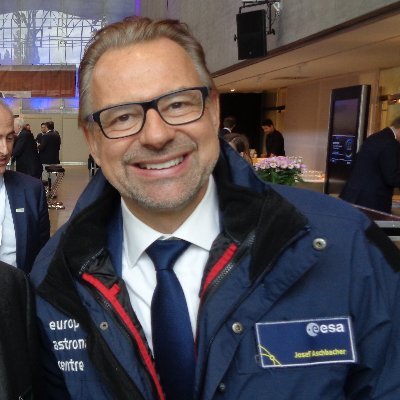
The post said the Copernicus programme was envisioned, built and launched by Europe, and credited the European Space Agency with delivering satellites that enabled it. It added that Sentinel-3C was demonstrating its capabilities. https://t.co/vbrE9orz7Y https://t.co/ZR9vP8SJrN #Copernicus #Satellite #ESAEurope #EU #ESA

2693
Le Parisien 5d

Starlink recently presented new images of its V3 satellites in orbit. #Starlink #satellites #société (translated)

www.leparisien.fr
Starlink dévoile de nouvelles images de ses satellites V3 en orbite
1467
Franceinfo 6d

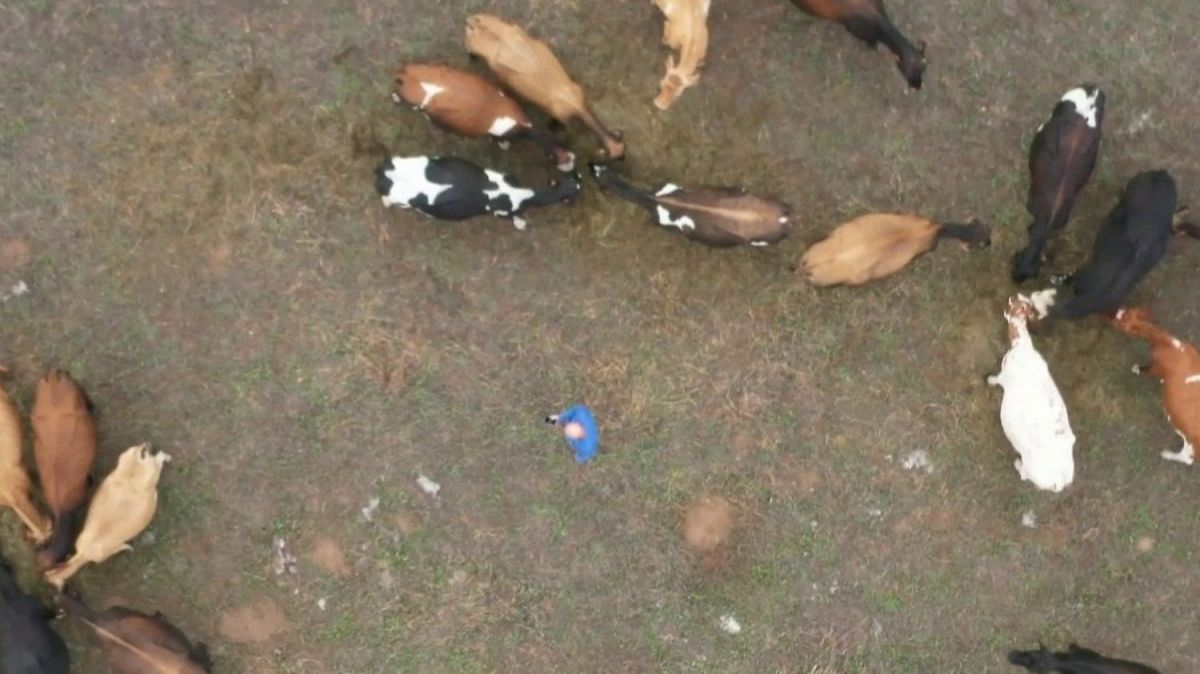
Breeders are concerned about the errors in the satellite system used to assess drought and determine compensations, claiming that it underestimates the damage or detects non-existent droughts. #Sécheresse #Éleveurs #Satellites (translated)

www.franceinfo.fr
"Pour le satellite, il n'y a pas de sécheresse" : des éleveurs dénoncent les erreurs du système utilisé pour mesurer, depuis l'espace, le manque d'eau et déterminer leurs indemnisations
1696
BBC 6d

The city's space boom raises questions about the role of the state in backing important industries. #SpaceIndustry #Satellites #Glasgow

www.bbc.co.uk
Europe is pouring billions into space. Can Glasgow's satellite industry keep up?
1698
2
20minutes 1w

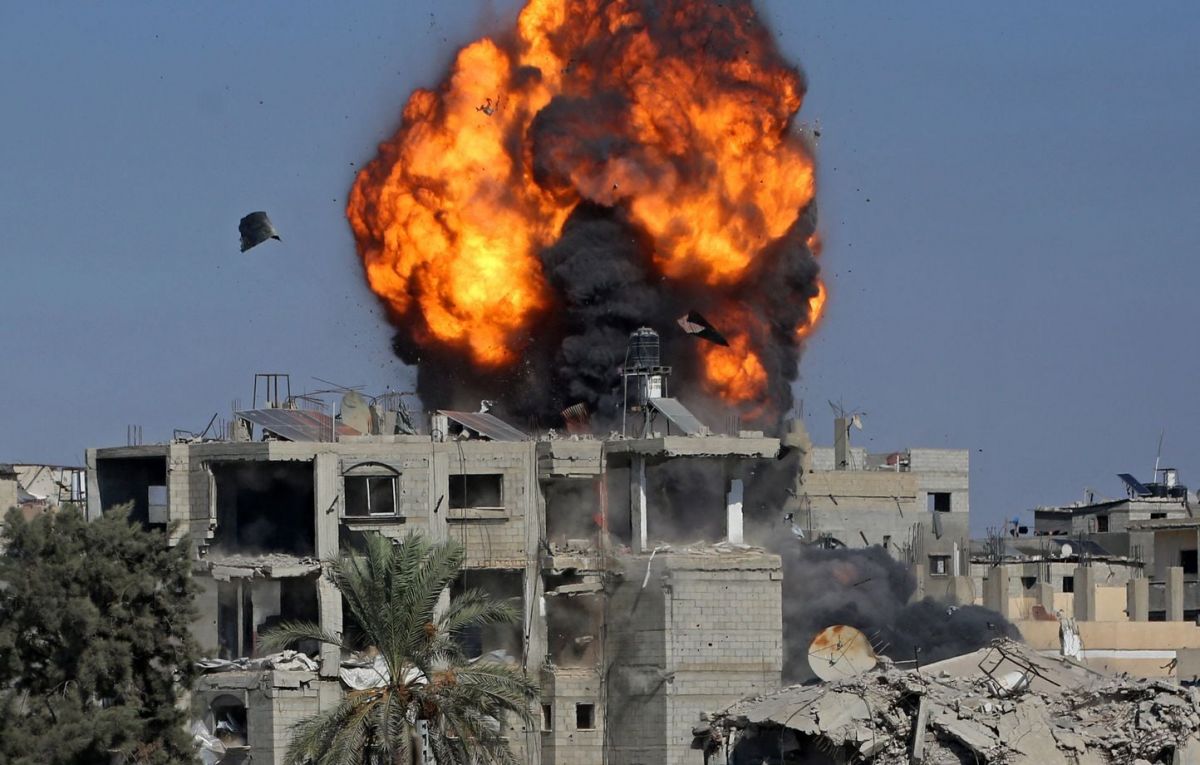
Satellite images reveal that the city of Gaza is 80% devastated by Israeli bombings since October 7, 2023, with estimates indicating that nearly 223,000 tons of bombs have been dropped, equivalent to about 15 times the power of the Hiroshima bomb. #Gaza #ConflitIsraéloPalestinien #Destruction (translated)

www.20minutes.fr
En trois ans, Gaza aurait subi en bombardements l’équivalent de 15 fois Hiroshima ?
2169
Philip Pilkington 2w

The post referred to an “unknown air closure” and said Kpler had been contacted to review its in-house satellite imagery. It added that the company was working to establish direct contact with the satellite and said further updates would follow.

1603
L'Obs 2w

The documentary "Musk, Bezos and the others in the conquest of Mars" highlights the ecological cost of "New Space," revealing the harmful consequences of massive satellite launches on the environment, pollution, and the proliferation of space debris. #Espace #Environnement #Documentaire (translated)

www.nouvelobs.com
« Musk, Bezos et les autres à la conquête de Mars » : le coût caché du « New Space »
1375
Armin Ronacher ⇌ 2w

Just to put this into perspective for Europeans: Starship today delivered 49t of payload (all Starlink satellites). That's 2/3rds of the total payload that all ESA Ariane 6 missions delivered in two years. We can and must do better! #SpaceInnovation #Starship #ESA #EU #US

804
Rima Hassan 2w

Regardez ces images satellites de Gaza et écoutez l’inconsistance l’hypocrisie et la laideur d’âme des négationnistes y compris à gauche comme @rglucks1 qui vous diront de ne surtout pas employer le mot génocide. https://t.co/ryriOnn0qG #Gaza #Génocide #Hypocrisie #PS #GZ

8731
Rima Hassan 2w

Regardez ces images satellites de Gaza. et écoutez l’inconsistance l’hypocrisie et la laideur d’âme des négationnistes y compris à gauche comme @rglucks1 qui vous diront de ne surtout pas employer le mot génocide. https://t.co/ZjruRo50YE #Gaza #Génocide #Hypocrisie #IL #PS

230
BBC 3w

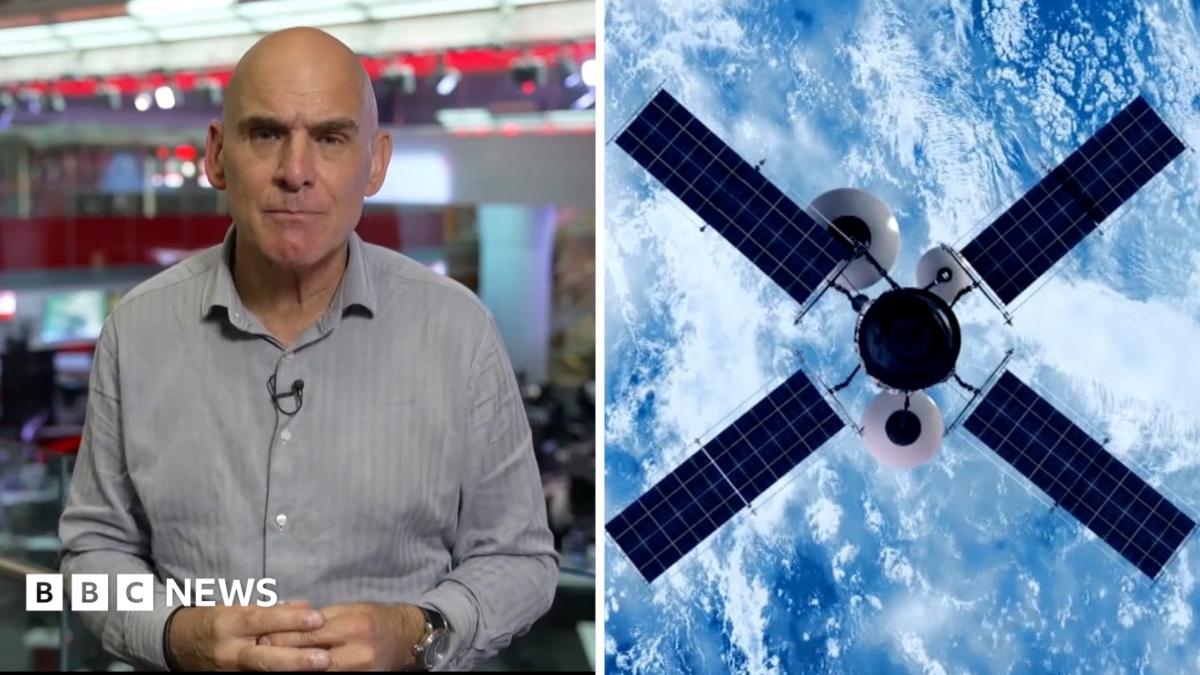
The UK has jammed satellites to defend itself from hostile threats, the BBC has been told. #SpaceRace #SatelliteSecurity #MilitaryTechnology

www.bbc.co.uk
Watch: The arms race in space explained
1731
BFMTV 3w

Le Royaume-Uni va créer un escadron spatial pour protéger ses satellites contre les menaces, en réponse à la nouvelle dynamique de la course à l'espace et aux récentes confirmations d'armements en orbite, selon le ministre britannique de la Défense. #Défense #Espace #RoyaumeUni

www.bfmtv.com
"Ce siècle dépendra du contrôle de l’espace": le Royaume-Uni va créer un escadron spatial pour protéger ses satellites "à l'aide de technologies avancées, y compris de guerre électronique"
1617
P
Patrice CUDICIO 3w

The Return to Feudalism in 21st Century Garb A simple observer's viewpoint, with no claim to hold any absolute truth. The Veneer Cracks There is something strangely archaic about the world unfolding before our eyes, despite its satellites, artificial intelligence, and promises of infinite progress. Here and there, we witness heads of state behaving like feudal lords of another age, patiently nibbling away at the neighboring territory, redrawing borders through force rather than law, as if governing a nation mattered less than expanding one's fiefdom. No names need be mentioned here: current events provide plenty of illustration, and each reader will recognize, according to their own geography and moment of reading, the faces that embody this observation. But this return to the archaic is not confined to grand geopolitical stages. It also permeates the most ordinary daily life—that of social media, where anyone can pour out venom against another without filter, without form, and often without the slightest argument. The verbal jousting of yesteryear, with its codes, its rhetoric, its tacit limits, has given way to raw invective, snap judgment, instant condemnation. We no longer debate: we execute, verbally—and sometimes it doesn't stop at words. The Vanished Inhibition What strikes one, in this dual observation—macro-political and micro-social—is the lifting of an inhibition we thought firmly anchored. Centuries of cultural construction, education, philosophy, sometimes religion, had patiently shaped mechanisms of restraint: politeness as social ritual, argumentation as a mode of resolving disagreement, respect for one's opponent as the very foundation of democratic debate. This civilizational veneer, however fragile it always was, seemed to hold. Today it is cracking, and the question—which for me remains a simple hypothesis, not a certainty—is why. A convenient explanation would blame social media: anonymity, the distance of the screen, the instantaneousness of publication would favor verbal acting-out without the usual mediation of reflection. This is probably true, but likely insufficient. For technology here is only an accelerant, an amplifier—not necessarily a root cause. A Poorly Formatted Neocortex? The more unsettling hypothesis—and I frame it explicitly as hypothesis, not scientifically established fact—is that of a failure in the formation of moral judgment and tolerance toward otherness. The human brain possesses the neural structures enabling empathy, the distancing of impulsive reaction, the acceptance of difference—but these capacities are not innate in their full exercise: they must be built, educated, cultivated, like a muscle that needs patient training from childhood onward. If this education in otherness, nuance, and tolerance of disagreement erodes—for multiple and undoubtedly complex reasons that are not mine to settle here—then older reflexes resurface: instinctive distrust of the stranger outside the clan, the law of the strongest, the logic of territorial or symbolic predation. The other ceases to be a possible interlocutor and becomes once again a potential threat, unless they belong to my tribe, my clan, my party, my digital bubble. Two Scales, One Logic What is striking, in this deliberately provocative reading, is the structural similarity between these two scales. The leader who invades a neighbor in the name of a rediscovered greatness or a reinvented historical right, and the anonymous internet user who insults a stranger in the name of an unnegotiable conviction, may obey the same underlying grammar: that of territory to defend, clan to protect, the other to subdue or exclude rather than understand. The form has changed—satellites instead of horses, tweets instead of heralds—but the substance, in this reading that remains mine alone and commits no one else, seems strangely identical to that of feudal rivalries: the absence of a recognized third party, of an accepted common rule, of a respected arbitrating authority. Everyone becomes judge and party, lord of their own digital or territorial fiefdom. A Civilization on a Knife's Edge Norbert Elias, in his Civilizing Process, showed how Western societies had historically built, with remarkable slowness, an increasing control over impulses and direct violence, in favor of more sublimated forms of social regulation. What we may be observing today—and I stress again the conditional—is a form of regression in this process, or at least a fragilization of the veneer it had patiently laid down. Should we see this as an effect of great technological accelerations, which shake up our cognitive rhythms without leaving education time to adapt? A deeper crisis of the institutions tasked with transmitting these values of tolerance—school, family, religion, the rule of law? Or simply a cyclical movement of human history, where phases of policed civilization alternate with darker backlashes? I have no certain answer, and I would be wary of anyone claiming to hold one. In Conclusion, a Shared Concern This text is only a viewpoint, necessarily partial and subjective, on a world that sometimes seems to replay ancient logics in new clothing. Perhaps I am wrong to perceive a continuity between the feudal lord and the contemporary dictator, between the anonymous online insult and the absence of education in nuance. Perhaps these phenomena are unrelated, or too complex to be thus summarized. But if this reading, even partially, hits the mark, then the question that arises is less one of technological regulation—though necessary—than the far more arduous question of how to rebuild, generation after generation, this capacity to accept the other in their difference, to debate without destroying, to coexist without necessarily dominating. This undertaking, if it exists, will not be resolved by an algorithm nor by an international treaty. It plays out, patiently, in the most elementary education—the one that teaches a child that the other is not a threat, but a possibility. Bibliography Elias, N. (1939). Über den Prozess der Zivilisation [The Civilizing Process]. Oxford: Blackwell (Eng. trans. 1978-1982). Lorenz, K. (1963). Das sogenannte Böse [On Aggression]. London: Methuen (Eng. trans. 1966). Arendt, H. (1970). On Violence. New York: Harcourt, Brace & World. Han, B.-C. (2013). Im Schwarm [In the Swarm: Digital Prospects]. Cambridge, MA: MIT Press (Eng. trans. 2017).

693
Beatrice Rosen 3w

L'eau va être le nouveau covid, pour terroriser la population et créer de nouvelles taxes et de nouvelles restrictions. Le WEF parle de ça depuis plusieurs années, et envoie ses youngs leaders faire la "vente" du concept. Ici, Bilderberg Boy est un bon petit soldat. Il commence à faire croire à la population qu'un pays qui a 20000 km de littoral sur une planète recouverte d'eau à 70% doit entrer en mode pénurie. À l'ère de l'IA, des satellites et des techs de pointe, on ne pourrait pas désaliniser et approvisionner nos compatriotes ? #Eau #Politique #Environnement

14727
Manfred Weber 4w

The best answer to today’s threats is unity and a European pillar of defence. Mitterrand and Kohl made European unity irreversible through the euro. We need the same approach for defence with joint command structures, a single market for armaments, European drones and satellites. https://t.co/WI4nmXvd2d #EuropeanDefense #Unity #EuroIntegration #EU #DE #FR

232
P
Patrice CUDICIO 4w

ET SI UNE PANNE D'INTERNET ÉTAIT NOTRE MEILLEUR AVENIR? Petite réflexion ironique sur ce qu'une coupure de réseau pourrait nous apprendre sur nous-mêmes Imaginez la scène. Une éruption solaire d'ampleur exceptionnelle, un cyberévénement majeur, ou plus prosaïquement une panne géante de satellites : internet s'effondre, les réseaux sociaux s'éteignent, les smartphones deviennent de simples cailloux lumineux inutiles. Combien de temps avant que nous redécouvrions... nos voisins ? Le laboratoire involontaire des catastrophes Ce n'est pas de la pure science-fiction. Les sociologues qui étudient les grandes pannes de courant, les catastrophes naturelles ou les confinements ont observé un phénomène récurrent et fascinant : dans les heures et les jours qui suivent, on assiste souvent à un regain spectaculaire de solidarité spontanée. On sort sur le pas de la porte. On demande à l'inconnu du dessus s'il a de la lumière. On partage sa réserve d'eau, ses bougies, ses informations. La queue à la boulangerie, d'ordinaire un non-lieu silencieux où chacun fixe son écran, redevient un espace de parole. C'est comme si, privés de l'alternative confortable du monde numérique, nous retrouvions d'un coup de vieux réflexes sociaux qu'on croyait éteints. Le lien ne serait donc pas mort — simplement mis en veille, faute d'être sollicité. Le confort comme ennemi du lien Il y a là un paradoxe cruel : ce n'est pas que nous ayons perdu la capacité de faire société, c'est que nous disposons en permanence d'une échappatoire plus simple. Pourquoi affronter l'inconfort d'une conversation avec un inconnu, le risque d'un silence gênant, l'effort d'une rencontre imprévisible, quand on peut se réfugier dans le flux rassurant et sans surprise de son fil d'actualité ? Le numérique n'a pas supprimé notre besoin de lien — il a simplement rendu son évitement extraordinairement facile. Et comme tout organe qu'on cesse de faire travailler, notre "muscle social" s'atrophie doucement, sans qu'on s'en aperçoive vraiment, jusqu'au jour où une panne généralisée nous oblige à le réactiver en urgence. Faut-il attendre le cataclysme ? Rassurons-nous : il existe heureusement des formes plus douces, et surtout volontaires, de reconnexion. On voit ainsi fleurir depuis quelques années les tiers-lieux, ces espaces hybrides entre café, bibliothèque et atelier partagé, conçus justement pour recréer du lien de proximité. Les jeux de société connaissent un retour en grâce inattendu chez les jeunes adultes. Les "digital detox", ces périodes volontaires de déconnexion, se multiplient, preuve que le besoin est bien identifié, même s'il reste difficile à satisfaire sans un minimum de contrainte extérieure. Bref c'est pas gagné! Il y a une forme d'humour noir à imaginer qu'il faille une catastrophe cosmique pour nous rendre notre humanité relationnelle. Mais peut-être n'avons-nous pas besoin d'attendre le soleil : il suffirait, plus modestement, de réapprendre à laisser volontairement notre téléphone dans notre poche, de temps en temps, pour voir si le monde autour de nous n'a pas, finalement, beaucoup plus à offrir que notre fil d'actualité. Une chose est sûre : en cas de panne générale, la boulangerie et le bistro du coin risquent de redevenir, l'espace d'un instant, le plus grand réseau social du quartier, à condition de se chauffer au bois.

1046
L
Le Soir 4w

La fusée européenne Vega-C a réussi à placer en orbite les satellites Sentinel-3C et Flex, qui amélioreront l'observation de la Terre et le suivi des impacts du changement climatique, lors d'un lancement effectué depuis Kourou. #VegaC #Sentinel3C #ChangementClimatique

www.lesoir.be
La fusée Vega-C réussit le lancement de Sentinel-3C et Flex, deux satellites au service du climat
17430