WRLD

Search

#stereotyp
Antoine Léaument 🇫🇷 52m

Antoine Léaument wrote that some people never paid attention to their words or actions, but were interested in them every five years, when they were surprised by their strength. He added that they then realized that they did not match the caricatures that were made of them, while continuing to accuse them of it. #Société #Incompréhension #Stéréotypes (translated)


1188
Östgöta Correspondenten 2d

The course Engineering Professionalism at Linköping University, which has been nicknamed the shower course, is criticized for reinforcing negative stereotypes about computer science students, despite the course's aim to teach important non-technical skills. #duschkursen #LiU #ingenjörsprofessionalism (translated)

www.corren.se
Bakom rubriken ”duschkursen” – så fungerar LiU:s omstridda kurs
2306
𝗠𝗜𝗖𝗞𝗔 3d

Micka believed that OL had not returned to the level displayed against Rennes, considering the play to be slow, predictable, and technically imprecise. He added that the team was falling back into a stereotypical game when their plan A failed, mentioning in particular Openda's positioning, the lack of creativity and intensity, as well as an attitude he described as calculating. #OL #Football #Ligue1 (translated)

2452
Le Monde.fr 3d

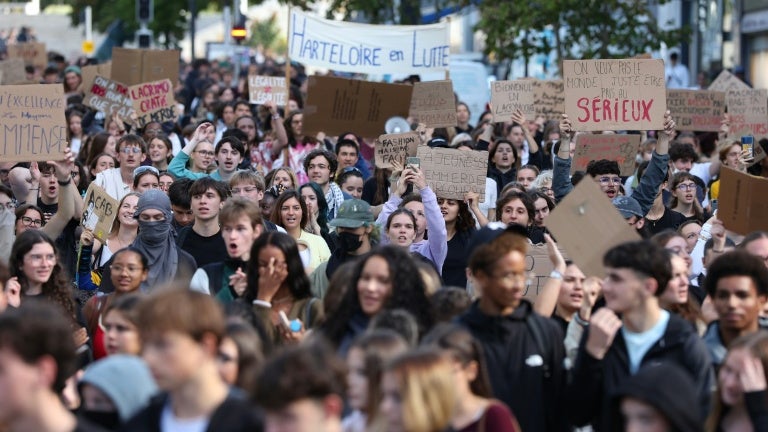
The article explores the feeling of contempt experienced by the mobilized youth, who feel stigmatized and reduced to negative stereotypes. #ProblemasDeConexión #ExtensionesDeNavegador #ConfiguraciónDelNavegador (translated)

www.lemonde.fr
« On nous fait passer pour des casseurs, des idiots ou des enfants pourris gâtés » : au sein de la jeunesse mobilisée, le sentiment d’être méprisé
2679
Marcin Józefaciuk 5d

Marcin Józefaciuk criticized the response of Deputy Minister Sławomir Ćwik to a question about paternity testing at the request of a parent and the responsibility for knowingly misleading a man. As he wrote, in the League of Debates Portal Zero, Ćwik accused the question of stereotyping women and said he trusts his wife. Józefaciuk believed that instead of addressing legal protections, the deputy minister assessed the intentions of the questioner and referenced personal experience. Józefaciuk reminded that — as he pointed out — the law establishes paternity by presumption concerning the mother's husband, acknowledgment of paternity, or court ruling, without universal DNA verification. He also noted that the test result does not, in itself, change the legal status of a father. He criticized Ćwik's statement that a man can test a child despite the mother's objection, invoking Article 97 § 2 of the Family and Guardianship Code, which — according to him — requires joint decision-making by parents on significant matters concerning the child and provides for court resolution in case of disagreement. The author wrote that the mother's husband essentially has a year from obtaining information about the lack of biological paternity to file a lawsuit for its denial, no later than until the child reaches adulthood. He also cited case III CZP 91/11, in which the Supreme Court described the case of a man who acknowledged a child in 1998, and his acknowledgment was annulled in 2006 after paternity was excluded by DNA testing. Józefaciuk called for presenting data on such proceedings and considering the available procedure for paternity testing, taking into account the protection of the child and the possibility of judicial resolution of the other parent's objections. He also advocated for a discussion about the consequences of proven, deliberate misleading. He qualified that the DNA result alone does not prove fraud nor automatically grant the right to recover expenses, and the child should not be held accountable for the actions of adults. #Polska #ojcostwo #prawo (translated)

3048
Krzysztof Graj 6d

Brazil’s synthetic voters – when AI manufactures public opinion They look like ordinary street interviews. A reporter approaches a passer-by in a Brazilian square and asks a simple question: who will you vote for? A young voter explains why Luiz Inácio Lula da Silva deserves another term. An elderly woman says Brazil needs Flávio Bolsonaro because he represents political renewal and greater security. The locations look plausible, the microphones are visible and the answers sound much like the brief political opinions heard in television vox pops around the world. None of the people are real. Ahead of Brazil’s presidential election on 4 October, fact-checking organisation Aos Fatos identified at least 50 TikTok videos in which artificial intelligence was used to manufacture voters, reporters and apparently spontaneous political interviews. Together, the videos had accumulated around 7.4 million views by mid-August. Some promoted Lula, others Flávio Bolsonaro, while another group used synthetic characters to ridicule or stereotype supporters of one side. Aos Fatos found no apparent evidence linking the accounts producing the videos to either presidential campaign. The opinion poll that never took place The format is important. These were not conventional deepfakes in which a recognisable politician is made to say something he never said. Instead, the creators reproduced the visual language of the vox pop – the short street interview used by broadcasters and social-media creators to illustrate what ordinary people supposedly think. In pro-Lula videos, synthetic voters described themselves as beneficiaries of social programmes or credited the president with improving their lives. In videos supporting Flávio Bolsonaro, artificial interviewees associated him with political renewal, public security and fighting corruption. Other clips were openly hostile: AI-generated characters presented as poor or living in parts of Brazil’s north-east were shown in dirty clothes or run-down surroundings, declaring support for Lula because they supposedly preferred welfare payments to work. The deception is therefore subtler than fabricating a candidate’s statement. It manufactures something that political communication normally treats as evidence of public sentiment. A real vox pop may be unscientific, but the people interviewed at least exist. These videos created the appearance that identifiable social groups – young people, pensioners, welfare recipients or residents of particular regions – were spontaneously expressing political preferences when no such encounters had taken place. An electoral-law specialist interviewed by Aos Fatos described the technique as the fabrication of a “social fact that never occurred”. That captures the central innovation: AI is being used not merely to falsify political speech, but to manufacture the impression of grassroots opinion. Fifty videos, but not one proven network The available evidence does not support describing the 50 posts as a centrally controlled influence operation. Aos Fatos located them through TikTok searches and recommendations produced by the platform itself, then examined the accounts responsible for publication. Most had relatively small individual audiences, although their combined reach was substantial. The first examples identified by the investigation appeared as early as March 2026. Activity increased in June and was concentrated particularly in July and the first half of August as Brazil’s election calendar intensified. Some accounts specialised in AI-generated videos generally, including fabricated podcast-style material. Others were explicitly political or supportive of a candidate, but Aos Fatos found no apparent links between those profiles and the official Lula or Bolsonaro campaigns. That distinction is essential. The evidence demonstrates a common technique and a shared political environment, not a single command structure. Some creators may have been motivated by ideology, others by engagement or monetisation. Publicly available evidence does not establish who commissioned the individual videos or whether any coordination existed between the accounts. This decentralised model also creates a different enforcement problem from a traditional bot network. There may be no headquarters to expose and no infrastructure whose removal disables the entire operation. The format itself can be copied by anyone with access to inexpensive generative-video tools. When the algorithm mixes real and synthetic citizens Aos Fatos documented another important feature of the phenomenon: TikTok’s recommendation system placed AI-generated interviews alongside genuine street interviews. For a user scrolling quickly through the platform, the transition between an authentic citizen and an entirely fabricated one could therefore be almost invisible. In 18 per cent of the 50 videos analysed, there was no indication that the people shown had been generated using AI. After Aos Fatos provided TikTok with the videos, the company said it had removed all of them for violating its rules on edited and AI-generated media. TikTok said its policies require creators to identify synthetic content and prohibit manipulated media capable of misleading users about matters of public importance or impersonating genuine journalistic material. The issue extends beyond one platform. Factchequeado’s review of Brazil’s 2026 election campaign found that synthetic endorsements and other deepfakes had become one of the most visible forms of AI-assisted electoral misinformation, alongside fabricated candidate statements and invented scenes. Brazil already had rules for synthetic politics Brazil entered the campaign with unusually detailed electoral rules governing artificial intelligence. The Superior Electoral Court, the TSE, requires electoral propaganda using synthetic multimedia to disclose clearly that AI was used. More importantly for the fake-voter videos, its rules prohibit synthetic audio or video used to favour or harm a candidacy when it creates or alters the image or voice of a living, deceased or fictitious person. The difficulty is attribution and enforcement. When a synthetic video is published by an official campaign, responsibility can be relatively straightforward to investigate. When it comes from an apparently independent account with no demonstrated relationship to a candidate, lawyers interviewed by Aos Fatos said responsibility is more likely to fall on the individual creator, while imposing electoral sanctions on a campaign would require evidence of a connection. For the final 72 hours before the election and the 24 hours following it, the TSE has imposed additional restrictions on newly published or republished synthetic material involving candidates or public figures, reflecting the particular difficulty of correcting fabricated content immediately before voting. From deepfake politicians to synthetic electorates The Brazilian case illustrates a broader change in political manipulation. The first generation of electoral deepfakes concentrated on famous people: make a politician appear to say something damaging, or fabricate an endorsement from a celebrity. Synthetic vox pops reverse the perspective. The politician can remain completely authentic; it is the electorate around the politician that is fabricated. That changes the psychological proposition of the message. Instead of saying the candidate believes this, the video suggests people like you believe this. Age, clothing, accent, neighbourhood and social class can all be generated to construct an artificial constituency around almost any political claim. There is no evidence that the 50 Brazilian videos identified by Aos Fatos constitute a single centrally directed campaign, nor evidence that they changed voting intentions. What they demonstrate is a technique whose barrier to entry has become extremely low. AI no longer needs to forge the politician. #DISINFORMED #Episode14 #Brazil #BrazilElection2026 #Elections #ElectionDisinformation #ArtificialIntelligence #AI #GenerativeAI #SyntheticVoters #SyntheticMedia #AIAvatars #AIGeneratedVideo #VoxPop #FakeInterviews #Astroturfing #AIPropaganda #PoliticalDisinformation #InfluenceOperations #InformationWarfare #SocialMediaManipulation #TikTok #PublicOpinion #ManufacturedConsent #SyntheticPublicOpinion #DigitalInfluence #Deepfakes #ElectionIntegrity #TSE #AosFatos #FactChecking #OSINT #MediaManipulation #WRLD (translated)

www.aosfatos.org
Eleitores gerados por IA fazem campanha no TikTok e põem em xeque regra do TSE
679
Damian Patecki 1w

Damian Patecki described a conversation with a friend whom he assessed as very attractive and successful in her career due to her own work. According to him, the woman said that she would prefer to be a man because she could dedicate herself to her career until the age of 40 and then start a family. She also believed that men have it better. Patecki wrote that he was unable to convince her that such a comparison was based on the assumption that as a man she would be at least 183 cm tall, have a large penis, a stereotypically attractive appearance, and professional success. He added that in his opinion, she was comparing herself to a small group of successful men who— as he put it— lived "as if on a code." He believed that a similar mistake was made by feminists when they spoke about male privileges, overlooking the large group of men who are in a worse situation. #równouprawnienie #gender #sukces (translated)

12651
ERR 1w

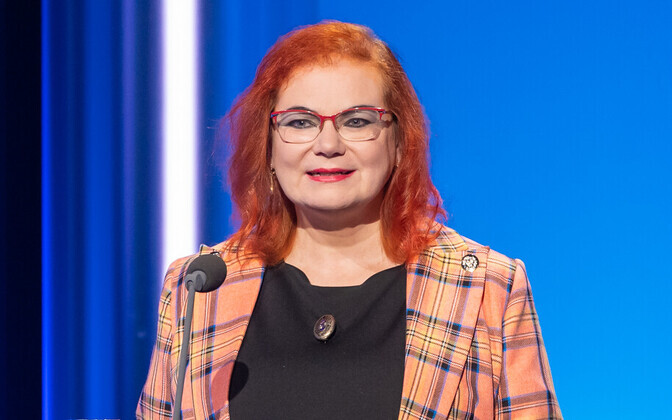
Loone Ots argues that elderly individuals should be regarded as valuable contributors to society rather than marginalized, advocating for their inclusion and support in various aspects of life, including the workforce, to combat stereotypes and improve their well-being. #eakad #vaesus #kaasamine

www.err.ee
Loone Ots: kuldne iga pole puue
1710
BFMTV 1w

The recent high school protests in France, fueled by social media, reveal a politicized and disillusioned youth demanding improvements in the educational system while defying stereotypes that consider them apathetic. #LycéensEnMobilisation #RéseauxSociaux #CultureNumérique (translated)

www.bfmtv.com
"Je m'interroge sur le fait que la société s'inquiète quand les jeunes s'engagent trop": au coeur de la colère lycéenne et des manifestations, les réseaux sociaux au diapason d'adolescents "politisés" et "méprisés"
1484
Ganesha 🇩🇪🇮🇳 2w

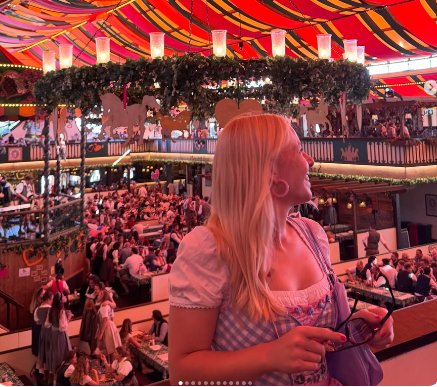
Jumping in the dirndl at the Wiesn. The same political direction that called a dirndl "backward" in the Bundestag in 2014, criticized a manga-dirndl with a cutout as sexist in Kleve in 2025, and in 2026 in Munich had figures on the devil's wheel painted over with cyclists shorts because there was too much skin and too much view under the dress. If the dirndl reduces women to appearance and reinforces stereotypical roles, this also applies to green feminists. Or does it only apply as long as others wear it? #Dirndl #Feminismus #Wiesn (translated)

11433
Reinier van Zutphen 2w

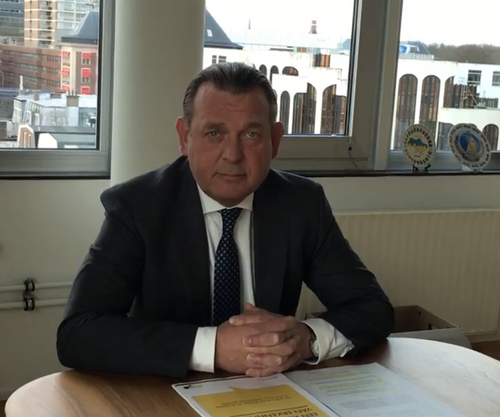
‘Ik merk daarbij zo weinig urgentie, dat ik de indruk krijg dat discriminatie nog steeds een grote rol speelt. Een overheid die zich laat leiden door negatieve stereotypen, handelt onbehoorlijk.’‘Discriminatie tegenover woonwagenbewoners is genormaliseerd’, zegt Van Zutphen. #woonwagenbeleid #discriminatie #SintiEnRoma

Ombudsman uit forse kritiek op de overheid vanwege uitblijven woonwagenplekken Sinti en Roma
www.volkskrant.nl
1378
Novinky 2w

Psycholožka Ludmila Čírtková ve své knize Viktimologie pro forenzní praxi zdůrazňuje, že oběti zneužívání si zaslouží respekt a pochopení, a kritizuje přetrvávající stereotypy o ideálních obětech, kdy jsou oběti posuzovány na základě jejich okolností místo skutečné tragédie, kterou zažily. #viktimologie #domácínásilí #psychologie

www.novinky.cz
Oběti zneužívání potřebují respekt, ne nálepku narušeného člověka, míní psycholožka Čírtková
1494
Dan Eriksson 2w

Förstår jag rätt? Skuldtyngd somalier fick äntligen ett jobb, ett välbetalt sådant dessutom, och det första han gör är att begära att få vara ledig? Innan han ens jobbat en enda dag? Låter som en rasistisk stereotyp. #Rasism #Stereotyper #Arbetsliv

11742
Seznam Zprávy 3w

Film V srdci divočiny od Davida Ayera sleduje válečného veterána Jamese Belmonta a jeho ovčáka Odina, kteří bojují s přírodou a svými traumaty v malebné, avšak kýčovité přírodě, kde se snaží přežít po letecké havárii, ale zůstávají zaklezlí ve stereotypních karikaturách bez hloubky a skutečné reflexe. #Veterán #Psychohologie #Film

www.seznamzpravy.cz
Recenze: V srdci divočiny. Brad Pitt a jeho ovčák bojují s přírodou i scénářem
1499
Marie Kreutzer 3w

"Wir haben noch immer viele Stereotype im Kopf, wenn es um Pädokriminalität geht" #Pädokriminalität #SexuelleGewalt #Triggerwarnung

Marie Kreutzer: "Wir haben noch immer viele Stereotype im Kopf, wenn es um Pädokriminalität geht"
www.derstandard.at
1500
D
der Standard 3w

Der Film Gentle Monster von Marie Kreutzer beleuchtet die Thematik sexueller Gewalt und Pädokriminalität, indem er die schockierende Entdeckung der Hauptfigur zeigt, dass ihr Partner ein Pädokrimineller ist, und thematisiert gesellschaftliche Stereotype sowie den Drang, solche Themen zu verdrängen. #Pädokriminalität #SexuelleGewalt #Triggerwarnung

www.derstandard.at
Marie Kreutzer: "Wir haben noch immer viele Stereotype im Kopf, wenn es um Pädokriminalität geht"
1500
L'Obs 3w

L'écrivain quebécois Thélyson Orélien, d'origine haïtienne, fait face à des accusations d'utilisation d'intelligence artificielle pour son roman C’était ça ou mourir, ravivant des stéréotypes racistes sur la capacité des écrivains issus de minorités à créer des œuvres authentiques. #Littérature #IntelligenceArtificielle #Racisme

www.nouvelobs.com
Affaire Thélyson Orélien : n’en déplaise aux inquisiteurs de l’IA, les « indigènes » savent écrire
1386
Balance ton Claude 3w

Chers lecteurs. Nous appelons à y aller mollo sur les attaques contre Thélyson Orélien. D'abord, il existe une chance non nulle (même si elle est infime) qu'il soit de bonne foi. Ensuite, Orélien a sans doute joué dans une zone d'ombre morale, exploité une période de flou au cours de laquelle nos institutions et nos mœurs (ainsi que nos prix littéraires) ne sont pas encore adaptées à cette technologie nouvelle et transformatrice. Mais il ne pensait sans doute pas que le succès de son livre prendrait une ampleur nationale ; et s'il nous a paru important de signaler l'arnaque, il nous parait important d'avoir aussi de la compassion et de l'empathie pour lui, voire le soutenir dans cette période difficile qu'il doit vivre. Le mieux serait bien sûr qu'il se remette à écrire ! Les leçons de cette affaire dépassent son cas personnel, et c'est sur cela que nous devons nous concentrer. Nous avons signalé ce bouquin parce qu'il a du succès, mais c'est loin d'être le seul. Sur ce réseau, des centaines d'hommes politiques et de comptes de slop font rédiger leur posts par IA, sans dire qu'il s'agit d'IA, trompant sciemment leurs lecteurs à longueur d'année. Et cela fait longtemps que les top des ventes de livres sur Amazon (premier distributeur de livres en France) sont trustés par des bouquins rédigés directement par IA, parfois très grossièrement, et avec un moins bon résultat que celui de Thélyson (qui a donc une forme de mérite à avoir réussi à produire une narration cohérente ayant donné satisfaction à beaucoup de lecteurs). L'intelligentsia parisienne sous-estime encore sans doute les capacités des IA, et n'utilise pas ou peu les LLM (et ne traîne pas sur Linkedin), c'est pour ça qu'elle n'a pas reconnu les formules stéréotypées. Formules qui, si nous n'étions pas lassés de les voir sans cesse, nous plairaient sans doute : les modèles de langage les ont apprises parce qu'elles plaisaient aux humains qui ont supervisé leurs entrainements par RLHF ! Dans les commentaires, certains témoignent ne pas voir l'intérêt de l'authenticité ; peut être que ce qu'il faut retenir de cette polémique, c'est que d'après l'ampleur du scandale, la majorité accorde beaucoup d'importance à l'authenticité. Si vous considérez que vous apportez de la valeur en faisant écrire vos ouvrages par IA, faites-le ! Mais au moins, mentionnez-le, pour ne pas trahir vos lecteurs, car le mensonge, lui, est moralement condamnable. #Authenticité #Littérature #IntelligenceArtificielle

12826
Novinky 3w

Článek zkoumá, jak se vnímání stárnutí a přístup k věku mění v čase, přičemž upozorňuje na to, že stereotypy o padesátnících jako o mužích, kteří mají to nejlepší za sebou, jsou čím dál méně relevantní, a místo toho se zaměřuje na pozitivní aspekty druhé dospělosti a nové příležitosti i v tomto věku. #stárnutí #pokročilývěk #druhádospělost

www.novinky.cz
Je padesátka opravdu nová čtyřicítka? A kdy vlastně dnes začíná stárnutí
8100
Spiegel Online 3w

Italiens Außenminister Antonio Tajani sorgt mit anstößigen Heiratsempfehlungen und frauenverachtenden Stereotypen für Empörung, indem er Frauen nach ihrem Aussehen und Rocklängen beurteilt, was heftige Kritik von der politischen Opposition nach sich zieht. #Frauenrechte #AntonioTajani #ForzaItalia

www.spiegel.de
Antonio Tajani: Italiens Außenminister empört mit frauenverachtenden Stereotypen
8335