WRLD

Search

#wisdom
Szymon Jadczak 3d

Szymon Jadczak appealed to journalists and those earning a living by publishing content on the internet to show responsibility instead of malice in the face of a crisis affecting the entire country and children. He called on them to limit the pursuit of clicks and the incitement of hate and polarization. He stated that they should do this for themselves if they still want to live in Poland, which he described as the best place to live in the world. #odpowiedzialność #dziennikarstwo #wisdom (translated)

3575
Otherland Bookshop Berlin 2w

The Full Moon Coffee Shop by Mai Mochizuki translated by Jesse Kirkwood Translated from the Japanese bestseller, this charming and magical novel, inspired by the myth of cats returning favors to those who care for them, reminds us that it’s never too late to follow our stars. In Japan cats are a symbol of good luck. As the myth goes, if you are kind to them, they’ll one day return the favor. And if you are kind to the right cat, you might just find yourself invited to a mysterious coffee shop under a glittering Kyoto moon. This particular coffee shop is like no other. It has no fixed location, no fixed hours, and seemingly appears at random to adrift young people at crucial junctions in their lives. It’s also run by talking cats. While customers at the Full Moon Coffee Shop partake in cakes, coffees, and teas, the cats also consult them on their star charts, offer cryptic wisdom, and let them know where their lives have veered off course—because every person who visits the shop has been feeling more than a little lost. And for a down-on-her-luck screenwriter, a romantically stuck movie director, a hopeful hairstylist, and a technologically challenged website designer, the feline guides will set them back on their fated paths. After all, there is a reason the shop appeared to each of them…

1033
António Guterres 2w

The greatest power is not the power to dominate. It's the power to build a future that works for everyone. Our shared future will be forged by whether humanity can govern power wisely. Together, let's meet this challenge with determination & resolve for a better world for all. https://t.co/XMfYtnnsVf #PowerToBuild #FutureForAll #WisdomInLeadership #Nospecificcountrycodescanbeidentifiedinthetweet.

2416
Sylvia Roque 2w

Esta pulseira chama-se "Sobriedade" e traz uma discreta mensagem. Estão escritas as palavras "serenidade", "coragem" e "sabedoria" em Código Morse com as miçangas. Um bom presente de um padrinho para seu afilhado no AA. 📿🙏⏳🎖️ ... . .-. . -. .. -.. .- -.. . || -.-. --- .-. .- --. . -- || ... .- -... . -.. --- .-. .. .- Confira no meu OLX: https://tiny.cc/OLX-SylviaRoque #macrame #bracelet #handcrafted #serenity #courage #wisdom #AA #morsecode Quarteira, Algarve, Portugal 🇵🇹

921
S
Stig Colbjørn Nielsen 2w

Melody of Silence - Modern Scandinavian poetry in English by the author, Stig Colbjørn Nielsen, Denmark. Melody of Silence is a captivating collection of modern poems inspired by the tranquil beauty of a Danish island, yet its themes extend far beyond Nordic borders. Through powerful poetry and striking illustrations created by the author, this book delves into life’s deeper questions amidst a chaotic world. A poetic journey exploring silence, nature, and the search for meaning. This collection invites readers to pause and reflect on moments of stillness, beauty, and inner strength. Rooted in the quiet simplicity of island life, the poems touch on universal ideas like the mysteries of existence, the flow of time, and the ongoing quest for purpose. Each poem is accompanied by an original illustration, crafted by the author, which enhances the meditative experience and encourages thoughtful contemplation. Together, the words and images offer comfort and insight for anyone facing the uncertainties of modern life. Melody of Silence serves as a tribute to the quiet power of nature and acts as a thoughtful guide for those seeking clarity and wisdom on life’s complex path. Alltogether the most beautiful European book of the year!

921
Luciano Magaldi Sardella (PhD) Sep 5

Luciano Magaldi Sardella, LSE Review of Books, “A currency in crisis — the euro’s structural fragility” SOURCE: https://medium.com/@ingnucllms/luciano-magaldi-sardella-lse-review-of-books-a-currency-in-crisis-the-euros-structural-1bb7a4c8b16a Source: https://lnkd.in/dBJpcU3n With my sincerest thanks in advance to: - Ms Anna D’Alton, Managing Editor of the LSE Review of Books, London School of Economics and Political Science. - Dr John H. Cochrane, Rose Marie and Jack Anderson Senior Fellow of the Hoover Institution at Stanford University, and author of such foundational works as The Fiscal Theory of the Price Level and Asset Pricing (both Princeton University Press). - Dr Luis Garicano, Professor of Public Policy at the London School of Economics and Political Science, and former Member of the European Parliament from 2019 to 2022. - Dr Klaus Masuch, who has accompanied the euro from its very inception, having held positions of the highest responsibility at the European Central Bank for over two decades — from the stewardship of monetary policy strategy to the oversight of EU member states. This is an honour I shall not readily forget. I have had the distinct privilege of continuing my role as academic reviewer for the LSE Review of Books — one of the most authoritative scholarly publications in the world — with the volume: “Crisis Cycle: Challenges, Evolution, and Future of the Euro,” published by Princeton University Press of Princeton University, Ivy League, USA. This quite remarkable work examines the evolution of the euro from its founding idealism to its present institutionalised fragility, laying bare how the monetary union has found itself ensnared in a self-reinforcing cycle of crisis and improvisation. It is a work of rare distinction, blending scholarly rigour with the hard-won wisdom of those who have shaped European economic policy at the very highest level. I extend my most heartfelt gratitude to Professors Cochrane, Garicano and Masuch for producing a volume of such depth, lucidity and intellectual courage. To review a work of this calibre is, before all else, an uncommon privilege.

1168
S
Sandfeen Aug 29

The Age of Experts Is Over If the past two decades—COVID-19, the 2008 financial crisis, and the net-zero charade—have taught us anything, it is this: the age of unquestioned experts is over. Authority issued by corrupt, bloated institutions no longer commands automatic respect. We are entering an era in which trust must be earned, not assumed. Credentials matter less than results. Expertise can become conformity wrapped in a credential; status is no substitute for trustworthiness. The future belongs to those with proven track records, not merely letters after their names. Friedrich Nietzsche warned of this more than a century ago. He distrusted experts who served the spirit of their age—those who mistook consensus for courage and conformity for principle. To Nietzsche, many authorities were functionaries of the status quo: too timid to challenge the sacred assumptions of their time. University professors, state philosophers, and moral enforcers wore obedience as a badge of honor. They did not think; they repeated. They did not challenge; they conformed. They made the ordinary seem profound through jargon, complexity, and ambiguity. Nietzsche saw these not as signs of insight, but as camouflage—cowardice in disguise. He also distinguished knowledge from wisdom. Knowledge can be taught, measured, and tested. Wisdom must be earned through suffering, struggle, and brutal self-examination. Nietzsche admired those who forged their own paths rather than simply climbing institutional ladders. Even in science, he saw a danger. He respected its methods but feared their sanctification. Science, he argued, still required justification; materialists confused method with meaning and data with truth. Experts who presented science as the only path to knowledge were, in Nietzsche’s eyes, dogmatists in lab coats. So the question is no longer, “What are your qualifications?” It is: What have you done? What have you risked? What have you proved? We must recover the courage to think for ourselves—and place our confidence only in those who have earned it through action, not appointment.

820
S
Sandfeen Aug 28

The Three Words Democracy Borrows Democracy is often praised as inherently good, but Aristotle, Plato, and Socrates saw serious flaws. A better view: rule by one, few, or many each has tradeoffs. A healthy society ideally combines a strong leader, a competent elite, and a virtuous citizenry—because, as Thomas Sowell said, “there are no solutions, only tradeoffs.” Democracy promises three virtues it can’t guarantee: freedom, wisdom, and consent. **Freedom:** Nozick’s thought experiment shows how slavery can be disguised by changing vocabulary—when power gradually shifts from overt domination to rules voted on by others, at what point is it “freedom”? A society can talk endlessly about freedom while restricting rights through taxes, regulations, and suspensions. **Wisdom:** Socrates doubted democracy produces wisdom. If a voyage were dangerous, you wouldn’t let every passenger vote equally on navigation. Yet political voting gives equal weight regardless of knowledge, inviting manipulation by those skilled in fear, emotion, and flattery. **Consent:** “Government of the people, by the people, for the people” can be an illusion. If the state is treated as “us,” coercion can be reframed as self-government. But representatives don’t truly follow your instructions the way a genuine agent must. Freedom, wisdom, and consent are real virtues—democracy just borrows their language, and the biggest risk is believing that choosing rulers collectively makes the ruled free, wise, and consenting.

820
S
Sandfeen Aug 28

Why Weak Societies Choose Tyranny The pinnacle of tyranny would be a system that allows politicians, elites, and bureaucrats to control a population without force or coercion because the people love their servitude. Aldous Huxley wrote Brave New World, an eerily relatable dystopian novel, with this idea at the forefront. Unlike Orwell’s 1984, there is no overt oppression. The state does not have to stamp on human faces with its jackboots or erect an inescapable surveillance state. Rather, the people of Brave New World happily chain themselves with meaningless pleasure and distractions. The authorities do not rule through terror and rage, the central elements of 1984, but instead give the people everything they ever wanted. A pharmaceutical called Soma becomes the opiate of the masses. Mustapha Mond, the World Controller, likens it to Christianity without tears. While religion requires years of moral training, Soma allows citizens to achieve peace simply by swallowing tablets. It is the perfect escape from reality, a holiday from the facts. Lenina, the female counterpart to the protagonist Bernard, cannot comprehend why he refuses Soma, preferring discomfort to something that can remove it. When Bernard states, “I’d rather be myself, myself and nasty, not somebody else, however jolly,” Lenina sees this as a sort of pathology and repeatedly encourages him to take the wonder drug. Bernard explains, “I want to know what passion is.” He understands that there is more to life than merely being content, craving genuine experience, including suffering and intensity, rather than being emotionally regulated by the World State. Lenina’s bewilderment stems from her conditioning to regard unhappiness as a technical problem, encapsulated in the society’s common saying that “a gram is better than a damn.” The people of Brave New World are not captives but satisfied customers. Children are produced by the scientific state, relieving people of the responsibility of parenthood. This grants them the ability to engage in promiscuity, where everyone belongs to everyone else, while filling their free time with cheap entertainment and endless sporting events—what would be referred to as slop today. As Neil Postman observed, Orwell saw totalitarianism through the lens of fear, while Huxley saw it through pleasure. There was no need to ban a book in Brave New Worldbecause there was no one who wanted to read one. An abundance of low-quality information rendered censorship unnecessary because no one could hear the truth through all the noise. Huxley threw shade at civil libertarians who passionately opposed tyranny because they failed to take into account man’s almost infinite appetite for distractions. Humanity in its rawest form is portrayed by John the Savage, an outsider free from the World State’s conditioning. Upon coming face-to-face with this spiritually neutered society, he completely rejects it: “I don’t want comfort, I want God, I want poetry, I want real danger, I want freedom, I want goodness, I want sin.” Huxley’s dystopia is not imposed on an unwilling population but instead requested by a hollow one. Which leads us to the question: How do people become so weak that they get on their knees and beg for totalitarianism? Good times make bad times possible. Once a certain level of luxury and safety is achieved, people start to resemble the hobbits from the Shire. They are so far removed from evil that they forget it even exists and become defenseless in the face of it. Andrew Lobaczewski, who studied the psychology of totalitarianism from inside Poland’s communist takeover, wrote: “During good times, people progressively lose sight of the need for profound reflection. They lose the capacity to differentiate human nature, and emotion begins to dominate intellect. Once a critical mass starts operating on the pleasure principle, any excess mental effort seems like pointless labor.” Lobaczewski warned that it is not as simple as some people losing the ability to think rationally. It is worse, because those people then shame anyone capable of doing so. A clever, liberal, and merry individual is a good sport. A more far-sighted person predicting dire results becomes a wet blanket, a killjoy. The ability to have uncomfortable conversations without emotion taking over is, in Lobaczewski’s view, an indicator of whether a society’s future will be good or bad. It is easier to think about pleasant things. This leads people to eliminate any data or facts that cause them discomfort. That becomes a habit and eventually a custom accepted by society at large. Once the general populace accepts that inconvenient truths should be left unsaid, it becomes incapable of reaching correct conclusions. After all, how could you ever describe a picture that you refuse to look at? “Catastrophe waits in the wings of the communities that lose the capacity for psychological reason and moral criticism,” Lobaczewski wrote. “It is on the other side of this weakening of thought that the processes of the generation of evil are intensified at every social scale until they give rise to bad times.” It is precisely man’s dreams of happiness that can lead to chaos and suffering. This hedonistic view of happiness contains the seeds of misery, feeding the eternal cycle whereby good times give birth to bad times. Friedrich Nietzsche viewed socialism as demanding comfort for the greatest number of people possible. To question whether it is good for the masses to live in comfort has become a form of heresy. This reveals the spiritual atrophy that so many suffer from. Considering only the weak believe comfort to be a virtue, it is what Carl Jung would describe as the infantile dream state of mass dependency: the desire to gently slip back into the kingdom of childhood, into the paradise of parental care. Except this lack of friction has consequences. The perfect state destroys the soil in which great intellect grows. Genius, struggle, passion, strength, and wisdom are required to build a safe and abundant society. Yet once a certain level of comfort is achieved, it can destroy the very virtues required to obtain it. Nietzsche observed that it is the warmest heart that aims to alleviate suffering and hardship but fails to realize that it thereby wills the destruction of its own foundation. Comfort breeds mediocrity, which is then called good. Small people want one thing above all: that no one hurt them. We have taken this pathology to such a degree that we now obsess over hurt feelings and call this virtue. Pleasure, in its proper place, is a byproduct of meaningful goals, not a goal in itself. Aristotle saw that pleasure and comfort distort perception and proper judgment. While they do not cause us to misjudge something like geometry or mathematics, they can destroy our ability to decide what is worth pursuing and, therefore, what to do. Consider The Odyssey. Homer depicts Odysseus’ men on the island of the Lotus-Eaters, where they taste the fruit and lose all desire to go home. Much like Huxley’s Brave New World, they are not imprisoned. Rather, they simply stop wanting anything more. Odysseus has to drag his men back to the ships while they weep to stay. This is what comfort can do to men. It empties them of purpose. We intuitively understand this but fail to apply it to our own lives. We must make the same choice as Odysseus when he refuses Calypso’s offer of endless comfort and immortality. He knows she is more beautiful than his wife Penelope waiting at home. He knows that he and Penelope will grow old and die, a fate he could avoid by staying with Calypso. No one who reads these stories wishes he had stayed. We want him to choose the hard way home because if he took the offer, he would stop being admirable. Yet staying is exactly what our modern society asks of us. We are told that the island is the good life. But what happens to the man who caves to this temptation? In Thus Spoke Zarathustra, Nietzsche imagines a risk-averse society taken to its logical endpoint. The elimination of all struggle produces a man so diminished that he fails to possess even self-contempt or higher aspiration. Safety and sameness become the highest goals, creating “no shepherd in one herd.” Anyone who seeks to be anything more than normal becomes an aberration to be dealt with. Or, as Nietzsche puts it, they have “made the wolf a dog in man himself, man’s best domestic animal.”

1055
S
Sandfeen Aug 28

The End of Blind Authority If the past two decades—through COVID-19, the 2008 financial crisis, and the net-zero charade—have taught us anything, it is this: the age of unquestioned experts is over. Authority granted by corrupt, bloated institutions no longer commands automatic respect. We are entering an era in which trust must be earned, not assumed. Credentials alone are not enough. Results matter more. Expertise can become conformity wrapped in a credential. The age of trusting people solely because of their status is fading. What matters now is trustworthiness, not titles. The future belongs to those with proven track records, not simply to those with letters after their names. Friedrich Nietzsche warned about this more than a century ago. He distrusted experts who blindly served the spirit of their age—those who mistook consensus for courage and conformity for principle. To Nietzsche, many authorities were not pioneers of truth but functionaries of the status quo: people too timid to challenge the assumptions of their time. He mocked the bureaucrats of knowledge: professors, state philosophers, and moral enforcers. They wore intellectual obedience like a badge of honor. They did not think; they repeated. They did not challenge; they conformed. To Nietzsche, jargon, complexity, and ambiguity were not always signs of insight. They could also be camouflage—cowardice in disguise. He distinguished between knowledge, which can be measured, taught, and tested, and wisdom, which must be earned. Wisdom comes through suffering, struggle, and honest self-examination. Nietzsche admired those willing to rise above institutional thinking. Even in science, he saw a danger. He respected its methods but feared their sanctification. He believed materialists could confuse method with meaning and data with truth. Experts who presented science as the only path to knowledge were dogmatists in lab coats. The question is no longer, “What are your qualifications?” It is: What have you done? What have you risked? What have you proved? We must rediscover the courage to think for ourselves and trust those who have earned authority through action—not appointment.

1289
FC Bayern München Aug 27

ℹ️ Wisdom Mike wechselt vom FC Bayern zum FC Brügge 🔗 https://t.co/fJxjEsu8ks Alles Gute für deine Zukunft, Weezy! https://t.co/ZEySB650Ys #Transfers #Bundesliga #Fussball

49835
Kerry Hau Aug 26

Der Transfer von Wisdom Mike zu Club Brügge ist endgültig perfekt. Der Spieler hat seinen Medizincheck bestanden und bei den Belgiern unterschrieben. Der FC Bayern erhält eine fixe Ablöse von 5 Millionen Euro, die durch Bonuszahlungen weiter ansteigen kann. Eine Rückkaufoption gibt es nicht, dafür aber eine Weiterverkaufsbeteiligung. @SkySportDE #TransferNews #Bundesliga #Football

12549
███████████████ Aug 26

ἰδοὺ γὰρ ὁ δεσπότης κύριος σαβαωθ συνταράσσει τοὺς ἐνδόξους μετὰ ἰσχύος καὶ οἱ ὑψηλοὶ τῇ ὕβρει συντριβήσονται καὶ οἱ ὑψηλοὶ ταπεινωθήσονται https://t.co/ZfWkIcne54 #Spirituality #Wisdom #Power

12436
maria_leonidou🇨🇾 Aug 15

«Κάθε χρόνος είναι ένα δώρο γνώσης και δύναμης.» Ευλογία να μεγαλώνεις🙏 #Happybirthday 🦁🍹 https://t.co/dEgOQWBYGS #Birthday #Blessings #Wisdom

13069
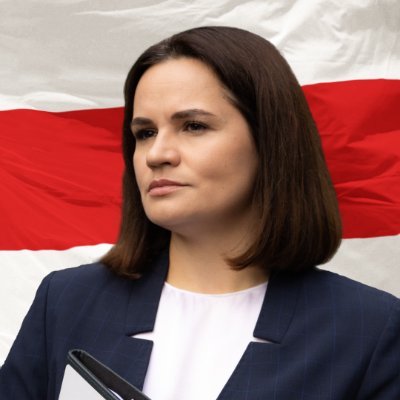
Sviatlana Tsikhanouskaya Aug 11

For me, Aliaksandr was a source of support and wisdom, whose advice I always valued deeply.

Belarusian opposition politician and scientist Aliaksandr Milinkevich dies at 79
www.euronews.com
8838
Jordi Hamadi Aug 9

“No juzgues cada día por la cosecha que recoges, sino por las semillas que plantas.” #RobertLouisStevenson #AllWeNeedIsGod https://t.co/335VrmOLnm #Inspiration #Motivation #Wisdom

12382
Adham Hasanin Aug 4

A Generation That Forgot the Shape of the Square On memory left to die alone By Adham Hasanin Egyptian journalist and political writer, based in the Netherlands In a house near mine, there is a boy of thirteen. Born in 2013 just a few months younger than the July coup itself, younger than the new republic under whose shadow we now live. I asked him once, with no preamble, no test, out of nothing more than passing curiosity: do you know what January was? He answered simply, without hesitation, without any sense that he was missing something: "An old revolution, against Mubarak, right?" Not entirely wrong. But it is everything he knows. The name Tahrir Square means nothing specific to him. The sound of the crowd chanting has no echo in his mind. He does not know that his own family whom he sees every day saying "thank God for stability," who warn him against "chaos" whenever a political headline crosses the screen once, at a moment two years before he was born, went down into the street, betting their entire lives on the possibility that something might change. This article is not about politics. It is about memory, and about who decides what gets told and what is left to die in silence. I. Who Erases the Picture? The first question that comes to mind is the easiest and most deceptive one: who erases this memory? And where do we begin holding them accountable? But the truth is too complex to reduce to a single actor. No one actually erases memory, in the literal sense of the act. There is no ministry called the "Ministry of Forgetting," no presidential decree ordering January struck from the collective consciousness. What happens is simpler than that, and more dangerous at once: the subject is simply never told. School says nothing. The textbook leaps from one period to another without pausing on January for more than two faded lines, composed with deliberate neutrality, devoid of any detail that might make the event feel alive to its young reader. Television no longer has any reason to return to it; the programmes that once hosted witnesses and activists stopped years ago, replaced by an official discourse that mentions January only in passing, as an unfortunate prelude to the "stability" that supposedly followed. And the home the most dangerous link of all has become afraid of the subject. Speech now carries a price, and many families, whether consciously or by sheer survival instinct, have decided that silence is safer than the story. The father who marched fears passing on to his son a curiosity that might one day lead him into trouble the family cannot afford. The mother who lost a friend in the events prefers not to reopen the wound before a child who does not yet grasp the weight of loss. And so, generation after generation, the circle of those who know shrinks, and the circle of those who do not even ask because they do not know there is anything worth asking widens. No one decided to erase the memory through an explicit decision. The memory was simply left to die alone, with no one tending it. And it is precisely this decentralised absence of responsibility that makes this kind of erasure more dangerous than any direct official ban: there is no single decision to challenge, no single body to hold accountable. Responsibility is distributed across thousands of small decisions made by thousands of individuals, each within their own context, each seeming reasonable when viewed in isolation. II. Why This Is More Dangerous Than Direct Repression An objection might be raised: is direct repression arrest, imprisonment, publishing bans not far more lethal than mere gradual forgetting? The answer is complex, and deserves calm unpacking. Direct repression can be seen. It can be documented, and the victim can know they are a victim, can tell their story, and their pain can become a testimony added to the collective memory, even if it never reaches justice. The political prisoner knows he is a political prisoner. The journalist banned from writing knows he is banned, and can tell the world he is banned. Direct repression, for all its cruelty, leaves a trace that can be followed. But a generation that has forgotten something happened at all does not even have a starting point from which to ask. This thirteen-year-old boy will never ask "why were we repressed?" because he does not know there is anything deserving that question in the first place. He feels no absence, because he does not know there is anything absent. He simply lives in a version of reality stripped of an entire chapter of his country’s history, and never for a moment suspects that this void is a void at all. Here lies the essence of the danger: direct repression creates victims who know they are victims. Erasure of memory, when it succeeds, creates a generation that does not even know it has been deprived of anything. And deprivation that is not felt cannot be resisted, because resistance always begins with an awareness of loss. The regime that came after 2013 does not need to convince the new generation that January was a mistake. That would be an arduous, costly task, requiring sustained propaganda and continuous effort to persuade each individual one by one. It is far easier, and strategically far more efficient, simply to ensure they never know it was anything at all. The void requires no defence; it requires only silence, and silence is free and always available. III. The Four Mechanisms of Erasure Four complementary mechanisms can be identified working together to produce this collective void not as an organised conspiracy, but as a system of incentives that pushes each party, consciously or not, to contribute to the same process. The first mechanism: formal education. The curriculum, as currently designed, treats January as a passing footnote rather than a founding event deserving detail and analysis. The student memorises two dates the start of the revolution and its presumed end without understanding why people took to the streets, what they were demanding, or how they felt in that pivotal moment. The second mechanism: broadcast media. The channels that once hosted live discussions on January, featuring varied perspectives, have gradually disappeared, or transformed their discourse entirely. Today’s televised image either ignores the anniversary altogether, or invokes it only to frame it as a prelude to chaos that must be avoided. The third mechanism: the silence of homes. This is the most dangerous of all, precisely because it is the most human and understandable. Parents who lived through the experience protect it with silence, not out of aversion to the story, but out of fear of its price. This silence, however legitimate its motives, achieves exactly the same effect as official censorship: it blocks the transmission of knowledge from one generation to the next. The fourth mechanism: the absence of alternative spaces. Even those among the new generation who wish to know cannot easily find places to look. Archives are scattered, trustworthy websites are blocked or require effort to reach, and personal testimonies are dispersed across corners of the internet that an ordinary student at an ordinary school will never stumble upon. These four mechanisms require no central coordination to work together. Each naturally serves the others, and all converge on a single result: a growing void in the consciousness of every new generation. IV. Memory as an Act of Resistance If erasure operates without a centre, then resisting it must also be decentralised. No one waits for a government decision to restore January to the curriculum, nor for a television programme to revive the testimonies. Resistance here is necessarily individual, happening in small details, in passing conversations, in the simple decision to tell rather than to stay silent. This is exactly what I try to do, without any claim to heroism, without any grand mission. I try, whenever I can, to tell the thirteen-year-old boy and others like him details that are never written in official reports or in schoolbooks: what the voices in the square sounded like, how someone felt the first time they realised change was possible, what that moment of hope was like before everything changed. The goal is not to bring back the past; the past cannot be brought back. The goal is that this boy, when he grows older and asks again and he will ask, because the questions always return at some point finds someone to tell him the full story, not two faded lines in a schoolbook. That he knows the stability he is told is the fruit of "wisdom" has a prior history, that this history carried other possibilities, and that real people bet their lives on those possibilities. V. Why This Matters Now Talking about the memory of a generation not yet aware might seem an intellectual luxury next to more urgent matters: arrests, a collapsing economy, regional wars. But the truth is that this issue is the foundation on which every other issue is built. A people who do not know they once rose up will not understand why they should ever think of rising again. A generation raised to believe "stability" is the only natural state possible will never ask itself what drove its own parents, shortly before it was born, to risk everything for an alternative that was never guaranteed. Memory is not a luxury; it is the reference point by which every generation measures its present, and through which it determines what is possible and what is not. And whoever understands this understands why erasing memory, not direct repression alone, is among the most important tools of any regime seeking to guarantee its permanence: because a people who have forgotten they were once free will not even know they are missing freedom. Memory, like the word, needs someone to tell it in order to survive. And when the tellers stop, memory does not die suddenly; it withers slowly, generation after generation, until the day comes when a boy asks an innocent question, and finds no one to answer him but two faded lines in a schoolbook.

118
Kerry Hau Jul 31

Wisdom Mike wird die Asien-Tour des FC Bayern nicht mit antreten und in München daran arbeiten, wieder spielfit zu werden. Geplant sind zeitnah auch Einsätze für Dantes U23. Die Option einer Leihe halten sich alle Beteiligten dennoch offen. @SkySportDE https://t.co/P57SnDlxFE @SkySportDE #FCBayern #AsienTour #Fussball

11936
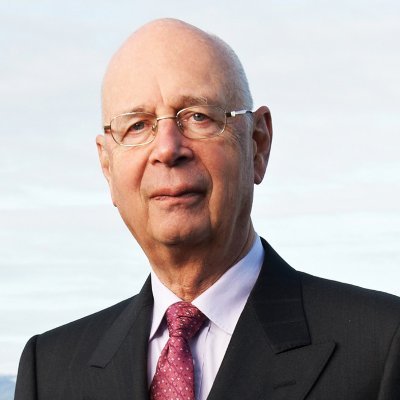
Klaus Schwab Jul 27

We are entering an age that will reshape economies, institutions, and daily life. We must not enter the #IntelligentAge sleepwalking. We must enter it with awareness, wisdom, and courage. More in 'Thriving and Leading in the Intelligent Age': ➡️🔗https://t.co/IQtYUm0s3c https://t.co/qaUGszDtfZ #IntelligentAge #Awareness #Leadership #Thetweetdoesnotmentionanyspecificcountries.Therefore #therearenocountrycodestoreturn.

ForFun Jul 26

«Το πιο βαθύ σκοτάδι είναι πριν την αυγή.» #OlympiacosBC https://t.co/m8eL3JE3MA #inspiration #wisdom #hope

16091