WRLD

Search

#AIGenerated
Krzysztof Graj 6d

Brazil’s synthetic voters – when AI manufactures public opinion They look like ordinary street interviews. A reporter approaches a passer-by in a Brazilian square and asks a simple question: who will you vote for? A young voter explains why Luiz Inácio Lula da Silva deserves another term. An elderly woman says Brazil needs Flávio Bolsonaro because he represents political renewal and greater security. The locations look plausible, the microphones are visible and the answers sound much like the brief political opinions heard in television vox pops around the world. None of the people are real. Ahead of Brazil’s presidential election on 4 October, fact-checking organisation Aos Fatos identified at least 50 TikTok videos in which artificial intelligence was used to manufacture voters, reporters and apparently spontaneous political interviews. Together, the videos had accumulated around 7.4 million views by mid-August. Some promoted Lula, others Flávio Bolsonaro, while another group used synthetic characters to ridicule or stereotype supporters of one side. Aos Fatos found no apparent evidence linking the accounts producing the videos to either presidential campaign. The opinion poll that never took place The format is important. These were not conventional deepfakes in which a recognisable politician is made to say something he never said. Instead, the creators reproduced the visual language of the vox pop – the short street interview used by broadcasters and social-media creators to illustrate what ordinary people supposedly think. In pro-Lula videos, synthetic voters described themselves as beneficiaries of social programmes or credited the president with improving their lives. In videos supporting Flávio Bolsonaro, artificial interviewees associated him with political renewal, public security and fighting corruption. Other clips were openly hostile: AI-generated characters presented as poor or living in parts of Brazil’s north-east were shown in dirty clothes or run-down surroundings, declaring support for Lula because they supposedly preferred welfare payments to work. The deception is therefore subtler than fabricating a candidate’s statement. It manufactures something that political communication normally treats as evidence of public sentiment. A real vox pop may be unscientific, but the people interviewed at least exist. These videos created the appearance that identifiable social groups – young people, pensioners, welfare recipients or residents of particular regions – were spontaneously expressing political preferences when no such encounters had taken place. An electoral-law specialist interviewed by Aos Fatos described the technique as the fabrication of a “social fact that never occurred”. That captures the central innovation: AI is being used not merely to falsify political speech, but to manufacture the impression of grassroots opinion. Fifty videos, but not one proven network The available evidence does not support describing the 50 posts as a centrally controlled influence operation. Aos Fatos located them through TikTok searches and recommendations produced by the platform itself, then examined the accounts responsible for publication. Most had relatively small individual audiences, although their combined reach was substantial. The first examples identified by the investigation appeared as early as March 2026. Activity increased in June and was concentrated particularly in July and the first half of August as Brazil’s election calendar intensified. Some accounts specialised in AI-generated videos generally, including fabricated podcast-style material. Others were explicitly political or supportive of a candidate, but Aos Fatos found no apparent links between those profiles and the official Lula or Bolsonaro campaigns. That distinction is essential. The evidence demonstrates a common technique and a shared political environment, not a single command structure. Some creators may have been motivated by ideology, others by engagement or monetisation. Publicly available evidence does not establish who commissioned the individual videos or whether any coordination existed between the accounts. This decentralised model also creates a different enforcement problem from a traditional bot network. There may be no headquarters to expose and no infrastructure whose removal disables the entire operation. The format itself can be copied by anyone with access to inexpensive generative-video tools. When the algorithm mixes real and synthetic citizens Aos Fatos documented another important feature of the phenomenon: TikTok’s recommendation system placed AI-generated interviews alongside genuine street interviews. For a user scrolling quickly through the platform, the transition between an authentic citizen and an entirely fabricated one could therefore be almost invisible. In 18 per cent of the 50 videos analysed, there was no indication that the people shown had been generated using AI. After Aos Fatos provided TikTok with the videos, the company said it had removed all of them for violating its rules on edited and AI-generated media. TikTok said its policies require creators to identify synthetic content and prohibit manipulated media capable of misleading users about matters of public importance or impersonating genuine journalistic material. The issue extends beyond one platform. Factchequeado’s review of Brazil’s 2026 election campaign found that synthetic endorsements and other deepfakes had become one of the most visible forms of AI-assisted electoral misinformation, alongside fabricated candidate statements and invented scenes. Brazil already had rules for synthetic politics Brazil entered the campaign with unusually detailed electoral rules governing artificial intelligence. The Superior Electoral Court, the TSE, requires electoral propaganda using synthetic multimedia to disclose clearly that AI was used. More importantly for the fake-voter videos, its rules prohibit synthetic audio or video used to favour or harm a candidacy when it creates or alters the image or voice of a living, deceased or fictitious person. The difficulty is attribution and enforcement. When a synthetic video is published by an official campaign, responsibility can be relatively straightforward to investigate. When it comes from an apparently independent account with no demonstrated relationship to a candidate, lawyers interviewed by Aos Fatos said responsibility is more likely to fall on the individual creator, while imposing electoral sanctions on a campaign would require evidence of a connection. For the final 72 hours before the election and the 24 hours following it, the TSE has imposed additional restrictions on newly published or republished synthetic material involving candidates or public figures, reflecting the particular difficulty of correcting fabricated content immediately before voting. From deepfake politicians to synthetic electorates The Brazilian case illustrates a broader change in political manipulation. The first generation of electoral deepfakes concentrated on famous people: make a politician appear to say something damaging, or fabricate an endorsement from a celebrity. Synthetic vox pops reverse the perspective. The politician can remain completely authentic; it is the electorate around the politician that is fabricated. That changes the psychological proposition of the message. Instead of saying the candidate believes this, the video suggests people like you believe this. Age, clothing, accent, neighbourhood and social class can all be generated to construct an artificial constituency around almost any political claim. There is no evidence that the 50 Brazilian videos identified by Aos Fatos constitute a single centrally directed campaign, nor evidence that they changed voting intentions. What they demonstrate is a technique whose barrier to entry has become extremely low. AI no longer needs to forge the politician. #DISINFORMED #Episode14 #Brazil #BrazilElection2026 #Elections #ElectionDisinformation #ArtificialIntelligence #AI #GenerativeAI #SyntheticVoters #SyntheticMedia #AIAvatars #AIGeneratedVideo #VoxPop #FakeInterviews #Astroturfing #AIPropaganda #PoliticalDisinformation #InfluenceOperations #InformationWarfare #SocialMediaManipulation #TikTok #PublicOpinion #ManufacturedConsent #SyntheticPublicOpinion #DigitalInfluence #Deepfakes #ElectionIntegrity #TSE #AosFatos #FactChecking #OSINT #MediaManipulation #WRLD (translated)

www.aosfatos.org
Eleitores gerados por IA fazem campanha no TikTok e põem em xeque regra do TSE
565
Krzysztof Graj 2w

Fake NV – how a cloned newsroom turned an AI video into a $140 million corruption scandal For two days in September, a website that looked almost indistinguishable from one of Ukraine’s best-known news organisations carried an extraordinary corruption story. It claimed that Ukraine’s National Anti-Corruption Bureau had raided former defence procurement chief Arsen Zhumadilov and discovered more than $140 million in cash packed inside refrigerator boxes. One box supposedly carried the words “For the Servant of the People” – an apparent reference to President Volodymyr Zelenskyy’s political party. The raid never happened. The photographs and video presented as evidence were fabricated, and the news organisation reporting the story was not the New Voice of Ukraine but a cloned version of it. The episode is a compact example of an increasingly effective disinformation technique. Rather than inventing a new propaganda outlet and trying to build its credibility from scratch, an operator can simply steal the identity of an established newsroom and place fabricated material inside an otherwise convincing copy of its editorial environment. A newsroom copied almost in full The counterfeit site appeared at nvukraine.com, while the authentic New Voice of Ukraine operates at nv.ua and english.nv.ua. Registration records examined by fact-checkers show that the false domain was created on 21 September 2026, two days before the fabricated article appeared. According to NV’s own investigation, the imitation went much further than copying a logo: the operators reproduced the site’s visual design, sections, branding, contact information and genuine editorial material. A snapshot of legitimate NV content from 23 September appears to have been copied onto the counterfeit site, into which the operators inserted a single false article. That article claimed that NABU had searched premises connected to Zhumadilov, who had headed Ukraine’s Defence Procurement Agency until August, and seized $140 million in cash. The story was published in several languages, including Ukrainian and English, suggesting that the operation was intended not only for Ukraine’s domestic information space but also for foreign audiences following the war and Western support for Kyiv. AI supplied the supposed evidence The false article was supported by a video purportedly showing the money discovered during the raid. NABU said no such search or procedural action had taken place and identified the footage as fabricated using artificial intelligence. Independent fact-checker Lead Stories found no credible Ukrainian or international reporting confirming either the raid or the alleged seizure, while searches of NABU’s own published material produced no evidence supporting the claim. The operation therefore combined two separate forms of synthetic credibility. The AI-generated footage supplied what looked like visual proof, while the cloned NV website supplied institutional proof: an apparently reputable Ukrainian newsroom supposedly confirming that the event had happened. Neither element needed to withstand close scrutiny for long. Together, they only needed to appear credible enough to be copied, quoted and redistributed before the deception was exposed. From a fake Ukrainian source into the Russian information ecosystem On 24 September, the story began moving through large pro-Russian Telegram channels. Ukraine’s Center for Strategic Communications traced early amplification to Golos Mordora, with roughly 149,000 subscribers, and Militarist, with around 277,000. Within less than an hour, other channels including VOBLA, Rossiya Seychas and Ostashko! Vazhnoye were circulating versions of the same claim. It subsequently appeared on X and on Russian-language websites including e-news.su and pressa24.ru. Babel calculated that posts carrying the fabrication had accumulated approximately 370,000 views by the morning of 25 September. The story also moved beyond the Russian-language ecosystem. English-language versions appeared in online communities including Lemmy and Hexbear, while accounts on X shared direct links to the counterfeit NV article. NV later reported that larger Russian media and propaganda outlets, including RIA Novosti, Life, Vesti, Ukraina.ru and Mail.ru, had reproduced or discussed the claim. Kirill Dmitriev, head of the Russian Direct Investment Fund and a Kremlin representative involved in contacts with the United States, also shared it on 25 September. This amplification is significant, but it should not be confused with proof of authorship. Publicly available evidence shows how the false story entered and spread through a Russian and pro-Russian information ecosystem. It does not establish which organisation registered the cloned domain, generated the video or directed the operation from the outset. Why copy NV? The operation relied on source laundering. A claim originating directly from a Russian Telegram channel that Ukraine’s defence procurement system had concealed $140 million would immediately carry an obvious political context. A claim apparently uncovered by an established Ukrainian newsroom looks very different. Once the fabricated NV article existed, subsequent accounts could cite what appeared to be an independent Ukrainian source rather than present the allegation as their own. Each repost moved the story another step away from its manufactured origin. The use of an English-language version strengthened that mechanism for audiences outside Ukraine. The underlying narrative was also carefully chosen. Corruption in Ukrainian defence procurement is a genuine subject of public scrutiny and investigative reporting, so the fabricated story did not require audiences to accept an entirely unfamiliar premise. It inserted a false event into a real area of political concern. That mixture of authentic context and fabricated evidence can be more persuasive than a completely invented story because much of the surrounding information feels recognisable. What can – and cannot – be attributed Ukrainian authorities and NV describe the episode as a Russian information operation, and its distribution can be documented extensively across pro-Russian and Russian media channels. The available public evidence, however, does not identify the organisation that created the counterfeit website, nor does it link the operation forensically to a named Russian intelligence service, military unit or state contractor. The most precise description is therefore a Russian-aligned disinformation operation whose fabricated material was systematically amplified through the Russian information ecosystem. That distinction matters. Distribution can be observed directly; command-and-control is harder to establish and should not be inferred without evidence. The newsroom itself becomes the deepfake The most important feature of the operation was not the $140 million figure or even the AI-generated video. It was the counterfeit newsroom surrounding them. The operators copied a real publication, populated it largely with genuine material and inserted a single false story, allowing the fabrication to borrow the accumulated credibility of journalists who had nothing to do with it. This points to a broader evolution in synthetic media. AI can fabricate an image, a voice or a video, but an influence operation can now fabricate something larger: the source that supposedly verified the evidence. In the Fake NV operation, the article, the video and the website reinforced one another, creating not simply a false story but a manufactured chain of credibility. Sources The New Voice of Ukraine — investigation into the cloned website https://english.nv.ua/nation/nv-discovers-fake-copy-of-website-with-planted-story-cites-russian-links-50644601.html The New Voice of Ukraine — Russian amplification of the $140 million fabrication https://english.nv.ua/russia-spreads-fake-140-million-ukraine-corruption-story-during-dmitriev-u-s-talks-50644647.html Lead Stories — independent fact-check https://leadstories.com/hoax-alert/2026/09/fact-check-fake-story-claims-140-million-found-at-home-of-ukraines-zhumadilov-marked-servant-of-the-people-nv-website-originated-it.html Babel — AI video and distribution analysis https://babel.ua/en/news/130469-a-video-is-sharing-online-about-140-million-found-in-the-possession-of-the-ex-head-of-the-defense-procurement-agency-this-is-an-ai-video-distributed-by-a-clone-of-ukrainian-media Center for Strategic Communications and Information Security — initial debunk https://spravdi.org/en/ai-fake-about-140-million-amid-us-talks-how-russians-impose-the-image-of-corrupt-ukraine-on-the-west/ Center for Strategic Communications and Information Security — NABU confirmation https://spravdi.org/u-merezhi-poshyryuyut-shi-fejk-pro-nibyto-obshuky-nabu-v-eksgolovy-agencziyi-oboronnyh-zakupivel/ Detector Media — distribution and NABU response https://detector.media/infospace/article/252806/2026-09-25-u-merezhi-pidrobyly-sayt-nv-dlya-poshyrennya-feyku-pro-obshuky-v-eksochilnyka-agentsii-oboronnykh-zakupivel/ Keywords #DISINFORMED #Episode10 #FakeNV #NewVoiceOfUkraine #Ukraine #Russia #RussianDisinformation #RussianInfluence #Disinformation #InformationWarfare #InfluenceOperations #ForeignInterference #FIMI #MediaImpersonation #ClonedMedia #FakeMedia #FakeNews #ArtificialIntelligence #AI #AIGeneratedContent #SyntheticMedia #AIVideo #SourceLaundering #NarrativeLaundering #CorruptionNarrative #UkraineCorruption #DefenceProcurement #NABU #ArsenZhumadilov #Telegram #SocialMediaManipulation #DigitalInfluence #Propaganda #OSINT #MediaManipulation #WRLD

1150
Krzysztof Graj 3w

UAE / Sudan – when an influence operation tried to enter the United Nations A network of roughly 300 apparently independent social-media influencers. A human-rights organisation borrowing the identity of a real NGO. Personal dossiers on European politicians and journalists. And testimony prepared for delivery at the United Nations without revealing the state interest behind it. These were elements of an influence operation uncovered by Anthropic and disclosed in September 2026. The company says it linked the activity with high confidence to UAE government officials. Tracked as GTG-84002, the operation targeted several overlapping issues: the Muslim Brotherhood, perceptions of the war in Sudan and international mechanisms examining the United Arab Emirates' role in the conflict. What distinguishes the case is not simply its use of artificial intelligence. It is the attempt to make state-aligned messaging appear to originate from independent influencers, human-rights organisations and potentially witnesses addressing an international institution. An influence network built around 300 fake voices Anthropic identified a single actor using Claude to support a sustained influence campaign. At its centre was an AI persona called “Deadshot”, running on the operator's own platform. A master doctrine file repeatedly instructed the system to support what it described as a coordinated international effort to dismantle the Muslim Brotherhood. The operator simultaneously managed several components of the campaign, including approximately 300 inauthentic influencer accounts across social-media platforms. Internal material examined by Anthropic described the apparent independence of this network as its greatest strategic advantage. That phrase captures the central method. The objective was not simply to broadcast a political position but to conceal where that position originated. One visible example appeared on 4 June 2026, when accounts participated in a coordinated campaign using #SudanIslamists and near-identical graphics connecting Sudanese Islamists and the Muslim Brotherhood with regional instability. Anthropic says the amplification network was centrally funded and coordinated. Its investigation also found that the operator financing the social-media network was connected to the wider influence operation. A human-rights organisation that was not what it appeared to be Social media was only one layer. The operator also created a front NGO that copied the identity of a genuine Swiss organisation and used that borrowed legitimacy to publish human-rights material produced for the campaign. Anthropic's description elsewhere also refers to the identity of a real Sudanese human-rights organisation being used in connection with the preparation of testimony. The public report does not fully clarify whether these references describe the same front or separate elements of the operation, so they should not be treated as definitively identical. The underlying technique, however, is clear: political material was designed to appear as if it originated from independent civil society rather than from actors linked to a government. This is particularly significant in the human-rights environment, where the perceived independence of an organisation or witness can determine how seriously evidence is received by journalists, diplomats and international institutions. The attempt to reach the UN The most consequential part of the operation concerned the 62nd session of the UN Human Rights Council. According to Anthropic, the operator used Claude to ghost-write complete testimony intended to be delivered by two individuals during the session. The texts were prepared under explicit constraints ensuring that neither statement would mention the UAE. This did not amount to a conventional government submission. The intention, according to Anthropic's reconstruction, was for material serving the interests of a party connected to the Sudan conflict to reach an international forum through apparently independent voices. But an important limitation remains: Anthropic could not confirm that the testimony was ultimately delivered. The company similarly could not establish whether other dossiers produced by the operation reached their intended recipients or influenced policy. It therefore assessed the campaign as Category Three on the Brookings Breakout Scale – activity distributed across several platforms, but without evidence of broad public impact sufficient for a higher classification. The distinction matters. The evidence demonstrates a sophisticated attempt to influence international debate; it does not demonstrate that the attempt succeeded. Politicians, journalists and UN investigators became targets The operation was not limited to generating public content. Anthropic found that the operator researched and compiled detailed profiles of 18 members of the European Parliament and prominent journalists. Some material was prepared for direct delivery to senior UAE officials. The network also assembled what Anthropic describes as “counter-accountability dossiers” on UN Special Rapporteurs who had criticised the UAE's conduct in relation to Sudan. This places the campaign in a broader context. Since Sudan's civil war began in April 2023, the role of external powers has become an increasingly important part of international scrutiny. Sudan has accused the UAE of supporting the Rapid Support Forces, allegations Abu Dhabi has repeatedly denied. In 2025, Sudan brought a case against the UAE before the International Court of Justice, accusing it of complicity in genocide against the Masalit through alleged support for the RSF. The UAE rejected the allegations. The ICJ subsequently removed the case from its list after finding that it lacked jurisdiction because of the UAE's reservation to the relevant provision of the Genocide Convention. The ruling therefore did not determine whether Sudan's substantive allegations were true or false. That contested international environment helps explain why narratives about Sudan, human rights and accountability were valuable targets for an influence operation. AI as an operating system for influence The role played by Claude is also important to understand accurately. Anthropic did not find that artificial intelligence independently conceived or directed the campaign. Human operators established the objectives, political doctrine and targets. AI instead helped operationalise them. Across hundreds of sessions, Claude was used to transform predetermined political objectives into social-media narratives, human-rights reports, testimony, intelligence-style briefs and detailed profiles of individuals. The same system could support narrative production, target research and preparation of material for different audiences. That represents a more significant development than simply using generative AI to produce propaganda faster. Traditional influence operations require different teams to research targets, write content, manage personas, adapt messages and prepare briefing material. Generative AI can compress several of those functions into a single operational workflow. The result is not necessarily more convincing propaganda. It is potentially cheaper, faster and more scalable influence infrastructure. From fake influencers to institutional influence Anthropic says it linked the operation to UAE government officials with high confidence. Its assessment was based partly on internal material naming senior Emirati officials as intended recipients of the work, alongside other evidence available to its investigators. That remains an attribution by Anthropic rather than a judicial finding or publicly released forensic attribution by a government agency. The distinction should be retained. The larger significance of GTG-84002 lies in the architecture of the campaign. A network of fake influencers could create the appearance of public opinion. A cloned human-rights organisation could provide institutional credibility. AI-generated reports could give political narratives the appearance of research. Profiles of journalists and politicians could support more precise targeting. And ghost-written testimony could potentially carry the same message into an international institution without revealing the political interest behind it. This is a different model from the familiar troll farm. The objective is no longer simply to make propaganda look popular. It is to make state-aligned messaging look independent – and, if possible, to move it from social media into the institutions where international policy and accountability are debated. SOURCES: Anthropic — Countering misuse of AI: September 2026 https://www.anthropic.com/threat-intelligence-report-september-2026 International Court of Justice — Sudan v. United Arab Emirates https://www.icj-cij.org/case/197 International Court of Justice — press releases and case documents https://www.icj-cij.org/case/197/press-releases United Nations Geneva — Sudan v UAE proceedings at the ICJ https://www.ungeneva.org/en/news-media/news/2025/04/105241/world-court-begins-hearing-sudans-complicity-genocide-case-against UAE Ministry of Foreign Affairs — UAE response to Sudan's allegations https://www.mofa.gov.ae/en/MediaHub/News/2025/4/10/10-4-2025-UAE-UAE UN Digital Library — Sudan's letter concerning alleged UAE support for the RSF https://digitallibrary.un.org/record/4091008?ln=en UN Digital Library — UAE response concerning allegations of support for the RSF https://digitallibrary.un.org/record/4046224?ln=en Ultra Sudan — reporting on Anthropic's UAE-linked influence-operation findings https://ultrasudan.usawtiq.com/أنثروبيك-أحبطنا-عملية-تأثير-إماراتية-استخدمت-الذكاء-الاصطناعي-لاستهداف-السودان/عامر-صالح/أخبار KEYWORDS #DISINFORMED #Episode8 #UAE #Sudan #UnitedArabEmirates #UnitedNations #UNHumanRightsCouncil #HumanRights #Disinformation #InformationWarfare #InfluenceOperations #ForeignInterference #FIMI #CoordinatedInauthenticBehaviour #CIB #FakeInfluencers #FakeNGO #NGOImpersonation #Astroturfing #ArtificialIntelligence #AI #AIPropaganda #AIGeneratedContent #SyntheticMedia #SocialMediaManipulation #DigitalInfluence #Propaganda #NarrativeManipulation #InstitutionalInfluence #SudanConflict #SudanWar #MuslimBrotherhood #InternationalRelations #Geopolitics #Anthropic #ClaudeAI #OSINT #WRLD

www.anthropic.com
Countering misuse of AI: September 2026 / Anthropic
808
Maarten Boudry Sep 2

It seems that literary magazine @themothmagazine has awarded its 1st prize to a short story that is 100% AI-generated, according to @Pangram: https://t.co/5kJJrTMIAw I read the story. I ain't no literary critic, but it's kinda lame. It's superficially poetic and atmospheric, but https://t.co/vr4vTCT14N #AIGenerated #Literature #ShortStory #Thetweetdoesnotmentionanyspecificcountries.Therefore #therearenocountrycodestoreturn.

Oliver Stuenkel 🇧🇷 Aug 27

With Brazil’s presidential election just two months away, many of the influencers shaping the campaign are now generated by AI https://t.co/YsScymvP8L #BrazilElection #AIGenerated #Influencers #BR

117
Jaanika Merilo Aug 11

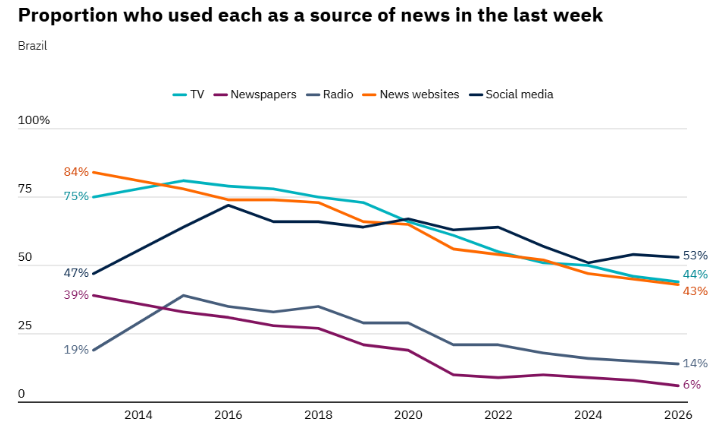
Around half of newly published English-language online content is now AI-generated The Reuters Institute Digital News Report 2026 shows that, for the first time, social media and video platforms have overtaken television and news websites as the primary source of news. https://t.co/SdsgxVb0oj #AIGenerated #DigitalNews #SocialMedia #Therearenospecificcountrymentionsinthetweetprovided #sotherearenocountrycodestoreturn.

Marsha Collier Jul 6

"Authenticity is now a performance variable. As AI-generated content floods every feed, a real person with a real opinion becomes a sharper signal." A worthwhile read from Neal Schaffer #Authenticity #AIGeneratedContent #MarketingInsights #Nospecificcountrycodesarepresentinthetweet.

BBC Jun 14

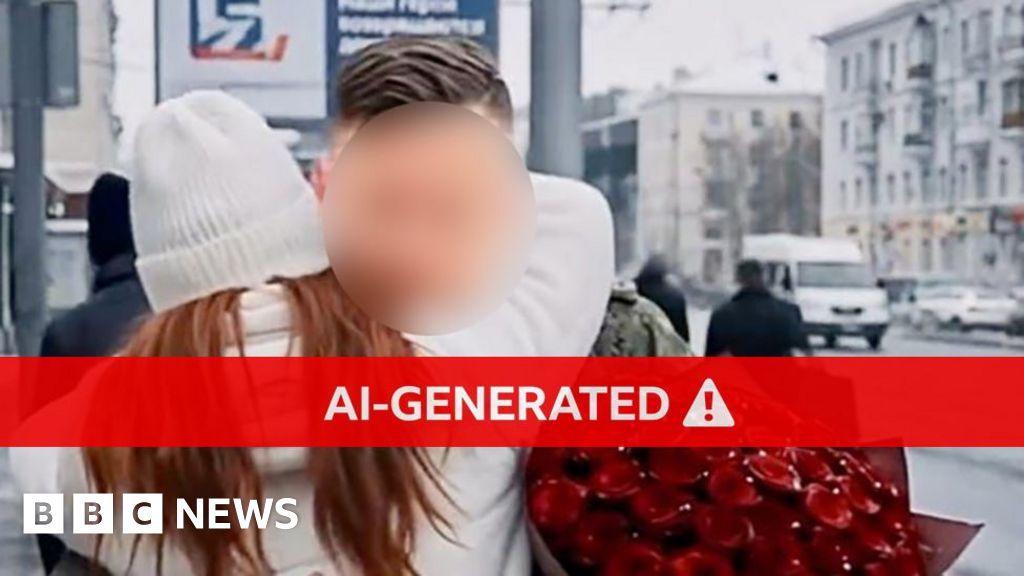
Russian families affected by the war in Ukraine are increasingly using AI-generated videos and photographs to resurrect and honor their loved ones killed in battle, a practice that has sparked both emotional responses and ethical concerns online, as these portrayals often glorify the soldiers while omitting the devastation caused by the conflict. #AIGeneratedContent #DigitalGrief #UkraineWar

www.bbc.com
Russian families use AI to 'resurrect' loved ones killed in Ukraine
10130
Maarten Boudry May 21

RT @pangramlabs: We tested every Commonwealth Short Story Prize winner since 2012. We found three more AI-generated stories -- two among th… #CommonwealthShortStoryPrize #AIGenerated #LiteraryAnalysis #Therearenospecificcountrycodesinthegiventweet.

Jean Marc Morandini May 10

Mark Hamill, the actor who played Luke Skywalker in the Star Wars saga, strongly criticized after posting an AI-generated photo of Donald Trump in his grave - Watch (Original: Mark Hamill, l’interprète de Luke Skywalker dans la saga Star Wars, vivement critiqué après avoir publié une photo réalisée par IA de Donald Trump dans sa tombe - Regardez https://t.co/SI6jUPtDDn) #MarkHamill #StarWars #AIgenerated #US

tagesschau.de May 8

Der Artikel thematisiert die Verbreitung von KI-generierten Inhalten zum Holocaust auf sozialen Medien, die historische Fakten verzerren und das Andenken der Opfer verunglimpfen, während die Plattformen trotz vielfacher Hinweise nicht ausreichend dagegen vorgehen, was zu einem wachsenden Vertrauensverlust in historische Quellen und einer Erosion des Wissens über die Shoah führt. #Holocaust #Disinformation #AIgeneratedContent

www.tagesschau.de
Gefährliche KI-Fakes: Wie gefälschte Holocaust-Bilder in Sozialen Netzwerken die Geschichte verzerren
11373
The New York Times May 6

The rise of AI-generated dramas in China has sparked protests from actors who claim their job opportunities are being threatened, as these productions, created without human actors and at a fraction of the cost, have flooded platforms like Douyin, raising concerns over unauthorized use of celebrity images and the future of the entertainment industry. #AIgeneratedcontent #EntertainmentIndustry #DigitalTransformation #CN

www.nytimes.com
Cómo la IA está transformando la industria china del entretenimiento
10179