WRLD

Search

#Bauen
Stefanie Hubig 1h

The draft law is finished. We have completed it and we are now, today, going into early coordination and will then present the draft law to the public in the next days, weeks, in any case this month. Federal Minister of Justice Stefanie Hubig from the SPD wants to legally anchor building according to lower standards and opens her statement in front of cameras and microphones with the words: "The draft law is finished. We have completed it and we are now, today, going into early coordination and will then present the draft law to the public in the next days, weeks, in any case this month." #Baupolitik #Wohnungsbau #GebäudetypE (translated)

Schneller und einfacher Bauen: Wo bleibt der "Gebäudetyp E"?
www.tagesschau.de
1333
Julian Adrat 8h

Julian Adrat criticized that Markus Söder had claimed in the program "Miosga" without contest that the AfD was hostile to the disabled and "brutally right" in Bavaria. Miosga referred to Adrat in a derogatory manner. Adrat countered Söder's statement with a series of his own examples, which he labeled as "not normal." These included the blowing up of nuclear power plants, prison sentences for internet memes, and centuries of debt approved by a dismissed parliament. He also mentioned transforming Christmas markets into fortresses, citizen income payments to foreigners, the handling of billions for masks, the purchase of babies, and calls for rocket attacks on Moscow. As further examples, Adrat cited the expansion of wind and solar plants, bike paths in Peru, the training of trans-rickshaw drivers in India, and 130,000 foreigners who roamed freely despite arrest warrants. In conclusion, he criticized that citizens had to finance the programs under threat of imprisonment. #Politik #AfD #Gesellschaft (translated)

1810
Nico Lange 3d

Nico Lange wrote that for decades the argument has repeatedly been made that the problems lie in the fact that no one talks to Putin. Conversations are confused with the willingness to fulfill Putin's demands. There have been many talks, channels, and contacts, and they continue to exist; however, Putin does not want to make compromises, Lange said. #Putin #Politik #Gespräche (translated)

3232
Prof. Karl Lauterbach 3d

The author wrote that China could produce 60 million cars annually, but the capacities are only utilized at 50 percent. Therefore, the country will do everything to further increase its exports. #China #Autoindustrie #Export #CN (translated)

3344
Frankfurter Allgemeine 3d

Despite the difficult conditions in residential construction, including rising construction costs and lengthy approval processes, apartments are still being built, particularly by Nassauische Heimstätte, which is planning several large-scale projects in the Rhine-Main area. #Immobilienmesse #Wohnungsbau #Bauen (translated)

www.faz.net
Immobilienmesse Expo Real: Auch ohne Bauturbo werden Wohnungen gebaut
2677
𝑀𝒾𝓈𝓈 𝐸𝓋𝑒 3d

Miss Eve criticized BMW over reports that the car manufacturer withdrew its leasing offer for the new President of the Saxony-Anhalt Parliament on the day of his election. If this is true, the question arises as to whether BMW makes business decisions dependent on the party affiliation of an officeholder, she wrote. She argued that for a company car funded by public means, efficiency and the requirements of the office should count. At the same time, she accused BMW of possibly applying political criteria in selecting customers and warned that these could choose other manufacturers. Miss Eve wrote that she drives a BMW 430i M Sport Coupe, but her leasing contract will soon expire. She could then choose another brand. In the event that BMW excludes customers because of their political views, she noted there are 60.5 million eligible voters in Germany, 30.5 percent potential AfD voters, and 18.5 million disgruntled customers. #BMW #Automobilindustrie #Kundenservice (translated)

2903
Sarah Zickler 3d

Sarah Zickler compared the promise, under her chancellorship, to neither raise taxes nor abandon the debt brake, with the statement that no one intends to build a wall. Moreover, she wrote that she now deeply despises parties and their party soldiers, especially the chancellor. #Politik #Kanzler #Steuern (translated)

2914
Eva Herman 4d

The author shared an excerpt from Rubio's speech before the Acropolis. In it, Rubio described the ideal of many current ideologies as a world of complete security without risk or failure, where there is neither the glory of victory nor the shame of defeat. Moreover, he stated that nowadays, there is too often a tendency to build downwards. #Ideologie #Sicherheit #Gesellschaft #DE (translated)

2695
Stefan Energie Chiemgau/Outdoor Chiemgau 4d

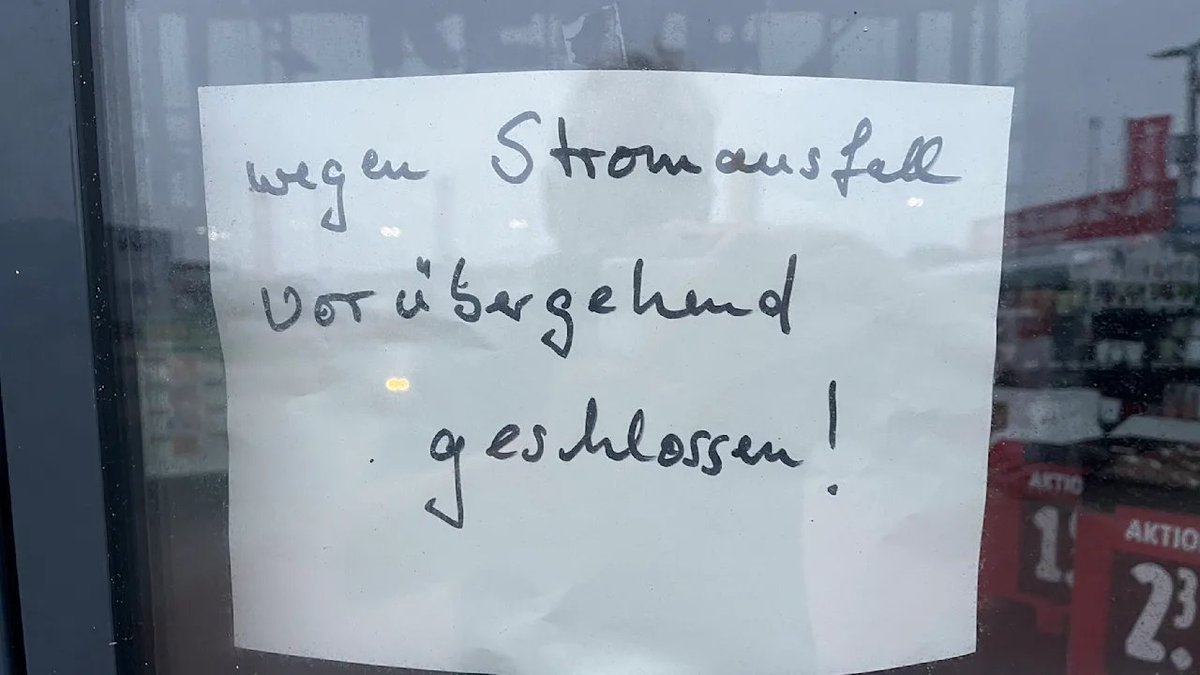
Stefan Energie Chiemgau/Outdoor Chiemgau wrote that Sylt had been without power for 15 hours due to an outdated medium-voltage cable. He assessed the outage as a sign of the dilapidated state of the German power grid and stated that the grid must first be modernized. At the same time, he wrote that heat pumps, electric chargers, photovoltaic systems, and wind farms continue to be added in Germany. https://t.co/UPO6serz0P #Stromversorgung #Energiepolitik #Infrastruktur (translated)

3040
Dr. Markus Krall 7d

Dr. Markus Krall stated that hardly anyone is constructing in Germany anymore because Robert Habeck and others have damaged the market with the heating law and other measures. The purchase of apartments increases demand and, consequently, the building activity of other investors, he explained. At the same time, Krall accused socialists of not understanding fundamental market mechanisms. #Bauen #Marktwirtschaft #Politik (translated)

3402
Plattenbauaristokrat 7d

A prefabricated building aristocrat presented a seven-point plan. He proposed to demolish homeless shelters and NGOs and build data centers in their place. As a "peace offering" to the Boomers, they should be allowed to work until 70, while in return he would not pay any taxes. Furthermore, he wanted to criminalize the right to exist for Israel and Palestine, introduce chat control for officials, and replace teachers with AI. For Instagram influencers, whose talk he described as pointless, he demanded a special tax. According to his proposal, there should be no value-added tax on alcohol. #Deutschland #Politik #Zukunft (translated)

2949
Maurice Höfgen 7d

Maurice Höfgen wrote that opponents of the socialization of housing in Berlin warned of an end to private new construction. In his fact check, he referred to this warning as a myth and argued that large real estate corporations do not build, but buy for shareholders instead of for tenants. https://t.co/hFct2dR7Ma #Wohnen #Berlin #Immobilien (translated)

11911
Doktor Eder 1w

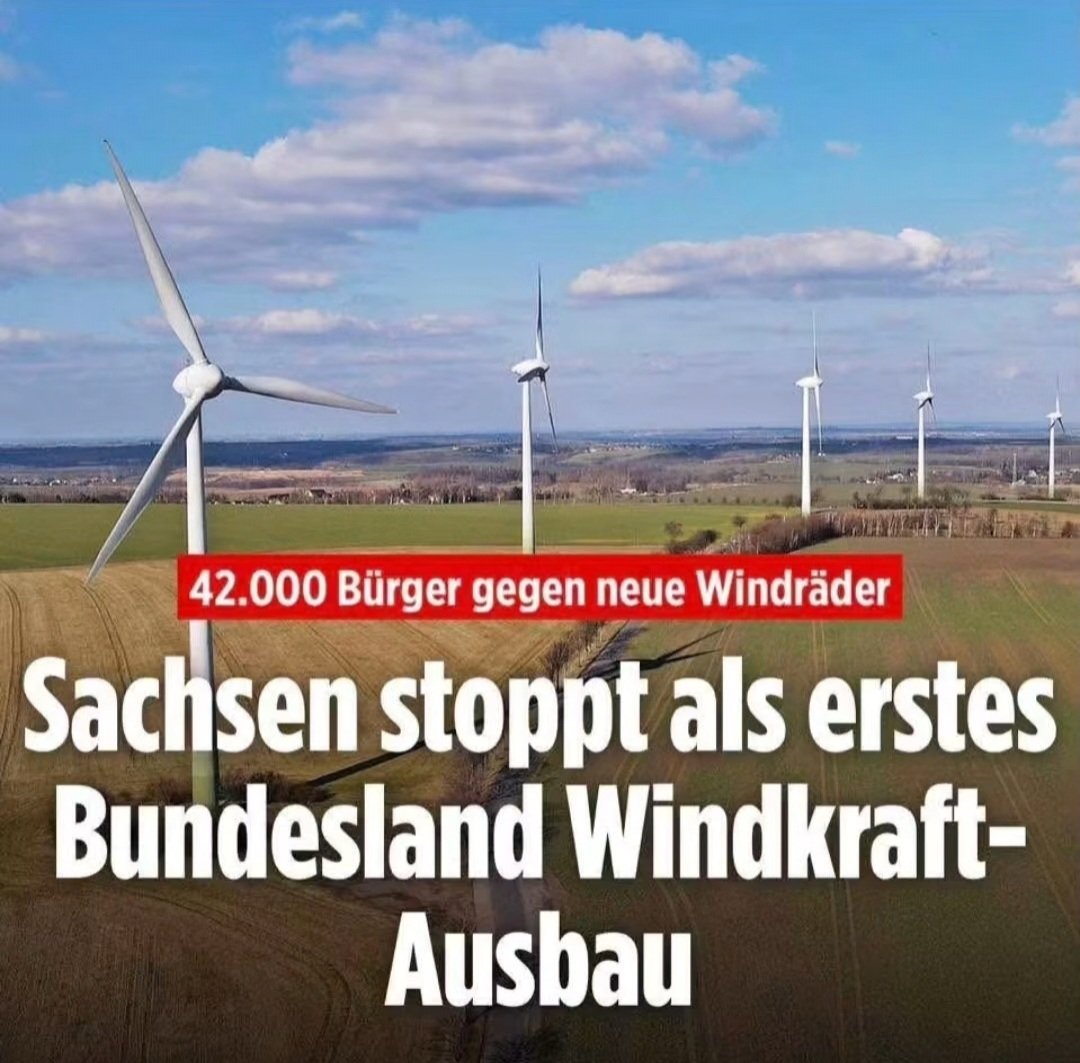
Doctor Eder wrote that he negotiated with Vuechtlaender that Saxony would receive its own electricity price zone and would be allowed to build and finance its own nuclear power plants. Subsequently, the state would need to explain the electricity prices to the angry people; the events would be filmed as a reality soap. https://t.co/Fvc9zTLwua #Sachsen #Strompreise #Energiesicherheit (translated)

23082

Ronzheimer asked whether the claim that Ukrainian refugees would all "come to us" after the war was meant as a threat. He wrote that the end of a war eliminates the reason for fleeing, and people would stay on site to rebuild their country. He endorsed humanitarian aid but described the portrayal as a constructed straw man and dishonest. #UkrainianConflict #Flüchtlinge #HumanitäreHilfe (translated)

12053
Christian Miele 1w

Christian Miele listed twelve challenges that Germany must overcome, in his opinion. Electricity and labor are expensive for companies: employers pay an average of around 45 euros per work hour, about 29 percent more than in the EU. In addition, high network fees and levies have increased energy costs; Germany exited nuclear power before sufficiently cheap and reliable alternatives were available. Long approval processes, according to Miele, also deter companies from investing. He named demographic change, rising contributions, and immigration that often does not lead to employment quickly enough as further problems. The shortage of skilled workers is real, he wrote, but uncontrolled immigration burdens households and municipalities. The Bundeswehr is also still inadequately equipped after decades of underfunding: the NATO target of 2 percent has long been missed, and there is still a lack of personnel, ammunition, and operational equipment. Miele wrote that Germany’s economy is hardly growing on its own: it shrank in 2023 and 2024 and only grew by 0.2 percent in 2025. Industry is producing less than it did a few years ago. In addition to taxes, levies, and energy costs, he pointed to weak demand, competition from China, and a lack of new products. In education, about one in three 15-year-olds does not reach the basic level in mathematics and reading; the gap between children from poor and rich families is as large as it has been since the beginning of the PISA tests. At the same time, there is a shortage of teachers and many school buildings are dilapidated. Among the further challenges, Miele listed the need for renovation of roads, bridges, railways, and schools. The municipal investment backlog is over 200 billion euros, about 55 billion of which is for schools alone. In his view, excessively high rents, low construction activity, and long approval processes also make it difficult to move to cities with open positions. The state is slow in digitization; many applications are still on paper, and internet coverage in rural areas is patchy. Finally, Miele warned that government spending is increasing without the economy growing correspondingly. Pensions, social services, and interest compete with defense and infrastructure for the same funds. If debt grows faster than economic output, there will be less room for investment later on, he wrote. Ultimately, the working people would bear the consequences, Miele explained, and he asked for his readers' assessments. #Herausforderungen #Wirtschaft #Deutschland (translated)

12965
Lars Wienand 1w

The author of the article wrote that there are two camps: one with people like Höcke, which, according to his account, builds a stronger distinction than any CDU in order to later fully implement its goals. Another camp would therefore like to cooperate with the CDU, but cannot do so because the radicals thwart their plans. #Politik #Deutschland #Radikalismus #DE (translated)

Jan Fleischhauer 1w

The author wrote that Berlin would become a big laboratory: there should only be prisons in exceptional cases, identity checks should no longer exist, construction should be done without concrete, and social work should replace the police. However, everything regarding financing should remain as it is; the south should continue to pay. The author asked why. https://t.co/hCzGiOQJGv #Berlin #SozialeGerechtigkeit #Politik #DE #EU (translated)

3531
Max Stirner 1w

Max Stirner wrote that it is remarkable that, according to his depiction, a country can neither complete a train station nor an airfield on time, must renovate 11,000 bridges, and watches as its capital deteriorates, yet believes it can victoriously conduct a possible war against Russia. #Politik #Krieg #Deutschland (translated)

16100
Der Schattenmacher 1w

With what Germany has wasted on development aid since 2020, one could have built and gifted approximately 1,000,000 homes to the Germans. #Entwicklungshilfe #Deutschland #Eigenheime (translated)

11767
Hans 🖤❤️💛 2w

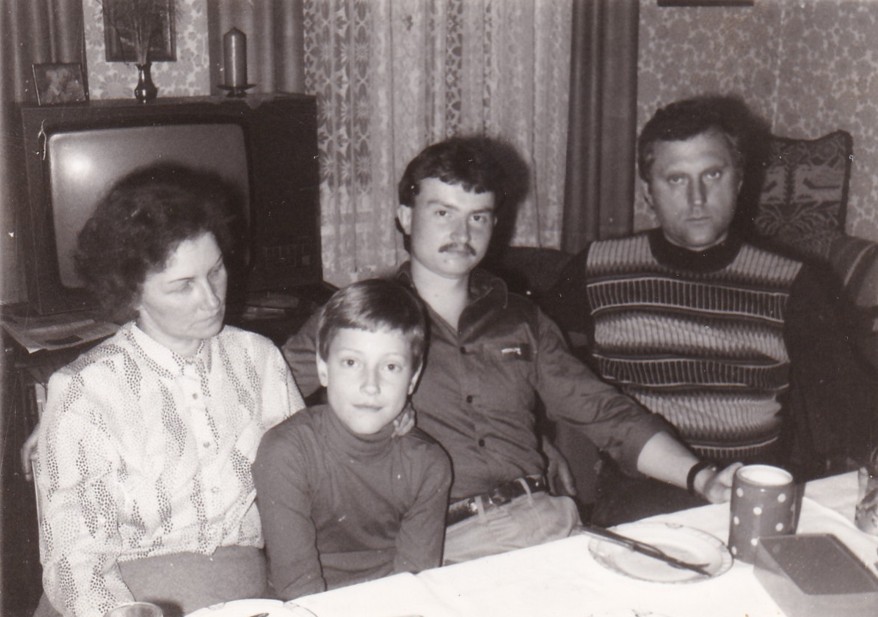
I had everything in the GDR and yet I just wanted to get away from there. My parents belonged to the upper class, if there was even such a thing in the GDR, or if one was allowed to call it that. They built a house (1976-78), took out a loan for 70,000 marks for it, and paid it off by 1988. The house was then debt-free. Additionally, my family received a Wartburg 353 as a gift in 1978 from an uncle in Munich through GENEX. It cost a little over 10,000 DM at the time. So there was more in the family than with the average GDR citizen, and yet I was completely fed up. Why? Well, on one hand, I was annoyed by this scarcity economy, where you had to wait for hours for everything, only to not get it anyway. Wasted and squandered life time. On the other hand, there was this constant, unbearable propaganda. Everywhere were stupid left-wing slogans, at work cash bonuses were distributed since the plan was always exceeded, only that nothing of it was visible in the shops. Then there was the unbearable living situation for many GDR citizens, because only a few could afford to build a house. Even the new apartment blocks (plattenbau) were the exception and not the rule. 70 percent of people lived in miserable shacks, that's just a fact. Thank goodness I was able to leave this miserable state in 1984 and build a good life for myself in the Federal Republic. And today I look in disbelief at Berlin, where they elected the left losers again – who can do nothing but spend other people's money – back into power. If I were living in Berlin today, I would pack my bags again and flee. Photo: My last evening in the GDR #DDR #deutscheGeschichte #Wende (translated)

11337