WRLD

Search

#Borgerlig
Simona Mohamsson 17h

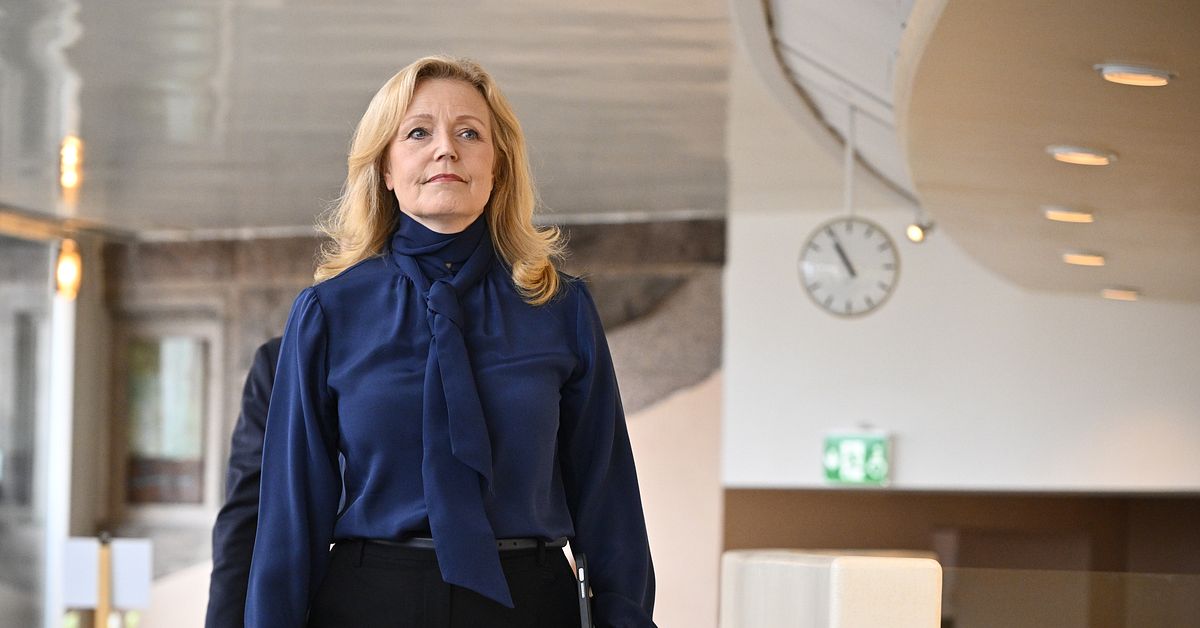
"If we can buy Sweden another year of civil policy and a civil state budget, we will do it," says L leader Simona Mohamsson. #Liberalerna #Valet2026 #SimonaMohamsson (translated)

L-ledaren: ”Jag är inte rädd för ett extra val”
www.di.se
2143
Eva Selsing 2d

Eva Selsing wrote that she did not see it as a problem that the left was critical of B.T.'s conservative profile. On the contrary, she believed that praise from left-leaning politicians and commentators would be a cause for concern, as it could indicate that the media had deviated from its conservative line. She argued that B.T.'s direct conservatism scared a left that had had a significant influence on media debate for decades. According to Selsing, the left only supported conservative viewpoints it could control, and the more subdued conservatism had followed the left's norms of shaming, censorship, and cancellation. She wrote that this type of conservatism had dominated the Danish media landscape until a few years ago, and that the situation still prevailed outside of B.T. Selsing believed that B.T.'s success was partly due to the media offering conservative perspectives and analyses that the readers and viewers, according to her, could not find elsewhere. She criticized other media for presenting uniform headlines and analyses and for expressing outrage over differing opinions. She wrote that actors with interests in conformity and censorship therefore reacted strongly to B.T., and that she would be more concerned if they did not. #Borgerlighed #MedieDebat #Ytringsfrihed (translated)

3454
Emilie Jäger 3d

Emilie Jäger wrote that she was proud to work at B.T., which she described as a free and independent media outlet with a civic foundation. According to her, this was reflected both in the newspaper's debate section and in the choice of topics. She believed that Denmark needed different media and mentioned Information, Politiken, DR, and B.T. as examples. Jäger wrote that she often received calls from dissatisfied politicians and their advisers, and occasionally even ministers. However, she had not experienced internal pressure from bosses regarding her political beliefs or about covering anyone in a certain way. She believed that B.T. also adhered to fundamental journalistic principles of hearing all parties, faithfully representing their viewpoints, and describing facts. According to Jäger, sources she interviewed both within and outside Christiansborg were sometimes dissatisfied, but her impression was that sources on both the right and left generally felt professionally treated. She also wrote that her management and colleagues, along with her, had turned a large deficit into a million-dollar surplus, while the newspaper played an important role in Danish democracy. #journalistik #demokrati #BorgerligtMedie (translated)

3570
Jotam Confino 3d

Jotam Confino wrote that several B.T. employees had publicly criticized the development of the media. According to him, they believed that B.T. had been used for an ideological project, that journalistic independence had been compromised, and that employees had allegedly been called in for discussions about their opinions. Confino wrote that he was not aware of any of the critics resigning, and that he personally believed it was free for both employees and others to criticize the media. As one of B.T.'s public profiles, Confino described his own experiences. He wrote that he had never received instructions about journalistic angles or been pressured to follow an ideological line. He also had not been in a conversation about his opinions or been told to be more critical of the left than the right, he wrote. Confino described his bosses as skilled and professional and said that he felt he had full journalistic freedom. Confino highlighted B.T.'s bourgeois profile and wrote that an editorial line did not in itself mean that the media was politically controlled. He asked why there was no corresponding criticism of Information, Politiken, or TV 2. He also criticized colleagues from other media, ministers, and party leaders for, in his opinion, contributing to doubts about B.T.'s independence. He pointed to B.T.'s coverage of the mink scandal, Enhedslisten's support for a terrorist organization, which according to his post was involved in the murder of a 21-year-old student from Tanzania, and anti-Semitism, among other things, in Mellemfolkeligt Samvirke. Confino wrote that B.T. had made significant progress both in readership and economy, and that he was proud to be part of the media and supported the management. #BT #journalistik #medier (translated)

2901
Daniel Schatz 3d

Daniel Schatz wrote that Mogge had pushed for Sweden to boycott Israel. He asked where the bourgeois parties stood on the issue, whether the Moderates supported the proposal, and whether the Centre Party, Birgitta Ohlsson, and Martin Ådahl supported a boycott. Schatz argued that such symbolic politics risked Sweden no longer being perceived as a serious actor in the Middle East. #Sverige #Israel #Bojkott (translated)

3239
SVT Nyheter 3d

A new survey shows that the Center Party's voters prefer a government with the Social Democrats, the Green Party, and the Left Party over a snap election, while a majority would rather choose a snap election than enter into a bourgeois government supported by the Sweden Democrats. #Val2026 #Centerpartiet #Vänsterpartiet (translated)

www.svt.se
Ny mätning: C-väljare ser hellre regering med V än extraval
2910
Östgöta Correspondenten 3d

Carl G Nilsson (M) raises questions in his debate article about the Center Party's resistance to collaborating with the Sweden Democrats to create a bourgeois government, despite the party being able to accept support from the Left Party. #Centerpartiet #BorgerligRegering #Sverigedemokraterna (translated)

www.corren.se
Nilsson (M): Varför vill inte C bidra till en borgerlig regering?
2463
Joachim B. Olsen 4d

Joachim B. Olsen wrote to Magnus Barsøe that he could call BT whatever he wanted. Olsen said that the media had gained many more readers and listeners in recent years and that the line and style of Borgerlig Tabloid would remain unchanged. #BT #journalistik #medier (translated)

2918
Ida Gabrielsson 4d

Ida Gabrielsson questioned after a discussion with Martin Ådahl whether there was any other party that the Center Party considered sufficiently acceptable. She wrote that C had tolerated the Social Democrats and the Green Party because they had previously agreed to govern with bourgeois economic policy so that C would not collaborate with the Sweden Democrats. At the same time, she argued, C had criticized S for its migration policy and rejected the Left Party despite V agreeing with C on the issue. Gabrielsson contrasted this with what she described as a contradiction in the Center Party's rhetoric on decency. She pointed to ministers from the Moderates whom she considered increasingly Trump-like and accused them of going after journalists and conducting negative campaigns, as well as statements from the KD leader, the right's talk of voters as voting cattle, and comments from Member of Parliament Lars Beckman (M) and Alice Teodorescu (KD), whom she described as conspiracy theorists. She wrote that Ådahl and C seemed to believe that the former alliance parties did not really support their current policy, but had been kidnapped by SD and deep down wanted to return to the era of Fredrik Reinfeldt. Gabrielsson argued that Ådahl and Magdalena Andersson seemed to think that the parties would return to the center when the Tidö cooperation ended. She called the view condescending and emphasized that the changes could also have been made deliberately and voluntarily. During the election campaign, Gabrielsson stated, she had spoken with a leading center-right politician from Stockholm about more people voting for SD in the area where she grew up. She recounted that she had highlighted material and social reasons for dissatisfaction and mentioned a neighbor who worked almost around the clock on his farm and cleared snow in half of Norrland during the winters. According to Gabrielsson, the center-right politician had responded that a difficult life did not excuse a vote for SD, as others with difficult lives did not vote for the party. Gabrielsson also relayed that her father, who grew up in Ockelbo, used to refer to C and the farmers as "the right aristocracy." On Tuesday, he had told her that he had closed the door on a DN Kultur journalist who wanted to discuss the family's background and life in the countryside and in the industrial town of Åmotsbruk. Her father had also criticized C as the worst party of the day and said he preferred the party when it was at least a farmers' party. Gabrielsson wrote that she had corrected him, but at the same time agreed that a party with 7 percent could be perceived as self-satisfied if it assumed that others would follow its line. #Centerpartiet #Sverige #politik (translated)

3595
Søren B. 4d

Søren B. referred to a video where Pia Olsen Dyhr, according to him, criticized conservative opponents of a food check. He asked how she could now take the student grants from 18,000 of the same families and wrote that the voters had the politicians they deserved. #dkpol #politik #Danmark #SU (translated)

3034
Ebba Busch 4d

"There is a majority in the parliament for bourgeois economic policy, that majority would serve Sweden well." The leader of the Christian Democrats, Ebba Busch, has for her part said that the party has "the same attitude as before the election." #Sverigedemokraterna #JimmieÅkesson #Val2026 (translated)

Jimmie Åkesson: SD gör sig redo för tiden efter Tidö
www.dn.se
1798
Carl Eos 4d

Carl Eos agreed with Jimmie Åkesson's reasoning in Expressen about the Sweden Democrats' role in cooperation with the center-right parties. Åkesson had written that the Sweden Democrats (SD) had been driving many reforms, but that the parties holding ministerial positions had received visibility when the reforms were implemented. He also pointed out that the cooperation had limited SD and asked why voters would choose the party over the Moderates if the center-right was perceived as good enough even on issues where SD had taken the lead. Eos wrote that the center-right parties had been able to showcase successes within SD's strong policy areas, while SD had not made corresponding advances in other areas. He argued that the parliamentary election in 2026 would largely be about issues where SD was weaker and, to a large extent, not about policy issues. Eos also noted that both Ulf Kristersson and Jimmie Åkesson had said that the time after Tidö had begun, and wrote that this would likely create discussion. https://t.co/JWjMHlH2Ri #Sverigedemokraterna #politiskdebatt #val2026 (translated)

3485
Steffen W. Frølund 5d

Steffen W. Frølund wrote that middle-class Danes had for decades had to pay for media that, in his opinion, had a political bias against their beliefs. He described it as a great injustice and believed that the left reacted violently when a media outlet moved to the right. #Politik #Medier #Debat (translated)

2478
Kasper Støvring 5d

Kasper Støvring wrote that when 80 percent of journalists were left-leaning, it required strong editorial control to ensure that conservative media remained conservative. #journalistik #medier #venstreorienteret (translated)

2706
V
Viktor Barth-Kron 5d

Viktor Barth-Kron wrote that the Centre Party wanted S-led governments to move towards the center and pursue bourgeois economic policies, while the Left Party wanted them to lean to the left and include the party. He added that he was not a political science professor but believed that the political conflict was clear. #politik #Sverige #Centerpartiet (translated)

2933
V
Viktor Barth-Kron 6d

Viktor Barth-Kron wrote that the election's most "liberal" event was the party's branch in Uppsala splitting over the issue of SD. He stated that the remaining, loyal to the leadership, still managed to pass the threshold to the council and immediately formed a governing coalition with S, V, and MP after a bourgeois conflict over a tram. #politik #Sverige #Uppsala (translated)

2488
Ida Gabrielsson 7d

Ida Gabrielsson wrote that she had difficulty understanding Thand Ringqvist's argument on Agenda that the Left Party and the Center Party were far apart. She claimed that the Center Party was not particularly close to any of the other parties with Magdalena Andersson as the prime ministerial candidate in economic policy. According to Gabrielsson, the Center Party had chosen the same prime ministerial candidate as the red-green parties to avoid governing with the Sweden Democrats, but the choice also meant that the party would have less influence on its bourgeois economic policy. Gabrielsson wrote that she did not want to decide which side the Center Party should choose, but felt that the party should have thought through the consequences before going to the election on Andersson. She argued that the Center Party's actions risked blocking both possible government alternatives. Since the election result, according to her, meant that the four parties' mandates were needed to choose Andersson as prime minister, she believed that the parties had to compromise. She emphasized that the business community had not voted and that each voter had had a vote. She also wrote that most red-green voters wanted to see a government with the Social Democrats, the Left Party, and the Green Party, while the voters of the Tidö parties had other favorites. According to Gabrielsson, parties should not negotiate with mandates from voters who had voted for another government alternative, and she believed that the election result must be reflected in politics. The Left Party wanted to be part of the government, according to her, to be able to implement reforms and agreements. Gabrielsson wrote that it was difficult to understand why the Center Party opposed the Left Party in the government and claimed that the Center Party's content in a possible agreement should be respected on the same terms. #politiksverige #val2023 #demokrati (translated)

13051
Eva Selsing 1w

Eva Selsing wrote that leftist educators who cannot tolerate dissent, and conservative students who must self-censor, are thankfully only a problem in the USA. With a rhetorical question, she suggested that similar conditions could also be applicable in Denmark. #undervisning #ytringsfrihed #politikk (translated)

11619
Krister Thelin 1w

Krister Thelin wrote that Elisabeth Thand Ringqvist should be informed that the Center Party needed to decide whether the party wanted to pursue liberal or socialist policies, rather than holding a seminar exercise. https://t.co/db5OR8XzkS #politik #Centerpartiet #Sverige (translated)

12768
Greta Andersson 1w

Greta Andersson wrote that the Center Party claimed to want to pursue bourgeois politics, while at the same time wanting a socialist prime minister and to collaborate with leftist parties. She believed that these goals could not be reconciled. #svpol #Centerpartiet #politik (translated)

11987