WRLD

Search

#Complexity
Bruno Maçães 3d

The author argued that if Russia were treated like Israel, there would be a thousand essays a day examining the moral complexity of Russian nationalism and imperialism, while weapons continued to be sold or even given to Moscow. #Russia #Israel #Nationalism #RU #IL

3358
Luke 'Ming' Flanagan 3w

Gold plating is where Governments add extra layers of complexity to EU rules. In Ireland when the government gold plate something and it subsequently pisses people off, the same government blames the EU. They deliberately mislead the public to save their skins. What new I hear https://t.co/TS6CY2btM0 #GoldPlating #EULaw #IrishGovernment #IE

232
Marko Mihkelson 🇪🇪🇺🇦🇪🇺 4w

I met Robert “Madyar” Brovdi, Commander of Ukraine’s 🇺🇦 Unnmanned Systems Forces @usf_army , who gave me a comprehensive briefing on the nature of modern warfare, in all its layers and complexity. It is absolutely high time for Western allies to make fundamental changes to their https://t.co/Bg5HdbeiTt #Ukraine #ModernWarfare #UnmannedSystems #UA

116
Luciano Magaldi Sardella (PhD) Sep 5

LUCIANO MAGALDI SARDELLA: ACADEMIC BOOK REVIEW OF"LONDON SCHOOL OF ECONOMICS (LSE)" PUBLISHED BY THE"PRINCETON UNIVERSITY PRESS" SOURCE: https://www.linkedin.com/pulse/luciano-magaldi-sardella-academic-book-review-school-sardella-ph-d--bsvse/ LUCIANO MAGALDI SARDELLA'S LITERARY–ACADEMIC REVIEW LONDON SCHOOL OF ECONOMICS (LSE) PUBLISHED BY PRINCETON UNIVERSITY PRESS I am delighted to share a piece of news that marks a meaningful moment in my trajectory as an academic literary reviewer for the London School of Economics (LSE). My review of the volume Crisis Cycle: Challenges, Evolution, and Future of the Euro, published by Princeton University Press, has been included among the assessments cited on the book’s official webpage. To find myself placed alongside distinguished commentators such as John H. Cochrane, Luis Garicano, and Klaus Masuch prompts further reflection on how much ground remains to be covered in aspiring to emulate their exemplary scholarly standards. John H. Cochrane’s book confronts a question of considerable consequence for Europe’s future: can the euro truly endure in its present form? In my review for the LSE Review of Books, I sought to convey the full complexity of this challenge, which I regard as central for economists, policymakers, and scholars of European integration. Princeton University Press: https://press.princeton.edu/.../9780691271606/crisis-cycle Princeton University Press edition on Amazon: https://www.amazon.com/.../Crisis-Cycle.../dp/0691271607... Bluesky: https://bsky.app/profile/did:plc:4snhergltry4xlrwkx72uvlm Book page (Kennys): https://www.kennys.ie/.../crisis-cycle-challenges... LSE Review of Books Email Love: https://emaillove.com/email-inspiration-from-lse-review... With profound academic gratitude to all those who have supported me, I remain committed to contributing to the international debate on the economic and institutional transformations shaping our continent.

www.linkedin.com
LUCIANO MAGALDI SARDELLA: ACADEMIC BOOK REVIEW OF"LONDON SCHOOL OF ECONOMICS (LSE)" PUBLISHED BY THE"PRINCETON UNIVERSITY PRESS"
1051
S
Sandfeen Aug 29

The Age of Experts Is Over If the past two decades—COVID-19, the 2008 financial crisis, and the net-zero charade—have taught us anything, it is this: the age of unquestioned experts is over. Authority issued by corrupt, bloated institutions no longer commands automatic respect. We are entering an era in which trust must be earned, not assumed. Credentials matter less than results. Expertise can become conformity wrapped in a credential; status is no substitute for trustworthiness. The future belongs to those with proven track records, not merely letters after their names. Friedrich Nietzsche warned of this more than a century ago. He distrusted experts who served the spirit of their age—those who mistook consensus for courage and conformity for principle. To Nietzsche, many authorities were functionaries of the status quo: too timid to challenge the sacred assumptions of their time. University professors, state philosophers, and moral enforcers wore obedience as a badge of honor. They did not think; they repeated. They did not challenge; they conformed. They made the ordinary seem profound through jargon, complexity, and ambiguity. Nietzsche saw these not as signs of insight, but as camouflage—cowardice in disguise. He also distinguished knowledge from wisdom. Knowledge can be taught, measured, and tested. Wisdom must be earned through suffering, struggle, and brutal self-examination. Nietzsche admired those who forged their own paths rather than simply climbing institutional ladders. Even in science, he saw a danger. He respected its methods but feared their sanctification. Science, he argued, still required justification; materialists confused method with meaning and data with truth. Experts who presented science as the only path to knowledge were, in Nietzsche’s eyes, dogmatists in lab coats. So the question is no longer, “What are your qualifications?” It is: What have you done? What have you risked? What have you proved? We must recover the courage to think for ourselves—and place our confidence only in those who have earned it through action, not appointment.

820
S
Sandfeen Aug 28

The End of Blind Authority If the past two decades—through COVID-19, the 2008 financial crisis, and the net-zero charade—have taught us anything, it is this: the age of unquestioned experts is over. Authority granted by corrupt, bloated institutions no longer commands automatic respect. We are entering an era in which trust must be earned, not assumed. Credentials alone are not enough. Results matter more. Expertise can become conformity wrapped in a credential. The age of trusting people solely because of their status is fading. What matters now is trustworthiness, not titles. The future belongs to those with proven track records, not simply to those with letters after their names. Friedrich Nietzsche warned about this more than a century ago. He distrusted experts who blindly served the spirit of their age—those who mistook consensus for courage and conformity for principle. To Nietzsche, many authorities were not pioneers of truth but functionaries of the status quo: people too timid to challenge the assumptions of their time. He mocked the bureaucrats of knowledge: professors, state philosophers, and moral enforcers. They wore intellectual obedience like a badge of honor. They did not think; they repeated. They did not challenge; they conformed. To Nietzsche, jargon, complexity, and ambiguity were not always signs of insight. They could also be camouflage—cowardice in disguise. He distinguished between knowledge, which can be measured, taught, and tested, and wisdom, which must be earned. Wisdom comes through suffering, struggle, and honest self-examination. Nietzsche admired those willing to rise above institutional thinking. Even in science, he saw a danger. He respected its methods but feared their sanctification. He believed materialists could confuse method with meaning and data with truth. Experts who presented science as the only path to knowledge were dogmatists in lab coats. The question is no longer, “What are your qualifications?” It is: What have you done? What have you risked? What have you proved? We must rediscover the courage to think for ourselves and trust those who have earned authority through action—not appointment.

1289
Nick Stefanov Aug 17

Cold Beer and Hot Showers - Not Kilowatt-Hours All That Consumers Want The energy sector spends an extraordinary amount of time talking about generation, transmission, storage, flexibility, markets, tariffs, balancing, ancillary services, carbon emissions, batteries, hydrogen, demand response, electrification pathways, system costs, capacity mechanisms, investment signals, market design and regulation. All of these things matter. Some of them matter enormously. But there is a simple question that often disappears somewhere between the conference room, the policy paper and the technical model: What does the customer actually want? The answer is surprisingly simple. Most people do not wake up in the morning thinking about kilowatt-hours. They do not dream about capacity markets. They do not worry about frequency stability. They do not spend their evenings comparing balancing mechanisms. They want cold beer and hot showers. They want a warm home in winter and a cool home in summer. They want the lights to turn on when they press the switch. They want their phone charged, their food refrigerated and their car ready when they need it. In other words, they do not want energy. They want what energy allows them to do. That distinction may sound trivial, but it changes almost everything. For more than a century, the energy industry has been organized around the production, transportation and sale of energy itself. Electricity became measured in kilowatt-hours. Gas became measured in cubic meters. Fuel became measured in litres or tonnes. Markets, regulations and business models were built around those units. The customer, however, never experienced life in kilowatt-hours. The customer experienced comfort. Convenience. Mobility. Reliability. Security. The units used by the industry and the outcomes desired by the customer were never the same thing. For a long time, this mismatch was not particularly important. Energy was relatively scarce, flexibility was limited, and the dominant challenge was supplying enough fuel to satisfy demand. The system could afford to focus on production because production was the central problem. Today the situation is changing. Electrification is transforming energy systems around the world. Renewable generation is increasing rapidly. Batteries are appearing in homes, businesses and vehicles. Buildings are becoming smarter. Heat pumps are replacing boilers. Electric vehicles are becoming mobile storage assets. Customers are increasingly able not only to consume energy but also to store it, shift it, manage it and sometimes even sell it. As this happens, the most valuable question is no longer simply how much energy is produced. The more important question becomes: How well is energy aligned with what people actually need? A family does not care whether its water heater operates at noon or at two in the afternoon if hot water is available when someone steps into the shower. A homeowner does not care whether a battery charges at 1 p.m. or 3 p.m. if electricity costs less and reliability improves. An electric vehicle owner does not care when charging occurs as long as the vehicle is ready when needed. The objective is not the kilowatt-hour. The objective is the service. This is why many of the most important developments in modern energy systems are not really about producing more energy. They are about matching energy to the service required, at the right time, in the right place and in the right form. The technical term for this is often hidden behind complicated language. Experts discuss flexibility, demand management, dynamic pricing, distributed energy resources and system optimization. Consumers experience something much simpler. They experience agency. They experience the ability to save money without sacrificing comfort. They experience the ability to make choices. They experience the ability to benefit from technologies that work for them rather than asking them to work for the technology. This is where many debates become confused. Consumers do not want to be coordinated. They want agency. Good energy systems do not force people to behave differently. They make beneficial behaviour easier, more natural and more rewarding. The best systems do not rely on control. They rely on alignment. When the customer’s interest aligns with the system’s interest, remarkable things become possible. Demand shifts naturally. Storage becomes useful. Flexibility appears. Costs decline. Reliability improves. The customer does not need to understand the complexity underneath. Just as nobody needs to understand how the internet routes packets around the globe in order to send a message, nobody should need to understand wholesale electricity markets in order to enjoy affordable energy services. Success is not measured by how much complexity consumers are asked to absorb. Success is measured by how much complexity the system absorbs on their behalf. The future energy system will undoubtedly involve more digital technology, more electrification, more storage, more automation and more coordination. But none of those are the destination. They are merely tools. The destination remains exactly what it has always been. Cold beer. Hot showers. Comfortable homes. Reliable mobility. Affordable bills. Everything else is infrastructure. And perhaps that is the simplest way to understand the energy transition. People do not want kilowatt-hours. They want the life that kilowatt-hours make possible.

235
D
der Standard Aug 17

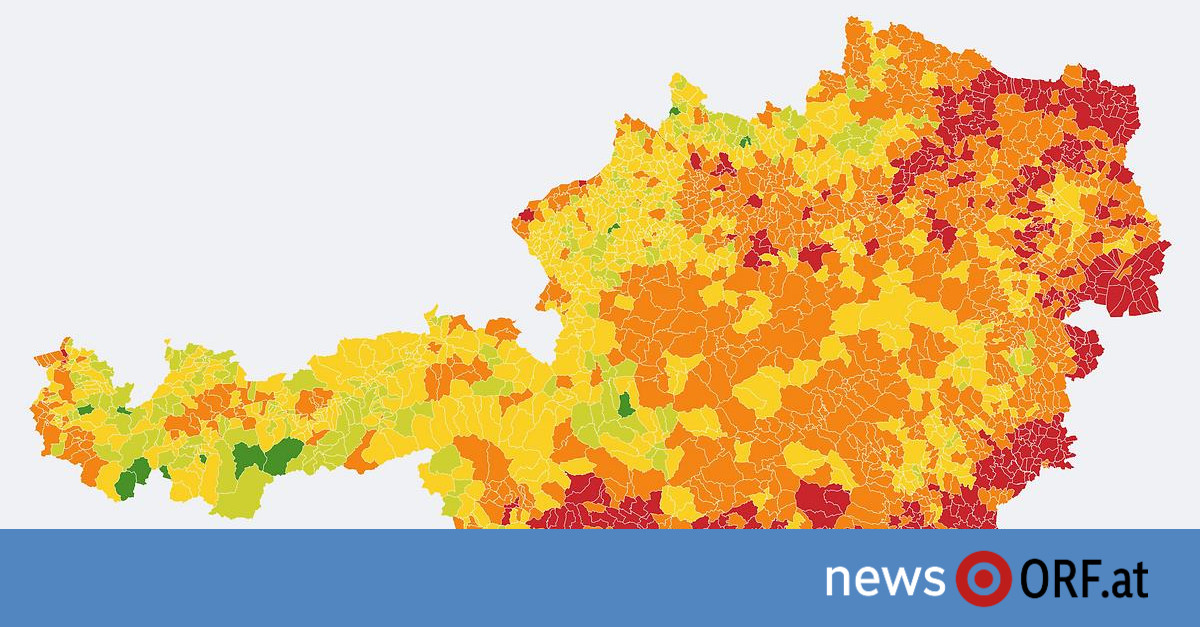
V letošním roce byl v Rakousku zaznamenán výrazně vysoký horký stres, přičemž 373 obcí a 22 okresů vykazuje podle interaktivní mapy výzkumného týmu Complexity Science Hub velmi vysoký horký index, přičemž některé oblasti, jako Bregenz, zažily horkou vlnu trvající 61 dní. #Hitzebelastung #Klimaänderung #Österreich

www.derstandard.at
373 Gemeinden heuer bisher mit sehr hohem Hitzebelastungswert
11177
newsORF.at Aug 12

Aktualizovaná data od Complexity Science Hub ukazují, že ve druhé polovině roku 2026 trpí již více než polovina rakouských obcí vysokou nebo velmi vysokou horkou zátěží, což je nárůst ve srovnání s rokem 2018, přičemž zvlášť vysoký horký stres pociťují starší lidé a zemědělství kvůli extrémnímu suchu. #Hitzebelastung #Klimaänderung #Gesundheit

orf.at
Karte zeigt Hitzebelastung in Gemeinden
18262
Constantin Gurdgiev Jul 29

Consequences of economic sanctions are non-linear, complex & harder to avoid than the sanctions themselves. #EconomicSanctions #Complexity #Consequences #Thetweetdoesnotmentionanyspecificcountries.Therefore #therearenocountrycodestoreturn.

118
Latvian public media Jun 10

Article Autortiesības – viens no civilizētas sabiedrības stūrakmeņiem discusses the persistent challenges regarding copyright understanding in Latvian society, pointing out the tension between protecting creative works and the perceived complexity of the legal system, with insights from cultural figures on the necessity of fostering greater awareness of authors' rights amidst ongoing misconceptions. #Autortiesības #Radošums #Kultūra

www.lsm.lv
Autortiesības – viens no civilizētas sabiedrības stūrakmeņiem. Kāpēc joprojām aiz tā klūpam?
16099
BBC Jun 9

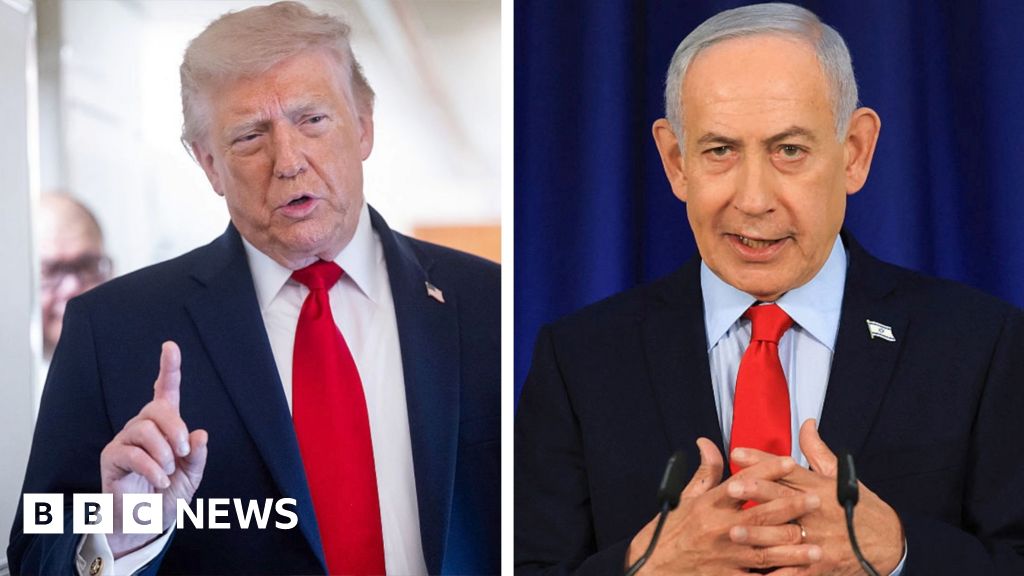
The article discusses how Donald Trump and Benjamin Netanyahu aimed to reshape the Middle East through military action against Iran, but instead face a prolonged crisis marked by Iran's unexpected resilience and continued aggression, exemplified by the downing of a U.S. helicopter, revealing the complexity of achieving definitive victory in warfare. #MiddleEastPolitics #IranConflict #TrumpNetanyahu

www.bbc.com
Bowen: Trump and Netanyahu wanted to reshape the Middle East - now they risk a permacrisis
10137
Kyriakos Pierrakakis May 19

One conclusion emerged clearly: the scale and complexity of the challenges we face require deeper coordination, stronger partnerships and an effective multilateral framework. No country can address these transformations alone. https://t.co/OugYiF2VSv #Multilateralism #GlobalChallenges #Partnerships #Therearenospecificcountrycodesrelatedtothetweetyouprovided.

120
BBC May 18

The article discusses the challenges posed by an Ebola outbreak in the Democratic Republic of Congo, which has been declared a public health emergency by the WHO due to the rare Bundibugyo strain, the absence of a vaccine, the conflict-affected region, and the complexity of tracing the virus's spread amidst local misconceptions and funeral practices. #EbolaOutbreak #PublicHealthEmergency #DRCongo

www.bbc.com
What is Ebola and why is stopping this outbreak so difficult?
10165
BBC May 18

The article discusses the challenges posed by an Ebola outbreak in the Democratic Republic of Congo, which has been declared a public health emergency by the WHO due to the rare Bundibugyo strain, the absence of a vaccine, the conflict-affected region, and the complexity of tracing the virus's spread amidst local misconceptions and funeral practices. #EbolaOutbreak #PublicHealthEmergency #DRCongo

www.faz.net
Angriff auf CSD in Berlin: Tatverdacht nicht erhärtet: Zweiter Verdächtiger freigelassen
10165
BBC May 16

In 2016, Donald Trump proclaimed China as America's main economic rival during a campaign rally in Indiana, and since then, his hardline stance on China has persisted, influencing his policies—including steep tariffs and military sales to Taiwan—despite recent diplomatic overtures that suggest a potential shift in tone, highlighting the complexity and ongoing tensions in U.S.-China relations. #USAChinaRelations #TradeWar #TrumpAdministration #CN #US #TW #IR

www.bbc.com
特朗普訪華:MAGA運動中的中國批評者如何看待他這次北京之行 - BBC News 中文
10168
BBC May 16

Claire Brosseau, a Toronto-based comedian and actress, struggles with severe mental illness and seeks medically assisted dying under Canada's laws, but faces delays in legislative expansion for those with mental disorders, as concerns over the healthcare system's preparedness and the complexity of mental health treatment persist. #MentalHealth #Euthanasia #MentalIllness #CA

www.bbc.co.uk
What is a 'safe death'? Mentally ill woman asks for assisted dying in Canada
8972
The New York Times May 15

Despite the White House's efforts to avoid confrontations ahead of President Trump's visit to China, recent U.S. sanctions on Chinese firms over issues related to Iran, cybersecurity, and artificial intelligence have escalated tensions between the two superpowers, highlighting the complexity of U.S.-China relations as they navigate both rivalry and dialogue. #USChinaRelations #Cybersecurity #ArtificialIntelligence #CN #US #IR #TW #JP #PH

www.nytimes.com
Spies, Sanctions, Cyberattacks: China and the U.S. Clash Behind the Scenes
10169
BBC May 13

A leading safety expert has called for a comprehensive risk assessment of Glasgow's Queen Elizabeth University Hospital campus, highlighting the complexity of determining safety due to historical failings linked to contaminated water and expressing concerns about the adequacy of ventilation systems in wards, amid ongoing investigations into patient deaths potentially related to the hospital environment. #HospitalSafety #RiskAssessment #PatientCare #GB #SC

www.bbc.com
Expert calls for full safety review of Glasgow super‑hospital
10171
The New York Times May 12

Lamine Yamal sparked controversy by waving a Palestinian flag during Barcelona's La Liga victory celebrations, a spontaneous act reflecting his strong feelings regarding the Israeli-Palestinian conflict, with reactions from politicians and the Barcelona manager highlighting the complexity of the ongoing debate in Spain. #Barcelona #Palestine #SportsActivism #ES #PS #IL #GW

www.nytimes.com
Lamine Yamal and a Palestinian flag at Barcelona's title celebrations
10172