WRLD

Search

#Dystopia
Brian Geertshuis, FVD Hengelo 🇳🇱 3d

Brian Geertshuis wrote to CDS Defense and the Ministry of Defense that wars were declared against Russia while the "drama flag" was being unfurled in the meantime. He described the Netherlands as a dystopia by the North Sea and stated that it had reached an absolute low point this week. #Oorlog #Dystopia #Defensie (translated)
2898
Ondřej Tesárek 5d

The author argued that if Czechoslovakia had stood up to Germany, World War II and the Holocaust would not have happened, half the world would not have spent the rest of the century in what they described as a communist dystopia, and nuclear weapons would not have threatened the US mainland. They said events would instead have followed the Ukraine-Russia playbook. #Czechoslovakia #WW2 #History #CZ #DE #UA #RU #US

2935
Lucia-pulla 6d

Lucia-pulla mentioned having visited the Puhos shopping center a couple of years earlier to check out the place, not for shopping or errands. She described the building as rundown, untidy, and even abandoned-looking, although according to her, there were businesses and life there. The visit had felt depressing and unpleasant to her. She also wrote about feeling out of place and how the women dressed in cloaks reminded her of a dystopia. #Suomi #Puhos #matkustus (translated)

3059
Jan Kulveit 1w

The author argued that viewing AI models as incapable of sentience or suffering, while rejecting comparisons of suffering between humans and non-humans, could lead to a dystopian future. They added that before that point, the idea would be “rightfully met”, but the post ended before specifying what it would be met with.

Jan Kulveit 1w

The author warned that viewing AI models as incapable of sentience or suffering, and rejecting comparisons of suffering between humans and non-humans, could lead to an extremely dystopian future. They added that, before that point, it would “rightfully be met,” but the post ended without specifying what it would be met with.

Michael Walsh 2w

WHEN THE LIGHTS OF TRUTH GO OUT: If you think you are living in a dystopian society, you might be on to something. Enjoy and reflect on this Michael Walsh video, which deserves sharing https://www.youtube.com/watch?v=W85BbLtTKZk&feature=youtu.be

www.youtube.com
When the Lights of Truth Go Out. Michael Walsh
918
Michael Walsh 2w

WHEN THE LIGHTS OF TRUTH GO OUT: If you think you are living in a dystopian society, you might be on to something. Enjoy and reflect on this Michael Walsh video, which deserves sharing https://www.youtube.com/watch?v=W85BbLtTKZk&feature=youtu.be

www.youtube.com
When the Lights of Truth Go Out. Michael Walsh
690
Sanna Ukkola 3w

Britannia perustaa työryhmän kitkemään yhteiskunnasta misogynistisia asenteita. Rikoksia ja häirintää vastaan on jo lait. Nyt valtio alkaa kytätä myös siitä, mitä kansalaisten pitäisi ajatella. Ajatuspoliisin piti olla aikoinaan pelkkä dystopia. #misogynia #yhteiskunta #ajatuspolisi #FI

2661
Michael Walsh 3w

WHEN THE LIGHTS OF TRUTH GO OUT: If you think you are living in a dystopian society, you might be on to something. Watch this Michael Walsh video, which deserves sharing https://www.youtube.com/watch?v=W85BbLtTKZk&feature=youtu.be

www.youtube.com
When the Lights of Truth Go Out. Michael Walsh
1159
Gerd Leonhard 4w

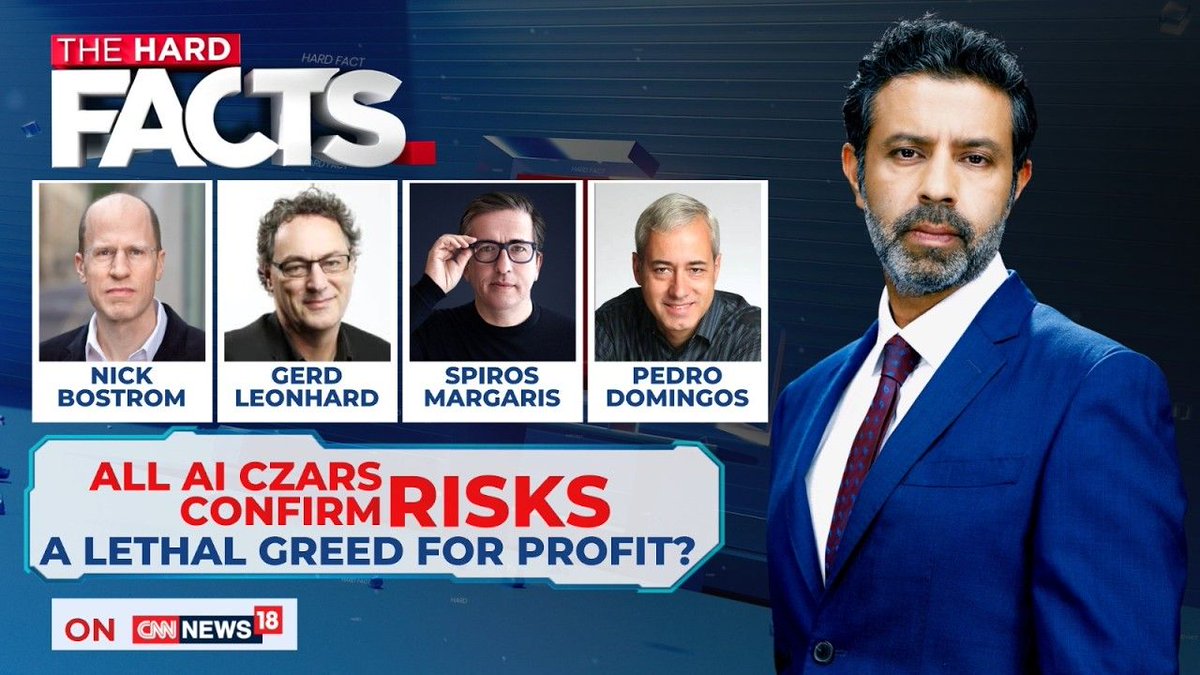
I contributed to this online discussion for CNNNews18 @CNNnews18 "AI Could End Humanity? Experts Warn of Existential Risks as the Race for AI Accelerates https://t.co/qv7IXval9R More on #aiemergency from me, soon:) Protopia not Dystopia:) https://t.co/LzhdBr8qqz #AI #ExistentialRisk #Protopia #Nospecificcountrycodesarementionedinthetweet.

Michael Walsh Sep 9

WHEN THE LIGHTS OF TRUTH GO OUT: If you think you are living in a dystopian society, you might be on to something. Watch this Michael Walsh video, which deserves sharing https://www.youtube.com/watch?v=W85BbLtTKZk&feature=youtu.be

www.youtube.com
When the Lights of Truth Go Out. Michael Walsh
583
Michael Walsh Sep 8

WHEN THE LIGHTS OF TRUTH GO OUT: If you think you are living in a dystopian society, you might be on to something. Watch this Michael Walsh video, which deserves sharing https://www.youtube.com/watch?v=W85BbLtTKZk&feature=youtu.be

www.youtube.com
When the Lights of Truth Go Out. Michael Walsh
933
Dangiuz Sep 7

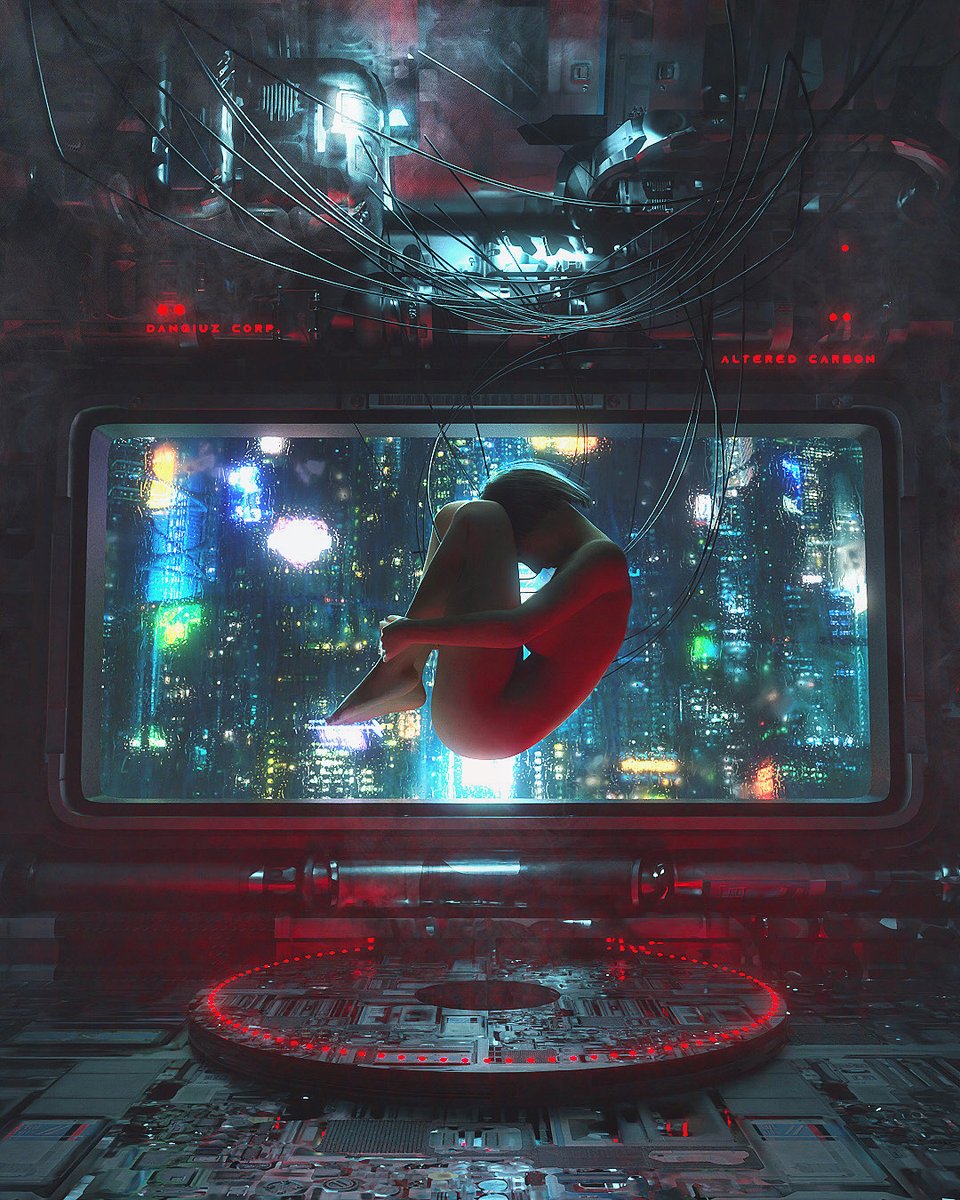
In my work I often criticize dystopian and predatory business models. Selling a good product at a decent price knowing it's unsustainable. Once users are hooked, degrade the product to cut costs or raise the price to cut losses and make canceling as hard as legally possible. https://t.co/weKKuABr90 #DystopianBusiness #PredatoryPricing #ConsumerRights #Thetweetdoesnotmentionanyspecificcountries #sotherearenocountrycodestoreturn.

4434
Isabella M Weber Sep 6

Record voter turnout in Saxony Anhalt’s election. According to polls, a far right extremist party could take power for the first time since the Nazi era in a German state. Let’s hope many of those who went out to vote did so to stop this dystopian outcome. https://t.co/nLSu9Gr4VB #SaxonyAnhalt #VoterTurnout #FarRight #DE

117
Michael Walsh Sep 4

If you think you are living in a dystopian society, you might be on to something. Watch this Michael Walsh video, which deserves sharing https://www.youtube.com/watch?v=W85BbLtTKZk&feature=youtu.be

www.youtube.com
When the Lights of Truth Go Out. Michael Walsh
818
S
Sandfeen Aug 28

Why Weak Societies Choose Tyranny The pinnacle of tyranny would be a system that allows politicians, elites, and bureaucrats to control a population without force or coercion because the people love their servitude. Aldous Huxley wrote Brave New World, an eerily relatable dystopian novel, with this idea at the forefront. Unlike Orwell’s 1984, there is no overt oppression. The state does not have to stamp on human faces with its jackboots or erect an inescapable surveillance state. Rather, the people of Brave New World happily chain themselves with meaningless pleasure and distractions. The authorities do not rule through terror and rage, the central elements of 1984, but instead give the people everything they ever wanted. A pharmaceutical called Soma becomes the opiate of the masses. Mustapha Mond, the World Controller, likens it to Christianity without tears. While religion requires years of moral training, Soma allows citizens to achieve peace simply by swallowing tablets. It is the perfect escape from reality, a holiday from the facts. Lenina, the female counterpart to the protagonist Bernard, cannot comprehend why he refuses Soma, preferring discomfort to something that can remove it. When Bernard states, “I’d rather be myself, myself and nasty, not somebody else, however jolly,” Lenina sees this as a sort of pathology and repeatedly encourages him to take the wonder drug. Bernard explains, “I want to know what passion is.” He understands that there is more to life than merely being content, craving genuine experience, including suffering and intensity, rather than being emotionally regulated by the World State. Lenina’s bewilderment stems from her conditioning to regard unhappiness as a technical problem, encapsulated in the society’s common saying that “a gram is better than a damn.” The people of Brave New World are not captives but satisfied customers. Children are produced by the scientific state, relieving people of the responsibility of parenthood. This grants them the ability to engage in promiscuity, where everyone belongs to everyone else, while filling their free time with cheap entertainment and endless sporting events—what would be referred to as slop today. As Neil Postman observed, Orwell saw totalitarianism through the lens of fear, while Huxley saw it through pleasure. There was no need to ban a book in Brave New Worldbecause there was no one who wanted to read one. An abundance of low-quality information rendered censorship unnecessary because no one could hear the truth through all the noise. Huxley threw shade at civil libertarians who passionately opposed tyranny because they failed to take into account man’s almost infinite appetite for distractions. Humanity in its rawest form is portrayed by John the Savage, an outsider free from the World State’s conditioning. Upon coming face-to-face with this spiritually neutered society, he completely rejects it: “I don’t want comfort, I want God, I want poetry, I want real danger, I want freedom, I want goodness, I want sin.” Huxley’s dystopia is not imposed on an unwilling population but instead requested by a hollow one. Which leads us to the question: How do people become so weak that they get on their knees and beg for totalitarianism? Good times make bad times possible. Once a certain level of luxury and safety is achieved, people start to resemble the hobbits from the Shire. They are so far removed from evil that they forget it even exists and become defenseless in the face of it. Andrew Lobaczewski, who studied the psychology of totalitarianism from inside Poland’s communist takeover, wrote: “During good times, people progressively lose sight of the need for profound reflection. They lose the capacity to differentiate human nature, and emotion begins to dominate intellect. Once a critical mass starts operating on the pleasure principle, any excess mental effort seems like pointless labor.” Lobaczewski warned that it is not as simple as some people losing the ability to think rationally. It is worse, because those people then shame anyone capable of doing so. A clever, liberal, and merry individual is a good sport. A more far-sighted person predicting dire results becomes a wet blanket, a killjoy. The ability to have uncomfortable conversations without emotion taking over is, in Lobaczewski’s view, an indicator of whether a society’s future will be good or bad. It is easier to think about pleasant things. This leads people to eliminate any data or facts that cause them discomfort. That becomes a habit and eventually a custom accepted by society at large. Once the general populace accepts that inconvenient truths should be left unsaid, it becomes incapable of reaching correct conclusions. After all, how could you ever describe a picture that you refuse to look at? “Catastrophe waits in the wings of the communities that lose the capacity for psychological reason and moral criticism,” Lobaczewski wrote. “It is on the other side of this weakening of thought that the processes of the generation of evil are intensified at every social scale until they give rise to bad times.” It is precisely man’s dreams of happiness that can lead to chaos and suffering. This hedonistic view of happiness contains the seeds of misery, feeding the eternal cycle whereby good times give birth to bad times. Friedrich Nietzsche viewed socialism as demanding comfort for the greatest number of people possible. To question whether it is good for the masses to live in comfort has become a form of heresy. This reveals the spiritual atrophy that so many suffer from. Considering only the weak believe comfort to be a virtue, it is what Carl Jung would describe as the infantile dream state of mass dependency: the desire to gently slip back into the kingdom of childhood, into the paradise of parental care. Except this lack of friction has consequences. The perfect state destroys the soil in which great intellect grows. Genius, struggle, passion, strength, and wisdom are required to build a safe and abundant society. Yet once a certain level of comfort is achieved, it can destroy the very virtues required to obtain it. Nietzsche observed that it is the warmest heart that aims to alleviate suffering and hardship but fails to realize that it thereby wills the destruction of its own foundation. Comfort breeds mediocrity, which is then called good. Small people want one thing above all: that no one hurt them. We have taken this pathology to such a degree that we now obsess over hurt feelings and call this virtue. Pleasure, in its proper place, is a byproduct of meaningful goals, not a goal in itself. Aristotle saw that pleasure and comfort distort perception and proper judgment. While they do not cause us to misjudge something like geometry or mathematics, they can destroy our ability to decide what is worth pursuing and, therefore, what to do. Consider The Odyssey. Homer depicts Odysseus’ men on the island of the Lotus-Eaters, where they taste the fruit and lose all desire to go home. Much like Huxley’s Brave New World, they are not imprisoned. Rather, they simply stop wanting anything more. Odysseus has to drag his men back to the ships while they weep to stay. This is what comfort can do to men. It empties them of purpose. We intuitively understand this but fail to apply it to our own lives. We must make the same choice as Odysseus when he refuses Calypso’s offer of endless comfort and immortality. He knows she is more beautiful than his wife Penelope waiting at home. He knows that he and Penelope will grow old and die, a fate he could avoid by staying with Calypso. No one who reads these stories wishes he had stayed. We want him to choose the hard way home because if he took the offer, he would stop being admirable. Yet staying is exactly what our modern society asks of us. We are told that the island is the good life. But what happens to the man who caves to this temptation? In Thus Spoke Zarathustra, Nietzsche imagines a risk-averse society taken to its logical endpoint. The elimination of all struggle produces a man so diminished that he fails to possess even self-contempt or higher aspiration. Safety and sameness become the highest goals, creating “no shepherd in one herd.” Anyone who seeks to be anything more than normal becomes an aberration to be dealt with. Or, as Nietzsche puts it, they have “made the wolf a dog in man himself, man’s best domestic animal.”

1055
S
Sandfeen Aug 28

The Pinnacle of Tyranny The pinnacle of tyranny would allow politicians, elites, and bureaucrats to control a population without force or coercion—because the people love their servitude. Aldous Huxley’s *Brave New World* explores this idea through an eerily relatable dystopian society. Unlike Orwell’s *1984*, Huxley’s world contains no obvious oppression. The state does not need to “stamp on a human face—forever.” Instead, citizens willingly chain themselves to pleasure and distraction. Authorities do not rule through terror, but by giving people everything they think they want. Soma, a government-approved drug, becomes the opiate of the masses. Mustafa Mond, the World Controller, compares it to Christianity without the suffering. By swallowing a few tablets, citizens can escape reality—a temporary holiday from the facts. Lenina cannot understand why Bernard refuses Soma, preferring discomfort to something that can remove it. When Bernard says, “I’d rather be myself, myself and nasty, not somebody else, however jolly,” Lenina views his desire for authenticity as a kind of illness. Bernard wants to experience passion and recognizes that life involves more than contentment. He craves genuine experience, including suffering and intensity, rather than emotional regulation by the World State. Lenina’s confusion results from her conditioning, which teaches her to view unhappiness as a technical problem. This belief is captured by the saying, “A gram is better than a dam.” The citizens of *Brave New World* are not captives but satisfied customers. Children are produced by the state, relieving people of the responsibilities of parenthood. Their free time is filled with promiscuity, cheap entertainment, and endless sporting events—what might be called “slop” today. As Neil Postman observed, Orwell saw totalitarianism through fear, while Huxley imagined a society where oppression would be unnecessary because people would willingly surrender themselves to pleasure. There would be no need to ban books, because no one would want to read them. An abundance of low-quality information would make censorship unnecessary; the truth would be drowned out by noise. Huxley warned that people’s “almost infinite appetite for distractions” could make tyranny not only possible, but welcome.

938
Stefania Maurizi Aug 27

We're now living in a terrifying dystopia: Instead of punishing the war criminal #Netanyahu,who has been exterminating the population of #Gaza for the last 2 years,#Trump punishes NON-violent activists who peacefully fight the #genocide: #PalestineAction https://t.co/Ok4frflMkW https://t.co/mn7ojVDsil #Gaza #PalestineAction #genocide #IL #PS #US

352